
attraction · Córdoba
Roman Bridge of Córdoba
Andalucía 365 · Updated 18 July 2026
Our Verdict
“The Roman Bridge is an essential piece of Córdoba’s historical landscape, offering the city's finest skyline views. While summer midday crossings can be punishingly hot and crowds are inevitable, walking the ancient stones provides a tangible link to two millennia of Roman, Islamic, and Christian engineering.”
Last verified: July 2026
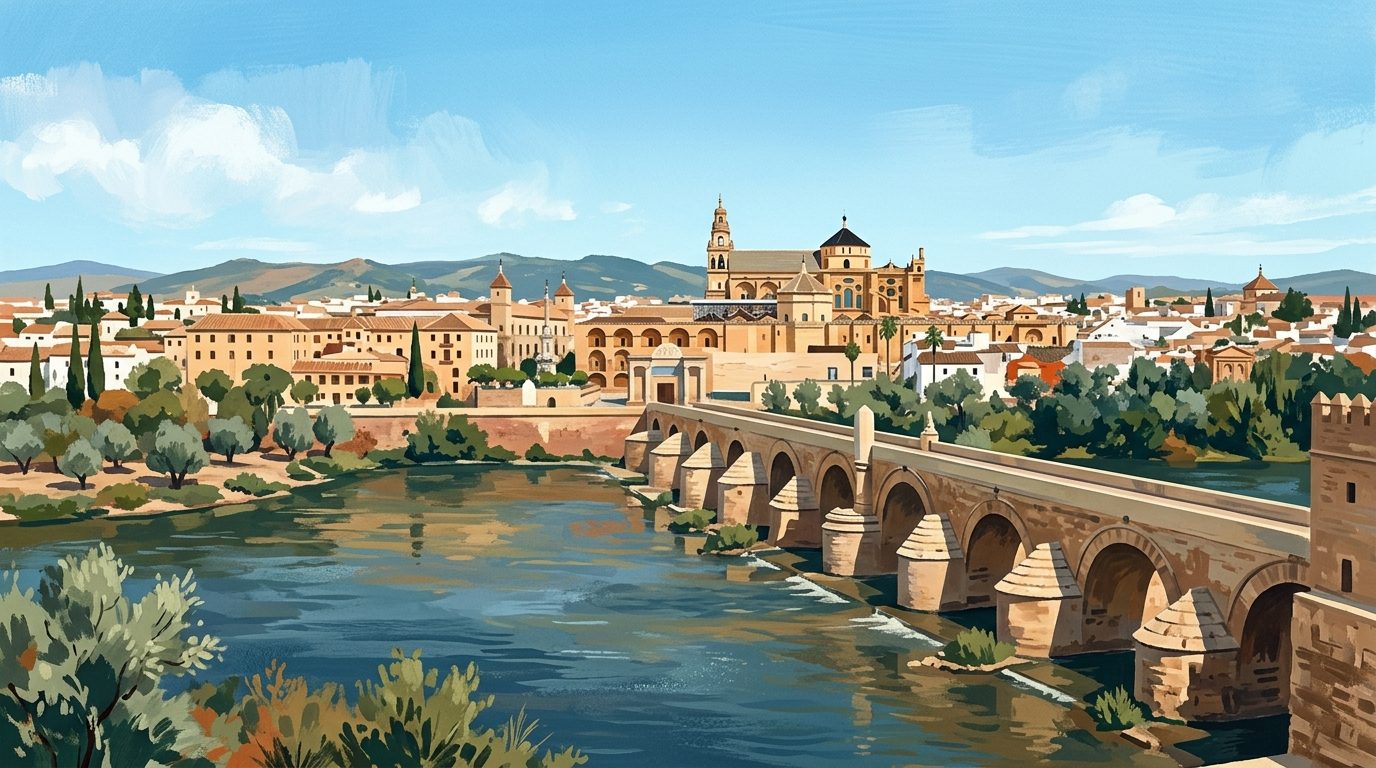
Sixteen stone arches span the wide, slow-moving waters of the Guadalquivir river, varying in shape from semi-circular Roman geometries to pointed Moorish forms. The Roman Bridge of Córdoba, constructed entirely of dense limestone, anchors the southern approach to the city. Originally erected in the 1st century BC during the reign of Augustus, this monumental piece of civil engineering carried the Via Augusta across the water and remained the city's only permanent river crossing for twenty centuries. Today, it serves as a wide pedestrian artery, connecting the historic core on the northern bank to the Campo de la Verdad district to the south.
Its current appearance reflects an immense history of repeated destruction, fortification and reconstruction. Most notably, Islamic engineers rebuilt the span in the 8th century, leaving a distinct architectural fingerprint on the central arches. The varying masonry styles reveal a timeline of essential repairs that continued well into the late 19th century, ensuring the bridge survived devastating winter floods. A comprehensive restoration completed in 2008 cleaned the stonework and renewed the paving, securing the bridge for modern pedestrian use.
Defensive Towers and Triumphal Gates
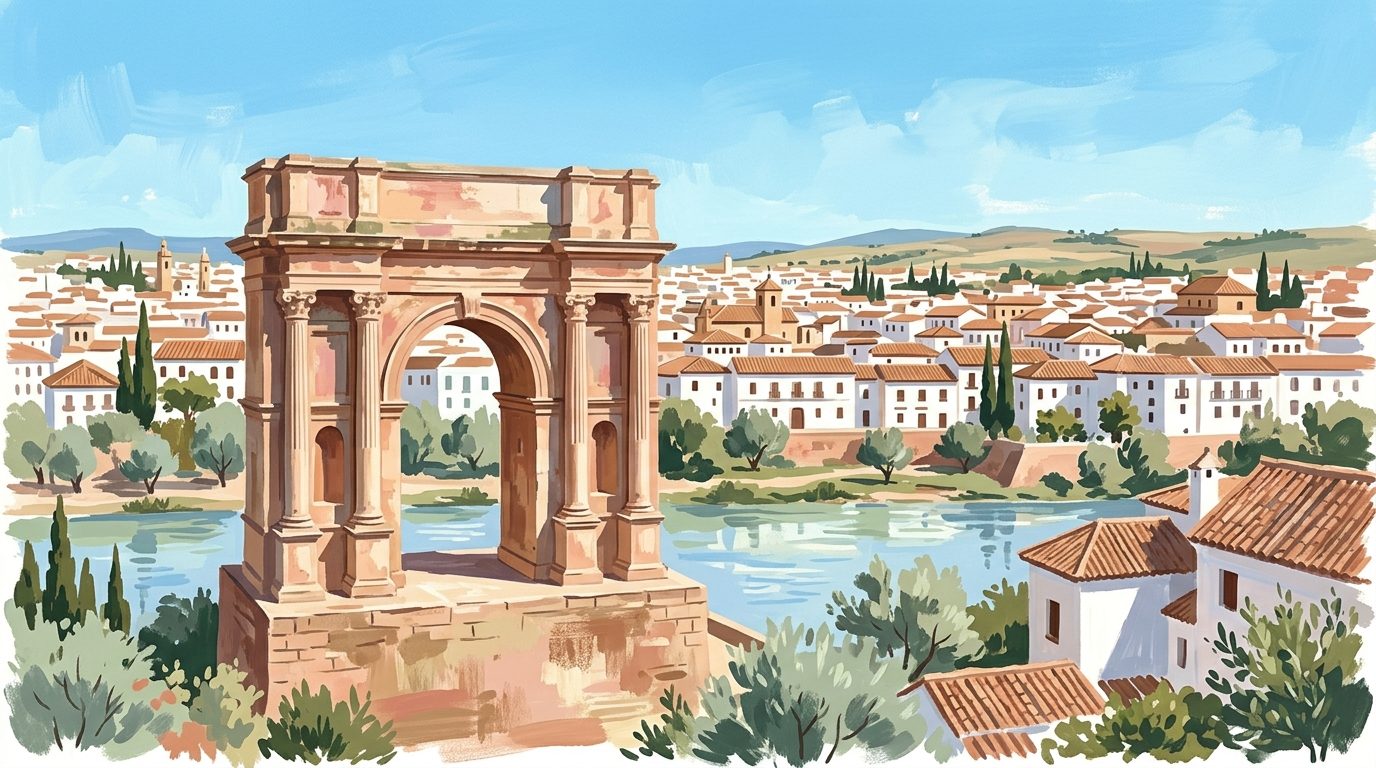
The bridge is bracketed by two significant architectural sentinels that once controlled all movement into the capital. On the northern bank, visitors pass through the Puerta del Puente, a monumental late 16th-century gate designed by Hernán Ruiz to resemble a classical triumphal arch. It marks the boundary of the old city walls and the immediate precinct of the historic centre.
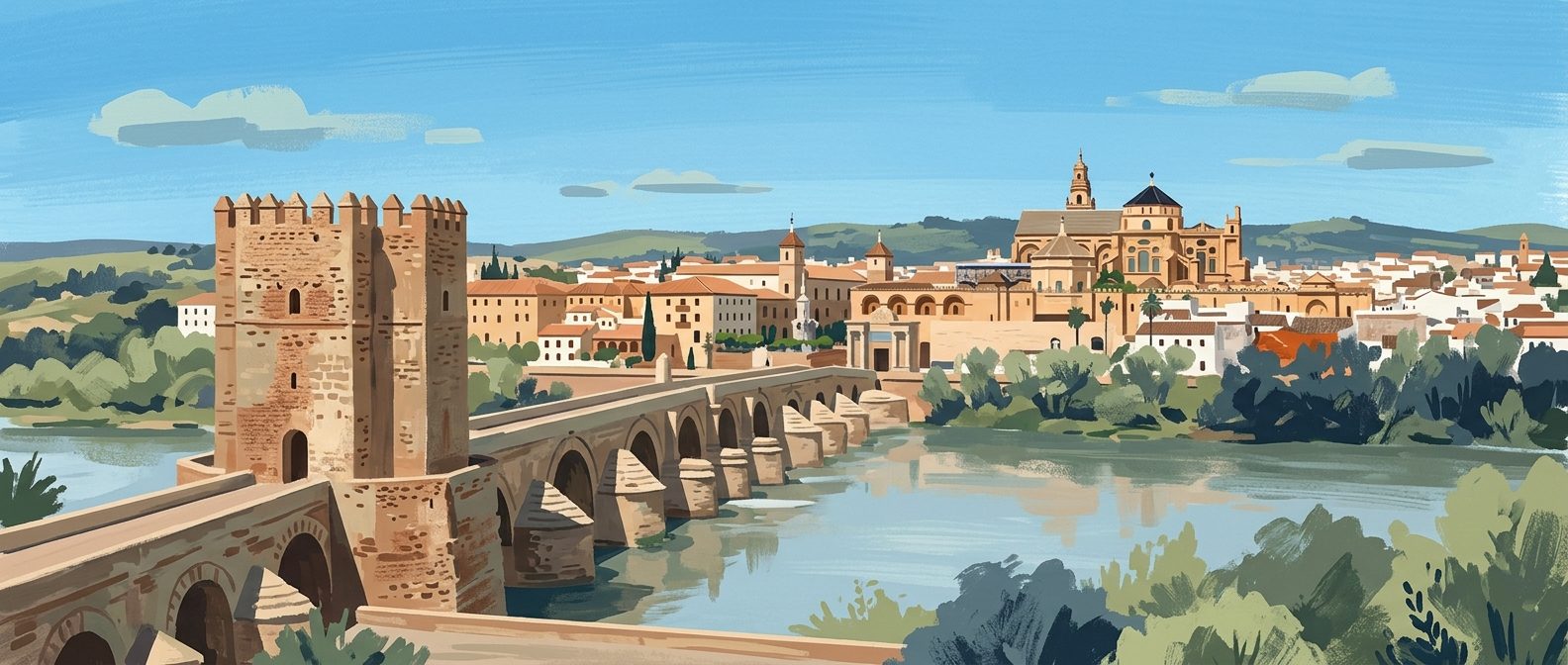
Guarding the southern end is the Torre de la Calahorra. Originally a medieval Islamic defensive tower, it was heavily reinforced by Christian monarchs to protect against attacks from the south. The fortress now houses a museum dedicated to the cultural history of al-Andalus and The Caliphate of Córdoba. Halfway across the bridge itself, a 17th-century statue of San Rafael by the sculptor Bernabé Gómez del Río juts out over the water. As the traditional guardian angel of Córdoba, the stone figure is rarely without a display of flickering candles and fresh flowers placed by local residents asking for protection.
Watermills and River Wildlife
Looking over the stone parapets offers a clear view of the Sotos de la Albolafia, a protected natural reserve consisting of small islands and dense riverbank vegetation right in the middle of the urban waterway. This wetland supports an unexpected variety of birdlife within the city limits. Patient observers can often spot grey herons, little egrets and great cormorants resting on the sandbanks, drying their wings in the sun or diving for fish in the shallow currents.
Downstream from the crossing, the remains of several ancient watermills break the surface of the river. The most prominent is the Molino de la Albolafia, distinguished by a large, reconstructed wooden waterwheel. In the medieval period, this hydraulic system lifted water from the Guadalquivir up into an aqueduct to irrigate the extensive gardens of the nearby Alcázar de los Reyes Cristianos. The surviving stone ruins provide a tangible link to the city's pre-industrial past and a stark contrast to the manicured streets of the modern tourist district.
A Candid Assessment
The Roman Bridge is an absolute requirement for the Córdoba experience, providing the definitive panoramic view of the old city skyline. It is the perfect vantage point to appreciate the immense scale of the historical centre, particularly at sunset when the limestone arches turn a rich, deep ochre. The bridge appeals strongly to photographers, architecture enthusiasts and anyone seeking a tangible connection to the ancient Roman and Islamic worlds. However, the crossing is completely exposed to the elements. During the peak summer months, the stone absorbs and radiates the fierce heat of Andalucía, making a midday crossing deeply uncomfortable and even dangerous without proper hydration. It is also one of the most heavily trafficked pedestrian zones in the province, meaning quiet moments are exceptionally rare outside of early mornings or late nights.
How to Visit and Accessibility
As a public thoroughfare, the crossing remains permanently open to pedestrians and requires no advance planning to traverse. The entire length of the span is paved with flat, regular cobblestones, making it fully accessible for wheelchair users, mobility scooters and pushchairs. There is no shade or seating provided anywhere along the bridge, so adequate sun protection and water are highly recommended between May and September. For accurate information regarding occasional exhibitions at the gatehouses, visitors should consult the official Turismo de Córdoba website.
What to See Nearby
The northern end of the bridge deposits visitors directly at the threshold of the most important monuments in Exploring the Caliphate Capital: A Deep Dive into Córdoba. The immediate neighbour is the formidable structure of The Mezquita-Cathedral of Córdoba: A Guide to the Great Mosque, which dominates the skyline from almost any point on the riverbank. Combining the bridge with an exploration of the mosque and the narrow, whitewashed streets of the Jewish Quarter makes for a comprehensive morning, and features heavily in any sensible itinerary such as Two Days in Cordoba: A Complete Itinerary. For those arriving by car, parking on the southern side of the river in the Miraflores district and walking across the bridge is often the most practical way to enter the restricted historic centre.
Nearby worth your time
A few well-placed stops for extending the day without turning it into a checklist.
Continue through Córdoba City
Step back into the wider landscape with local guides, nearby places and the province overview.
Things to do · 10 min
Golf in Córdoba Province: Courses, Holidays, and Shops
Discover practical tips, course details, and holiday planning advice for playing golf in Córdoba province, from the mountain fairways of Sierra Morena to the historic greens of Los Pedroches.
Feature · 8 min
The Caliphate of Córdoba
In 929, Abd al-Rahman III declared himself Caliph, breaking religious ties with the Middle East and launching an era of unparalleled architectural and intellectual achievement.
Itinerary · 9 min
A Weekend in Cordoba: Two Days in Andalucía's Caliphate City
Spend 48 hours in Cordoba exploring the mesmerising Mezquita, getting lost in the whitewashed streets of the Judería, and eating excellent salmorejo.