
attraction · Córdoba
Torre de la Calahorra
Andalucía 365 · Updated 18 July 2026
Our Verdict
“While the museum's dioramas feel dated and rely heavily on the audio guide, the historical context is invaluable. The architectural weight of the tower and the panoramic rooftop views make the entry fee worthwhile. It is highly recommended for history enthusiasts, architecture fans, and photographers.”
Last verified: July 2026
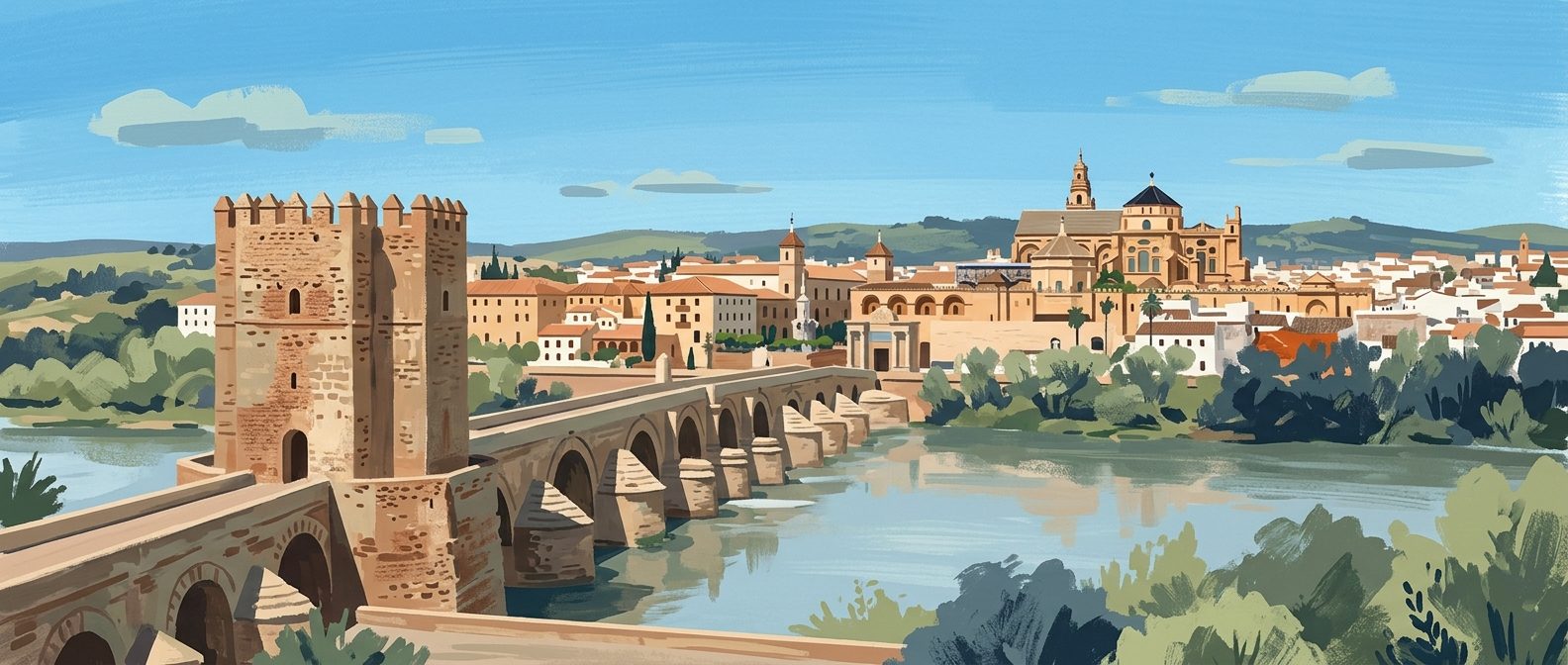
Standing as a formidable sentinel at the southern end of the Puente Romano, the Torre de la Calahorra is a defensive fortress that has guarded the entrance to Córdoba for centuries. As one of the most distinctive medieval fortifications in Andalucía, it was originally constructed by the Almohad Caliphate to protect the city from southern invasions, before being extensively fortified by King Enrique II of Castile in 1369. Today, its sturdy stone walls house the Museo Vivo de al-Andalus, managed by the Fundación Paradigma Córdoba para la Convivencia. This site links the military history of the Guadalquivir riverbank with an intellectual exploration of the city’s golden age. Visitors are treated to an audio-driven journey through the medieval era, focusing on the period when Christian, Jewish, and Muslim communities coexisted. Beyond the historical depth, the tower provides one of the most striking vantage points for viewing the city skyline across the water.
A Fortress on the River
The architecture of the Torre de la Calahorra tells a clear story of military necessity. The structure features a distinctive layout with three imposing wings. If you examine the masonry closely, you can spot the transition from the original Islamic foundations to the heavy, 14th-century Christian reinforcements, complete with remnants of a moat. The interior spaces are defined by thick walls and minimal natural light, highlighting the practical focus of the building. Narrow, stone-built staircases remind you of the primary role of the tower as a riverside stronghold. It is a structure designed to intimidate those approaching the city from the south, offering a stark contrast to the refined arches of the Mezquita-Cathedral of Córdoba waiting on the opposite bank.
Inside the Museo Vivo de al-Andalus
Rather than relying solely on static displays, the museum uses a comprehensive audio-visual system to guide visitors through eight dedicated galleries. As you move through the rooms, life-sized figures and detailed dioramas represent key intellectuals of the medieval era. You will encounter representations of the Islamic philosopher Averroes, the Jewish physician Maimonides, and the Christian monarch Alfonso X. The exhibits highlight the transfer of knowledge across cultures between the 8th and 13th centuries, covering crucial advancements in philosophy, medicine, and science.
The physical displays are equally engaging. Key pieces include a meticulous scale model of the Great Mosque, showing its appearance during the Moorish era, alongside intricate scale models of the Alhambra in Granada. You will also find sections dedicated to ancient agricultural methods, showcasing models of waterwheels,such as the nearby Molino de la Albolafia,and irrigation techniques that transformed the local landscape. Another gallery highlights early musical instruments that originated in Al-Andalus and eventually influenced modern European music.
The Roof Terrace and Battlements
The visitor experience culminates on the roof terrace. From these medieval battlements, you have an unobstructed view of the Roman Bridge stretching across the water toward the historic centre. It is an exceptional location for photography, offering a clear perspective of the layers of Roman, Moorish, and Renaissance history that define Córdoba. Looking down, you can appreciate the scale of the river and the adjacent Sotos de la Albolafia nature reserve, where white egrets often gather in the shallows. Looking ahead provides a sweeping panorama of the UNESCO World Heritage skyline.
The Candid Verdict
While the museum's dioramas feel dated and rely heavily on the audio guide, the historical context is invaluable. The architectural weight of the tower and the panoramic rooftop views make the entry fee worthwhile. It is highly recommended for history enthusiasts, architecture fans, and photographers.
How to Visit and Accessibility
The tower sits squarely on the south bank of the Guadalquivir river. Most visitors reach it by taking a slow walk across the river, which is thoroughly covered in our guide to the Roman Bridge and Calahorra Tower. If you are arriving by car, there is a large public car park nearby in the Miraflores area. Due to its medieval defensive design, the tower is not fully accessible. The stone staircases are narrow, winding, and steep in places, making the upper floors and the roof terrace unsuitable for wheelchair users or those with significant mobility issues. Sensible footwear is strongly recommended for navigating the worn steps.
Practical Planning and Nearby Pairings
Allow between 60 and 90 minutes to explore the museum and enjoy the views from the roof. If you choose to listen to every track on the audio guide, you may require up to two hours. Late afternoon is the ideal time to visit, as the lowering sun casts a warm light over the historic centre and the river. This timing allows you to walk back across the bridge just as the city lights are switched on. Avoid midday during the peak summer months, as the climb and the exposed roof terrace can become uncomfortably hot.
For accurate details regarding opening patterns, seasonal shifts, and scheduled closures, check the official Torre de la Calahorra website before your arrival. Once you have finished your visit, head back across the bridge to explore the winding alleys of the historic centre. Walking into the Jewish Quarter of Córdoba perfectly complements the themes discussed in the museum, allowing you to trace the footsteps of the philosophers you just learned about.
Nearby worth your time
A few well-placed stops for extending the day without turning it into a checklist.
Continue through Córdoba City
Step back into the wider landscape with local guides, nearby places and the province overview.
Things to do · 10 min
Golf in Córdoba Province: Courses, Holidays, and Shops
Discover practical tips, course details, and holiday planning advice for playing golf in Córdoba province, from the mountain fairways of Sierra Morena to the historic greens of Los Pedroches.
Feature · 8 min
The Caliphate of Córdoba
In 929, Abd al-Rahman III declared himself Caliph, breaking religious ties with the Middle East and launching an era of unparalleled architectural and intellectual achievement.
Itinerary · 9 min
A Weekend in Cordoba: Two Days in Andalucía's Caliphate City
Spend 48 hours in Cordoba exploring the mesmerising Mezquita, getting lost in the whitewashed streets of the Judería, and eating excellent salmorejo.