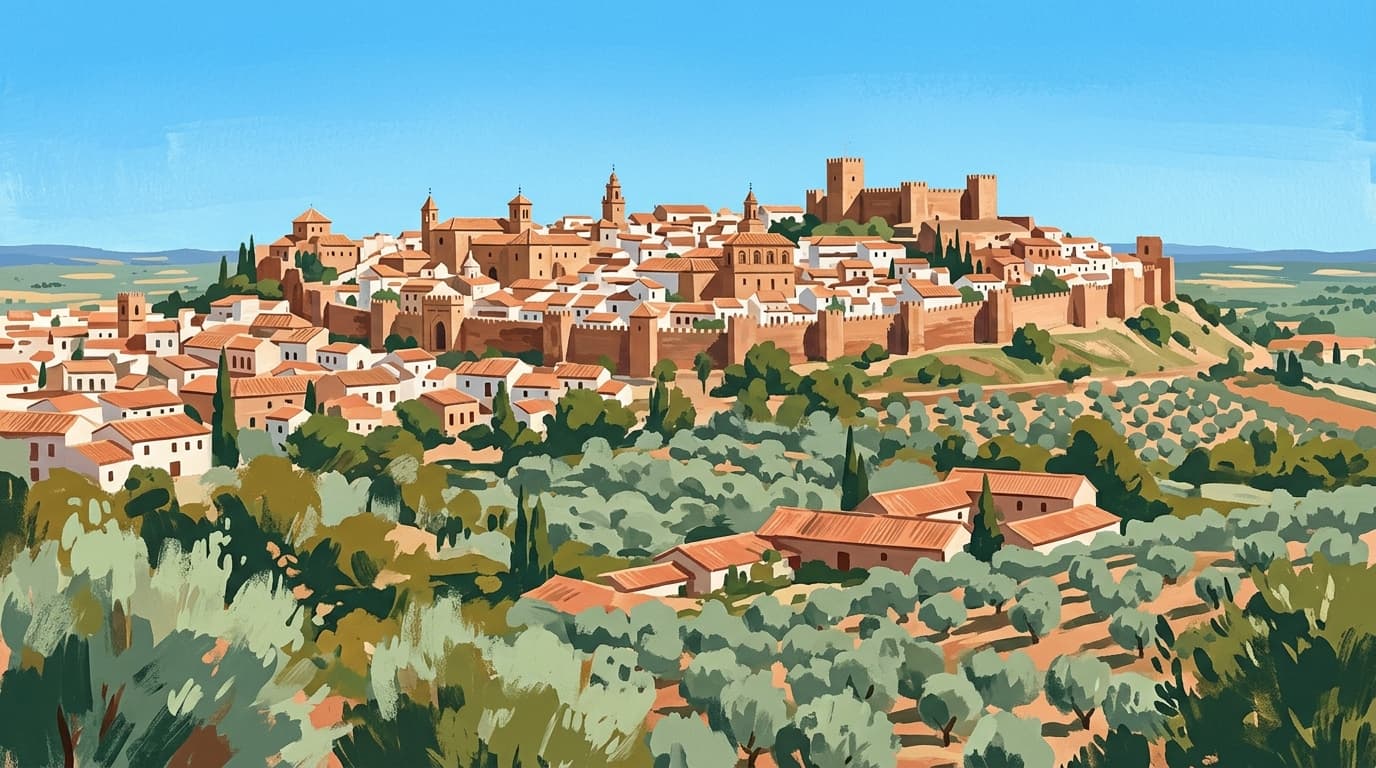
Perched on a ridge overlooking the vast wheat plains of the Campiña, Carmona is one of Europe’s oldest continuously inhabited settlements. Its blend of Roman engineering and Moorish fortification makes it a compelling alternative to the capital city of Seville.
A Guide to Carmona: The Fortified Gateway to the Seville Plains
Carmona sits roughly 30 kilometres east of Seville, commanding a strategic position atop a limestone outcrop known as Los Alcores. Its history spans over five millennia, having been inhabited by Carthaginians, Romans, and Moors before the Christian reconquest in 1247. Walking through its gates, you immediately sense the scale of its past. The town feels like an open-air museum, where Roman tombs sit alongside Baroque palaces and Mudejar towers.
Unlike the crowded streets of Seville, Carmona offers a quieter, more contemplative pace. The white-washed streets of the old quarter wind upwards towards the Alcázar del Rey Don Pedro, providing a clear view across the surrounding agricultural landscape. It is a town defined by its massive stone walls and the golden light that reflects off its calcified buildings during the late afternoon. For anyone interested in the layers of Andalucían civilisation, Carmona is an essential stop on the route between Seville and Córdoba.
What to See & Do
The Roman Necropolis (Necrópolis Romana)
Situated on the western edge of the town, this is one of the most significant Roman burial sites in Spain. Discovered in the late 19th century, the site contains hundreds of tombs dating from the 1st century BC to the 2nd century AD. The most impressive are the Tomb of Servilia, which resembles a Roman villa with its own courtyard and colonnades, and the Tomb of the Elephant, named after a stone statue found within. The site includes a small museum that houses grave goods and provides context for the Roman funeral rites practised here. It remains a stark reminder of Carmo's importance as a major administrative centre on the Vía Augusta.
Puerta de Sevilla and the Alcázar
The Puerta de Sevilla is the town’s most iconic entrance. This double-gate system was originally built by the Carthaginians, later modified by the Romans, and significantly reinforced by the Almohad Caliphate. You can climb to the top of the 'Torre del Oro' (not to be confused with the one in Seville) for a view over the Plaza de San Fernando. The defensive complex houses a small visitor centre and offers a look at the sheer thickness of the walls that once made Carmona nearly impregnable.
Church of Santa María de la Asunción
Built on the site of Carmona’s former grand mosque, this Gothic church is a masterclass in architectural transition. The building retained the mosque's courtyard, the Patio de los Naranjos, which still features Visigothic and Moorish inscriptions on its columns. Inside, the church is cavernous, housing a magnificent 16th-century altarpiece. It serves as the spiritual heart of the town and reflects the wealth Carmona accumulated during the colonial era through its high-vaulted ceilings and silverwork.
Alcázar del Rey Don Pedro (The Parador)
At the highest point of the town stands the ruins of the Alcázar del Rey Don Pedro, originally a Roman fortress and later a palace for Peter I of Castile. Much of the original structure was destroyed by earthquakes, but the remaining sections have been integrated into the Parador de Carmona. Even if you aren't staying overnight, you can walk through the monumental gateway and visit the bar or restaurant. The terrace offers the most famous view in the province: a panoramic sweep across the fertile Guadalquivir valley where the wheat fields meet the horizon.
Puerta de Córdoba
Located at the opposite end of the old town from the Puerta de Sevilla, the Puerta de Córdoba was the gate that led towards the city of the Caliphs. It underwent a significant Baroque renovation in the 17th century, though its Roman foundations are still visible. It is a quieter spot than the Seville gate and marks the transition from the narrow medieval streets to the steep slopes leading down to the plains.
Practical Information
Opening Times & Ticket Prices
Roman Necropolis: Open Tuesday to Saturday from 09:00 to 18:00 (winter) and 09:00 to 21:00 (summer). Sundays 09:00 to 15:00. Entry is free for EU citizens and €1.50 for others.
Puerta de Sevilla: Open Monday to Saturday from 10:00 to 18:00, and Sundays 10:00 to 15:00. Entry is approximately €3 per person.
Church of Santa María: General visits are usually allowed from 10:00 to 14:00 and 17:30 to 19:30. Entry is €5, which often includes an audio guide.
How to Get There
By Car: Carmona is a 30-minute drive from Seville via the A-4 motorway. It is also an easy stop for those driving between Seville and Córdoba (approx. 1 hour from Córdoba).
By Bus: The M-124 bus line connects Seville (Plaza de Armas or Prado de San Sebastián) to Carmona. The journey takes around 45 to 60 minutes. Services are frequent on weekdays but reduced on Sundays.
Parking
Parking inside the historical centre is extremely difficult due to the narrow streets. The best option is to park in the large public car park at Plaza de San Antón or along the Paseo del Estatuto. Both are a five-minute walk from the Puerta de Sevilla entrance.
Where to Eat Nearby
For a traditional experience, Molino de la Romera is located in a beautifully restored 15th-century olive oil mill. It specialises in grilled meats and local seasonal vegetables, with a terrace that offers views over the valley. For something more contemporary, Taberna El Jaleo in the Plaza de San Fernando serves creative tapas that move beyond the standard fried fish. Try the espinacas con garbanzos (spinach with chickpeas), a local staple. If you are looking for a quick bite, many of the small bars around the market offer tostadas with local olive oil and tomatoes for breakfast.
Where to Stay
The Parador de Carmona is the premier choice, offering a stay within a 14th-century fortress with a swimming pool that overlooks the plains. For a more intimate, boutique experience, Hotel Casa de Carmona is a 16th-century Renaissance palace with 33 unique rooms, featuring traditional courtyards and antique furnishings. Those on a more modest budget will find several converted townhouses within the old quarter that provide a quiet atmosphere and easy access to the main monuments.