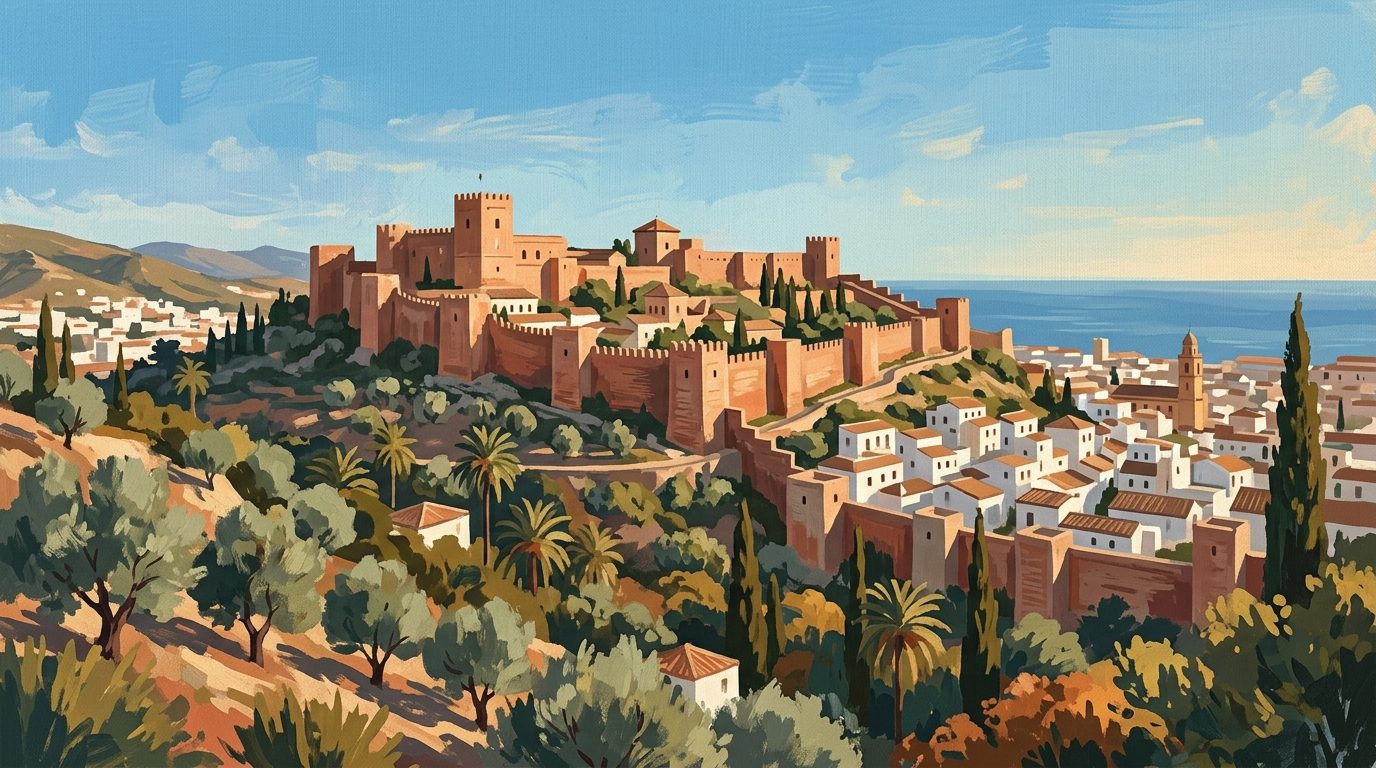
Perched high above the Mediterranean, the Alcazaba de Almería is the largest Moorish fortress in Spain, offering a starkly beautiful window into the defensive power of the Caliphate. Its golden sandstone walls dominate the city skyline, providing sweeping views across the Almerian landscape and the sea beyond.
Construction of the Alcazaba began in 955 AD under the orders of Abd al-Rahman III, the first Caliph of Córdoba. At the time, Almería was the most important port in the Caliphate, acting as the primary gateway for trade and naval power in the Mediterranean. This fortress was not merely a military barracks; it was a palatine city, the seat of government for the Taifa of Almería, and a refuge for the local population during times of siege.
Spanning over 43,000 square metres, the complex is divided into three distinct enclosures. The first two are of Islamic origin, while the third was added by the Catholic Monarchs, Isabella and Ferdinand, following the Reconquista in 1489. This layering of architectural styles makes the Alcazaba one of the most significant historical sites in Andalucía, representing a millennium of shifting power and cultural fusion.
What to See & Do
Exploring the Alcazaba requires a sturdy pair of walking shoes and a good couple of hours. The climb from the city centre is steep, but the rewards are found in the intricate detail of the ruins and the panoramic vistas from the battlements.
The First Enclosure: Defensive Gardens
The lower tier of the fortress was originally a residential area and a space for the military garrison. Following centuries of decay, it was transformed in the 20th century into a series of tiered gardens. These gardens are meticulously maintained and utilise a traditional Moorish irrigation system, with water flowing through narrow stone channels (acequias) into rectangular ponds.
As you walk through this section, look for the remains of the ancient cisterns that once held the city’s water supply. The walls here are particularly impressive, offering the first real sense of the fortress's scale. From the northern edge of the first enclosure, you can look down upon the Barrio de la Chanca, a historic quarter of cave houses and brightly painted homes that has changed little in layout since the Middle Ages.
The Second Enclosure: The Palatine City
Crossing the Muro de la Vela (Wall of the Sail), you enter the heart of the Moorish complex. This second enclosure served as the residence for the governors and kings of Almería. It contained a palace, a mosque, private baths, and houses for the court officials. While much of the original palace (the Al-Mutasim Palace) lies in ruins, archaeological excavations have revealed the layout of the rooms and courtyards.
Key highlights in this section include the Ermita de San Juan, a small chapel built over the site of the former mosque, and the Casas de la Alcazaba. These are reconstructed Almohad-style houses that provide a fascinating look at domestic life in the 11th and 12th centuries. You can step inside to see the typical layout of a central courtyard surrounded by narrow living quarters, designed to keep the interior cool during the fierce Almerian summers.
The Muro de la Vela itself is worth noting for its bell, which was traditionally used to warn the city of pirate attacks or to announce the opening and closing of the city gates. Today, it marks one of the best vantage points for photographing the entire complex.
The Third Enclosure: The Christian Castle
The highest part of the hill is occupied by a fortress-within-a-fortress. Built after the Christian conquest of the city, this section features the heavy, circular towers and thick stonework typical of late 15th-century military architecture. It stands in sharp contrast to the square, more decorative towers of the Moorish sections.
Inside, you will find a large courtyard and the Torre del Homenaje (the Keep). This area was designed to hold the latest artillery of the era, and its defensive walls are significantly thicker than those in the lower enclosures. The view from the top of these towers is peerless, stretching across the Port of Almería and out towards the Cabo de Gata Natural Park on the horizon.
The Alcazaba on Screen
Film enthusiasts will recognise these ramparts from several major productions. The Alcazaba served as the Water Gardens of Sunspear in the sixth season of Game of Thrones, representing the capital of Dorne. The lush gardens and water features of the first enclosure provided the perfect backdrop for the Martell family’s ancestral home. Beyond the small screen, the fortress and the nearby Tabernas Desert have featured in Indiana Jones and the Last Crusade, Conan the Barbarian, and more recently, Wonder Woman 1984.
Practical Information
To get the most out of your visit, it is wise to arrive early in the morning, particularly during the summer months when the Almerian heat can become oppressive by midday.
- Opening Times:
- Summer (1 April to 15 June): Tuesday to Saturday 09:00 to 21:00; Sunday 09:00 to 15:00.
- High Summer (16 June to 15 September): Tuesday to Saturday 09:00 to 15:00 and 19:00 to 22:00; Sunday 09:00 to 15:00.
- Winter (16 September to 31 March): Tuesday to Saturday 09:00 to 18:00; Sunday 09:00 to 15:00.
- Closed: Every Monday, 1 January, 6 January, 1 May, 24 December, 25 December, and 31 December.
- Ticket Prices: Entry is free for citizens of the European Union (on production of a valid ID or passport). For all other visitors (including UK citizens post-Brexit), the entrance fee is a nominal €1.50.
- How to Get There: The entrance is located on Calle Almanzor. From Almería Cathedral, it is a 10-minute walk uphill through the narrow, winding streets of the old town. Bus Line 1 stops near the base of the hill at the "Alcazaba" stop.
- Parking: There is no parking directly at the fortress. It is recommended to use the public car parks in the city centre, such as the one at Plaza de la Morería or near the port, and walk the remaining distance.
Where to Eat Nearby
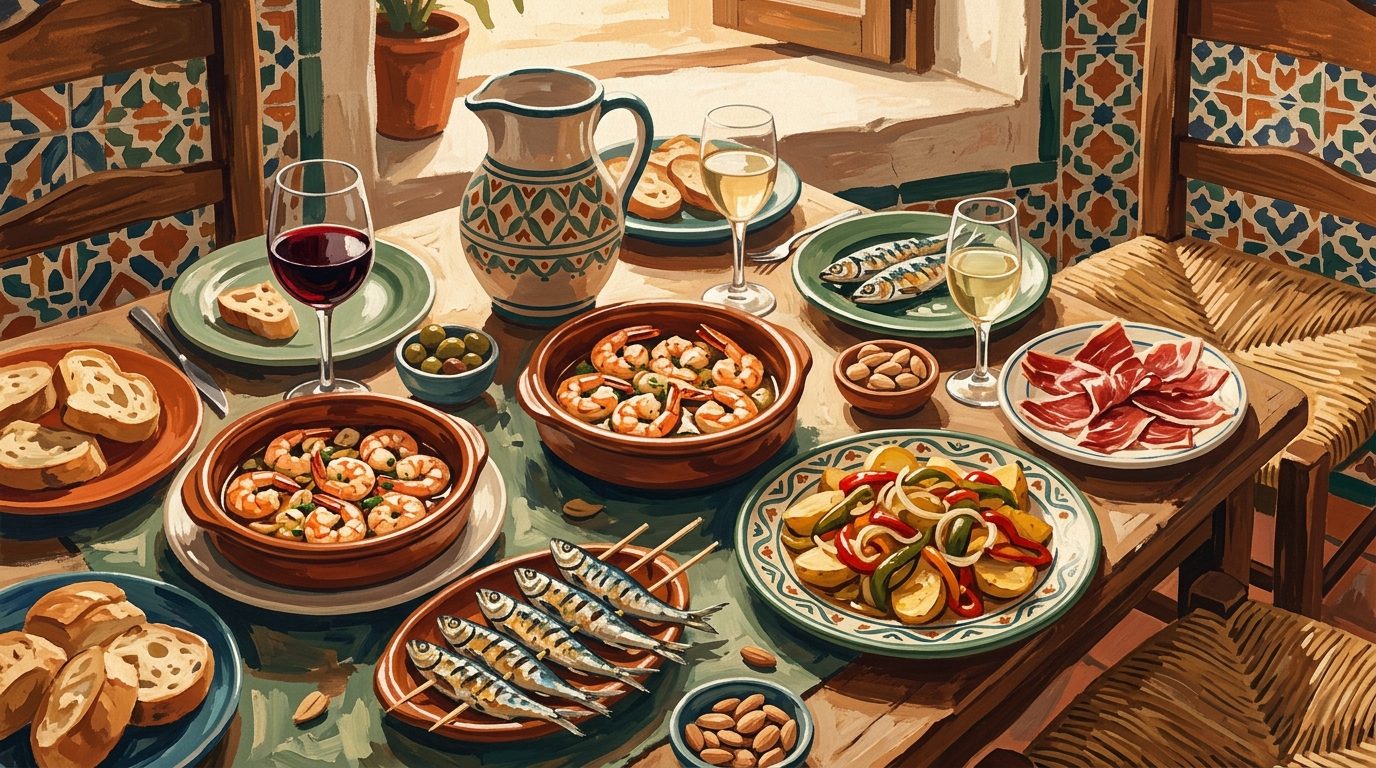
After exploring the ramparts, head back down into the Medina (the old town) for some of Almería's famous tapas. Unlike much of Andalucía, Almería maintains the tradition of providing a free tapa of your choice with every drink.
Casa Puga: Located on Calle Jovellanos, this is the oldest tapas bar in the city. It is a traditional spot with marble counters and cured hams hanging from the ceiling. Try the gambas rojas (red prawns) or the bacalao (salt cod). It is usually busy, so be prepared to stand at the bar.
Tetería Almedina: Set just below the fortress walls, this Moroccan-style tea house offers a tranquil escape. It serves excellent couscous, tajines, and a wide variety of Moorish teas and sweets. The rooftop terrace provides an intimate view of the Alcazaba walls as they begin to glow in the evening light.
La Guajira: This is a cultural association and flamenco venue located right at the foot of the Alcazaba. While primarily known for its evening performances, its terrace offers arguably the best view of the fortress in the city. It is a fantastic place for a sundowner after a day of sightseeing.
Where to Stay
For a stay that complements the historical atmosphere of the Alcazaba, Aire Hotel & Ancient Baths is the premier choice. Located in a converted 19th-century palace in the Plaza de la Constitución, it features a rooftop pool with direct views of the fortress and an underground spa built into ancient vaults. Alternatively, Hotel Catedral offers modern comforts within a beautiful neo-Mudéjar building right next to the city’s fortified cathedral, placing you perfectly for exploring the old town's narrow alleys.