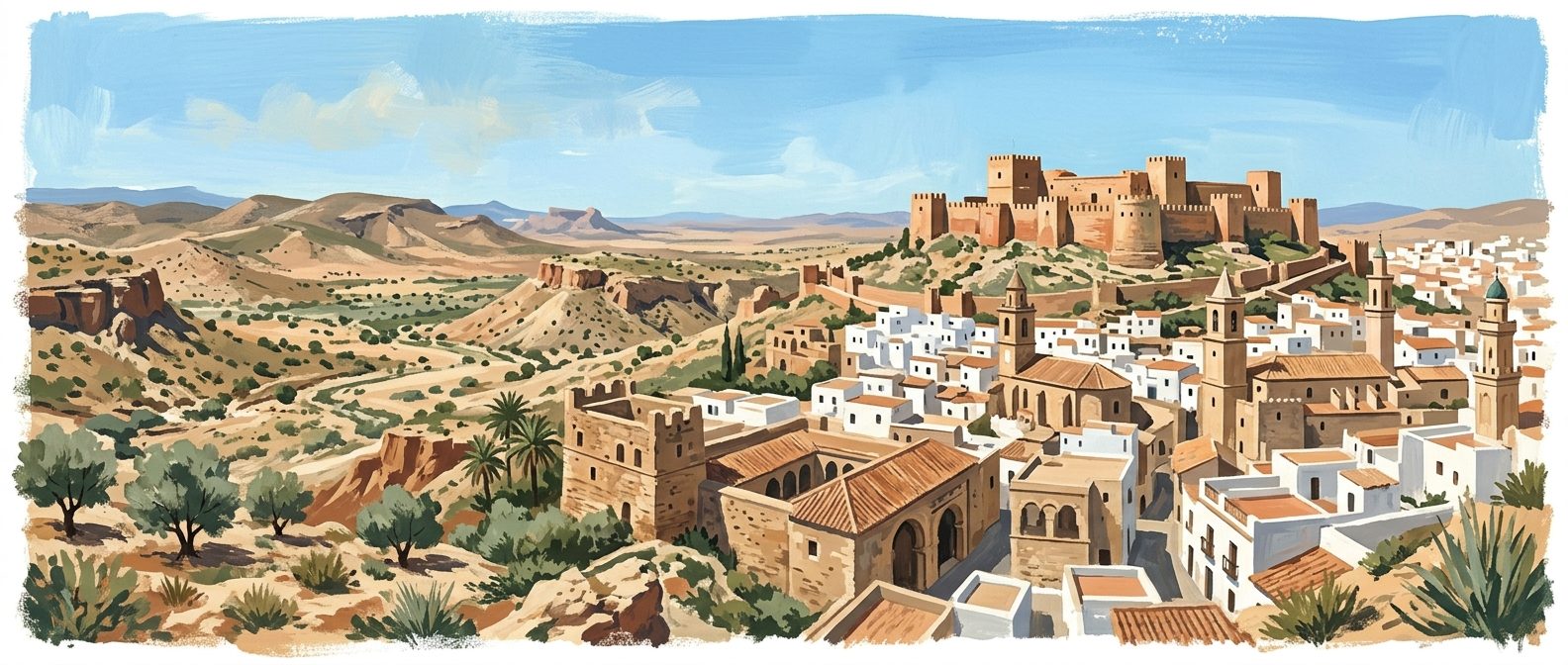
Almería City serves as the gateway to the cinematic "Hollywood of Europe", where the stark beauty of the Tabernas Desert has hosted legends from Clint Eastwood to Indiana Jones. Following the trail of celluloid history leads from city museums to dusty frontier towns that remain as evocative today as they were in the 1960s.
For decades, the arid landscapes surrounding Almería City have played a starring role on the silver screen. While the city itself is a coastal Mediterranean capital, its proximity to the only true desert in Europe transformed it into a global hub for the film industry during the mid-20th century. Over 300 films have been shot in this corner of Andalucía, ranging from the gritty Spaghetti Westerns of Sergio Leone to epic blockbusters like Lawrence of Arabia, Indiana Jones and the Last Crusade, and more recently, Game of Thrones.
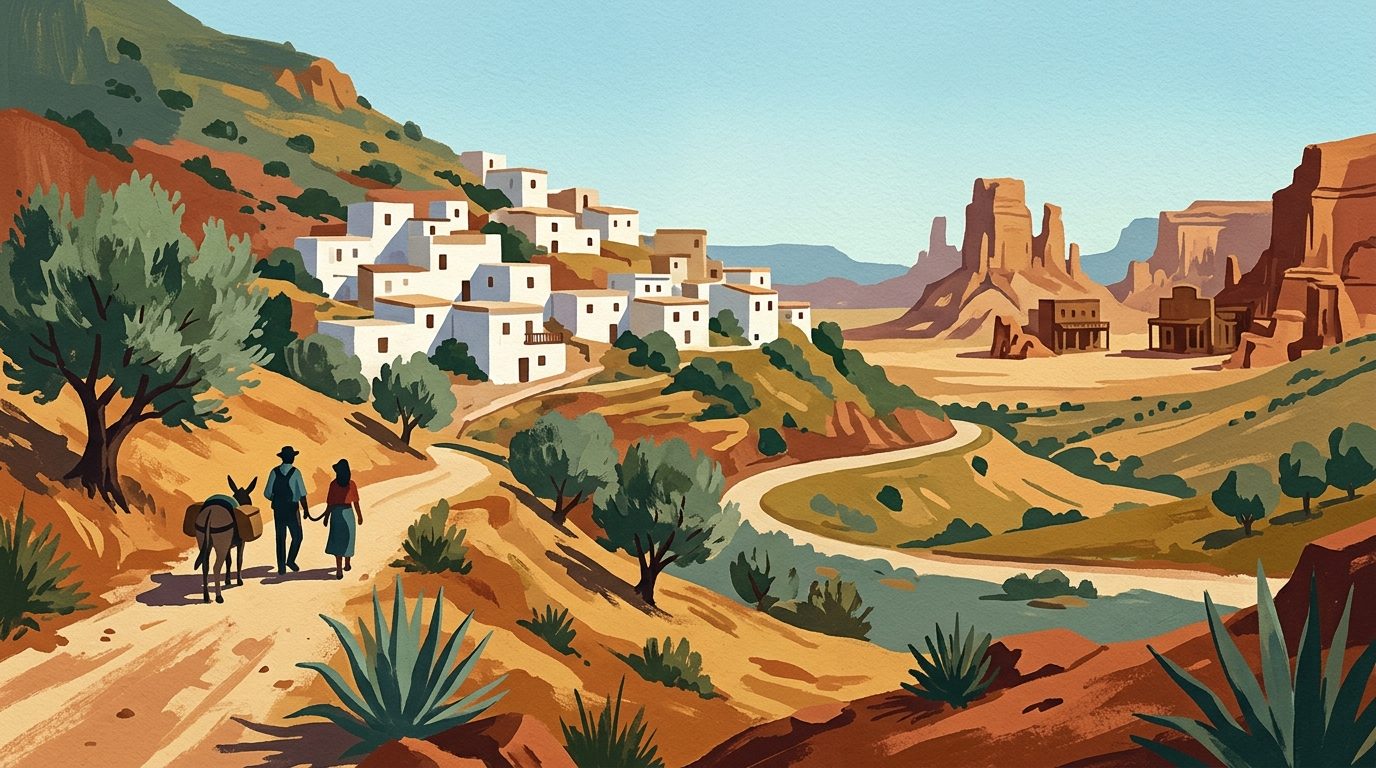
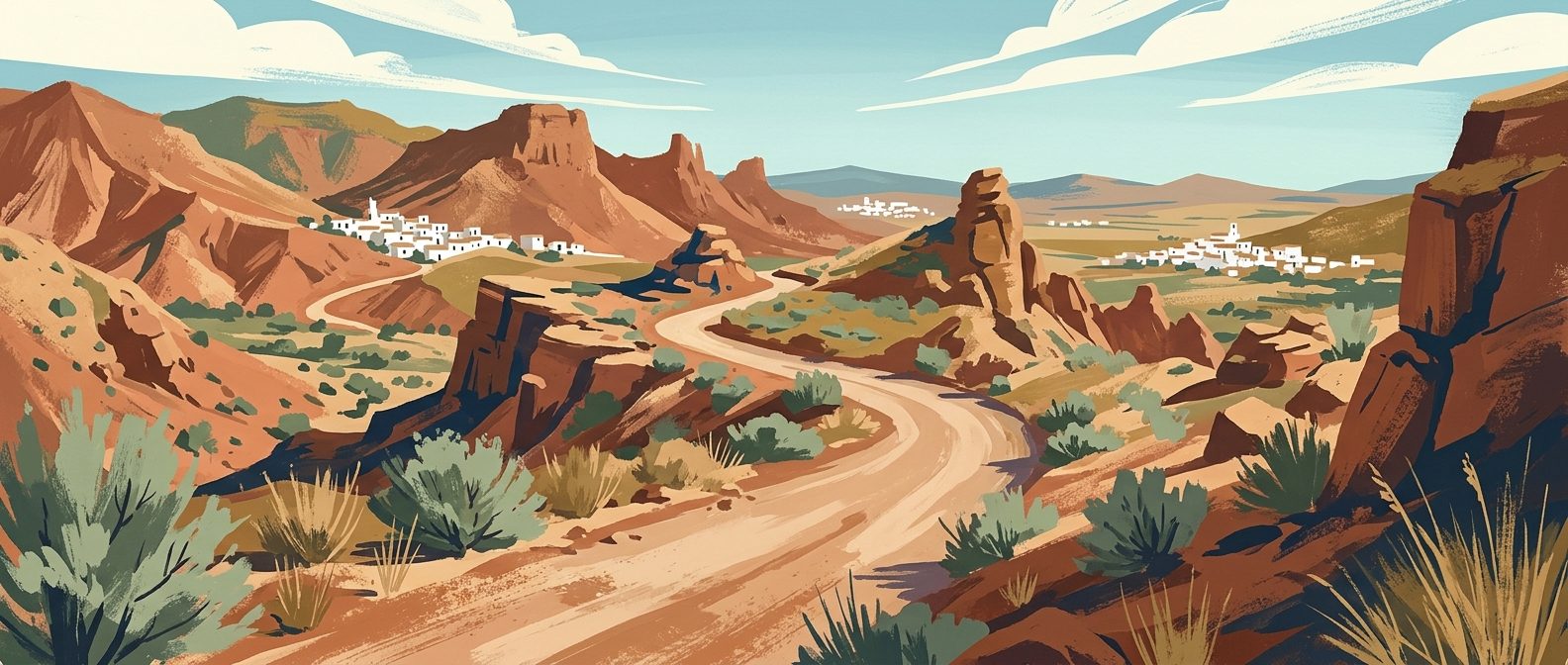
To understand why directors have long been drawn to this province, one must look at the unique geology of the Tabernas Desert. The landscape is a sprawling expanse of badlands, canyons, and dry riverbeds that perfectly mimic the American West or the North African wilderness. Today, Almería City embraces this legacy, offering visitors a clear path from urban film museums to the legendary sets still standing in the dust of the Tabernas interior.
Exploring Almería City's Film Heritage
Before heading out into the desert, the city itself provides several key locations that contextualise the region's relationship with the film industry. Walking through the centre, you will find traces of the actors and directors who once frequented the local cafes and hotels during the height of the Western boom.
Casa del Cine (The House of Cinema)
Located in the Villablanca district, the Casa del Cine is an essential stop for anyone interested in the human side of Almería's film heritage. This 19th-century villa, formerly known as Cortijo Romero, served as a residence for stars such as Clint Eastwood and Brigitte Bardot. However, its most famous guest was John Lennon, who stayed here in 1966 while filming How I Won the War. It was within these walls that Lennon famously composed "Strawberry Fields Forever". The museum now features immersive rooms that recreate the atmosphere of 1960s film sets and the private life of the stars who called Almería home.
Paseo de las Estrellas (The Walk of Fame)
Located in front of the Cervantes Theatre, Almería's own Walk of Fame pays tribute to the international icons who have worked in the province. Each star marks a significant contribution to the local industry, with names including Ridley Scott, Terry Gilliam, Sophia Loren, and Arnold Schwarzenegger. It is a simple but effective reminder that this city was once the busiest film production centre outside of California and London.
The Tabernas Desert: A Cinematic Wilderness
A thirty-minute drive north of the city takes you into the heart of the Tabernas Desert. Spanning 280 square kilometres, this protected natural space is home to the "Western Towns", original film sets that were preserved and converted into tourist attractions. Each set offers a slightly different experience, from family-friendly theme parks to more authentic, working studios.
Oasys MiniHollywood
Originally known as "Yucca City", this set was constructed for Sergio Leone's 1965 masterpiece, For a Few Dollars More. It is the most developed of the parks, featuring a complete Western town with a sheriff's office, a bank, a funeral parlour, and a large saloon. Today, it operates as a full-scale theme park, complete with a zoological reserve housing over 800 animals and a swimming pool complex. The daily stunt shows in the main square are highly entertaining, featuring gunfights and horse stunts that recreate classic Western tropes.
Fort Bravo (Texas Hollywood)
If you prefer a more rugged and less polished experience, Fort Bravo is the site to visit. Situated deep in a canyon, this set feels more like a working studio than a theme park. It includes an American Western town, a Mexican pueblo, and a wooden cavalry fort. Because it is still used for active filming, the atmosphere is incredibly atmospheric and quiet between showtimes. The horse-drawn carriage rides included in the entrance fee allow you to explore the surrounding desert tracks where many famous chase scenes were captured.
Western Leone
The smallest of the three sets, Western Leone was built specifically for Once Upon a Time in the West. The centrepiece is the large red ranch house (McBain's House), which remains in excellent condition. While it lacks the scale of Oasys, it provides a more intimate look at the specific cinematography of Sergio Leone's films. It is a quieter site, making it a favourite for photographers looking to capture the desert light without the crowds.
Practical Information
Opening Times & Ticket Prices
Prices and hours can vary by season, so it is wise to check the official websites for Oasys MiniHollywood, Fort Bravo, and Western Leone before setting off, as seasonal hours in the desert are subject to heat warnings. Generally, the following applies (check on the operators' websites before travelling):
- Casa del Cine: Open Tuesday to Saturday (10:30 to 13:30 and 17:00 to 20:00 in winter; 18:00 to 21:00 in summer). Sundays 10:30 to 13:30. Closed Mondays. Entry is approximately €3.
- Oasys MiniHollywood: Usually open 10:00 to 18:00 (winter) or until 21:00 (summer). Tickets are roughly €30 for adults at the gate, with discounts for online bookings.
- Fort Bravo: Open daily 09:00 to 19:30. Entry is approximately €21 for adults.
- Western Leone: Open daily 10:00 to 20:00. Entry is approximately €11.
How to Get There
By Car: This is the most efficient way to access the desert. From Almería City, take the A-92 motorway north towards Tabernas. Each film set is clearly signposted off the N-340a road. Parking at all desert sites is free for ticket holders.
By Bus: ALSA operates several buses daily from Almería's Estación Intermodal to the town of Tabernas. The journey takes about 45 to 60 minutes depending on the service (check the ALSA website for current timetables and prices before travelling). However, the film sets are located several kilometres from the town centre, so you will need to arrange a taxi from the Tabernas town bus stop. Avoid walking the several kilometres to the sets during summer months (June to September) due to extreme desert temperatures and lack of shade.
Where to Eat Nearby
For a traditional experience within Almería City, head to Taberna Nuestra Tierra near the Cathedral. They specialise in local tapas with a modern twist and often have displays related to the city's culture. If you are already in the desert, Restaurante Las Heras in the town of Tabernas is a superb choice. It is a local institution known for its hearty plato alpujarreño and slow-cooked meats, providing a refreshing contrast to the quick-service food found inside the theme parks. Another excellent option is Oro del Desierto, which offers a more refined menu and produces some of the world's best organic olive oil on-site.
Where to Stay
Staying in Almería City allows you to enjoy the coastal evening breeze after a day in the heat of the desert. Hotel Aire de Almería is a stylish choice located in the old town, featuring a rooftop pool with views of the Alcazaba. For those who want to fully immerse themselves in the Western experience, Fort Bravo offers basic but comfortable wooden cabins (cabañas) within the film set, allowing you to wake up in the middle of a film set as the sun rises over the desert dunes.