
Food & drink · Cádiz
Where to Eat in Cádiz: From Atlantic Seafood to Market Tapas
Discover the salt-tangled flavours of Europe’s oldest city, where bluefin tuna, paper cones of fried fish, and crispy shrimp fritters define the culinary landscape.
By Dan · Updated 16 July 2026 · 6 min read
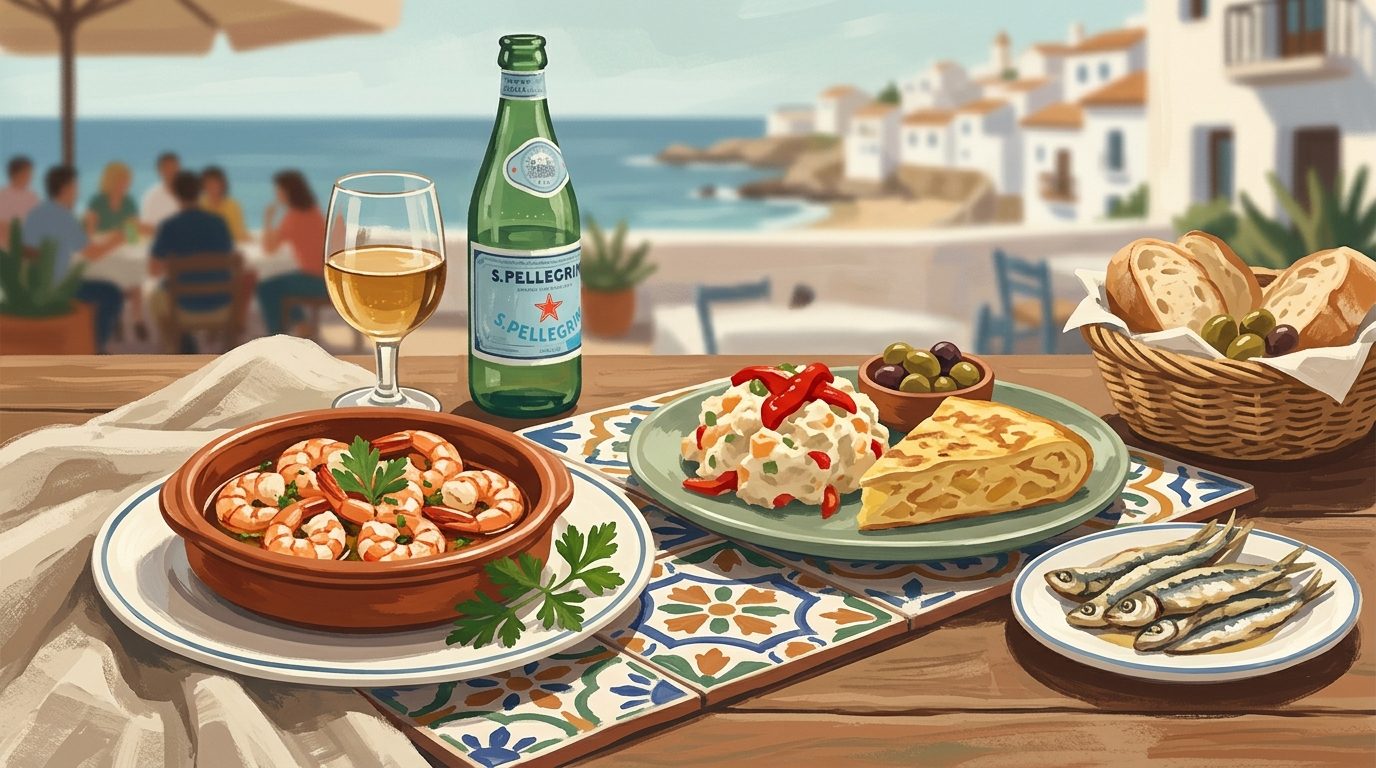
Cádiz is a city that tastes of the Atlantic, where the daily catch dictates the menu and the simple joy of a paper cone of fried fish outweighs any fine-dining pretension.
Cádiz, often called La Tacita de Plata (the little silver cup), is a city defined by its relationship with the sea. Surrounded almost entirely by water, its culinary identity is shaped by the tides of the Atlantic and the ancient traditions of the Almadraba, a Phoenician-era method of catching bluefin tuna. Eating here is rarely a formal affair. It is a city of standing at mahogany bars, peeling prawns with salt-crusted fingers, and finding shade in narrow limestone alleys with a glass of chilled Manzanilla sherry.
While other Andalucían cities might focus on heavy meats or inland stews, the Gaditano (a native of Cádiz) diet revolves around the lonja (fish market). You will find an obsession with texture: from the crunch of pescaíto frito (fried small fish) to the buttery silkiness of tuna belly. The food scene here doesn't rely on trends; it relies on the quality of ingredients brought onto the docks at dawn. For anyone navigating the chaotic energy of the central market or tucked into a tavern in the fishing quarter of La Viña, the focus remains firmly on the freshness of the haul.
The Heart of the City: Mercado Central
The Mercado Central de Abastos is the undisputed focal point of food culture in Cádiz. Reconstructed in the early 21st century while retaining its 1830s neoclassical bones, it is one of the oldest covered markets in Spain. By morning, it is a place of business, where locals haggle over piles of erizos de mar (sea urchins) and gleaming corvina (meagre). By midday, the Rincón Gastronómico (gastronomic corner) opens, turning the market into an open-air food hall.
This is the best place to start any culinary tour. At Gadisushi (€), you can sample the local bluefin tuna prepared with Japanese precision, highlighting the quality of the descargamento (the leanest part of the tuna). For something more traditional, head to Argüeso (€), where you can pair a glass of dry Fino with a plate of chicharrones de Cádiz, thinly sliced, slow-roasted pork seasoned with lemon and oregano. The beauty of the market is the ability to graze, moving from stall to stall, sampling local goat cheeses from the Sierra de Grazalema alongside Atlantic oysters.
The Art of Fried Fish: Freidurías
You cannot claim to have eaten in Cádiz without visiting a freiduría. These are traditional fried fish shops where the seafood is coated in seasoned flour (usually a mix of wheat and chickpea) and flash-fried in olive oil. It is typically sold by weight and served in a cartucho, a conical paper wrapper that absorbs the excess oil and allows you to eat while walking.
Freiduría Las Flores (€€) on the Plaza de las Flores is the local institution. While there is a seated area, the authentic experience involves joining the queue at the counter. Order the variado to get a mix, but make sure it includes cazón en adobo. This is dogfish marinated in vinegar, cumin, oregano, and garlic before being fried. In Cádiz, it is often called bienmesabe (literally "it tastes good to me"), and it provides a sharp, acidic punch that cuts through the richness of the frying. Look out also for puntillitas (baby squid) and acedías (small soles), which should be eaten whole, fins and all, for maximum crunch.
La Viña: Tapas and Tradition
The Barrio de la Viña is the old fishing quarter, a labyrinth of streets on the western edge of the old town that leads to La Caleta beach. This is the spiritual home of the city's Carnival and its most traditional tapas bars. The atmosphere here is thick with the scent of sea air and frying oil.
Taberna Casa Manteca (€€) is perhaps the most famous bar in the province. Its walls are plastered with bullfighting memorabilia and faded flamenco posters. There are no tables in the main bar; you jostle for space at the counter. The speciality here is embutidos (cured meats) served on squares of wax paper. Try the mojama (salt-cured tuna loin), often referred to as the jamón of the sea. It has a concentrated, salty depth that requires a cold beer or a dry sherry to balance.
For a more refined take on Viña cuisine, El Faro de Cádiz (€€€) is essential. While the dining room is formal, the bar area offers a more accessible way to experience some of the best seafood in Andalucía. It was here that many say the modern standards for the city's most famous dish were set.
The Iconic Tortillitas de Camarones
The tortillita de camarones (shrimp fritter) is the culinary emblem of Cádiz. Unlike a thick Spanish omelette, these are thin, lacy, and impossibly crisp discs made from a batter of wheat and chickpea flour, parsley, spring onions, and tiny, whole camarones (shrimp). They should be translucent in places and never greasy.
The secret to a great tortillita is the temperature of the oil and the thinness of the batter. Ventorrillo del Chato (€€€), located on the strip of land connecting the old town to the mainland, has been serving these since the 18th century. However, back in the city centre, Bar La Sorpresa (€€) offers a fantastic version alongside an incredible selection of granel (straight from the barrel) sherries. Eating a tortillita is a sensory experience: the snap of the batter followed by the sweet, salty burst of the tiny shrimp.
Ordering Like a Local
Eating in Cádiz follows a specific rhythm. Lunch is the main event, usually starting around 2:00 PM. If you are heading to a popular spot like Casa Manteca, arrive at 1:30 PM to secure a spot at the bar. When ordering, remember that a ración is a full plate, a media ración is a half plate, and a tapa is a small snack. In Cádiz, the media ración is often the best way to sample a variety of dishes without over-ordering.
When it comes to drinks, skip the red wine. The humidity and heat demand something colder. Ask for a caña (a small draught beer) or, better yet, a copa de Fino or Manzanilla. These dry sherries are produced just across the bay in El Puerto de Santa María and Sanlúcar de Barrameda. They are the perfect accompaniment to salty seafood, acting as a palate cleanser between bites of fried fish. If you want something longer and more refreshing, a rebujito (sherry mixed with lemon-lime soda and mint) is the local choice during festivals and hot afternoons.
Where to Find the Best
Barrio de la Viña
Taberna Casa Manteca (Calle Corralón de los Carros, 66): Go for the chicharrones and the atmosphere. It is the quintessential Cádiz experience. (€€)
El Faro de Cádiz: Head to the bar for tortillitas de camarones and papas aliñás (seasoned potatoes with tuna and onions). (€€€)
Taberna Las Banderas: A great spot for local stews and fresh Atlantic fish in a slightly quieter setting than Manteca. (€€)
El Pópulo and the Centre
Bar La Sorpresa: An old-school taberna specialising in tuna and sherry. Their atún en manteca (tuna preserved in lard) is a revelation. (€€)
Freiduria Las Flores I: The gold standard for fried fish. Buy a cartucho and eat it on the steps of the post office across the square. (€)
La Curiosidad de Mauro Barreiro (Calle Veedor, 10): For those looking for something modern, Mauro offers creative twists on Gaditano classics, like his signature tuna dishes. (€€€)
Playa de la Victoria (New Town)
Balandro: Located overlooking the bay, this is a local favourite for a long Sunday lunch. The tapas menu at the bar is extensive and high quality. (€€)
Arrozante: If you are craving rice, this is one of the better spots on the promenade to find a proper arroz a banda (fish-based rice). (€€€)
Arte Serrano: Excellent for grilled meats and Iberian ham if you need a break from the constant stream of seafood. (€€)
Practicalities
For more inspiration on what to see and do between meals, visit the official Cádiz Tourism Board website.
Last reviewed: 21 June 2026 · Editorial policy
Related guides
Master the Art of the Andalucían Kitchen: The Best Cooking Classes in Southern Spain (2026 Guide)
Discover the secrets of the Andalucían kitchen, from masterclasses in the markets of Sevilla to sherry-infused cooking in the hills of Cádiz.
7 min read
Where to Eat in Málaga: From Beachfront Espetos to Soho Small Plates
Forget its reputation as a mere transit point; Málaga has transformed into one of Spain’s most compelling food cities, balancing salt-crusted beach traditions with a sharp, modern dining scene.
7 min read
Where to Eat in Huelva: From Atlantic Prawns to the Heights of Jabugo
Discover the culinary secrets of Spain's southwestern corner, where the Atlantic's finest white prawns meet the world's best acorn-fed ham.
6 min read
A Guide to Eating in Almería: Tapas, Seafood, and Desert Traditions
Discover the unique food culture of Almería, from the tradition of free-choice tapas to the legendary 'cherigan' toast and the freshest red prawns in the Mediterranean.
7 min read
A Local’s Guide to Eating and Drinking in Jerez de la Frontera
Discover the authentic taste of Jerez de la Frontera, from the traditional tabancos serving sherry from the cask to the rich, slow-cooked stews of the Santiago quarter.
7 min read
Beyond the Tapas Bar: A Journey Through the Flavours of Andalucía
Discover the essential dishes of Southern Spain, from the chilled salmorejo of Córdoba to the smoky espetos of the Málaga coast.
7 min read
Newsletter
More stories from Andalucía
Weekly notes, seasonal picks, and the next guides worth bookmarking.