
Food & drink · Granada
A Serious Eater's Guide to Granada: From Free Tapas to Fine Dining
Beyond the Alhambra lies a city where the drink-to-food ratio remains the best in Spain, anchored by a free tapas culture that rewards the adventurous diner.
By Dan · Updated 16 July 2026 · 7 min read
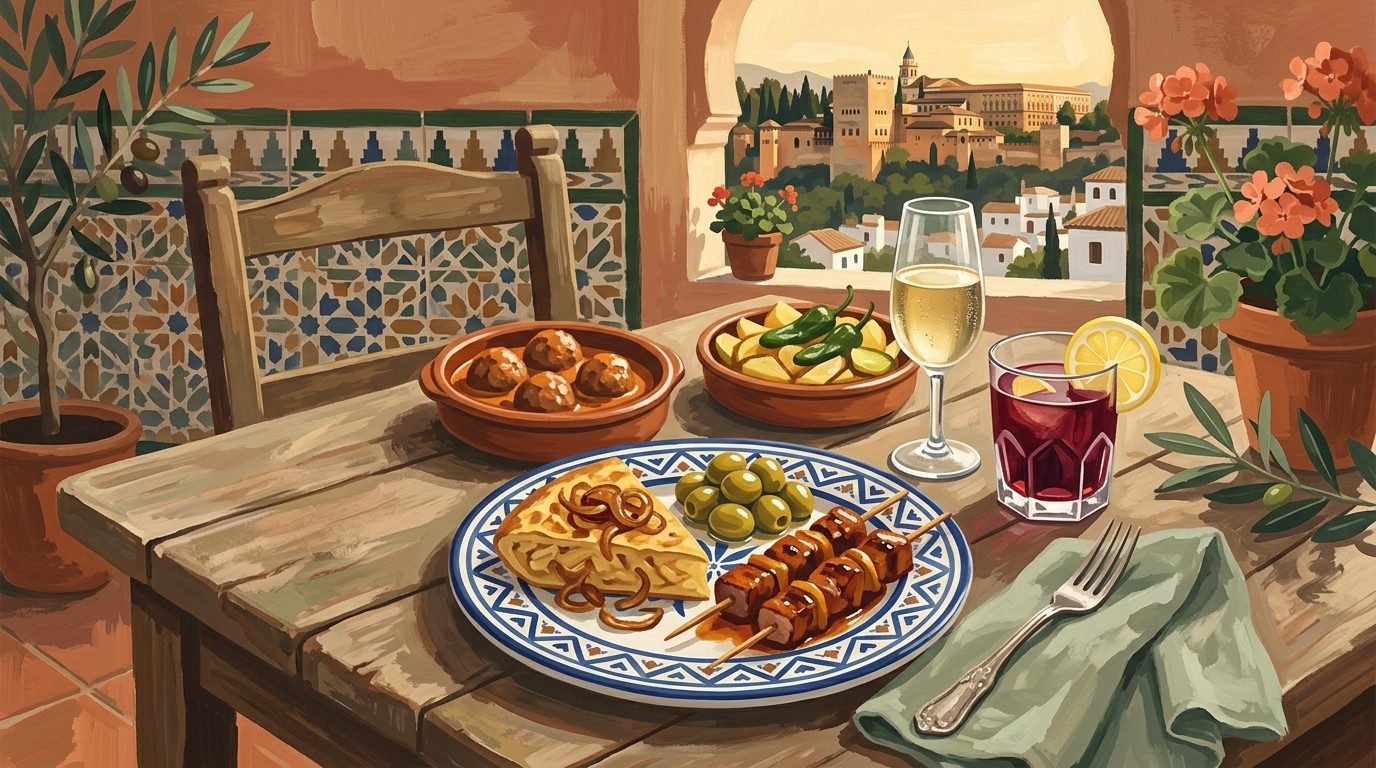
Beyond the Alhambra lies a city where the drink-to-food ratio remains the best in Spain, anchored by a free tapas culture that rewards the adventurous diner. Granada is a place where you rarely need a menu to start your evening, provided you know which street corner to turn.
Granada occupies a unique position in the Andalucían kitchen. Positioned at the foot of the Sierra Nevada mountains and only an hour from the Tropical Coast, its larder is stocked with everything from snow-cured hams to chirimoyas (custard apples). But for most visitors, the culinary identity of the city is defined by one glorious, enduring tradition: the free tapa. Unlike in Sevilla or Málaga, where you pay for every small plate, Granada continues to serve a complimentary dish with every round of drinks. It is a city that invites you to crawl from bar to bar, letting the kitchen decide your menu.
While the concept of free food sounds like a recipe for mediocrity, the competition in Granada is fierce. A bar that serves a dry slice of tortilla or a basic bowl of olives won't survive the scrutiny of the locals for long. The standard is exceptionally high, with many establishments serving miniature versions of their best stews, seafood, or fried delicacies. You can cobbled alleys of the Albaicín or the wide boulevards of the modern centre, the secret to eating well here is to move often and trust the house specialities if you are navigating the steep.From the moorish flavours of the old Arab quarter to the contemporary wine bars of Realejo, this is how to navigate the city’s tables.
The Art of the Free Tapa
To understand Granada, you must understand the rules of engagement for tapas. Generally, you do not choose your tapa. You order a caña (a small glass of beer) or a glass of wine, and the waiter brings a plate. In many traditional spots, the food gets more substantial with each subsequent round. The first drink might bring a plate of jamón de Trevélez (ham from the high-altitude villages of the Alpujarra), while the second yields carne en salsa (meat in gravy) or migas (fried breadcrumbs with peppers and chorizo).
Los Diamantes (€€) is the quintessential example of this culture. While they now have multiple locations across the city, the original site on Calle Navas remains legendary. This seafood bar is loud, frantic, and perpetually packed. Order a cold Alhambra beer and you will likely receive a plate of piping hot, perfectly fried boquerones (anchovies) or gambas (prawns). There are no chairs; you stand at the bar and discard your napkins on the floor as per tradition. It is fast-paced eating at its best.
For something slightly more refined, head to La Tana (€€) in the Realejo district. This is widely considered one of the finest wine bars in Spain. The owners manage a cellar that would make a sommelier weep with joy. The tapas here are simple but focus on extreme ingredient quality: think ripe tomatoes drizzled with olive oil from nearby Jaén, or thin slices of lomo (pork loin). It is a temple to the produce of Andalucía.
Navigating Plaza Nueva and the City Centre
The area around Plaza Nueva is highly popular with visitors, which sometimes leads to the assumption that dining options there are overpriced or tourist-orientated. While there are plenty of tourist traps to avoid, the centre is also home to some of the city's most historic institutions. Bodegas Castañeda (€€) is an essential stop. It is a cavernous, old-world bar where vermouth is served straight from the barrel. Their tablas (platters) of cheeses, cured meats, and pâtés are excellent, but the real draw is the atmosphere of a bygone era.
Just a few minutes away is Los Manueles (€€), which has been serving the city since 1917. While they have several locations, the traditional site remains a favourite for their famous giant croquetas. These are not the small bites you find elsewhere; they are substantial, creamy, and packed with flavour. It is also one of the best places to try Tortilla de Sacromonte, a local omelette traditionally made with mutton brains and testicles. This is a dish for the truly adventurous eater who wants to taste the history of the city's cave-dwelling communities.
The Creative Heart of Realejo
Realejo, the old Jewish quarter, has become the hub for a more modern style of dining. Here, the traditional tapas culture exists alongside craft beer bars and contemporary bistros. Rosario Varela (€€) is a prime example of this evolution. The decor is industrial-chic, and the food takes a more global approach. You might find a bao bun alongside a plate of traditional habas con jamón (broad beans with ham), a staple Granada dish that showcases the sweetness of the local beans.
In the same neighbourhood, Puesto 43 (€€) offers a different experience. Originally a fishmonger, it transitioned into a restaurant that serves some of the freshest seafood in the city. The quisquillas de Motril (small, sweet blue prawns from the coast) are a local delicacy that should be ordered whenever they appear on the menu. They are usually served raw or very lightly poached to preserve their delicate flavour.
Albaicín: Sunset Views and Moorish Flavours
The Albaicín is the ancient Moorish quarter, a labyrinth of whitewashed houses and jasmine-scented squares. While many restaurants here trade on their views of the Alhambra, it is possible to find exceptional food away from the overlook points. Restaurante El Agua (€€€) is famous for its fondues, but it also offers a romantic setting that justifies the climb. However, if you want to eat like a local, seek out Bar Mascarones (€) on Calle Pagés. This is a no-frills neighbourhood spot where the caracoles (snails) are a local obsession during the season.
For a sit-down meal with a serious kitchen, El Huerto de Juan Ranas (€€€) provides the definitive view of the Alhambra palaces. While you pay for the location, the kitchen focuses on traditional Granadino recipes with modern execution. Look for dishes featuring granada (pomegranate), the fruit that gave the city its name and frequently appears in local salads and desserts.
Ordering Like a Local
To eat well in Granada, you need to understand the vernacular. When you enter a bar, don't wait to be seated; find a gap at the counter or a small table. If you want a small beer, ask for a caña. If you are particularly thirsty, ask for a tubo (a tall glass) or a tercio (a 330ml bottle). If you are ordering wine, specify if you want a blanco (white) or tinto (red), but also look for Vinos de la Tierra de Granada to try something produced on the slopes of the Sierra Nevada.
When you want more than just the free tapa, you move into the world of raciones (full portions) and medias raciones (half portions). It is always wise to start with a half portion to see the size, as Granadino kitchens are notoriously generous. If the bar is busy, do not be afraid to catch the waiter's eye: service in Granada is professional and fast, but it requires a bit of assertiveness during the peak hours of 2:00 PM for lunch and 9:00 PM for dinner.
Where to Find the Best
The City Centre
Cunini (€€€): A legendary seafood institution near the Cathedral. It is the place to go for a formal sit-down lunch involving salt-baked sea bass or spider crab. The service is old-school and impeccable.
Bar Provincias (€€): Tucked away in a side street near the Alcaicería market, this was a favourite of the singer Enrique Morente. It is famous for its fried fish and its unpretentious, friendly atmosphere.
Realejo
La Botillería (€€): A fantastic spot for those who want a more modern take on Andalucían classics. Their meat dishes, particularly the Iberian pork, are sourced from the best producers in the region.
El Quinteto (€€): Known for its creative presentation and fusion of local ingredients with international techniques. It is a great choice if you want a break from the traditional fried tapas circuit.
Albaicín & Sacromonte
Venta El Gallo (€€€): Located in the Sacromonte caves, this is primarily known for flamenco, but their kitchen serves authentic sacromontano dishes that are worth the trip alone. Try the habas con jamón.
Casa Torcuato (€€): A classic Albaicín institution with a lovely terrace. It is the perfect place to spend a Sunday afternoon sharing a large paella or a platter of fried calamari with friends.
Last reviewed: 21 June 2026 · Editorial policy
Related guides
Master the Art of the Andalucían Kitchen: The Best Cooking Classes in Southern Spain (2026 Guide)
Discover the secrets of the Andalucían kitchen, from masterclasses in the markets of Sevilla to sherry-infused cooking in the hills of Cádiz.
7 min read
Where to Eat in Málaga: From Beachfront Espetos to Soho Small Plates
Forget its reputation as a mere transit point; Málaga has transformed into one of Spain’s most compelling food cities, balancing salt-crusted beach traditions with a sharp, modern dining scene.
7 min read
Where to Eat in Cádiz: From Atlantic Seafood to Market Tapas
Discover the salt-tangled flavours of Europe’s oldest city, where bluefin tuna, paper cones of fried fish, and crispy shrimp fritters define the culinary landscape.
6 min read
Beyond the Tapas Bar: A Journey Through the Flavours of Andalucía
Discover the essential dishes of Southern Spain, from the chilled salmorejo of Córdoba to the smoky espetos of the Málaga coast.
7 min read
The Art of the Tapeo: A Local Guide to Tapas Culture in Andalucía
Discover the unwritten rules of the Andalucían tapeo, from the legendary free tapas of Granada to the historic tabernas of Sevilla.
6 min read
A Local’s Guide to Eating and Drinking in Jerez de la Frontera
Discover the authentic taste of Jerez de la Frontera, from the traditional tabancos serving sherry from the cask to the rich, slow-cooked stews of the Santiago quarter.
7 min read
Newsletter
More stories from Andalucía
Weekly notes, seasonal picks, and the next guides worth bookmarking.