
Food & drink
Beyond the Tapas Bar: A Guide to Michelin Stars and Fine Dining in Andalucía
Discover the sophisticated world of Andalucían fine dining, from the maritime experiments of Ángel León to the historical Al-Andalus flavours of Paco Morales.
By Dan · Updated 14 July 2026 · 7 min read
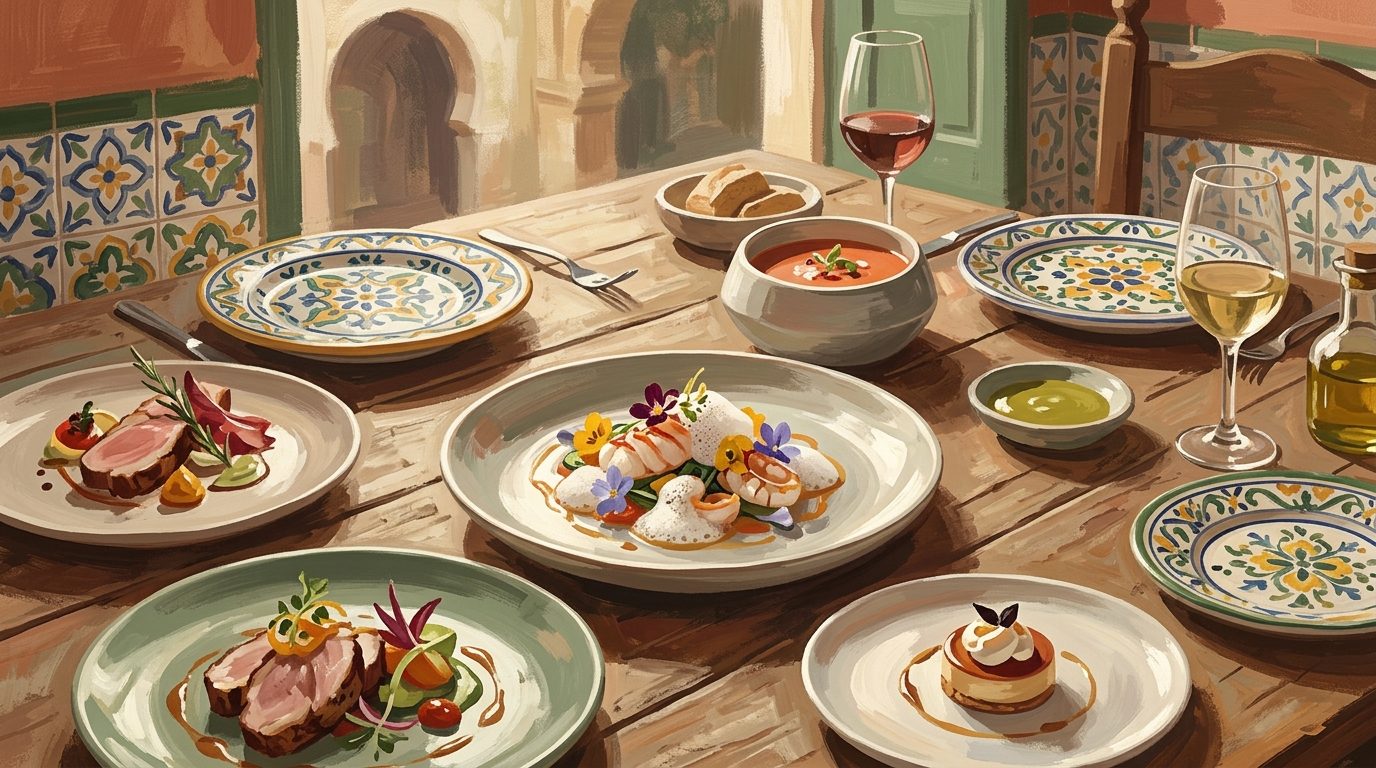
Beyond the humble corner tavern, the south of Spain has evolved into a powerhouse of culinary innovation, home to visionaries who are redefining the limits of Atlantic and Mediterranean flavours. From the maritime experiments of El Puerto de Santa María to the historical reconstructions of Córdoba, fine dining in Andalucía offers a sophisticated journey through the region's diverse produce.
For decades, the international perception of eating in Andalucía was limited to fried fish served on wax paper or a plate of thinly sliced ham in a crowded bar. While these traditions remain the soul of the region, a quiet revolution has taken place over the last twenty years. Today, Andalucía is one of the most exciting gastronomic destinations in Europe, holding a significant collection of Michelin stars that reflect a unique blend of ancient heritage and avant-garde technique.
The culinary landscape here is defined by its geography. To the west, the Atlantic Ocean provides the atún de almadraba (wild bluefin tuna caught using an ancient Phoenician netting system), while the Mediterranean to the east offers smaller, sweeter shellfish, such as the famous red prawns of Garrucha. Inland, the mountains of Ronda and the olive groves of Jaén provide a larder of game, wild mushrooms, and some of the world's finest extra virgin olive oils. Fine dining in this region isn't just about white tablecloths and hushed service; it is an exploration of these landscapes through the lens of chefs who are deeply connected to their terruño (the specific local environment or terroir).
The Titans: Dani García and the Marbella Connection
No discussion of Andalucían fine dining is complete without Marbella-born Dani García. He was the first to bring three Michelin stars to the region with his eponymous restaurant. However, in a move that shocked the culinary world in 2019, he chose to close his three-star flagship just weeks after receiving the top honour, stating he wanted to bring his cooking to a wider audience.
García remains a central figure, and his influence is visible across the Costa del Sol. While he now runs a global empire, his roots are firmly planted in the recetario andaluz (Andalucían cookbook). His restaurant Tragabuches in Marbella is a homage to the traditional cooking of the Serranía de Ronda, serving dishes like rabo de toro (oxtail) and suckling pig with a refined, modern touch. For a different side of his empire, El Coleccionista offers an intimate, high-end cocktail experience (check on the operator's website before travelling), while his wider group continues to champion local delicacies like quisquillas (blue-edged prawns from Motril).
Ángel León: The Chef of the Sea
In El Puerto de Santa María, located in the Bay of Cádiz, Ángel León operates Aponiente, a three-Michelin-starred restaurant housed in a converted 19th-century tide mill. León is often described as a visionary for his work with the ocean. He doesn't just cook fish; he treats the sea as a laboratory. He was the first chef to introduce marine plankton as a human food ingredient and has developed "fish charcuterie", creating chorizo and morcilla (black pudding) entirely from marine species that were previously discarded as descarte (bycatch).
Eating at Aponiente is a theatrical experience. You might be served a "sea pear" that turns out to be a cleverly disguised mollusc or a dessert made with sea honey. His commitment to sustainability and his ability to extract intense, savoury flavours from the Atlantic have made him a global icon. For a slightly more accessible version of his genius, his second restaurant in the same town, Alevante, also holds a Michelin star and focuses on the classic hits from Aponiente's history.
Paco Morales and the Flavours of Al-Andalus
In Córdoba, Paco Morales is conducting a different kind of experiment. At Noor, which holds three Michelin stars, Morales acts as a culinary archaeologist. He has spent years researching the food of the Caliphate of Córdoba, specifically the Al-Andalus period. Each season, he focuses on a different century, recreating the flavours of the era using only ingredients that would have been available in Spain at the time.
This means that for his early-century menus, you will find no tomatoes, potatoes, or peppers, as these arrived from the Americas much later. Instead, he utilises ras el hanout (a complex spice blend), bitter oranges, almonds, and saffron. The result is a menu that feels both ancient and incredibly futuristic. The aesthetic of the restaurant, inspired by the geometric patterns of the Mezquita, complements a dining experience that is arguably the most intellectual in all of Spain.
The Rise of the Inland Star: Jaén and Baeza
While the coast has long been the focus of tourism, some of the most exciting emerging chefs are found in the "sea of olives", the province of Jaén. This area is currently undergoing a gastronomic renaissance. Vandelvira (1 Michelin star), located in a stunning 16th-century Renaissance palace in Baeza, is led by Juan Carlos García. His cooking is a masterclass in using local olive oil as a central pillar, creating textures and flavours that are deeply rooted in the Jaén countryside.
In the city of Jaén itself, Malak and Dama Juana are proving that you don't need a sea view to attract the attention of the Michelin inspectors. These chefs are focusing on cocina de monte (mountain cooking), using wild herbs, partridge, and local legumes to create tasting menus that are sophisticated yet unpretentious. This inland movement represents a shift towards celebrating the rugged, agricultural heart of Andalucía.
Ordering Like a Local
When dining at this level in Andalucía, the menú degustación (tasting menu) is the standard format. Unlike the casual tapas crawl, these meals are endurance events, often lasting three to four hours. To eat like a local, always enquire about the maridaje (wine pairing). In this region, that almost certainly means Sherry. Do not make the mistake of thinking Sherry is only a sweet dessert wine; the dry Finos and Manzanillas are the perfect accompaniment to salty appetisers, while a nutty Amontillado or a complex Oloroso can stand up to heavy meat dishes.
Finally, embrace the sobremesa. This is the Spanish tradition of lingering at the table long after the meal has finished to talk, drink coffee, or enjoy a digestivo. In fine dining establishments, you are never rushed out of your seat. The table is yours for the afternoon or evening, and the conversation is considered just as important as the food.
Where to Find the Best
Marbella and the Costa del Sol
Marbella remains the undisputed capital of luxury dining in the south. Beyond the fame of Dani García, the city offers a high concentration of starred establishments. Skina, located in the narrow streets of the old town, holds two stars and is famous for its tiny size (seating only a handful of diners) and its incredible wine cellar. Messina, led by Mauricio Giovanini, offers a more contemporary, minimalist approach with a focus on juices and extracts to create clean, powerful flavours.
Málaga City
The provincial capital has shaken off its image as a mere gateway to the coast and is now a serious food destination. José Carlos García, situated in the modern Muelle Uno port area, provides a sleek setting to enjoy his refined take on Malagueño classics like gazpachuelo (a warm potato and fish soup). For something more experimental, Kaleja in the Jewish Quarter uses candela (open fire) to cook almost everything, resulting in deep, smoky flavours that pay tribute to the charcoal kitchens of the past.
Cádiz and El Puerto de Santa María
This area is the home of Atlantic cooking. Aside from the aforementioned Aponiente, you should look for LÚ Cocina y Alma in Jerez de la Frontera. Chef Juanlu Fernández combines his passion for French classical technique with the finest Cádiz produce, a style he calls "Avant-garde Andalusí-French." It is whimsical, precise, and entirely unique. In the city of Cádiz itself, Código de Barra explores the history of the city through creative dishes that reference its status as one of the oldest inhabited cities in Europe.
Ronda and the Mountains
The dramatic clifftop town of Ronda is home to Bardal, where chef Benito Gómez has earned two Michelin stars. His cooking is bold and honest, avoiding unnecessary flourishes to focus on the intensity of flavour from the Serranía de Ronda. The menu often features local mountain trout, Iberian pork, and wild game, served in a space that feels sophisticated yet connected to the rural landscape.
Last reviewed: 14 July 2026 · Editorial policy
Related guides
The Ultimate Sherry Triangle Route: A 3-Day Bodega Itinerary
Forget everything you think you know about sweet cream sherry gathering dust in a vicar’s cupboard. The true Sherry Triangle is a serious, terroir-driven journey through chalk-white soils, coastal winds, and centuries-old cathedral bodegas.
10 min read
A Gastronomic Guide to Andalucía: From Sherry Bodegas to Olive Groves
Discover the authentic flavours of Southern Spain, from the sherry bodegas of Jerez to the ancient olive groves of Jaén and the world-renowned ham of Jabugo.
6 min read
A Serious Eater's Guide to Granada: From Free Tapas to Fine Dining
Beyond the Alhambra lies a city where the drink-to-food ratio remains the best in Spain, anchored by a free tapas culture that rewards the adventurous diner.
7 min read
Master the Art of the Andalucían Kitchen: The Best Cooking Classes in Southern Spain (2026 Guide)
Discover the secrets of the Andalucían kitchen, from masterclasses in the markets of Sevilla to sherry-infused cooking in the hills of Cádiz.
7 min read
Beyond the Tapas Bar: A Journey Through the Flavours of Andalucía
Discover the essential dishes of Southern Spain, from the chilled salmorejo of Córdoba to the smoky espetos of the Málaga coast.
7 min read
The Art of the Tapeo: A Local Guide to Tapas Culture in Andalucía
Discover the unwritten rules of the Andalucían tapeo, from the legendary free tapas of Granada to the historic tabernas of Sevilla.
6 min read
More guides
Beyond the Caña: The Rise of Craft Beer and Botanical Gin in Andalucía
Discover the artisanal side of Southern Spain, from the microbreweries of Málaga's Soho district to the sophisticated gin-tonic culture of Sevilla and Granada.
6 min read
Where to Eat in Nerja: A Food Lover’s Guide to the Axarquía Coast
From wood-fired paella on the sands of Burriana to the crowded tapas bars of the old quarter, Nerja offers an authentic taste of the Málaga coastline.
6 min read
The Art of the Andalucían Breakfast and Merienda
To understand the soul of Andalucía, one must sit at a crowded bar at 10:00 am and wait for the scent of toasted bread and olive oil. It is a daily ritual that prioritises the simple pleasure of a slow morning over the rush of the working day.
6 min read
The Best Places to Eat in Jaén: A Guide to the World Capital of Olive Oil
Jaén remains one of the few places in Spain where the tradition of the free tapa is still treated with reverence. It is a city defined by its golden olive oil and a stubborn commitment to honest, seasonal cooking.
6 min read
Jamón Ibérico: The Ultimate Guide to Andalucía’s Cured Gold
Discover the art of Jamón Ibérico, from the acorn-fed pastures of Jabugo to the high-altitude curing rooms of Trevélez. Learn how to decode the colour-coded labels and where to find the finest hand-carved plates in Andalucía.
6 min read
A Guide to Eating in Almería: Tapas, Seafood, and Desert Traditions
Discover the unique food culture of Almería, from the tradition of free-choice tapas to the legendary 'cherigan' toast and the freshest red prawns in the Mediterranean.
7 min read
A Calendar of Flavour: The Best Food Festivals in Andalucía
From the smoky beach fires of Málaga to the prestigious ham auctions in Huelva, Andalucía’s food festivals offer a seat at the table of the region’s most authentic traditions.
7 min read
A Guide to Seasonal Eating in Andalucía
Discover the culinary calendar of Andalucía, from the sun-drenched tropical fruits of Granada to the smoky chestnut festivals of the Sierra mountains.
6 min read
The Liquid Gold of Andalucía: A Deep Dive into the World’s Best Olive Oil
Discover the secrets of Andalucía's liquid gold, from the vast groves of Jaén to the art of the perfect breakfast tostada. This guide covers varieties, harvest secrets, and the best mills to visit.
6 min read
Newsletter
More stories from Andalucía
Weekly notes, seasonal picks, and the next guides worth bookmarking.