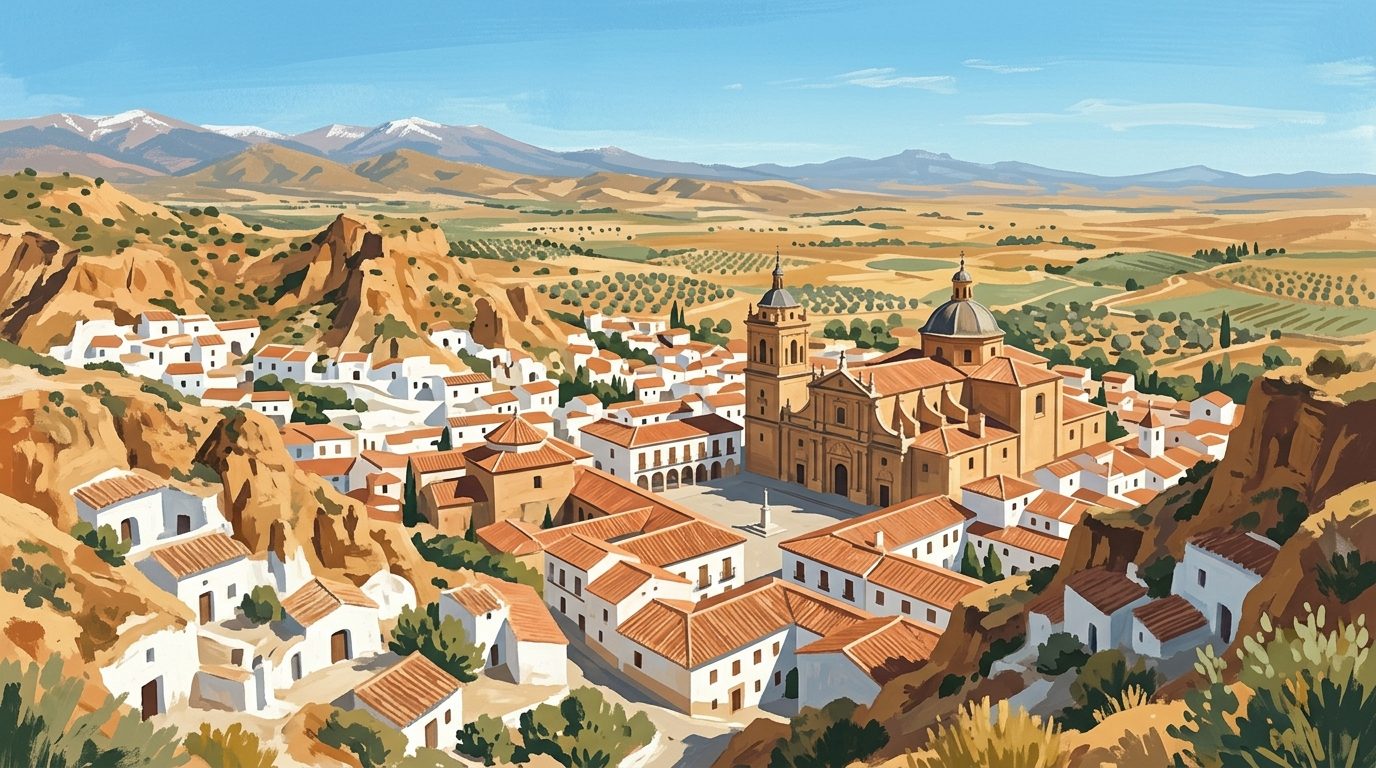
Set on a high-altitude plateau beneath the peaks of the Sierra Nevada, Guadix is one of the oldest human settlements in Europe. It is defined by its remarkable subterranean world, where thousands of residents live in whitewashed caves carved directly into the ochre-coloured earth.
Driving into Guadix feels like entering a different geological era. The surrounding landscape, known as the Hoya de Guadix, is a dramatic expanse of reddish badlands and clay chimneys, shaped by millions of years of erosion. This soft, malleable clay is the very reason for the town’s unique identity. For centuries, the people of Guadix have literally carved their homes into the hillsides, creating a troglodyte neighbourhood that remains fully inhabited today.
While the caves are the primary draw, Guadix is a town of two distinct halves. Below the cave-potted hills lies a monumental city centre, home to a grand cathedral and a maze of Renaissance and Baroque streets. It was an important Roman colony known as Acci and later a strategic Moorish stronghold called Wadi Ash. Today, it serves as the gateway to the Marquesado region, offering a blend of peculiar geology and high-altitude Andalucían culture.
What to See & Do
Barrio de las Cuevas (The Cave Neighbourhood)
The Barrio de las Cuevas is the most significant troglodyte district in the world, containing over 2,000 inhabited caves. Unlike the damp caverns one might imagine, these homes are whitewashed, ventilated, and maintain a constant temperature of around 18 to 20°C throughout the year. As you walk through the district, you will see white chimneys and vent pipes protruding from the grassy hills, marking the kitchens and bedrooms beneath your feet.
The best way to understand this lifestyle is to visit the Centro de Interpretación de las Cuevas (Cueva Museo). Located in the Plaza Padre Poveda, this museum occupies several original cave dwellings and demonstrates how a local family lived in the early 20th century. It displays traditional crafts, agricultural tools, and the specific techniques used by the 'maestros picaores', the master cave-diggers who used hand tools to hollow out these homes without the need for structural beams.
Guadix Cathedral
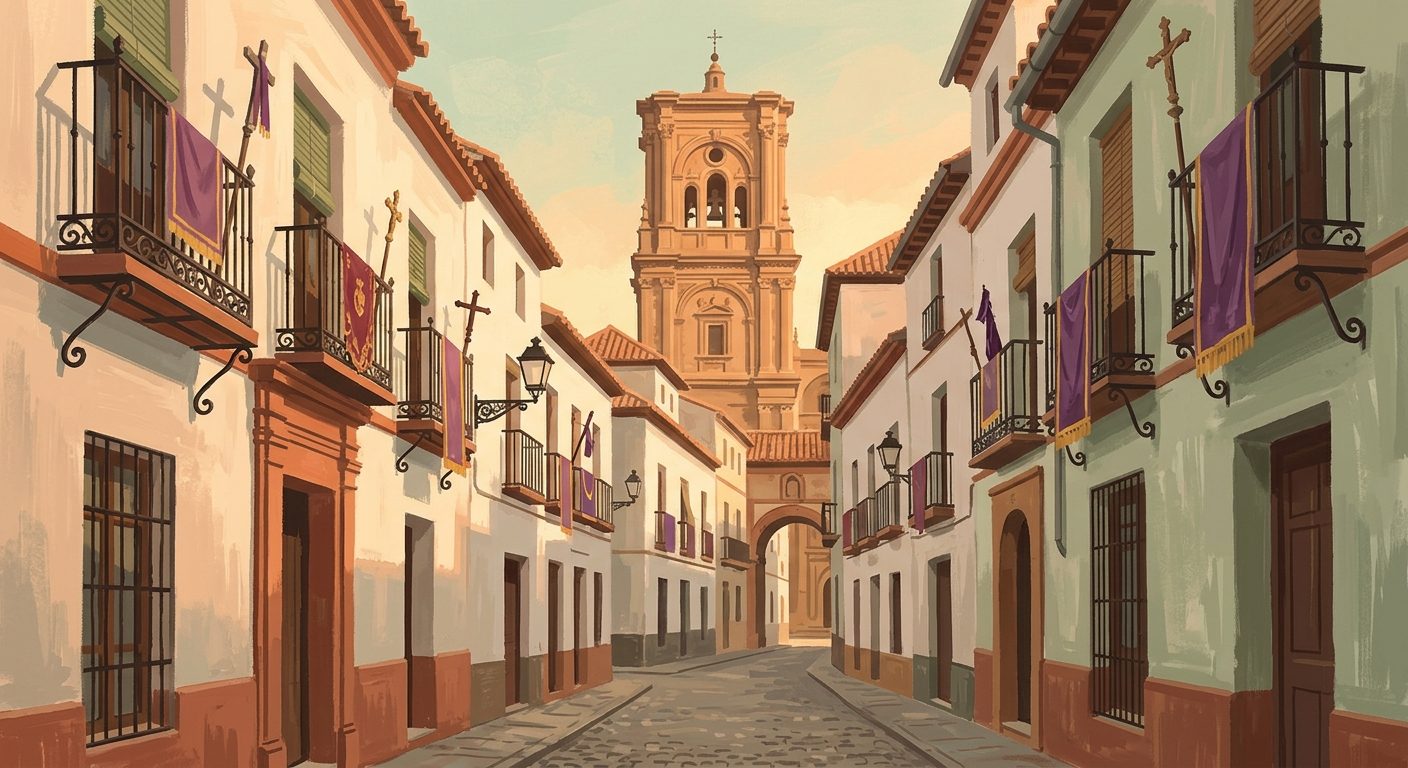
In the town centre, the Catedral de la Encarnación stands as a massive contrast to the humble caves. Built over the site of the town's former main mosque, its construction spanned two centuries (from the 16th to the 18th). This long timeline resulted in a fascinating hybrid of Gothic, Renaissance, and Baroque architecture. The exterior is particularly famous for its intricate Baroque facade, designed by Vicente Acero, which resembles a giant altarpiece carved in stone.
Inside, the cathedral is cavernous and light, featuring a beautiful ambulatory and a choir area with finely carved stalls. A ticket also includes access to the cathedral museum, which holds a notable collection of sacred art and goldwork. For the best perspective of the town, you can climb the bell tower. The ascent offers a panoramic view across the terracotta roofs of the lower town up to the white chimneys of the cave district and the snow-capped Sierra Nevada beyond.
The Alcazaba
Watching over the town from a central ridge is the 11th-century Moorish Alcazaba. Built using the red adobe clay of the region, its towers have a distinctively warm, earthy hue. While much of the interior was lost after the Reconquista, the exterior walls and towers remain largely intact. It serves as a reminder of the town’s importance during the Nasrid Kingdom of Granada. As of mid-2026, access to the interior remains limited due to ongoing restoration projects, but the walk around its perimeter provides excellent vantage points for photographers looking to capture the contrast between the fortress and the surrounding badlands.
Teatro Romano (Roman Theatre)
One of the most exciting recent discoveries in Andalucía is the Roman Theatre of Guadix. Found by accident in 2008 during the construction of an underground car park, the site revealed a substantial 1st-century theatre. It was once part of the Roman colony of Julia Gemella Acci. Archaeological work continues, but you can view the remains from the street level, seeing the semi-circular seating area and the stage foundations that had been buried for nearly two millennia.
Practical Information
Cathedral Opening Times: Generally open Monday to Saturday from 11:00 to 15:00 and 17:30 to 19:30. On Sundays, it opens for visits from 14:00 to 19:30. These times can shift slightly depending on the season, so it is wise to check at the entrance.
Cathedral Tickets: General admission includes the audio guide and the tower climb (check on the operator's website before travelling to confirm current prices).
Cave Museum (Centro de Interpretación): Usually open Tuesday to Saturday from 10:00 to 14:00 and 16:00 to 18:00 (winter: October to March) or 17:00 to 19:00 (summer: April to September). Sundays 10:00 to 14:00.
Museum Tickets: €2.60 for adults; children under 14 enter free.
How to Get There: Guadix is approximately 55km east of Granada. By car, follow the A-92 motorway, a journey of about 45 to 50 minutes. The drive is spectacular as it skirts the northern edge of the Sierra Nevada. There are also frequent ALSA bus services from Granada’s main bus station, taking just over an hour.
Parking: Avoid driving into the narrow streets of the old town centre. There is ample free parking near the cathedral on the Avenida Mariana Pineda, and several large open-air car parks near the Roman Theatre site.
Where to Eat Nearby
For an authentic experience, head to La Tinaja. It is a restaurant located inside a large cave, providing a cool atmosphere during the hot summer months. They specialise in grilled meats and traditional stews like 'olla de San Antón'. Their house-made desserts are also well-regarded by locals.
In the Plaza de la Constitución, Restaurante El Refugio is a high-quality option that focuses on local produce from the Geopark. They offer an impressive selection of over 30 cheeses and a great list of wines from the Guadix region. It is a fantastic place for a long lunch under the arches of the historic square.
If you prefer a casual tapas experience, La Bodeguilla is one of the oldest and most traditional bars in town. It is simple and unpretentious, serving classic Granada-style tapas with every drink. Try the local 'choto' (kid goat) if it is on the daily menu.
Where to Stay
To truly appreciate the town, you should spend a night underground. Cuevas la Granja and Casas Cueva la Tala offer self-catering cave houses that combine the historic architecture with modern comforts like swimming pools and kitchens. For those who prefer a more conventional hotel, Hotel YIT Abentofail is located in a beautifully restored 16th-century building in the old town, featuring a traditional Andalucían courtyard and stylish, comfortable rooms just a short walk from the cathedral.