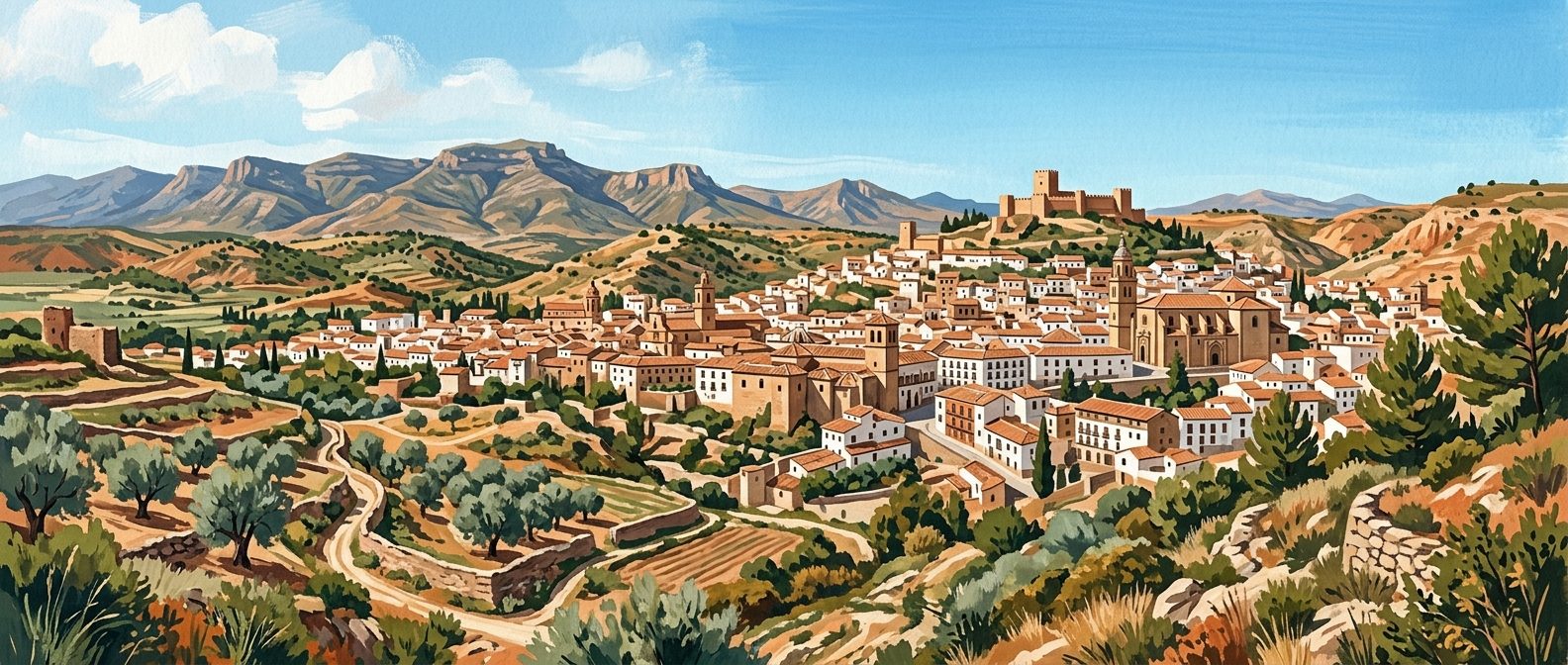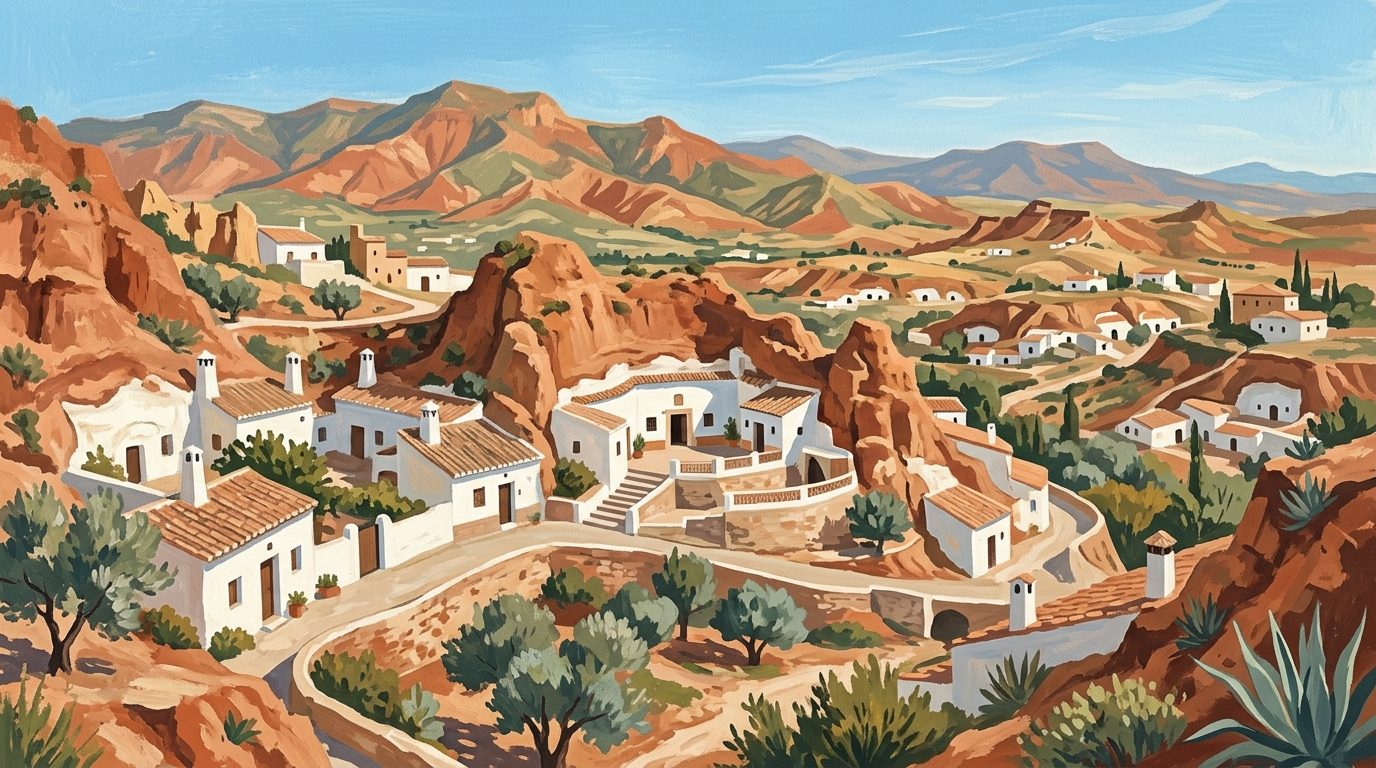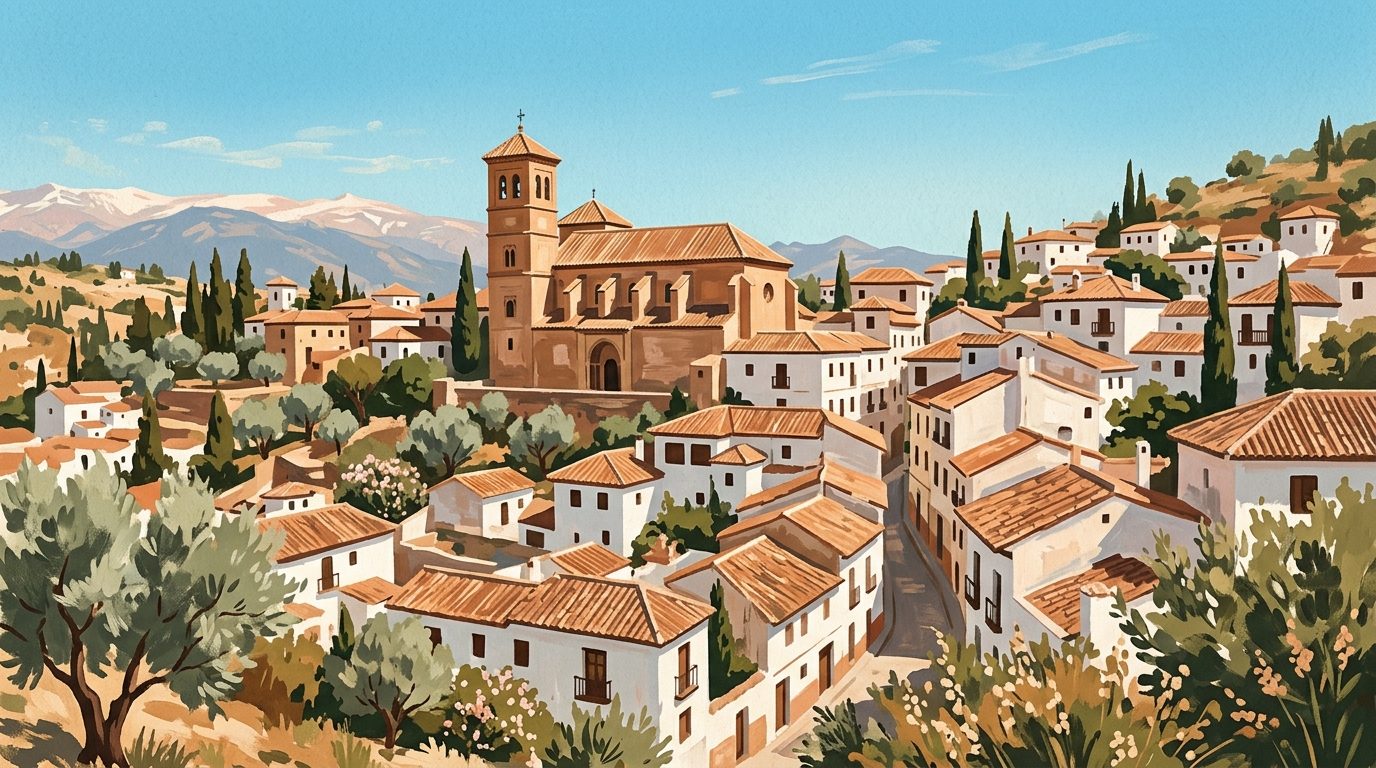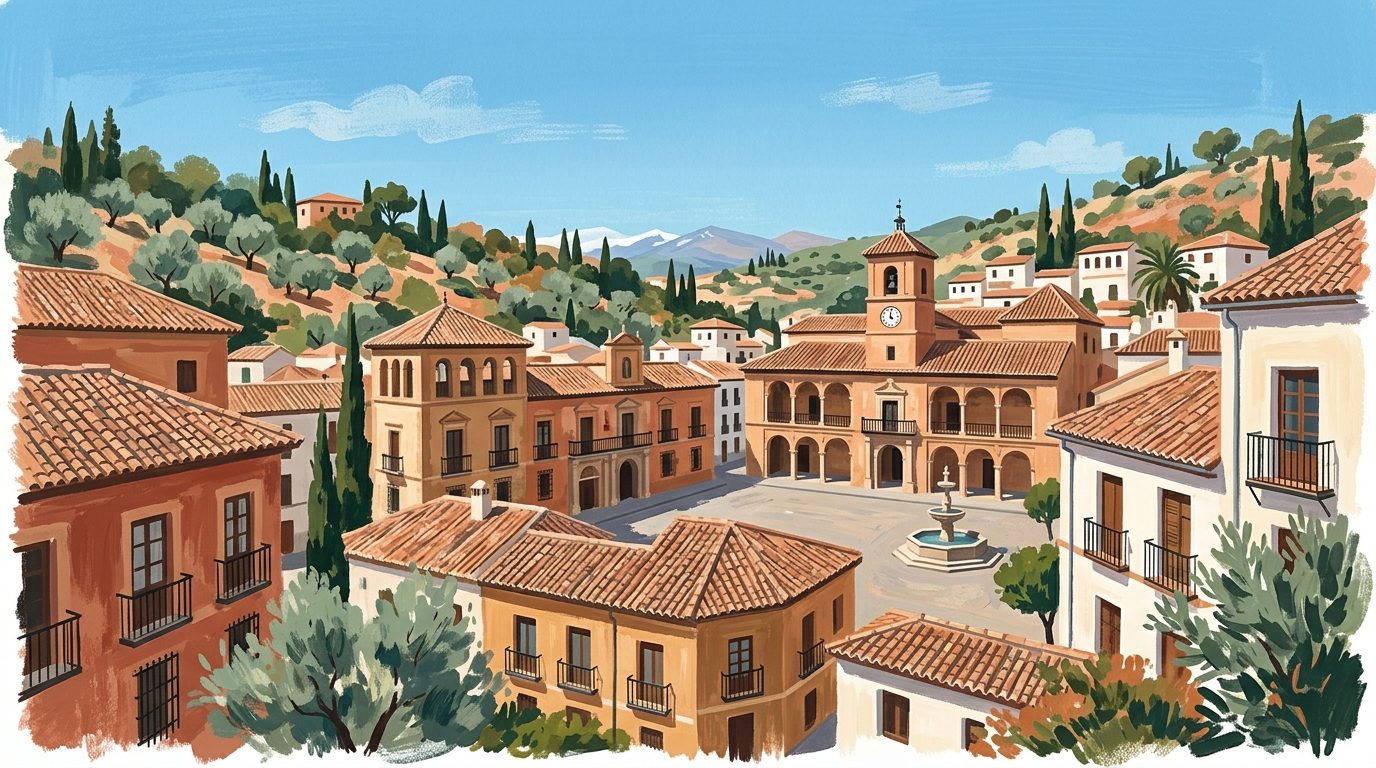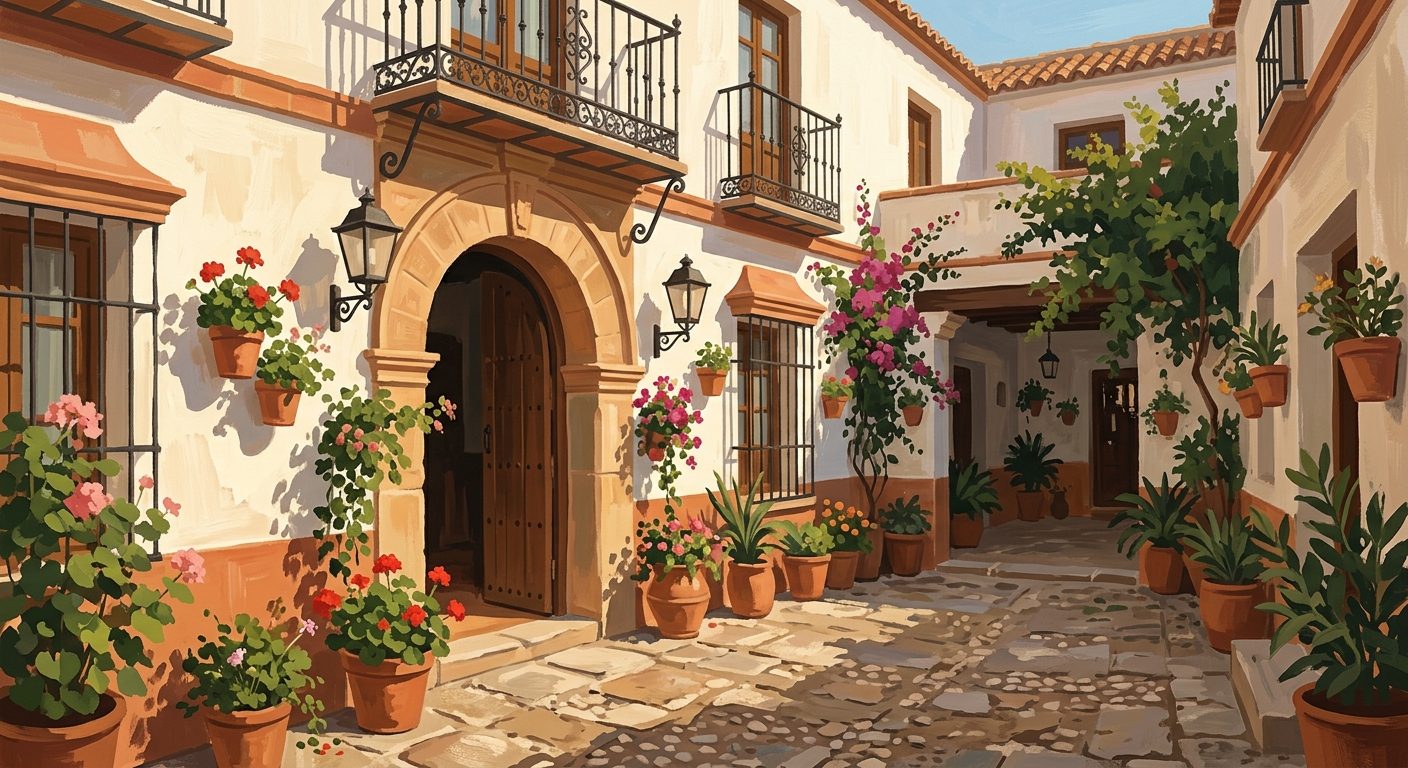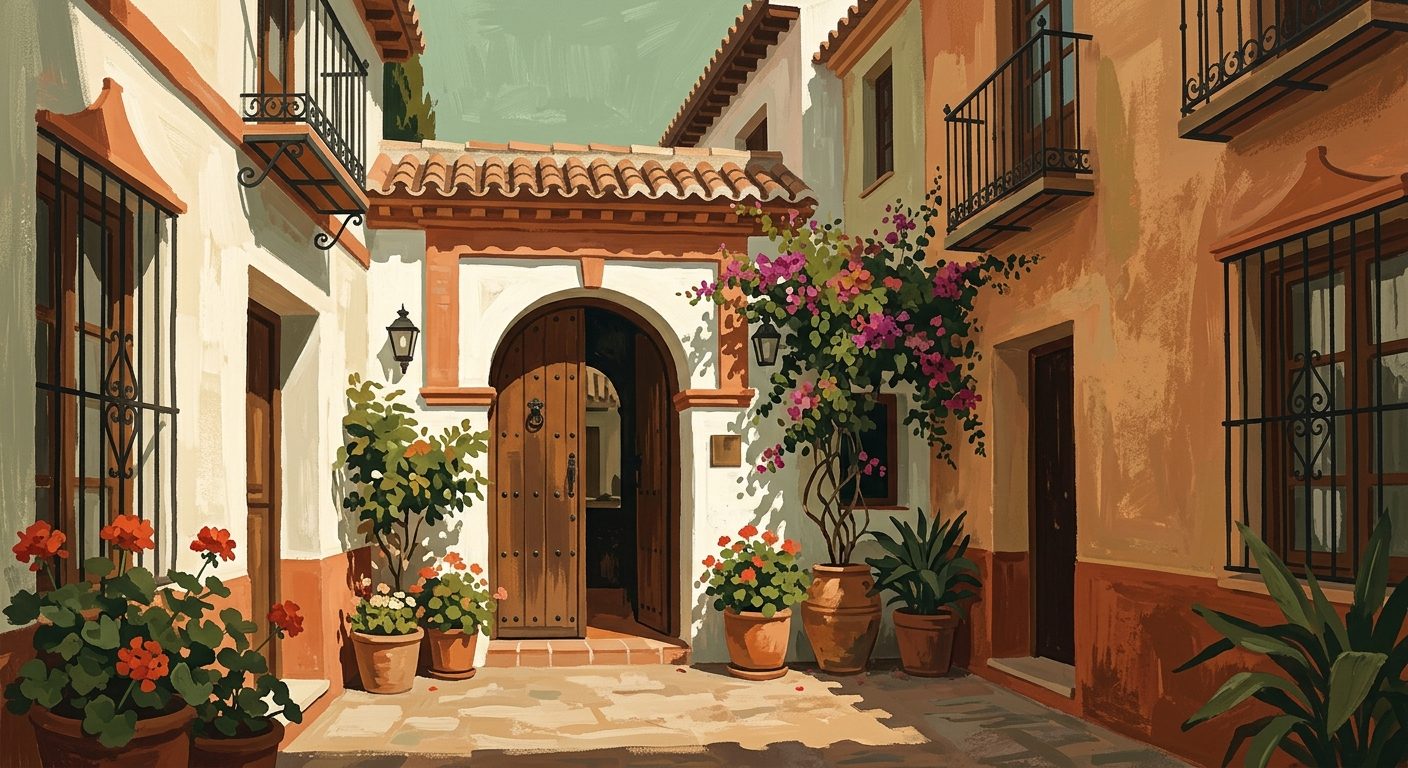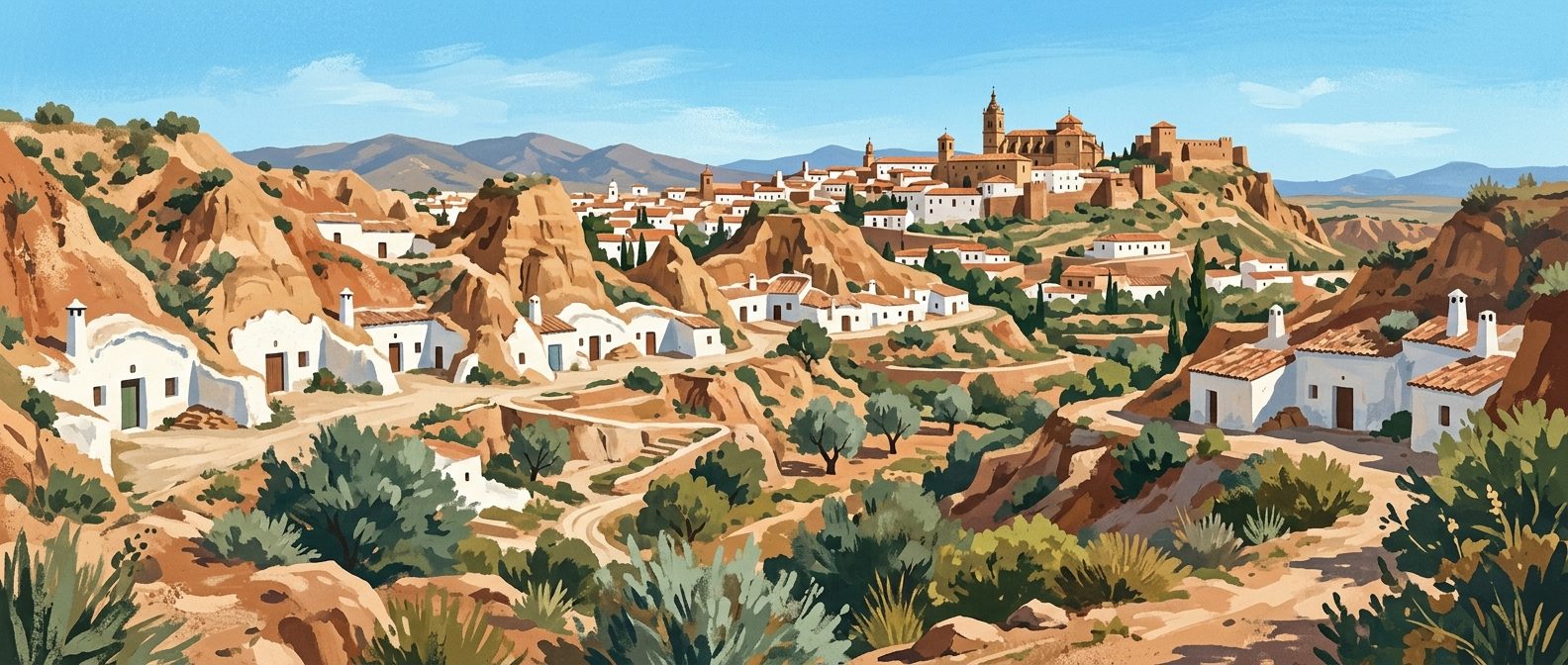
A world of ochre earth and whitewashed chimneys where thousands of people live underground beneath the high peaks of the Sierra Nevada. This is the heart of Andalucía’s troglodyte country, a landscape shaped as much by geology as by human resilience.
The High Plateau and the Red Earth
Driving east from Granada, the lushness of the Genil valley abruptly gives way to a prehistoric landscape. This is the Marquesado del Zenete and the Guadix basin, a territory defined by its altiplano (high plateau) and a network of deep, wind-carved ravines known as badlands. The soil here is a striking rust-red, providing a stark backdrop to the snow-capped Sierra Nevada mountains that loom to the south.
While most travellers rush through on the A-92 motorway towards Almería, those who stop find one of the most culturally distinct corners of the Iberian Peninsula. This is not the Andalucía of white villages draped in jasmine; it is an earthy, rugged region where the architecture is subtractive rather than additive. Instead of building walls, the locals have spent centuries carving rooms directly into the soft clay and tufa rock. These cuevas (caves) offer a steady temperature of around 18 to 20°C year-round, a natural air-conditioning system that makes the searing summer heat and biting winter winds of the high plateau perfectly manageable.
Places to Explore
Guadix
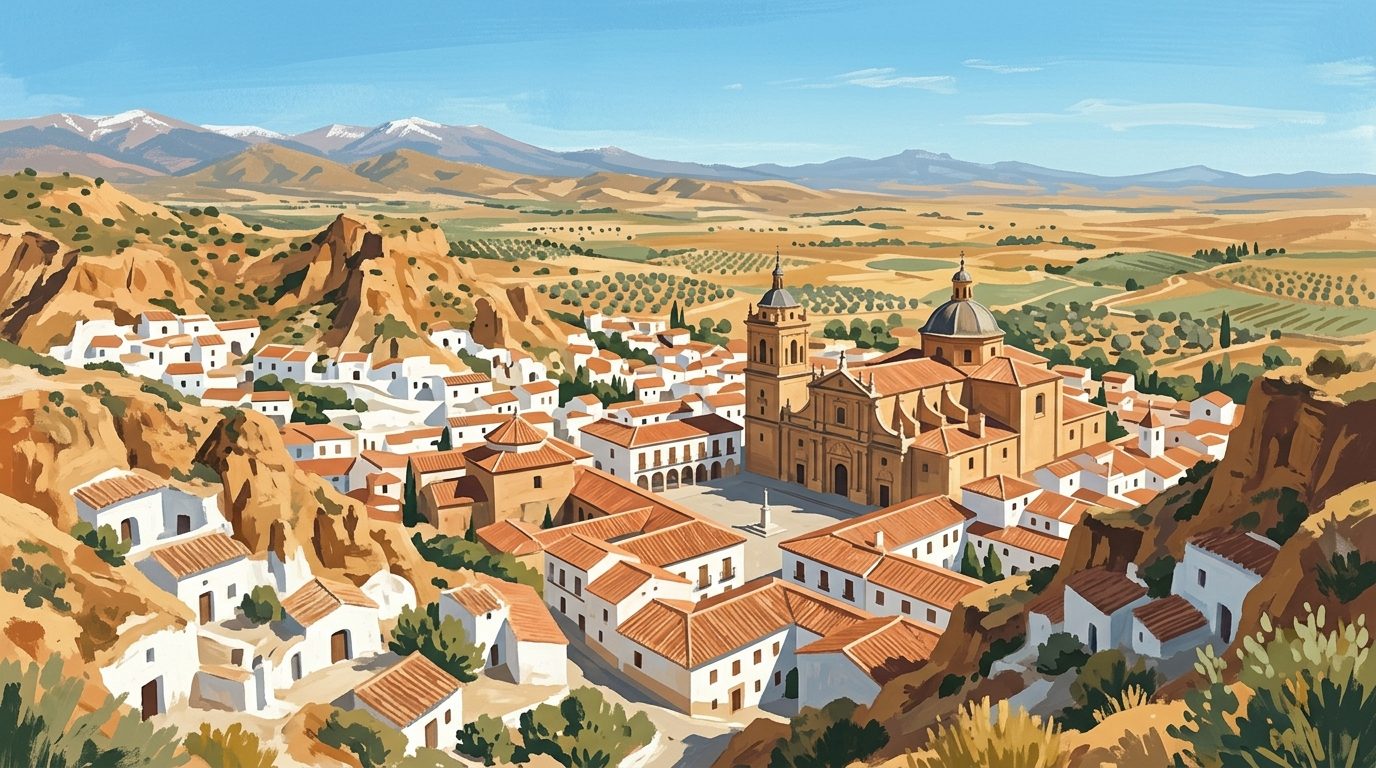
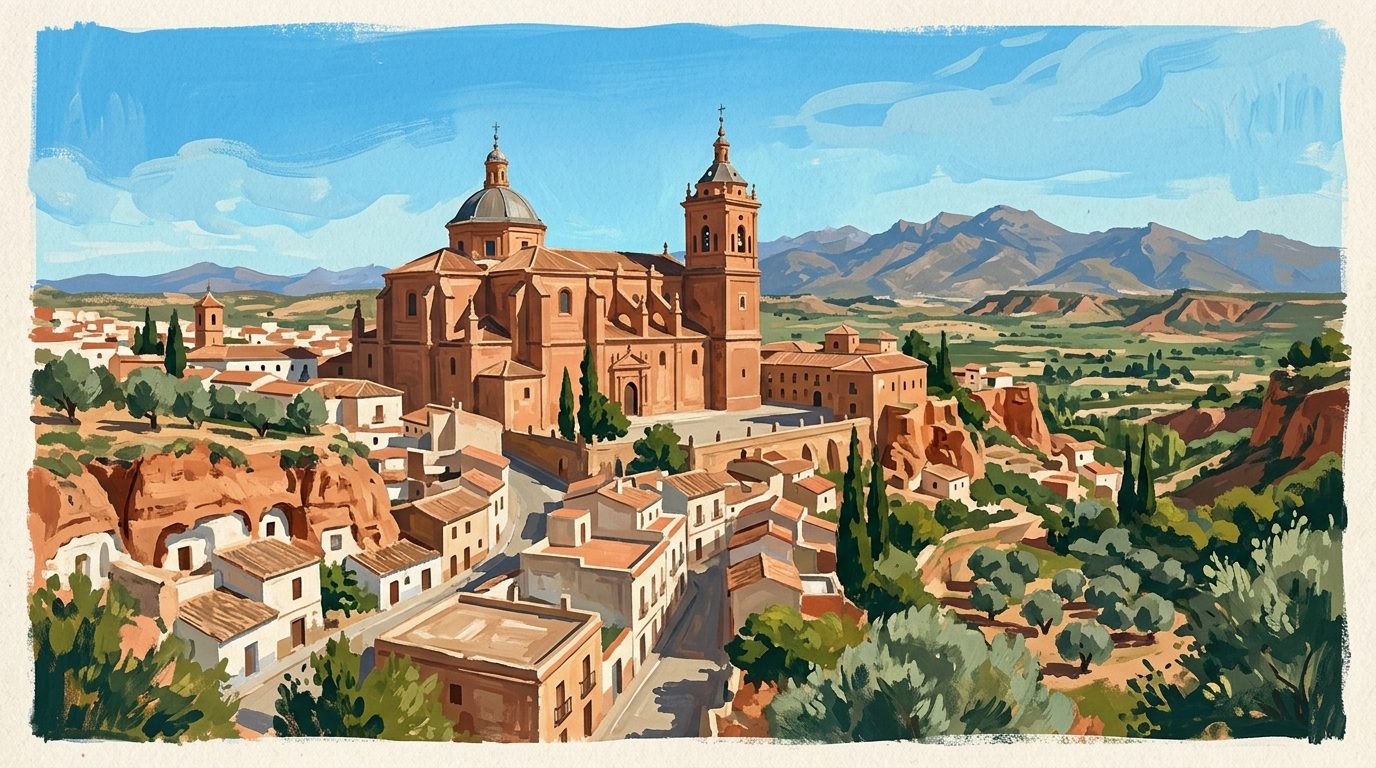
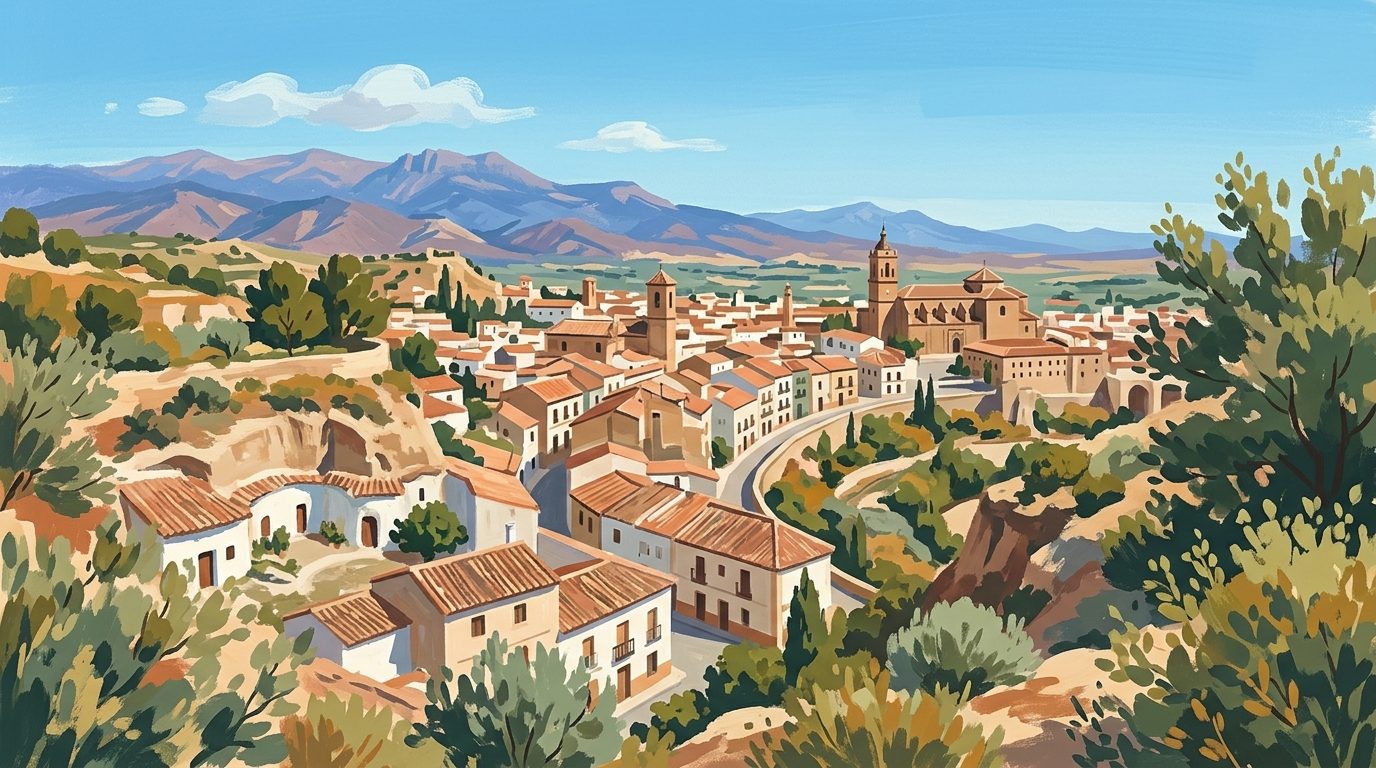
Guadix is a city of two halves. Below, the urban centre is dominated by the massive Catedral de la Encarnación, a sandstone behemoth that blends Gothic, Renaissance, and Baroque styles. Its warm, honey-coloured stone glows at sunset, but the real soul of the city lies uphill in the Barrio de las Cuevas. Over 2,000 cave dwellings are still inhabited here, recognisable by their conical white chimneys poking out of the hillsides like terracotta mushrooms.
To understand the mechanics of cave life, head to the Centro de Interpretación de las Cuevas de Guadix in the Plaza de la Ermita de Gracia. It is a working museum (check the official tourism website before travelling for current opening times) that dispels the myth of cave living being primitive; these homes are often spacious and impeccably clean. For the best view of this lunar landscape, walk up to the Mirador del Cerro de la Bala. From here, you can see the sprawl of the cave district against the backdrop of the Alcazaba, an 11th-century Moorish fortress. If you want to see the local pottery tradition, visit the Cueva Museo de Alfarería on Calle San Miguel, where the Gabarrón family still produces the traditional jarra granadina (a specific style of local pitcher) using techniques that haven't changed in centuries.
Purullena
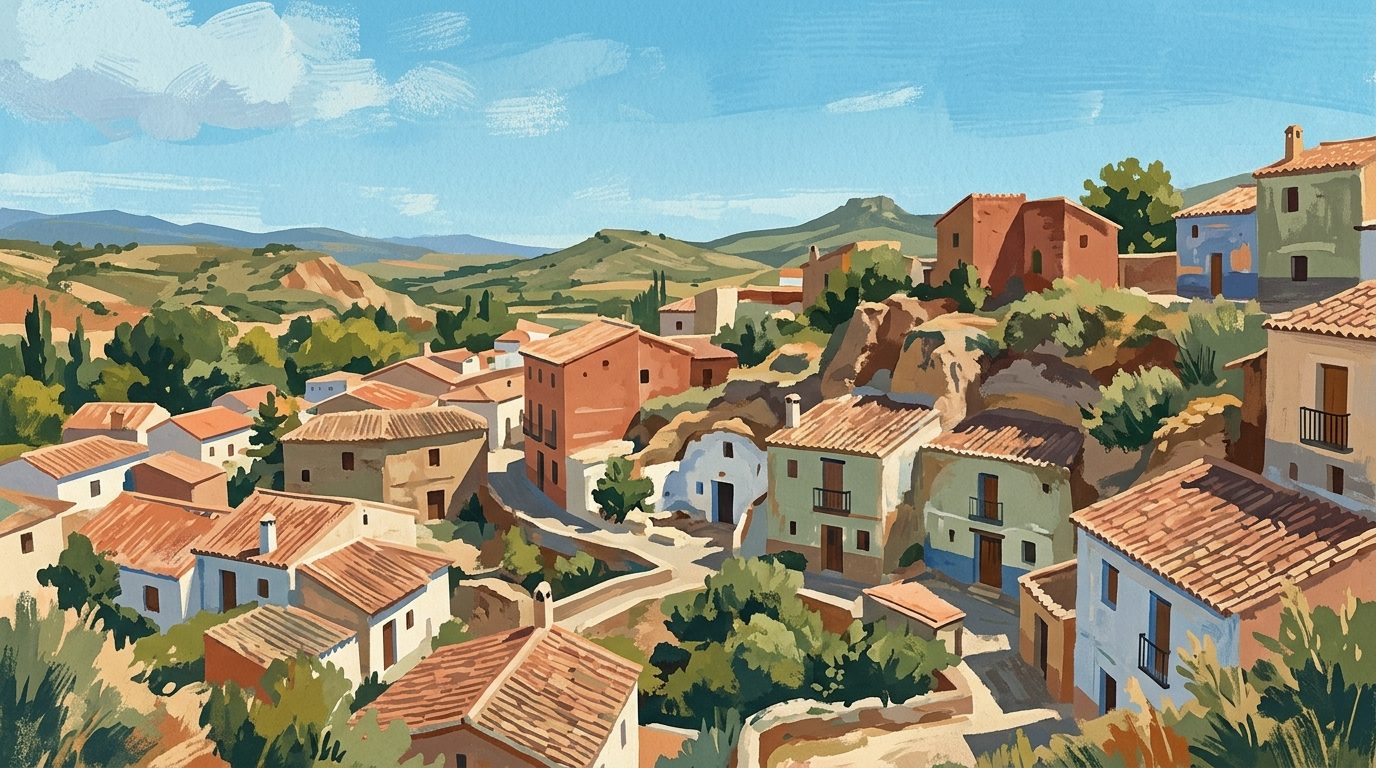
Just five kilometres west of Guadix lies Purullena, a village famous for its blue and green ceramics and its even more radical cave architecture. The village feels like an extension of the hills themselves. As you drive in, the roadside is lined with alfarerías (potteries) displaying stacks of hand-painted plates and jugs. It is well worth stopping at Cerámica de la Cueva, where you can see the kilns built into the rock.
Purullena is also home to the Cueva de la Inmaculada, an extraordinary multi-level cave dwelling that has been converted into a museum. It demonstrates how families expanded their homes as they grew, digging deeper into the hillside rather than building upwards. A short drive out of the village takes you to the Mirador del Fin del Mundo (End of the World Viewpoint). The name is not hyperbole; the view looks out over the Marchal badlands, a chaotic sea of jagged clay ridges and deep gullies that looks more like Arizona than Southern Spain. The contrast between the parched red earth and the green ribbon of the Fardes river valley below is spectacular.
Read the full Purullena guide →
Eating & Drinking in The Marquesado & Guadix
The food in this part of Granada is hearty and designed to sustain farmers and shepherds through the cold mountain winters. A local staple is Monda de Guadix, a rich scramble of potatoes, eggs, and local ham. You should also look for Olla de San Antón, a heavy stew of beans, fennel, and various cuts of pork, typically served during the colder months.
In Guadix, Bodega La Bota (Calle de la Redonda, 18500 Guadix) is a local institution for a glass of robust red wine from the nearby Norte de Granada vineyards, often served with a generous tapa of lomo en manteca (pork loin preserved in lard). For a more formal meal in a unique setting, Restaurante La Tinaja is located inside a series of converted caves. Their paletilla de cordero (shoulder of lamb) slow-roasted in a wood-fired oven is exceptional. If you are in Purullena, Mesón El Ancla serves traditional grilled meats over olive wood fires, providing a smoky flavour that perfectly matches the rustic surroundings. Don't leave without trying the local aceite de oliva (olive oil) from the Montes de Granada, which has a distinct peppery finish.
Where to Stay
To truly experience the region, you must stay in a cave. These aren't the damp, dark holes one might imagine, but sophisticated accommodation with all the modern comforts. Cuevas del Tío Tobas in Alcudia de Guadix is an excellent choice, offering individual cave houses with fireplaces and a shared salt-water pool. The silence inside a cave is absolute, making for some of the best sleep you will find in Andalucía.
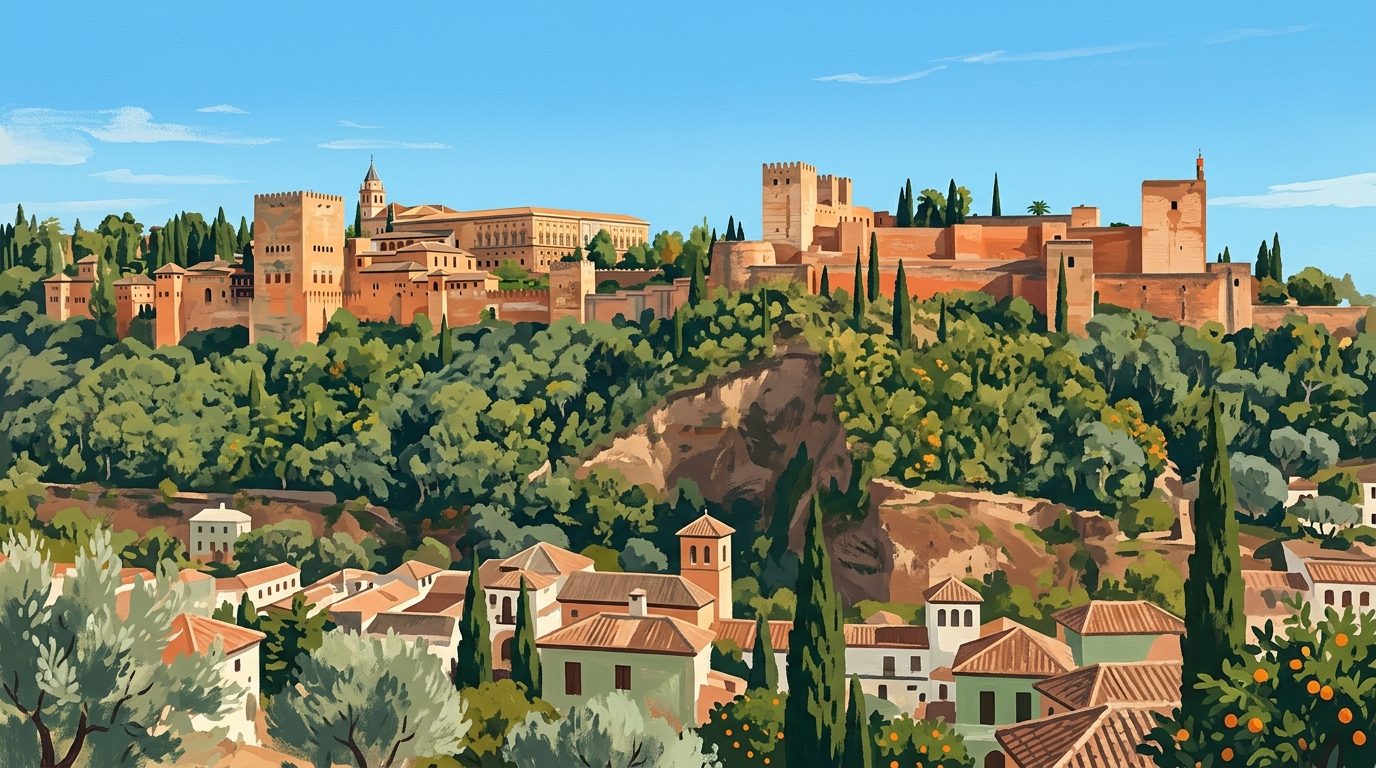
If you prefer to stay above ground, the Hotel Palacio de Oñate in the centre of Guadix offers a sense of historical grandeur. This 16th-century palace has been restored with care, featuring a traditional central courtyard and views over the cathedral. For those seeking something more rural, Hospedería del Zenete in La Calahorra sits at the foot of the dramatic Castillo de la Calahorra, a red-stone fortress that dominates the skyline of the Marquesado.
Getting There & Around
Guadix is exceptionally well-connected by road, sitting directly on the A-92 motorway, about 45 minutes east of Granada city and an hour west of Almería. There is a train station in Guadix with daily services to Granada and Almería, though the station is located about a 20-minute walk from the town centre. To explore the badlands and the smaller villages of the Marquesado, a car is essential. The roads are generally in good condition, but the tracks leading to the best viewpoints, like the Fin del Mundo, can be narrow and gravelly, so drive with caution.
Best Time to Visit
The best time to explore the Marquesado is during the spring (April to June) or autumn (September to October). During these windows, the temperatures are mild enough for hiking through the badlands, and the air is clear, offering sharp views of the Sierra Nevada. Winter can be beautiful, with the contrast of snow against the red clay, but be prepared for freezing nights and occasional snow on the higher roads. July and August are punishingly hot, though the interiors of the caves remain refreshingly cool, making it a viable summer retreat if you plan your outdoor activities for the early morning.