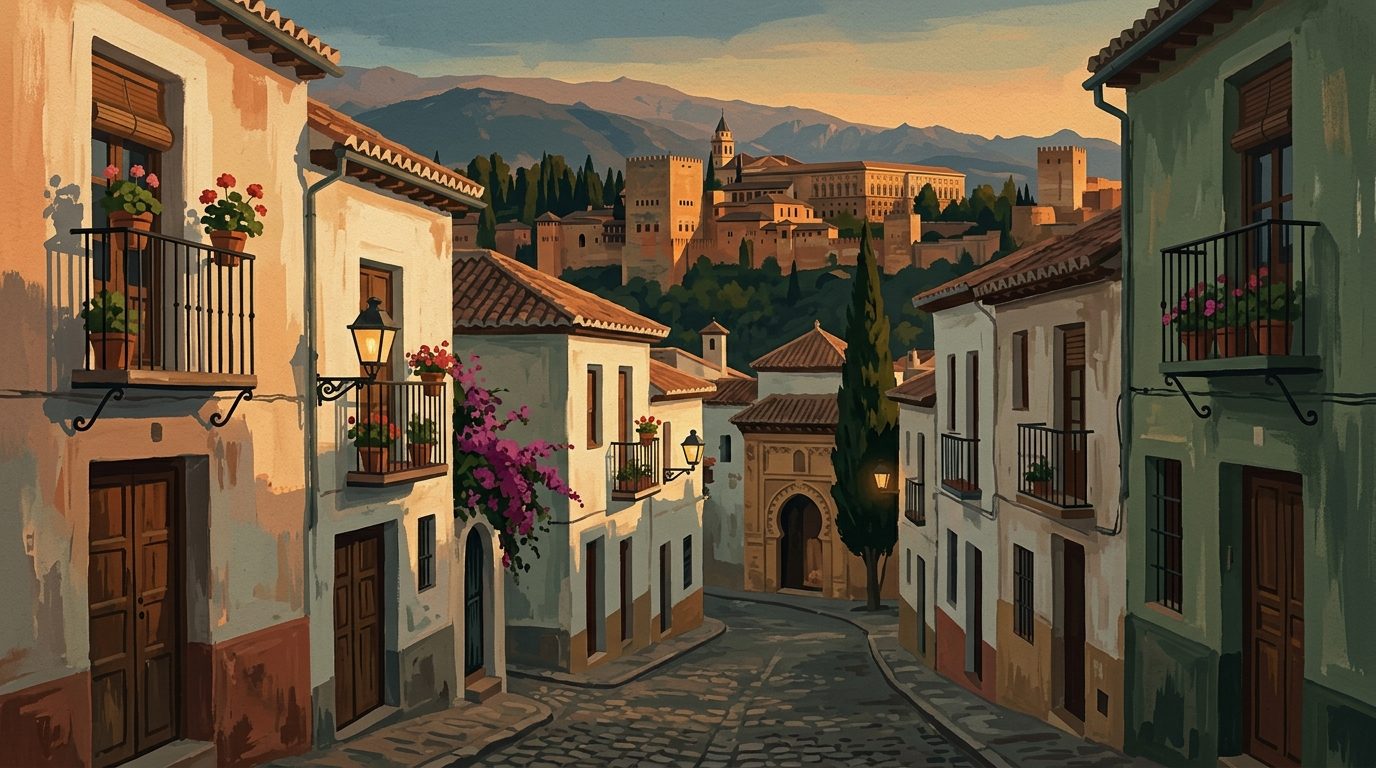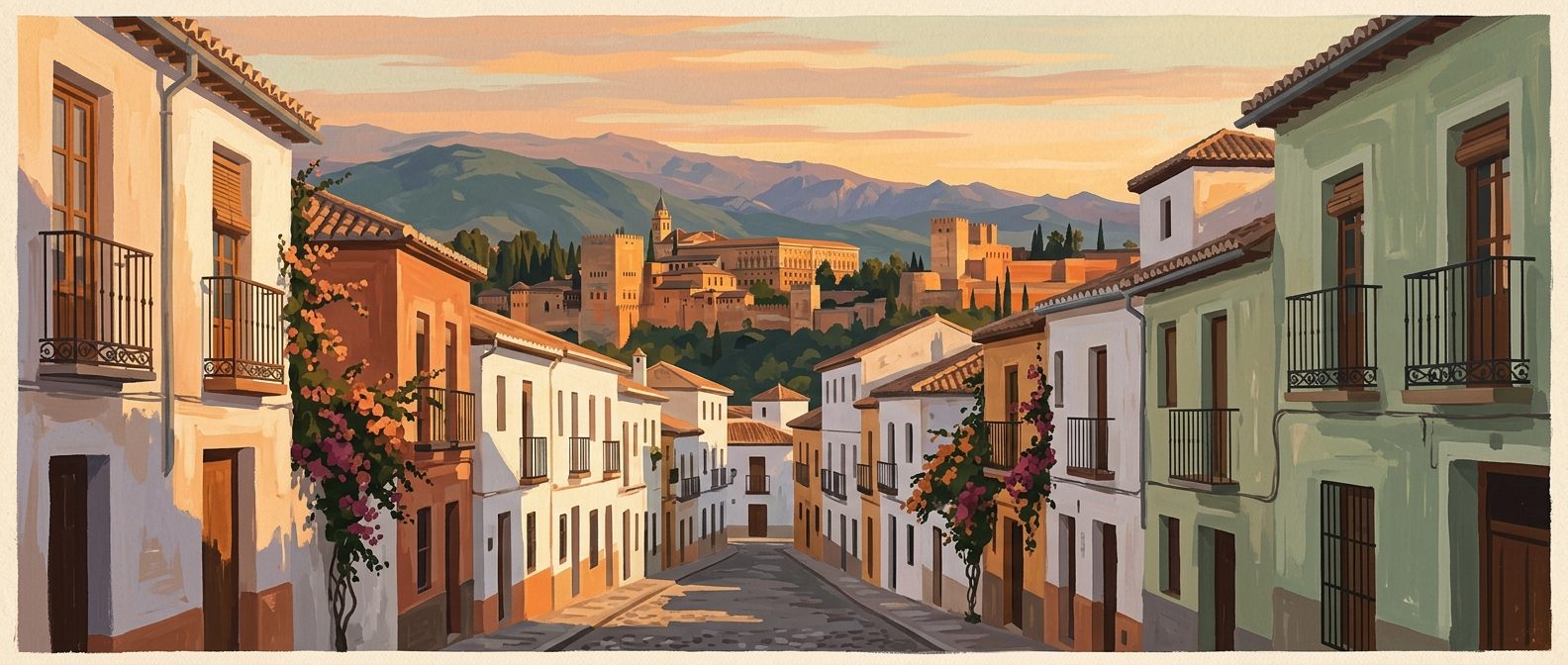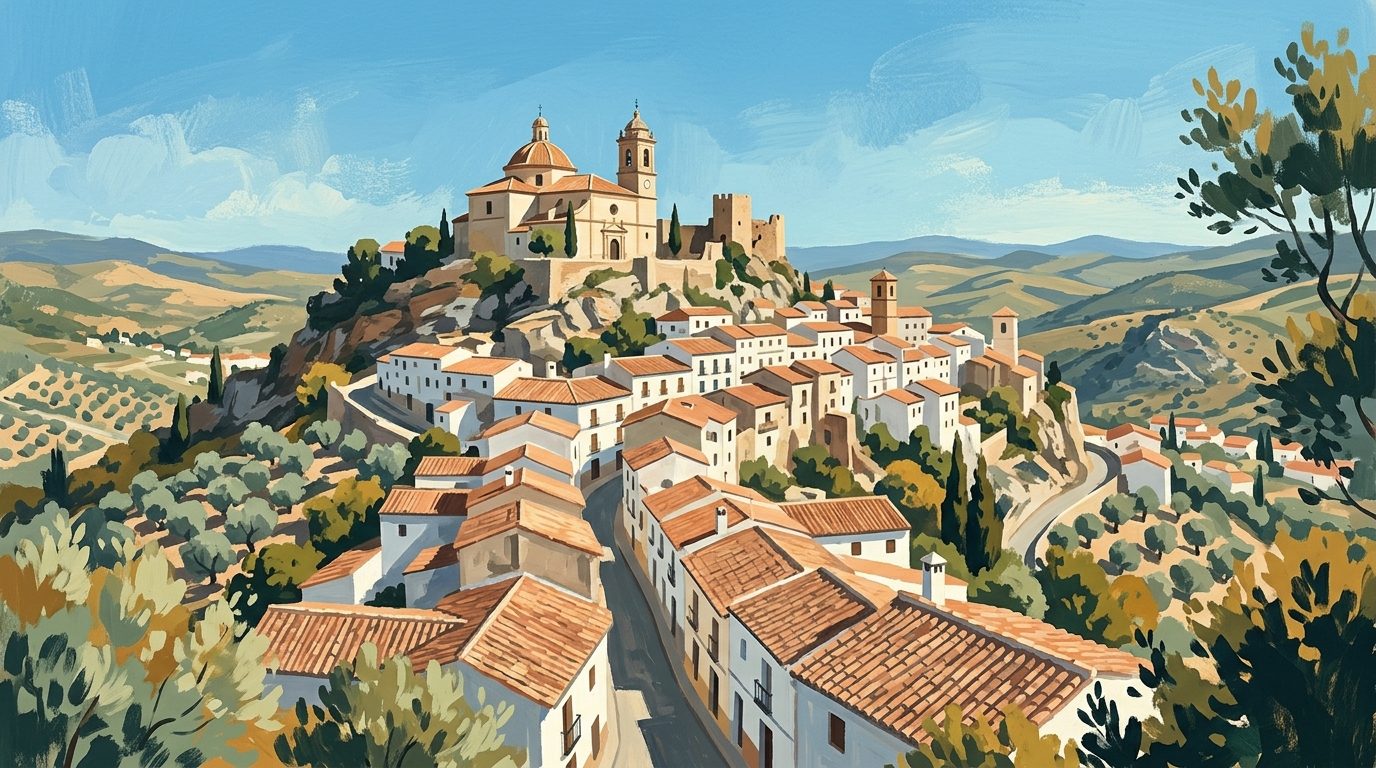
Few towns in the province of Granada offer such a striking silhouette as Montefrío, where a Moorish castle once stood guard over the Nasrid frontier. Its unique skyline, dominated by a circular church and a cliff-top fortress, has earned international acclaim as one of the finest views on the planet.
Set roughly 50 kilometres northwest of Granada city, Montefrío is a place defined by its topography. It sits within the Poniente Granadino, a region of rolling hills and endless olive groves that served as the final defensive line for the Nasrid Kingdom before the fall of Granada in 1492. For centuries, this was a frontier outpost, a role that dictated its vertical architecture and defensive positioning. Today, it is best known for a 2015 National Geographic article that ranked its panoramic view as one of the ten best in the world, an accolade that transformed this quiet agricultural hub into a point of pilgrimage for photographers and travellers seeking the quintessential Andalucían landscape.
The town is divided between the lower modern centre and the steep, ancient streets of the Arrabal district that cling to the rock. Visiting Montefrío requires a bit of stamina, as the most rewarding sights involve steep climbs, but the reward is a perspective on the Spanish countryside that has remained largely unchanged for centuries. For visitors here for the Neoclassical architecture or the Neolithic archaeological sites nearby, the town provides a sense of scale and history that is rare even in a province as storied as Granada.
What to See and Do
Iglesia de la Villa and the Fortress Ruins
The most iconic structure in Montefrío is the Iglesia de la Villa, which sits atop a massive rocky outcrop overlooking the town. This site was originally the location of a Moorish castle, and parts of the original defensive walls are still visible today. After the Reconquista, the Catholic Monarchs ordered the construction of a church on the ruins of the fortress to symbolise the victory of Christianity. Built between 1486 and 1507, the church features a blend of Gothic, Renaissance, and Mudéjar styles.
To reach the church, you must climb a series of 111 steps and winding paths from the town centre. Inside, you will find the Centro de Interpretación de la Última Frontera de al-Ándalus (Interpretation Centre of the Last Frontier of Al-Ándalus). This museum explains the strategic importance of Montefrío during the 15th century, detailing how the town functioned as a critical military post. Even if you aren't interested in the museum, the views from the terrace outside the church are exceptional, offering a 360-degree look at the surrounding mountains and the town below.
Iglesia de la Encarnación
In the heart of the town stands the Iglesia de la Encarnación, a building that looks entirely out of place in a rural Andalucían village. Completed in 1786, this church is famous for its massive circular shape, inspired by the Pantheon in Rome. Designed by the architect Ventura Rodríguez, its round floor plan was not just an aesthetic choice but a practical one; the ground in the lower part of the town was unstable, and a circular structure distributed the weight of the massive dome more effectively than a traditional cross-shaped building.
The interior is remarkably sparse, reflecting the Neoclassical preference for clean lines and mathematical precision over the ornate flourishes of the Baroque era. The dome measures 30 metres in diameter and creates acoustics that make even a whisper carry across the hall. It is one of the few truly circular churches in Spain and serves as the social and religious heart of the municipality.
Mirador National Geographic
While there are several viewpoints (miradores) around the town, the most famous is the Mirador de las Peñas, now officially signposted as the Mirador National Geographic. Located on the road leading toward Tocón, about a 15-minute walk or a short drive from the centre, this spot provides the classic postcard view of Montefrío. From here, the Iglesia de la Villa appears to be floating on its rock above the whitewashed houses, framed by the deep green of the olive trees. There is a small metal frame installed at the site to help visitors line up the perfect shot, mimicking a magazine cover.
Peña de los Gitanos
Approximately five kilometres from the town centre lies the Peña de los Gitanos, an archaeological site of immense importance. This area has been inhabited since the Neolithic period and contains one of the most significant collections of megalithic dolmens in southern Spain. The site includes several distinct areas: Neolithic caves, Bronze Age settlements, and a Visigothic necropolis. Because it is located on private land, access is usually restricted to guided tours which must be booked in advance via the official Peña de los Gitanos website or the local tourist office (check on the operator's website before travelling). Walking through the limestone formations and ancient burial chambers offers a quiet, atmospheric contrast to the town’s more monumental attractions.
Practical Information
Opening Times: The Iglesia de la Villa and its Interpretation Centre are generally open Tuesday to Sunday from 11:00 to 14:00, with afternoon hours typically from 16:30 to 18:30 (these hours vary slightly between winter and summer). The Iglesia de la Encarnación is usually open during morning mass times and for a few hours in the early evening, though times align with evening mass schedules (check with the local parish or tourist office before travelling).
Ticket Prices: Entry to the Iglesia de la Villa museum costs approximately €2.50. Entry to the Iglesia de la Encarnación is free, though donations are welcome. Guided tours of the Peña de los Gitanos typically cost around €10 per person and require a minimum group size or a pre-arranged booking.
Getting There: From Granada, take the A-92 motorway toward Málaga and exit at Huétor Tájar, then follow the signs for the A-4155 to Montefrío. The drive typically takes between 50 and 70 minutes depending on traffic at the Huétor Tájar exit. There is also a bus service operated by ALSA from the Granada bus station, though services are infrequent. Advance booking is essential, especially during the 2026 summer discount period when buses may be fully booked (check on the operator's website before travelling).
Parking: Parking in the centre of Montefrío is difficult due to the narrow, one-way streets. It is best to park in the designated areas near the entrance of the town or at the large car park located near the health centre (Centro de Salud) on the edge of the village, then walk into the Plaza de España.
Where to Eat Nearby
For traditional regional flavours, Restaurante La Fonda is a reliable choice. Located near the town centre, it specialises in local dishes like choto al ajillo (kid goat with garlic) and remojón montefrieño (a salad of oranges, cod, and olives). Their sesos al mojeteo is a local delicacy for more adventurous eaters.
In the main square, Bar Pregonero is an excellent spot for tapas. It is popular with locals and provides a great vantage point for watching the daily life of the town unfold. If you are looking for something slightly outside the town, Restaurante La Enrea offers a more formal dining experience within a converted oil mill, focusing on high-quality local olive oil and seasonal produce.
Where to Stay
Hotel La Enrea is the premier accommodation in the area. This two-star hotel is housed in a beautifully restored 19th-century olive oil mill at the foot of the hill. It provides a peaceful setting with views of the fortress and easy access to the town’s hiking trails. For those preferring more privacy, there are numerous rural houses (casas rurales) such as Cortijo de Carmen, which offer a rustic experience among the olive groves that define this part of Granada.