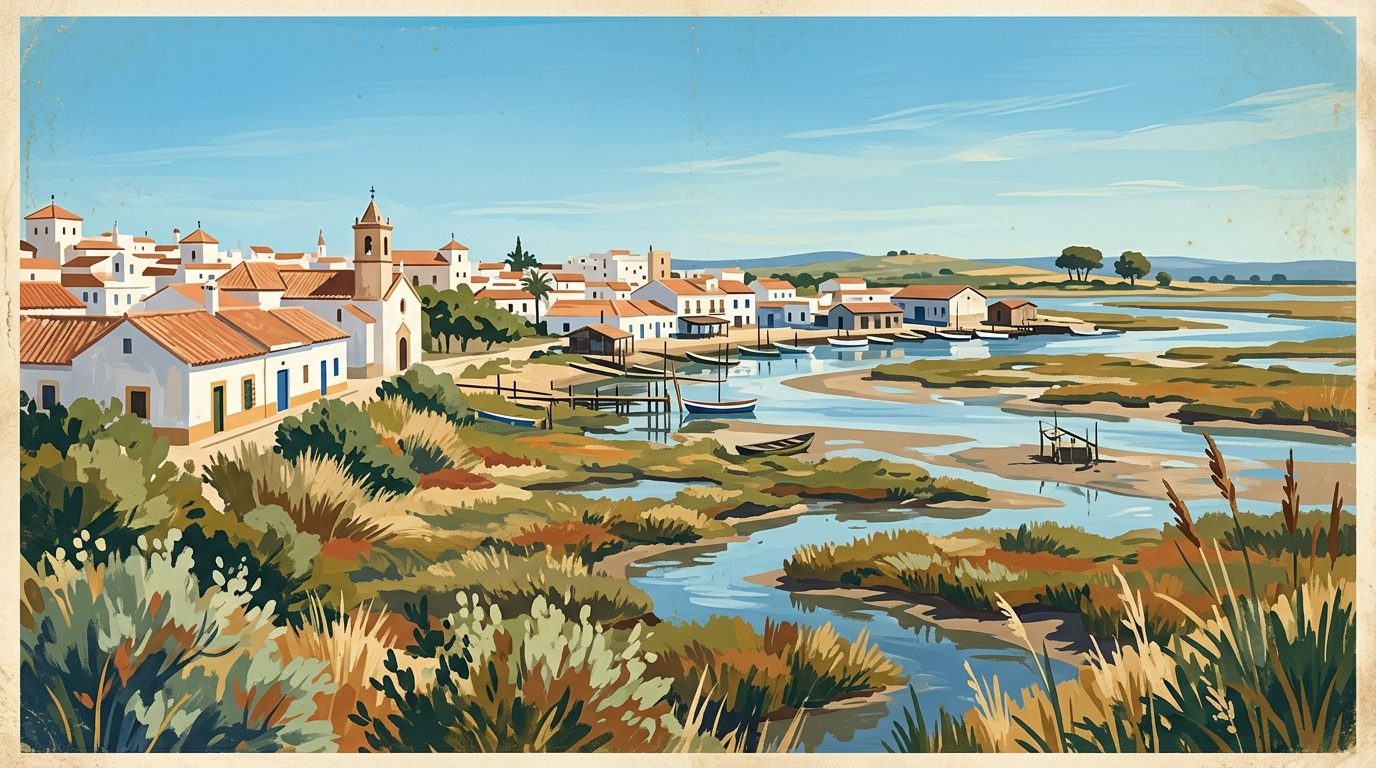
Spread across the tidal mouth of the Odiel and Tinto rivers, this UNESCO Biosphere Reserve is a vital sanctuary for Europe’s most significant spoonbill colonies. Just a short distance from the industrial skyline of Huelva, the marshes offer a peaceful landscape of salt pans, lagoons, and sandbars teeming with birdlife.
To the uninitiated, the approach to Huelva city might seem dominated by the heavy industry of its port and chemical plants. However, look just beyond the cranes and silos and you will find one of the most important wetland ecosystems in Europe. The Odiel Marshes (Marismas del Odiel) cover over 7,000 hectares of tidal plains, where the fresh waters of the Tinto and Odiel rivers meet the Atlantic salt. Declared a UNESCO Biosphere Reserve in 1983, this site is a masterclass in nature’s resilience, providing a high-quality habitat for migratory birds right on the doorstep of an active provincial capital.
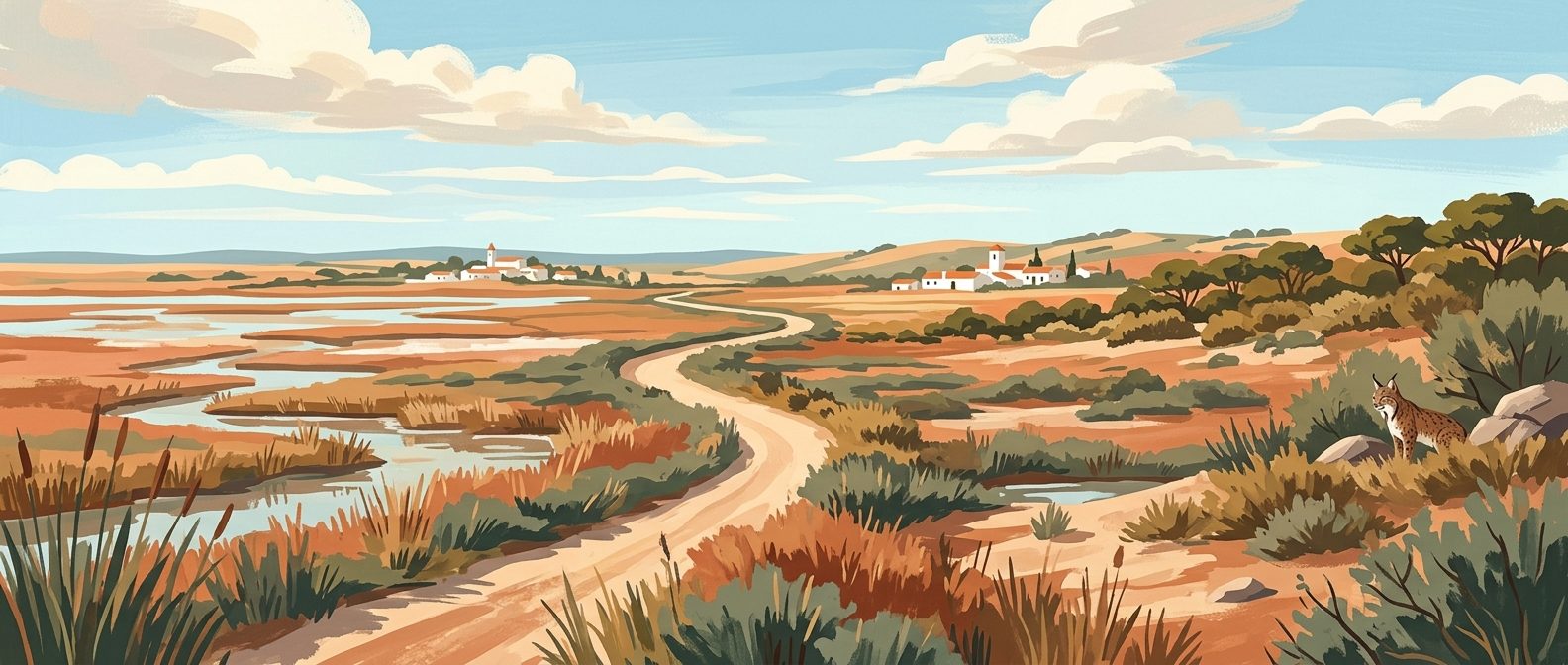
The reserve is often described as the 'Kingdom of the Tide' because the landscape changes every few hours. At low tide, vast mudflats are exposed, creating a buffet for waders and shorebirds. At high tide, the water snakes through a labyrinth of channels, or caños, surrounding small islands of scrub and salt-tolerant plants. For birdwatchers, photographers, or those simply looking for a quiet walk with a salty breeze, the Odiel Marshes offer a wilder, more accessible alternative to the famous Doñana National Park further east.
What to See & Do
The Spoonbill and Flamingo Colonies
The undisputed star of the reserve is the Eurasian Spoonbill (Platalea leucorodia). The Odiel Marshes house roughly 30% of the entire European breeding population. These elegant white birds, with their distinctive spatulate bills, are most active during the spring breeding season on the Isla de Enmedio, a strictly protected zone within the reserve. While you cannot walk onto the island, you can see them clearly from the various hides and during boat tours. Please note that visible bird populations can vary significantly depending on the season and breeding cycles.
Flamingos are another constant presence. Unlike the seasonal visitors in other parts of Spain, a large number of Greater Flamingos remain here year-round. They are frequently seen in the shallow salt pans and lagoons near the main causeway. Their striking pink plumage against the blue water and white salt crusts makes for exceptional photography, especially during the golden hour before sunset.
The Dique Juan Carlos I Causeway
One of the best ways to experience the scale of the marshes is to drive or cycle along the Dique Juan Carlos I. This 12-kilometre causeway (often called 'El Espigón') cuts straight through the heart of the reserve. As you travel along it, the river Odiel lies on one side and the Atlantic on the other. It is a fantastic route for spotting ospreys, which have been successfully reintroduced to the area and can often be seen perched on man-made nesting platforms. The road eventually leads to the Playa del Espigón, a wild, undeveloped beach that serves as Huelva city’s most natural stretch of coastline.
Walking the Sendero de Calatilla
For those who prefer to explore on foot, the Sendero de Calatilla is an easy, circular trail starting near the visitor centre. It takes you through the marisma alta (high marsh), where the vegetation is dominated by glasswort and sea rosemary. The trail includes several wooden bird hides overlooking the lagoons. These hides are strategically placed to allow visitors to observe grey herons, marsh harriers, and various species of sandpipers without disturbing them. The path is flat and well-marked, making it suitable for families and casual walkers.
The Salt Pans of Bacuta
Salt production has been a central part of Huelva’s economy since Roman times, and the marshes still feature both traditional and industrial salt pans (salinas). The Salinas de Bacuta have been restored to show how salt was once harvested by hand. The process involves directing seawater into shallow basins where the sun and wind evaporate the water, leaving behind the 'white gold'. These pans are not just historical curiosities; they are vital for the birds, as the varying salinity levels in different ponds attract different types of crustaceans, which in turn attract specific bird species. Access to certain salt pans may change depending on the season and ongoing conservation work.
Practical Information
Opening Times: The nature reserve itself is an open space accessible at any time, but the Anastasio Senra Visitor Centre (also known as La Calatilla) has specific hours. Generally, it is open Tuesday to Sunday from 10:00 to 14:00. However, hours can vary by season; check the official Ventana del Visitante portal before travelling. During the winter, it reopens in the afternoon from 16:00 to 18:00, while in summer the afternoon hours shift to 18:00 to 20:00 to avoid the midday heat. The centre is usually closed on Mondays.
Ticket Prices: Entry to the visitor centre and the walking trails is free of charge. If you wish to take a guided 4x4 tour or a boat excursion through the channels, these are operated by private companies like Platalea. Expect to pay around €15 to €20 per person for a standard two-hour group tour (check on the operator's website before travelling). It is recommended to book these in advance, especially during the spring migration.
How to Get There: From Huelva city, follow the signs for 'Punta Umbría' or 'Playas'. After crossing the bridge over the Odiel River, take the exit for 'Paseo Marítimo/Ensenada de los Gallegos' and follow signs for the 'Dique Juan Carlos I'. The visitor centre is located approximately 3 kilometres down this road.
Parking: There is a large, free car park at the Anastasio Senra Visitor Centre. There are also several small lay-bys along the causeway where you can pull over to use the bird hides, though take care not to block the road as it is used by heavy vehicles heading to the end of the dike.
Where to Eat Nearby
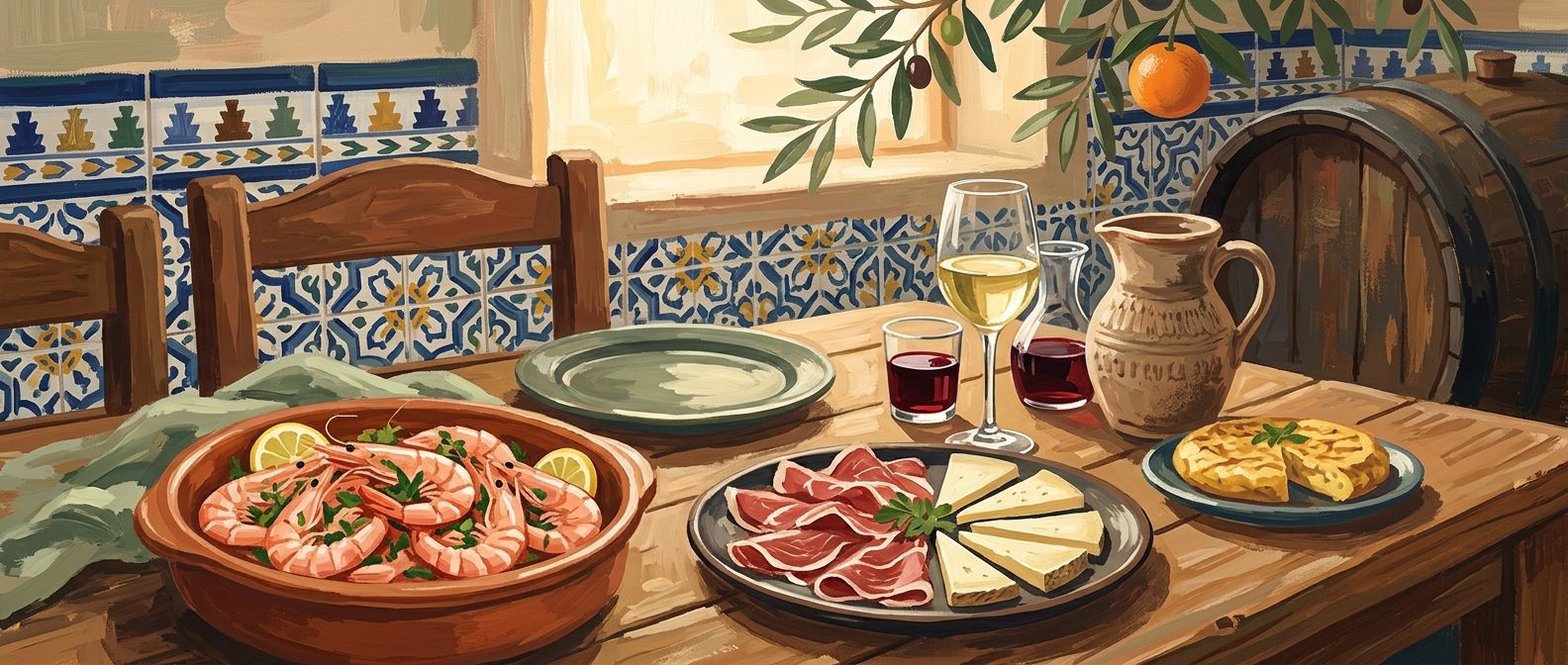
While there are no restaurants inside the heart of the reserve, Huelva city is only a ten-minute drive away and is famous for its seafood. Masero on Avenida de la Ría offers a modern take on local staples like choco (cuttlefish) and white prawns from the bay. For a more traditional experience, head to Azabache in the city centre. Their tapas menu features excellent Iberian ham and grilled meats from the nearby mountains. If you prefer to stay by the water, the chiringuitos in Punta Umbría, such as El Derrape, serve fresh sardines and fried fish with a view of the Atlantic.
Where to Stay
For easy access to the marshes, the Senator Huelva Hotel provides a comfortable, central base within the city. If you prefer a coastal atmosphere, Barceló Punta Umbría Mar is situated on the edge of the Enebrales Nature Reserve, just a short drive from the Odiel causeway. It offers direct beach access and high-end amenities. For a more intimate stay, there are several boutique apartments in Huelva’s historic centre, such as Apartamentos San Pedro, which place you within walking distance of the city’s best dining spots.