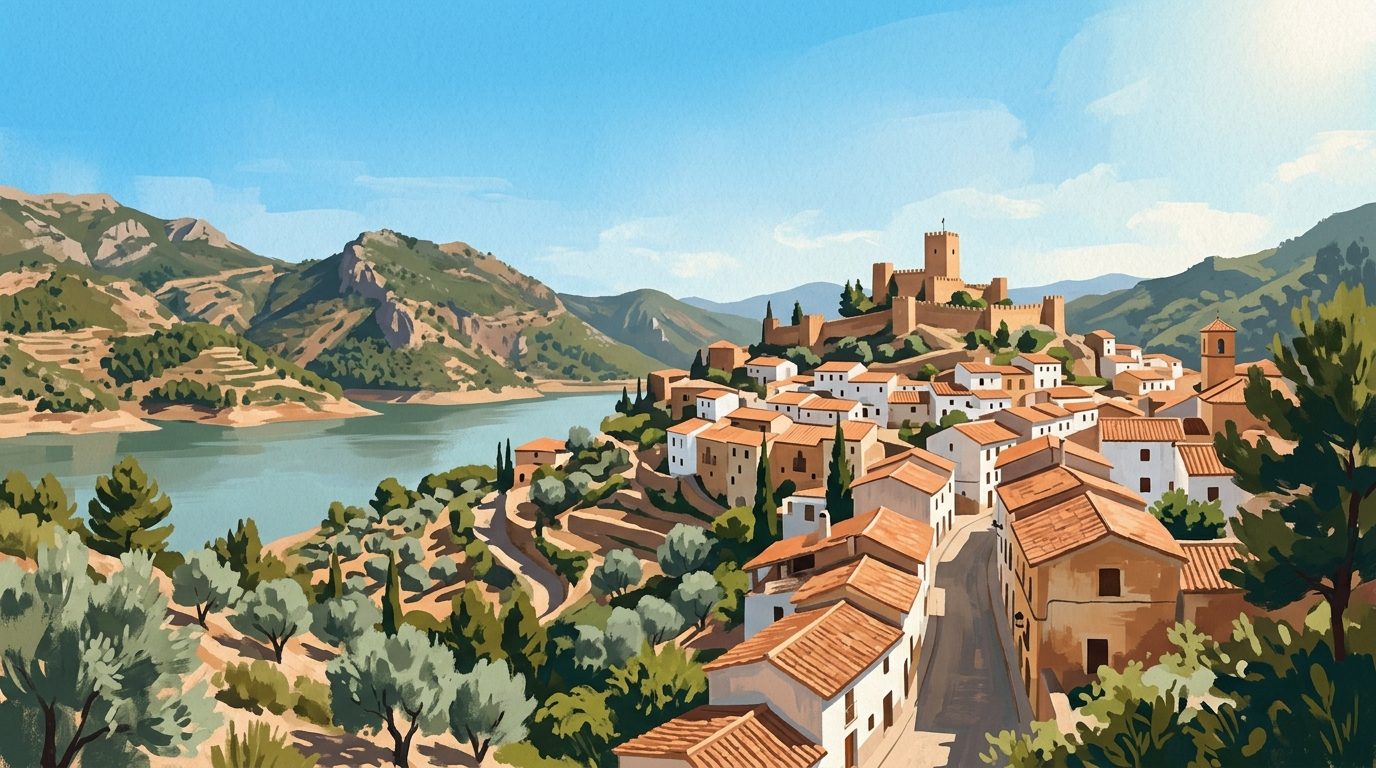
Perched on a limestone pedestal overlooking the expansive Tranco reservoir, Hornos de Segura offers one of the most dramatic silhouettes in the Sierra de Segura. This medieval village combines ancient defensive architecture with its modern status as a premier destination for European stargazing.
Hornos de Segura occupies a singular position in the heart of the Sierras de Cazorla, Segura y Las Villas Natural Park. Sitting at an altitude of 865 metres, the village is built directly onto a rugged promontory that falls away sharply towards the turquoise waters of the Tranco de Beas reservoir. This strategic location has defined its character for centuries, serving as a formidable defensive outpost for the Order of Santiago during the Reconquest.
Today, the village is a protected Conjunto Histórico-Artístico, recognised for its well-preserved medieval layout and traditional mountain architecture. Its narrow, steep streets wind upwards toward the castle, which remains the focal point of the skyline. Beyond its historical appeal, Hornos has gained international recognition for the clarity of its skies. Far from the light pollution of major cities, it provides an exceptional window into the universe, anchored by a unique astronomical centre located within the walls of its ancient fortress.
What to See & Do
The Cosmolarium and Castle
The 13th-century Castillo de Hornos is the village’s crowning landmark. While much of the original fortress was in ruins for decades, a significant restoration project transformed the keep and the parade ground into the Cosmolarium. This is an innovative astronomy centre that uses the historical setting to educate visitors about the cosmos. Inside the main tower, you will find exhibitions on the history of astronomy and the significance of the Starlight Reserve status held by the Sierra de Segura.
The site features a digital planetarium where immersive films about the solar system are screened. One of the most rewarding aspects of a visit is climbing to the roof of the keep; the terrace provides a 360-degree view that encompasses the village rooftops, the vast reservoir, and the surrounding mountain peaks like El Yelmo. On clear nights, the centre frequently organises telescope sessions for guided stargazing.
Mirador de la Puerta de la Villa
Located near the entrance to the old town, this viewpoint is often the first stop for visitors. It marks the site of one of the original gates in the village walls. From here, the scale of the Tranco reservoir becomes apparent. The contrast between the deep green of the pine forests and the bright blue of the water is particularly striking in the late afternoon. It is an excellent spot to orient yourself before heading into the labyrinthine residential streets.
Iglesia de Nuestra Señora de la Asunción
This 16th-century church is a fine example of Gothic and Renaissance transitions in the province of Jaén. Built on the site of an earlier mosque, the church features a single nave and a notable portal in the Plateresque style. The interior houses several religious artefacts of local significance, but the exterior is equally impressive for how it integrates into the village's rocky foundations. The small plaza in front of the church offers a quiet space to observe the local pace of life.
The Tranco Reservoir and Solar Boat
While the village sits high above the water, the Tranco de Beas reservoir is an essential part of the Hornos experience. A 15-minute drive (approx. 12km) down the mountain leads to the Centro de Ocio El Tranco. Here, you can board a 100% solar-powered boat for a quiet tour of the reservoir. This is a unique way to see the surrounding mountains from a lower perspective and observe local birdlife without the noise of a traditional engine. The centre also offers kayak rentals and hiking trails that hug the shoreline.
Practical Information
Opening Times and Tickets
The Cosmolarium: Generally opens from Friday to Sunday and on public holidays. Visitors are advised to check the official Cosmolarium website for seasonal variations. During the summer months (July and August), it typically opens daily except for Mondays. Morning hours are usually 10:00 to 14:00, and evening hours vary between 17:00 and 21:00 depending on the season. Entry tickets cost approximately €5 for adults and €3.50 for children (under 12) and seniors.
The Solar Boat: Tours usually run several times a day from Tuesday to Sunday. It is advisable to book online in advance via the official El Tranco website during peak periods. Tickets are approximately €10 for adults and €6 for children.
How to Get There
Hornos de Segura is relatively remote. From Jaén city, take the A-316 and N-322 towards Úbeda, then follow the A-319 through the heart of the Natural Park. Alternatively, from the north, access is via the A-317 from Segura de la Sierra. The roads are well-maintained but contain many hairpin bends and steep gradients; expect the journey from Úbeda to take around 1 hour and 30 minutes.
Parking
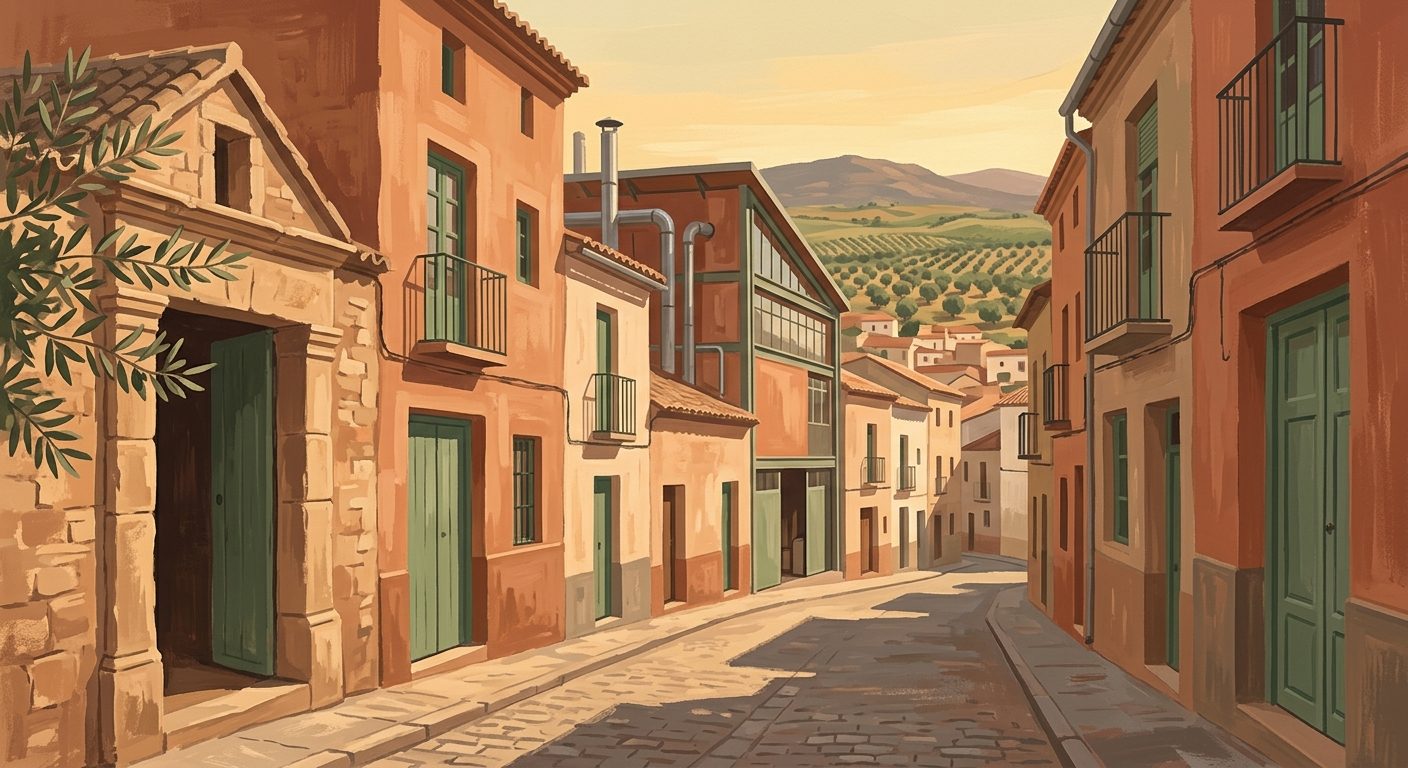
Driving inside the historic centre is not recommended for visitors as the streets are extremely narrow and often end in cul-de-sacs. There is a designated public car park at the entrance of the village (near the Mirador de la Puerta de la Villa). From there, all major sites are accessible on foot, though be prepared for steep climbs.
Where to Eat Nearby
Dining in Hornos revolves around the traditional mountain cuisine of the Sierra de Segura. Restaurante El Mirador is a reliable choice, offering a terrace with views over the reservoir. Order the cordero segureño (local lamb), which is prized for its flavour and tender texture. Another excellent option is La Taberna de Hornos, where you can sample ajos pringues (a local pork liver and breadcrumb dish) and andarijos. The focus here is on seasonal ingredients and local olive oil, providing a hearty meal necessary after a day of walking the village’s steep inclines.
Where to Stay
For an authentic experience, look for traditional houses such as Apartamentos Rurales El Mirador, which offer balconies overlooking the valley. These self-catering options allow you to enjoy the silence of the village after the day-trippers have left. Alternatively, the Hospedería de Montaña El Cortijo, located a few kilometres outside the main village, provides a more secluded setting with easier access to the hiking trails and the shores of the Tranco reservoir.