
Things to do · Cádiz
Cycling in Cádiz: A Guide to the Best Coastal and Mountain Routes
From the family-friendly Vía Verde de la Sierra to the challenging climbs of the Grazalema mountains, Cádiz province is a premier destination for cyclists of all levels.
By Dan · Updated 16 July 2026 · 6 min read
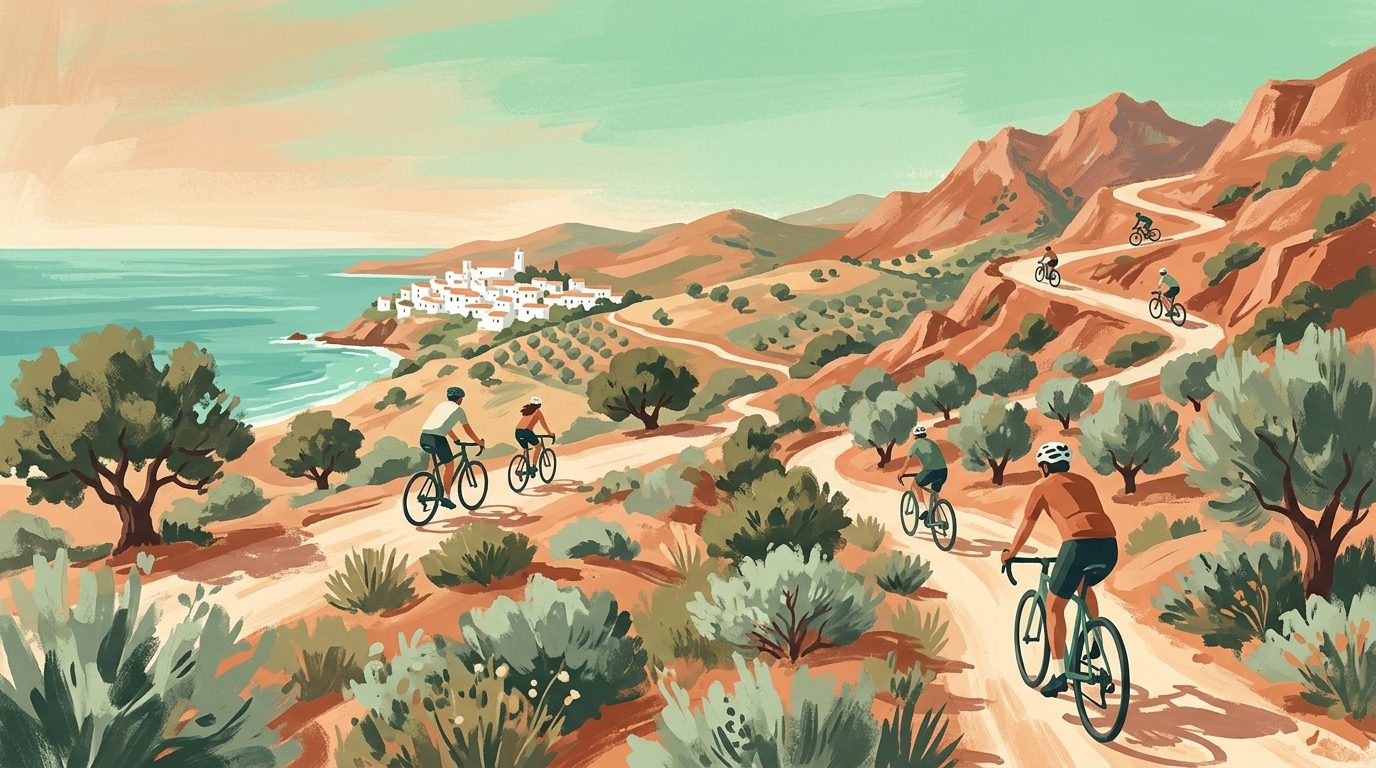
For skirting the Atlantic coastline on a flat cruiser or tackling the steep ascents of the Sierra de Grazalema, Cádiz province offers some of the most varied terrain in southern Spain. It is a region where old railway lines have been reimagined as scenic greenways and coastal paths link ancient watchtowers across sandy dunes.
Cádiz is frequently overlooked by cyclists who head straight for the high peaks of the Pyrenees or the established cycling hubs of Mallorca, yet its diversity is a major advantage. The province is roughly divided into three distinct zones: the flat, breezy Atlantic coast, the rolling vineyard-dotted hills around Jerez, and the dramatic limestone peaks of the Sierra de Cádiz in the north. This variety means you can spend a morning riding through prehistoric cork oak forests and an afternoon cooling off in the ocean after a flat coastal burn.
The cycling culture here is growing rapidly, supported by a network of well-maintained trails and a climate that allows for year-round riding. While the summer heat requires an early start, the mild winters are perfect for long-distance road cycling or gravel grinding. The infrastructure is improving every year, with the EuroVelo 8 route taking shape along the coast and the Vía Verde network providing safe, car-free environments for families. You can cádiz delivers an authentic Spanish experience without the crowds found in more commercialised regions if you are a dedicated roadie looking for thousand-metre climbs or a casual holidaymaker wanting a gentle pedal between beach bars.
The Best Places for Cycling in Cádiz
The Vía Verde de la Sierra
Running for 36 kilometres between the villages of Olvera and Puerto Serrano, this is arguably the most famous cycling route in the province. It follows the path of a railway line that was never finished, meaning the gradients are exceptionally gentle, rarely exceeding 3%. This makes it a perfect choice for families or those who want to take in the scenery without a heavy physical toll. The route takes you through 30 tunnels (some over a kilometre long and equipped with motion-sensor lighting) and over four impressive viaducts.
One of the highlights is the Peñón de Zaframagón, a massive limestone outcrop that houses one of the largest colonies of tawny vultures in Europe. There is an observation centre located in the old railway station nearby. For bike hire, Sesca at the Olvera station provides mountain bikes and e-bikes starting from around €20 per day (check the operator's website before travelling). There are several restored station buildings along the way that now serve as cafes and small hotels, ideal for a mid-ride lunch of local goat’s cheese and chorizo.
The Pueblos Blancos and the Grazalema Loop
For road cyclists, the Sierra de Grazalema is the primary draw. The terrain here is challenging, with steep, winding roads and significant elevation gain. The classic "Pueblos Blancos" circuit often starts in Grazalema or Zahara de la Sierra. The most iconic climb is the Puerto de las Palomas, which reaches 1,357 metres. From the top, you have panoramic views of the Zahara-el Gastor reservoir and the surrounding peaks. The descent towards Zahara is technical and exhilarating, with a series of tight switchbacks.
This area is best suited for experienced riders with good fitness levels. Roads are generally in excellent condition, and drivers in this part of Spain are notoriously respectful of cyclists, often giving wide berths on narrow mountain passes. Local operators like Cycling Country offer supported tours through these mountains, providing mechanical support and luggage transfers.
The Coastal Routes: Conil to Tarifa
The Costa de la Luz offers a completely different experience. Here, the challenge is not elevation, but the wind. The "Levante" (an easterly wind) can be fierce, making a ride towards Tarifa feel like pedalling through treacle, while a tailwind in the opposite direction will make you feel like a pro. A particularly enjoyable section is the pine forest of Pinar de la Breña near Barbate. The trails here are sandy and better suited to mountain bikes or gravel bikes.
You can follow parts of the EuroVelo 8 route, which stays relatively close to the shore. A great 20-kilometre stretch runs from Conil de la Frontera down to Los Caños de Meca, passing the Cape Trafalgar lighthouse. The terrain is a mix of gravel tracks and quiet secondary roads. In Conil, Bici-Conil offers rentals and guided group rides for those who want to find the best tracks through the coastal cliffs.
Jerez and the Sherry Vineyards
The countryside surrounding Jerez de la Frontera is a rolling landscape of albariza soil, the chalky white earth that produces the region’s famous Sherry grapes. This is fantastic territory for gravel biking. There is a vast network of cañadas reales (ancient livestock paths) that criss-cross the vineyards. These paths are generally flat or gently undulating, providing a meditative riding experience through the vines.
A popular route is the Cañada del León, which connects Jerez with the Bay of Cádiz. It is a rugged track that avoids main roads and gives you a sense of the agricultural heart of the province. If you prefer staying on the tarmac, the roads between Jerez, Sanlúcar de Barrameda, and El Puerto de Santa María are relatively quiet, though you should be mindful of the midday sun as there is very little shade in the vineyard country.
Cádiz City and the Bay Area
Cádiz city itself is incredibly compact, but it is well-connected by a new network of cycle lanes. You can cycle the entire perimeter of the old town along the sea walls in about 40 minutes. For a longer excursion, the Vía Verde Entre Ríos links Chipiona, Rota, and Sanlúcar de Barrameda. This coastal greenway is flat, paved, and separated from traffic, making it an excellent option for a relaxed day out with stops at various beaches along the way.
Practical Information
Cycling in Cádiz requires some planning, particularly regarding the weather. The best months for riding are March to June and September to November. July and August are often too hot for any serious exertion after 10:00 am. If you are riding in the Sierra de Cádiz during winter, be aware that temperatures can drop significantly, and snow is not unheard of on the highest passes.
Bike hire prices generally range from €15 for a basic city bike to €50+ for a high-end carbon road bike or an e-mtb (check prices with local operators before travelling). Most operators will require a passport or ID and a small deposit. It is standard practice for rental shops to provide a helmet, a basic repair kit, and a lock, but always double-check this before heading out. Water is essential; while many villages have public fountains, the coastal routes and the vineyard tracks can be very dry, so carry more than you think you will need.
Local Tips
- Watch the Wind: Check the wind forecast before planning your route, especially on the coast. If a strong Levante is blowing, stay in the sheltered valleys of the Sierra or plan a route where the wind is at your back for the return leg.
- The Venta Culture: Stop at a venta (roadside inn) for breakfast or lunch. They are the heart of Andalucían cycling culture. A "mollete de la sierra" with olive oil and tomato is the traditional fuel for local riders.
- Early Starts: In the warmer months, aim to be on the road by 8:00 am. You will finish your ride just as the heat becomes intense, leaving the afternoon for a siesta or the beach.
- Train Access: Renfe Media Distancia trains between Cádiz, Jerez, and Sevilla allow bikes, but space is limited to three per train (verify current policies with Renfe before travelling), so book your ticket in advance or arrive early at the station.
Last reviewed: 26 October 2026 · Editorial policy
Related guides
A Guide to Cycling in Málaga: From Coastal Paths to Mountain Peaks
Discover the best of cycling in Málaga, from the gentle coastal Senda Litoral to the challenging peaks of the Montes de Málaga and the rugged Axarquía hills.
6 min read
Cycling in Almería: The Ultimate Guide to Desert Trails and Mountain Passes
Discover the rugged beauty of Almería on two wheels, from the cinematic Tabernas Desert to the challenging switchbacks of the Alto de Velefique.
6 min read
A Guide to Cycling in Granada: From High Peaks to Valley Floors
From the highest paved road in Europe to technical mountain bike trails through olive groves, Granada offers some of the most varied terrain in Andalucía for cyclists of all disciplines.
6 min read
Cycling in Jaén: From Infinite Olive Groves to Rugged Mountain Peaks
Discover why Jaén is Spain’s best-kept secret for cyclists, from the flat Vía Verde del Aceite to the technical trails of the Sierras de Cazorla.
6 min read
Cycling in Córdoba: The Best Routes and Practical Guide
From the flat trails of the Guadalquivir valley to the rugged peaks of the Sierras Subbéticas, Córdoba offers a diverse landscape for cyclists of all abilities.
6 min read
Bikepacking in Andalucía: A Complete Guide to Two-Wheeled Adventures
Discover how to plan the ultimate bikepacking adventure in southern Spain. Our guide covers route planning, essential gear, weather windows, and tips for navigating wild terrain.
13 min read
More from Cádiz

The Ultimate Guide to Golf in Cádiz Province
Discover the finest golf courses, resorts, and practical tips for planning your next golf holiday in the province of Cádiz. From championship layouts to essential details on green fees and club hire, everything you need is covered.
11 min read
Riding the Atlantic: A Guide to Water Sports in Cádiz
Discover the best kitesurfing, surfing, and whale watching across the province of Cádiz, from the wind-whipped shores of Tarifa to the Atlantic rollers of El Palmar.
6 min read
Discover the Enchanting Pueblos Blancos: Andalucía's Whitewashed Gems Await
Journey through Andalucía's iconic Pueblos Blancos, where historic whitewashed villages cling to dramatic hillsides, offering wide views and authentic Spanish charm.
5 min read
Hiking and Walking in Cádiz: From Atlantic Cliffs to Mountain Peaks
Discover the diverse landscapes of Cádiz, from the high-altitude Spanish Fir forests of Grazalema to the dramatic coastal cliffs of Barbate.
6 min read
Day Trips from Cádiz: Coastal Castles and Sherry Cities
Discover the best day trips from Cádiz, featuring world-class sherry bodegas in Jerez, the hilltop beauty of Vejer, and the ancient Roman ruins of Bolonia.
7 min read
Newsletter
More stories from Andalucía
Weekly notes, seasonal picks, and the next guides worth bookmarking.