
Things to do
A Birder’s Guide to Andalucía: Migration, Marshes, and Mountains
Andalucía is a global birdwatching hotspot, offering everything from massive raptor migrations over the Strait of Gibraltar to the iconic flamingo colonies of Doñana.
By Dan · Updated 16 July 2026 · 7 min read
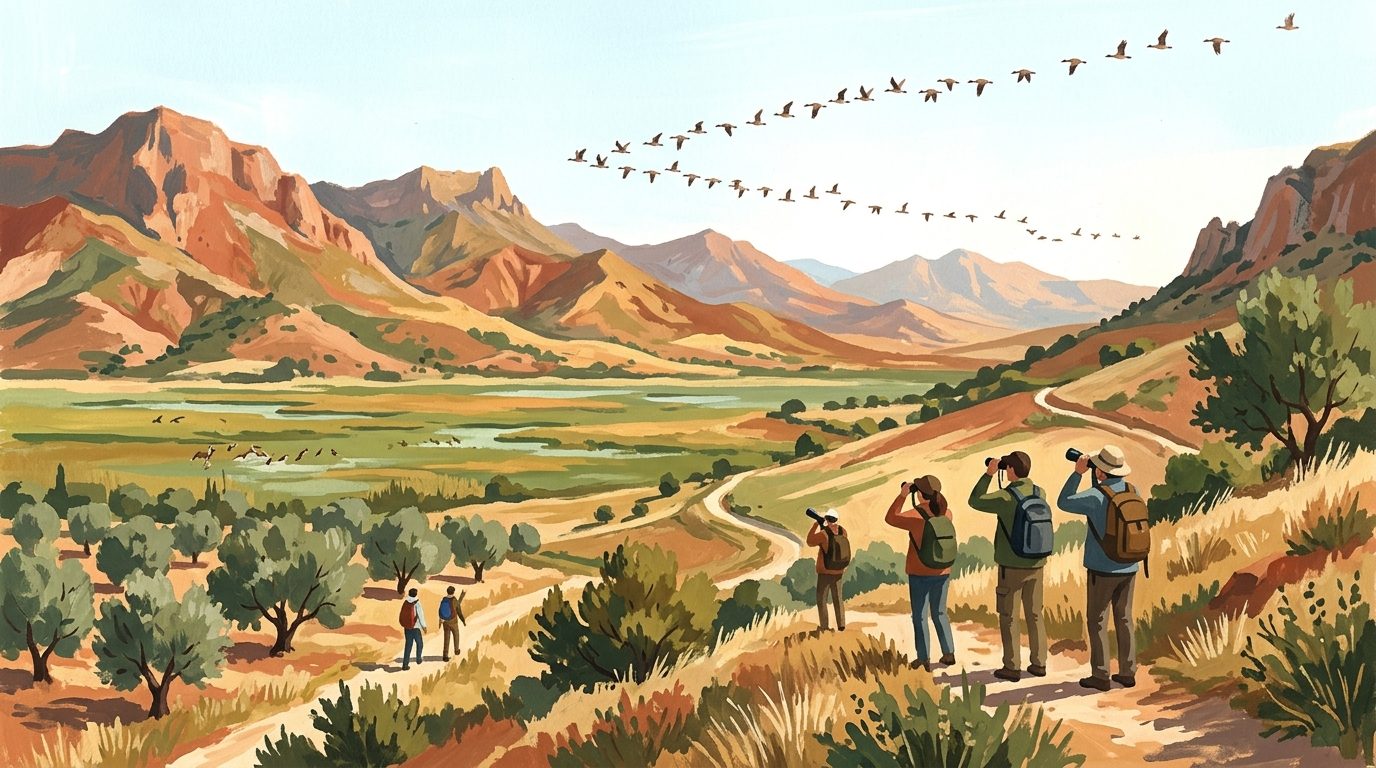
Andalucía serves as the primary gateway for millions of birds moving between Europe and Africa, offering some of the most spectacular avian displays in the world. From the massive raptor migrations over the Strait of Gibraltar to the pink horizons of flamingo-filled lagoons, the region is a year-round destination for enthusiasts.
Andalucía occupies a unique geographical position that makes it one of the most important birdwatching hubs in Europe. Situated at the southernmost tip of the continent, it is separated from Africa by just 14 kilometres of water at the narrowest point of the Strait of Gibraltar. This creates a natural bottleneck that forces hundreds of thousands of soaring birds to congregate here during their biannual migrations. However, the appeal of this region extends far beyond the migration seasons. The diversity of habitats is extraordinary, ranging from the high-altitude peaks of the Sierra Nevada and the rugged limestone crags of Grazalema to the vast, tidal marshes of the Guadalquivir and Odiel rivers.
For a serious twitcher looking for rare raptors or a casual nature lover hoping to see a colony of flamingos, Andalucía provides an accessible and rewarding experience.The climate allows for comfortable birding even in mid-winter, when many northern European species descend to the warmer southern wetlands. In the spring, the region transforms into a breeding ground for exotic species like the European Bee-eater and the Roller, adding splashes of vivid colour to the olive groves and cork oak forests. With well-maintained visitor centres, accessible hides, and a growing network of professional guides, exploring the avian life of Southern Spain has never been more straightforward.
The Best Places for Birdwatching in Andalucía
The Strait of Gibraltar: The Great Migration
The area around Tarifa and Algeciras is legendary among birdwatchers. During the spring (March to May) and autumn (August to October), the sky here can be filled with thousands of Honey Buzzards, Black Kites, Griffon Vultures, and Short-toed Eagles. The birds wait for the thermal currents and the right wind conditions to make the crossing to Africa. The wind is a critical factor here; the strong Levante (easterly) or Poniente (westerly) winds determine where the birds gather and when they choose to fly.
The Cazalla Bird Observatory, located just outside Tarifa, offers a superb vantage point with views across the water. It is not uncommon to see several hundred Booted Eagles or White Storks in a single hour during peak days. For those interested in seabirds, the boat trips out into the Strait primarily for whale watching also provide excellent opportunities to see Cory’s Shearwaters and Balearic Shearwaters. Local operators like Birding The Strait provide expert-led day trips that track the movement of these birds across the coastal watchpoints.
Doñana National Park: A Wetland Wonderland
Doñana is arguably the most famous nature reserve in Spain. This vast expanse of marshes, sand dunes, and pine forests in the provinces of Huelva and Sevilla is a vital sanctuary for the endangered Spanish Imperial Eagle. The park is a complex ecosystem that changes dramatically with the seasons. In winter, the marshes are flooded and host massive populations of Greylag Geese and various duck species. As spring arrives, the 'vera' (the edge where the trees meet the marsh) becomes a hive of activity with Glossy Ibis, Squacco Herons, and Purple Herons nesting in the cork oaks.
Access to the core of the National Park is strictly controlled to protect the habitat, so booking a guided tour is essential. Companies like Doñana Reservas operate 4x4 tours that depart from the village of El Rocío, taking you deep into the restricted zones. Even without a tour, the promenade at El Rocío overlooks a large lagoon where Greater Flamingos and Spoonbills are frequently seen feeding just metres from the village sand tracks.
Marismas del Odiel: The Pink Horizon
Located just on the outskirts of Huelva city, the Marismas del Odiel is a UNESCO Biosphere Reserve that often gets overlooked in favour of Doñana. However, it is one of the best places in Europe to see Spoonbills, as it hosts a massive breeding colony. The tidal nature of these marshes means that the bird life changes with the clock; as the tide retreats, thousands of waders such as Curlew Sandpipers, Bar-tailed Godwits, and Whimbrels appear on the mudflats. The site is also a success story for Osprey reintroduction, and you can often see these magnificent fish-hawks hunting over the Estero de Domingo Rubio. The visitor centre at Anastasio Senra provides maps and advice on the best walking trails through the salt pans.
Laguna de Fuente de Piedra: Flamingo Central
In the heart of Málaga province lies the largest natural lake in Andalucía. This saline lagoon is famous for hosting the second-largest colony of Greater Flamingos in Europe. In years with sufficient rainfall, up to 20,000 pairs of flamingos nest here, turning the lake into a sea of pink; however, during drought periods, the lagoon can dry up completely, so check local water levels before visiting. The best time to visit is in late spring when the chicks have hatched and the adult birds are most active. The Laguna de Fuente de Piedra Visitor Centre offers elevated views over the water, and there are several hides positioned around the perimeter. It is a stark, beautiful landscape that provides a perfect contrast to the coastal wetlands.
Sierra de Grazalema and the Serranía de Ronda
For those who prefer mountain scenery, the limestone massifs of Grazalema and Ronda are home to some of the largest colonies of Griffon Vultures in Europe. These huge birds can be seen effortlessly catching thermals above the cliffs. The Garganta Verde canyon is a particularly good spot for viewing them at eye level. This area is also the place to look for mountain specialists like the Blue Rock Thrush, Rock Bunting, and the elusive Bonelli’s Eagle. The cork oak forests surrounding the white villages are also home to the Firecrest and various species of woodpecker. Walking the trails around the Cueva del Gato or the Guadiaro River valley is highly productive for birders who enjoy a mix of hiking and spotting.
Guadalhorce Estuary: A Coastal Surprise
Surprisingly, one of the most productive birding sites is located right next to Málaga Airport. The Desembocadura del Guadalhorce is a small reserve at the mouth of the river, but its combination of sea, river, and lagoons attracts an incredible variety of species. It is one of the few places in the region where you are almost guaranteed to see the rare White-headed Duck, with its distinctive blue bill. Because of its location, it acts as a 'service station' for tired migrants arriving from Africa. It is a flat, easy-to-walk site with several well-placed hides, making it a perfect spot for a few hours of birding before a flight.
Practical Information
Birdwatching in Andalucía is generally affordable, as many of the best sites are public natural parks with free entry. However, to get the most out of your trip, hiring a specialist guide is recommended, especially in complex areas like Doñana. Prices for a half-day guided tour typically range from €50 to €90 per person, while private full-day excursions can cost upwards of €200 (check on the operator's website before travelling).
Regarding equipment, a pair of 8x42 binoculars is the standard requirement. If you are visiting the marshes or the Strait, a spotting scope is incredibly helpful for identifying distant waders or raptors. The best seasons are undoubtedly spring (March to May) for breeding birds and migration, and autumn (August to October) for the return journey. Summers can be punishingly hot, so if you visit in July or August, ensure you are out at dawn and finished by midday. Pack light, breathable clothing in neutral colours, a wide-brimmed hat, and plenty of water.
Local Tips
To make your birding trip more successful, download the eBird app, which is widely used by the local birding community to log recent sightings. This helps you track exactly what has been spotted at a specific lagoon or viewpoint in the last 48 hours. Always check the wind forecast before heading to Tarifa; if the Levante wind is too strong, the birds often hunker down and migration stops entirely. Finally, don't ignore the 'ventas' (roadside restaurants) near birding spots; they are often where local guides congregate for lunch and are great places to pick up informal tips on where the latest rare species have been seen.
Last reviewed: 21 June 2026 · Editorial policy
Related guides
Sierra de Aracena: Huelva's Green Highland
An ancient managed landscape where holm oak and chestnut forests meet rare raptors and the iconic Iberian pig. This northern Huelva highland provides one of Andalucía's most intact examples of the dehesa ecosystem.
8 min read
Where to Find Andalucía’s Most Remarkable Wildlife
Discover the best spots in Andalucía to see rare species like the Iberian lynx, migratory whales in the Strait of Gibraltar, and pink flamingos in natural lagoons.
6 min read
A Guide to the Odiel Marshes: Huelva’s Coastal Wilderness
Discover the sprawling tidal wetlands of the Odiel Marshes, a UNESCO Biosphere Reserve home to Europe’s most significant spoonbill colonies and striking pink flamingos.
6 min read
A Guide to El Rocío: Andalucía’s Sandy Pilgrimage Village
Discover El Rocío, a unique Andalucían village where the streets are made of sand and the traditional horse-and-carriage still reigns supreme on the edge of Doñana.
6 min read
Exploring Padul: The Mammoth Route and Wetlands of the Lecrín Valley
Discover the prehistoric secrets of Padul, home to the famous Mammoth Route and one of Andalucía's most vital wetland nature reserves.
5 min read
Where the Sands Shift and the Marismas Breathe: A Guide to Doñana
Discover the wild Atlantic coast of Huelva, where the shifting dunes of Doñana meet the sand-paved streets of El Rocío and the pristine beaches of Mazagón.
8 min read
More guides

The Definitive Guide to Feria de Abril in Sevilla
Discover the cultural nuances, strict dress codes, and insider advice for navigating Sevilla's exclusive spring fair like a seasoned local.
9 min read

Golf in Jaén Province: A Practical Guide to Courses, Clubs, and Holidays
Discover the reality of playing golf in Jaén. From the 9-hole course at La Garza to local societies and combining rounds with olive oil tourism.
12 min read

Golf in Córdoba Province: Courses, Holidays, and Shops
Discover practical tips, course details, and holiday planning advice for playing golf in Córdoba province, from the mountain fairways of Sierra Morena to the historic greens of Los Pedroches.
10 min read

The Ultimate Guide to Golf in Cádiz Province
Discover the finest golf courses, resorts, and practical tips for planning your next golf holiday in the province of Cádiz. From championship layouts to essential details on green fees and club hire, everything you need is covered.
11 min read

Golf in Sevilla Province: Courses, Holidays and Local Pro Shops
Swap the crowded coastal fairways for the refined courses of Sevilla province. Discover top layouts designed by golfing legends, local shops, and expert tips for your next trip.
10 min read

A Complete Guide to Golf in Málaga Province
From championship courses in Marbella to practical advice on club rentals and tee times, discover everything you need to know about playing golf in Málaga province.
11 min read

Golf in Granada Province: A Practical Guide to Courses, Holidays and Gear
Plan your perfect golfing trip with our practical guide to Granada's 18-hole courses. Discover green fees, club rental, and the best locations for a golf holiday.
12 min read
Bikepacking in Andalucía: A Complete Guide to Two-Wheeled Adventures
Discover how to plan the ultimate bikepacking adventure in southern Spain. Our guide covers route planning, essential gear, weather windows, and tips for navigating wild terrain.
13 min read

Hands-on Gastronomy: The Best Cooking Classes in Andalucía
Discover the art of Andalucían cuisine through hands-on workshops, from Triana's market-based schools to specialist Sherry cooking classes in Vejer.
6 min read
Newsletter
More stories from Andalucía
Weekly notes, seasonal picks, and the next guides worth bookmarking.