things to do
A Guide to Cycling in Seville: Two Wheels, No Hills
14 April 2026 · 5 min read · 1,093 words

With over 180 kilometres of segregated cycle lanes, Seville is widely regarded as one of the most bike-friendly cities in Europe. Its flat terrain and sun-drenched avenues make exploring on two wheels both practical and exceptionally pleasant.
With over 180 kilometres of segregated cycle lanes, Seville is widely regarded as one of the most bike-friendly cities in Europe. Its flat terrain and sun-drenched avenues make exploring on two wheels both practical and exceptionally pleasant.
A Guide to Cycling in Seville: Two Wheels, No Hills
Seville underwent a radical transformation in the mid-2000s, turning what was once a traffic-heavy city into a global leader for urban cycling. By installing a comprehensive network of segregated lanes, the local government made it possible to traverse the entire urban centre without ever having to share a lane with a motor vehicle. This was not a slow evolution; it was a rapid, 2007 initiative that saw the city build 80 kilometres of tracks in a single year, a network that has now more than doubled. Today, it is common to see professionals in suits, families with children, and visitors all using the same flat, easy-to-navigate paths.
For the visitor, cycling offers a perspective that walking cannot. Because the city is almost entirely flat—the only 'hills' are the ramps of the bridges—you can cover a vast amount of ground without breaking a sweat. The lanes are clearly marked in green, separated from both pedestrians and cars by low kerbs or bollards, providing a level of safety that is rare in older European cities. Whether you are navigating the narrow fringes of the historic centre or following the wide sweep of the river, the bike is often the fastest and most enjoyable way to get around.
Best Places for Cycling in Seville
The Guadalquivir Towpath
The route along the Guadalquivir River is perhaps the most scenic stretch of cycling in the city. Starting at the Torre del Oro, you can follow the path north towards the Expo ‘92 site on the Isla de la Cartuja, or south towards the lush gardens of the Muelle de las Delicias. The path is wide and provides views of the colourful facades of Triana across the water. On the riverbank, you will find plenty of space to stop and rest under the shade of a plane tree. For those wanting a guided experience of these landmarks, a [AFFILIATE: Guided City Bike Tour in Seville] provides historical context while you pedal along the waterfront.
Parque de María Luisa and Plaza de España
While most of the city’s bike lanes are functional transit routes, the Parque de María Luisa is pure recreation. The park is a maze of tiled fountains, ponds, and shaded avenues. Cycling here is particularly pleasant in the late morning before the heat of the day settles in. The highlight is, of course, the Plaza de España. You can cycle right up to the edges of the grand semicircular building, which was constructed for the Ibero-American Exposition of 1929. The plaza is vast, and seeing it from the seat of a bicycle allows you to appreciate the scale of the architecture and the intricate ceramic work representing Spain's provinces without the fatigue of a long walk. Many local operators offer specific park tours, such as a [AFFILIATE: Parks and Architecture Bike Tour in Seville].
The Triana Loop
Cross the Puente de Isabel II (known locally as the Triana Bridge) to enter the Triana district. This area has a distinct identity from the rest of Seville. The cycle lanes here take you through the heart of the neighbourhood, past traditional ceramic workshops and lively food markets. One recommended route is to cycle through Triana, then loop back over the Puente de San Telmo, passing the Palacio de San Telmo on your way back into the city centre. This circuit gives you a feel for both the traditional and the grand, institutional sides of the city.
Via Verde de la Sierra (Day Trip)
If you have a full day and want to escape the city, the Via Verde de la Sierra is one of the finest rail-trails in Spain. Located about an hour’s drive from Seville, this converted railway line runs for 36 kilometres between the villages of Olvera and Puerto Serrano. It is entirely car-free and takes you through 30 tunnels and over four viaducts. The scenery is spectacular, featuring olive groves and the Peñón de Zaframagón, home to one of Europe’s largest colonies of griffon vultures. Several companies in Seville offer transport to the start of the trail, including bike rental and return pick-up. You can book this as a [AFFILIATE: Via Verde de la Sierra Day Trip from Seville].
The Expo ‘92 Site (Isla de la Cartuja)
For those interested in modern architecture and a slightly more 'retro-futuristic' vibe, the Isla de la Cartuja is a fascinating place to cycle. This was the site of the 1992 Universal Exposition. While some parts have been repurposed as a technology park, many of the original pavilions remain. The roads here are wide, and the cycle lanes are extensive. It is much quieter than the city centre, making it an excellent place for those who want to cycle at a faster pace without having to dodge pedestrians or other cyclists.
Practical Information
Seville’s public bike-sharing scheme is called Sevici. It is remarkably efficient, with over 250 stations across the city. Visitors can purchase a short-term 7-day registration at any station kiosk using a credit card. Once registered, the first 30 minutes of every journey are free. This is perfect for short hops between monuments. However, for a full day of exploring, you may prefer a private rental.
Private rental shops like CenterBici or Elecmove (which specialises in electric bikes) offer more comfortable machines with baskets and locks. Prices typically range from €10 to €15 for a full day. The best time to cycle is between October and May. If you visit in July or August, cycling between 1:00 pm and 7:00 pm is not recommended due to extreme temperatures; instead, join the locals for an evening ride when the air cools and the city comes alive after dark.
Local Tips
Always stay within the green lanes. While Seville is bike-friendly, the local police (Policía Local) are known to issue fines to cyclists caught on pedestrian pavements or going the wrong way down one-way streets. When parking, never leave a rental bike outside overnight, even if locked; most hotels and apartments in Seville are used to guests bringing bikes into the courtyard or hallway. Finally, keep an eye out for 'semana santa' (Holy Week) or the 'Feria de Abril' dates; during these festivals, many bike lanes in the centre are closed or blocked by crowds, making cycling almost impossible in the historic core.
More guides
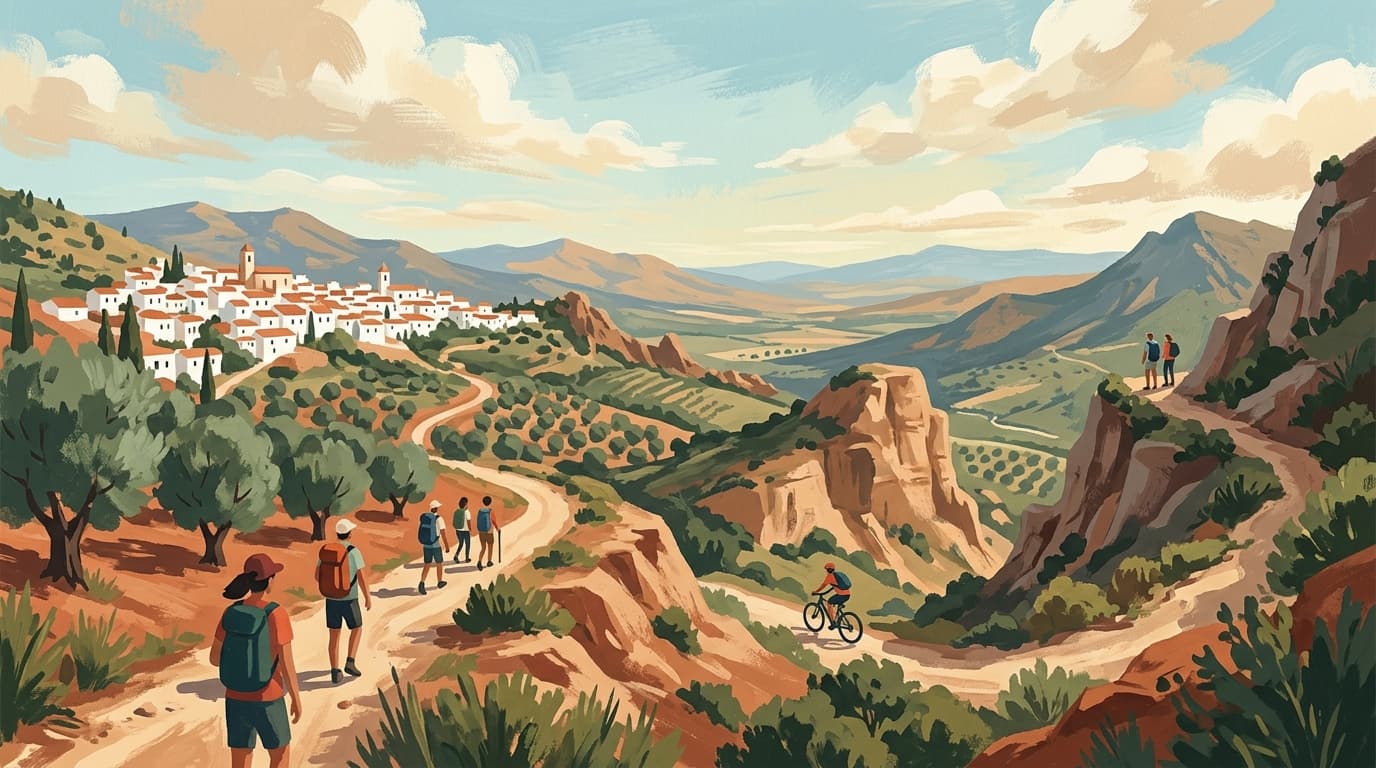
Beyond the Coast: Essential Day Trips from Málaga
Discover the best day trips from Málaga, featuring the clifftop views of Ronda, the suspension bridges of Caminito del Rey, and the ancient dolmens of Antequera.
6 min read
Read guide →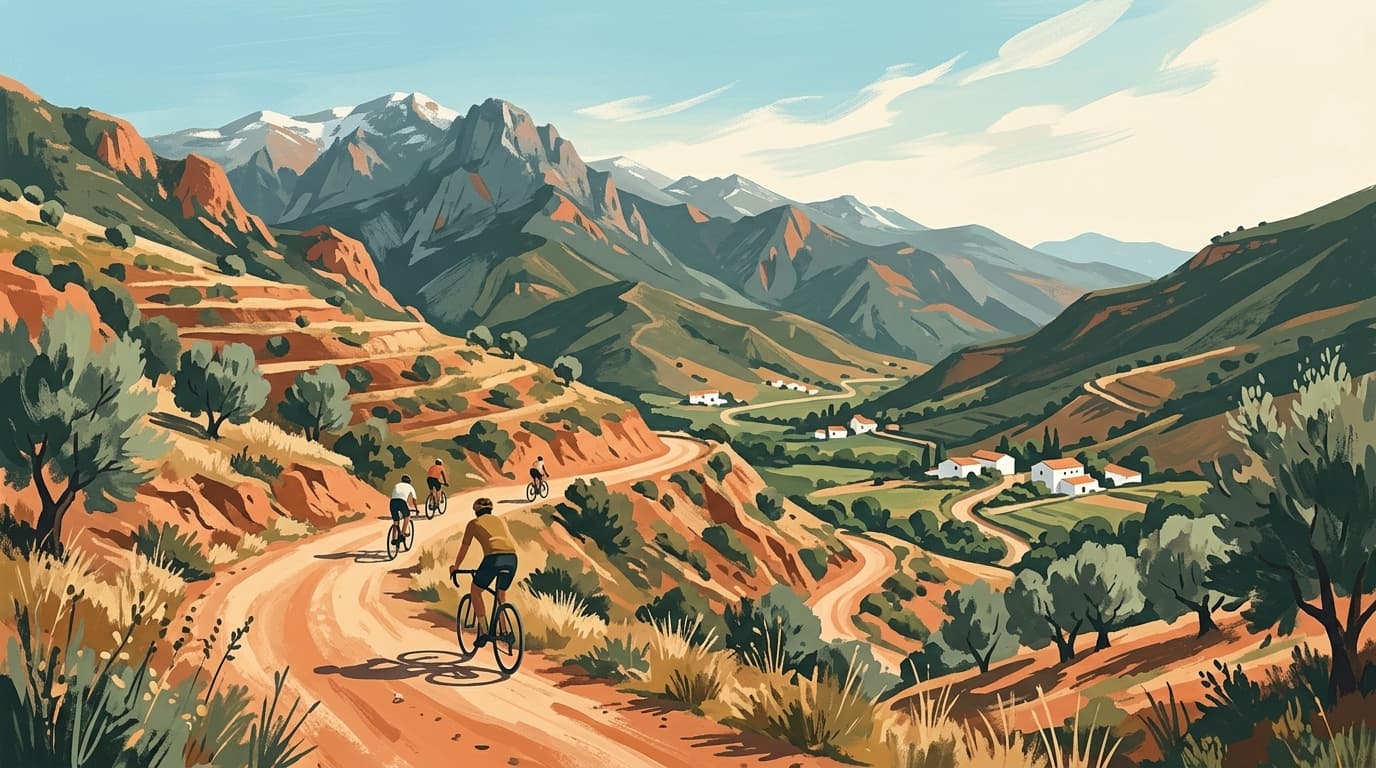
A Guide to Cycling in Granada: From High Peaks to Valley Floors
From the highest paved road in Europe to technical mountain bike trails through olive groves, Granada offers some of the most varied terrain in Andalucía for cyclists of all disciplines.
6 min read
Read guide →
A Birder’s Guide to Andalucía: Migration, Marshes, and Mountains
Andalucía is a global birdwatching hotspot, offering everything from massive raptor migrations over the Strait of Gibraltar to the iconic flamingo colonies of Doñana.
7 min read
Read guide →Newsletter
More stories from Andalucía
Weekly notes, seasonal picks, and the next guides worth bookmarking.