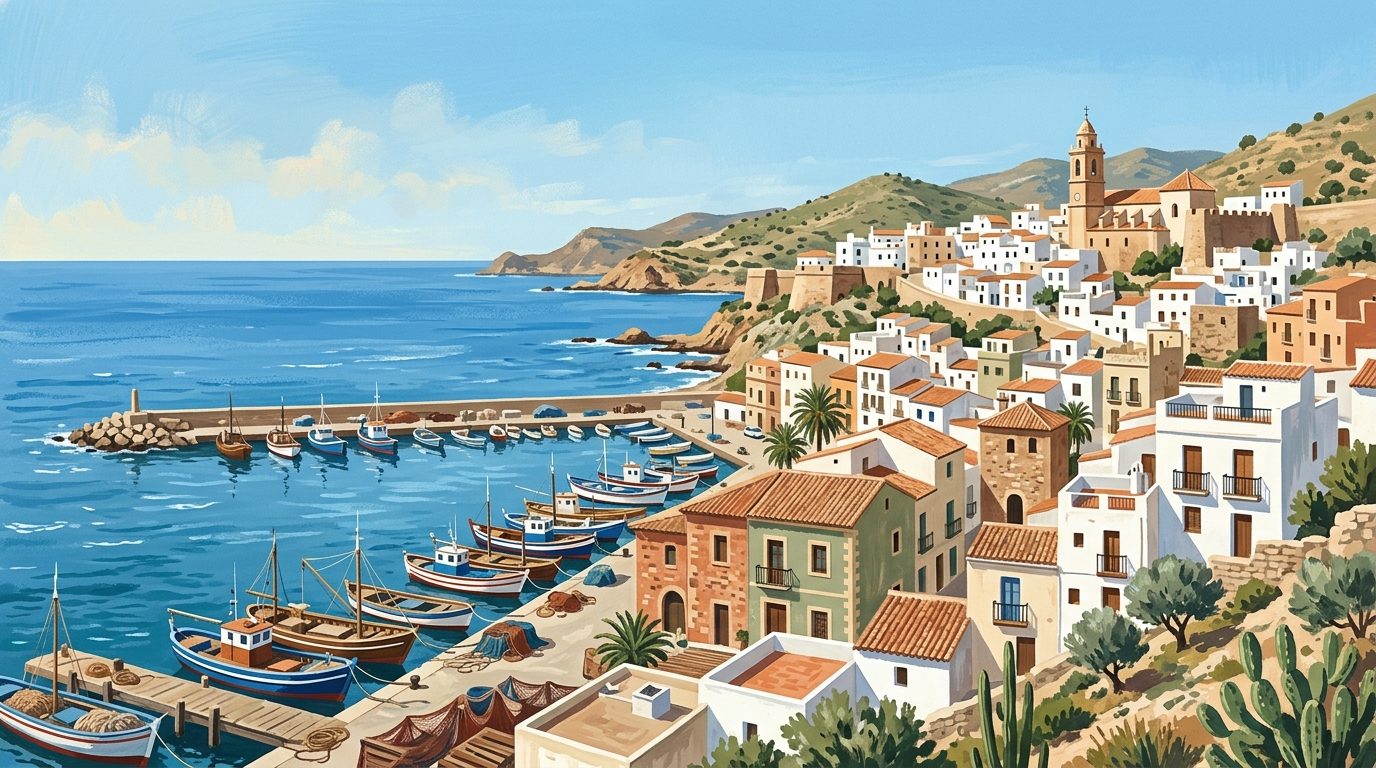
Garrucha is a working fishing port that remains refreshingly immune to the polish of modern tourism. It is the culinary capital of the Levante Almeriense, celebrated globally for its distinctive red prawns.
Garrucha stands apart from its more famous neighbours. While Mojácar offers hilltop whitewashed charm and Vera provides expansive sandy stretches, Garrucha is a town defined by industry, salt air, and a stubborn adherence to tradition. Located on the coast of Almería, this is not a purpose-built holiday resort but a living, breathing port where the rhythm of the day is still dictated by the return of the fishing fleet. For the visitor, this authenticity is its greatest draw. You come here to walk the longest marble promenade in Europe, to watch millions of Euros worth of seafood being traded in minutes, and to eat some of the finest shellfish in the Mediterranean.
Historically, Garrucha was a vital gateway for the mineral wealth of the Sierra Almagrera. In the 19th century, lead and iron ore flowed through its docks, bringing a wave of industrial prosperity that left behind a legacy of handsome architecture and a distinct sense of local pride. Today, the mining chimneys have cooled, but the town’s commercial energy remains focused on the sea. It serves as the primary social and gastronomic hub for the Levante Almeriense region, offering a grounded, Spanish experience that feels worlds away from the generic internationalism of the Costa del Sol.
What to See & Do
The Fish Auction at La Lonja
The beating heart of Garrucha is the Lonja (the fish market), located at the northern end of the port. Unlike many ports where the trade is hidden away, Garrucha allows visitors to witness the daily auction from a dedicated viewing gallery. Every weekday afternoon, usually starting around 17:00, the local trawlers return to the harbour, followed by swarms of seagulls. The catch is unloaded and immediately moved into the digital auction room.
Watching the auction is a masterclass in speed and precision. Crates of sea bass, red mullet, hake, and the legendary red prawns (Gamba Roja de Garrucha) glide past on conveyor belts. Local restaurateurs and wholesalers bid using remote controls, the prices dropping on the screen until someone hits the button. It is a fast-paced environment that underscores the town's connection to the Mediterranean. If you want to understand why the food in Garrucha tastes so fresh, an hour spent here provides the answer.
El Malecón (The Promenade)
One of the most striking features of the town is the Paseo Marítimo, locally known as El Malecón. Stretching for nearly two kilometres, this promenade is paved entirely with Macael marble, the same high-quality stone used in the Alhambra. The walk is flanked by an ornate white balustrade and rows of sturdy palm trees, providing a sophisticated frame for the Mediterranean views.
The Malecón serves as the town’s living room. In the late afternoon, the 'paseo' begins, a traditional Spanish stroll where locals of all generations meet to talk and enjoy the sea breeze. Along the route, you will find numerous ice cream parlours and open-air cafes that stay active until late into the evening. It is the best place to appreciate the scale of the port, which accommodates both a traditional fishing fleet and a modern marina.
Castillo de las Escobetas
At the southern end of the town, near the border with Mojácar Playa, stands the Castillo de las Escobetas. This 18th-century fortress was built during the reign of Carlos III to defend the coast against Berber pirate raids. It is a sturdy, limestone structure with a semi-circular battery that once held heavy artillery. While it is smaller than the great fortresses of Almería city, it is excellently preserved and provides a tangible link to the defensive history of the Levante coast. The castle often hosts cultural exhibitions and serves as an information point, and the surrounding gardens offer a quiet spot for photos of the coastline.
The Parish Church of San Joaquín
Located in the centre of the town, the Iglesia de San Joaquín is a fine example of 19th-century religious architecture. Built during the height of the town’s mining boom, its interior is surprisingly airy and elegant. The church is dedicated to the patron saint of Garrucha, and it serves as the focal point for the town's fervent Holy Week processions and the festivals in August. The square outside the church is a typical Spanish plaza, shaded and surrounded by small local shops and bakeries.
The Town Hall (Ayuntamiento)
For those interested in architecture, the Town Hall is worth a brief stop. It is housed in a former warehouse used for storing minerals, renovated to reflect the neo-classical tastes of the 19th-century mercantile class. It stands as a reminder that Garrucha was once one of the wealthiest ports in the province, a hub of international trade that attracted consulates from across Europe.
Practical Information
Garrucha is highly accessible and serves as a natural transit point for anyone staying in the Levante Almeriense. If you are arriving by car, the town is linked via the A-370 from the AP-7 motorway. Parking can be difficult on the main streets during the summer, but there is a large, paid underground car park at the port which is convenient for both the Lonja and the main restaurant strip. There are also large free parking areas on the outskirts of the town, about a ten-minute walk from the centre.
Opening Times & Costs:
- The Fish Auction: Monday to Friday, typically starting at 17:00. Entry to the viewing gallery is free of charge, though you must remain quiet and respectful of the workers.
- Castillo de las Escobetas: Generally open Tuesday to Saturday, 10:00 to 14:00. Note: Hours may be extended during the peak summer months of July and August. Entry is free.
- Markets: The weekly street market takes place on Friday mornings, spanning several streets near the port. It is an excellent place to buy local fruit, vegetables, and cured meats.
Public transport is reliable, with a regular bus service (Autocares Baraza) connecting Garrucha to Mojácar, Vera, and Almería city. The bus stop is located on the main road running parallel to the port.
Where to Eat Nearby
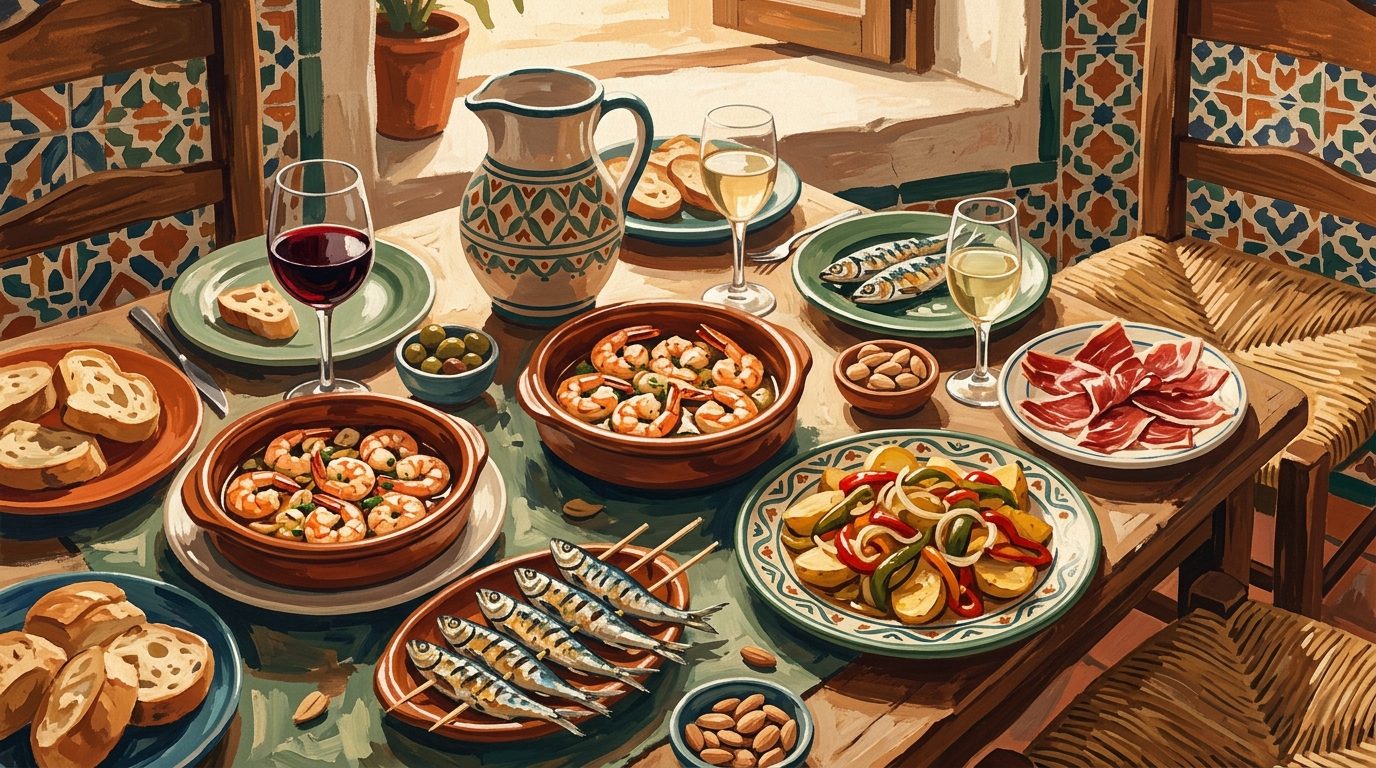
The culinary scene in Garrucha revolves entirely around the 'Gamba Roja'. These prawns are caught in deep underwater trenches nearby and are famous for their intense, sweet flavour. They are traditionally served 'a la plancha' (grilled) with nothing but sea salt.
Restaurante Mesón del Pescador is a local institution located on the Malecón. It is a no-frills establishment where the focus is entirely on the quality of the seafood. The red prawns here are non-negotiable, but the 'fritura variada' (mixed fried fish) is also exceptional. For a slightly more refined atmosphere, Restaurante Rincon del Puerto offers views over the marina and a sophisticated menu featuring fresh turbot and local shellfish. If you prefer a more casual experience, the tapas bars tucked into the side streets away from the front offer excellent seafood snacks with every drink. Look for Bar El Almejero for an authentic local crowd.
Where to Stay
Garrucha is primarily a town of residential apartments, but there are several comfortable options for visitors. Hotel Tikar, located just on the edge of town towards Vera Playa, is a boutique option known for its excellent wine cellar and artistic decor. For a more central, traditional stay, Hostal Cervantes offers clean, simple rooms within walking distance of the port and the beaches. Most visitors find that staying in Garrucha allows them to walk to dinner and enjoy the evening atmosphere without needing a car.