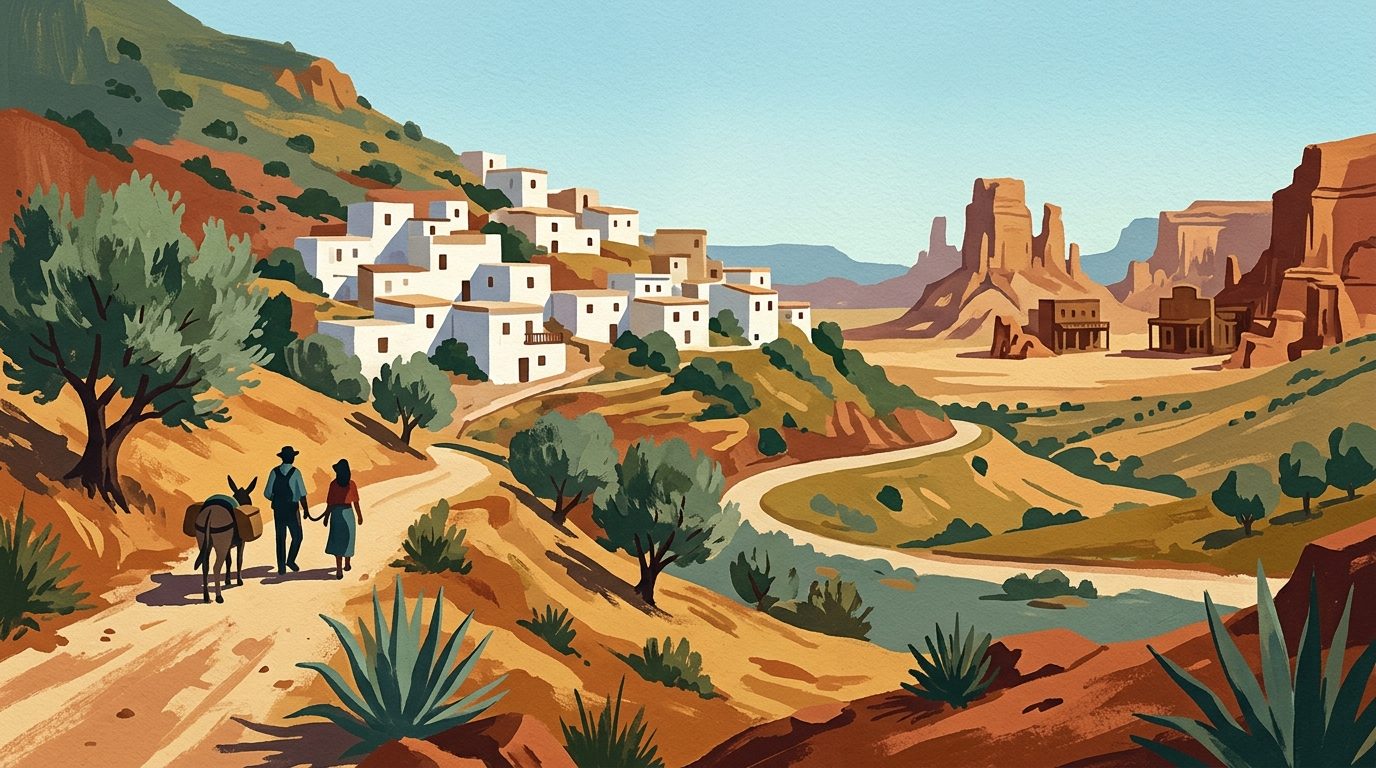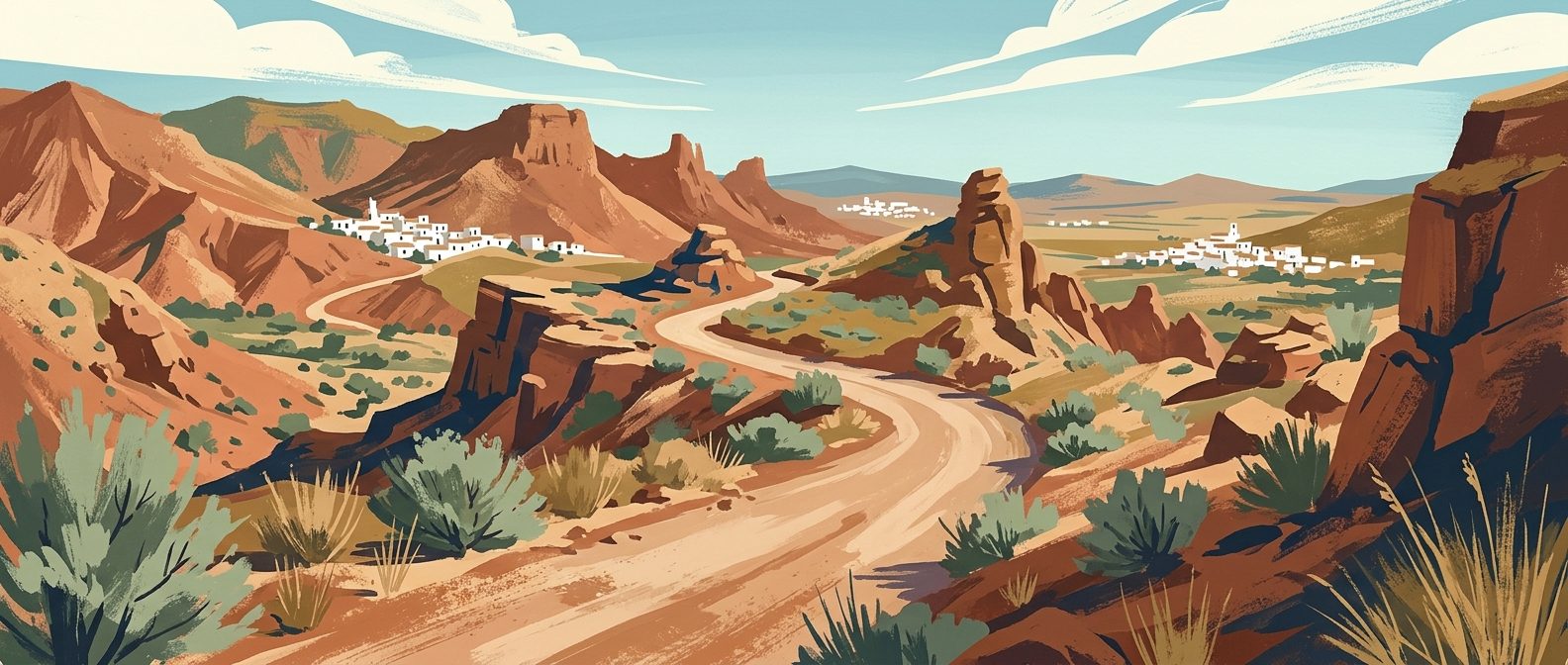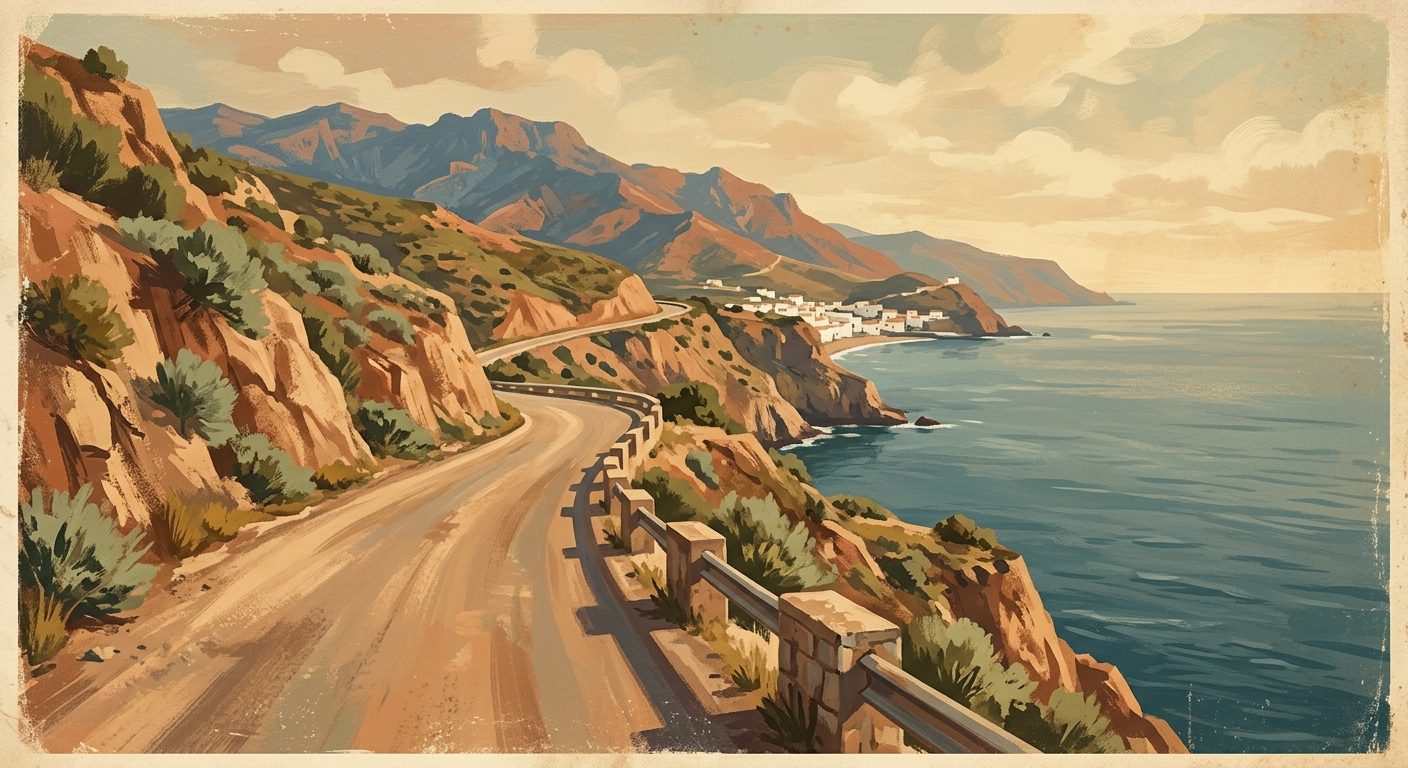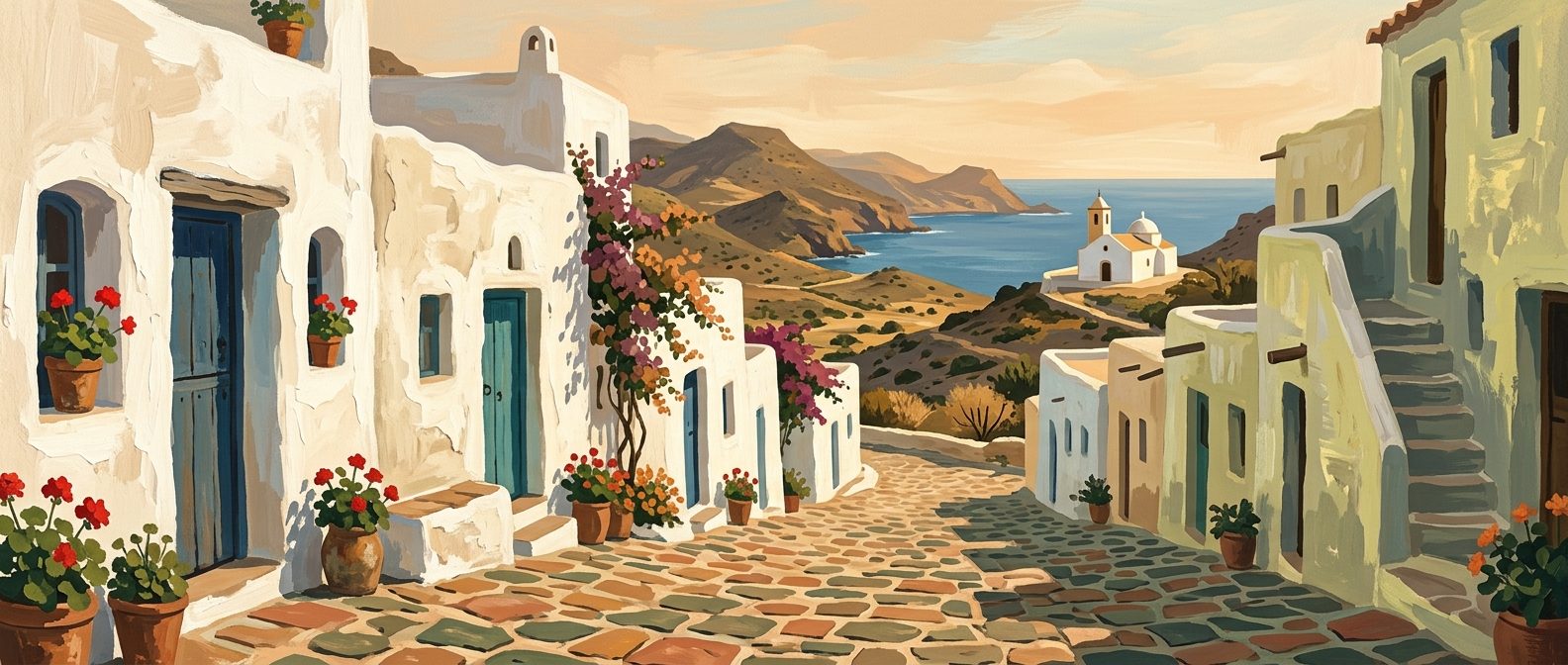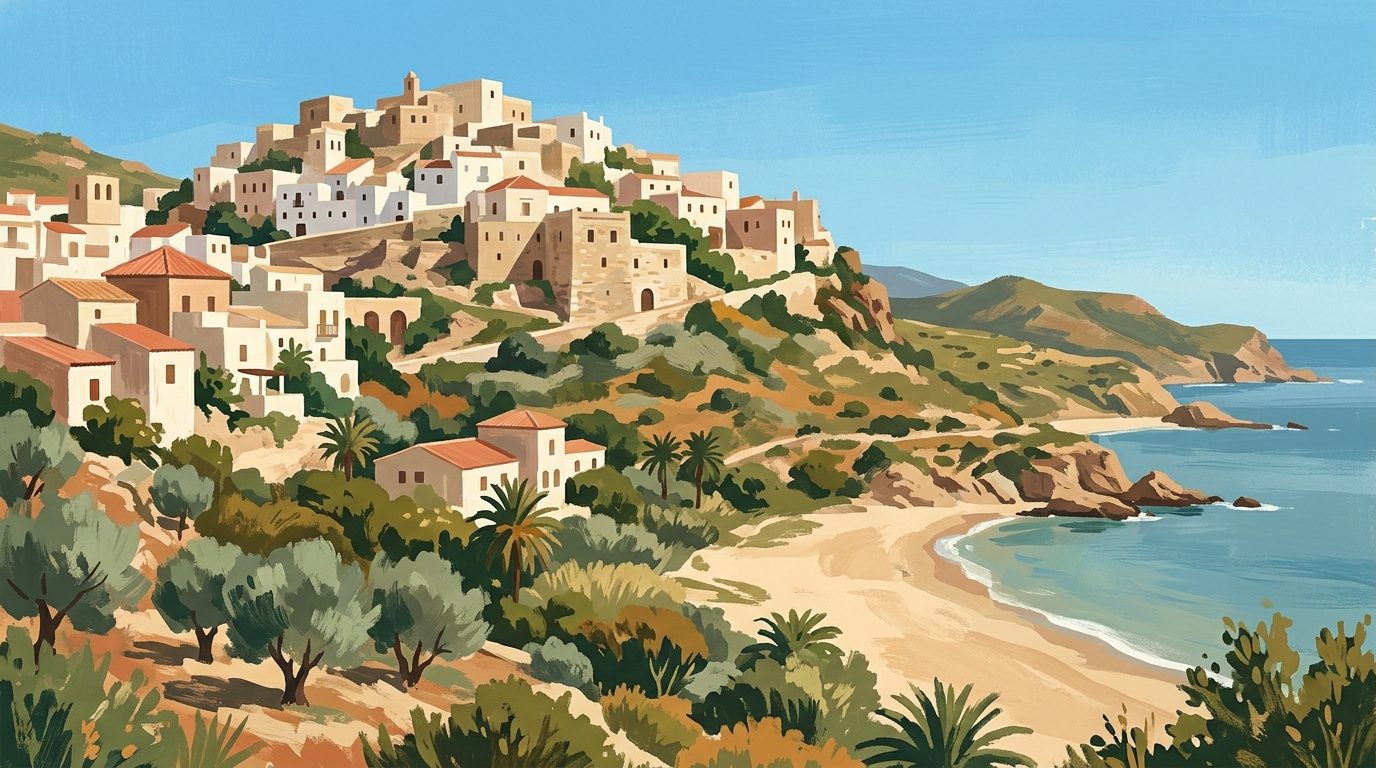
Mojácar presents a striking sight as its cluster of whitewashed houses clings to the foothills of the Sierra Cabrera overlooking the Mediterranean. This Almerian landmark is split into two distinct personalities: the quiet, labyrinthine old town on the hill and the lively residential strip along the shoreline.
Mojácar is a place of sharp lines and deep shadows, where the intense Almerian light reflects off lime-washed walls. Standing at the edge of the Levante Almeriense, it serves as a gateway between the arid interior and the clear waters of the coast. For decades, it has attracted a significant community of international residents, particularly from Britain, who have integrated into the local rhythm while preserving the village's traditional character. The result is a unique atmosphere where traditional Spanish tapas bars sit comfortably alongside international bistros, all within the shadow of a medieval fortress-church.
The history of the village is defined by its strategic position. From the Phoenicians to the Romans and eventually the Moors, many cultures have left their mark on these slopes. The local identity is most clearly represented by the Indalo, a prehistoric figure of a man holding a rainbow, which was originally found in caves nearby and is now painted on almost every doorway as a symbol of good luck and protection. For visitors wandering the steep, flower-lined alleys of the Pueblo or walking the long stretches of sand at the Playa, Mojácar offers a pace of life that feels far removed from the high-rise resorts of the more developed costas.
What to See & Do in Mojácar Pueblo
Exploring the Historic Centre
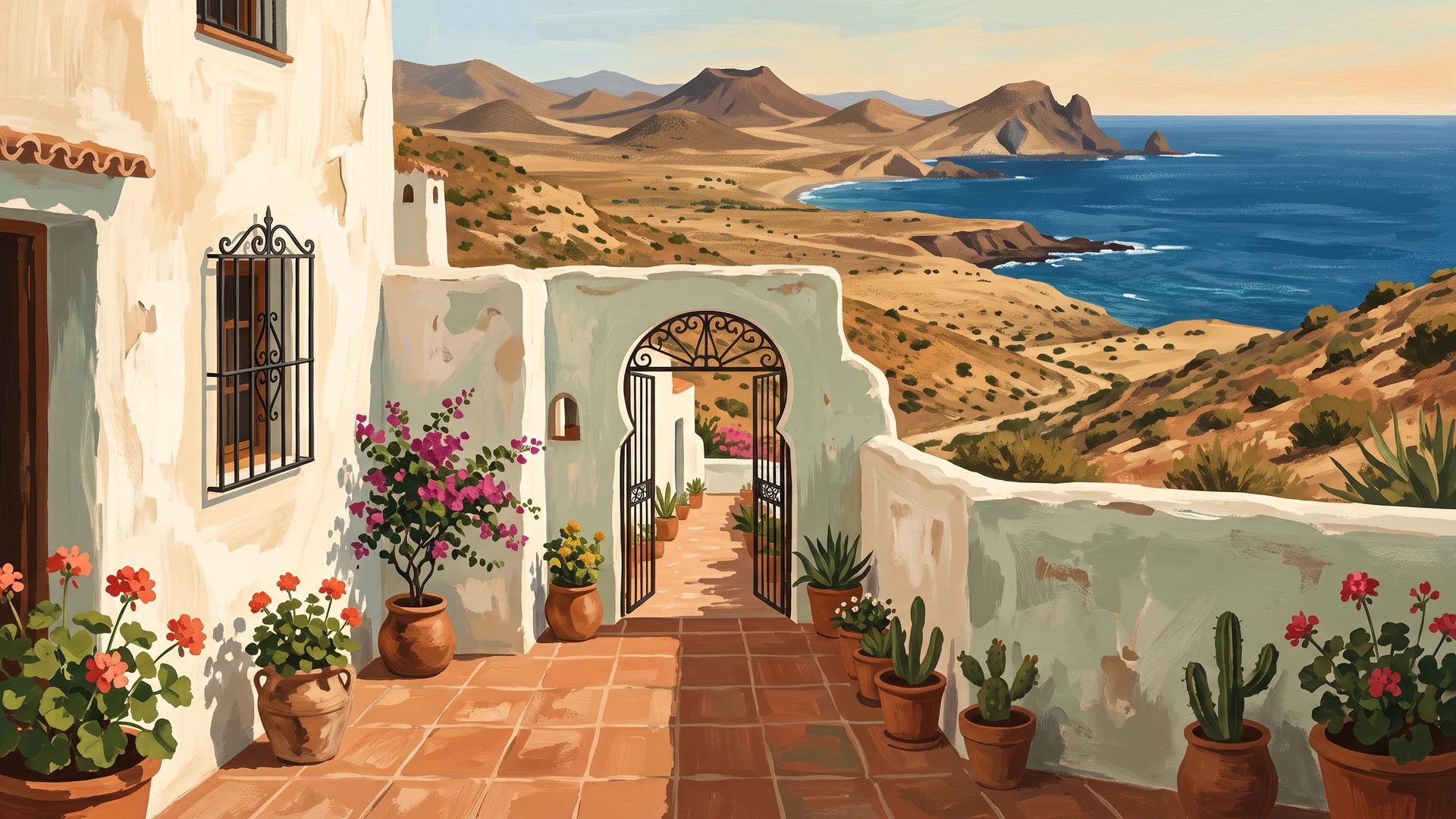
The best way to understand the Pueblo is to get lost in its maze of streets. Starting at the bottom of the hill, you can enter through the Puerta de la Ciudad. This 16th-century stone archway was the original gate to the walled village and carries the town’s coat of arms. From here, the streets narrow and wind upwards, leading you past white houses draped in purple bougainvillea.
As you climb, you will reach the Barrio del Arrabal, the old Jewish quarter. This area is arguably the most pretty part of the village, with its winding lanes and colourful doors. It is a quiet residential zone where the silence is often only broken by the sound of a distant radio or the chime of the church bells.
Iglesia de Santa María
The main church of Mojácar looks more like a military outpost than a place of worship. Built in 1560 on the site of a former mosque, the Iglesia de Santa María was designed to double as a fortress where the villagers could seek refuge during pirate raids. Its thick stone walls and robust square tower reflect this defensive purpose. Inside, the atmosphere is cool and sombre, featuring a large contemporary fresco behind the altar that was painted in the 1980s by the German artist Michael Sucker.
Plaza Nueva and the Viewpoints
The heart of social life in the upper village is Plaza Nueva. This open square is usually filled with people sitting at outdoor café tables. The main draw here is the Mirador, a large terrace that offers panoramic views over the Valley of the Pyramids and the surrounding mountain ranges. On clear days, you can see as far as the Sierra de los Filabres. It is the preferred spot for watching the sunset when the desert landscape begins to glow with orange and pink hues.
For an even higher perspective, follow the signs to the Mirador del Castillo. While the original Moorish castle no longer remains, the plateau where it once stood provides 360-degree views that take in the entire coastline of Mojácar Playa and the neighbouring town of Garrucha.
The Moorish Fountain (Fuente Mora)
Located at the foot of the village, the Fuente Mora is a site of immense historical importance. This is where, in 1488, the Moorish governor of Mojácar met with the emissaries of the Catholic Monarchs to negotiate the village's peaceful surrender. A plaque above the twelve water spouts tells the story of how the governor argued that he and his people were as Spanish as the Christians and should be allowed to stay and live in peace, a request that was unusually granted. Today, local residents still come here to fill large bottles with fresh spring water that flows from the hills.
Mojácar Playa
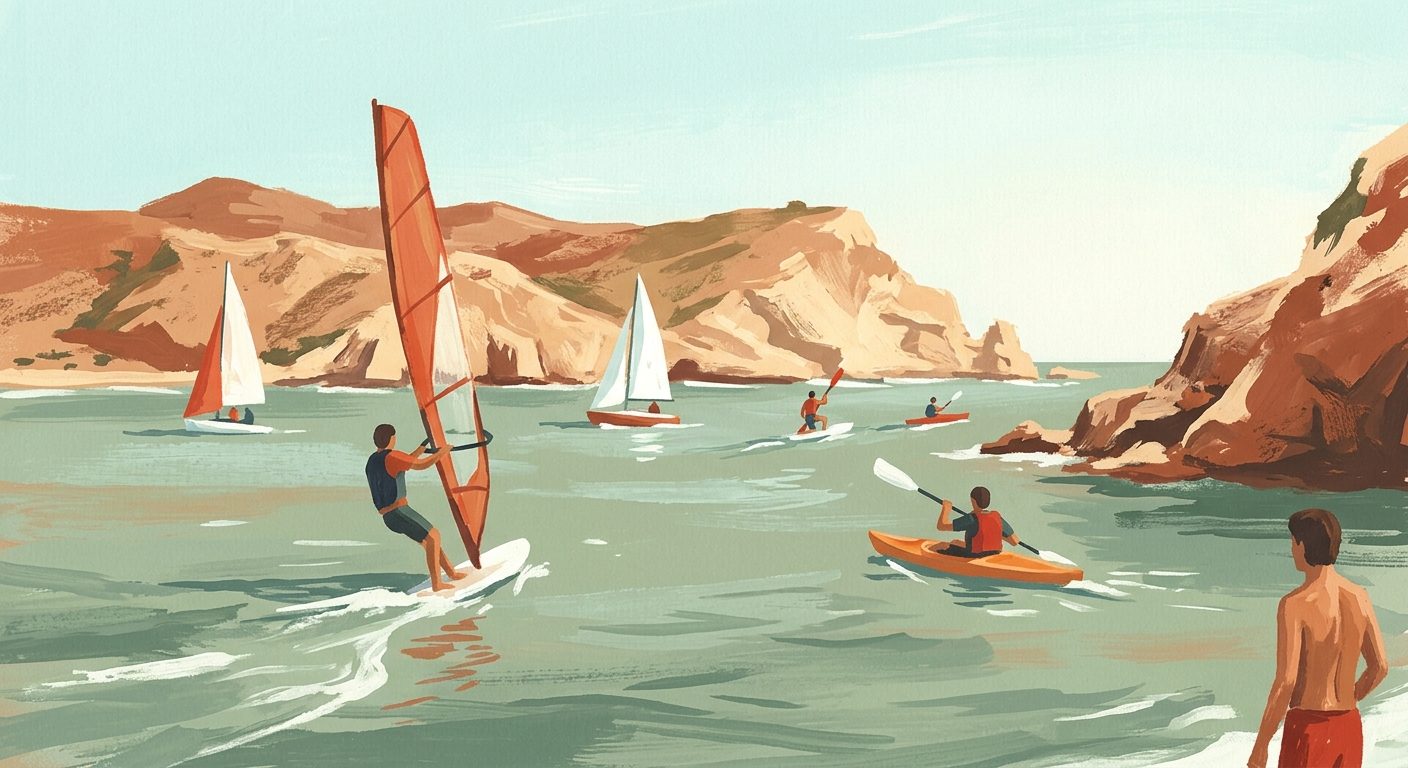
While the Pueblo is about history and views, the Playa is about the sea. The coastline stretches for 17 kilometres, offering a variety of beach experiences. Playa del Cantal is the busiest stretch, known for its chiringuitos (beach bars) and social atmosphere. If you prefer something quieter, head south towards Playa de Macenas, where the development thins out and you are closer to the natural volcanic landscapes of the Cabo de Gata-Níjar Natural Park.
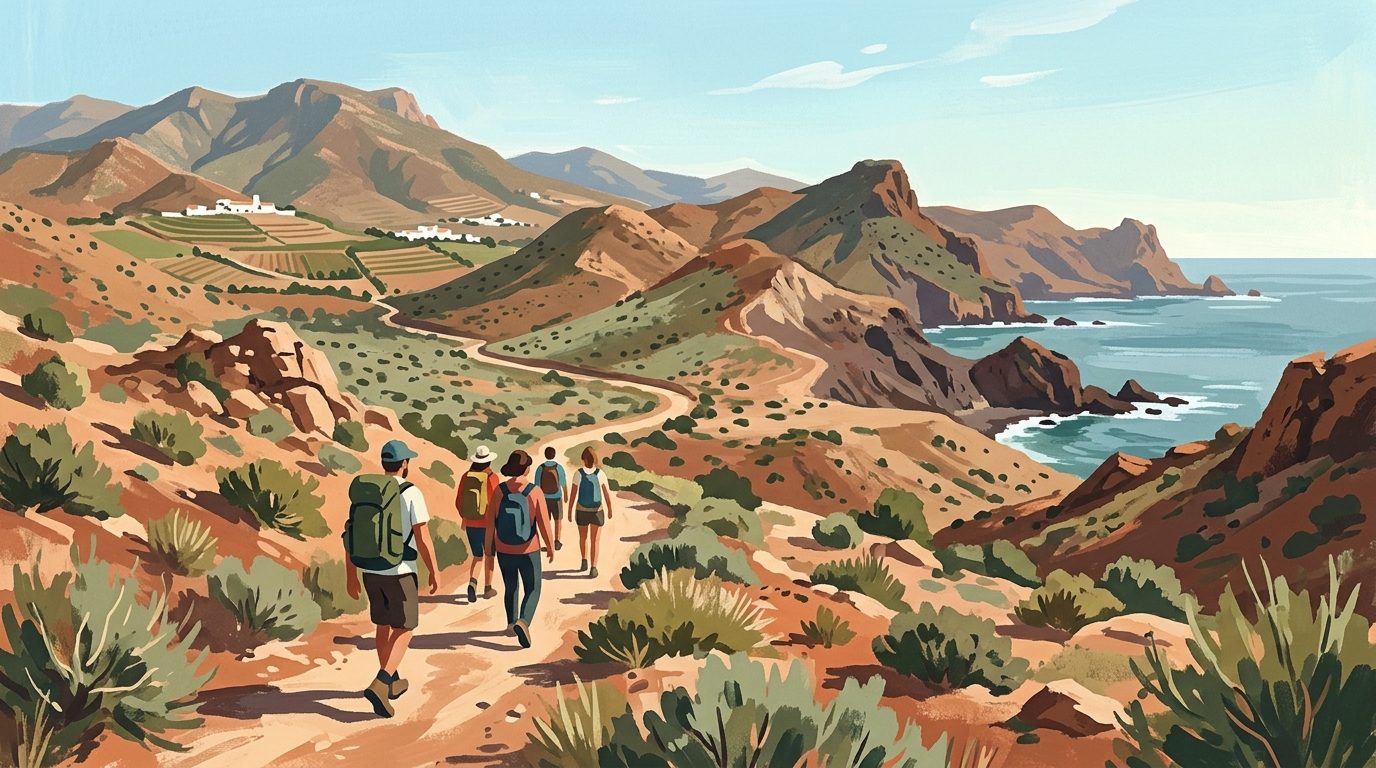
Between the beaches, you will find the Torre del Pirulico, a restored Moorish watchtower sitting on a rocky outcrop. A short hike up to the tower offers a dramatic view of the waves crashing against the cliffs and the natural sea arch below.
Practical Information
Getting There
The nearest airport is Almería (LEI), located roughly 80 kilometres away. A drive from the airport takes about an hour via the A-7 motorway, exiting at Los Gallardos or Vera. If you are travelling from further afield, Murcia Airport (RMU) is about 135 kilometres to the north. ALSA operates bus services from Almería city and Murcia, though schedules can be limited outside the peak summer months.
Local Transport and Parking
A local yellow shuttle bus (the 'Transporte Urbano de Mojácar') connects the Pueblo and the Playa every 30 minutes (less frequently in winter). Check the latest fares on the Transporte Urbano de Mojácar website, as prices are subject to annual review. Driving into the old town is not recommended as many streets are pedestrianised or extremely narrow. Instead, use the large free car park at the entrance to the village. From there, a public elevator (free of charge) takes you from the lower level up to the main square, saving you a steep uphill walk.
Opening Times and Prices
- Iglesia de Santa María: Open daily for visits outside of mass times. Entry is free, though donations are welcome. Mass is held on Saturdays and Sundays at 18:00 in winter, or 20:00 during the active summer schedule (check on the parish website before travelling).
- Casa de la Canana Museum: A preserved 20th-century village house. Entry is approximately €3.50. Opening hours are typically 10:30 to 14:00 and 17:00 to 20:00, closed on Wednesdays and Sunday afternoons.
- Weekly Market: Held every Wednesday morning near the sports centre. It is a good place to find local produce, leather goods, and ceramics.
Where to Eat Nearby
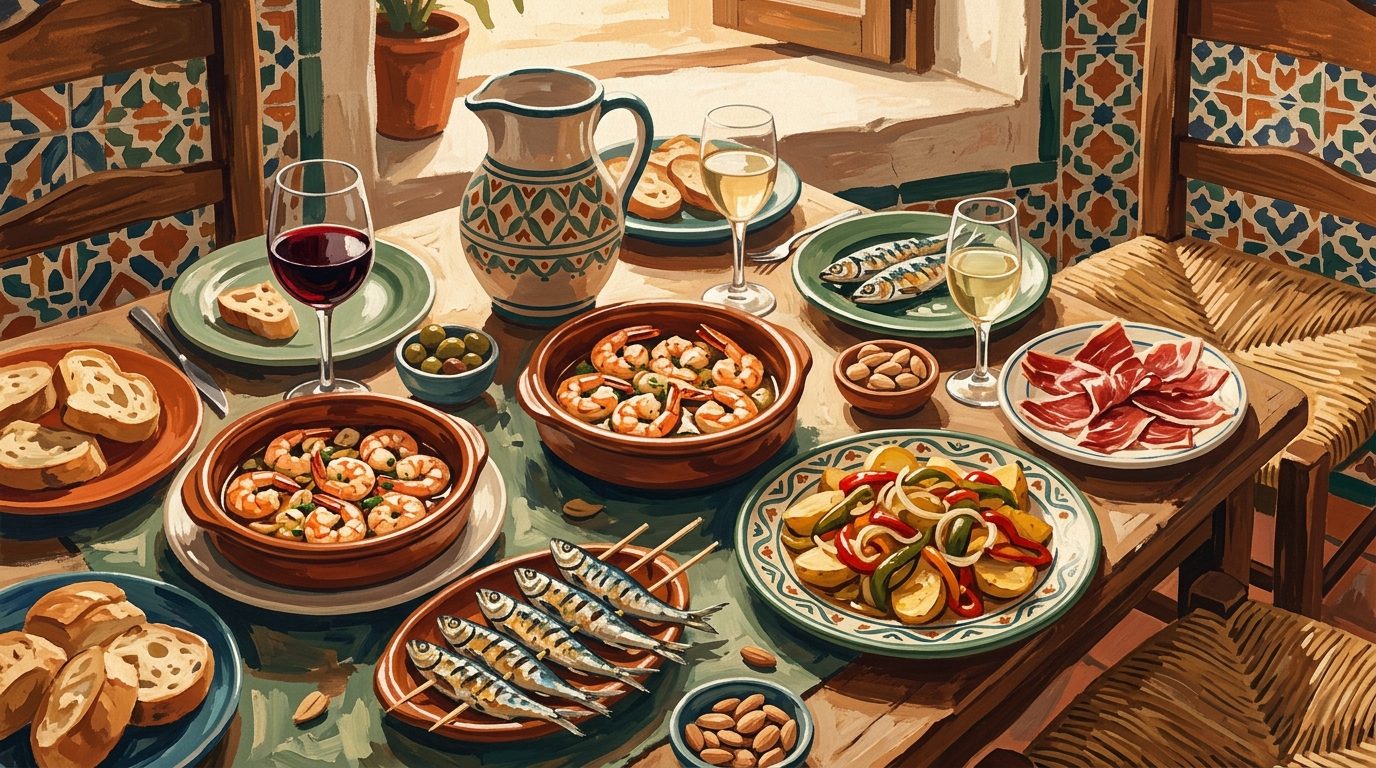
In the Pueblo, Arlequino is a local favourite for its creative take on Mediterranean tapas and its small, welcoming terrace. It is often busy, so booking ahead is sensible during weekends. For a more traditional experience, Bar Chiqui near the town gate is an excellent spot for a classic Spanish breakfast of tostada con tomate or a quick coffee with the locals.
Down on the Playa, Restaurante La Parata offers a slightly more formal dining experience with a focus on seasonal ingredients and mountain views. If you are looking for fresh seafood with your feet in the sand, the various chiringuitos along Playa del Cantal serve excellent grilled sardines and paella throughout the afternoon.
Where to Stay
The Parador de Mojácar is a reliable choice on the beachfront, offering modern rooms and a large swimming pool in a garden setting. For those who prefer the atmosphere of the old town, Hotel Mamabels is a highly-rated option in the heart of the old town, providing quiet rooms and a personal touch. If you are seeking a rural retreat, Cortijo El Sarmiento is an adults-only bed and breakfast located in the countryside between the village and the sea.