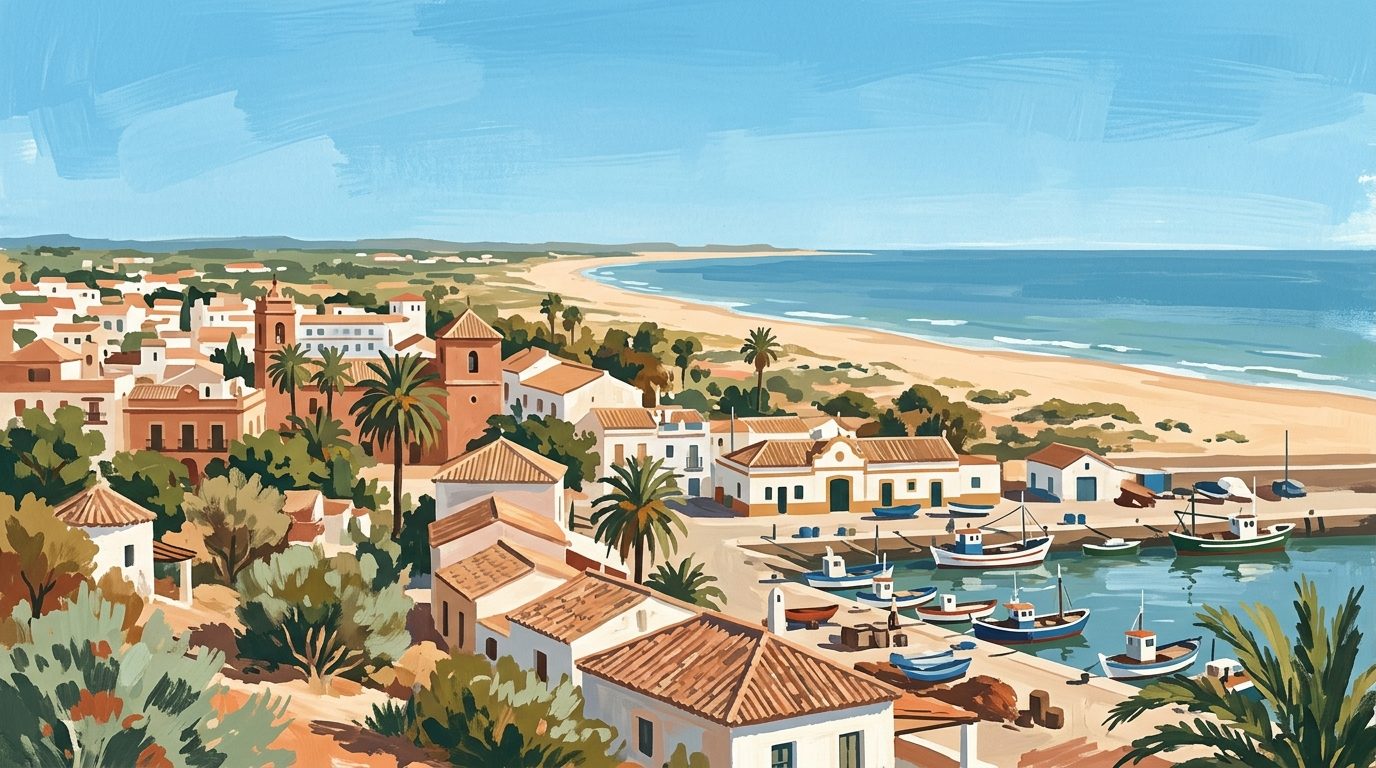
A modern town with deep-rooted maritime traditions, Isla Cristina offers some of the freshest seafood in Spain alongside vast Atlantic beaches. Its location between the saltmarshes and the sea provides a unique landscape for birdwatchers and sun-seekers alike.
Isla Cristina is not your typical Andalucían coastal town. Unlike many of its neighbours which grew from ancient Roman or Moorish settlements, this town was founded in the mid-18th century by fishmongers from Catalonia and Valencia. They were drawn here after the devastating 1755 Lisbon earthquake shifted the coastline, creating a perfect natural harbour. This relatively young history is reflected in the town's layout and its industrious, salt-of-the-earth atmosphere. Today, it stands as the most important Atlantic fishing port in southern Spain, where life revolves entirely around the tides and the daily catch.
Located just seven kilometres from the Portuguese border, the town sits on a peninsula surrounded by the Atlantic Ocean and the Carreras River. This geography creates a distinctive microclimate and a landscape defined by water. Visitors often come for the twelve kilometres of fine golden sand, but stay for the authentic culture that persists despite the rise of tourism. It is a place where you can watch the sunrise over the marshes and the sunset over the ocean, all while enjoying some of the finest gastronomy the Huelva province provides.
What to See & Do
The Lonja (Fish Market)
To understand Isla Cristina, you must visit the Lonja. It is the engine of the local economy. The town handles the highest volume of fresh fish in Andalucía, and the daily auction is a spectacle of speed and expertise. While the main auction floor is restricted to professionals, the surrounding docks are accessible. Watching the blue and white fishing fleet return in the late afternoon, followed by swarms of seagulls, is a quintessentially local experience. You can see crates of the famous gamba blanca (white prawn), langoustines, and various types of tuna being unloaded and rushed to the stalls.
Marismas de Isla Cristina Natural Park
The town is bordered by 2,145 hectares of protected saltmarshes. This tidal wetland is a vital stopover for migratory birds. You can explore the area via the Vía Verde del Litoral, a flat walking and cycling path that follows the route of a former railway line. It connects Isla Cristina with Ayamonte and Lepe. Along the way, keep an eye out for flamingos, spoonbills, and storks. The landscape changes dramatically with the tides; at high tide, the marshes resemble a vast lake, while low tide reveals a complex network of channels and mudflats where locals often forage for clams.
Salinas del Alemán (Salt Pans)
Within the marshes, the Salinas del Alemán (also known as Biomaris) offer a fascinating look at traditional salt production. Here, they harvest flor de sal (salt flowers) by hand using age-old techniques. The pans create a patchwork of colours, from brilliant white to deep pink, caused by the microorganisms that inhabit the high-salinity water. Visitors can take guided tours to learn about the process or even enjoy a magnesium-rich salt bath in the mineral-heavy pools, which are said to have therapeutic properties for the skin and joints.
Playa Central and the Coastal Dunes
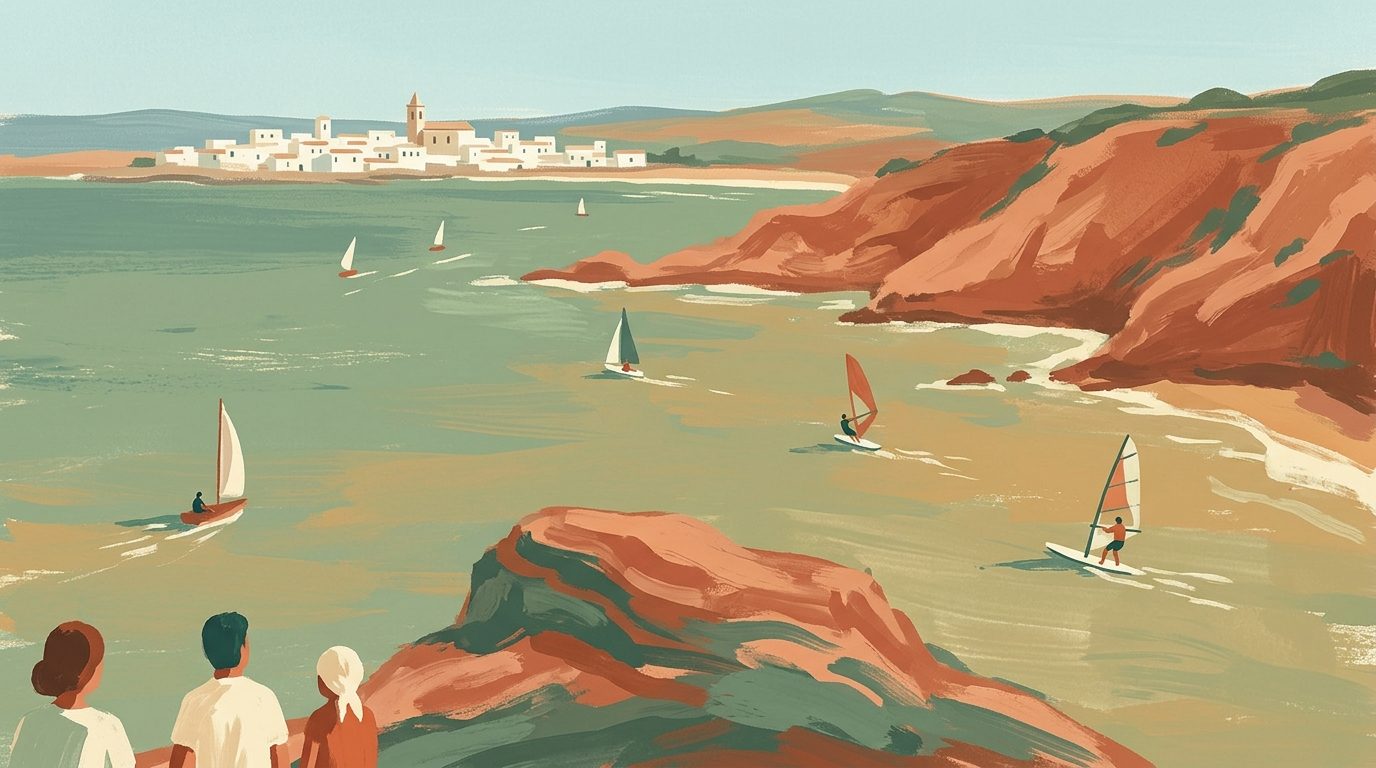
The beaches here are immense. Playa Central is the most accessible, equipped with wooden boardwalks that protect the delicate dune systems. Unlike the rocky coves of the Mediterranean, these Atlantic beaches are wide, flat, and backed by fragrant pine and juniper forests. If you prefer a more secluded spot, head east towards Playa del Hoyo or Casita Azul. The latter is named after a blue house that now serves as a visitor centre for the coastal ecosystem. The water here is cooler and the waves more spirited than on the Costa del Sol, making it a refreshing escape during the peak of summer.
The Carnival Tradition
While most of Spain is quiet in February, Isla Cristina erupts into colour for its Carnival. It is one of the oldest and most famous in Spain, second only perhaps to Cádiz. The tradition survived even through the prohibitions of the Franco era, kept alive by the locals under the guise of "Winter Festivals." The town fills with murgas (satirical musical groups) and comparsas, and the street parties last for over a week. If you visit during this time, expect the town to be transformed by elaborate costumes and a sharp, witty sense of humour.
Practical Information
Getting There
Isla Cristina is located at the western end of the Huelva coast. By car, take the A-49 motorway from Huelva or Sevilla, exiting at junction 122 for the N-446. The drive from Huelva city takes roughly 45 minutes, while Sevilla is about 90 minutes away. If you are coming from Portugal, it is just a 20-minute drive across the international bridge over the Guadiana River.
Public transport is managed by the Damas bus company. There are regular services from Huelva's central bus station and several direct buses daily from Sevilla (Plaza de Armas). The bus station in Isla Cristina is centrally located on Calle de Nuestro Padre Jesús del Gran Poder.
Parking
During the summer months, parking near the beaches can be difficult. There is a large public car park near the Muelle (docks) and several designated areas along the Avenida del Carnaval. In the town centre, spaces are tight, so it is often better to park slightly further out and walk, as the town is largely flat and pedestrian-friendly.
Opening Times & Prices
- Lonja (Fish Market): Guided tours for tourists are often organised by local heritage companies such as Platalea. Individual entry to the auction floor is generally not permitted for safety reasons.
- Salinas del Alemán: Open daily from 10:00 to 20:00 (June to September). In spring (April to May), hours may vary; check with Biomaris locally. Guided tours cost approximately €8 per person. Salt baths are priced separately at around €10.
- Casita Azul Visitor Centre: Usually open Tuesday to Sunday, 10:00 to 14:00. Entry is free.
Where to Eat Nearby
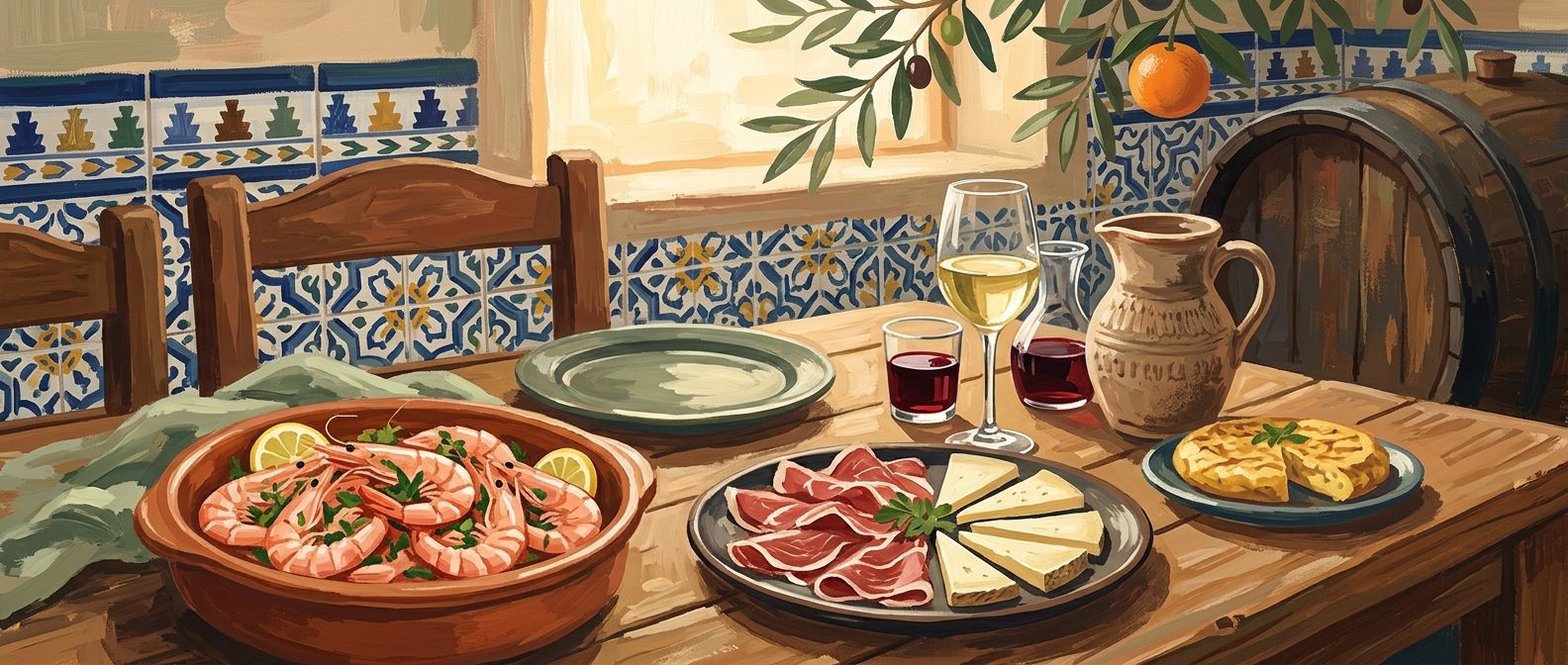
The culinary scene in Isla Cristina is dominated by what comes off the boats each morning. You cannot leave without trying the atún de almadraba (tuna) or the raya pimentonada (skate with paprika). Casa Rufino on Avenida de la Playa is a local institution, famous for its inventive tuna dishes and impeccable service. For a more casual experience, the Mercado de Abastos (central market) features stalls selling fresh seafood that can sometimes be cooked for you at nearby bars. Restaurante La Gola, located at the end of the breakwater, offers stunning views of the river mouth and exceptional grilled fish.
Where to Stay
For those seeking direct beach access, the Occidental Isla Cristina is a popular choice, offering spacious rooms and views over the Atlantic. If you prefer a more boutique feel, Hotel Sol y Mar is situated closer to the town centre and the port, providing easy access to the local taverns and the fish market. There are also several well-maintained campsites nearby, such as Camping Giralda, which sits within the pine forests and offers a more natural setting for your stay.