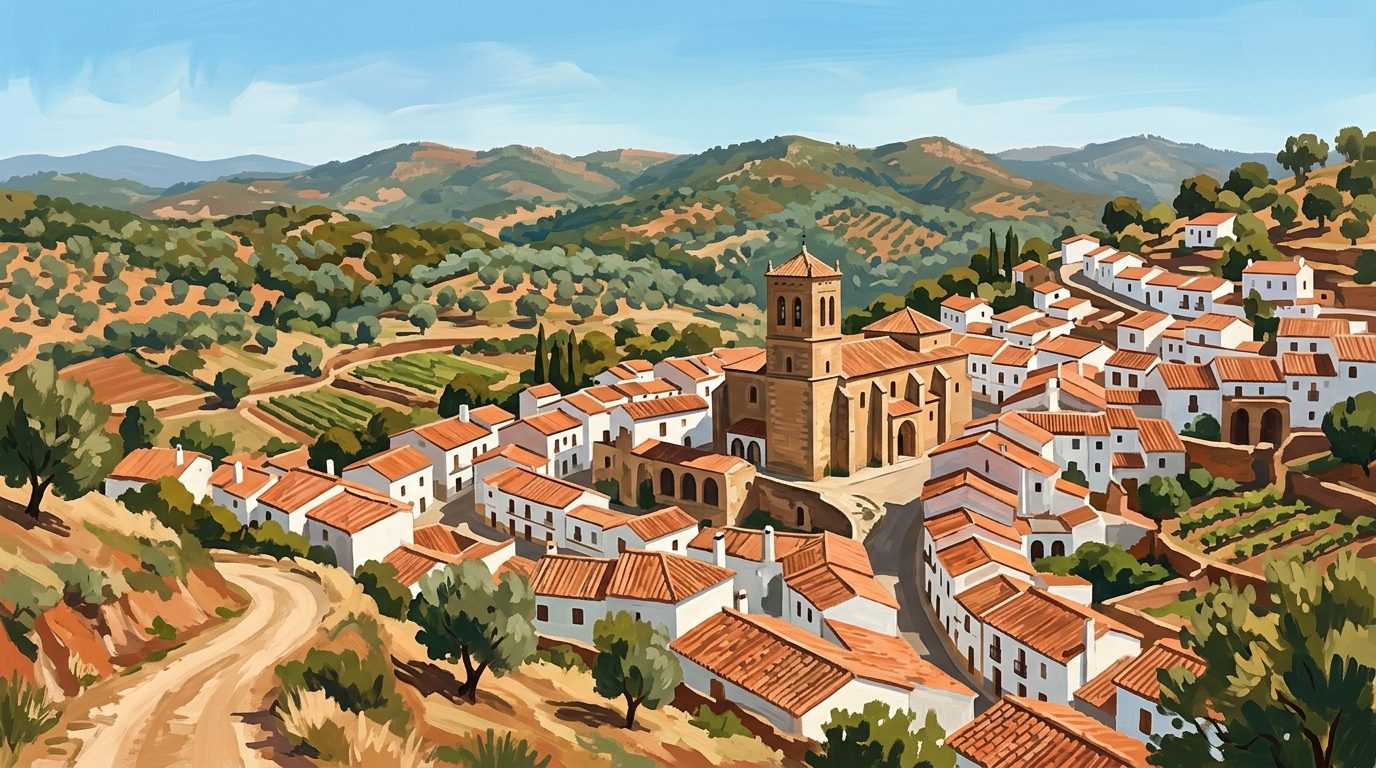
The undisputed capital of Spanish cured ham, Jabugo is a quiet white village where the scent of acorn-fed Ibérico pork fills the mountain air. It offers a deep dive into the traditions of the dehesa, from historic drying cellars to the distinctive local gastronomy.
Situated in the heart of the Sierra de Aracena y Picos de Aroche Natural Park in the province of Huelva, Jabugo is a name that resonates with food lovers across the globe. For many, it is not merely a village but a seal of quality, synonymous with the finest 100% Ibérico ham. The village sits at an altitude of 658 metres, where a unique microclimate of cold winters and mild summers provides the perfect conditions for the natural curing of meat. This environment, combined with the surrounding ancient oak woodlands, has shaped the identity of Jabugo for centuries.
While the village itself is small, with a population of around 2,000 residents, its influence on Andalucían culture and the global culinary stage is immense. Visitors arrive not for high-octane entertainment, but for a slow-paced exploration of a craft that has remained largely unchanged since the 19th century. Beyond the curing houses, Jabugo serves as a gateway to the rolling hills of northern Huelva, where the black Ibérico pigs roam freely among the holm and cork oaks.
What to See & Do in Jabugo
Cinco Jotas Bodegas (Sánchez Romero Carvajal)
The most famous name in Jabugo is Sánchez Romero Carvajal, the producers of the legendary Cinco Jotas ham. Founded in 1879, their facility is more of a cathedral to ham than a simple factory. A guided tour here is the essential Jabugo experience. You are led through dark, temperature-controlled cellars where tens of thousands of ham legs hang from the ceiling, slowly maturing in the mountain air. The smell is heady: a mix of salt, aged fat, and the sweet nuttiness of acorns.
During the tour, experts explain the four factors that define a true Jabugo ham: the 100% Ibérico breed, the free-roaming life in the dehesa, the diet of acorns (bellotas), and the artisanal curing process. The visit usually concludes with a professional carving demonstration and a tasting session, where you learn to appreciate the complex marbling and deep crimson colour of the meat.
Centro de Innovación y Promoción del Ibérico (CIPI)
Housed in one of the most striking buildings in the village, the CIPI, often referred to as the Ham Museum, is located in the historic Tiro de Pichón. This building was designed by the renowned architect Aníbal González, who also created the Plaza de España in Sevilla. It originally served as a summer retreat for the Spanish aristocracy and King Alfonso XIII.
The centre acts as an interpretation hub for the Denominación de Origen Protegida (DOP) Jabugo. Inside, interactive displays guide you through the lifecycle of the Ibérico pig and the ecology of the dehesa. It is a brilliant place to understand the science behind the flavour, from the oleic acid in the acorns to the specific moulds that develop on the ham during the years it spends in the cellar.
Plaza del Jamón
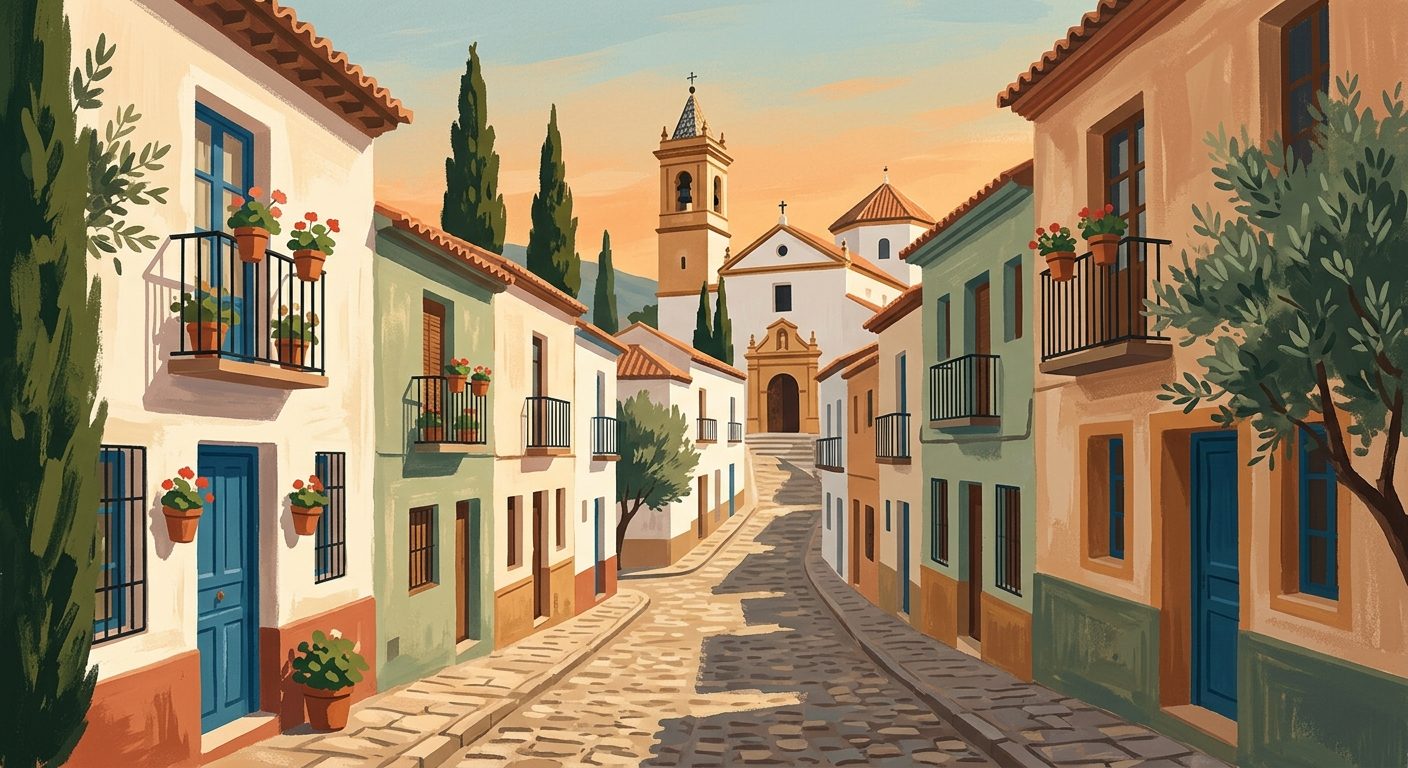
The village's main square, officially known as Plaza de España but universally called the Plaza del Jamón, is the social heart of Jabugo. Surrounded by whitewashed houses and small shops selling local produce, it is dominated by the 18th-century Church of San Miguel Arcángel. The square is the best place to sit with a coffee or a glass of dry Sherry and watch the rhythm of village life. Many of the surrounding shops offer vacuum-packed cuts of lomo (loin), morcón (large chorizo), and of course, sliced ham, which are much more affordable than those found in international airports.
Walking the Ribera de Jabugo
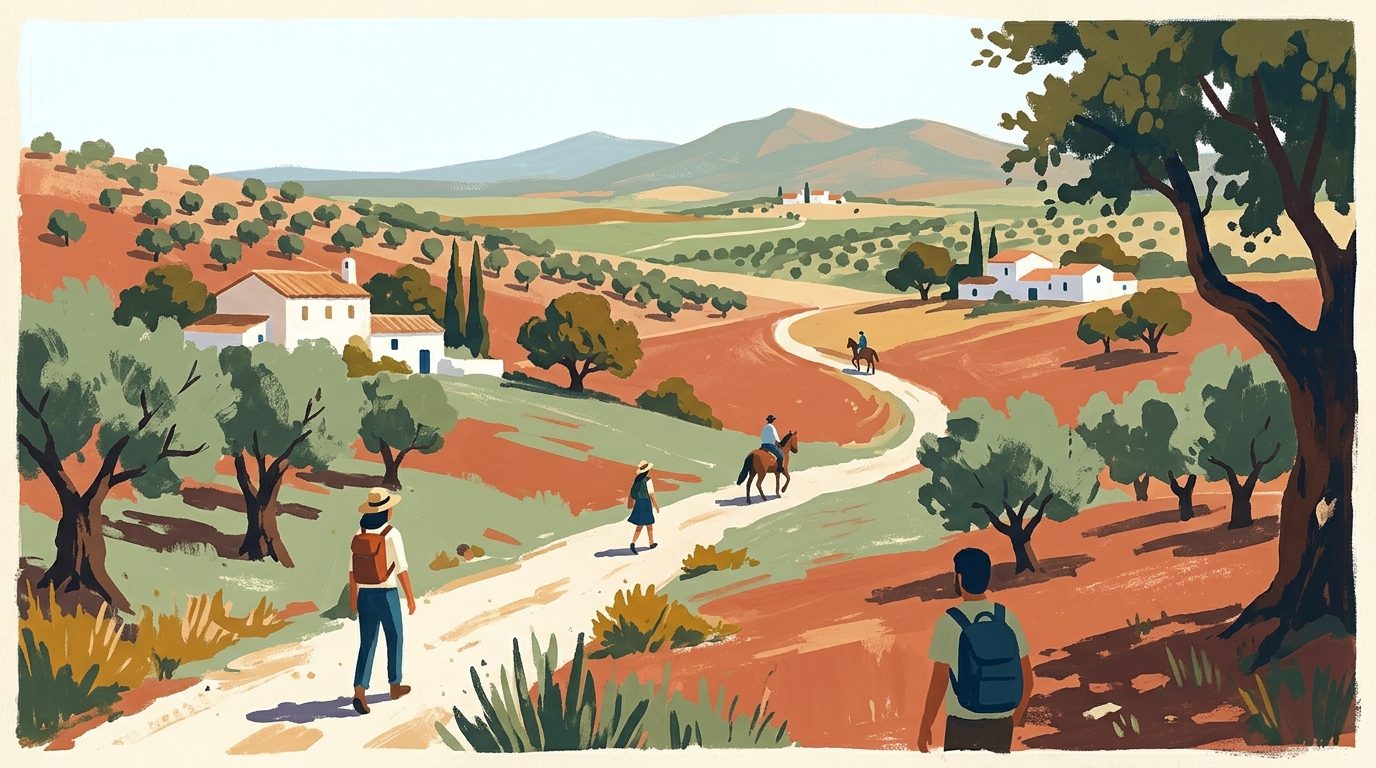
To see where the magic begins, take a walk along the Ribera de Jabugo trail. This path leads you out of the village and into the oak forests. Depending on the season, you might see the pigs during the 'Montanera' (from October to February), when they forage for fallen acorns. The landscape is a prime example of the dehesa, a man-made ecosystem that balances agricultural use with the preservation of wild Mediterranean forest. The air here is exceptionally fresh, and the paths are well-marked, connecting Jabugo with neighbouring hamlets like El Repilado and Castaño del Robledo.
Practical Information
Opening Times:
- Cinco Jotas Bodega: Tours generally run Monday to Saturday from 10:00 to 18:00 and Sundays from 10:00 to 14:00 (advance booking required; check official site for seasonal variations). Booking in advance via the official Cinco Jotas website is essential as group sizes are limited.
- CIPI (Ham Museum): Typically open Tuesday to Sunday, 10:00 to 14:00 and 16:00 to 18:00. It is advisable to call ahead (+34 959 121 208) as hours can shift during local festivals.
Ticket Prices:
- Cinco Jotas Essence Tour: Approximately €28 per adult, including tasting (check on the operator's website before travelling).
- Full 5 Jotas Experience (including dehesa visit): Around €70.
- CIPI Museum: Entry is usually around €3 (check local tourism office for combined ticket discounts).
How to Get There:
Jabugo is located about 100km from Sevilla (a 75-minute drive) and 100km from Huelva city. The most common route is via the N-433 road if coming from Sevilla, or the N-435 from Huelva. While there is a small train station in the nearby hamlet of El Repilado (on the Huelva-Zafra line), the service is infrequent (currently limited to one or two trains per day on the Huelva-Zafra line; check Renfe for latest times). A car is highly recommended for exploring the wider Sierra de Aracena region.
Parking:
Parking within the narrow streets of the village centre can be difficult. It is best to park on the outskirts near the entrance of the village or in the designated areas near the Cinco Jotas visitor centre.
Where to Eat Nearby
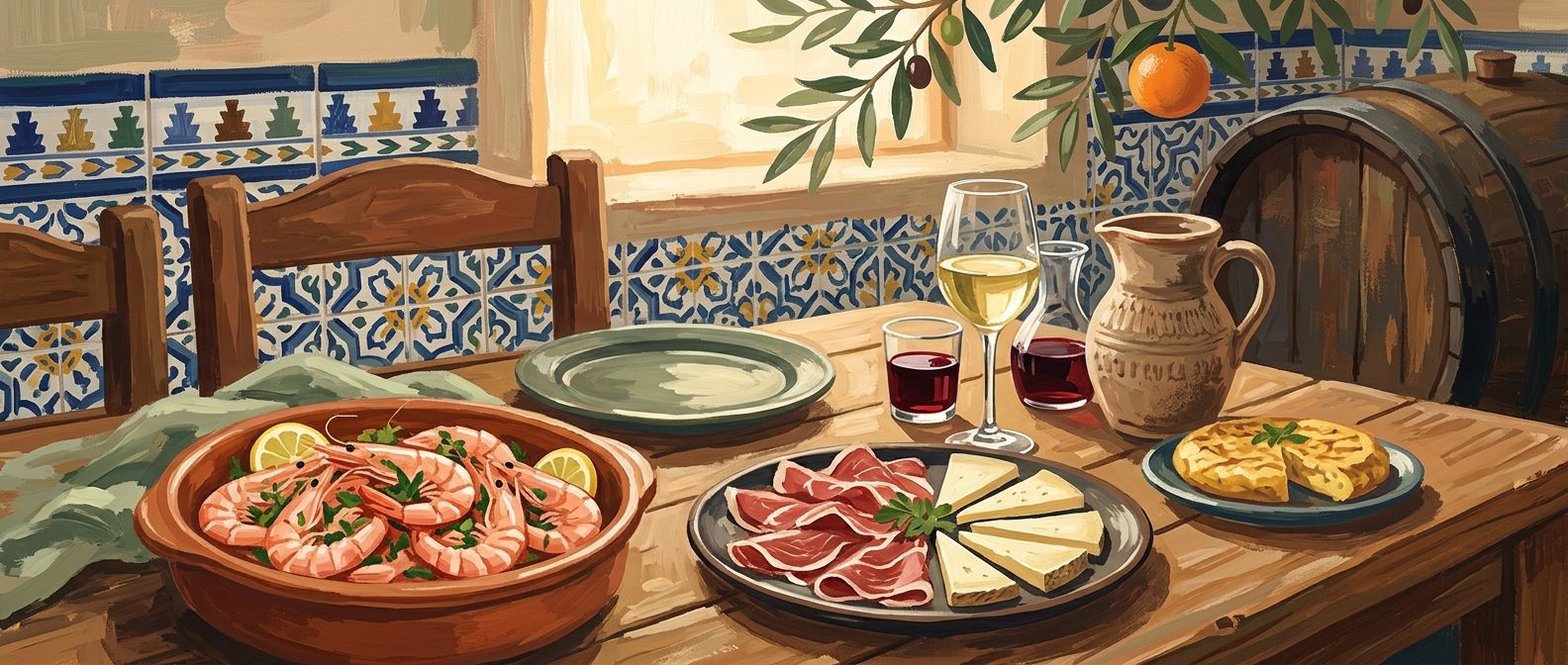
Las Bellotas: Located on the main road passing through Jabugo, this is a local institution. While the decor is traditional and unassuming, the quality of the grilled meats is exceptional. Order the 'pluma' or 'secreto', highly prized cuts of Ibérico pork, grilled over charcoal and served with local potatoes. A plate of their hand-sliced ham is a prerequisite for any meal here.
Mesón Sánchez Romero Carvajal: Situated right next to the Cinco Jotas bodega, this restaurant offers a more refined way to sample the local produce. It is the perfect spot for a post-tour lunch, focusing on traditional mountain recipes such as stews and seasonal mushrooms, which are abundant in the Sierra during autumn.
Where to Stay
Accommodation within Jabugo itself is limited to a few traditional guesthouses like Hostal Toribio, which offers simple, clean rooms in the centre. For a more expansive stay, many visitors choose the Hotel Galaroza Sierra in the nearby village of Galaroza (only 10 minutes away) or Posada de San Marcos in Alájar. These options provide a rural retreat feel with views over the valley, allowing you to enjoy the quietude of the Sierra de Aracena after the day-trippers have departed.