
Route · Cádiz
Kitesurfing in Tarifa: The Ultimate Guide to Europe's Wind Capital
Europe's southernmost tip is defined by two relentless winds and a coastline uniquely shaped to harness them. You can tarifa remains the undisputed proving ground for wind-chasers if you are launching your first kite or mastering unhooked tricks.
By Dan · Updated 24 July 2026 · 10 min read
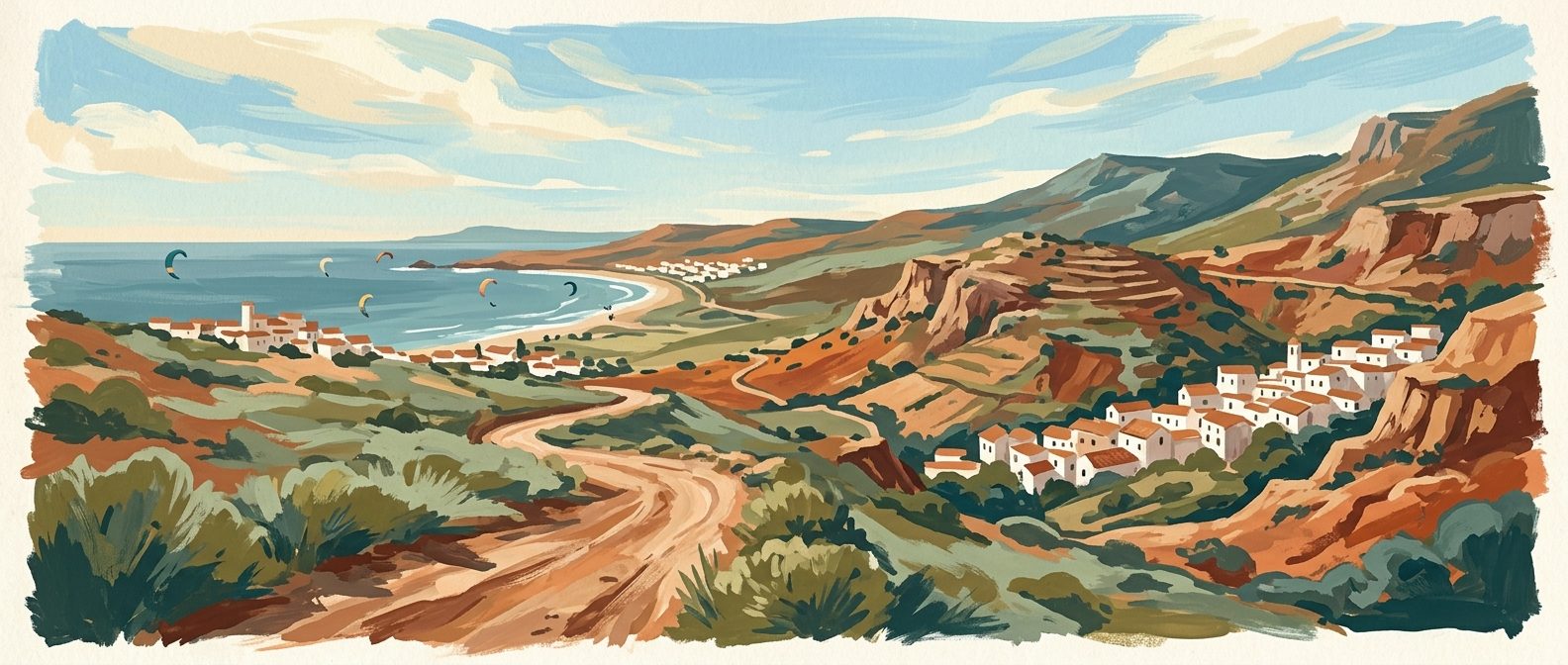
This article contains affiliate links. If you book through them, we may earn a small commission at no extra cost to you.
Europe's southernmost tip is defined by two relentless winds and a coastline uniquely shaped to harness them. For launching your first kite or mastering unhooked tricks, Tarifa remains the undisputed proving ground for wind-chasers.
The drive south along the N-340 from Cádiz gives you fair warning. As you pass Vejer de la Frontera, the wind turbines multiplying across the hillsides begin spinning with frantic intensity. By the time the road curves around the Mirador del Estrecho and the mountains of Morocco snap into view just nine miles across the water, you understand exactly why you are here. This is the bottleneck of the Strait of Gibraltar, an extreme geographic funnel that generates the most reliable and punishing winds in Europe.
Tarifa is not a place for a quiet, undisturbed beach holiday. It is a town governed entirely by the forecast. You will find sand in your coffee. You will see dripping neoprene hanging from the balconies of whitewashed townhouses. You will structure your meals, your sleep, and your social life around the exact knot-reading of the local anemometers.
Since the early windsurfing pioneers arrived in the 1980s, the town has evolved into the central hub for the global kitesurfing community. On a high-season afternoon, the sky above the Atlantic resembles a chaotic swarm of brightly coloured insects, with hundreds of kites cutting through the salt spray. But despite the apparent chaos, the infrastructure here is highly organised and rigorously regulated. Or an advanced rider seeking the aggressive kickers of a winter storm, this stretch of the for a total novice preparing to body-drag through the shallows for the first timeCosta de la Luz delivers. You simply have to know which beach to choose, which wind is blowing, and when to respect your limits.
Understanding the Wind: Levante vs. Poniente
To kite in Tarifa is to live at the mercy of two opposing weather systems. Understanding their mechanics is the single most important factor in planning your time on the water. If you walk into any café in town, the first question you will hear is: "What is the wind doing today?"
The Levante (East Wind)
The Levante is Tarifa's most famous and infamous wind. Blowing out of the Mediterranean and accelerating as it squeezes through the Strait of Gibraltar, it arrives in Tarifa hot, dry, and immensely powerful. It typically blows between 25 and 40+ knots, sometimes lasting for a week or more without a drop in intensity.
Conditions: Because the Levante blows off the land (cross-offshore) at the main beaches, it flattens the water, creating excellent conditions for freestyle riding and massive jumps. However, the offshore direction means if you drop your kite or snap a line, you will be blown out to sea. This is a severe hazard. You absolutely must purchase a rescue boat voucher (often called 'Sea Angels' vouchers, available at almost all beach bars and kite centres) if you plan to ride Levante at Los Lances.
Tactics: The Levante is notoriously gusty near the shore. You will often need a remarkably small kite, frequently a 7m or even a 5m for average-weight riders. When the Levante goes 'nuclear' (exceeding 40 knots), the smartest riders pack up and head to alternative spots further up the coast.
The Poniente (West Wind)
The Poniente rolls in from the Atlantic. It is cooler, wetter, and far more forgiving than the Levante. It generally blows side-onshore at 15 to 25 knots, making it the preferred wind for beginners and wave riders.
Conditions: Because it is an onshore wind, you will never be blown out to sea. If things go wrong, the wind will simply push you back onto the sand. The Poniente brings a rolling Atlantic swell, offering superb wave-riding conditions, particularly in the autumn and winter months.
Tactics: You will need larger kites for the Poniente, typically a 10m to 12m for an average rider. The wind is significantly smoother and less gusty than the Levante, allowing for predictable, consistent progression for learners.
The Beaches: Where to Launch
Tarifa's coastline is vast, but the kitesurfing zones are strictly regulated, particularly from June to September when bathers flock to the coast. Riding in the wrong zone during summer will result in a heavy fine from the Guardia Civil.
Los Lances Norte
This is the primary kitesurfing beach, stretching for several kilometres north of the town. During the summer, the designated kite zone begins just north of the Rio Jara estuary and extends towards the Arte Vida hotel. The beach is enormously wide, offering plenty of space to lay out your lines safely.
A word of warning regarding the Rio Jara lagoon: when the tide fills the estuary, it creates a perfectly flat, butter-smooth lagoon that looks incredibly tempting. Do not ride in it. It is a strictly protected bird sanctuary, and the local police patrol it rigorously on quad bikes. Stick to the open ocean.
Access is via the N-340. Pull into the dirt car parks near the Rio Jara campsite or the Arte Vida hotel. During high summer, these car parks fill by 11:00 AM, so arrive early.
Valdevaqueros
Located roughly 8 to 10 kilometres north of Tarifa, just before the colossal Punta Paloma sand dune, Valdevaqueros is the tactical safety net for Levante days. Because the bay curves significantly inward, the cross-offshore Levante wind becomes cross-shore here. If you encounter trouble, the wind will blow you towards the enormous sand dune at the far end of the bay, rather than out into the shipping lanes.
Because it is the safest place to ride the Levante, it becomes intensely crowded. By mid-afternoon in July or August, the water is a minefield of tangled lines and dropped kites. The main access points are at the Spin Out centre or the Tumbao beach bar. Expect to pay a small daily fee (usually around €5) for the private parking fields during the summer season.
Balneario (Los Lances Sur)
Right at the edge of the town, where the causeway connects to the Isla de las Palomas, sits Balneario. This is strictly a spot for professionals and highly advanced riders during the Levante. The wind blows directly offshore, and there are dangerous rocky outcrops. It is famous for its exceptionally flat water and the ramp-like kickers formed by the swell wrapping around the island, making it the backdrop for countless professional kitesurfing videos. If you are not entirely confident in your unhooked tricks and self-rescue capabilities, spectate from the promenade.
The Escape Routes: Palmones and Caños de Meca
When the Levante reaches 45 knots in Tarifa, it becomes unrideable for all but the heaviest, most experienced professionals. On these days, you pack your car and drive.
Heading 30 minutes east towards Algeciras brings you to Palmones. Situated in the Bay of Gibraltar, with a direct view of the Rock, this industrial beach catches the Levante at a significantly reduced strength. A 40-knot storm in Tarifa translates to a manageable 20-knot breeze in Palmones.
Alternatively, for strong Poniente days when Los Lances is closed out by massive, dumping shorebreak, drive 45 minutes north to Caños de Meca. The reef break here offers some of the best wave-riding conditions in Andalucía, though the rocky launch requires caution.
Learning to Kite: Schools and Progression
Tarifa is undeniably one of the best places on earth to learn to kitesurf, entirely because of the infrastructure. The concentration of highly qualified IKO (International Kiteboarding Organization) instructors here is staggering. Attempting to teach yourself or learning from a friend is a dangerous false economy; invest in proper tuition.
A standard beginner's course takes around three to four days. Day one involves flying a small trainer kite on the sand and learning safety systems. Day two moves into the water for 'body dragging': using the kite's power to pull you through the water without a board. By days three and four, you will be attempting water starts with the board.
There are over forty licensed schools in Tarifa. When choosing an operator, ensure they offer boat rescue support for their students (essential during Levante) and teach with modern, well-maintained equipment. We highly recommend booking a comprehensive course with a reputable operator.
Many schools are based around the Los Lances Norte car parks or operate directly out of the town centre, driving you to the optimal beach each day depending on the wind.
Equipment Hire and Shops
If you are an independent rider (IKO Level 3 or equivalent) but prefer not to pay airline baggage fees for your gear, renting in Tarifa is exceptionally straightforward. Nearly every school offers equipment hire, allowing you to swap kite sizes throughout the day as the wind fluctuates.
If you need to repair a torn canopy or a snapped line, head immediately to the Polígono La Vega, the industrial estate on the northern edge of town. This is the mechanical heart of Tarifa's surf industry. Warehouses here are dedicated entirely to kite repair, often turning around major canopy stitching within 24 hours. The Polígono is also home to several major brand outlets and second-hand gear shops, making it an excellent place to pick up a discounted wetsuit or a replacement bar.
Accommodation: Where to Stay
Your choice of accommodation dictates the rhythm of your trip. You must decide whether you want to walk to the tapas bars at night, or walk to the water with your kite in the morning.
In the Old Town
Staying inside the medieval walls of Tarifa offers immediate access to the legendary nightlife and exceptional dining scene. The narrow streets are packed with surf-styled cafes, excellent tuna restaurants, and bars that stay open until dawn. However, parking a rental car or a van near the old town is a daily battle, and you will have to drive 10 minutes up the N-340 every time you want to kite. If you want a comfortable, stylish base within walking distance of the old town, La Residencia Tarifa offers rooftop views of Africa and excellent drying facilities for wetsuits.
Along the N-340
If your sole priority is maximising time on the water, book a hotel or campsite along the main coastal road. This allows you to check the wind from your bedroom window and walk directly onto the sand. The downside is that you will need to drive or take a taxi into town for dinner. Hotel Huracán is an institution in Tarifa, featuring lush sub-tropical gardens leading straight down to the beach, its own kite centre, and a relaxed, old-school windsurf vibe. For a more budget-friendly, highly social atmosphere right on the kite zone, South Hostel Tarifa is a superb option.
Practical Information
When to Go
Tarifa is windy year-round, but the seasons offer completely different experiences.
- Spring (April to June): Often considered the optimal time. The winds are reliable, the water is warming up, and the beaches are free from the intense summer crowds.
- Summer (July to August): The wind is highly consistent (predominantly Levante), but the town and beaches are packed. Kite zones are strictly enforced, and parking requires immense patience.
- Autumn (September to November): The water remains warm from the summer, the crowds vanish, and the Poniente brings excellent wave conditions.
- Winter (December to March): For the hardy. The wind is driven by Atlantic low-pressure systems rather than thermal effects, meaning it can be unpredictable. You might get a week of dead calm followed by ten days of screaming 40-knot storms. You will share the water only with dedicated locals and professional riders in training.
What to Bring
The water in the Strait of Gibraltar is fed by the cold Atlantic currents. Even in the peak of August, the water temperature rarely exceeds 20°C (68°F).
You will need a wetsuit regardless of when you visit. A 3/2mm full wetsuit is standard for summer, though some riders prefer a shorty on the hottest days. From November to April, a good quality 4/3mm or even a 5/3mm suit is required.
The sun in Southern Spain is aggressive. The reflection off the water and the white sand will burn you rapidly, even when the strong wind makes you feel cool. High-SPF water-resistant sunscreen and a secure surf hat are essential.
Costs and Logistics
Expect to pay around €60 to €80 for a group lesson (three to four students per instructor). Private lessons generally start at €120 per hour. Full equipment rental (kite, board, harness, wetsuit) costs approximately €60 to €90 per day in 2026 (check on the operator's website before travelling).
The closest airports are Gibraltar (45 minutes), Jerez (1.5 hours), and Málaga (1 hour 45 minutes). While there is a bus service running from Algeciras and Cádiz, relying on public transport with heavy kitesurfing bags is an exercise in frustration. Renting a car is highly advised. It gives you the freedom to chase the wind up the coast to Palmones or Caños de Meca when the conditions in Tarifa dictate a change of plan.
Tarifa demands respect, both for the power of the ocean and the intensity of its weather systems. But once you lock into your harness, sheet in the bar, and glide out over the deep blue water with the mountains of two continents framing your periphery, you will understand exactly why riders return to this wild stretch of the coast year after year.
Last reviewed: 21 June 2026 · Editorial policy
Related guides
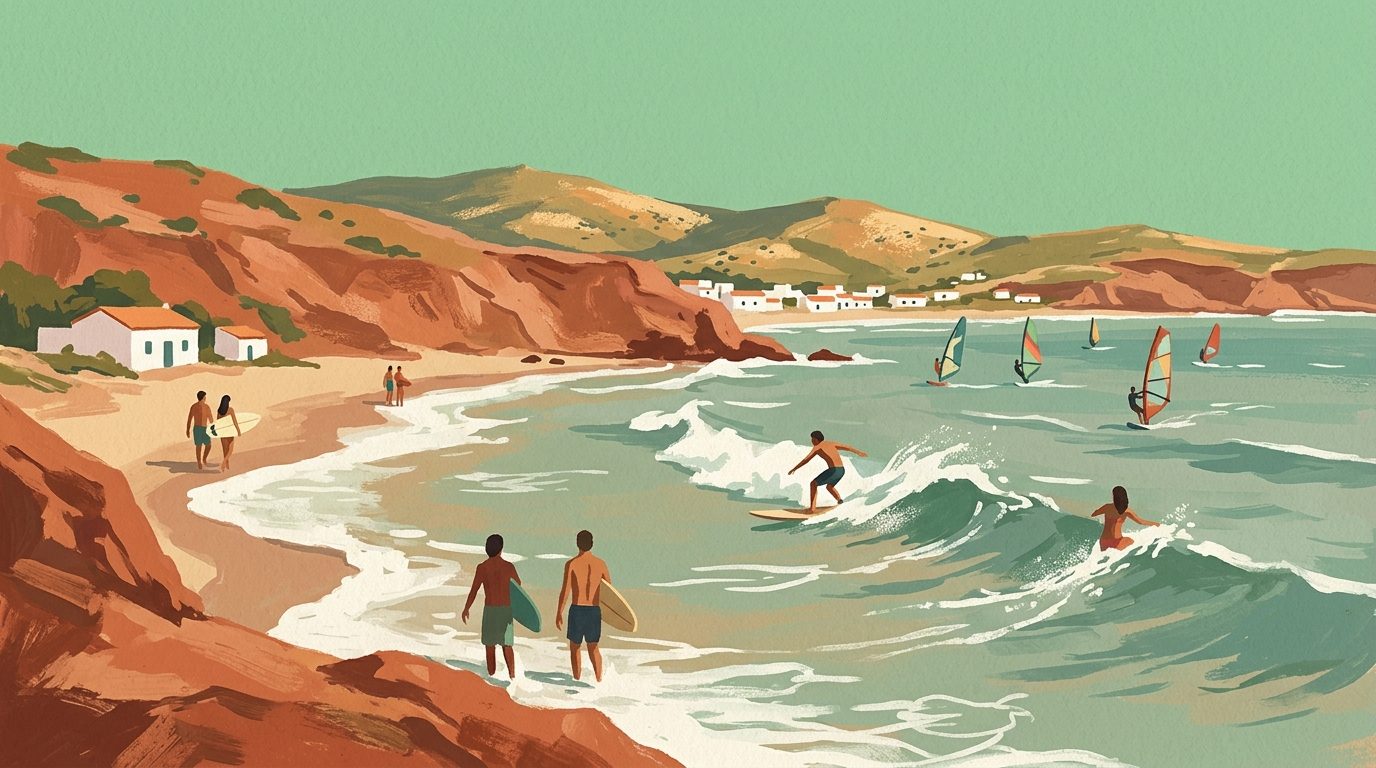
Riding the Atlantic: A Guide to Water Sports in Cádiz
Discover the best kitesurfing, surfing, and whale watching across the province of Cádiz, from the wind-whipped shores of Tarifa to the Atlantic rollers of El Palmar.
6 min read
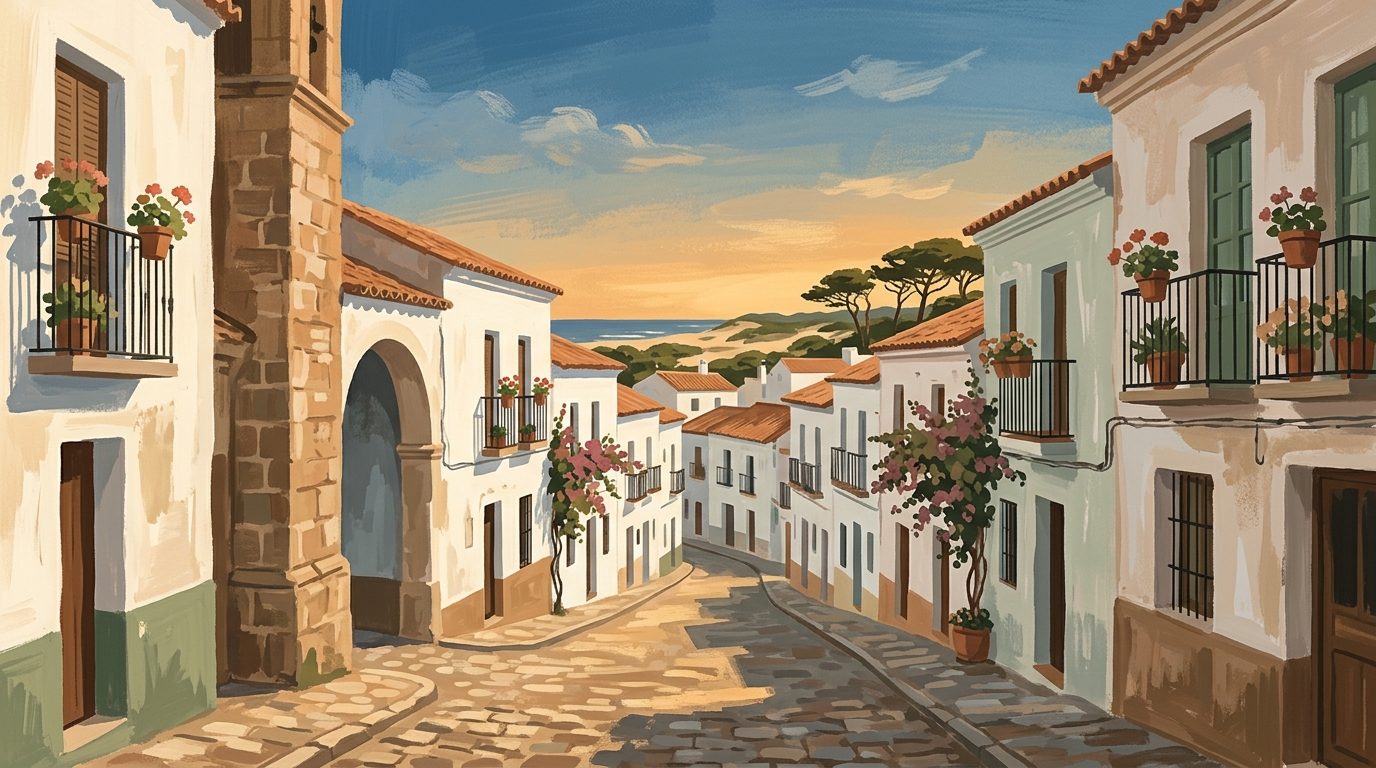
Costa de la Luz: The Complete Guide
The Costa de la Luz is an untamed stretch of Atlantic shoreline defined by wild dunes, pine forests and stiff sea breezes. Spanning the coastlines of Huelva and Cádiz, it offers a stark alternative to the concrete resorts of the Mediterranean.
9 min read
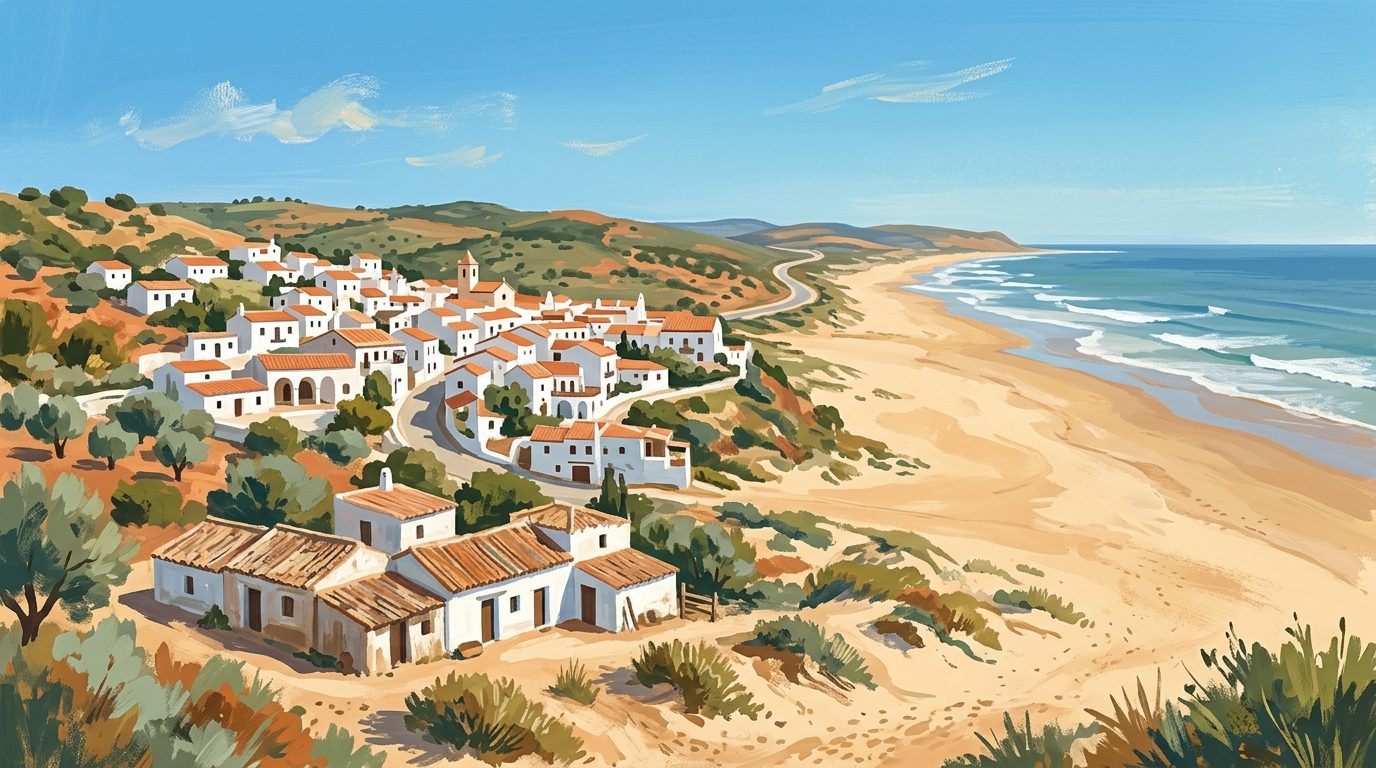
Playa de El Palmar: A Guide to the Surfing Capital of Cádiz
Playa de El Palmar is the undisputed surfing capital of the Costa de la Luz, offering eight kilometres of golden sand and some of the finest sunsets in the province of Cádiz. This expansive shoreline balances a wild, Atlantic character with a thriving scene of beach bars and surf schools.
7 min read
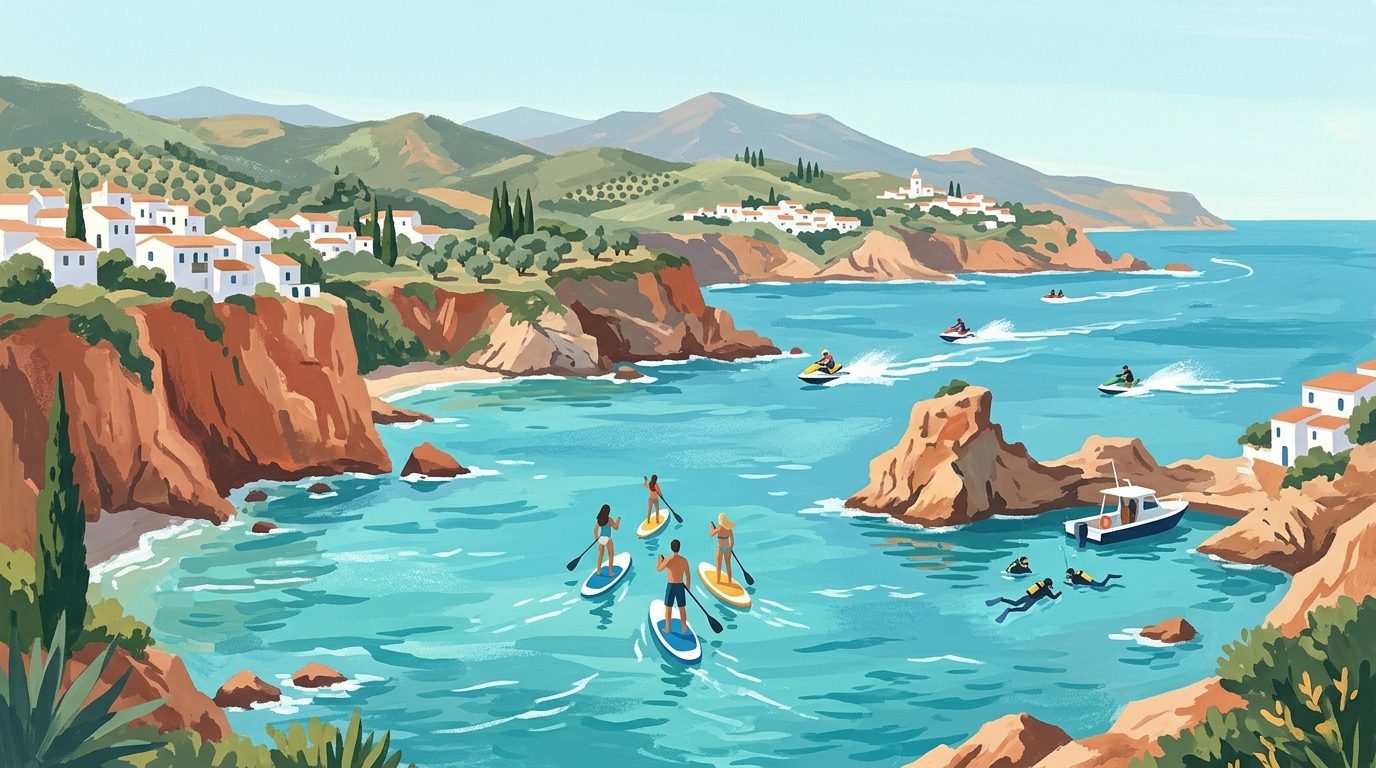
A Guide to Water Sports in Málaga: From SUP to Scuba
Discover the best locations for stand-up paddleboarding, diving, and jet skiing along the Costa del Sol with our practical guide to Málaga's water sports.
6 min read
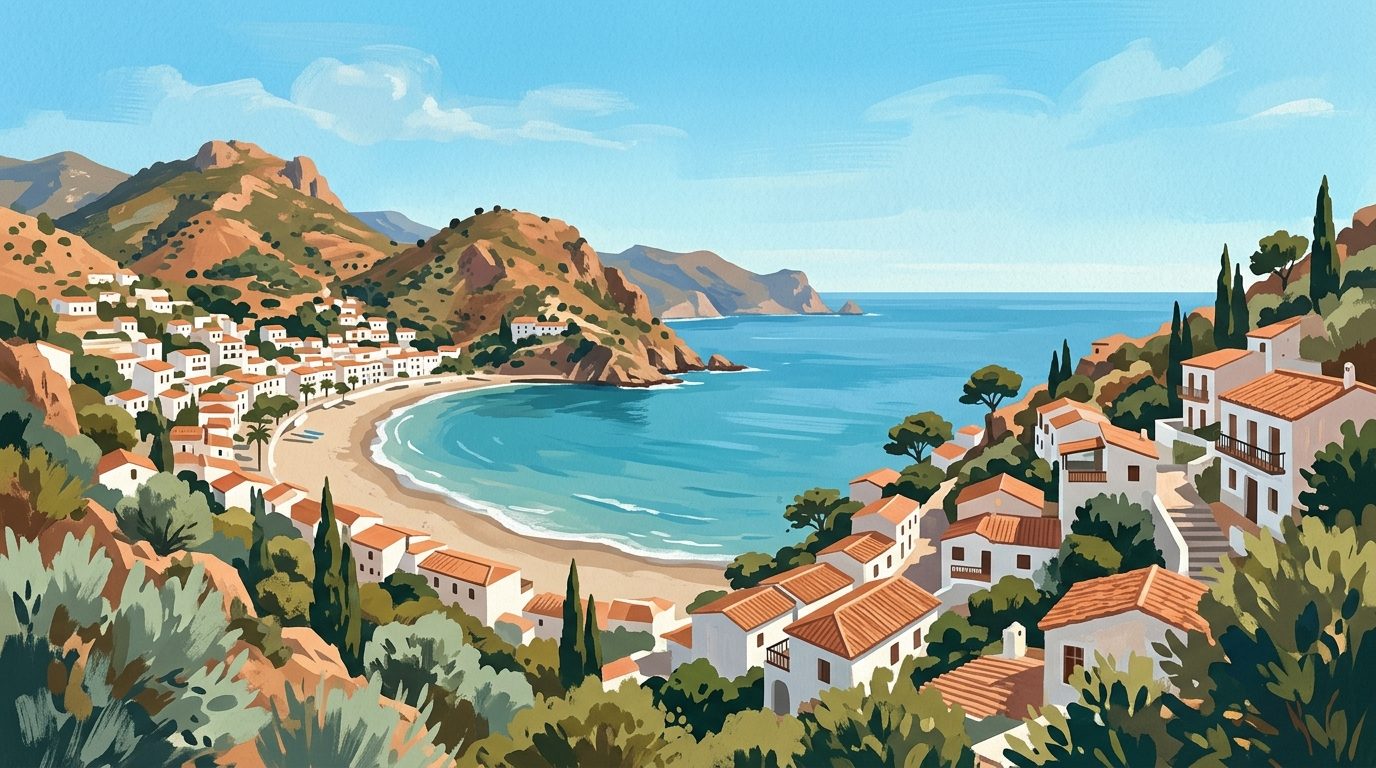
A Guide to La Herradura: Granada’s Curved Coastal Retreat
A perfect horseshoe bay on the Costa Tropical, La Herradura offers some of the best diving in Spain and a slower pace of life than its western neighbours.
6 min read
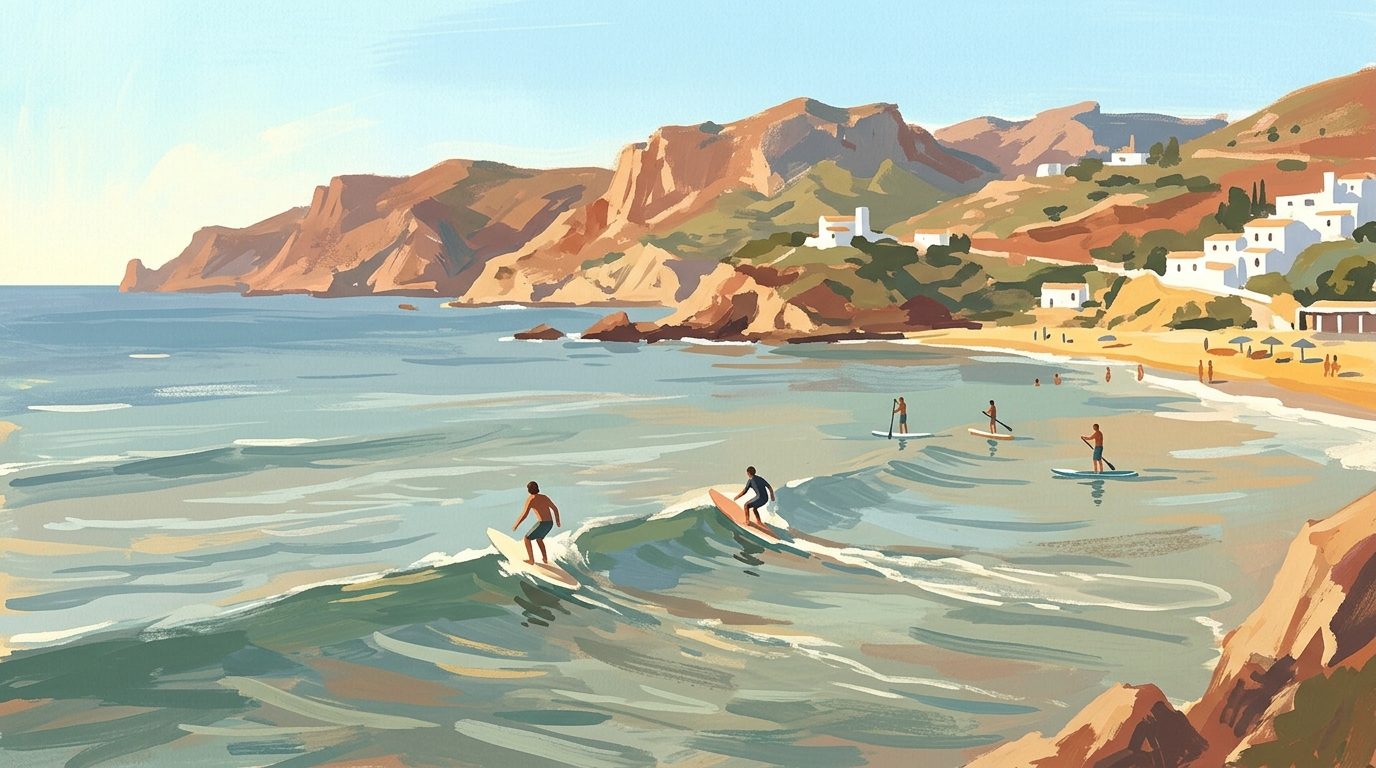
Surfing and SUP in Andalucía: A Guide to the Best Breaks and Bays
From the powerful Atlantic swells of the Costa de la Luz to the glassy Mediterranean coves of Almería, Andalucía offers world-class conditions for every level of surfer and paddler.
6 min read
Newsletter
More stories from Andalucía
Weekly notes, seasonal picks, and the next guides worth bookmarking.