
Route · Huelva
Doñana National Park Guide: Marshes, Lynx, and Restricted Zones
A shifting landscape of tidal marshes, ancient pine forests, and wind-sculpted dunes, Doñana is Europe's most crucial wetland reserve. Navigating its restricted zones requires planning, but the reward is encountering Iberian lynx and thousands of migratory flamingos in total wilderness.
By Dan · Updated 24 July 2026 · 9 min read
This article contains affiliate links. If you book through them, we may earn a small commission at no extra cost to you.
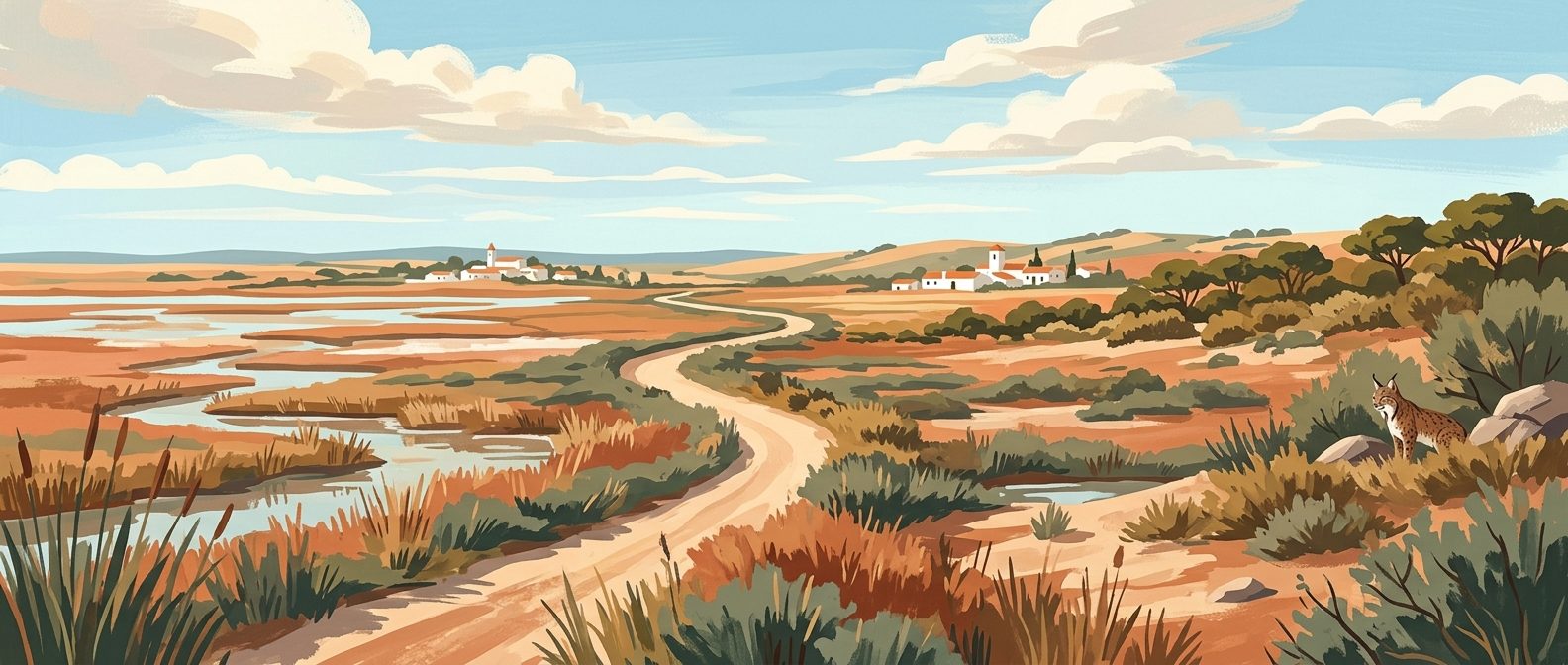
A shifting landscape of tidal marshes, ancient pine forests, and wind-sculpted dunes, Doñana is Europe's most crucial wetland reserve. Navigating its restricted zones requires planning, but the reward is encountering Iberian lynx and thousands of migratory flamingos in total wilderness.
There is nowhere else in Europe quite like Doñana. Straddling the provinces of Huelva and Sevilla, where the Guadalquivir River finally exhales into the Atlantic Ocean, this vast wilderness is a theatre of extremes. Depending on the month you drive down the A-483 from Almonte, you might find an endless, mirror-like inland sea teeming with half a million wintering birds, or a cracked, baked desert where red deer seek shade beneath isolated cork oaks.
Doñana is not a park you can simply drive through on a whim. The core of the reserve is heavily restricted to protect its fragile ecosystems, which include the last major stronghold of the endangered Iberian lynx and a vital stopover for birds migrating between Africa and Northern Europe. Accessing the deepest parts of the marismas (marshes) and the vast coastal dunes requires joining authorised 4x4 tours, while the periphery offers an excellent network of free-access boardwalks and hides.
This guide will show you exactly how to navigate the complex zoning of Doñana, which trails offer the best independent birdwatching, how to secure a spot on the restricted core tours, and how to set your expectations for a landscape that dramatically reinvents itself with the passing of each season.
Understanding the Geography: National vs. Natural Park
Before you plan your route, it is vital to understand the difference between the two protective boundaries here.
The Parque Nacional (National Park) forms the highly protected core. It covers over 54,000 hectares of pristine marshes, mobile dunes, and dense scrubland. You cannot drive your own vehicle into the National Park, nor can you walk freely within it. Access is strictly limited to official guided 4x4 tours, researchers, and the few remaining traditional landowners.
Surrounding the core is the Parque Natural (Natural Park), which acts as a buffer zone. It spans nearly 54,000 additional hectares and is far more accessible. Here, you will find the main visitor centres (Centros de Visitantes), marked hiking trails, boardwalks, and public bird hides. You can easily spend two or three days exploring just the Natural Park without ever paying for a guided tour, though combining both public and restricted access gives you the most comprehensive experience.
El Rocío: The Gateway of Sand
The most logical base for exploring Doñana is the extraordinary village of El Rocío. Reached via the A-483, this town feels entirely detached from modern Europe. The streets are completely unpaved, consisting entirely of deep, soft sand. Locals ride horses to the bakery, and nearly every building has a wooden rail outside for tethering mounts.
Beyond its famous annual pilgrimage (the Romería de El Rocío, which floods the town with a million people every Pentecost, falling on 24 May 2026), El Rocío is usually a quiet, atmospheric outpost. If visiting this month, expect massive crowds and restricted vehicle access in the weeks surrounding this date. Its greatest asset for wildlife lovers is the promenade running along its southern edge, bordering the Charco de la Boca. This permanent lagoon is the beginning of the Doñana marshes. You can stand on the sand outside the magnificent Ermita de la Virgen del Rocío and watch Eurasian spoonbills, greater flamingos, and glossy ibis wading in the shallows just fifty metres away.
For accommodation, the village offers several excellent options that respect the traditional architecture. Hotel Toruño sits directly on the edge of the marsh, offering a superb terrace where you can eat breakfast while scanning the water with binoculars. Be prepared to empty sand out of your shoes every evening; it is an unavoidable, albeit charming, part of staying here.
Accessing the Restricted Core: 4x4 Park Tours
To see the interior of the National Park, you must book a guided 4x4 tour. These are operated by a handful of authorised concessionaires and are generally split into two distinct routes: the Northern Route and the Southern Route.
The Northern Route (From El Rocío)
Departing from El Rocío, these tours typically last around four hours and focus on the diverse ecosystems of the northern sector. You will spend hours bouncing along the Raya Real, a 30-kilometre-long, 100-metre-wide sandy firebreak flanked by dense pine forests and mastic scrub. This is prime territory for the Iberian lynx and the Spanish imperial eagle. The vehicles used are usually 20-seater unimogs or heavy-duty Land Rovers. The ride is bone-rattlingly rough in places, so those with severe back issues should take note.
The guides speak excellent English and Spanish, and the vehicles often pause at the edge of the marismas in the Coto del Rey, where you can disembark to use spotting scopes. Cooperativa Marismas del Rocío (the official concessionaire) is the standard way to experience this section, and booking at least a month in advance during the spring is absolutely essential.
The Southern Route (From El Acebuche)
The southern tours (operated by Doñana Reservas) depart from the El Acebuche Visitor Centre, located further south near the coastal town of Matalascañas. This route focuses on the dramatic transition between the Atlantic Ocean and the inland forests. You will drive along 30 kilometres of virgin, wave-battered beach (one of the longest untouched coastlines in Spain) before turning inland to navigate the massive Dunas Móviles (mobile dunes). These dunes, blown inland by coastal winds, slowly swallow entire pine forests, leaving behind skeletal, dead trees known locally as cruces (crosses). It is an eerie, fascinating landscape, starkly different from the watery marshes of the north.
The Quest for the Iberian Lynx
For many visitors, Doñana is synonymous with the Iberian lynx, the world's most endangered feline (though recent conservation efforts have thankfully downgraded its status to 'vulnerable'). Spotting one in the wild remains a challenge and requires both luck and specific planning.
If you are determined to see a lynx, you need to manage your expectations. They are incredibly elusive, solitary, and perfectly camouflaged against the dappled light of the pine undergrowth. Your best chances are during the cooler months, between November and February, when it is mating season and the cats are more active during daylight hours.
Focus your efforts on the northern 4x4 tours that traverse the Raya Real and the edges of the Coto del Rey. Lynx rely almost entirely on wild rabbits for food, so where you see high concentrations of rabbit warrens in the sandy soil beneath mastic bushes (lentisco), a lynx might be nearby. Book the earliest possible morning tour or the late afternoon tour. The midday heat drives them deep into the impenetrable scrub.
The Free-Access Visitor Centres (Centros de Visitantes)
If you prefer to explore independently, the Natural Park offers four outstanding visitor centres, each highlighting a different ecosystem. Entrance to all of them is free.
1. Centro de Visitantes La Rocina
Located just one kilometre south of El Rocío along the A-483, La Rocina focuses on the freshwater streams that feed the main marshes. A 3.5-kilometre circular boardwalk winds through dense pine forests, fern groves, and reed beds. There are four well-maintained wooden hides overlooking the water. It is a brilliant spot in spring for seeing purple swamphens, little bitterns, and the vividly coloured azure-winged magpie flitting through the pines.
2. Centro de Visitantes El Acebrón
If you drive six kilometres further into the park from La Rocina, you reach El Acebrón. This former hunting lodge is surrounded by a dense, humid riparian forest (bosque de ribera). A 1.5-kilometre trail loops through ancient cork oaks and tangled vines. The canopy here is thick, making it significantly cooler on a hot day. It is excellent for woodland birds and offers a glimpse into how Doñana looked centuries ago before large-scale timber clearing.
3. Centro de Visitantes El Acebuche
Situated near Matalascañas, El Acebuche is the operational heart of the park. It serves as the departure point for the southern 4x4 tours and houses the captive breeding centre for the Iberian lynx. While you cannot visit the breeding enclosures, the centre features live camera feeds and a comprehensive exhibition. Outside, a network of boardwalks leads to hides overlooking a large lagoon, which is highly reliable for spotting red-crested pochards and marsh harriers.
4. Centro de Visitantes José Antonio Valverde
This is the most remote and spectacular of the public centres, sitting deep in the northern marshes. Reaching it is an adventure. You must drive a 30-kilometre unpaved dirt track starting from the village of Villamanrique de la Condesa. Warning: Do not attempt this drive in a standard hire car if there has been heavy rain in the past 48 hours; the mud will swallow a small hatchback whole. During dry conditions, the corrugated dirt road is manageable if you drive slowly.
The reward for the bumpy journey is a large, glass-fronted cafeteria and viewing area built directly over the water. In spring, the reed beds here host a massive, chaotic heronry. You will see purple herons, night herons, glossy ibis, and cattle egrets nesting in their hundreds, squabbling loudly just metres from the windows.
The Birdwatching Calendar: Timing Your Visit
Doñana is completely ruled by water. The changing seasons alter the landscape so drastically that visiting in January is unrecognisable from visiting in August.
- Winter (December to February): The rains have filled the marshes. Up to half a million waterfowl, including massive flocks of greylag geese from Northern Europe, arrive to overwinter. The skies are constantly moving, and the temperatures are crisp but pleasant. This is peak birdwatching season.
- Spring (March to May): The water remains high, but the wintering birds are replaced by summer migrants from Africa. The marshes explode with life. Flamingos perform their courtship dances, the heronries are deafening, and wildflowers carpet the sandy soils. This is the most popular time to visit, so book accommodations and tours well in advance.
- Summer (June to September): A crucial caveat for summer visitors: Doñana dries up completely. This period is known as the seca. The endless lakes turn into a cracked, dusty pan of baked mud. Wildlife concentrates around the few remaining permanent waterholes, making animals easier to spot, but the heat is punishing (often exceeding 40°C), and the biting horseflies and mosquitoes can be relentless.
- Autumn (October to November): The first autumn rains begin to soften the baked mud. The landscape starts to green, and the first waves of wintering birds return. It is a transitional period, quieter than spring, but beautifully atmospheric.
Practical Information
Getting There
Sevilla Airport is the closest major hub, located about an hour’s drive (80 kilometres) from El Rocío. Hiring a car is effectively mandatory if you wish to travel between the different visitor centres, as public transport within the park boundaries is non-existent. The drive from Sevilla follows the A-49 motorway west towards Huelva, before turning south onto the A-483 at Bollullos Par del Condado.
What to Bring
A standard pair of 8x42 binoculars is the minimum requirement, but because the distances across the marismas are vast, a tripod-mounted spotting scope will vastly improve your experience. Pack high-strength insect repellent regardless of the season; the mosquitoes near the freshwater streams at La Rocina are active year-round. Dress in layers, as the dawn 4x4 tours are freezing, even in May, but by midday, you will be in a t-shirt.
Alternative Ways to Explore
If bouncing in a 4x4 does not appeal, the fringes of the park offer superb equestrian routes. Doñana a Caballo allows you to ride through the pine forests of El Rocío on calm, sure-footed Andalucían horses, offering a quiet, traditional way to experience the sandy trails without disturbing the wildlife.
For those basing themselves in the city and lacking a rental car, several operators run comprehensive day trips. Booking a guided day trip provides hotel pickup, transport in a 4x4, and an expert guide with spotting scopes, stripping away the logistical headache of navigating the unpaved roads yourself.
Doñana rewards the patient and the prepared. It is not a manicured safari park, but a raw, shifting wetland where nature dictates the terms. Arrive early, embrace the dust and the sand, and you will understand exactly why this fierce, fragile landscape remains the most important stretch of wild land in Spain.
Last reviewed: 21 June 2026 · Editorial policy
Related guides
Doñana National Park: A Guide to Europe’s Great Wetland Wilderness
A vital sanctuary for the Iberian lynx and millions of migratory birds, Doñana National Park is a landscape of shifting dunes and vast seasonal marshes.
7 min read
Where the Sands Shift and the Marismas Breathe: A Guide to Doñana
Discover the wild Atlantic coast of Huelva, where the shifting dunes of Doñana meet the sand-paved streets of El Rocío and the pristine beaches of Mazagón.
8 min read
A Guide to El Rocío: Andalucía’s Sandy Pilgrimage Village
Discover El Rocío, a unique Andalucían village where the streets are made of sand and the traditional horse-and-carriage still reigns supreme on the edge of Doñana.
6 min read
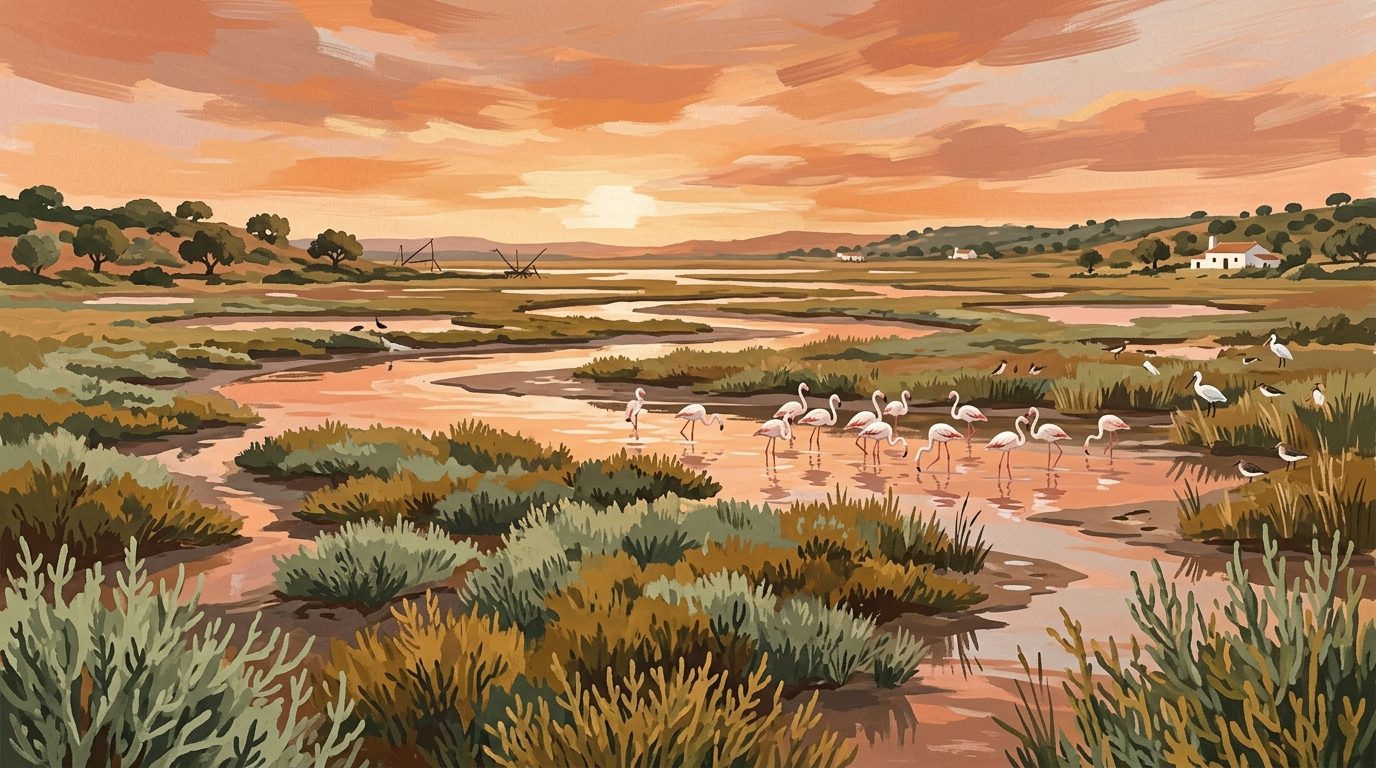
Odiel Marshes: Huelva's Overlooked Wetland
Discover the Marismas del Odiel, a tidal powerhouse in Huelva that hosts Europe's largest spoonbill colony and a spectacular array of flamingos and ospreys.
7 min read
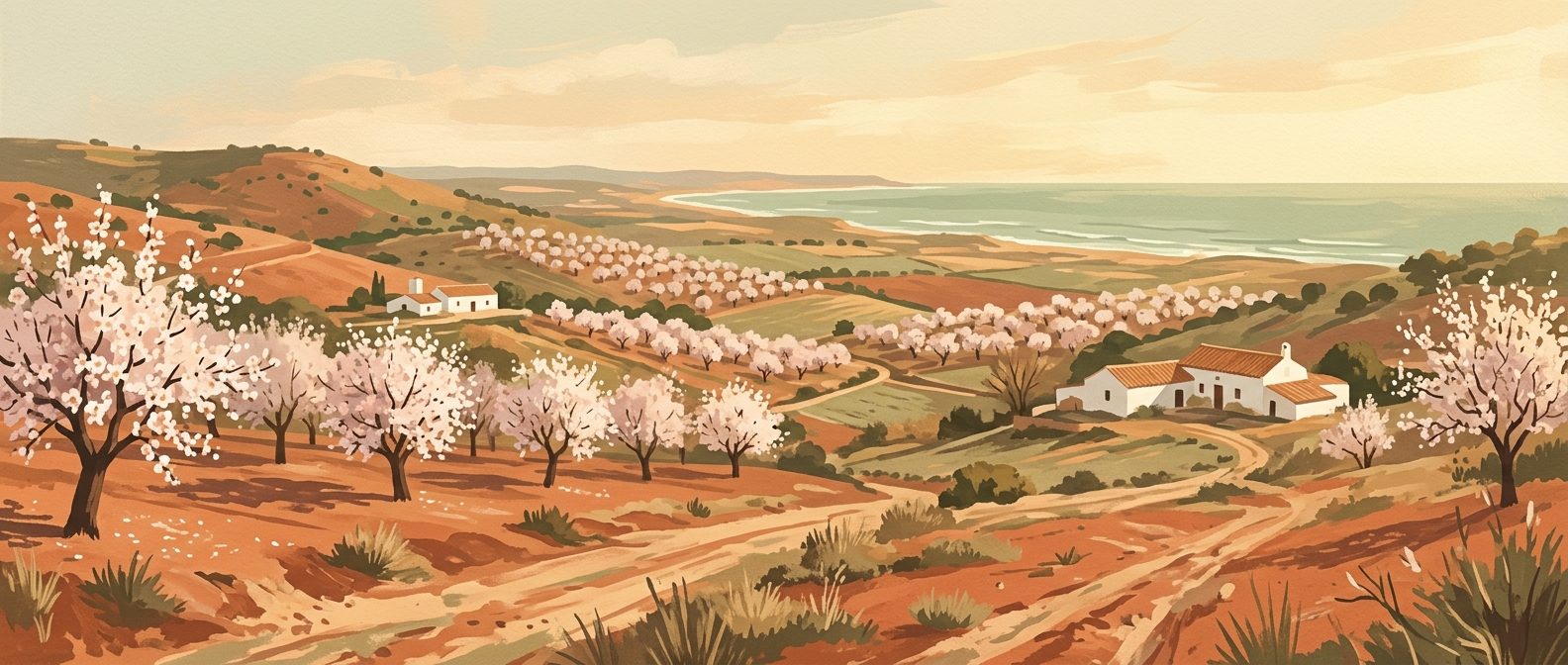
Huelva in February: Almond Blossom and Atlantic Solitude
Experience Huelva in February, from the blooming almond orchards of the Sierra de Aracena to the flamingo gatherings in Doñana National Park.
6 min read
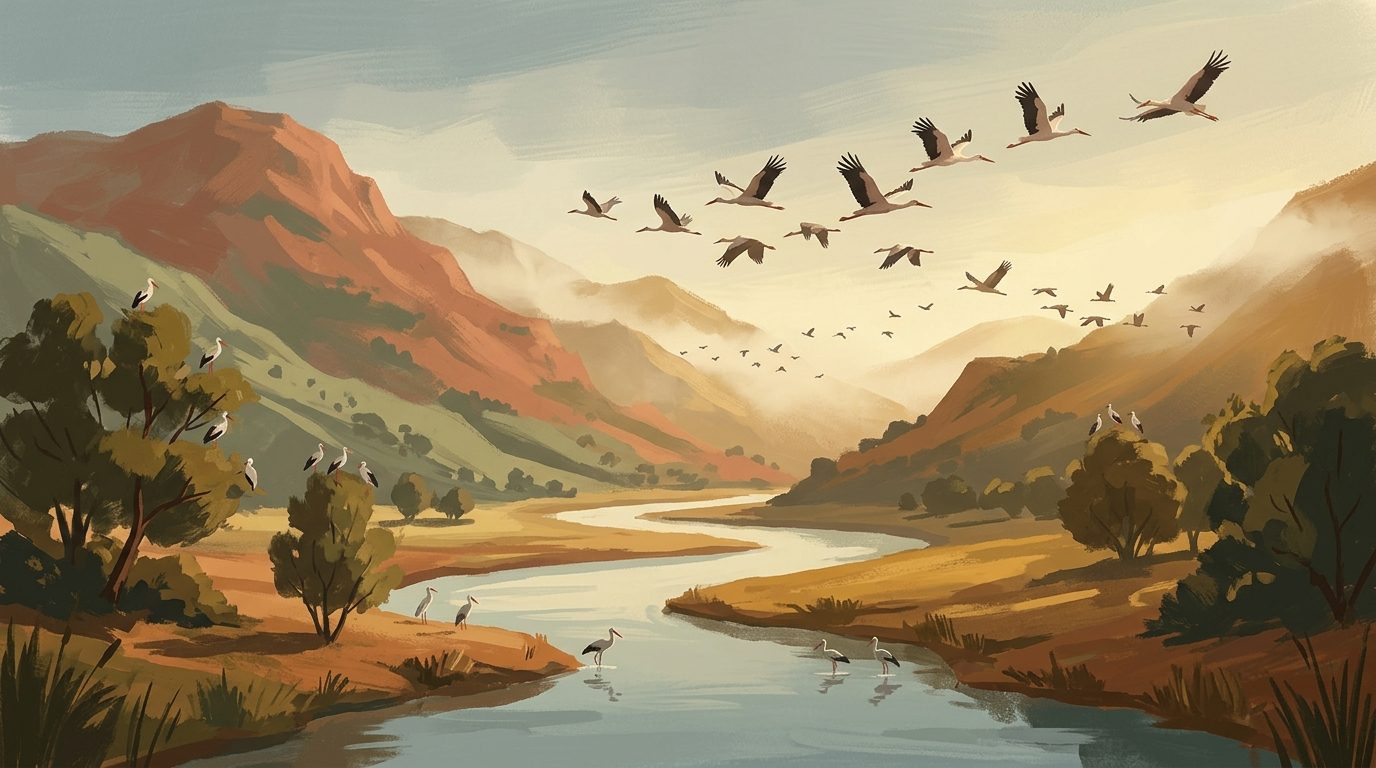
Huelva in January: Birdlife and Mountain Mist
January in Huelva offers the peak of the Doñana bird migration, atmospheric mountain escapes in the Sierra de Aracena, and the freshest Jamón Ibérico of the year.
6 min read
Newsletter
More stories from Andalucía
Weekly notes, seasonal picks, and the next guides worth bookmarking.