
Route · Jaén
The Ultimate Andalucían Olive Oil Route: Jaén and the Subbética
Driving through Jaén means navigating a landscape defined by sixty-six million olive trees marching in perfect geometric lines to the horizon. This route decodes the complex, fiercely competitive world of Andalucían liquid gold, from traditional family presses to high-altitude mountain harvests.
By Dan · Updated 7 June 2026 · 8 min read
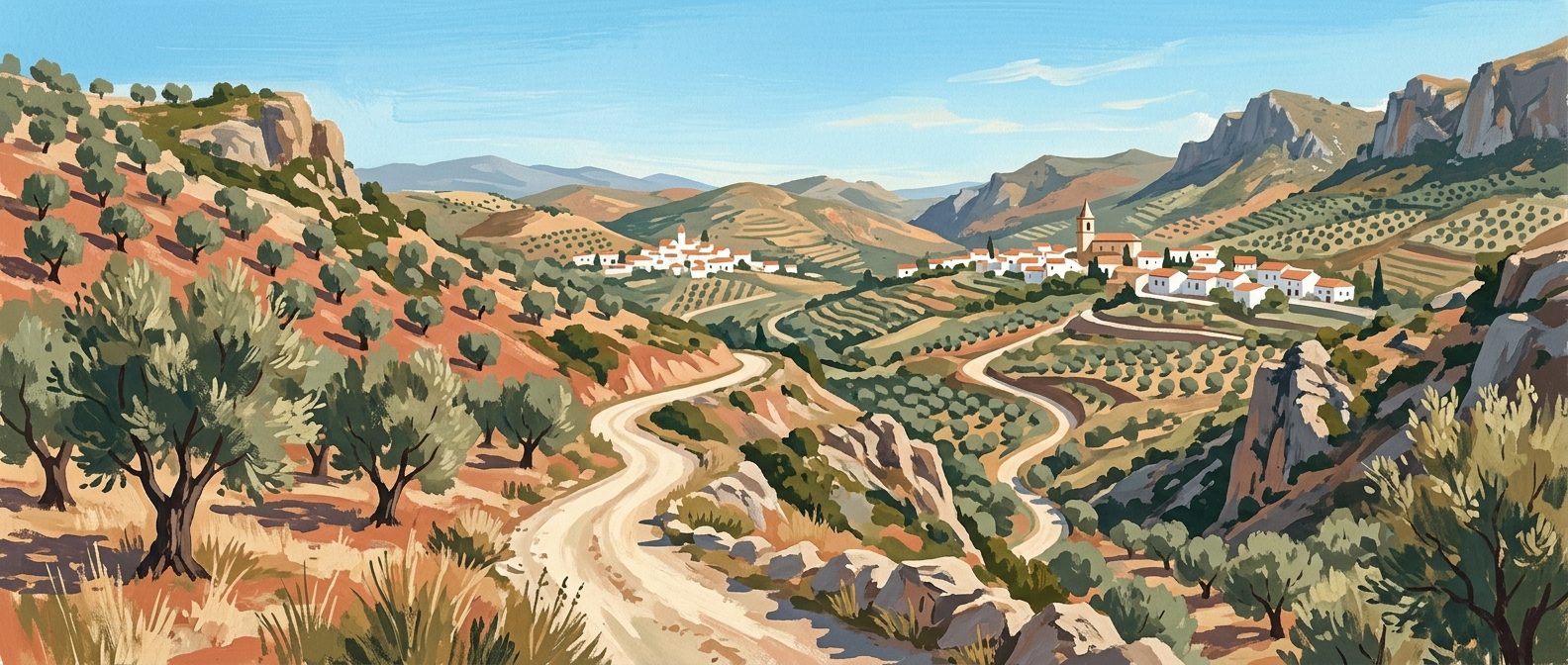
Driving through Jaén means navigating a landscape defined by sixty-six million olive trees marching in perfect geometric lines to the horizon. This route decodes the complex, fiercely competitive world of Andalucían liquid gold, from traditional family presses to high-altitude mountain harvests.
Cross the rugged Despeñaperros pass on the A-4 heading south, and the physical geography of Spain abruptly surrenders to a singular, staggering monoculture. This is the Mar de Olivos, the Sea of Olives. The province of Jaén alone produces roughly twenty per cent of the world's olive oil (on average), generating more of the liquid than the entire country of Italy.
For decades, this region focused entirely on bulk volume, feeding a global supply chain that cared little for nuance. That era is firmly over. Today, a relentless pursuit of excellence dominates the region. The finest estates are extracting "early harvest" (cosecha temprana) Extra Virgin Olive Oil (AOVE in Spanish) with the exacting rigour of grand cru winemakers. These brilliant emerald oils, pressed in October from green olives, are intensely aromatic, fiercely peppery, and highly prized.
To understand Andalucían food, you must understand its foundational fat. This driving route takes you through the epicentre of the industry, starting in the vast plains of northern Jaén, climbing into the rigorous terrain of the Sierra Mágina, and finally crossing the provincial border into the sophisticated groves of Córdoba’s Subbética region. It requires a car, an unhurried itinerary, and an appetite for the sharp, grassy burn of raw Picual.
Stage 1: The Gateway to the Groves (Bailén to Jaén)
Distance: 40 km
Roads: A-32, A-311
Focus: Ultra-modern production and the early harvest
Begin your journey just off the A-4 near Bailén. This area is home to some of the most technologically advanced almazaras (olive mills) in the world. The approach here is clinical, scientific, and profoundly effective. Pull off the A-32 at Villanueva de la Reina to visit Oro Bailén or head slightly east to Picualia in Bailén. These are not quaint, rustic farmhouses; they are state-of-the-art facilities filled with gleaming stainless-steel centrifuges.
If you arrive in late October, the sensory experience is overwhelming. The air outside the mill hangs heavy with the sharp, astringent scent of crushed green leaves and unripe tomatoes. Inside, you will witness the manic energy of the early harvest, where olives are picked and pressed within mere hours to prevent oxidation. The temperature of the paste is kept strictly below 27°C (often much lower) to preserve the volatile aromatic compounds.
From Bailén, take the slower A-311 south towards Jaén city. This two-lane road forces you to slow down, often behind tractors hauling trailers piled high with fruit. The visual scale of the planting here is hypnotic; the parallel lines of trees blur like an optical illusion as you drive past. Arrive in Jaén by late afternoon to watch the sunset from the Castillo de Santa Catalina, surveying the sprawling groves stretching towards the horizon.
Stage 2: Renaissance Grandeur and Premium Picual (Baeza & Úbeda)
Distance: 50 km
Roads: A-316 (Autovía del Olivar)
Focus: Tasting mechanics and aristocratic estates
Leaving Jaén city, join the A-316, explicitly named the Autovía del Olivar. This is a fast, smooth road that slices directly through the heartland of the province towards the twin Renaissance cities of Baeza and Úbeda. Both towns are architectural masterpieces, built on the immense wealth generated by agriculture in the 16th century.
Use Baeza as your base for a formal tasting session. Professional olive oil tasting is an exacting discipline. You will be handed a small, cobalt-blue glass. The blue glass is mandatory; it obscures the colour of the oil, preventing the taster from equating a bright green hue with superior quality. You cup the glass in your palm for a minute to warm the oil to exactly 28°C, releasing the aromas.
The dominant olive variety here is Picual. When you inhale, you are looking for specific descriptors: fig leaf, green almond, artichoke, and freshly cut grass. Take a small sip, draw air over your tongue to atomise the oil, and swallow. A high-quality early harvest Picual will trigger a sudden, sharp cough at the back of your throat. This burn is caused by oleocanthal, a potent phenolic compound indicating freshness and high antioxidant levels.
A few kilometres from Úbeda lies the Castillo de Canena estate. While access to the actual 16th-century castle is restricted, their mill operations offer insight into one of Spain’s most prestigious and heavily awarded brands. Their biodynamic approaches and experimental smoking techniques represent the vanguard of the modern Spanish oil industry.
Stage 3: The Mountain Harvest (Sierra Mágina)
Distance: 65 km
Roads: A-320, JV-3221
Focus: High-altitude farming and extreme terrain
Drive south from Úbeda on the A-320, aiming for the jagged peaks of the Sierra Mágina Natural Park. The terrain changes dramatically, and so does the agriculture. The sprawling, flat plains give way to steep, punishing gradients. Turn onto the minor JV-3221 towards Pegalajar and Cambil, and you will understand the brutal reality of mountain olive farming.
Here, the trees cling to slopes so severe that mechanical harvesters are entirely useless. Every olive must be harvested by hand, using traditional nets spread on the uneven ground and long poles to beat the branches. Because the altitude brings colder nights and harsher conditions, the trees yield fewer olives, but the fruit they do produce is forced to defend itself by generating higher levels of polyphenols. The resulting oil from the Sierra Mágina DOP is arguably the most robust, aggressive, and intensely flavoured in Spain.
This is demanding driving. The roads are narrow, often slick with mud tracked out of the groves by farm vehicles during the winter harvest, and the drop-offs are steep. Pull over in the village of Huelma around 2:00 PM and find a local tavern. Order a plate of pipirrana (a chopped salad of tomato, green pepper, and garlic) or andrajos (a flatbread and rabbit stew). Both dishes rely entirely on the local mountain oil for their structural flavour.
Stage 4: The Historic Epicentre and the Provincial Border (Martos to Baena)
Distance: 75 km
Roads: A-316, N-432
Focus: Industrial scale and traditional granite presses
Descend from the mountains and drive west towards Martos via the A-316. Martos holds the title of the largest municipal producer of olive oil on the planet. The sheer scale of the local cooperatives during December is staggering. Heavy-duty trucks form queues hundreds of metres long, waiting to dump tonnes of black, fully ripe olives into vast washing bays. The smell in the air shifts from fresh grass to the pungent, almost fermented odour of alpechín (the dark wastewater byproduct of the pressing process).
Leaving Martos, you join the N-432, winding your way out of Jaén and crossing into the province of Córdoba. Your destination is Baena, the heart of the Baena DOP. This town represents a philosophical bridge between the fierce Picual oils of Jaén and the softer profiles of the west.
In Baena, secure a visit to Núñez de Prado (check on the operator's website before travelling). While the industry has almost universally adopted closed stainless-steel centrifuge systems, this estate still operates massive, conical granite stones (empiedros) to crush a portion of their harvest. They champion the concept of Flor de Aceite, the free-run juice that naturally seeps from the crushed olive paste before any mechanical pressing occurs. It takes roughly eleven kilos of olives to produce a single litre of this unpressed oil, resulting in a sweet, exceptionally delicate profile.
Stage 5: The Subbética Finish (Priego de Córdoba)
Distance: 35 km
Roads: A-339
Focus: Hojiblanca, Picuda, and olive oil wellness
The final leg of the route follows the A-339 south-east into the rugged, limestone hills of the Sierras Subbéticas Natural Park, terminating in Priego de Córdoba. The agricultural shift is subtle but absolute. The Picual tree finally loosens its grip on the landscape, replaced by the Picuda and Hojiblanca varieties.
Oils from the Priego de Córdoba DOP consistently dominate international blind-tasting competitions. The flavour profile changes entirely here. The violent peppery kick of Jaén mellows into notes of green apple, tomato vine, and sweet almond, with a remarkably smooth, buttery finish. The town of Priego itself is arguably the most beautiful on this route, defined by the Barrio de la Villa (a maze of whitewashed alleys dripping with geraniums) and the dramatic Balcón del Adarve overlooking the river gorge.
Having spent days driving through the groves and tasting the oil, the logical conclusion is to experience its therapeutic applications. High-polyphenol olive oil has been used in dermal treatments for millennia, valued for its concentrated Vitamin E and anti-inflammatory properties.
Practical Information
When to Drive the Route
Timing is everything. To witness the production of premium cosecha temprana (early harvest) oils, you must visit between mid-October and early November. The weather is generally crisp, the skies are clear, and the mills are pressing their finest fruit. The main harvest, aimed at volume, begins in late November and runs through January. Visiting during this later window means heavier industrial activity, muddier roads, and bitterly cold mornings.
Avoid this route in July and August. Temperatures regularly exceed 40°C, the landscape turns a pale, dusty yellow, and the mills are entirely dormant.
Logistics and Mill Etiquette
Do not expect the walk-in, highly polished tourism infrastructure of a Napa Valley winery. Andalucían almazaras are working factories. While a few of the larger estates have dedicated tasting rooms with regular opening hours, the vast majority require booking at least a week in advance. Many will only offer tours in Spanish, though the larger producers (like Castillo de Canena or Oro Bailén) have English-speaking guides if requested during booking.
If you are travelling during the harvest season, bear in mind that production takes absolute priority over tourism. A tour might be delayed or abruptly rerouted if a crucial piece of machinery needs attention or a sudden influx of fruit arrives from the groves.
Driving Advice
You will be sharing minor roads (specifically the JV and CO designated routes) with massive agricultural machinery. Tractors pulling trailers of olives move at roughly 30 km/h and visibility on the winding rural roads is often poor. Exercise severe patience; overtaking is frequently dangerous and locals will know exactly where the blind corners are. Ensure your rental vehicle has adequate tyre tread, as rural roads in the late autumn can be slick with agricultural runoff and early morning frost.
Last reviewed: 21 June 2026 · Editorial policy
Related guides
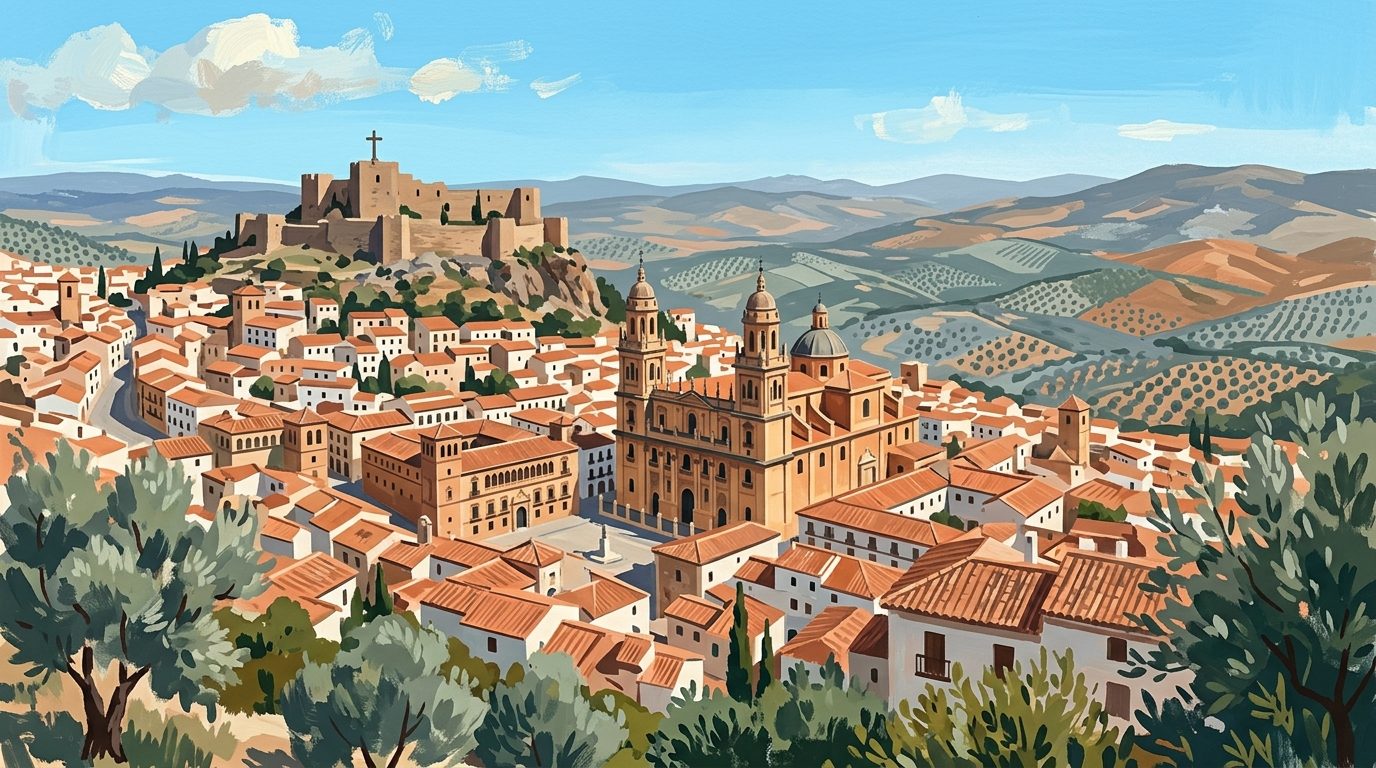
A Tale of Two Cities: The Golden Stone of Úbeda and Baeza
Beyond the endless olive groves of Jaén lie Úbeda and Baeza, two cities that define the Spanish Renaissance with their golden sandstone and quiet nobility.
7 min read
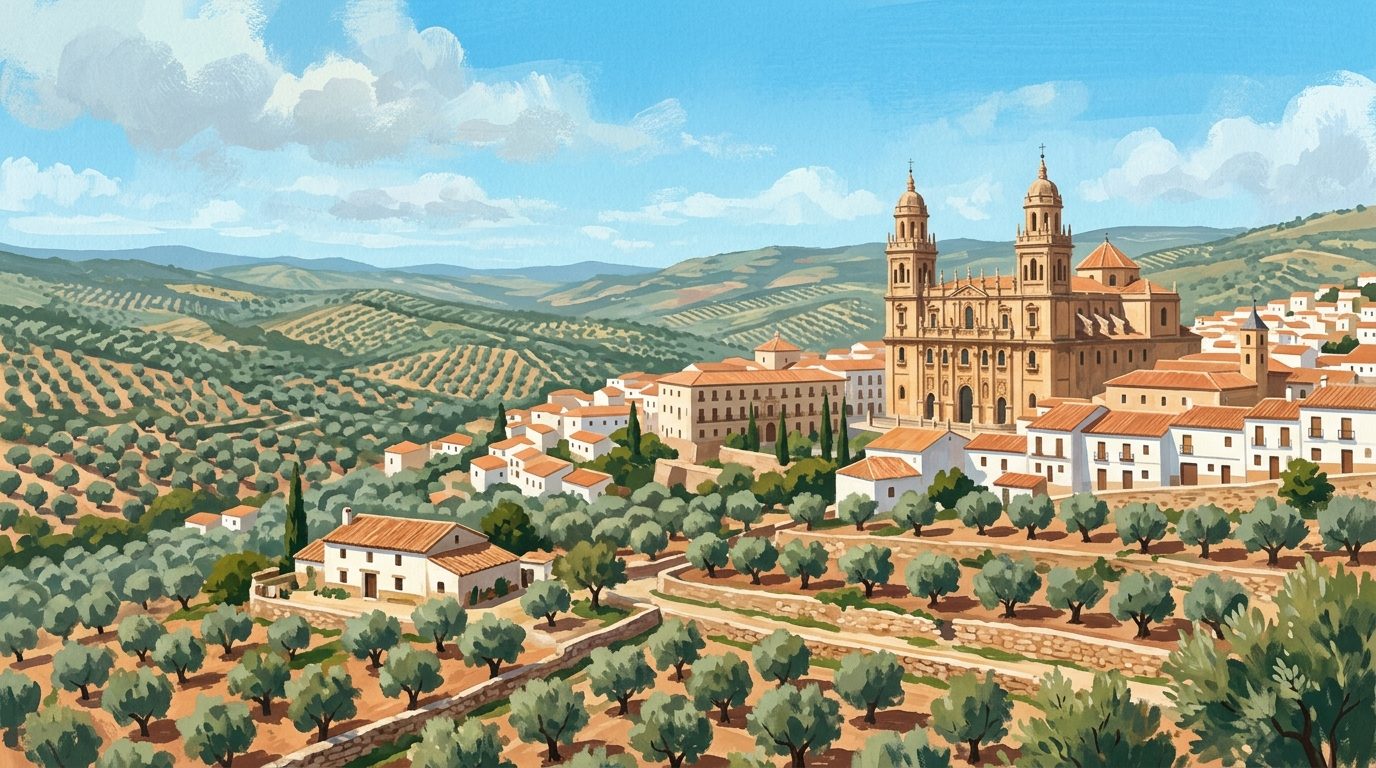
Exploring the Olive Oil Culture of Jaén City
Discover the global capital of olive oil in Jaén City, where you can explore historic mills, enjoy professional tastings, and experience luxury oleotherapy treatments.
5 min read
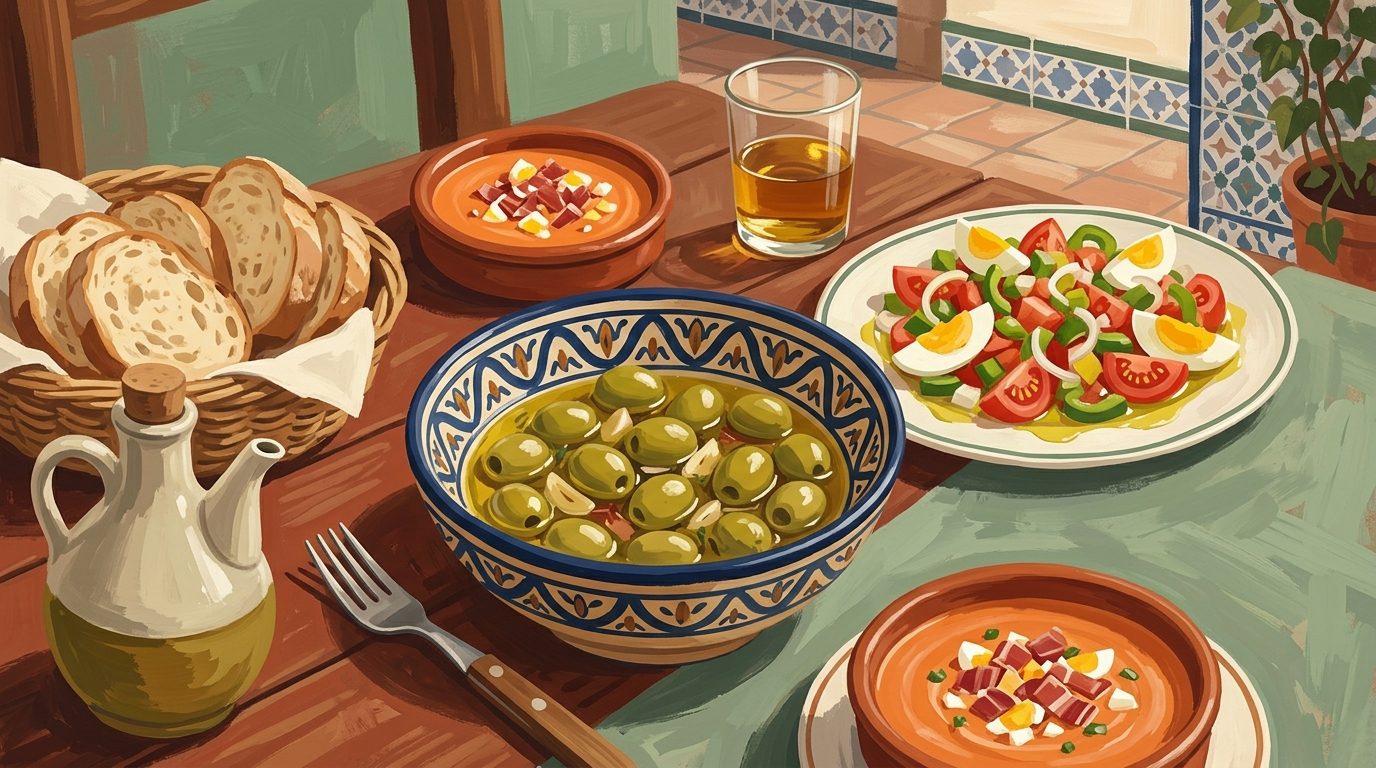
The Best Places to Eat in Jaén: A Guide to the World Capital of Olive Oil
Jaén remains one of the few places in Spain where the tradition of the free tapa is still treated with reverence. It is a city defined by its golden olive oil and a stubborn commitment to honest, seasonal cooking.
6 min read
Jaén in November: The Rhythm of the Olive Harvest
Experience the peak of the olive harvest in Jaén this November, from tasting electric-green fresh oils to exploring the quiet Renaissance streets of Úbeda and Baeza.
7 min read
The Ultimate Sherry Triangle Route: A 3-Day Bodega Itinerary
Forget everything you think you know about sweet cream sherry gathering dust in a vicar’s cupboard. The true Sherry Triangle is a serious, terroir-driven journey through chalk-white soils, coastal winds, and centuries-old cathedral bodegas.
10 min read
The Ultimate Jamón Ibérico Route: Through Huelva and Córdoba
Tracking down the world's finest ham is an exercise in geography, patience, and appetite. This three-day drive through the ancient oak forests of Huelva and Córdoba takes you straight to the source of authentic Jamón 100% Ibérico de Bellota.
9 min read
Newsletter
More stories from Andalucía
Weekly notes, seasonal picks, and the next guides worth bookmarking.