
Route
The Ultimate Whale Watching Guide: Strait of Gibraltar
Fourteen kilometres of churning water separate Europe from Africa, creating a turbulent bottleneck that serves as one of the world's greatest pelagic highways. Here, in the Strait of Gibraltar, you can watch wild orcas hunt bluefin tuna and sperm whales dive into the abyss just miles from the Andalucían coast.
By Dan · Updated 7 June 2026 · 9 min read

Fourteen kilometres of churning water separate Europe from Africa, creating a turbulent bottleneck that serves as one of the world's greatest pelagic highways. Here, in the Strait of Gibraltar, you can watch wild orcas hunt bluefin tuna and sperm whales dive into the abyss just miles from the Andalucían coast.
It begins on the N-340 highway. As you wind your way south past the cork oak forests of the Alcornocales Natural Park, the horizon suddenly cracks open, revealing the jagged Rif Mountains of Morocco. The African continent looks so close you feel you could swim to it. This geographical pinch-point, the Strait of Gibraltar, is the chaotic meeting place of the Mediterranean Sea and the Atlantic Ocean. For centuries, it has dictated human maritime history. But beneath the churning surface, it dictates a massive, relentless migration of marine life.
For wildlife enthusiasts, the port town of Tarifa in Cádiz province is ground zero. This windswept outpost at the southernmost tip of continental Europe is your departure point for some of the most reliable and spectacular cetacean watching in the northern hemisphere.
I have stood on the heaving bow of a small research vessel here, soaked in sea spray, watching a pod of long-finned pilot whales log sleepily on the surface, entirely unbothered by the heavy cargo ships thundering past in the commercial shipping lanes. The proximity of heavy human industry to fragile, complex marine ecosystems is stark and unnerving.
Whale watching in Cádiz is not a manufactured leisure activity; it is an expedition into a volatile, deeply active marine environment. It requires planning, an understanding of the unpredictable local weather systems, and a willingness to surrender to the rhythms of wild animals. Knowing exactly how to navigate the operators, the seasons, and the sea is essential to experience it properly.
The Oceanography: Why Does It Happen Here?
To understand why so many whales and dolphins congregate off the coast of Tarifa, you have to look at the seabed. Just west of the Strait lies the Camarinal Sill, a submerged mountain ridge. The Atlantic Ocean and the Mediterranean Sea have different salinities and temperatures. Lighter Atlantic surface water flows relentlessly eastward into the Mediterranean, while denser, saltier Mediterranean deep water pushes westward beneath it.
When this heavy outflow hits the Camarinal Sill, it forces deep, nutrient-rich waters up toward the surface. This massive upwelling creates a plankton bloom, which attracts small baitfish, which in turn attract mackerel, squid, and bluefin tuna. Where the fish gather, the apex predators follow.
This biological conveyor belt operates in a remarkably narrow channel, meaning you do not have to travel far offshore to find deep-water species. In some areas, the seabed drops abruptly to depths of nearly 1,000 metres just a few miles from the beaches of Tarifa.
What Will You See? The Seven Species of the Strait
Seven different species of cetaceans either live in the Strait year-round or use it as a migratory corridor. Understanding what to look for will dramatically improve your experience on the water.
The Resident Populations
These species can be spotted almost entirely year-round, provided the weather allows boats to leave the harbour.
- Long-finned Pilot Whales: One of the most common sightings. These are actually large dolphins, easily identified by their bulbous, melon-shaped heads and robust, curved dorsal fins. They live in matriarchal pods of 15 to 20 individuals and are frequently seen 'logging' (resting motionless at the surface) in the middle of the Strait.
- Bottlenose Dolphins: The classic, robust dolphin species. In the Strait, they are often seen hunting in the turbulent wake of large cargo ships, leaping high into the air.
- Common Dolphins: Smaller, incredibly fast, and identifiable by the distinctive yellow-and-grey hourglass pattern on their flanks. They often ride the bow waves of the whale watching boats.
- Striped Dolphins: Slightly smaller than common dolphins, highly athletic, and known for spectacular leaping manoeuvres. They are usually found in larger, tighter pods.
The Seasonal Migrants
These species pass through the Strait at specific times of the year, following food sources.
- Sperm Whales: These deep-sea giants pass through between April and August, though spring is generally the most reliable time to see them. They hunt giant squid in the deep underwater canyons. You will likely spot their distinctive angled blow (a bushy spout of water erupting at a 45-degree angle to the left) before you see the animal. They spend up to 45 minutes underwater, surfacing to breathe for about ten minutes before throwing their massive flukes (tails) in the air to dive again.
- Fin Whales: The second-largest animal on the planet. They do not linger in the Strait; they transit through quickly, migrating from the Mediterranean into the Atlantic during the early summer. Sightings are brief and require a degree of luck.
The Apex Predators
- Orcas (Killer Whales): The most highly sought-after sighting in Andalucía. A specific sub-population of Iberian orcas arrives in the Strait during the peak heat of summer. Their behaviour here is entirely unique, tied directly to human fishing activity.
The Orca Season: A Deep Dive (July to August)
If your primary goal is to see orcas, you must time your visit for July or August. During these months, the Atlantic bluefin tuna migrate back out of the Mediterranean after spawning. The orcas know this, and they set up an ambush in the Strait.
However, the orcas do not just hunt the tuna naturally; they have learned to exploit local fishermen. Small Moroccan and Spanish fishing boats (pateras) sit over the deep drop-offs, fishing for massive tuna using traditional drop-line techniques. As the fishermen hook a 200-kilo tuna and begin the exhausting process of hauling it up from the depths, the orcas wait.
When the exhausted fish is nearing the surface, the orcas strike, frequently stripping the tuna from the hook and leaving the fisherman with nothing but a severed fish head. Watching this strategic, highly intelligent behaviour play out on the open ocean is astonishing.
Practical Note: Orca specific tours operate differently from standard whale watching trips. The boats must travel further west, often close to Cape Spartel on the Moroccan coast, where the drop-line fishermen operate. These trips typically last three hours instead of two, and tickets are significantly more expensive. They also sell out weeks in advance. Booking directly through the operators' websites (such as firmm.org or turmares.com) is highly recommended for securing your spot early, especially during the July-August orca season.
The Realities of the Strait: Winds, Weather, and Warnings
Understanding the local weather is critical. Tarifa is the windsurfing capital of Europe for a reason. The wind here is a dominating, aggressive force that dictates everything.
There are two prevailing winds: the Poniente (a cooler westerly wind from the Atlantic) and the Levante (a furious easterly wind from the Mediterranean). When the Levante blows hard, it forces the entire Mediterranean Sea through the narrow funnel of the Strait, creating steep, treacherous standing waves.
When the Levante reaches above Force 4 or 5, the Port Authority closes Tarifa harbour to all small vessels. Whale watching trips are cancelled instantly. The Levante can blow relentlessly for five or six days straight, meaning entire weeks of whale watching can be wiped out.
The Strategy: Never leave your whale watching trip to the last day of your holiday. Book it for the very first morning you are in the area. If your trip is cancelled due to wind, the operators will happily roll your ticket over to the next available day. If you only leave yourself a single 24-hour window, the odds of disappointment are high.
Seasickness Warning: Even on days when the port is open, the convergence of currents creates a chaotic, multidirectional swell. The water is rarely flat. If you are prone to motion sickness, you will feel it here. Go to any Spanish pharmacy and ask for Biodramina con Cafeína (dimenhydrinate with caffeine). Take it 30 minutes before boarding. The standard version will make you drowsy; the caffeinated version keeps you alert enough to actually enjoy the whales.
Choosing the Right Operator and Boat
Tarifa has several operators, mostly clustered around the Avenida de la Constitución and Calle Alcalde Juan Núñez. Spanish law stringently regulates cetacean watching: boats cannot approach closer than 60 metres, must parallel the animals rather than cut them off, and must idle their engines if animals approach the vessel.
I strongly recommend booking with operators who prioritise marine biology and research alongside tourism.
- FIRMM (Foundation for Information and Research on Marine Mammals): Arguably the most scientifically grounded operator in Tarifa. Run by Swiss researcher Katharina Heyer, every trip includes a biologist collecting data. They offer a highly educational preamble before you board.
- Turmares: A large, reliable operator with a fleet of different boats, including vessels with underwater viewing windows. This is usually the best option for families with younger children, as the larger boats offer more stability and indoor shelter.
- Whale Watch Tarifa: Excellent, experienced skippers who are incredibly adept at reading the currents and spotting distant blows.
Boat Types: You will generally have the choice between a large monohull/catamaran or a smaller, rigid-hulled inflatable boat (Zodiac/RIB). The larger boats are safer, drier, and more comfortable. The Zodiacs sit much lower to the water, giving you an intimate, eye-level view of the dolphins, but you will get wet, and the repeated slamming against the swell is hard on the lower back. Zodiacs are strictly not recommended for pregnant women or anyone with spinal issues.
Practical Information: Logistics and Preparation
Arriving and Parking in Tarifa
If you are driving down for the day, be prepared for severe parking shortages, particularly in July and August. The port itself has restricted vehicular access. Do not attempt to drive your car down to the ferry terminal unless you have a specific permit.
Instead, aim for the paid gravel parking lot on Calle Alcalde Juan Núñez (right by the port entrance), but arrive before 9:30 AM to secure a space. Alternatively, use the underground public car park near the Guzman el Bueno Castle, or park further north near Playa de Los Lances and walk the 15 minutes down the cobbled streets to the port.
What to Wear and Bring
- Layers: Even if it is 35 degrees Celsius on land, the wind chill on the open water of the Strait will cause you to shiver. Bring a windproof jacket.
- Footwear: Rubber-soled shoes. The decks get wet and slippery. Flip-flops are a liability.
- Sun Protection: The glare off the water is intense. Polarised sunglasses are essential: they cut the surface reflection, allowing you to see the dark shapes of the whales moving beneath the water before they surface.
- Photography: Smartphone cameras generally result in disappointing, tiny black dots on a horizon of blue. If you want good photos, you need a DSLR or mirrorless camera with at least a 200mm to 300mm telephoto lens. Keep your shutter speed high (above 1/1000th) to compensate for the continuous pitching of the boat.
Where to Base Yourself
Given the early departure times (the sea is often calmest first thing in the morning), staying in Tarifa town is highly advantageous. It allows you to walk to the port and eliminates the stress of morning traffic on the N-340.
For a comfortable stay within walking distance of the harbour, booking accommodation right in the historic centre offers excellent access. If you prefer to be slightly removed from the nighttime noise of the old town, there are superb modern options available, though they require a short taxi ride or a brisk 20-minute walk to the boat departures.
Whale watching in the Strait of Gibraltar is a raw, humbling experience. It strips away the predictable comforts of standard tourism and forces you to engage directly with the wild elements of the Andalucían coast. Plan carefully, respect the wind, and keep your eyes on the horizon.
Last reviewed: 21 June 2026 · Editorial policy
Related guides

Reptiles of Andalucía: A Field Guide to Europe’s Herpetological Stronghold
Discover the incredible biodiversity of Andalucía's reptiles, from the giant Ocellated Lizard to the elusive Mediterranean Chameleon and the rare Lataste’s Viper.
7 min read
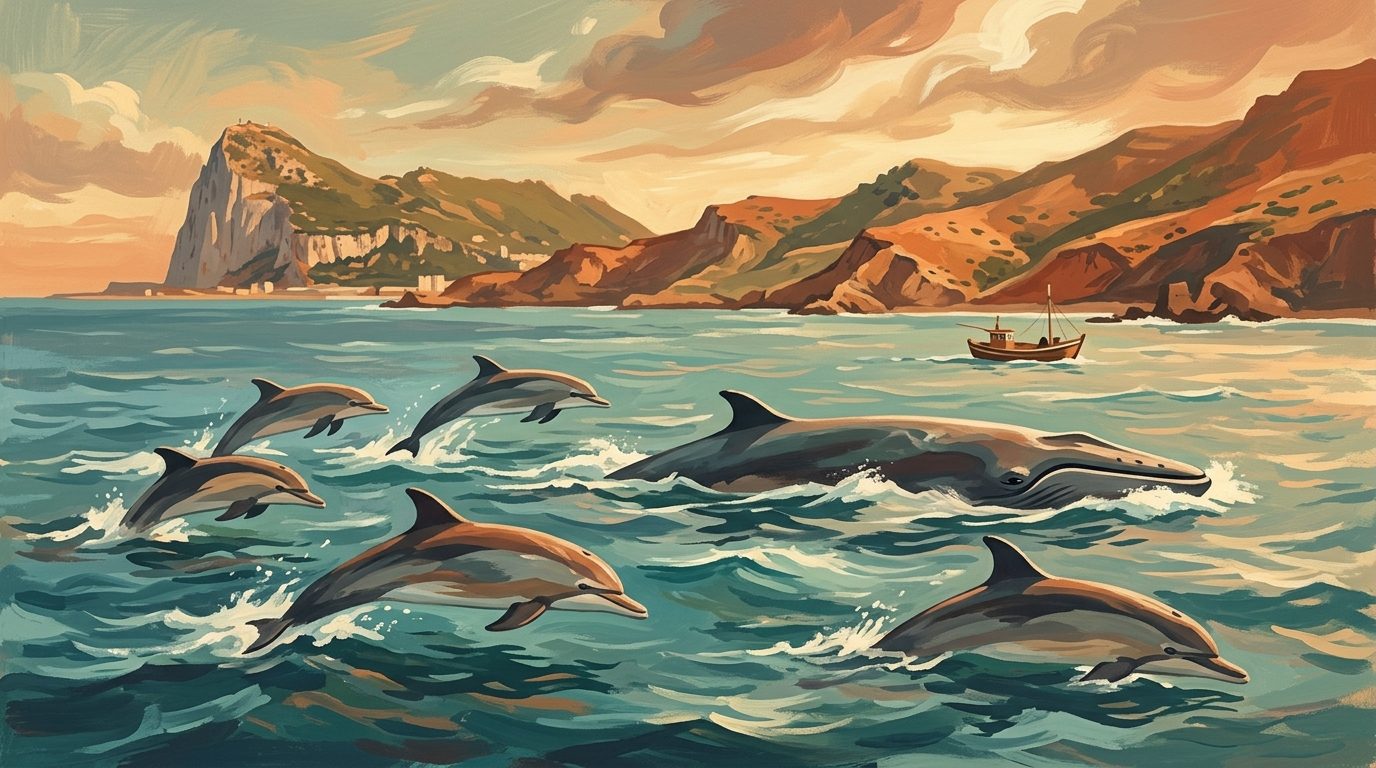
Whale and Dolphin Watching in the Strait of Gibraltar
The Strait of Gibraltar is a premier marine sanctuary where Atlantic and Mediterranean waters meet, offering reliable sightings of orcas, sperm whales, and several dolphin species.
7 min read

The Complete Caminito del Rey Guide: How to Walk Spain's Most Famous Gorge
Walking the precipitous boardwalks of the Caminito del Rey is a thrilling encounter with sheer limestone cliffs and fascinating engineering heritage. This guide details exactly how to secure tickets, navigate the linear route, and plan your logistics.
10 min read

Walking the GR7 in Andalucía: The Ultimate Guide to Spain's Great Southern Trail
Leave the crowds behind and tackle Spain's greatest long-distance trail. From navigating faded waymarks to crossing the high Alpujarras, here is exactly how to walk the GR7 in Andalucía.
11 min read

A Guide to Hiking and Walking in Andalucía
Discover the best hiking trails in Andalucía, from the high peaks of the Sierra Nevada to the volcanic coast of Cabo de Gata and the lush forests of Grazalema.
7 min read

Subterranean Andalucía: A Guide to Caving and Show Caves
Discover the underground wonders of Andalucía, from the record-breaking columns of Nerja to the sparkling gypsum crystals of Sorbas.
7 min read
More guides

Doñana National Park Guide: Marshes, Lynx, and Restricted Zones
A shifting landscape of tidal marshes, ancient pine forests, and wind-sculpted dunes, Doñana is Europe's most crucial wetland reserve. Navigating its restricted zones requires planning, but the reward is encountering Iberian lynx and thousands of migratory flamingos in total wilderness.
9 min read

The Ultimate Andalucía Photography Route: Chasing Light Across Southern Spain
Forget the bleached-out midday snaps and crowded tourist viewpoints; photographing southern Spain requires an obsession with timing and terrain. This comprehensive route guides you to the exact coordinates and precise hours needed to capture the region's finest architectural geometry and dramatic geology.
9 min read

Roman Andalucía Heritage Trail
Before the Moorish emirs reshaped southern Spain, this territory was the fiercely wealthy Roman province of Baetica, a crucial supplier of olive oil and emperors to the empire. This seven-day route traces the classical footprint across Andalucía, leading you from coastal fish-salting ruins and lonely mountain amphitheatres to the architectural remnants that bridged the fall of Rome and the rise of Al-Andalus.
9 min read

The Alpujarras Complete Guide: High Altitudes and Moorish Footpaths
South of the Sierra Nevada, the Alpujarras is a high-altitude network of steep ravines, ancient irrigation channels, and white villages clinging to the mountainside. This guide covers how to navigate the hairpin bends, where to find the best hiking trails, and which village suits your basecamp needs.
9 min read

The Ultimate Jamón Ibérico Route: Through Huelva and Córdoba
Tracking down the world's finest ham is an exercise in geography, patience, and appetite. This three-day drive through the ancient oak forests of Huelva and Córdoba takes you straight to the source of authentic Jamón 100% Ibérico de Bellota.
9 min read

Best Weekend Breaks in Andalucía
When you live in southern Spain, the temptation is to spend every weekend repeating the same comfortable Sunday routines. These seven targeted 48-hour itineraries bypass the obvious tourist traps, giving residents and expats a genuine excuse to pack a weekend bag and drive somewhere entirely new.
11 min read

One Week in Andalucía Itinerary: The Classic Triangle & Ronda
Seven days in southern Spain is just enough time to trace the defining Moorish capitals and mountain roads of Andalucía. This itinerary strips away the coastal sprawl to focus entirely on the essential cities of Málaga, Granada, Córdoba, and Sevilla, returning via the dramatic mountain gorge of Ronda.
9 min read

Budget Backpacker Guide to Andalucía
Andalucía on a shoestring is entirely possible if you know where to eat, how to travel, and which timing tricks unlock the region's monuments for free. Taking this approach strips away the tourist premium to show you exactly how to backpack southern Spain on less than €50 a day.
10 min read

Motorcycle Touring in Andalucía: The Ultimate Rider's Guide
Forget the motorways; Andalucía’s true character is carved into its mountain passes, where immaculate asphalt drapes across deep ravines and high-altitude plateaus. This is a landscape built for motorcycles, offering thousands of kilometres of technical riding.
9 min read
Newsletter
More stories from Andalucía
Weekly notes, seasonal picks, and the next guides worth bookmarking.