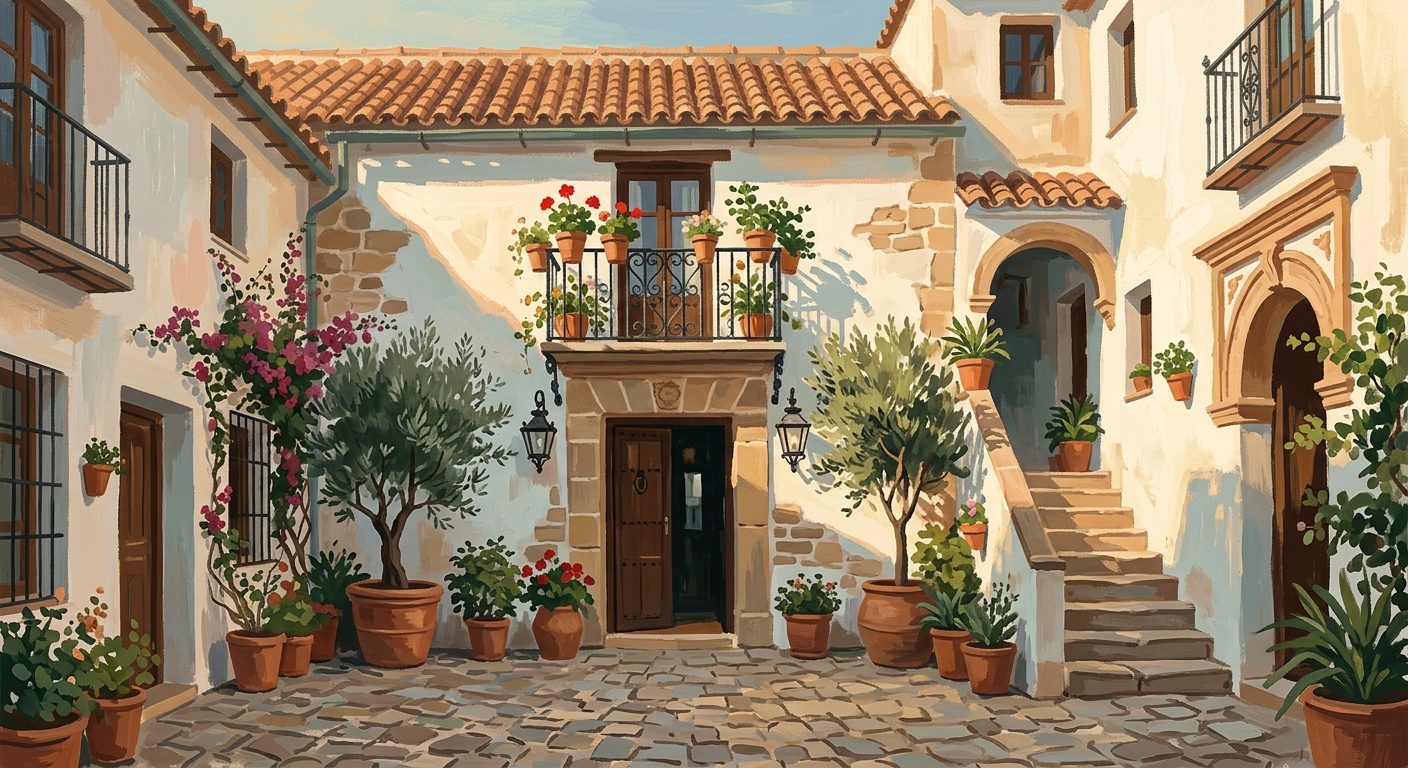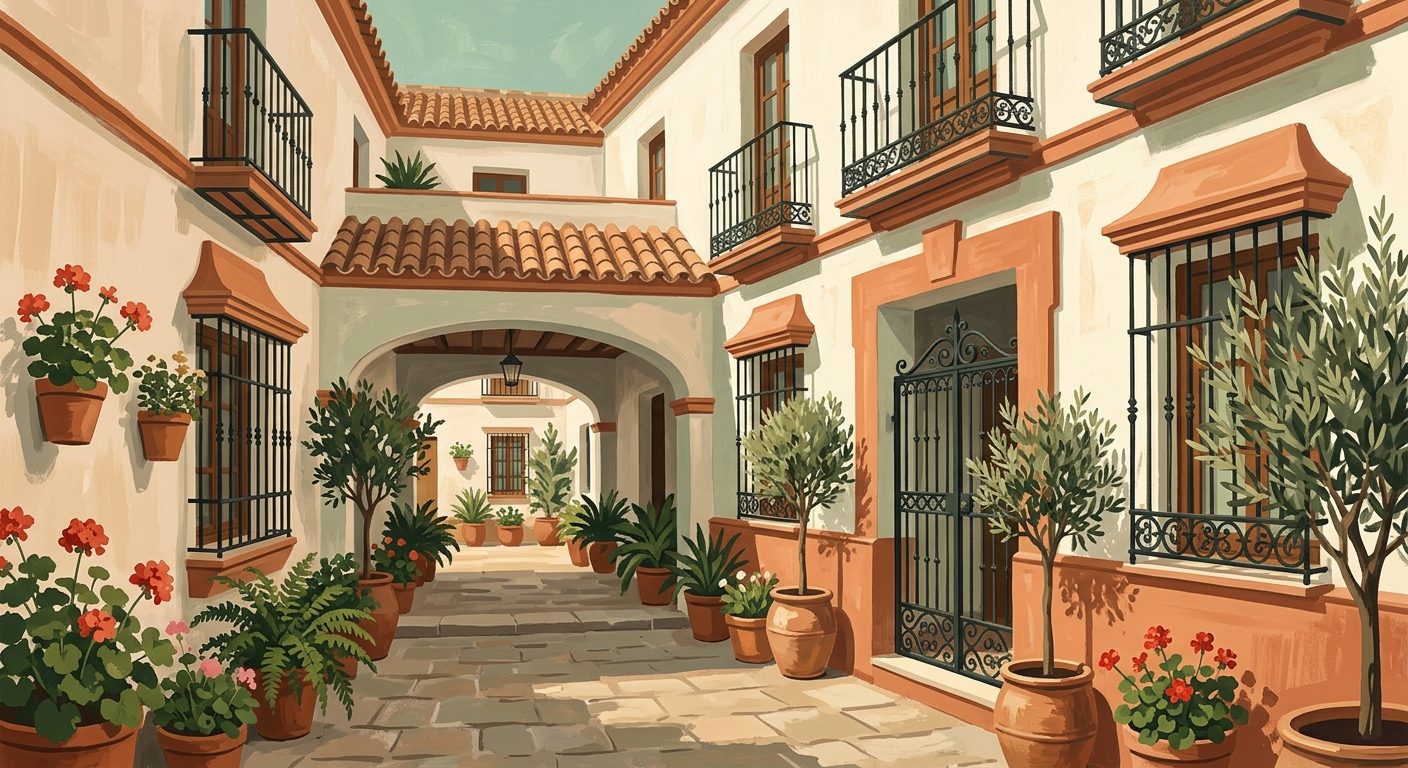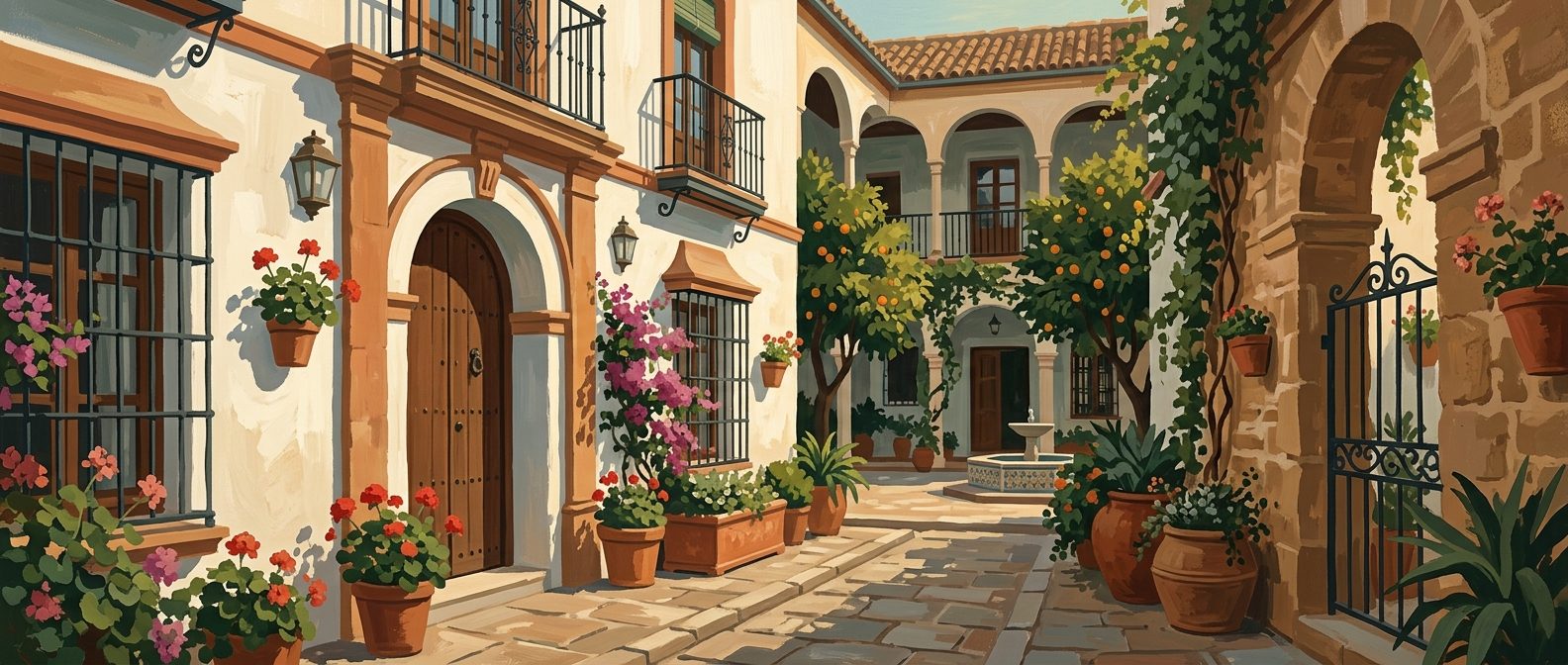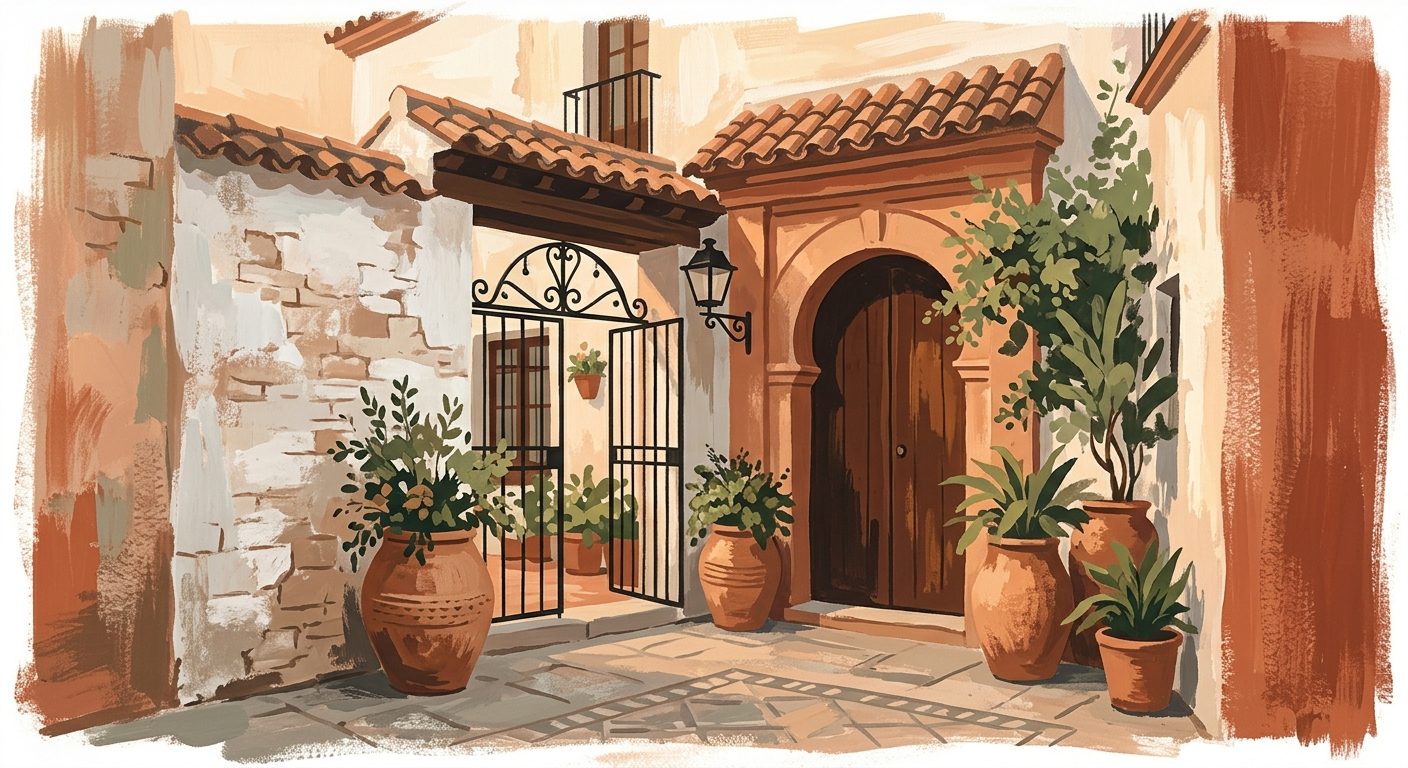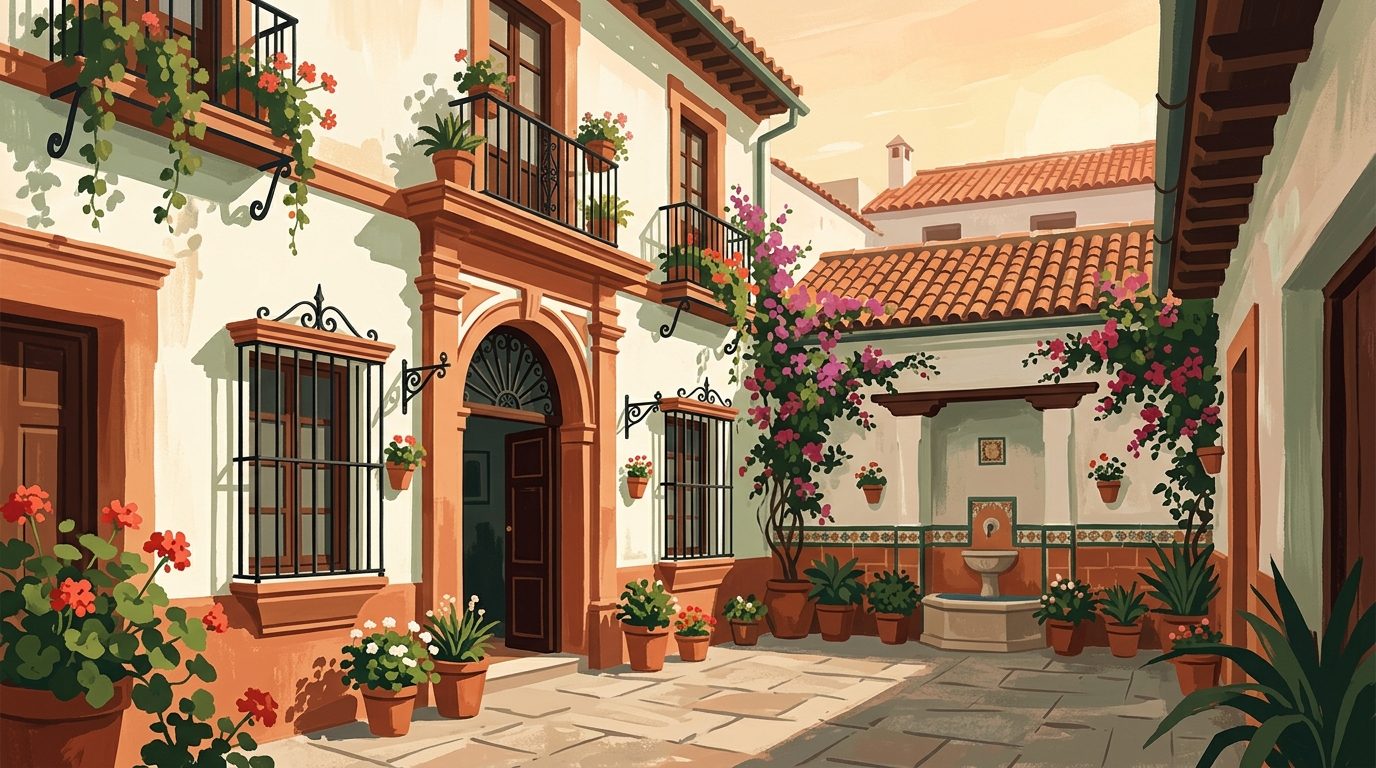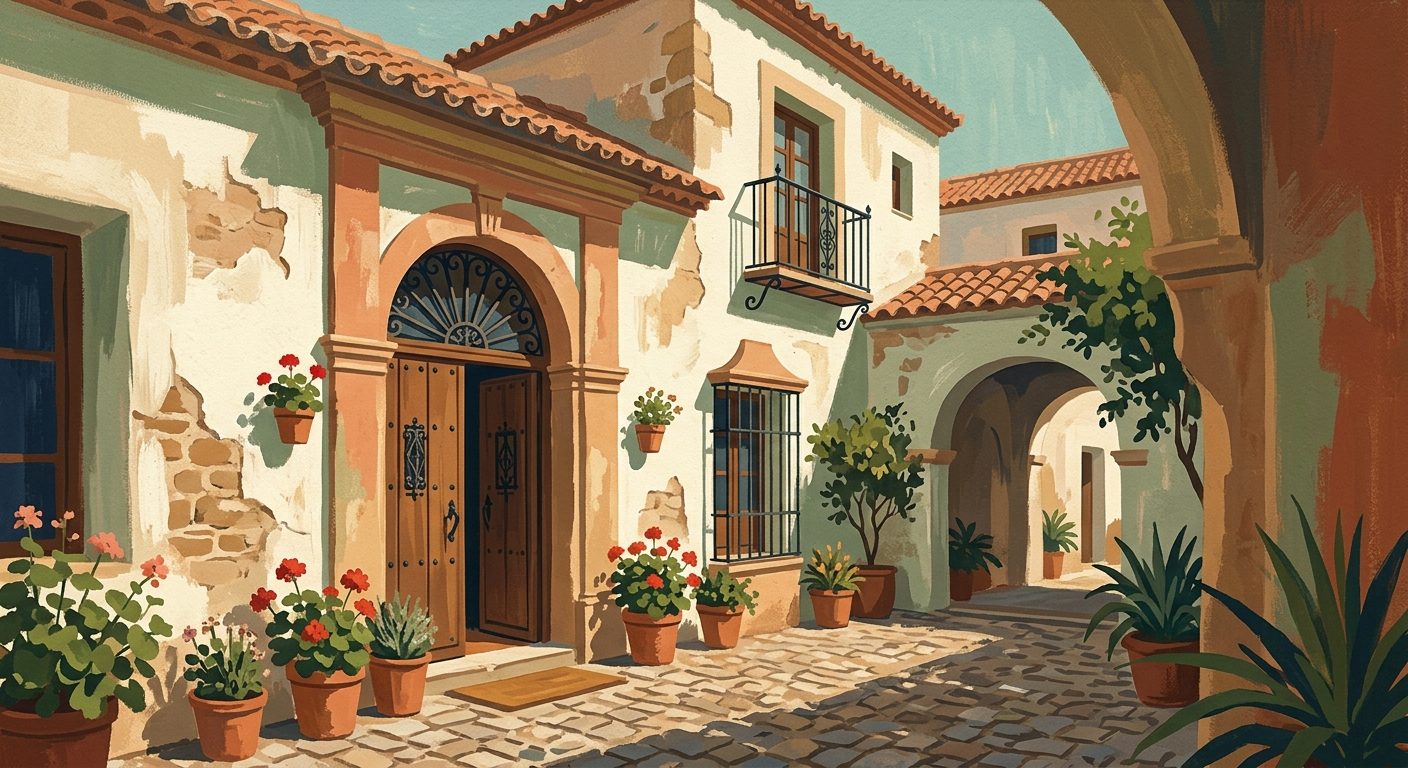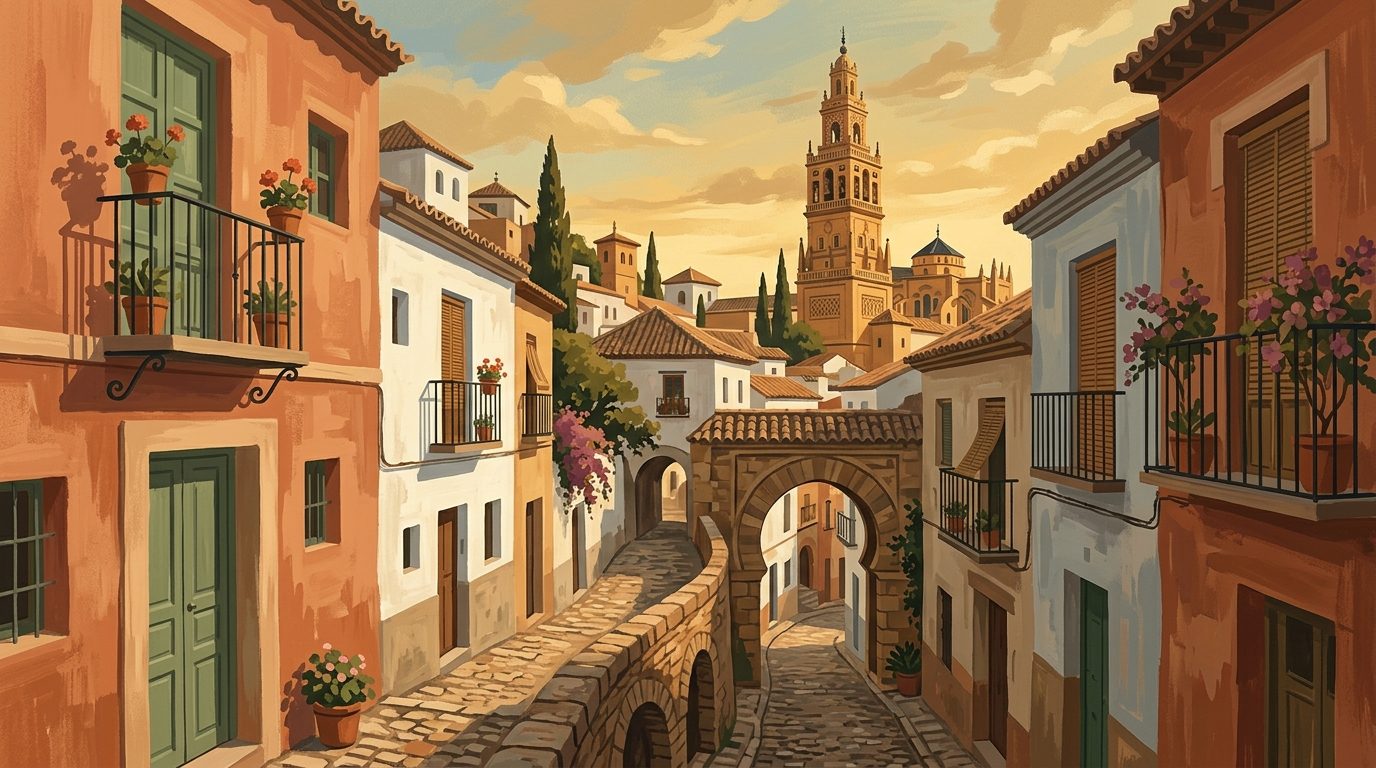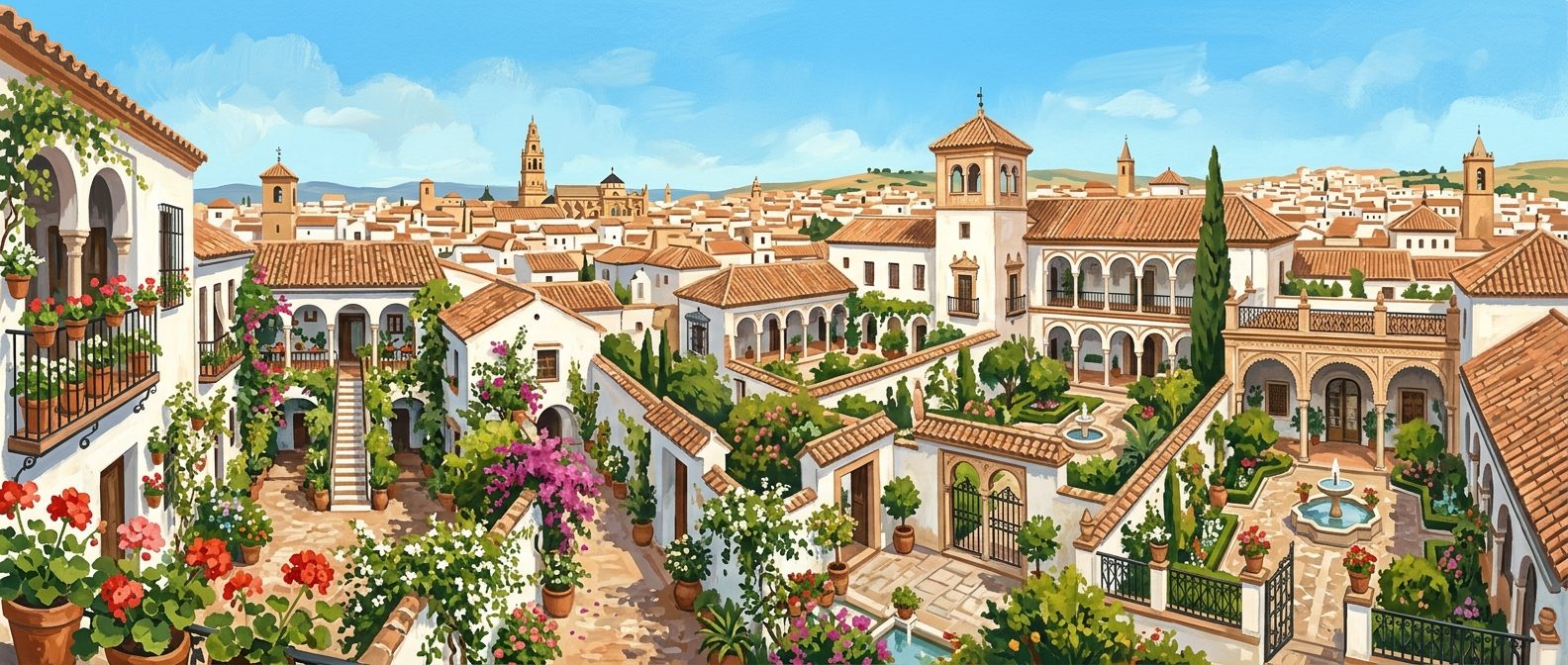
Beyond the stone walls of the city’s ancient quarters lies a private world where whitewashed surfaces disappear behind thousands of blooming geraniums. The courtyards of Córdoba represent a centuries-old response to the Andalucían heat, evolving from simple domestic necessities into a UNESCO-recognised cultural tradition.
While the Mezquita-Catedral often commands the initial attention of visitors to Córdoba, the city’s soul is arguably found within its patios. These internal courtyards were designed by the Romans and perfected by the Moors to provide a cool, shaded sanctuary during the intense summer months. Over time, the practical need for ventilation and light transformed into a competitive art form, culminating in the annual Patio Festival. For those visiting outside the festival window in May, the Palacio de Viana provides a permanent museum of this tradition, housing twelve distinct courtyards within its walls. Understanding the distinction between the grand aristocratic spaces of Viana and the humble, shared ‘patios populares’ of the residential neighbourhoods is key to appreciating the city's architectural heritage.
Walking through these spaces offers a sensory experience defined by the scent of jasmine, the sound of trickling water, and the striking contrast of terracotta pots against brilliant white walls. It is a tradition that remains deeply rooted in the local community, with residents spending months pruning and watering their displays to ensure they reach their peak for the spring celebrations.
What to See & Do
The Palacio de Viana
Often referred to as the Museum of the Patios, the Palacio de Viana is a sprawling 14th-century manor house located in the Santa Marina district. Rather than a single courtyard, this complex features twelve different patios and a large formal garden, each representing a different era or social function. The Patio de los Gatos (Courtyard of the Cats) is one of the oldest, retaining a medieval atmosphere with its simple lines and functional layout. In contrast, the Patio de las Columnas was designed for social events, featuring grand arches and a more formal, open feel.
The transition between these spaces demonstrates five centuries of architectural evolution. You can observe the Patio de la Madama, defined by its central statue and intimate scale, or the Patio de las Rejas, which allows passers-by a glimpse of the interior through its ornate ironwork, a rare concession of privacy in a culture that typically keeps its beauty hidden behind closed doors. The interior of the palace is equally compelling, containing collections of leatherwork, tapestries, and historical libraries, though many visitors choose to purchase a ticket specifically for the grounds.
The May Patio Festival (Los Patios de Córdoba)
For two weeks in May, usually during the first half of the month, private residents across the historic centre open their doors to the public. This is the Fiesta de los Patios, a tradition that earned UNESCO Intangible Cultural Heritage status in 2012. The festival is a competition where homeowners vie for prizes based on the variety of flora, the arrangement of the pots, and the preservation of traditional features like central wells and pebble-dash floors.
In 2026, the festival ran from 4 May to 17 May. During this period, the city is organised into several walking routes. The courtyards are generally open from 11:00 to 14:00 and again from 18:00 to 22:00. Entry is free, though it is customary to leave a small tip for the owner at the entrance or exit. Be prepared for significant queues at the most famous locations, particularly on weekends.
The San Basilio Route
The neighbourhood of San Basilio, located near the Alcázar de los Reyes Cristianos, is widely considered the most traditional area for patio viewing. This district contains some of the most frequently awarded courtyards in the city. Streets such as Calle San Basilio and Calle Martín de Roa are the epicentre of the festival. Even outside the official May event, several patios in this area operate as small museums or workshops, allowing visitors to enter for a small fee (typically 5 to 6 euros) throughout the year.
Centro de Interpretación de los Patios (Trueque Cuatro)
Located at Calle Trueque 4, this is a permanent site dedicated to the history of the patio tradition. It serves as an excellent starting point for those who want to understand the social history of these spaces. The house was saved from redevelopment to preserve its traditional layout, and it now functions as a cultural centre where you can learn about the irrigation techniques (such as the use of long canes with tin cans attached to water high-reaching pots) that are still used today.
Practical Information
Palacio de Viana Opening Times & Prices
The Palacio de Viana operates on seasonal hours. In winter (September to June), it is open Tuesday to Saturday from 10:00 to 19:00 and Sundays from 10:00 to 15:00. It is generally closed on Mondays, except during peak weeks in March, April, and May when it may open from 10:00 to 15:00. During the summer months of July and August, the palace adopts a morning-only schedule, typically 09:00 to 14:00.
For 2026, a combined ticket for the 12 Patios and the Palace interior costs €12. If you only wish to visit the patios and gardens, the price is €8. Children under 10 enter for free. A helpful tip for budget travellers: the palace often offers free entry to the patios on Wednesdays from 14:00 to 17:00, though this is subject to capacity limits.
How to Get There
Córdoba is a city best explored on foot. The Palacio de Viana is roughly a 15 to 20-minute walk north from the Mezquita-Catedral. If you prefer public transport, Bus Lines 1, 2, and C2 have stops near the Santa Marina district. From the train station, a taxi will take approximately 10 minutes and cost around €7 to €10.
Parking
Driving into the historic centre is not recommended due to narrow streets and restricted access zones (ACIRE). The nearest reliable parking for the Palacio de Viana is Parking Calle Sevilla or the APK2 Paseo de la Victoria (booking in advance via app is recommended during the festival). If you are visiting for the Patio Festival, it is better to park on the south side of the river near the Miraflores Bridge and walk across, as the central car parks fill up very early.
Where to Eat Nearby
Directly across from the Palacio de Viana is Taberna de Santa Marina. This traditional tavern is a favourite with locals, featuring decor dedicated to the city’s bullfighting history. It is an ideal spot to try salmorejo (a thick, cold tomato soup topped with ham and egg) or rabo de toro (oxtail stew). Another excellent choice nearby is Taberna Sociedad Plateros María Auxiliadora. Established in 1868, it specialises in local Montilla-Moriles wines and offers a fantastic bacalao (cod) with orange and olive oil. For a more contemporary take on Andalucían flavours, La Regadera near the river provides creative plates using seasonal produce, though it is roughly a 10-minute walk from the Viana area.
Where to Stay
For those seeking luxury, Hospes Palacio del Bailío is a converted 16th-century palace located just five minutes from Viana, featuring its own Roman ruins and an outdoor pool. Hotel Macià Alfaros is another reliable option nearby, offering traditional Andalucían architecture and easy access to the Santa Marina district. If you prefer to be in the heart of the San Basilio patio route, Las Casas de la Judería provides a collection of interconnected historic houses with authentic courtyards and a prime location near the Alcázar.