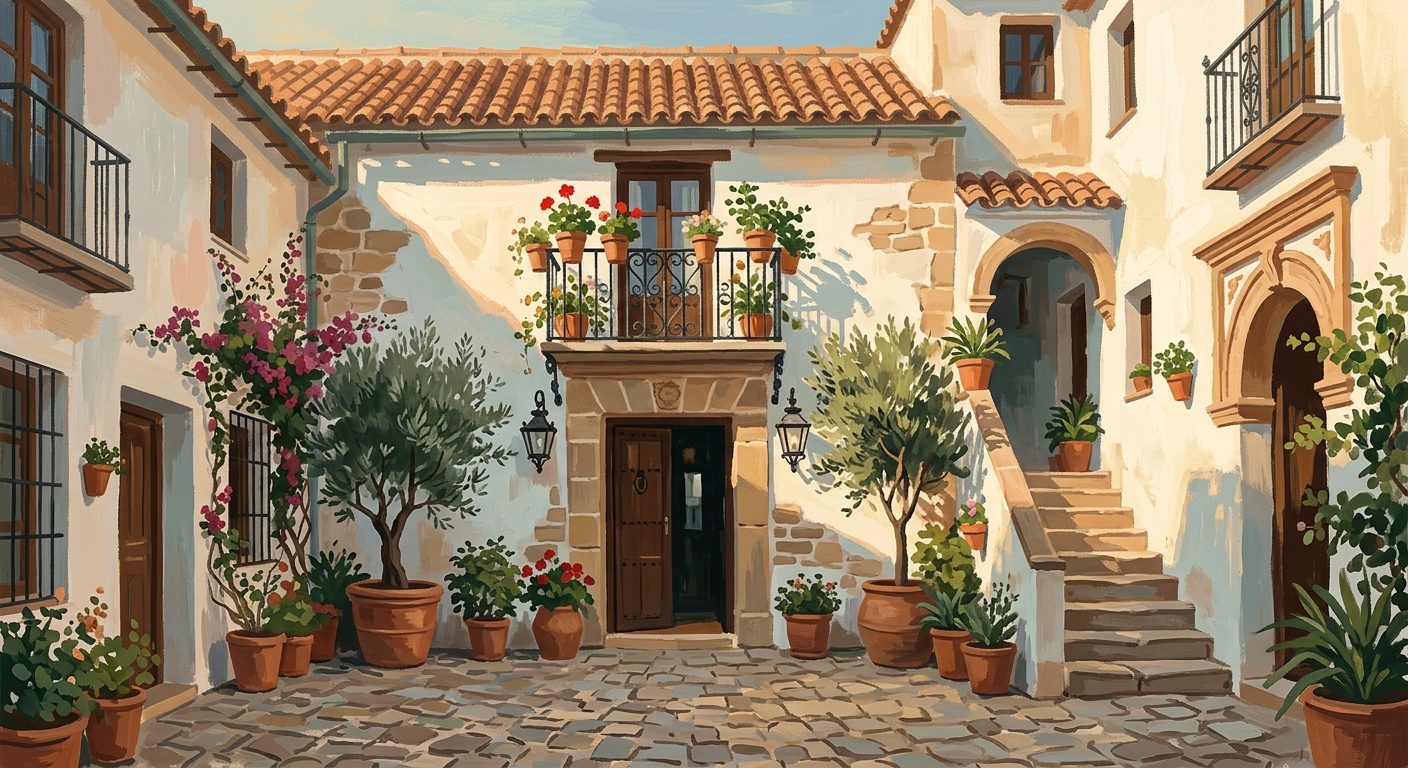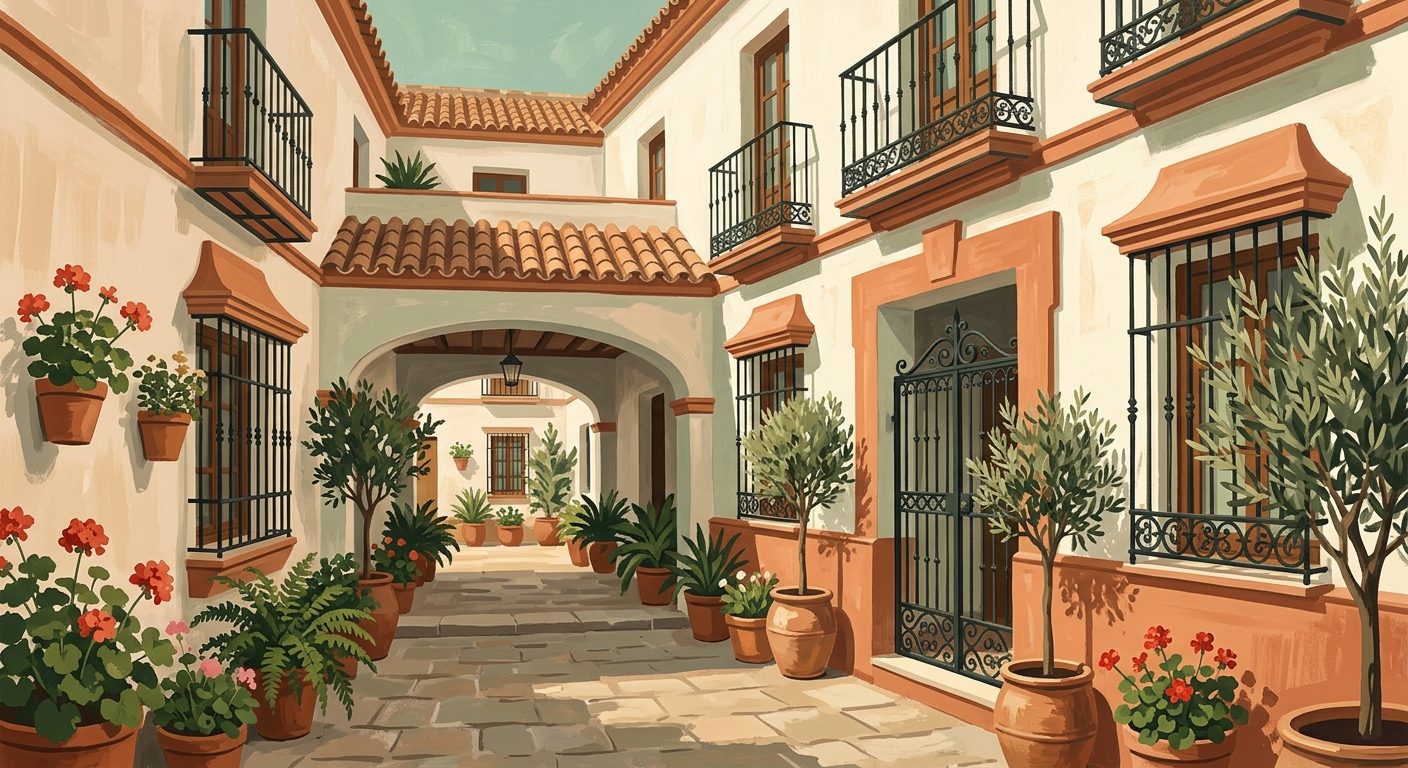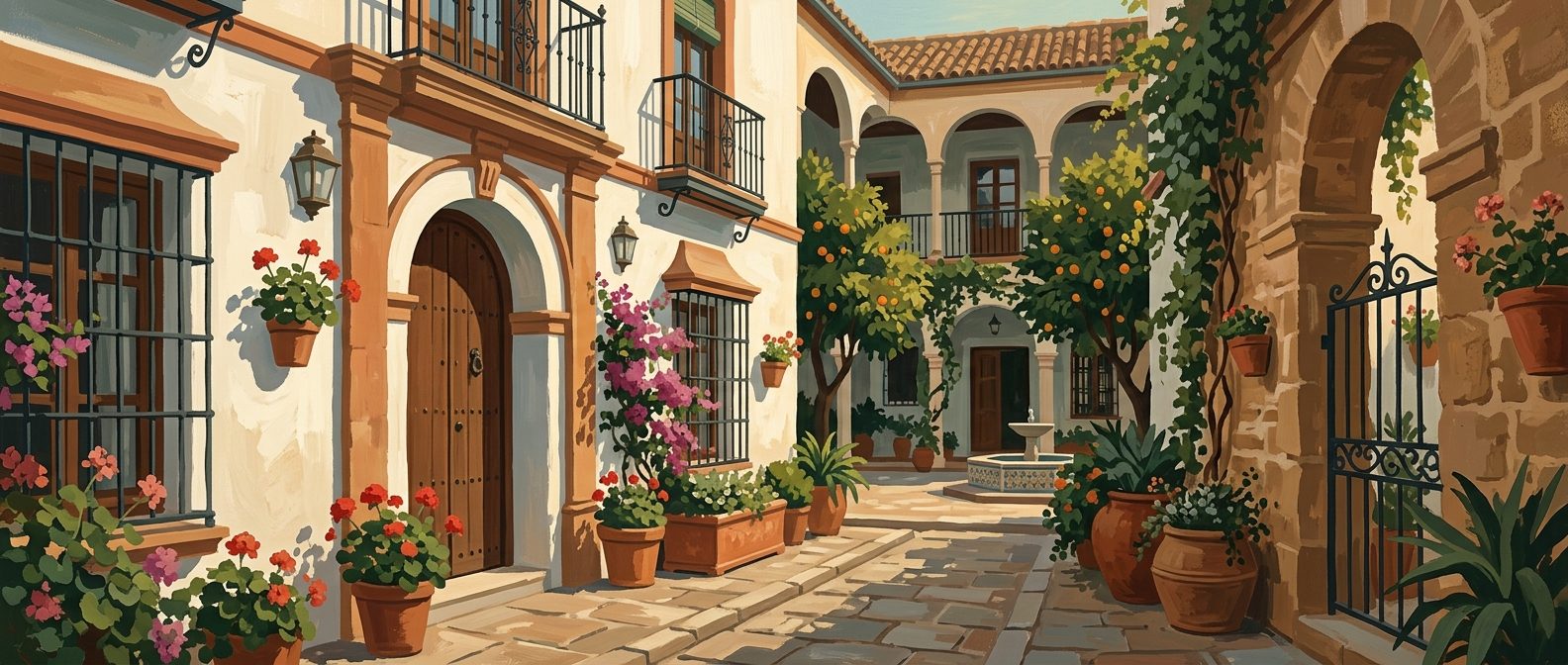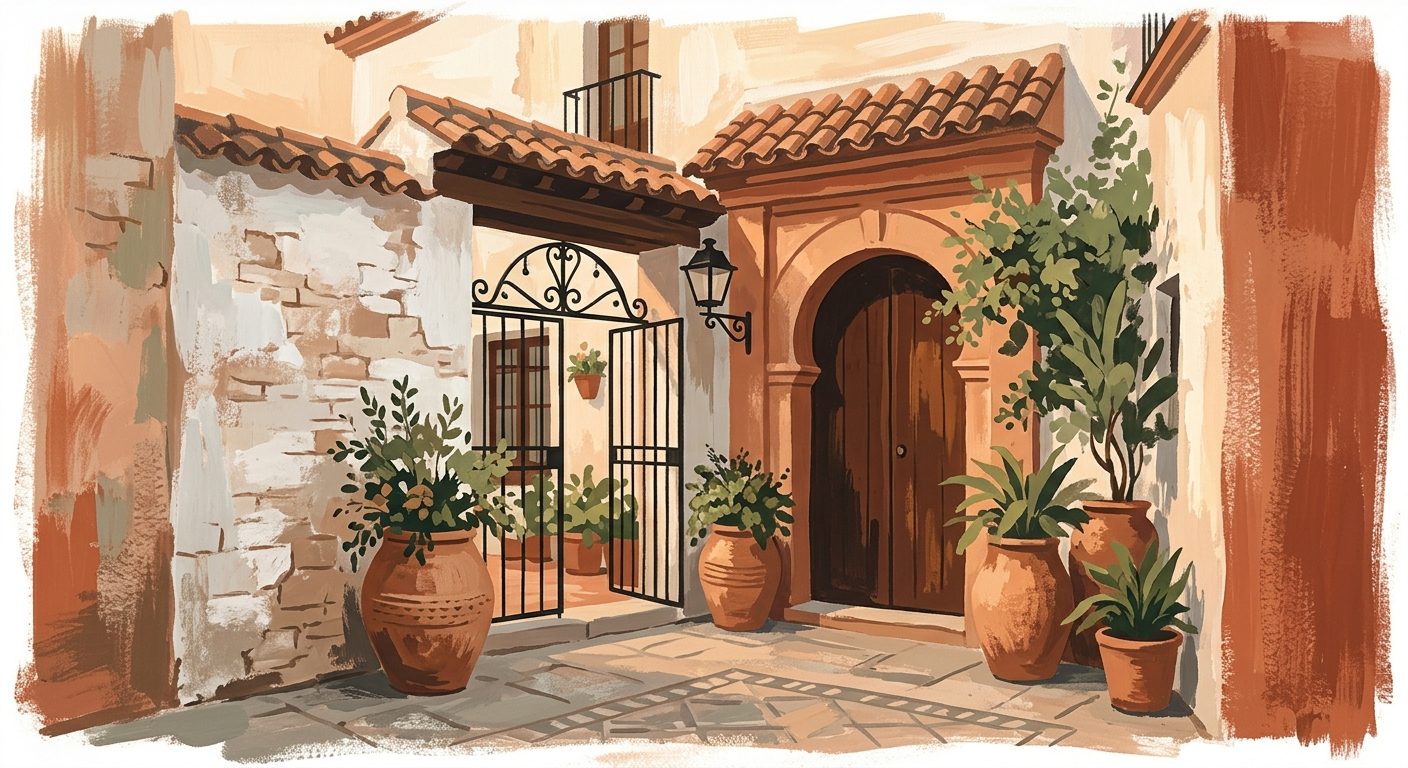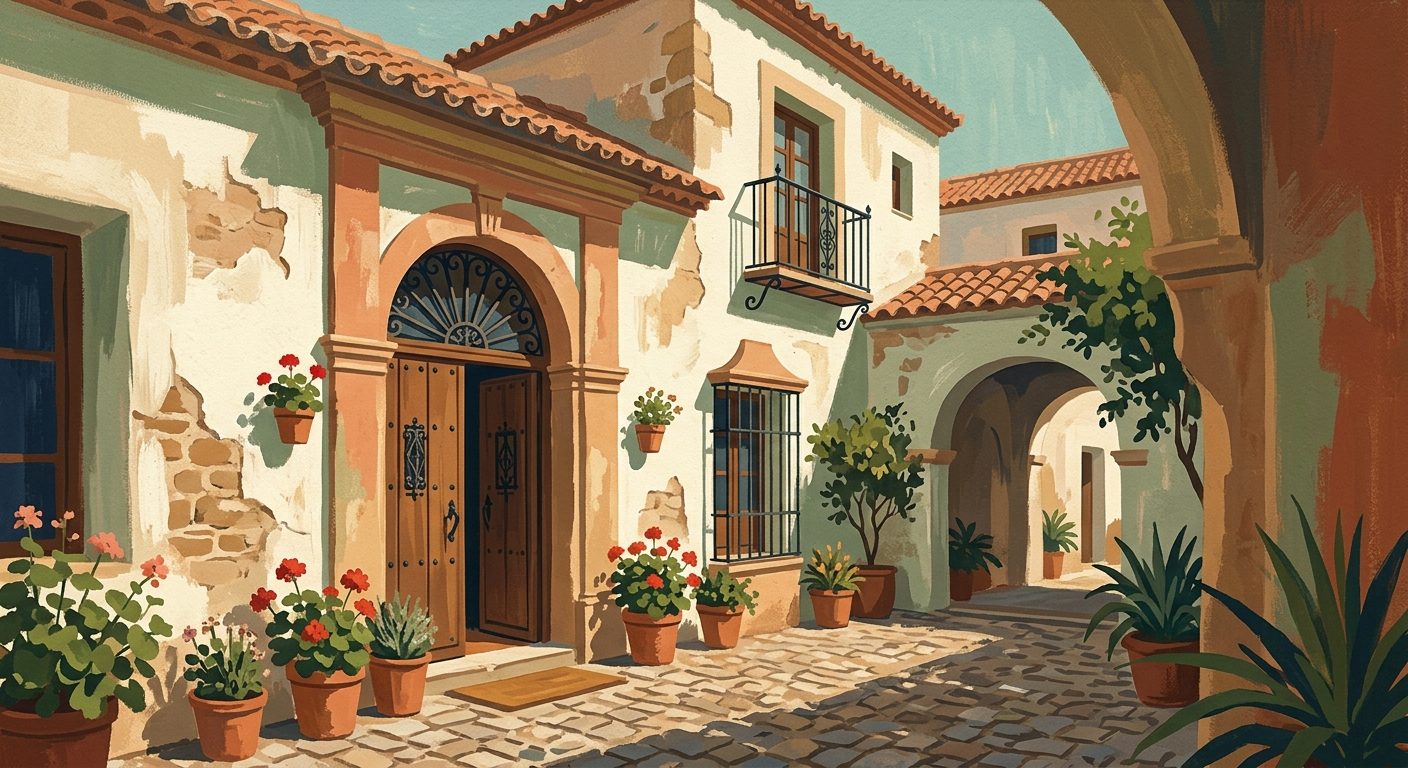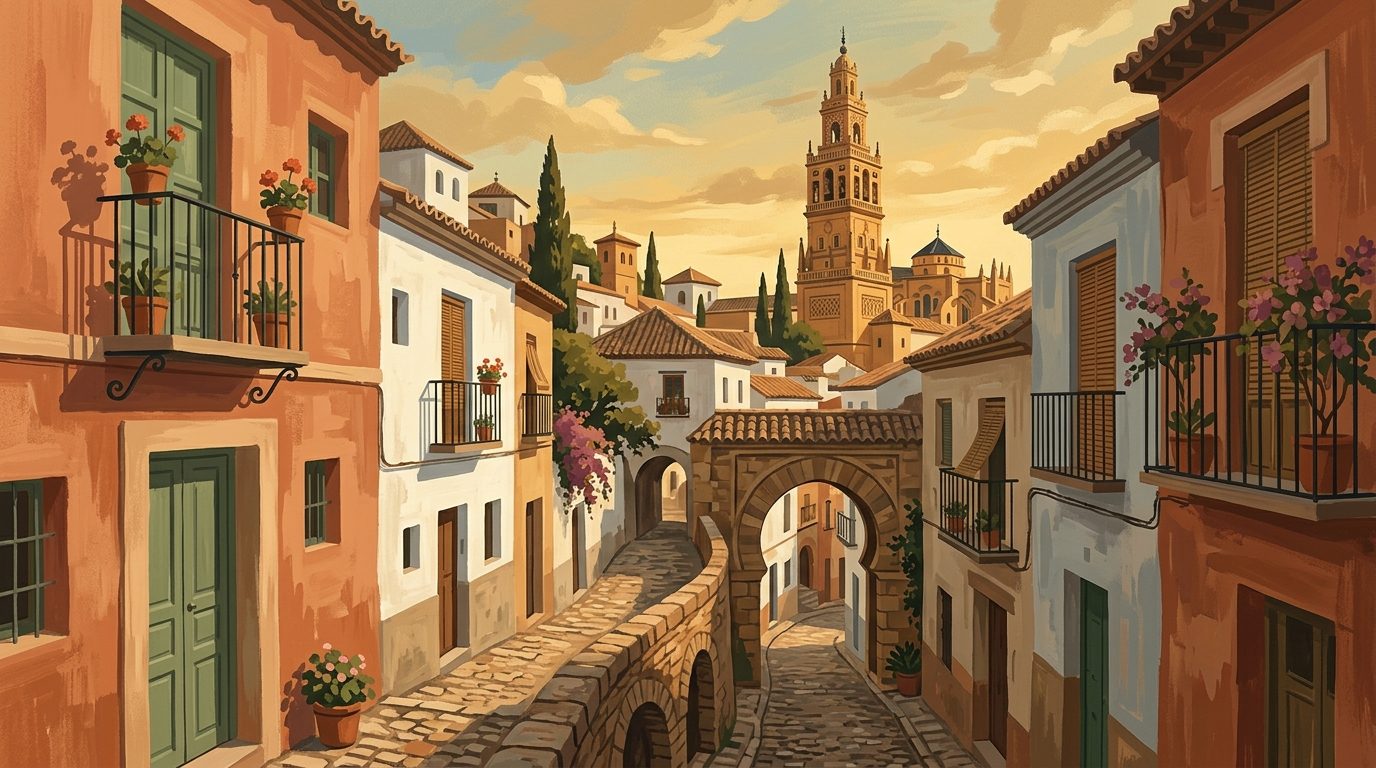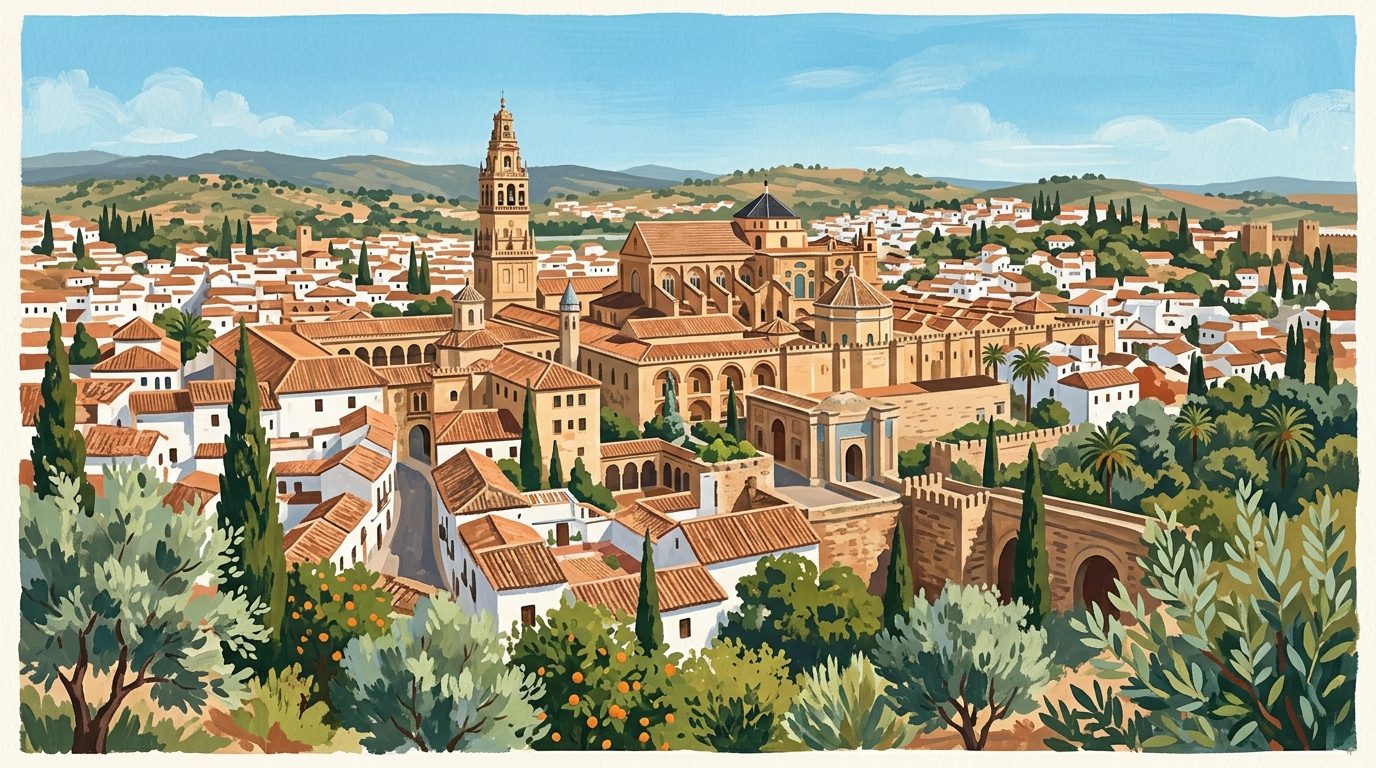
While the Great Mosque captures the headlines, Córdoba reveals its true character in the narrow lanes where the scent of orange blossom lingers long after sunset. This is a city that rewards those who slow down to study the intricate plasterwork and seek out the quietest courtyards.
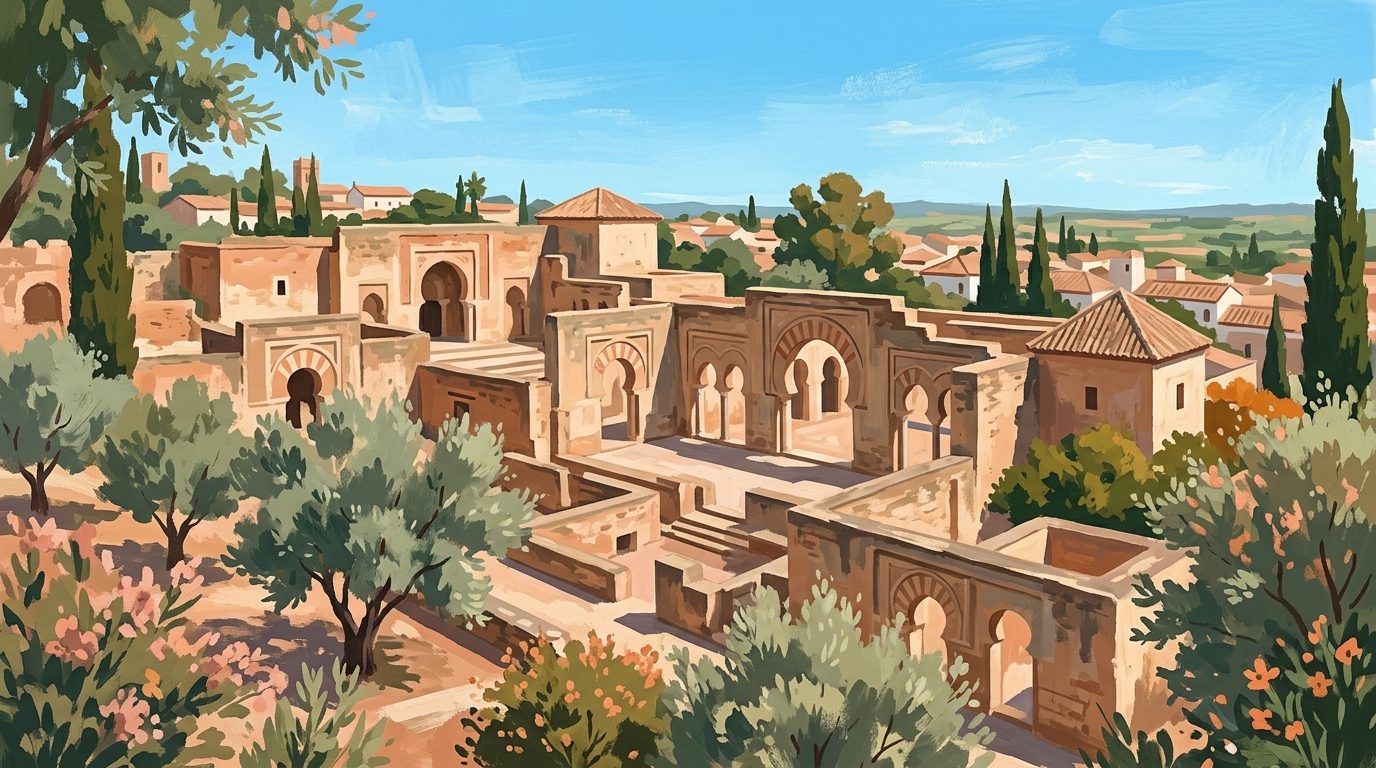
To understand Córdoba is to acknowledge its status as the former intellectual heart of Europe. In the 10th century, while London and Paris were mud-caked settlements, this city was the capital of the Umayyad Caliphate, home to hundreds of thousands of residents, street lighting, and a library containing hundreds of thousands of volumes. This legacy of sophistication hasn't vanished; it is baked into the limestone of its walls and the sophisticated water systems of its traditional houses. Modern Córdoba feels like a series of intimate villages connected by a shared past, where Roman foundations meet Islamic geometry and Christian grandeur.
The city sits on a bend of the Guadalquivir river, a positioning that dictated its importance for millennia. Today, it manages to feel remarkably unhurried despite its international profile. Visitors often make the mistake of visiting as a day trip from Sevilla or Madrid, but to do so is to miss the blue hour when the day-trippers depart and the local tabernas (inns or taverns) fill with residents discussing the latest bullfighting news or the 2026 patio competition results. It is a city of layers, where a simple doorway often opens into a paradise of greenery and trickling fountains that remain invisible from the street.
Places to Explore
Mezquita-Cathedral
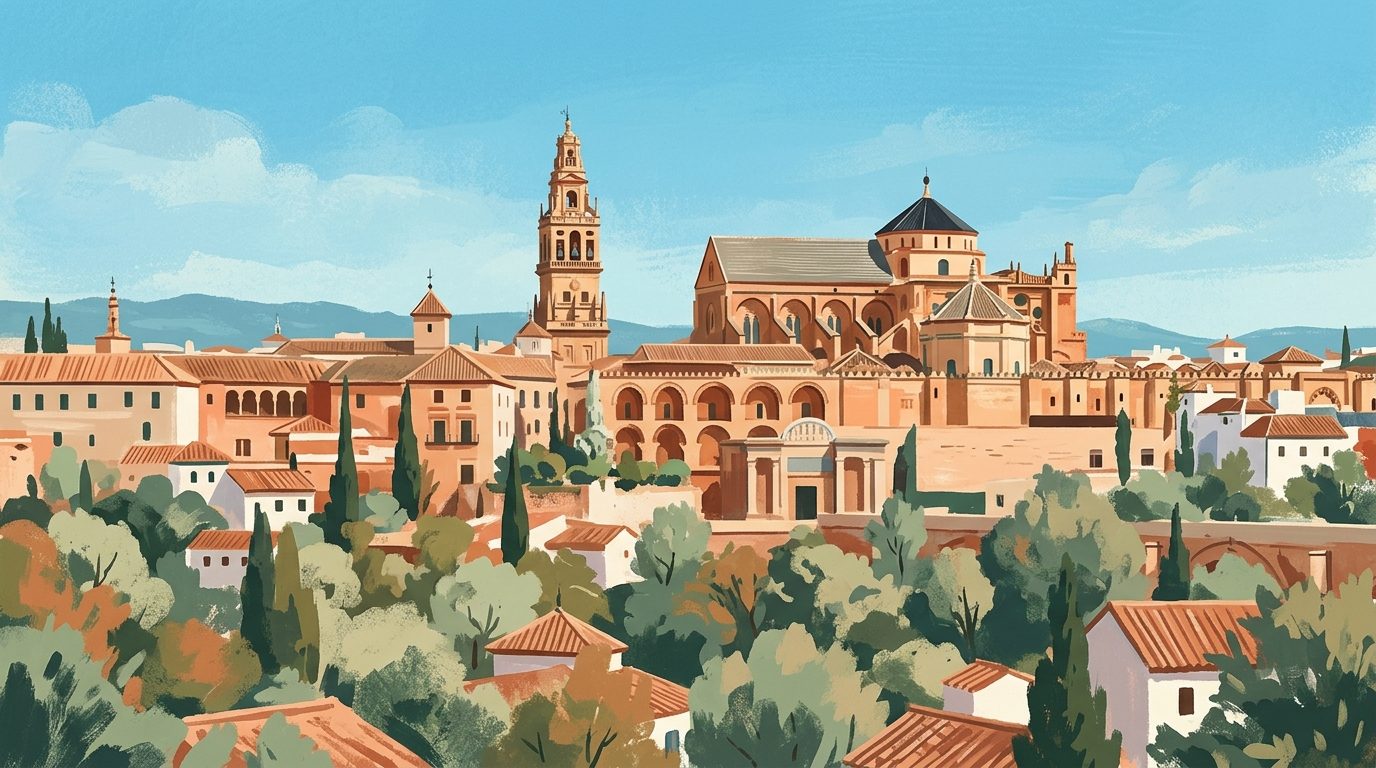
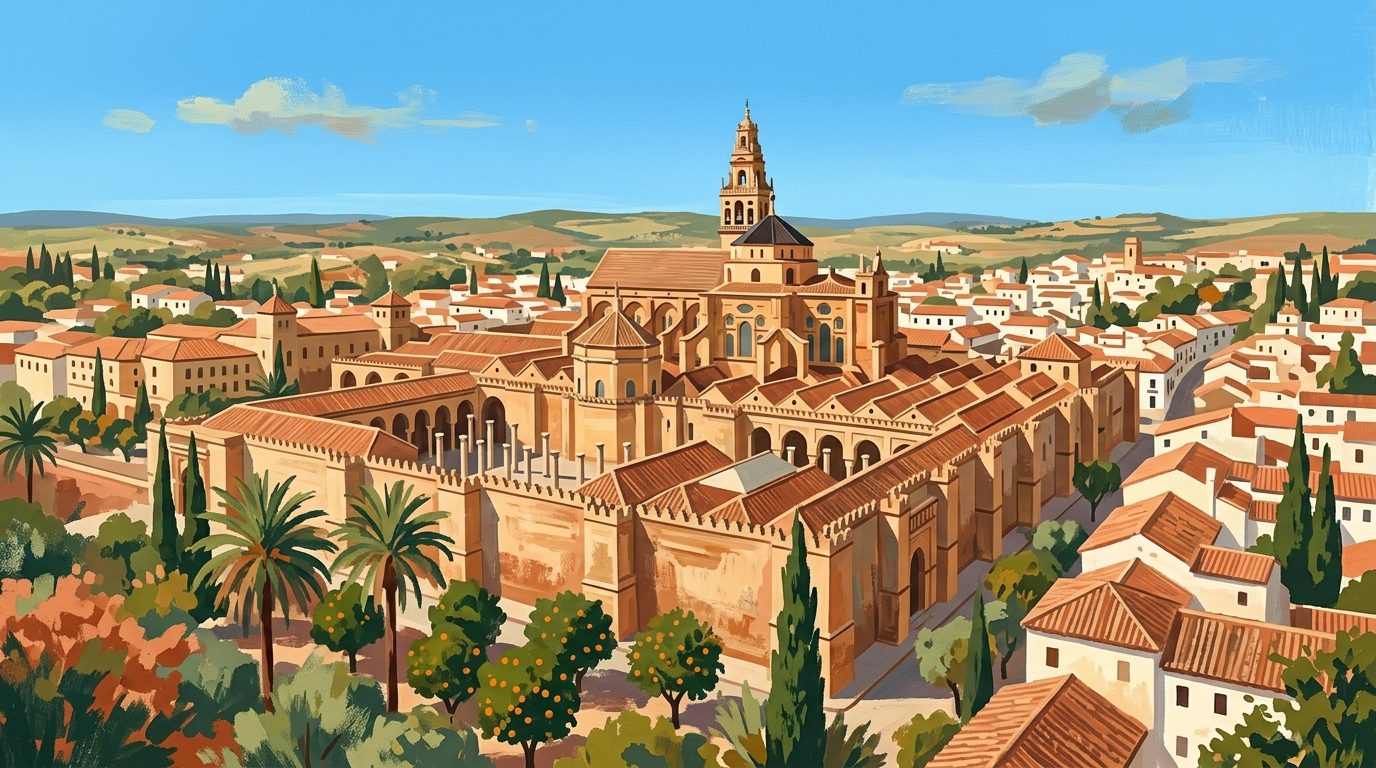
The Mezquita-Cathedral is not merely a building; it is a physical timeline of the religious and political shifts in the Iberian Peninsula. Originally the site of the Visigothic church of San Vicente, the building was transformed into a mosque in 784 by Abd al-Rahman I. Its most distinctive feature is the forest of over 800 columns made of jasper, onyx, and marble, topped with the iconic double arches of red brick and white stone. Walking through this space feels like moving through a petrified grove, where the light shifts through the high windows to illuminate the mihrab (prayer niche), an architectural masterpiece of gold-backed glass mosaics sent by the Byzantine Emperor.
The 16th-century insertion of a Renaissance cathedral nave directly into the centre of the mosque is a jarring but fascinating architectural intervention. Charles V, who authorised the work, famously remarked that they had destroyed something unique to build something commonplace. However, the juxtaposition provides a unique dialogue between Islamic and Christian aesthetics. Be sure to climb the bell tower, formerly the minaret, for a perspective over the orange-tree courtyard known as the Patio de los Naranjos. The irrigation channels here still follow the layout designed centuries ago by the Moors.
Read the full Mezquita-Cathedral guide →
Jewish Quarter (Judería)
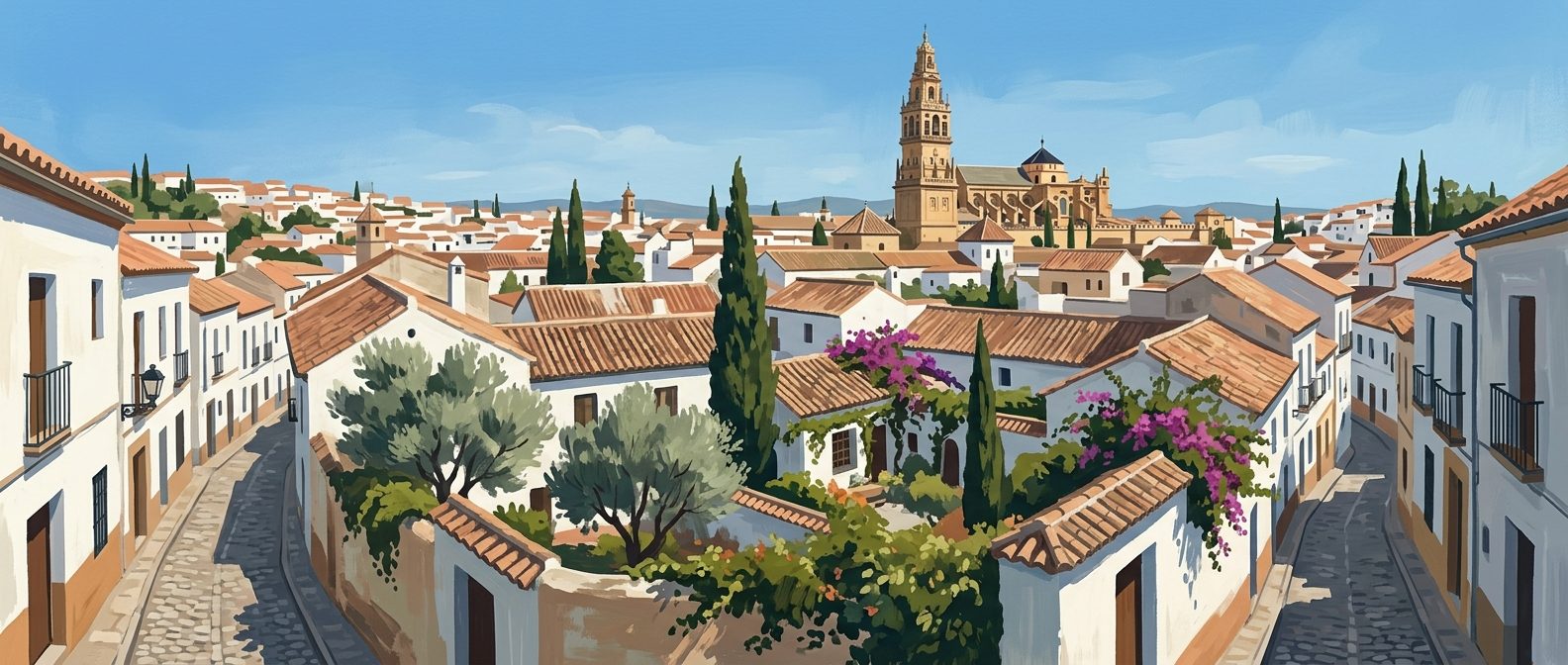
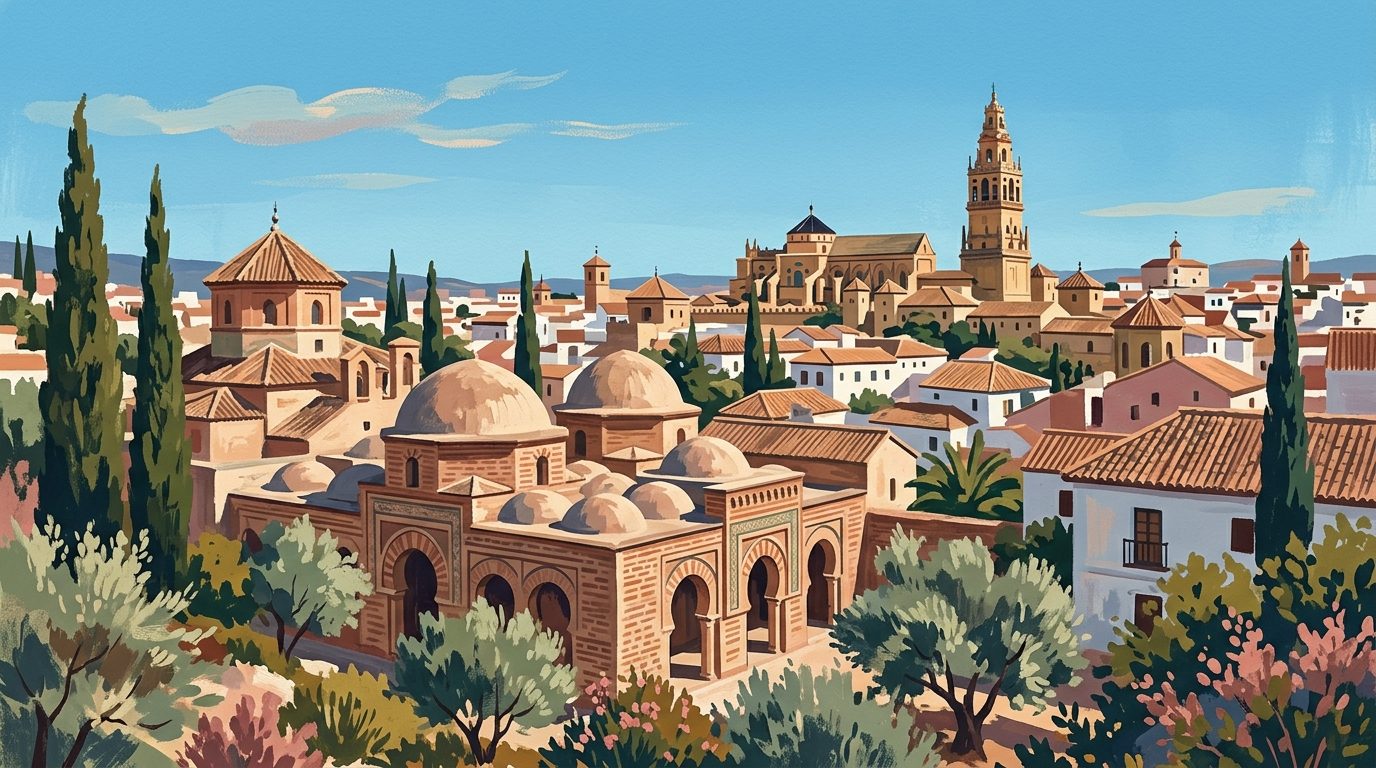
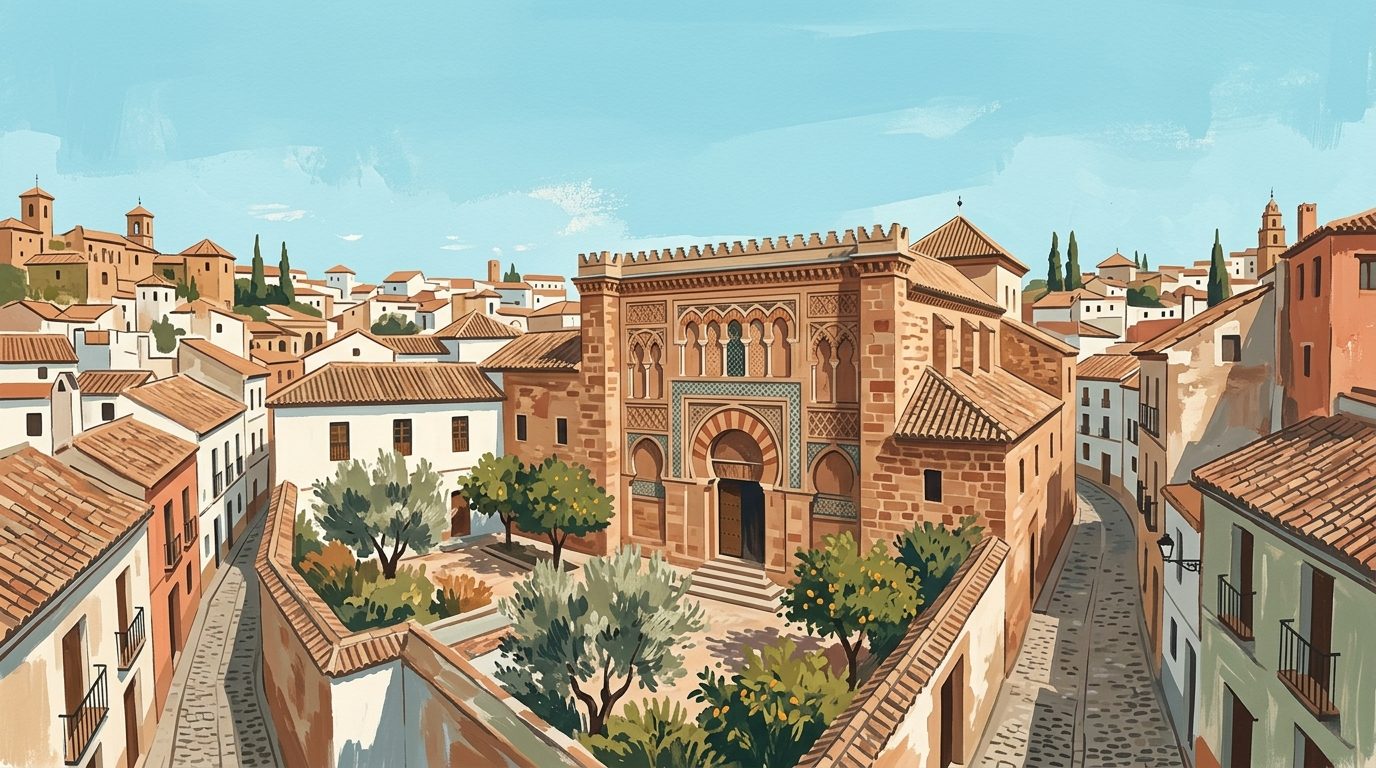
West of the Mezquita lies the Judería, a labyrinth of whitewashed streets that served as the centre of Jewish life between the 10th and 15th centuries. Unlike the grand boulevards of modern Spanish cities, these lanes were designed to provide shade and security. The focal point is the 14th-century Synagogue on Calle Judíos, one of only three original synagogues remaining in Spain. Its Mudejar plasterwork is exceptionally delicate, featuring Hebrew inscriptions and floral motifs. Nearby, the bronze statue of the philosopher Maimonides in Tiberiades Square is a popular stopping point; local tradition suggests rubbing his shoes for wisdom.
While the Calleja de las Flores (Alley of the Flowers) is the most photographed spot, offering a perfectly framed view of the Mezquita's bell tower between flower-potted walls, truer insights are found in the Zoco Municipal de la Artesanía (Municipal Crafts Market). This 16th-century mansion houses local artisans working in traditional Cordovan leather (cordobán) and silver filigree. Exploring these lanes requires no map; simply follow the scent of fried fish and the sound of distant flamenco guitar. Even the smallest plazas, such as the Plaza del Potro mentioned by Cervantes in Don Quixote, carry a heavy sense of narrative that spans centuries.
Read the full Jewish Quarter (Judería) guide →
Córdoba Patios & Viana Palace
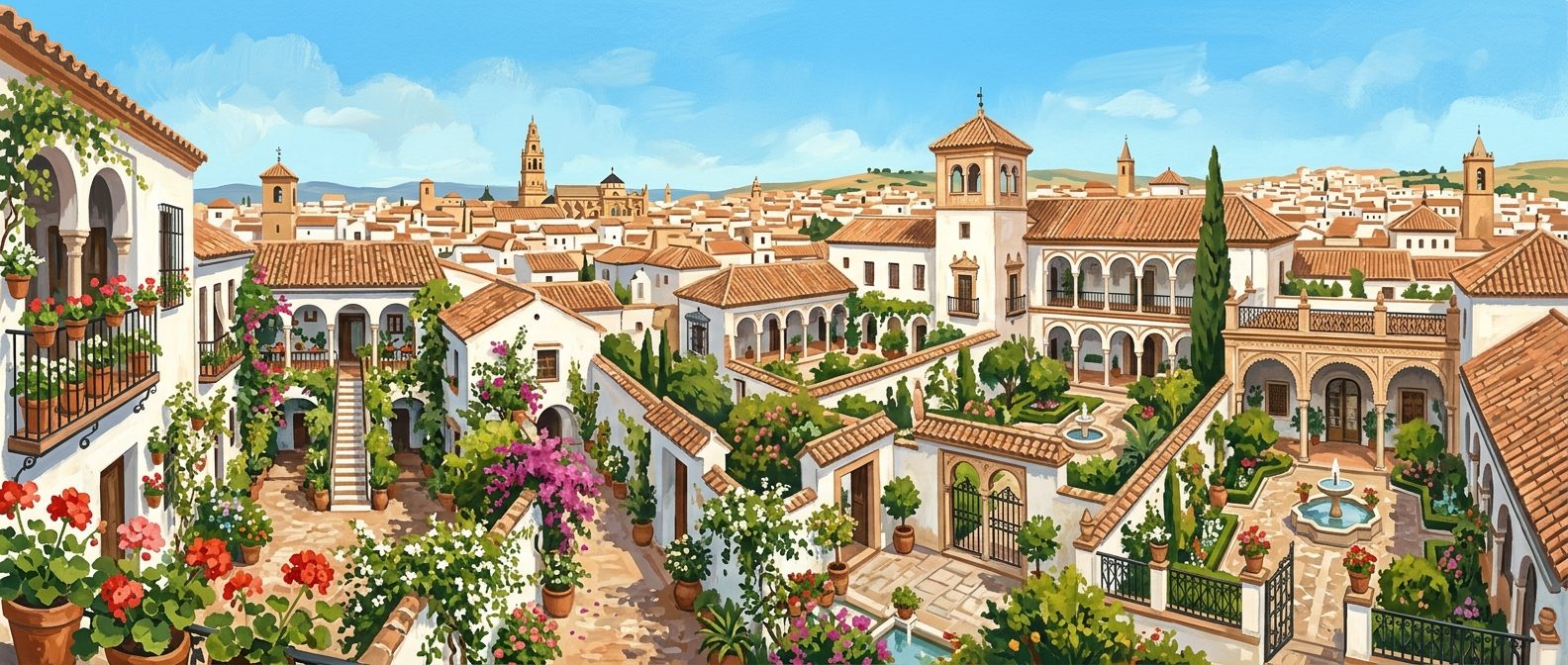
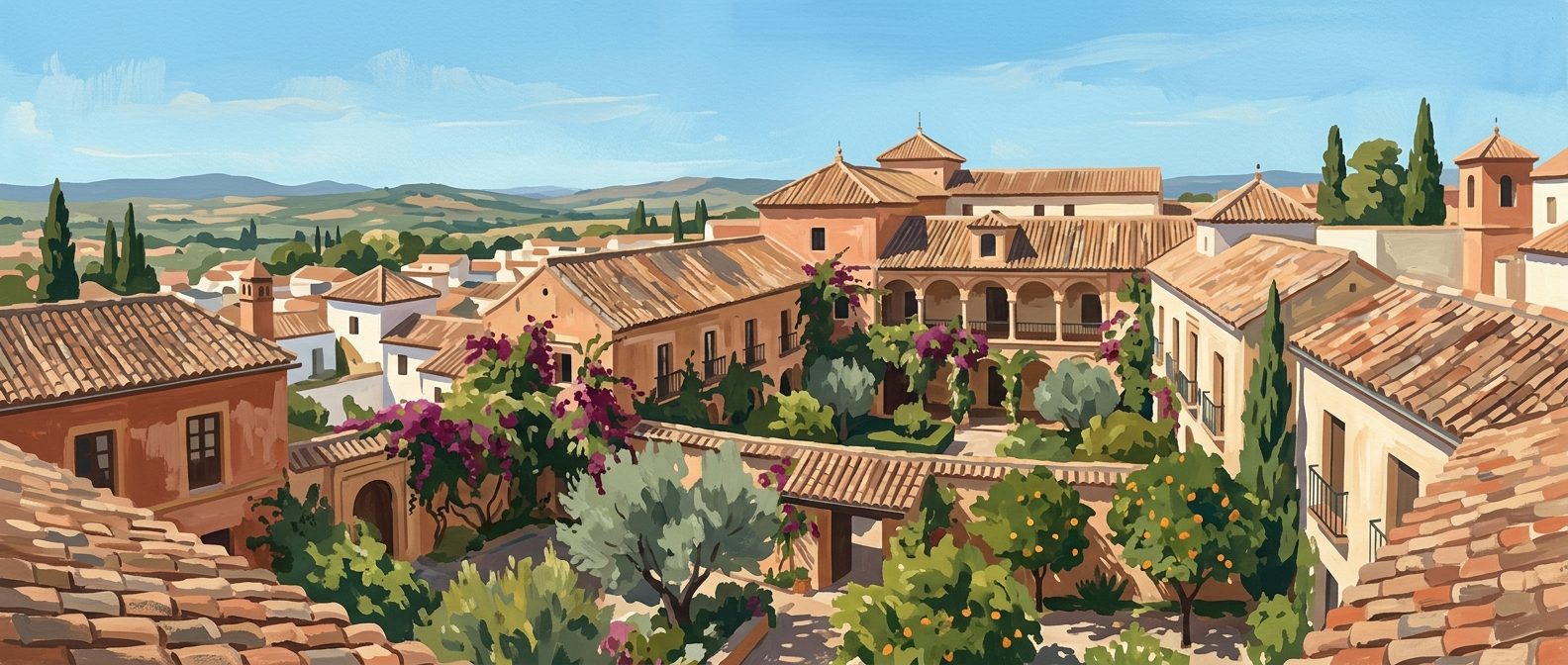
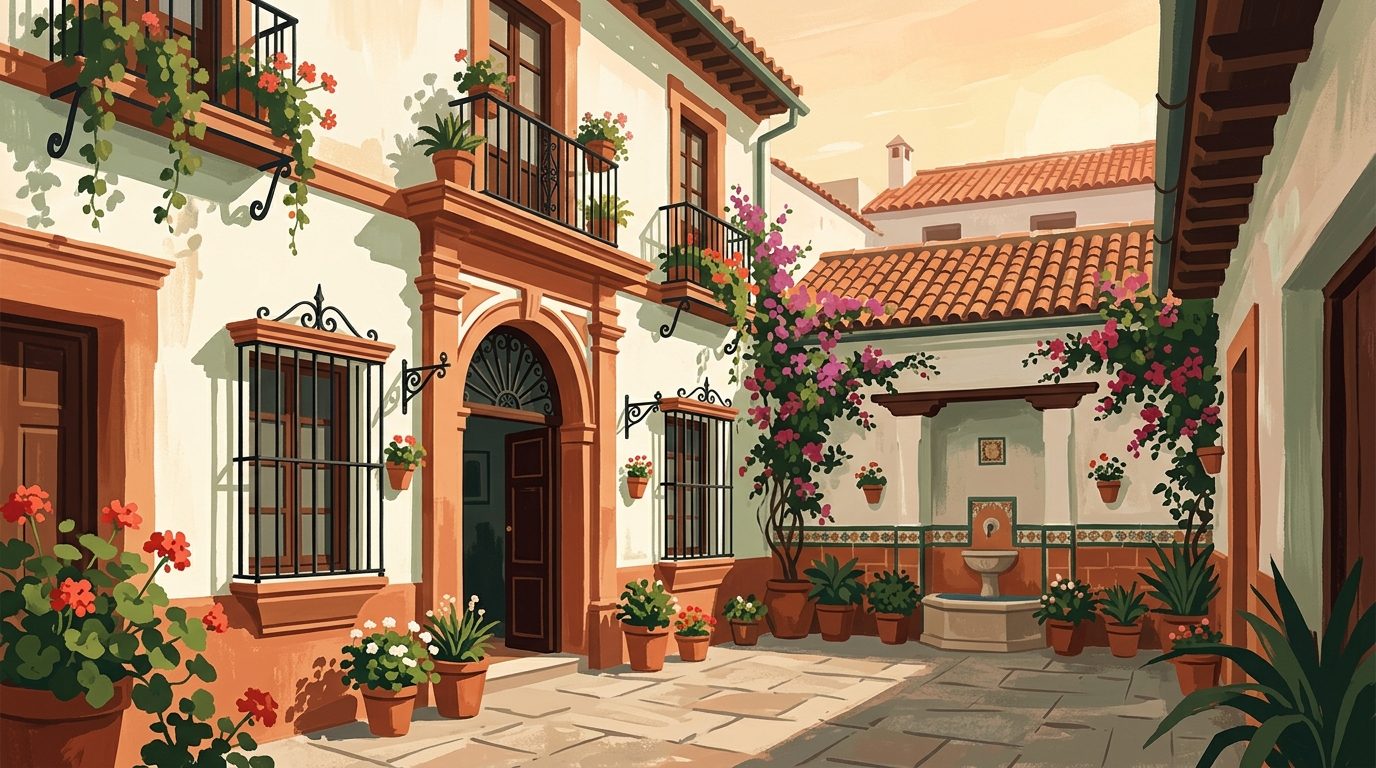
The courtyard is the soul of the Cordovan home, a tradition born from the need to create a cool microclimate during the searing summer months. While the Fiesta de los Patios takes place every May (running from 4 to 17 May in 2026), you can experience this culture year-round. The Palacio de Viana is the ultimate expression of this domestic architecture. Often called the 'Museum of Patios', this 14th-century aristocratic manor features twelve distinct courtyards, ranging from the formal Patio de los Columnas to the intimate Patio de los Gatos. Each courtyard tells a different story, using orange trees, cypresses, and hundreds of pots of geraniums and jasmine to create a sensory experience.
Beyond Viana, the San Basilio neighbourhood is the heart of the patio tradition. Here, residents like those at Calle San Basilio 44 often open their private homes to the public for a small fee (check local listings before travelling to confirm participation), allowing a glimpse into a lifestyle where the boundaries between indoor and outdoor living are blurred. You will notice the thick stone walls and the central fountains that serve as natural air conditioning. These spaces are not just gardens; they are social hubs where families have gathered for generations, carefully tending to irrigation and floral displays that are passed down from grandmother to granddaughter.
Read the full Córdoba Patios & Viana Palace guide →
Roman Bridge & Calahorra Tower
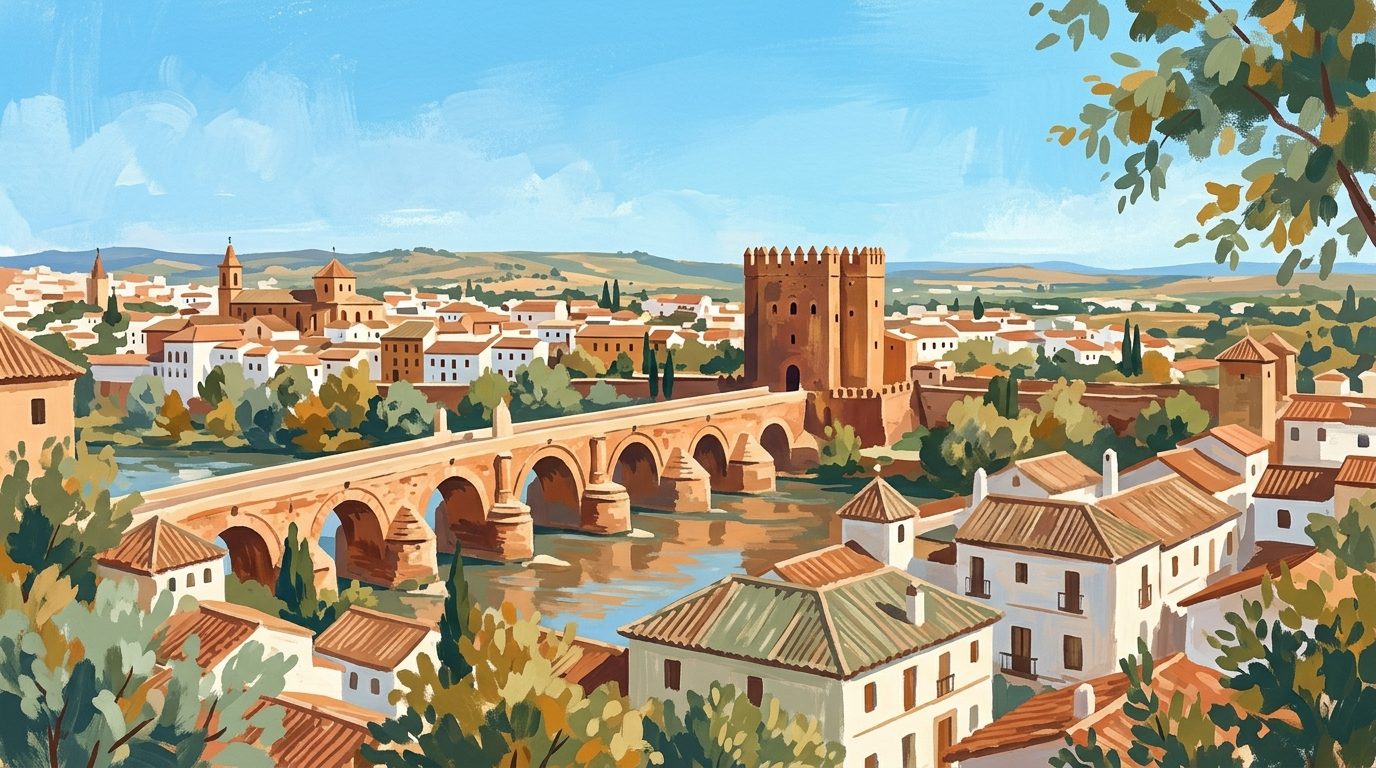
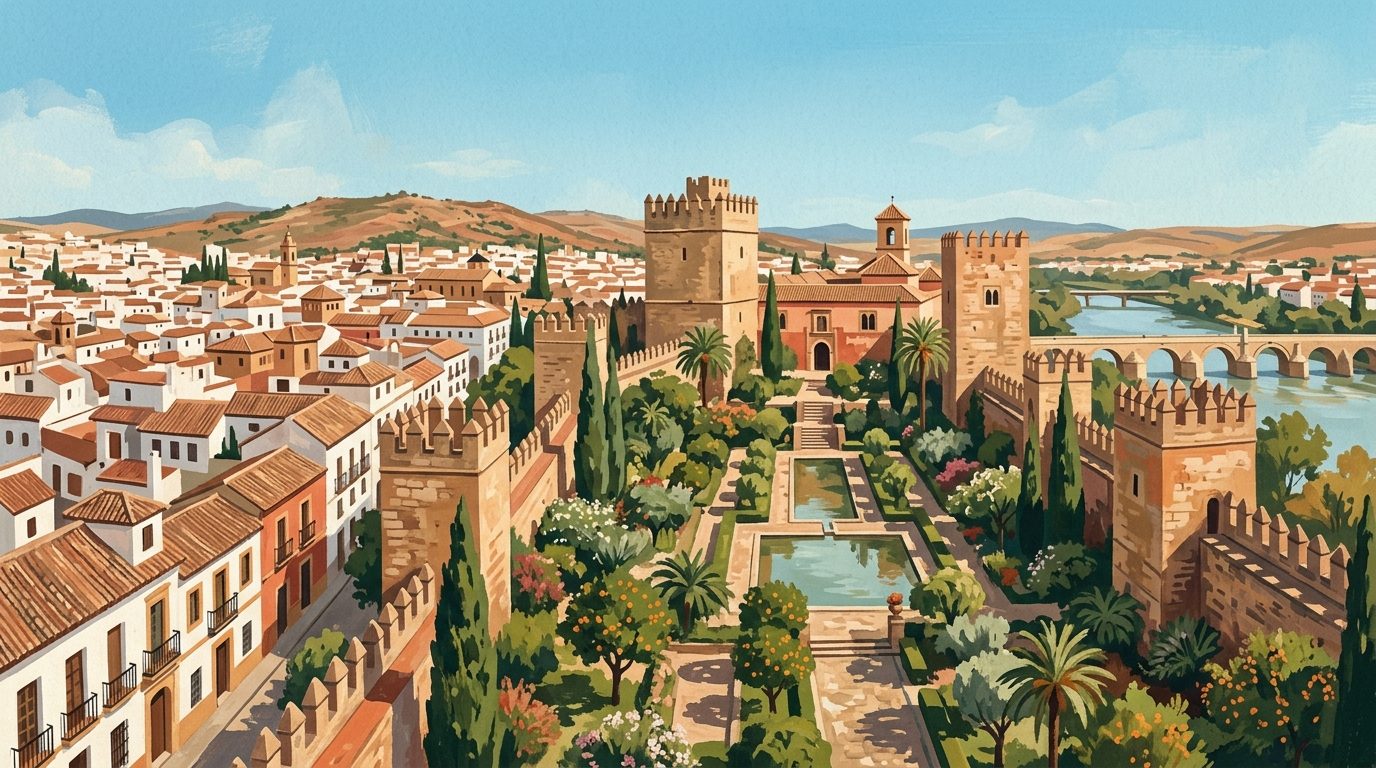
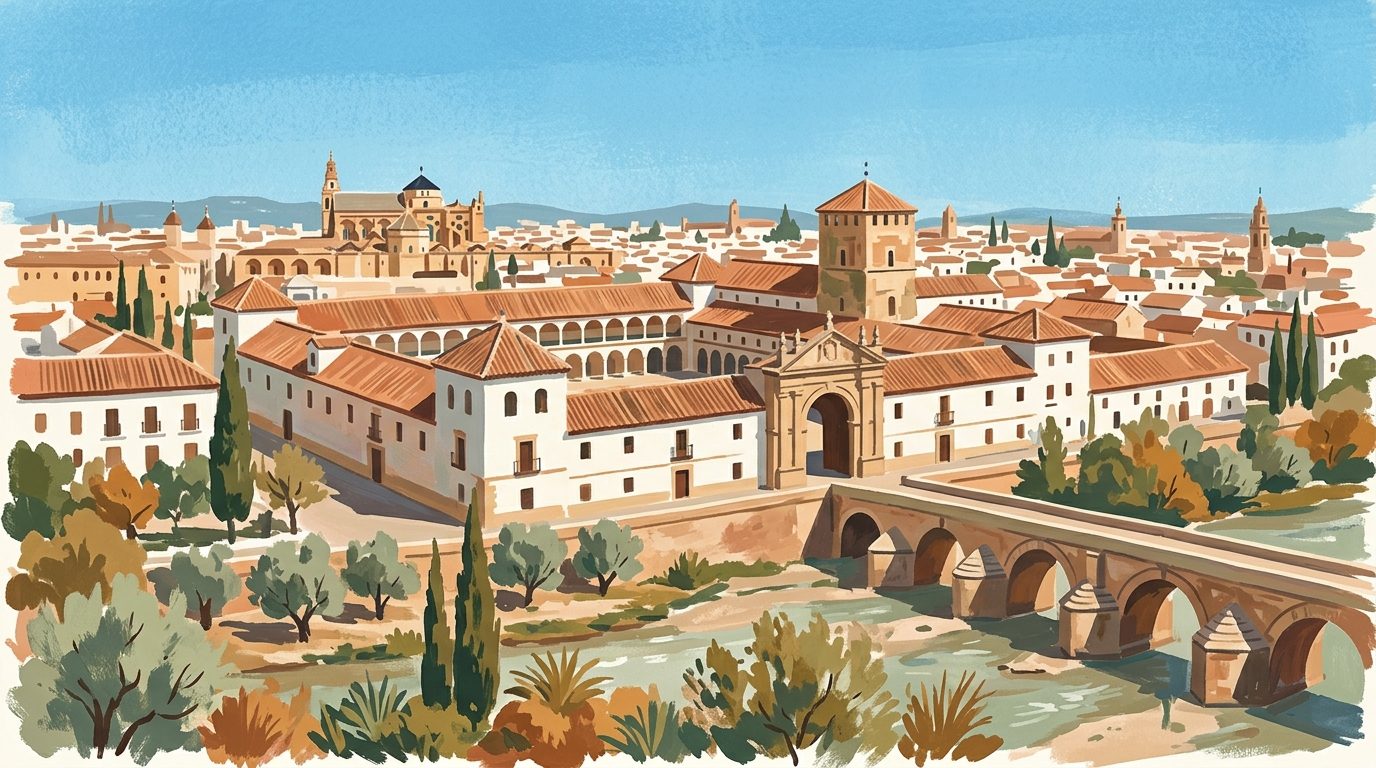
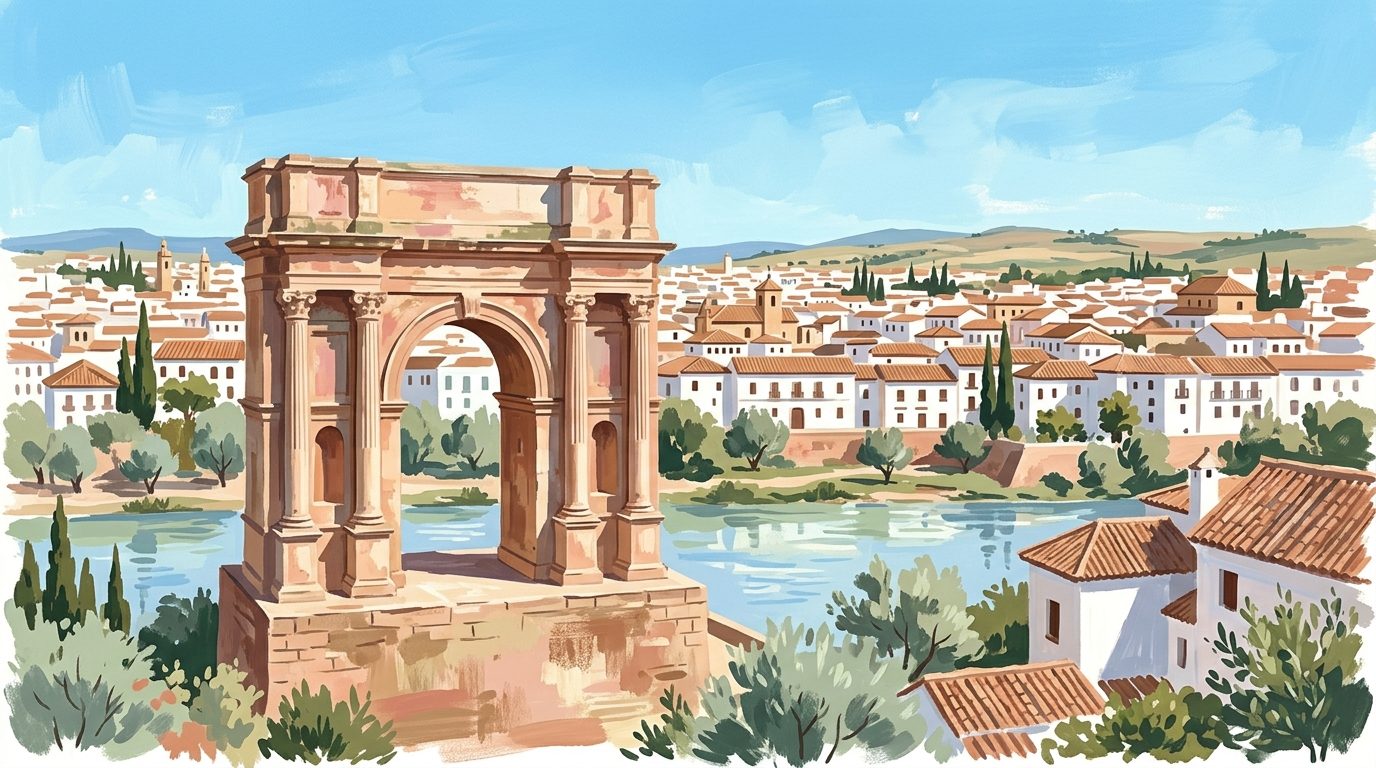
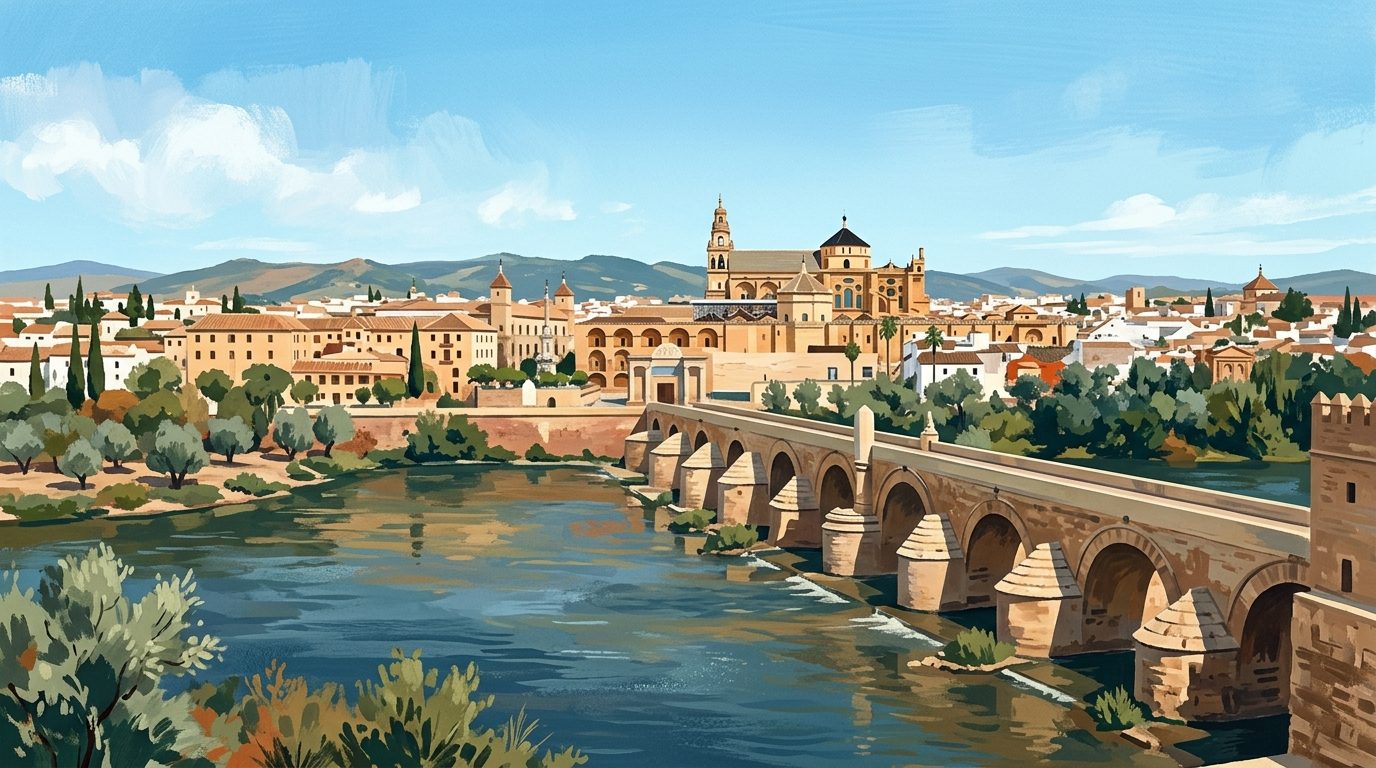
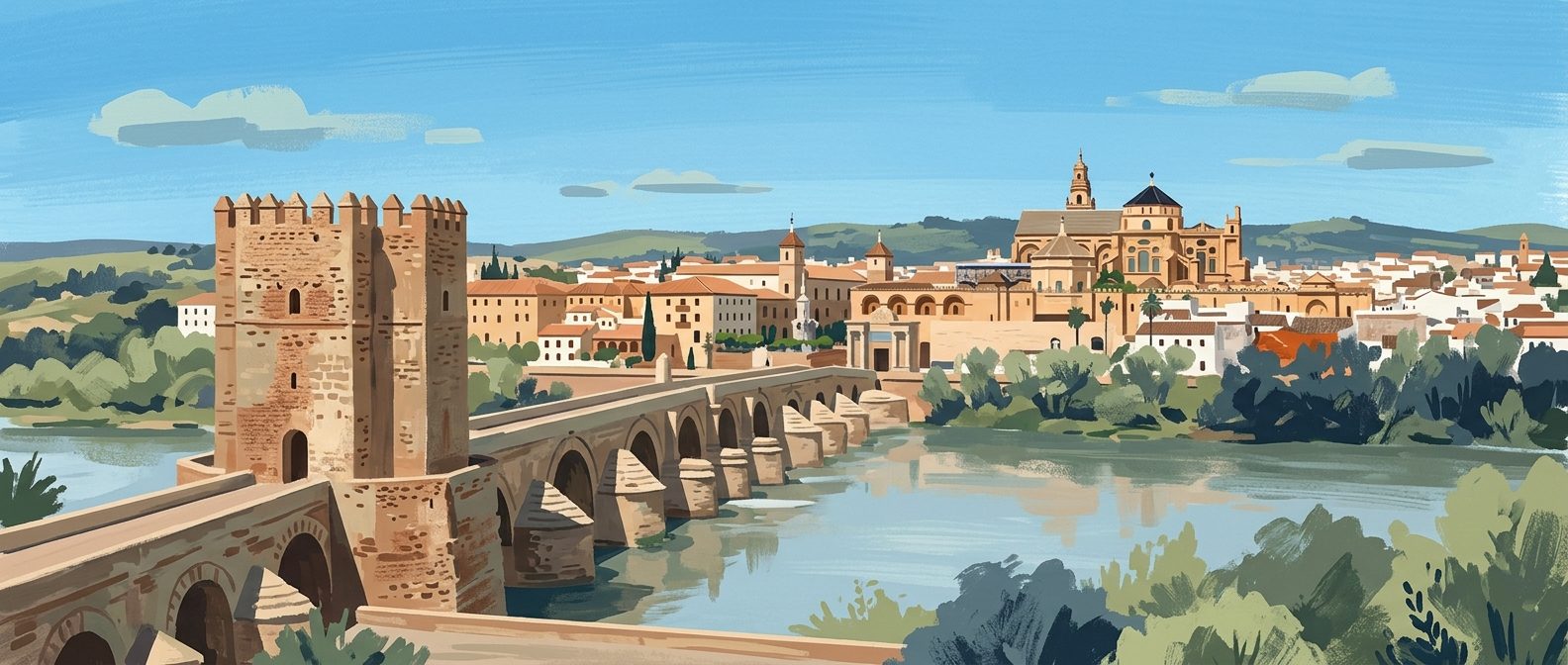
Approaching Córdoba from the south across the Roman Bridge (Puente Romano) provides the city’s most dramatic entrance. Originally built in the 1st century BC, the bridge has undergone numerous reconstructions, most notably by the Moors who gave it its current sixteen-arch profile. Walking across the bridge at sunset allows you to see the city walls and the Puerta del Puente (Bridge Gate) bathed in golden light. Mid-way across stands a statue of San Rafael, the city's guardian angel, often surrounded by candles and flowers left by locals.
At the southern end of the bridge sits the Calahorra Tower, a defensive gatehouse that now houses the Museum of Al-Andalus. This museum is essential for anyone wanting to understand the 'convivencia': the period when Muslims, Christians, and Jews lived in relative harmony. The displays use 3D models and audio guides to explain the scientific and philosophical advancements of the Caliphate. From the top of the tower, the view back across the river toward the Mezquita is arguably the finest in the city, offering a clear visual layout of how the historic centre connects to the modern outskirts. Below the bridge, look for the ancient Arab water wheels (albolafia) that once lifted river water to the gardens of the Alcázar.
Read the full Roman Bridge & Calahorra Tower guide →
Eating & Drinking in Córdoba City
Cordovan cuisine is distinct from its neighbours, leaning heavily on the high-quality olive oils from the nearby Subbética mountains. You cannot leave without trying Salmorejo, a thick, creamy cold tomato soup thickened with bread and garlic, topped with hard-boiled egg and jamón ibérico (Iberian ham). For a quintessential local experience, head to Taberna San Miguel 'El Pisto' near Plaza de San Miguel. This wood-panelled tavern has been serving locals since 1880; order the Rabo de Toro (braised oxtail), which is tender enough to eat with a spoon.
Another local staple is the Flamenquín: slices of pork loin wrapped around Serrano ham, breaded, and deep-fried into a long roll. For a more formal setting that captures the city's history, Bodegas Campos is an institution. Its labyrinthine dining rooms are filled with old wine barrels signed by famous visitors. Pair your meal with a glass of Montilla-Moriles, the local fortified wine. Unlike Sherry, these wines are made from Pedro Ximénez grapes and reach their alcohol content naturally without fortification. Visit the Mercado Victoria, a converted 19th-century wrought-iron pavilion, for a contemporary take on these traditional flavours in a social, market-style environment.
Where to Stay
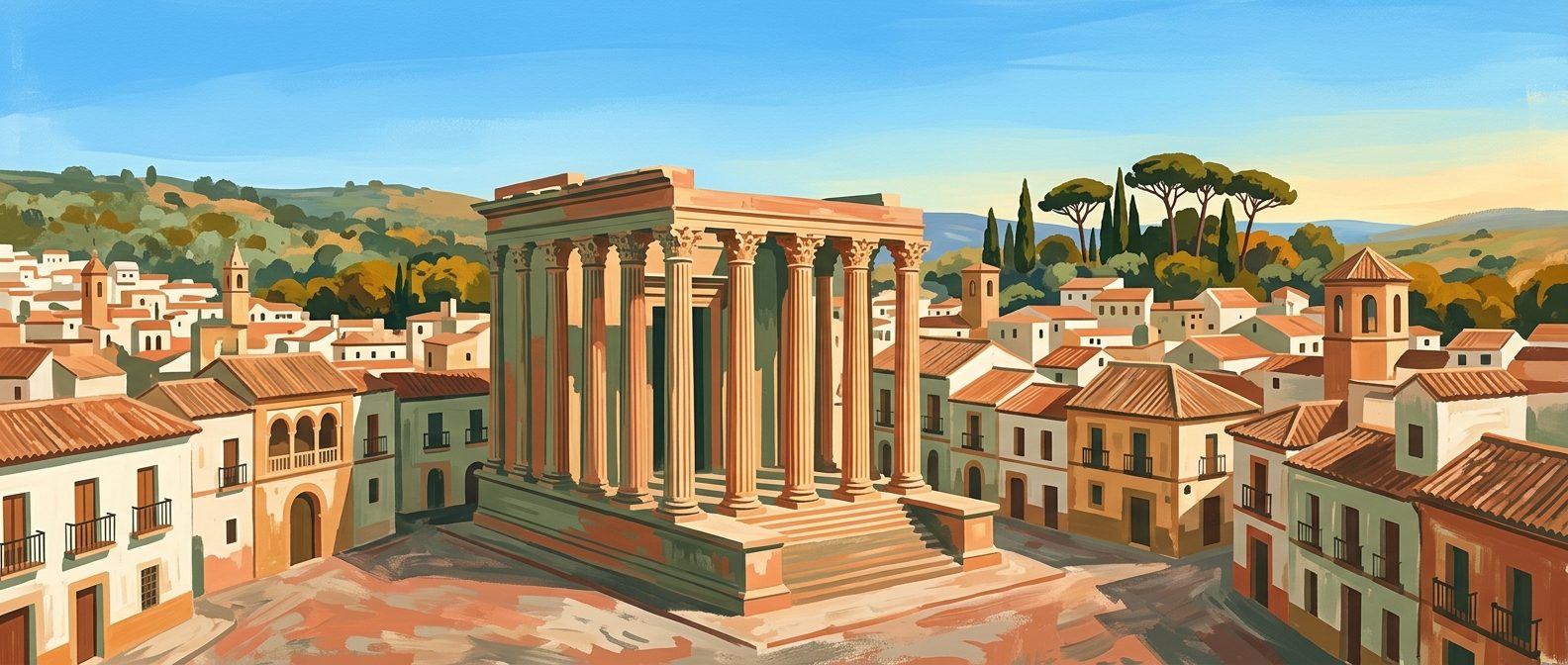
For those seeking luxury with deep historical roots, Hospes Palacio del Bailío is unmatched. Built on the site of a Roman villa, it features glass floors in the dining room that reveal ancient ruins below. If you prefer to be in the heart of the narrow lanes, Las Casas de la Judería consists of several interconnected 17th and 18th-century houses, complete with secret tunnels and traditional fountains. For a boutique experience, Balcón de Córdoba offers just ten rooms and a rooftop terrace with views that feel close enough to touch the Mezquita’s walls. Staying within the old city walls is highly recommended, as it allows you to wander the streets in the early morning before the crowds arrive, though be prepared for a short walk from your drop-off point as many streets are car-free.
Getting There & Around
Córdoba is exceptionally well-connected thanks to the AVE high-speed train, which whisks passengers from Madrid in 1 hour 45 minutes and from Sevilla in just 45 minutes. The train and bus stations are located side-by-side, about a 20-minute walk or a quick taxi ride from the historic centre. Within the city, your own two feet are the best mode of transport; the central core is compact and largely pedestrianised. If you are staying further out, the local Aucorsa bus network is efficient, and a fleet of eco-friendly electric minibuses specifically navigates the tight corners of the Judería.
Best Time to Visit
May is undeniably the best time to visit, as the city celebrates the Festival of the Patios, the Feria, and the Wine Tasting Festival. The weather is warm, and the entire city smells of orange blossom and jasmine. However, this is also the busiest and most expensive month. October is a fantastic alternative, offering mild temperatures and clear skies without the crowds. Avoid July and August if possible; Córdoba frequently records the highest temperatures in Spain, often exceeding 40°C, which makes exploring the stone-paved streets uncomfortable during the day.