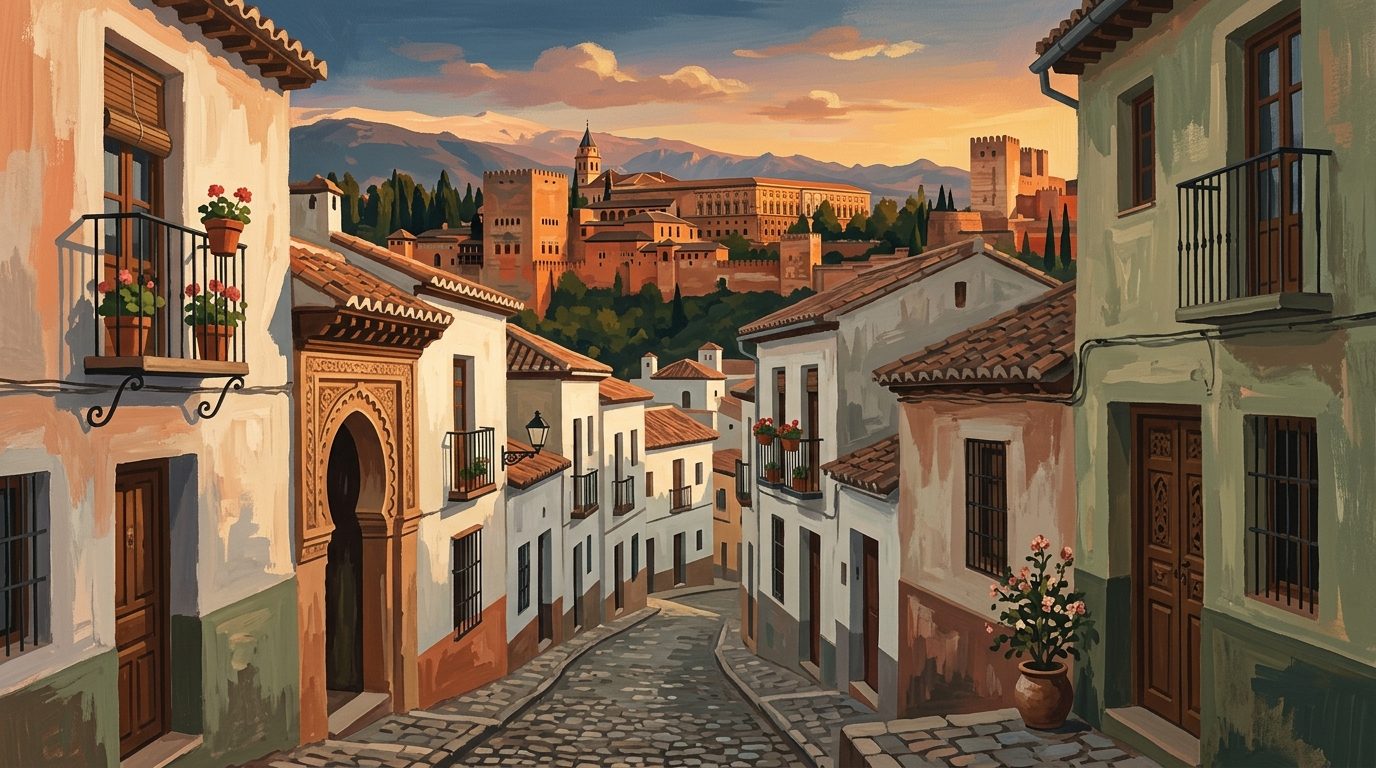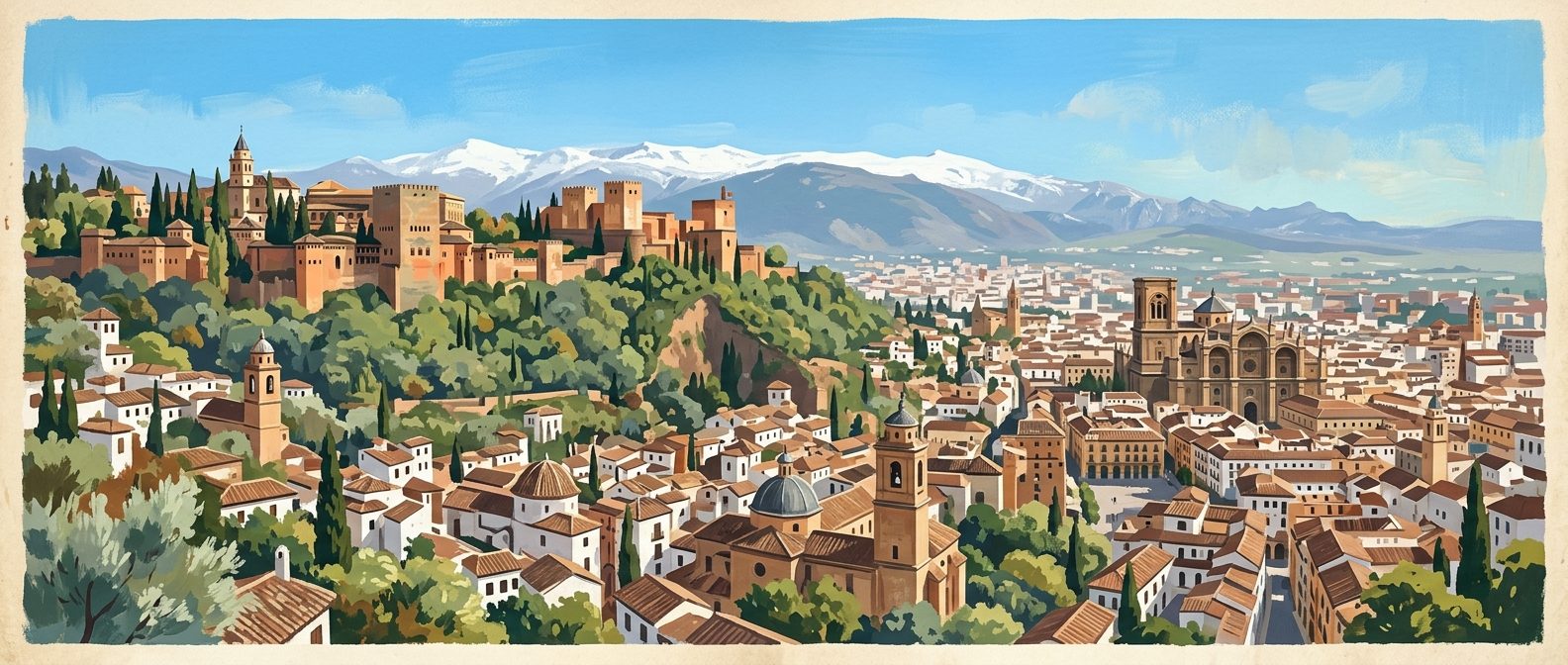
Beyond the red walls of the Alhambra, the centre of Granada reveals the city's transition from the final Nasrid kingdom to the seat of the Catholic Monarchs. This compact district blends Renaissance architecture with narrow Moorish market streets and a world-renowned culture of complimentary food.
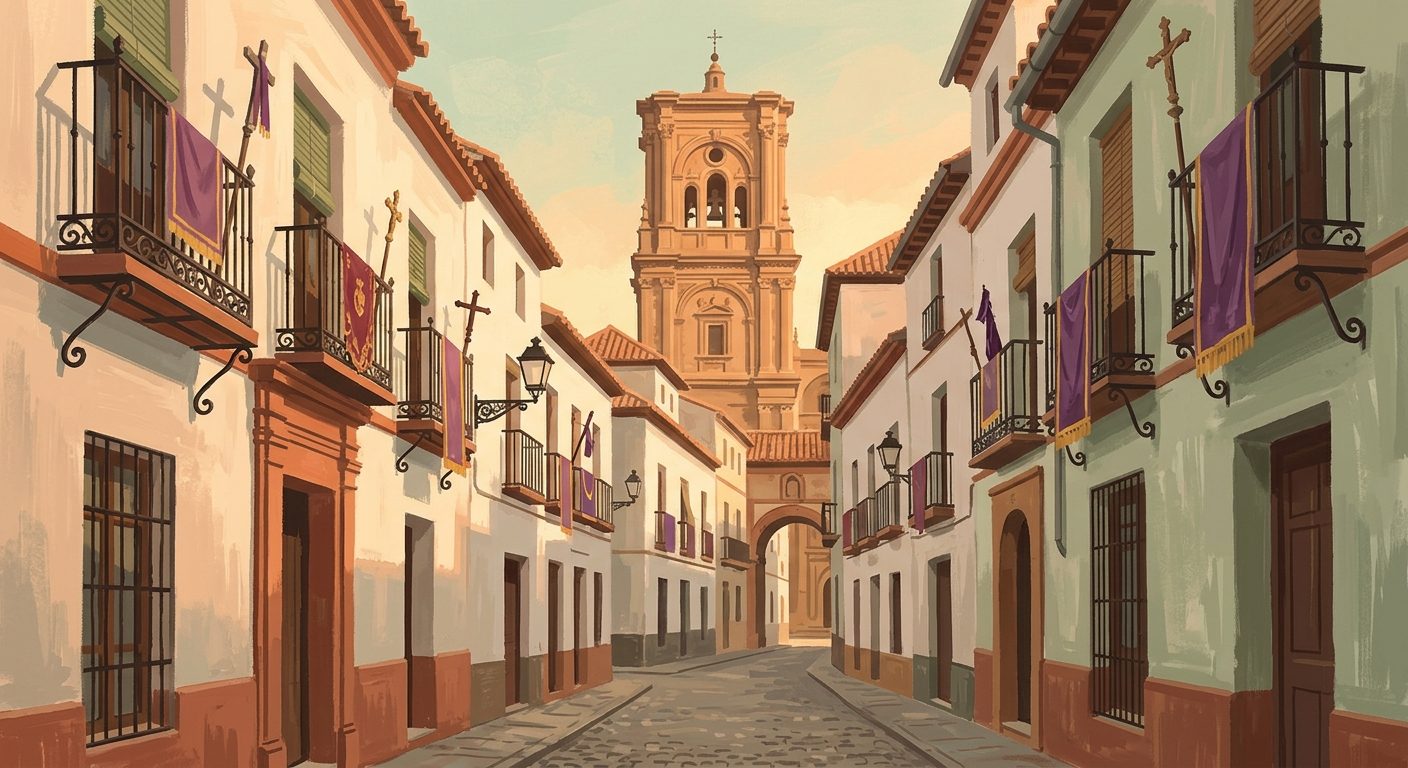
While the Alhambra palace complex draws millions to its hilltop perch, the Granada city centre provides the context for how this city evolved after 1492. Known locally as 'Centro', this area is the administrative and commercial core, yet it remains intensely atmospheric. It is a place where grand Catholic monuments stand atop the foundations of former mosques, and the layout of the streets changes abruptly from wide 19th-century boulevards to a labyrinth of medieval alleys. Walking through the centre allows you to trace the shift from the Islamic Nasrid era to the Christian Renaissance, all while navigating a lively modern city where students, locals, and visitors share the same plazas.
The city centre is remarkably walkable, concentrated around the axis of the Gran Vía de Colón and Calle Reyes Católicos. It serves as the gateway to the older quarters of the Albayzín and Realejo, but it holds its own weight as a primary destination. Here, the scale of the architecture is intended to impress, reflecting the ambition of Queen Isabella I of Castile and King Ferdinand II of Aragon, who chose this city as their final resting place. The result is an urban environment that feels both stately and intimate, where every turn reveals a carved stone facade or a courtyard filled with the scent of orange blossom.
What to See & Do
Granada Cathedral (Catedral de Granada)
Standing as a massive symbol of the Spanish Renaissance, the Cathedral of the Incarnation was built over the site of the city’s Great Mosque. Construction began in 1523 and took 181 years to complete, which explains the mix of architectural styles. While the initial plans were Gothic, the architect Diego de Siloé transformed it into a Renaissance masterpiece. The facade, designed later by the local artist Alonso Cano, is particularly striking with its three enormous arches. Inside, the sheer height and the whitewashed interior create a sense of immense space and light that differs from the darker, moodier Gothic cathedrals found elsewhere in Spain. The Capilla Mayor (Main Chapel) is a highlight, featuring a circular design with 45-metre high ceilings and stained-glass windows that flood the altar with colour.
The Royal Chapel (Capilla Real)
Adjoining the Cathedral but maintaining its own separate entrance and identity, the Royal Chapel is one of the most significant historical sites in the country. It was commissioned by the Catholic Monarchs, Isabella and Ferdinand, as their burial place. Although they died before it was finished in 1517, their remains were moved here in 1521. The chapel is built in the Isabelline Gothic style and houses the elaborate marble tombs of the monarchs, along with their daughter Joanna the Mad and her husband Philip the Handsome. Below the ornate monuments, a small staircase leads to the crypt where you can see the simple lead coffins. The sacristy museum also contains Isabella’s personal collection of Flemish paintings and her crown and sceptre.
The Alcaicería Silk Market
Just a few steps from the Cathedral entrance lies the Alcaicería. Originally, this was the site of the Great Bazaar of Granada, where silk and spices were traded during the Moorish period. The original market was a maze of narrow streets protected by gates, but it was destroyed by fire in the mid-19th century. The current version is a neo-Moorish reconstruction, but it retains the original tight-knit layout. While many of the shops now cater to tourists with ceramics and leather goods, the area still provides a sensory experience of what the medieval market might have felt like. Look for 'fajalauza' ceramics (traditional blue and green pottery) and 'taracea', the intricate Moorish wood inlay work that has been produced in the city for centuries.
Plaza Nueva and the Corral del Carbón
Plaza Nueva is the oldest square in Granada, though its name suggests otherwise. It was built in the 16th century to cover a section of the Darro River to create more space for the city. It serves as a meeting point between the centre and the climb up to the Alhambra or the Albayzín. Nearby, tucked away on Calle Mariana Pineda, is the Corral del Carbón. Built in the 14th century, it is the oldest monument from the Nasrid dynasty in the city. It originally served as a 'funduq', a warehouse and inn for merchants. It is the only building of its kind preserved in its entirety on the Iberian Peninsula. The horseshoe archway entrance leads into a courtyard that now houses a craft shop and occasionally hosts outdoor performances.
The Culture of Free Tapas
The city centre is the best place to experience Granada’s most famous culinary tradition: the free tapa. Unlike almost anywhere else in Spain, when you order a drink, be it a beer (caña), a glass of wine, or even a soft drink, you are served a small plate of food at no extra cost. In the streets surrounding the Cathedral and Calle Elvira, this culture is alive and well. The traditional custom is that the kitchen decides what is served, though some modern establishments now offer a choice from a set menu. Often, the kitchen will increase the complexity or size of the dish with each subsequent round of drinks. This makes 'tapeo' (the act of going for tapas) a social event where the food is as much of a draw as the drink.
Practical Information
Opening Times: The Cathedral is generally open for visitors Monday to Saturday from 10:00 to 18:15, and Sundays from 15:00 to 18:15. The Royal Chapel follows a similar schedule, opening Monday to Saturday 10:15 to 18:30 and Sundays 11:00 to 18:30. Always check for local holidays or religious services which may alter these times.
Ticket Prices: Entry to the Cathedral is around €6.00 to €8.00 (check the official Cathedral and Royal Chapel websites before travelling for up-to-date pricing), which includes an audio guide. The Royal Chapel requires a separate ticket, also around €6.00 to €8.00. Combined tickets or discounts for students and seniors are often available at the ticket offices.
How to Get There: Most of the city centre is pedestrianised. If arriving by train, the station is a 15-minute walk or a short bus ride away. From the airport, the dedicated airport bus stops at Gran Vía de Colón, right in the heart of the district. Local buses (red lines) and the 'Alhambra Bus' (small red and white vans) connect the centre to the hills.
Parking: Driving in the centre is highly restricted; many streets have cameras that fine unauthorised vehicles. If arriving by car, use the San Agustín underground car park near the Cathedral or the Puerta Real car park. Be prepared for high hourly rates; if staying overnight, check if your hotel offers a discounted parking rate.
Where to Eat Nearby
For a quintessential Granada experience, head to Los Diamantes on Calle Navas. This spot is famous for its fried fish (pescaíto frito), served as a free tapa or as a larger 'ración'. It is often standing-room only, but the quality of the shrimp and calamari is exceptional. For something more traditional, Bodegas Castañeda near Plaza Nueva is an institution. It is known for its vermouth on tap and its 'tablas' (platters of local cheeses, cured meats, and pâtés). If you prefer a seated meal with a view, the restaurants along Calle Elvira offer a mix of traditional Andalucían fare and North African cuisine, reflecting the city’s heritage.
Where to Stay
Accommodation in the city centre ranges from grand historic buildings to modern boutique hotels. Staying near Plaza Nueva or Calle Reyes Católicos puts you within walking distance of all major sites. The AC Palacio de Santa Paula is a luxury option set in a former 16th-century convent, offering a quiet retreat from the city streets. For a more contemporary feel, Hotel Room Mate Leo features a rooftop terrace with views across the city rooftops towards the Sierra Nevada mountains.