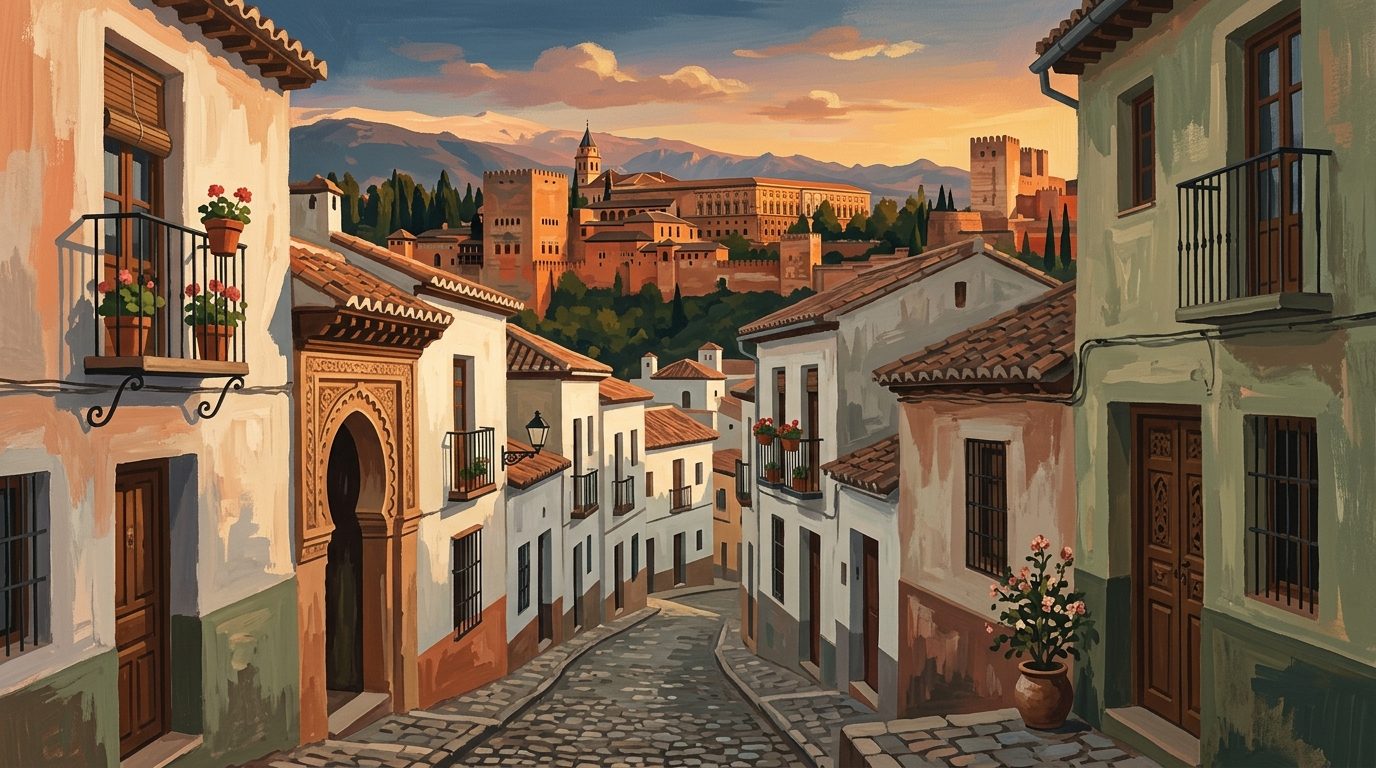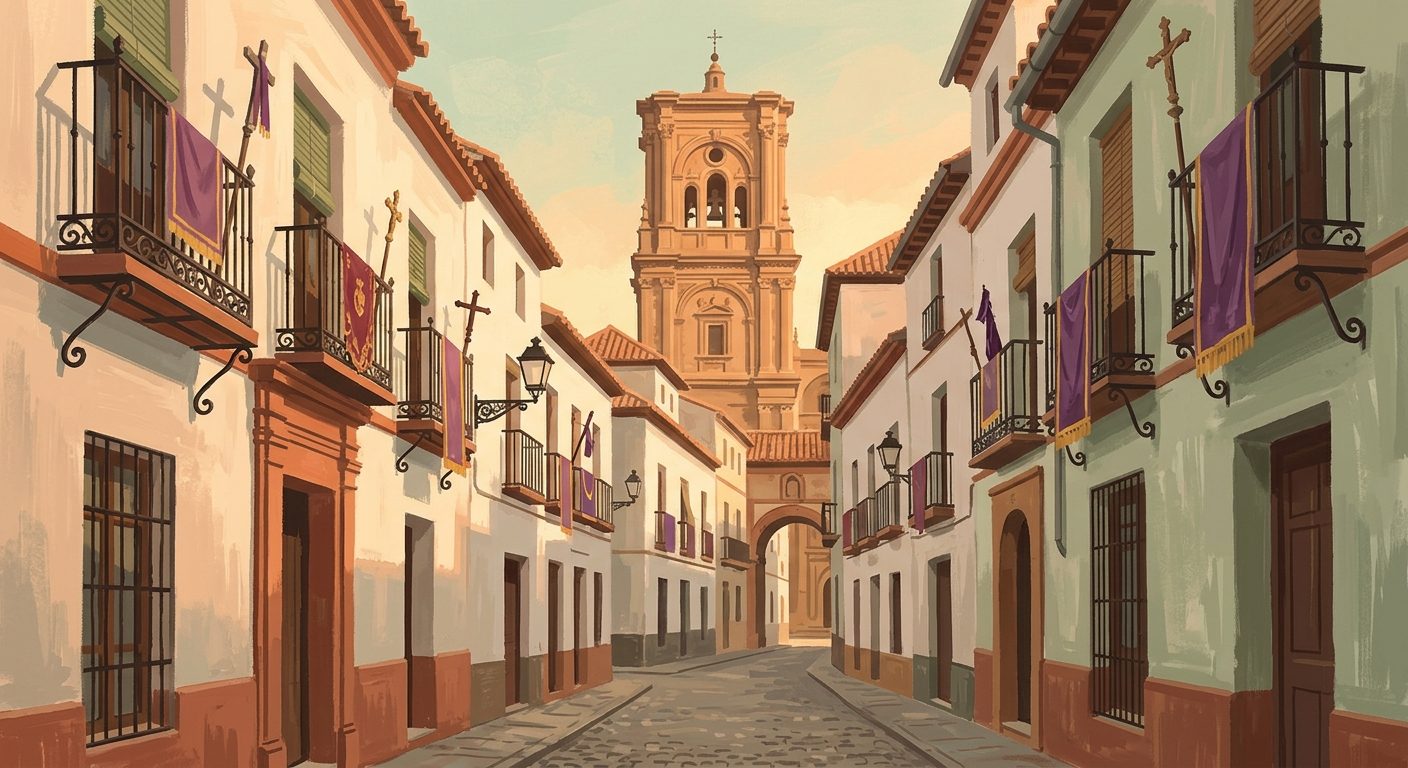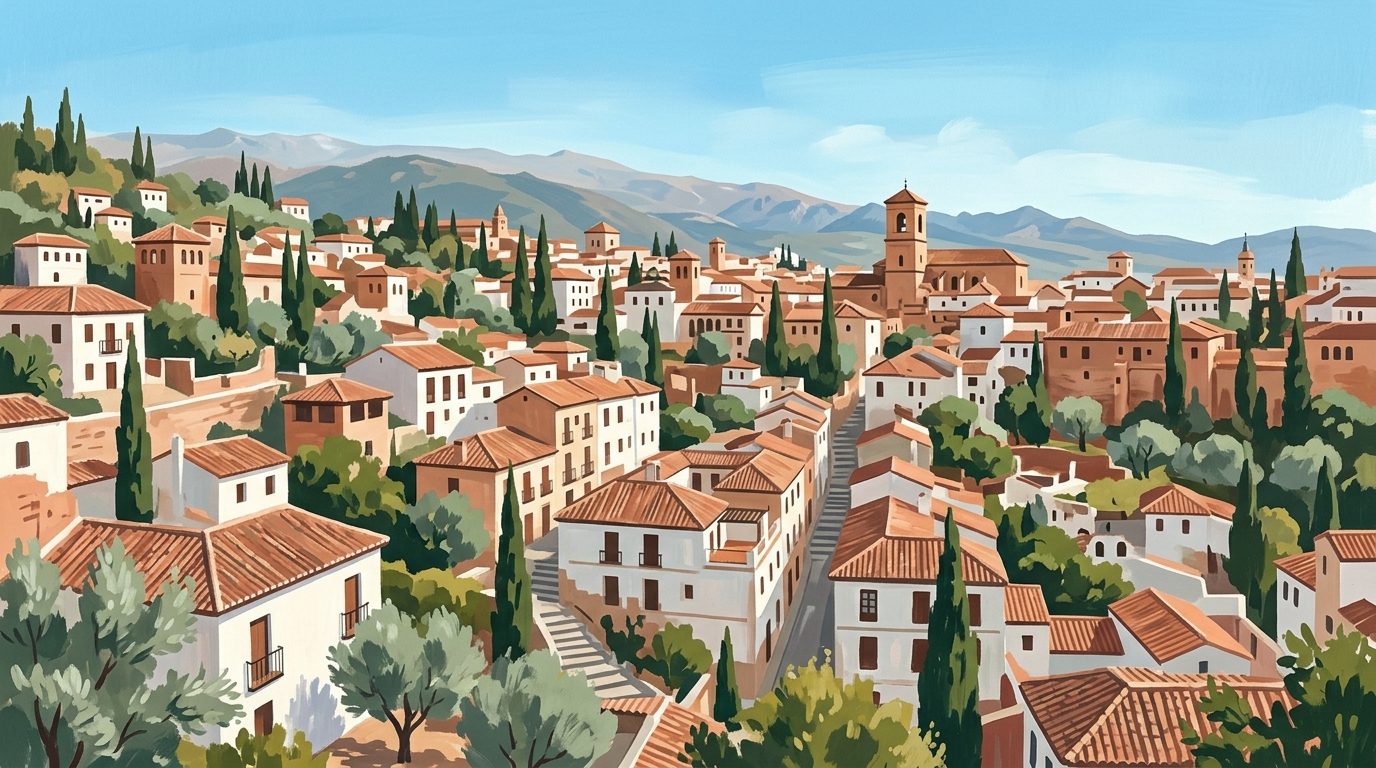
Once the flourishing Jewish quarter of Granada, Realejo is a district of steep alleys, striking street art, and wide squares. It offers a grounded alternative to the more tourist-heavy Albaicín, perfect for those seeking authentic local life.
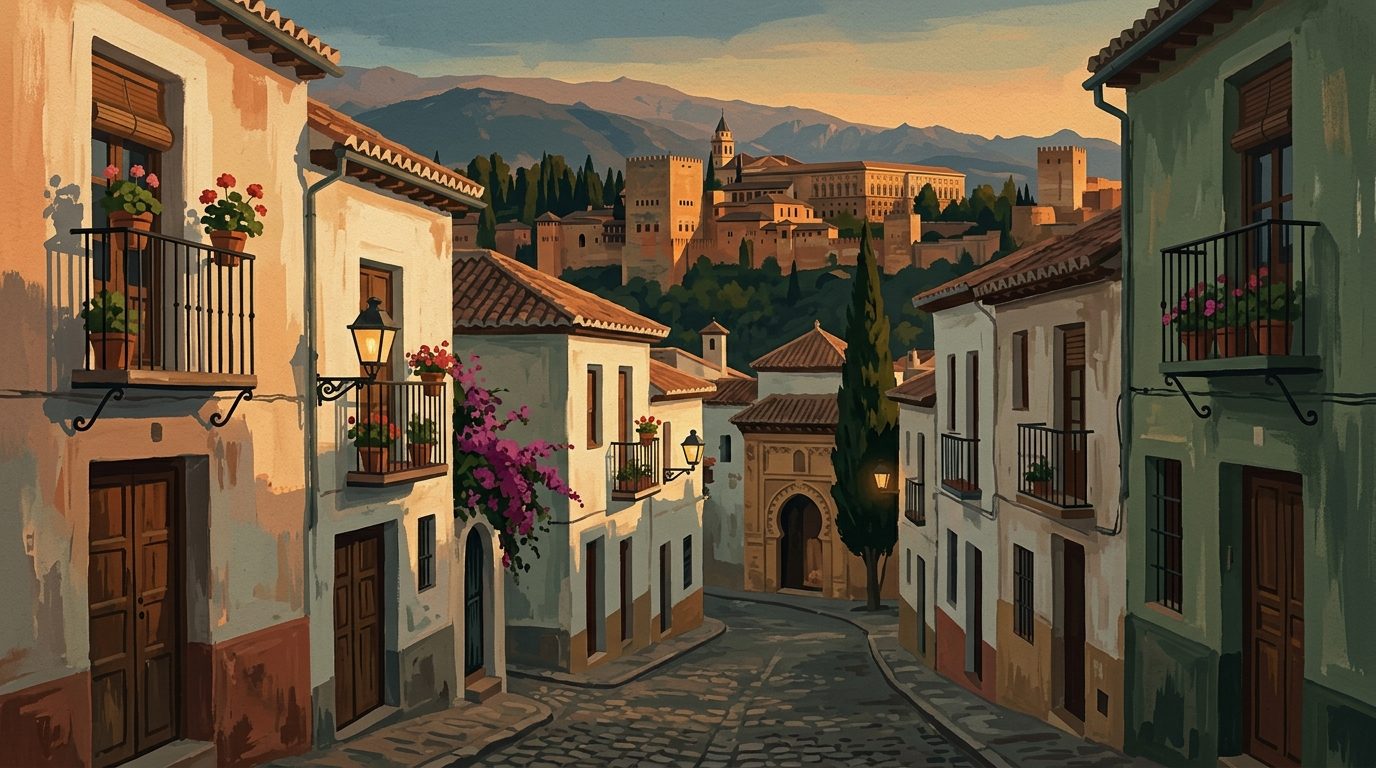
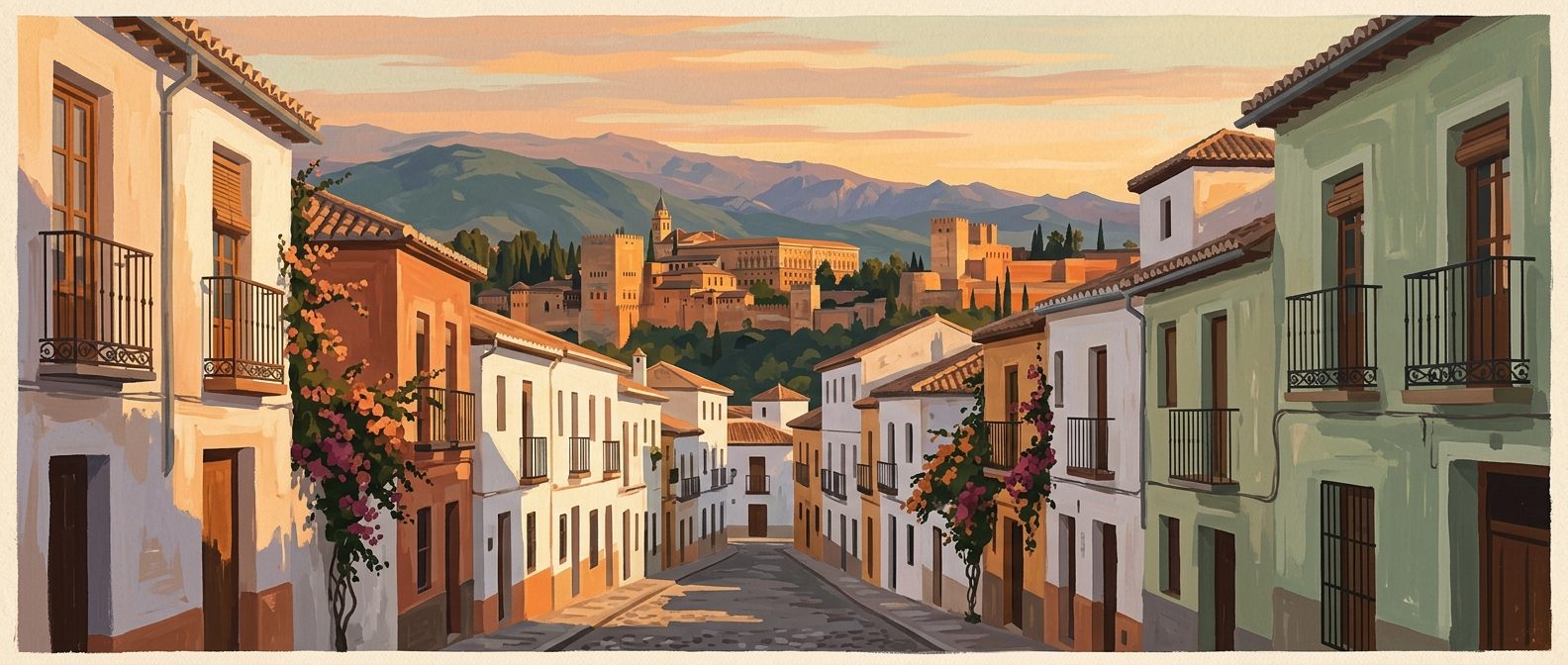
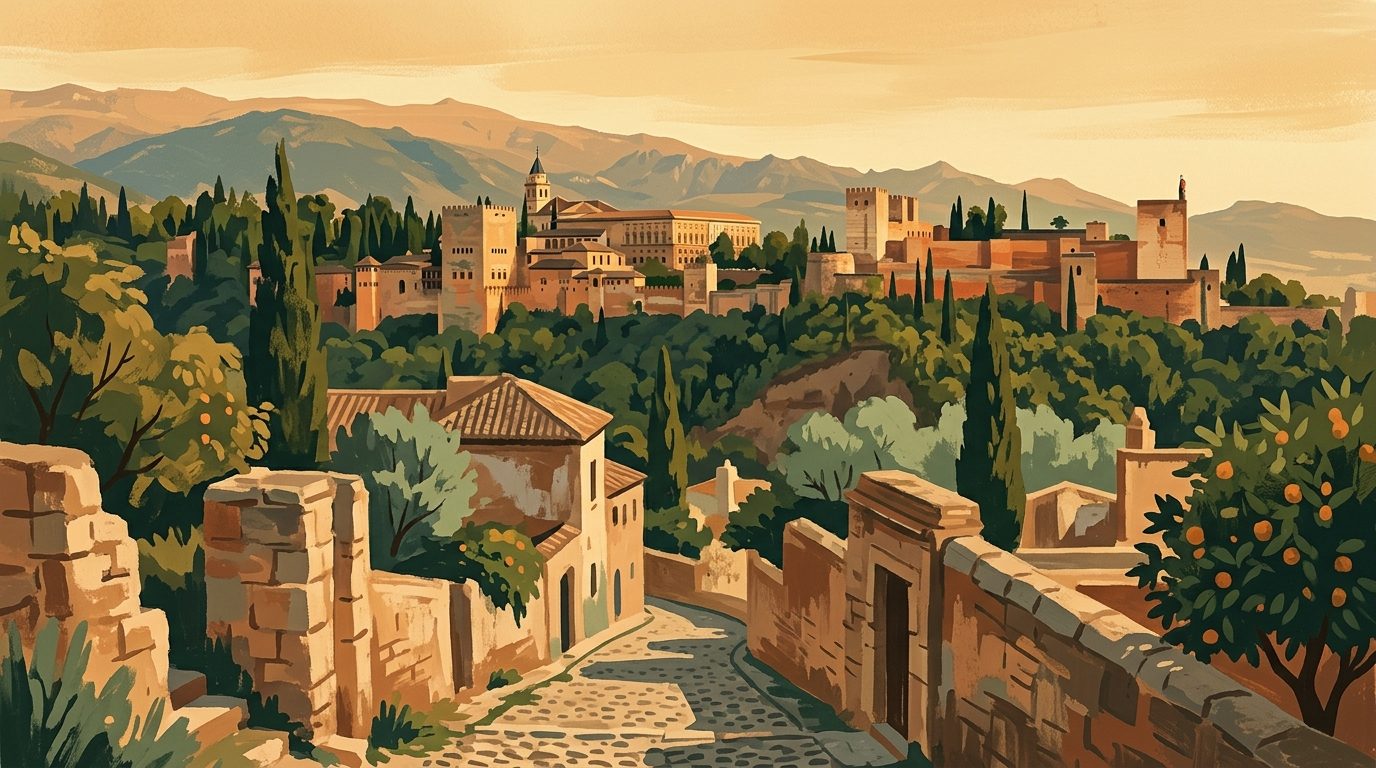
To understand Granada beyond the Alhambra, one must walk the streets of Realejo. This district, located at the base of the hill where the Nasrid palaces sit, was known as Garnata al-Yahud (Granada of the Jews) for centuries. Following the conquest by the Catholic Monarchs in 1492, the quarter underwent a radical transformation as Jewish residents were expelled and their homes were replaced by grand houses, churches, and convents. Today, it is one of the city's most atmospheric neighbourhoods, blending its ancient Moorish and Jewish roots with a modern, artistic edge.
The neighbourhood stretches from the edges of the modern city centre up the southern slopes of the Sabika hill. While the Albaicín across the valley is famous for its whitewashed uniformity, Realejo feels more eclectic. You will find 16th-century mansions sitting alongside contemporary murals, and quiet, leafy squares that suddenly open out from narrow, winding stairs. It remains a lived-in part of the city where children play in the plazas and traditional shops still serve the local residents, providing a welcome respite from the crowds found around the Cathedral.
What to See & Do
Campo del Príncipe
This expansive square is the social epicentre of Realejo. Built on the site of a former Muslim cemetery, it was paved in the 16th century to host public celebrations and royal weddings. The focal point of the plaza is the Cristo de los Favores, a stone crucifix erected in 1640. Local tradition holds that on Good Friday, thousands of residents gather here in silence to ask for three wishes. On any other day of the year, the square is lined with terrace tables where locals enjoy long lunches in the sun. The square is bordered by the imposing facade of the Hotel Palace, formerly a military hospital, which adds a sense of grandeur to the space.
Street Art by El Niño de las Pinturas
Realejo serves as an open-air gallery for Raúl Ruiz, known internationally as El Niño de las Pinturas. His work is world-renowned for its intricate detail and the integration of poetic quotes into the imagery. To see his most famous pieces, head to Cuesta del Caidero and Calle Molinos. His murals often depict human figures with expressive faces, blending mechanical elements and calligraphy. Searching for these murals is a practical way to explore the quieter residential streets that you might otherwise overlook.
Cuarto Real de Santo Domingo
Often overlooked by visitors, the Cuarto Real de Santo Domingo is a 13th-century Almohad palace that predates much of the Alhambra. It was once a royal retreat for the Nasrid queens. While much of the original complex was replaced by a Dominican convent, the qubba (throne room) remains. This square tower features exquisite plasterwork and tiling that rival the decorations of the more famous palaces uphill. The surrounding gardens are public and provide a quiet spot for a walk under the shade of orange trees.
Casa de los Tiros
This 16th-century fortress-like mansion is easily recognised by the muskets (tiros) protruding from its battlements. Built for the Granada-Venegas family, it now serves as a museum dedicated to the history and traditions of Granada. The Cuadra Dorada (Golden Room) is the highlight of the interior, featuring a magnificent carved wooden ceiling with portraits of Spanish monarchs and heroes. The museum is an excellent place to learn about the 19th-century romantic travellers who helped shape the modern image of the city.
Lavadero de la Puerta del Sol
Located at the top of the neighbourhood, this historic communal laundry site was once the hub of domestic life in Realejo. It is a simple, rectangular structure with stone basins where women would gather to wash clothes while sharing local news. Today, it is a protected monument that offers one of the best viewpoints over the city rooftops. The walk up to the laundry involves several flights of stairs, but the panoramic views across the city toward the Cathedral make the effort worthwhile.
Practical Information
Opening Times:
Cuarto Real de Santo Domingo: Generally open Tuesday to Sunday, 10:00 to 14:00 and 17:00 to 21:00 (summer schedule: 1 May to 30 September; check on the operator's website before travelling). Closed Mondays.
Casa de los Tiros: Tuesday to Saturday, 09:00 to 21:00; Sunday, 09:00 to 15:00. Closed Mondays.
Ticket Prices:
Cuarto Real: Entry is usually free, though some special exhibitions may carry a small charge.
Casa de los Tiros: Free for EU citizens with valid ID; approximately €1.50 for others.
How to Get There:
Realejo is easily accessible on foot from Plaza Nueva or Calle Reyes Católicos. Alternatively, take the small red Alhambra Bus (lines C30, C32, or C35) which stops at various points throughout the neighbourhood, including Campo del Príncipe.
Parking:
Driving into Realejo is not recommended as streets are extremely narrow and many are restricted to residents. The nearest public car parks are Parking Victoria on Calle Párraga, Parking Escolapios, or the large Parking San Agustín near the Cathedral. Expect to pay around €2.50 per hour.
Where to Eat Nearby
For a traditional experience, Los Manueles on Calle Reyes Católicos is a local institution, famous for its giant croquettes and broad beans with ham. If you prefer the atmosphere of Campo del Príncipe, La Esquinita is highly regarded for its fresh seafood and fried fish platters, served in a relaxed setting. For something slightly different, Bar Altamura offers a blend of Italian influence and local tapas; it is popular with the creative crowd that frequents the neighbourhood. Remember that in Granada, a free tapa is still served with every drink, making a 'tapa crawl' through the bars around Calle Molinos an affordable way to dine.
Where to Stay
Realejo offers several boutique options that provide a more intimate stay than the large hotels in the city centre. Hospes Palacio de los Patos, located on the edge of the district, is a converted 19th-century palace for those seeking luxury. Within the heart of the quarter, look for small guest houses and renovated apartments near Calle Santiago, which allow you to experience the neighbourhood's quiet evenings and the morning sound of church bells from nearby Santo Domingo.