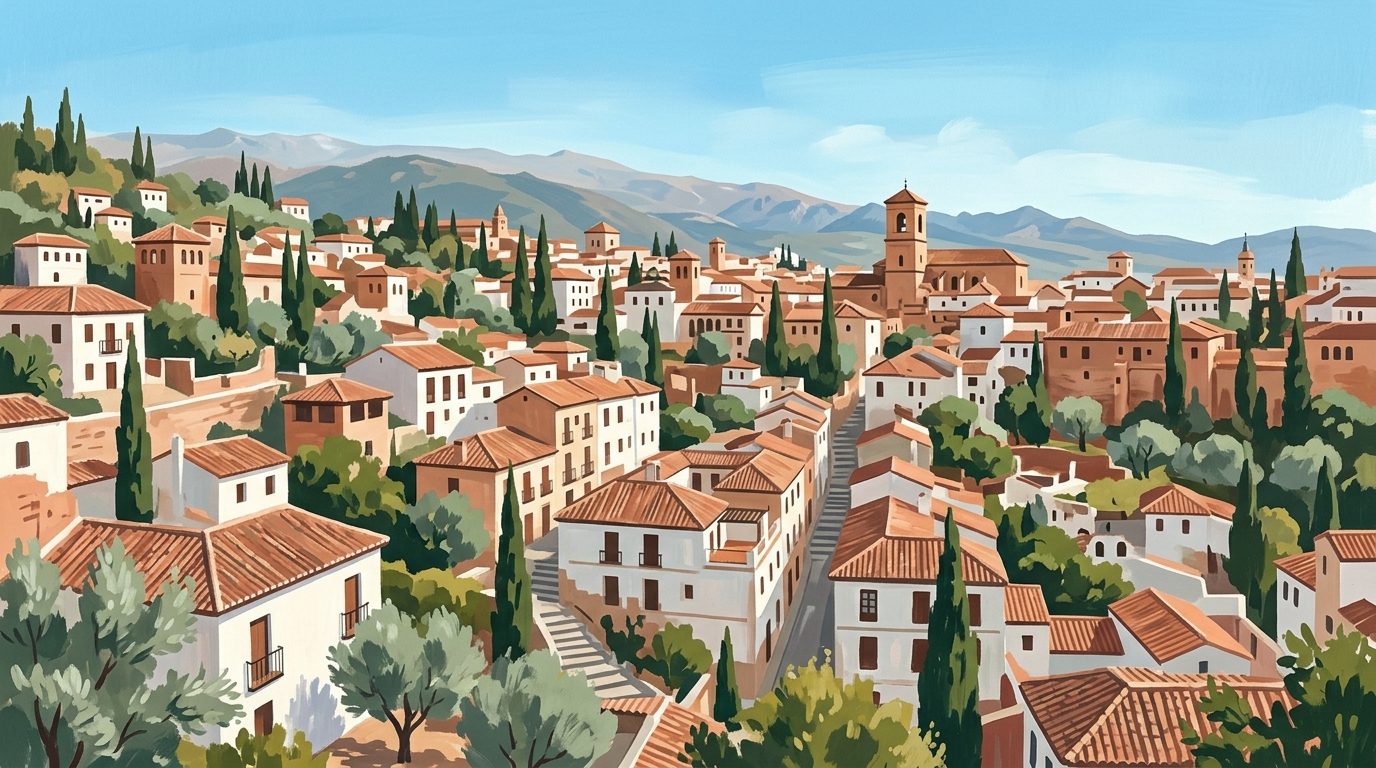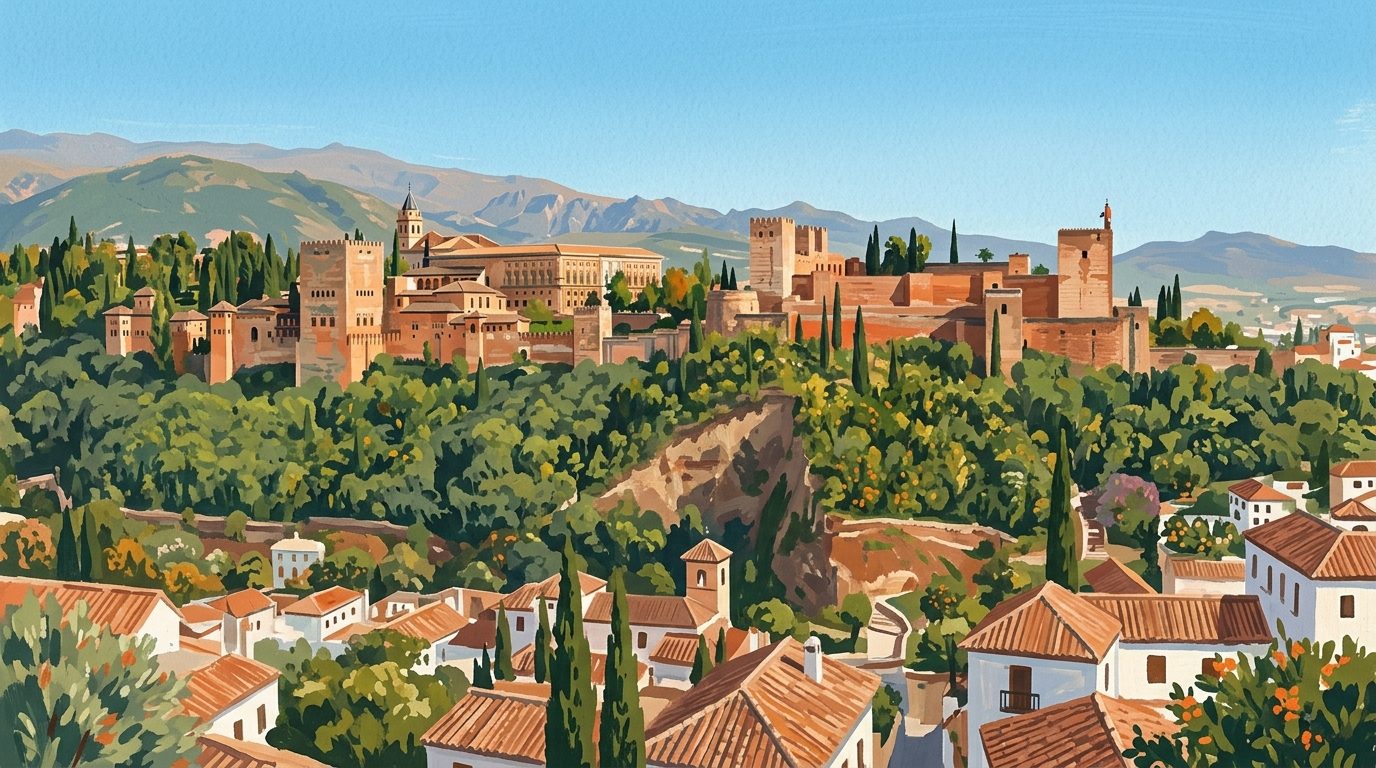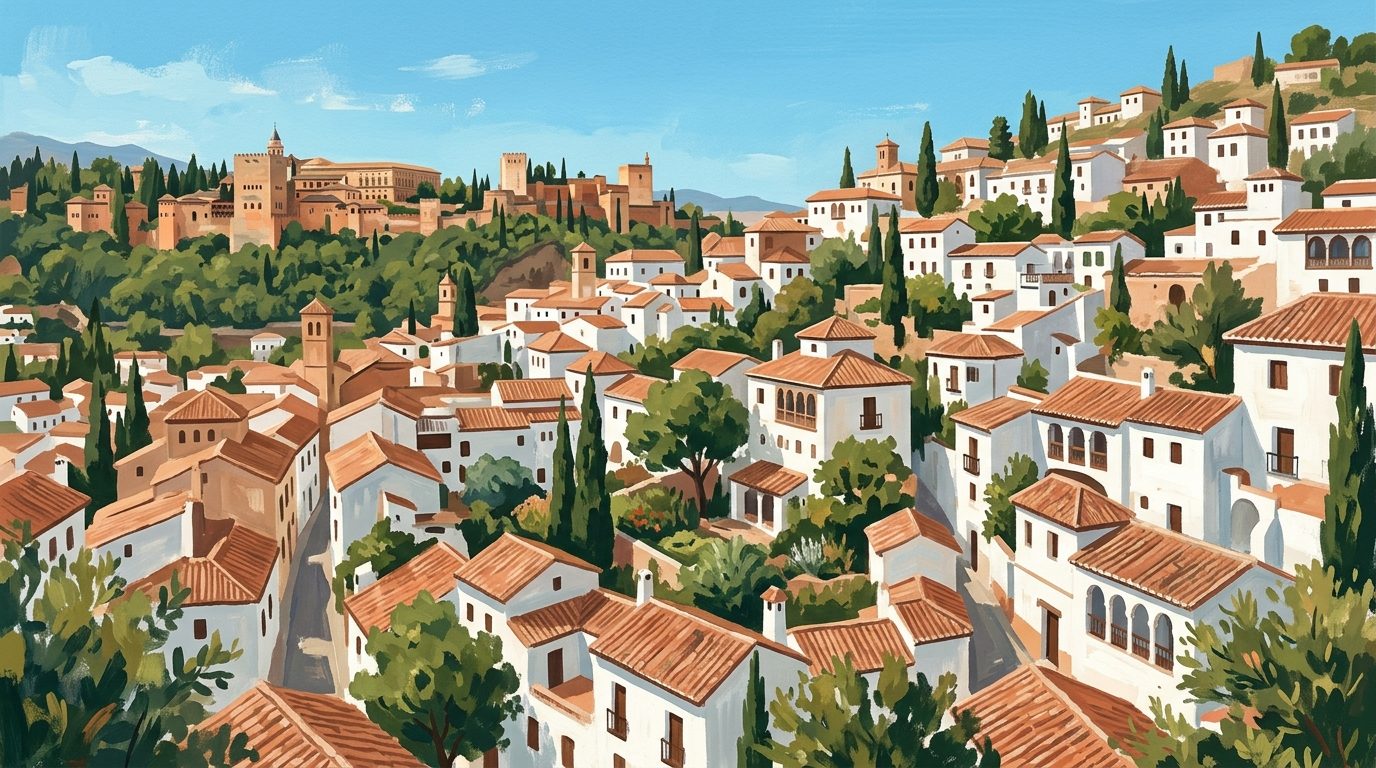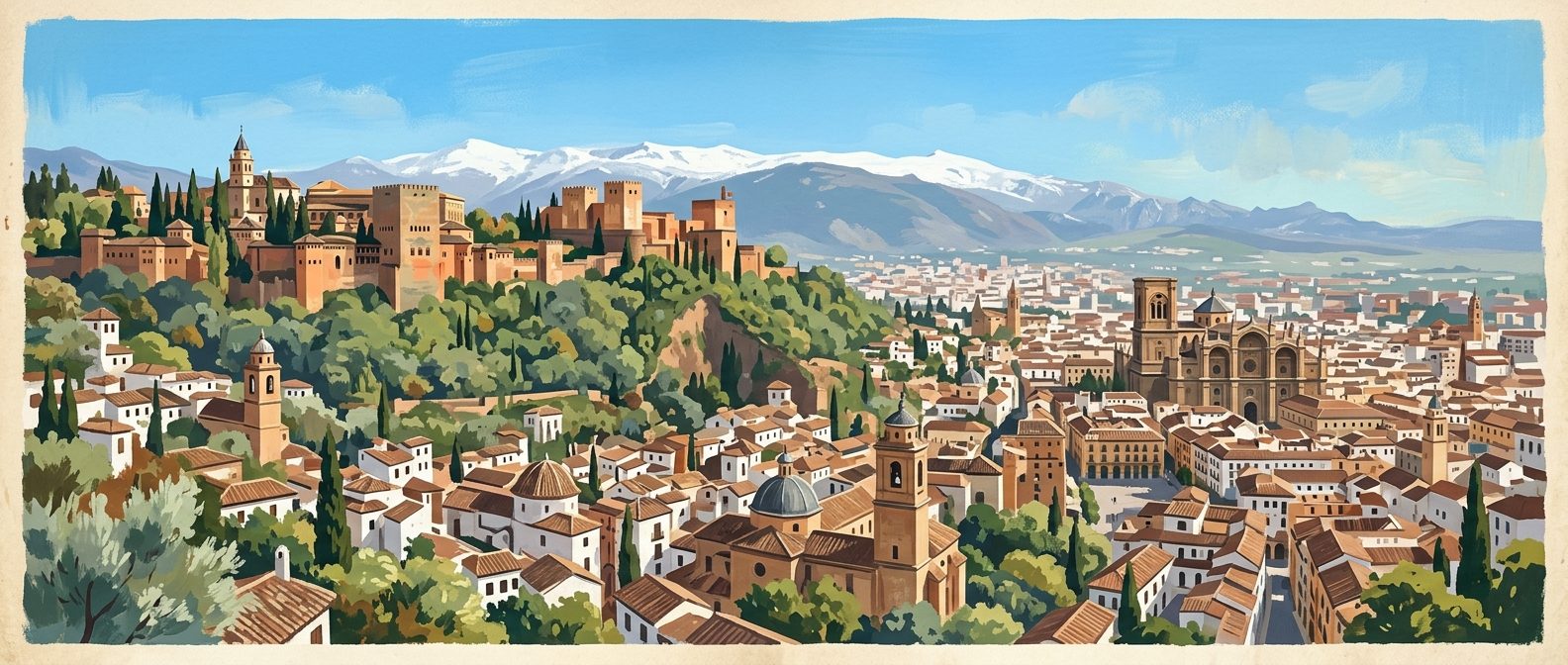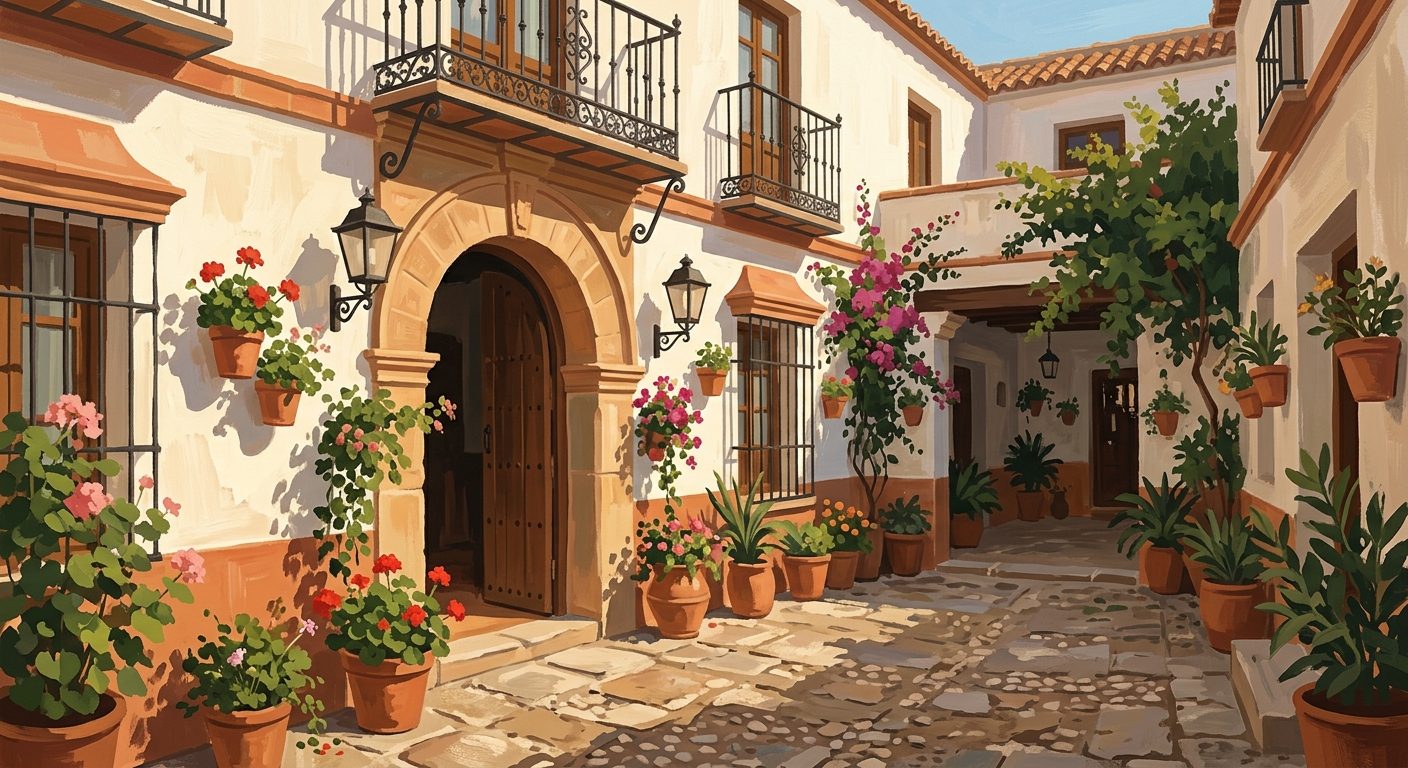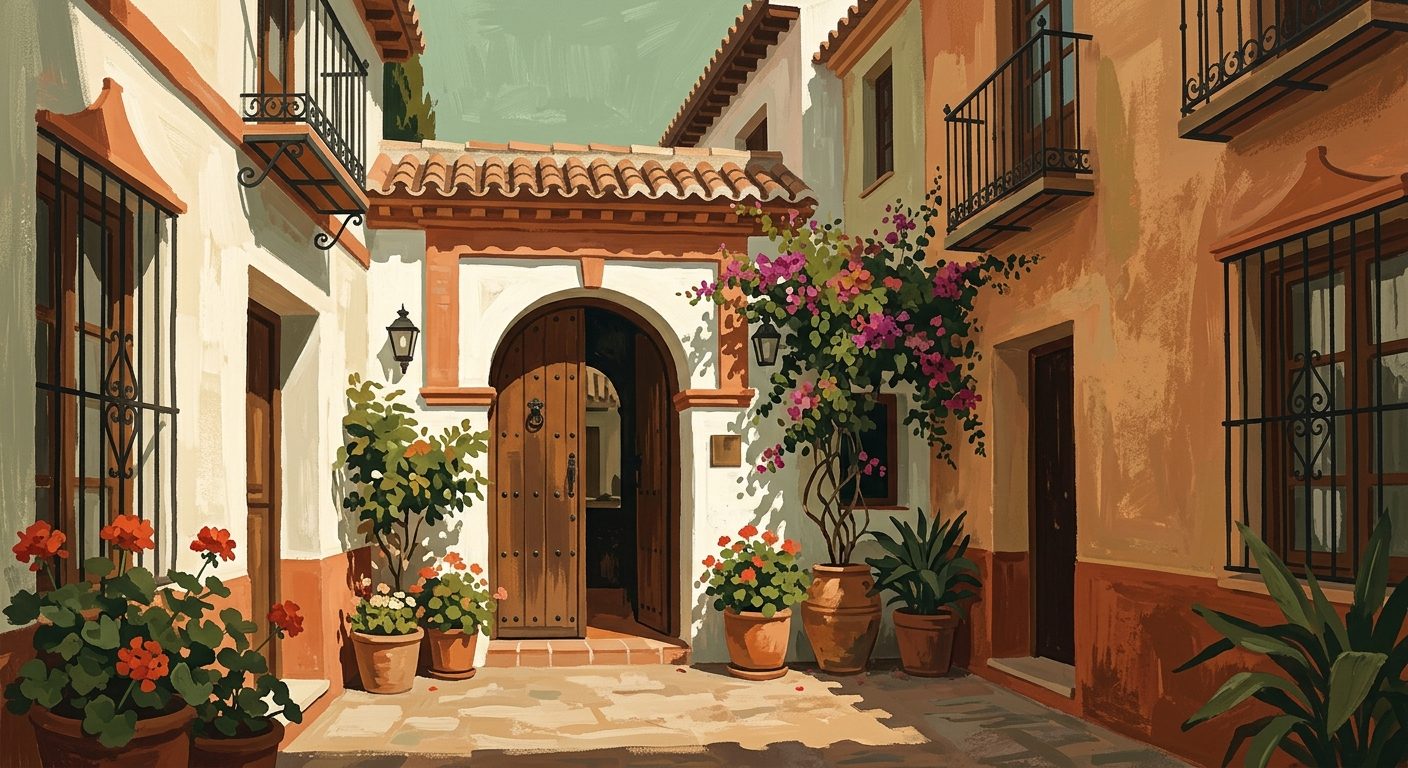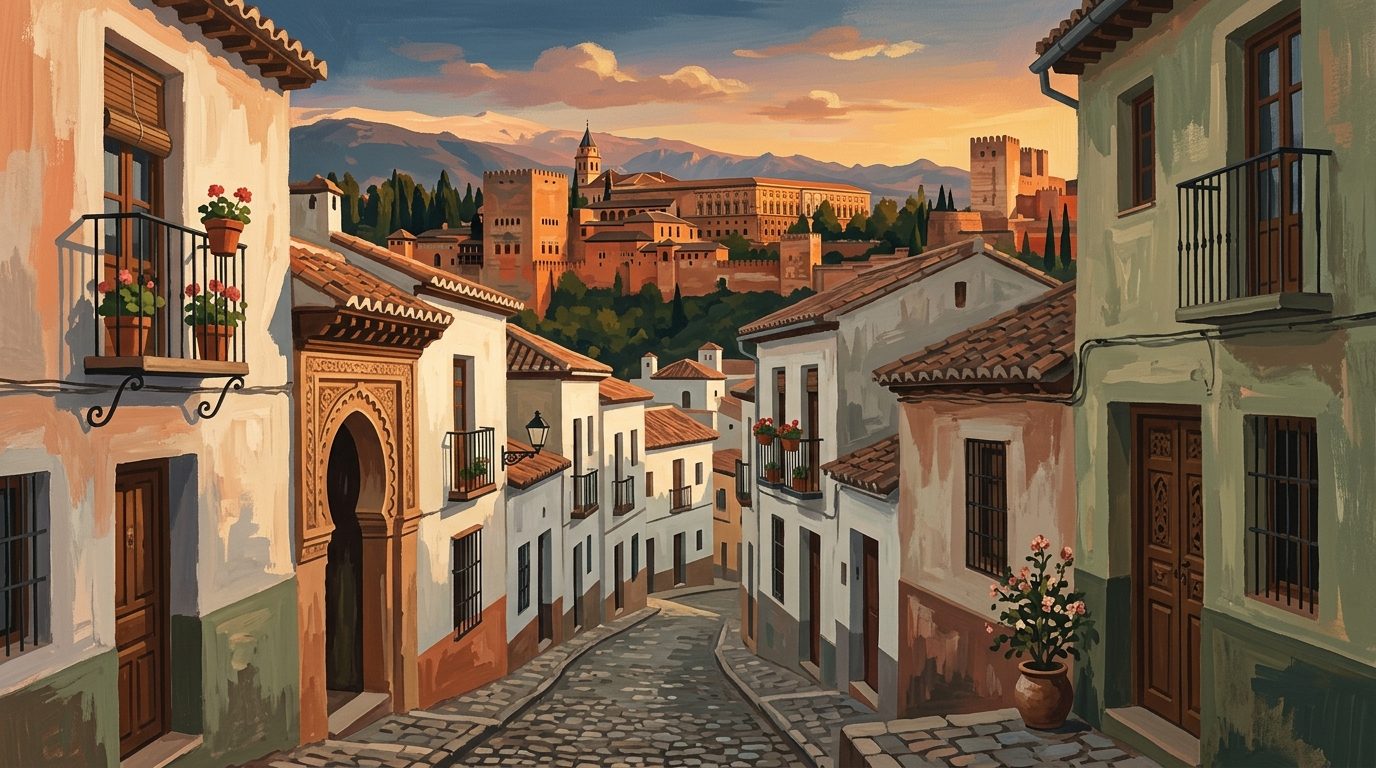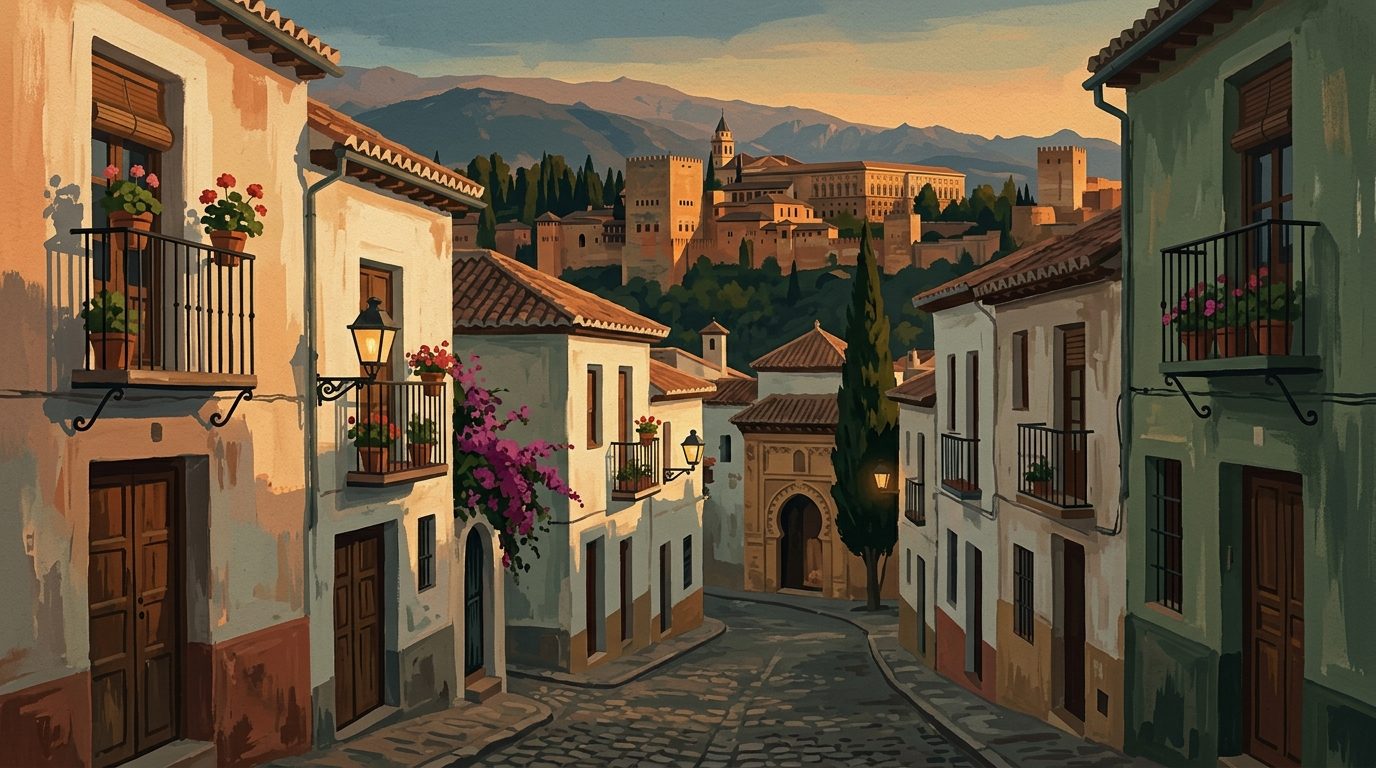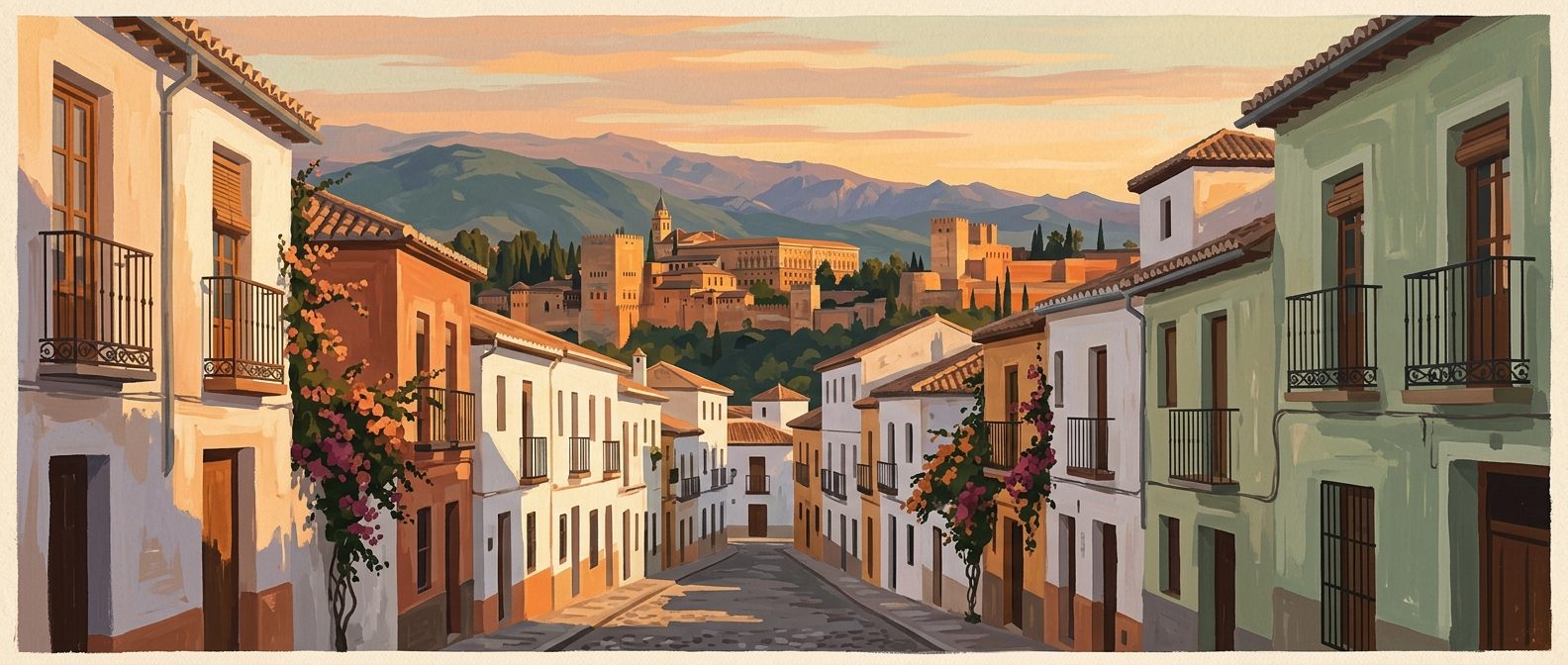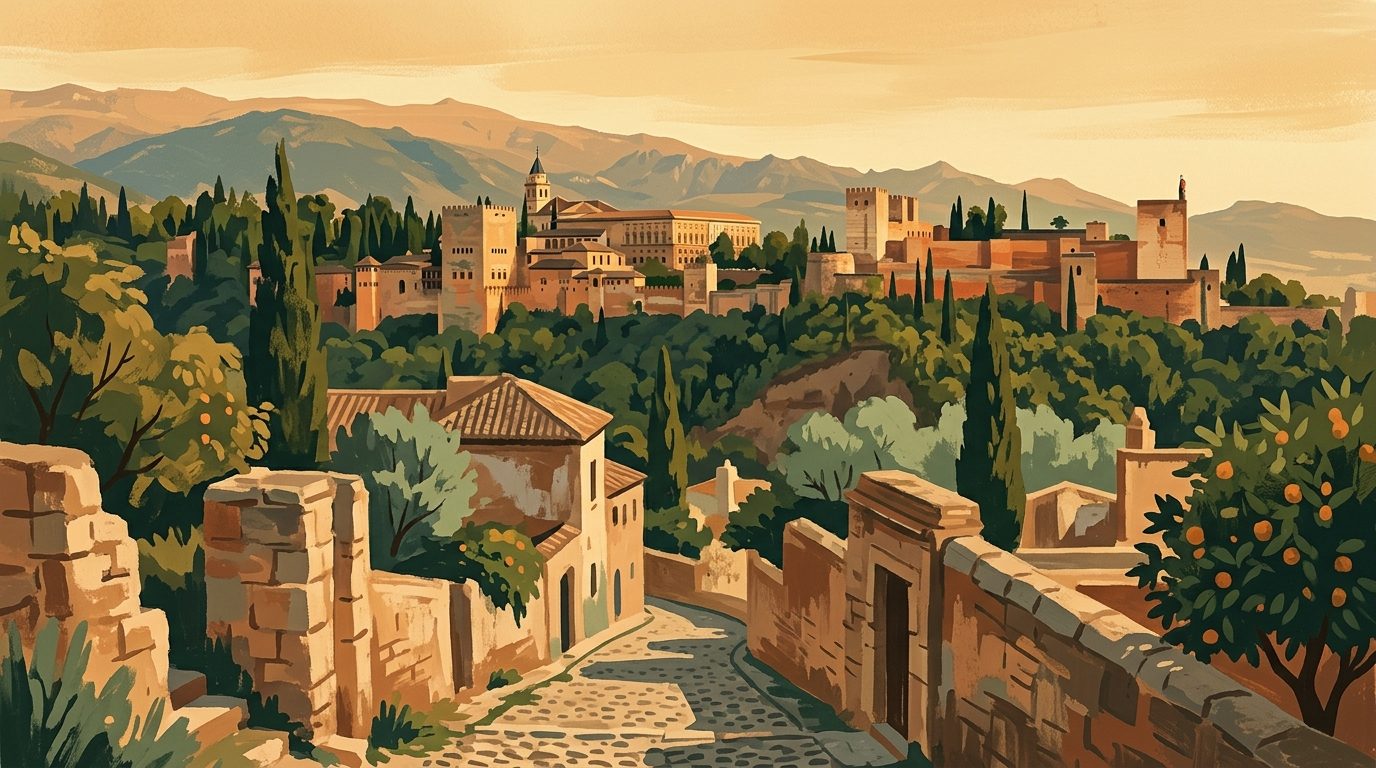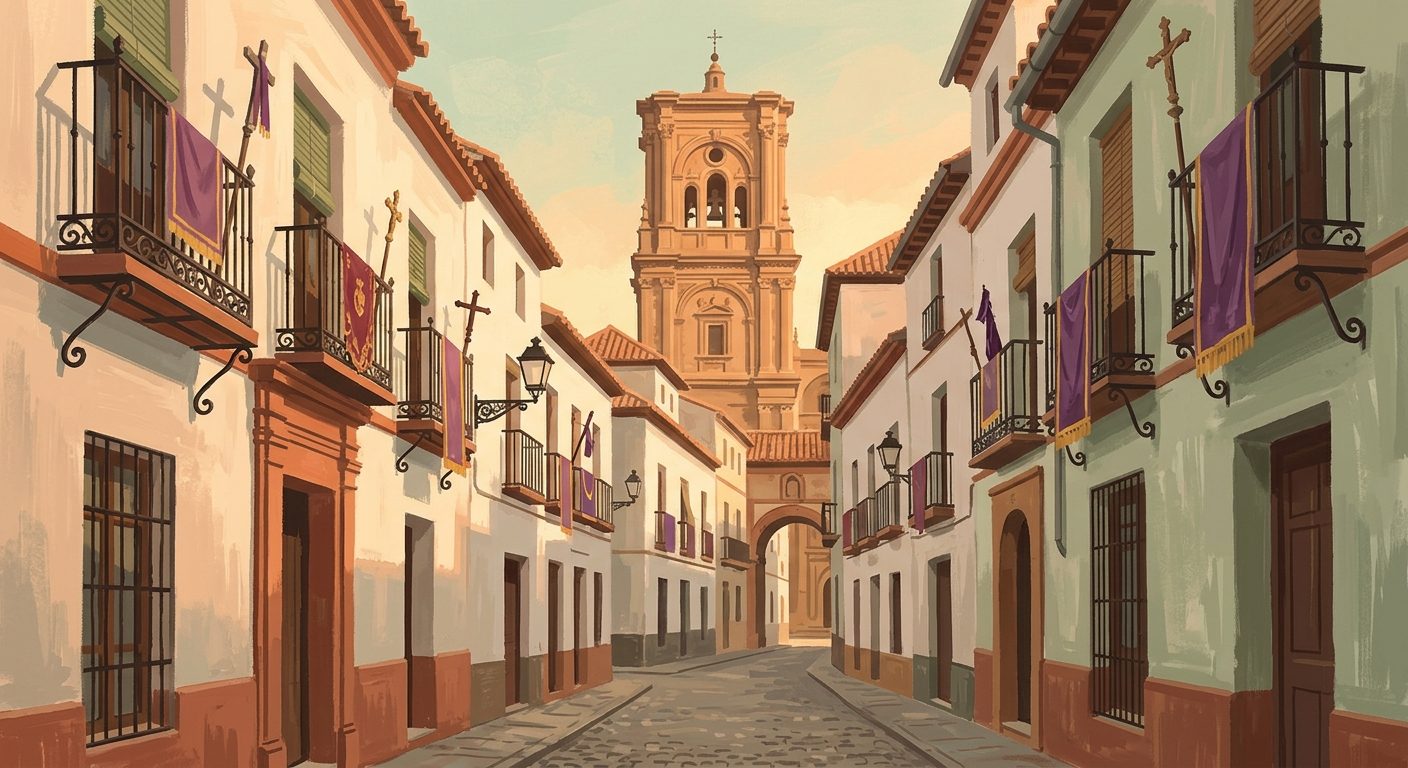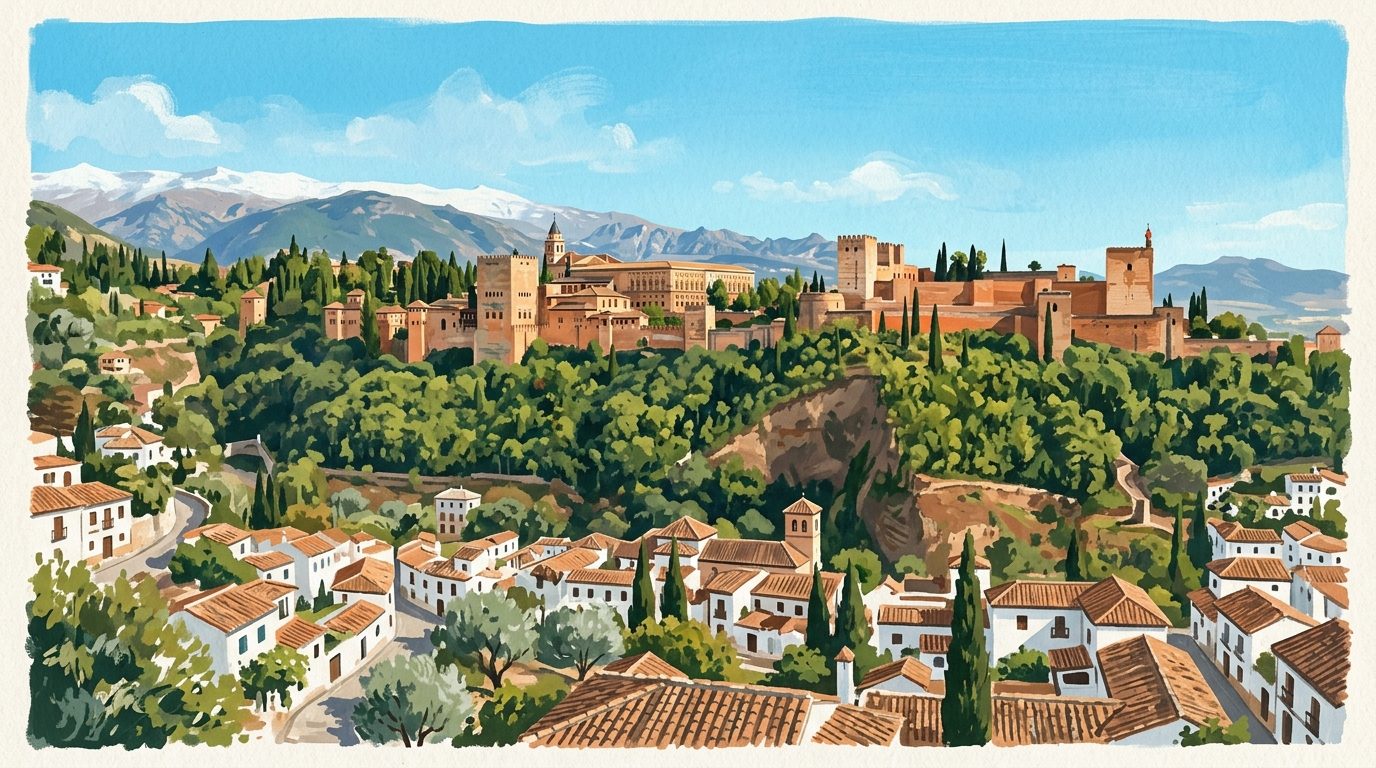
Granada is a city defined by the Sierra Nevada peaks and the intricate stonework of the Nasrid kings. To know it, you must climb its hills, eat standing at a crowded zinc bar, and look past the souvenir stalls to the silent courtyards within.
Granada often feels like two distinct cities held together by a shared history and a very steep set of stairs. On one side of the River Darro, you have the monumental weight of the Spanish Golden Age: grand cathedrals, wide boulevards, and university buildings. On the other, the Albaicín rises in a maze of whitewashed lanes that feel more like a North African medina than a typical European city. Looming over everything is the Alhambra, a fortress so dominant it dictates the rhythm of the city’s light and shadow. While most visitors arrive with a ticket for the palaces in hand, the real character of the place is found in the gaps between the monuments: the smell of woodsmoke in Sacromonte, the sharp citrus of a local remojón (orange and salt cod salad) in a Realejo tavern, and the sight of the snowy mountains reflected in a glass of cold Alhambra beer.
Life here is lived outdoors, despite the biting cold of winter or the dry heat of July. The city has resisted the modernisation that has polished the edges off other Andalucían capitals. It remains slightly gritty, intensely atmospheric, and fiercely proud of its status as the last stronghold of Al-Andalus. For anyone navigating the slippery pebble mosaics of the empedrado granadino (Granadan paving) or hunting for the best habas con jamón (broad beans with ham), you are constantly reminded that this is a city of layers, where every church is built on a mosque and every garden hides a thousand years of stories.
The Alhambra & Generalife
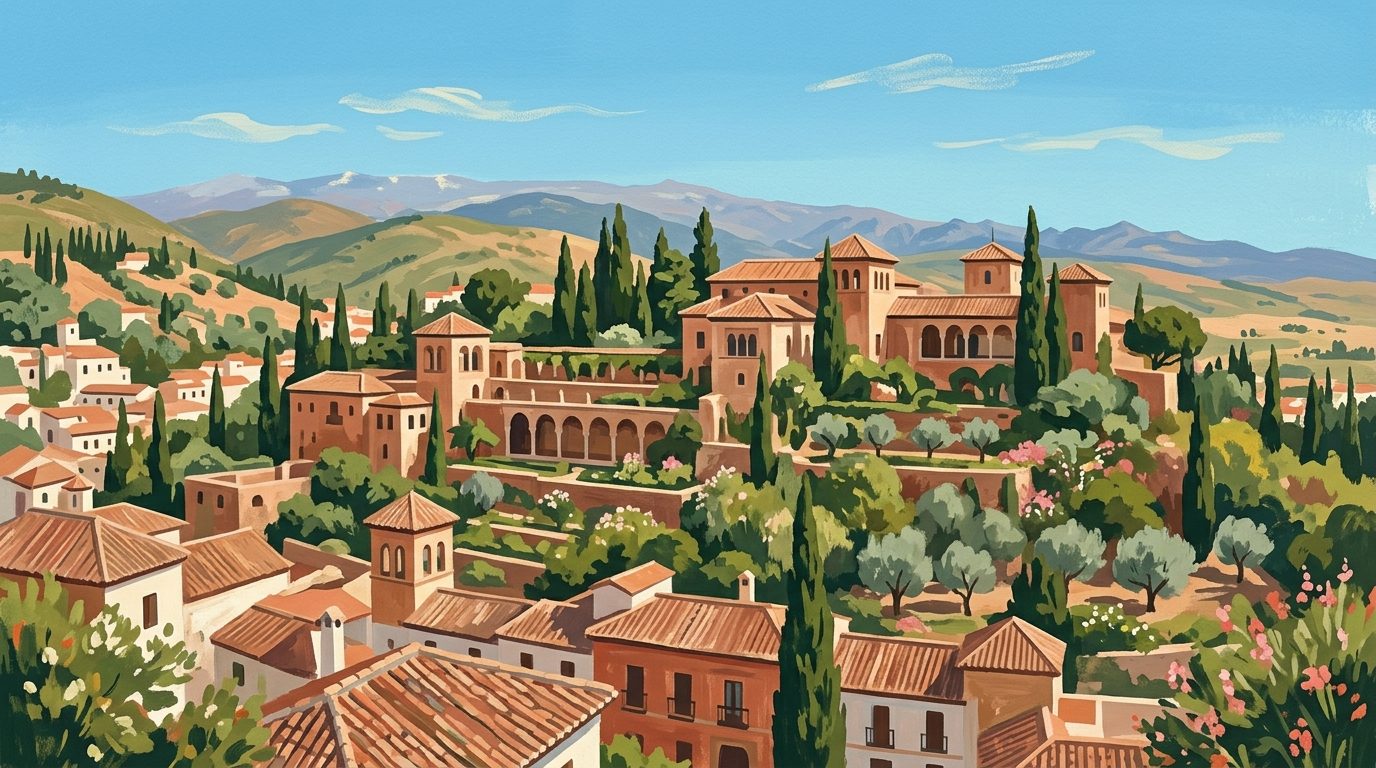
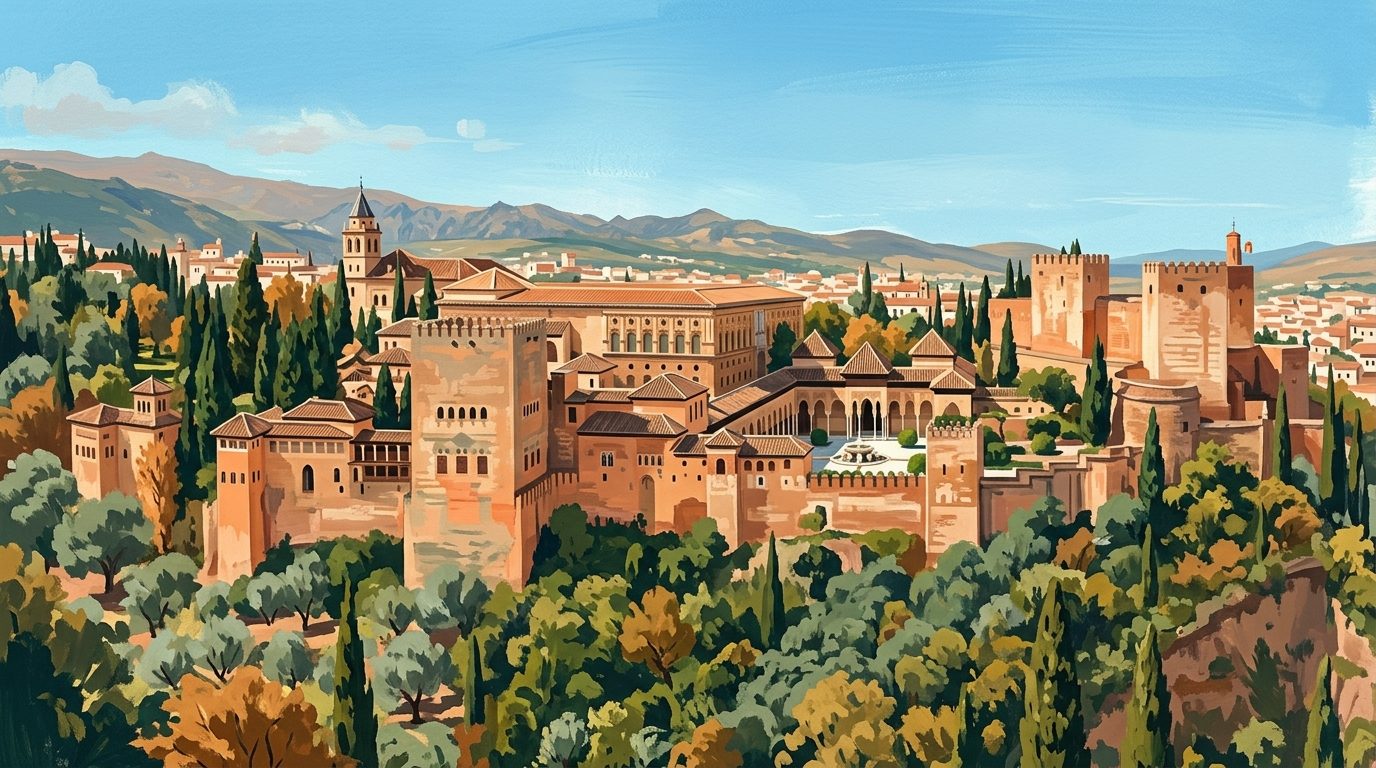
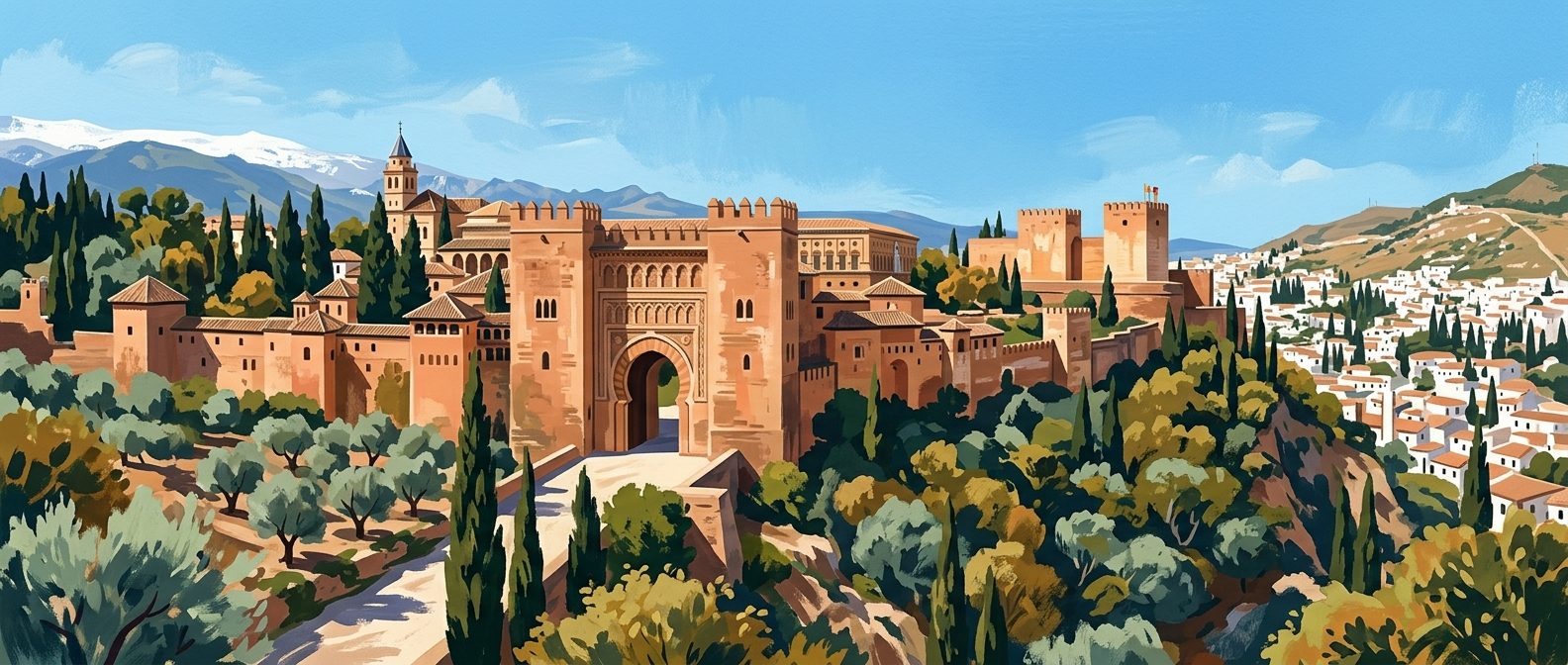
The Alhambra is not simply a palace; it is a royal city within a city. To walk through the Palacios Nazaríes (Nasrid Palaces) is to see the peak of Islamic architecture in Europe. The geometric tilework and cursive calligraphy carved into the plaster aren’t just decoration; they are a sophisticated attempt to recreate paradise on earth. Pay particular attention to the Court of the Myrtles, where the central pool creates a perfect mirror image of the Comares Tower, and the Court of the Lions, with its twelve stone beasts and forest of slender columns. Even the later addition of the Palace of Charles V, a heavy Renaissance square, provides a fascinating contrast to the delicate Moorish work.
Adjacent to the fortress lies the Generalife, the summer estate where the kings escaped the formalities of court. The Jardín de la Acequia (Water-Garden Courtyard) is the highlight, where long pools are flanked by flowerbeds and arching jets of water. This is a place of sensory detail: the sound of the water and the scent of jasmine are as much a part of the architecture as the brickwork. It is essential to book tickets well in advance via the official Patronato de la Alhambra website, and if you can, secure a night visit to the Nasrid Palaces. The play of light and shadow on the carved ceilings, without the crowds of the day, is an entirely different experience. Ensure you wear sturdy shoes, as you will likely clock up several miles walking from the Gate of Justice to the far end of the Upper Alhambra.
Read the full The Alhambra & Generalife guide →
The Albaicín
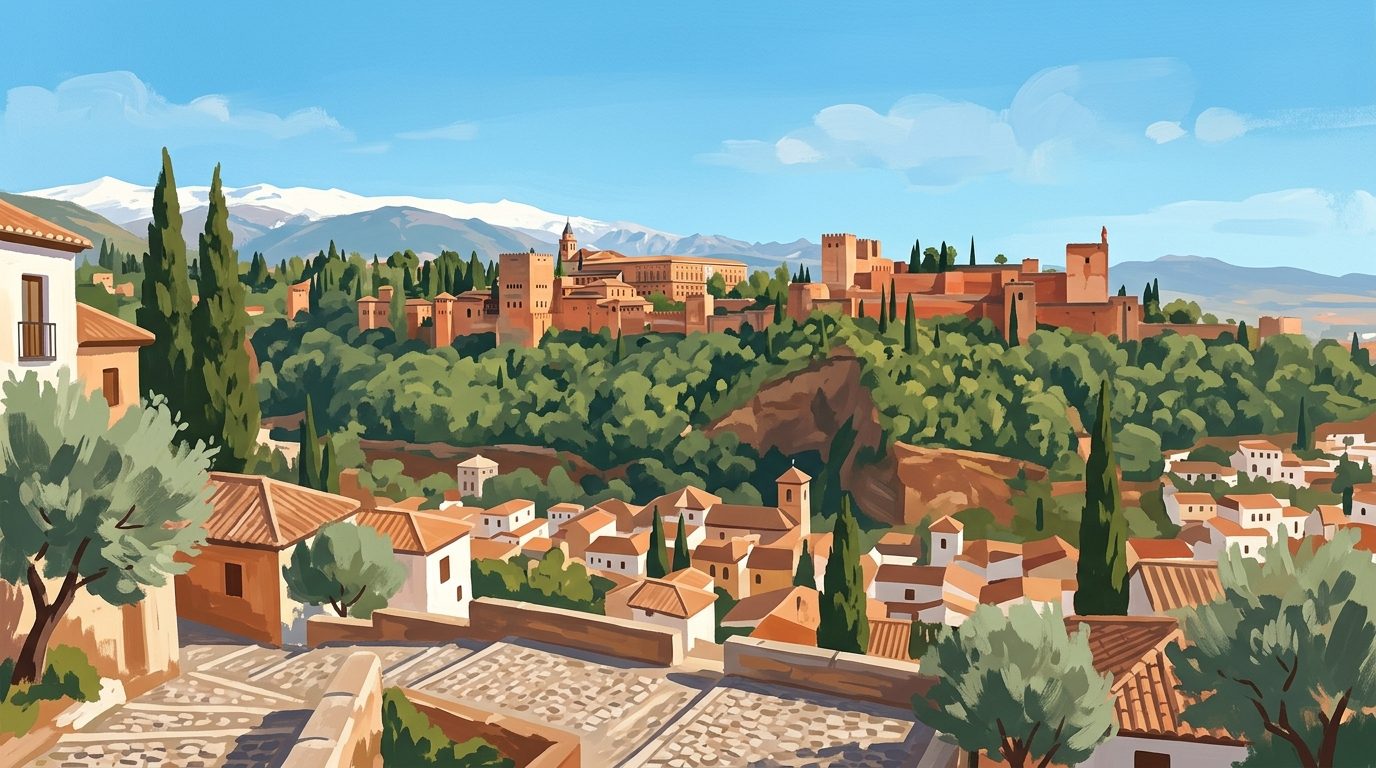
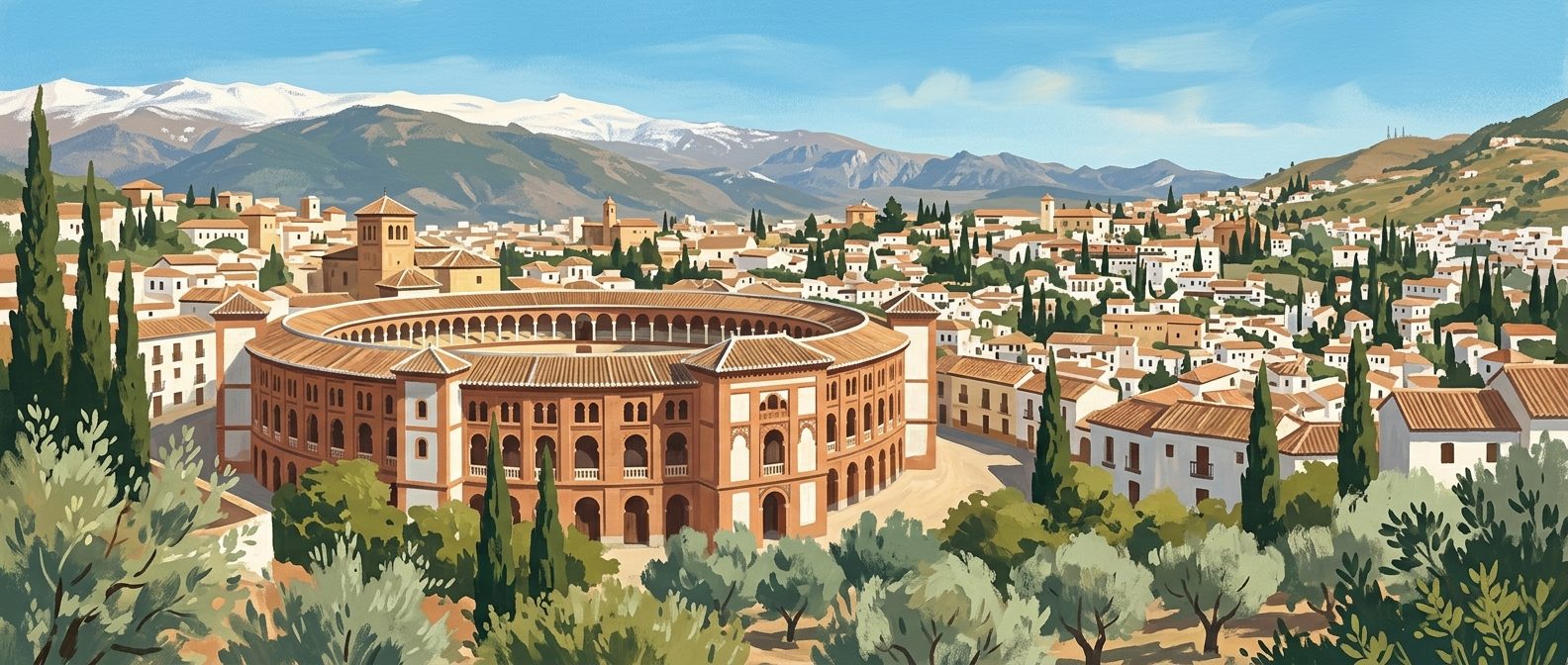
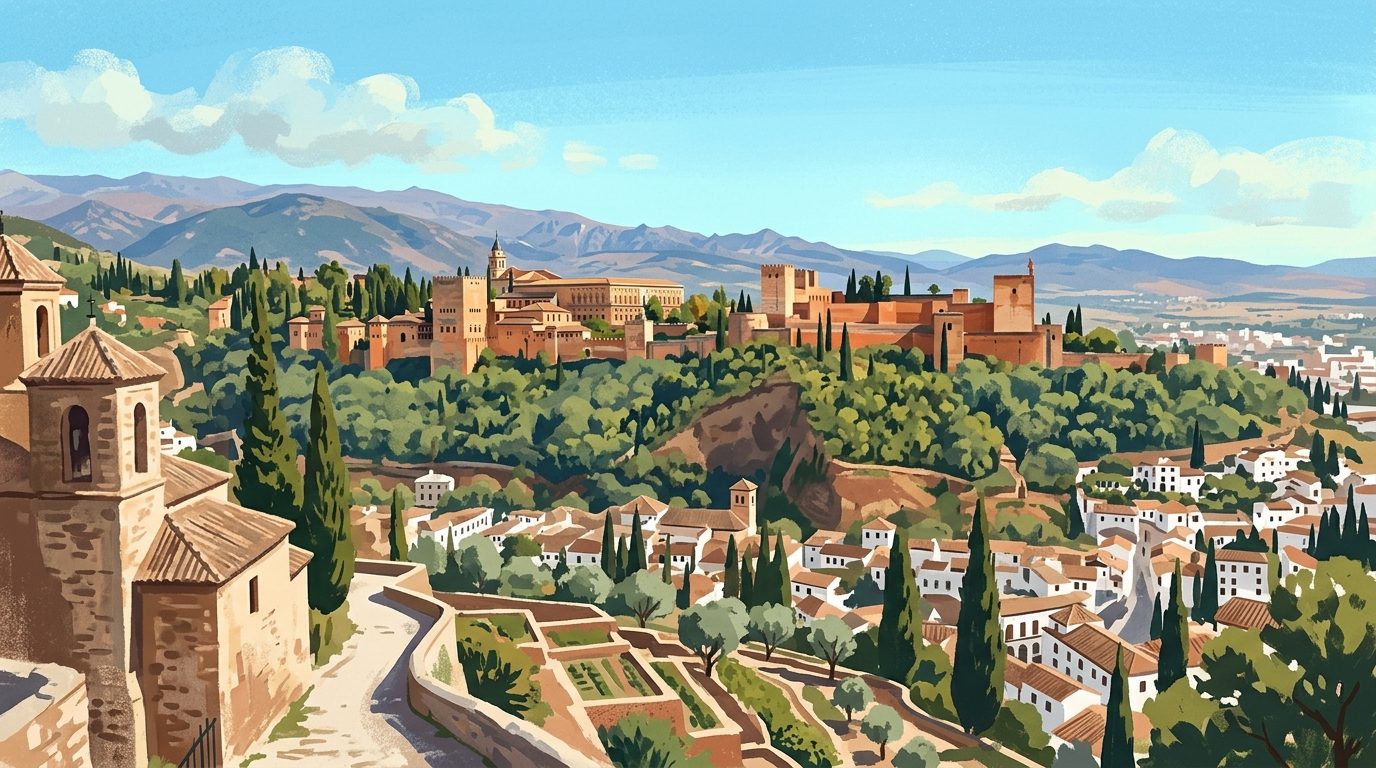
Facing the Alhambra across the valley, the Albaicín is the city's oldest Moorish quarter and a UNESCO World Heritage site. This is a neighbourhood of cármenes, traditional villas with private, walled gardens that spill over with vines and pomegranate trees. The main thoroughfare, the Carrera del Darro, runs alongside the river and is arguably one of the most beautiful streets in Spain, but the real soul of the Albaicín lies further up. As you climb the Cuesta del Chapiz, the noise of the city fades, replaced by the sound of fountain water and the occasional strum of a guitar.
While the Mirador de San Nicolás offers the famous postcard view of the Alhambra against the Sierra Nevada, it is often overrun with tourists. For a quieter moment, head to the Mirador de San Cristóbal or the small garden at the Mezquita Mayor de Granada. The neighbourhood is also home to the Bañuelo, 11th-century Arab baths that survived the Christian conquest and offer a quiet, cool respite from the sun. Look out for the aljibes (water cisterns) scattered throughout the plazas; these ancient reservoirs still supply the neighbourhood's gardens. Ending a day here usually involves a glass of wine at a small table in the Placeta de San Miguel Bajo as the walls of the Alhambra turn deep ochre in the sunset.
Read the full The Albaicín guide →
Sacromonte
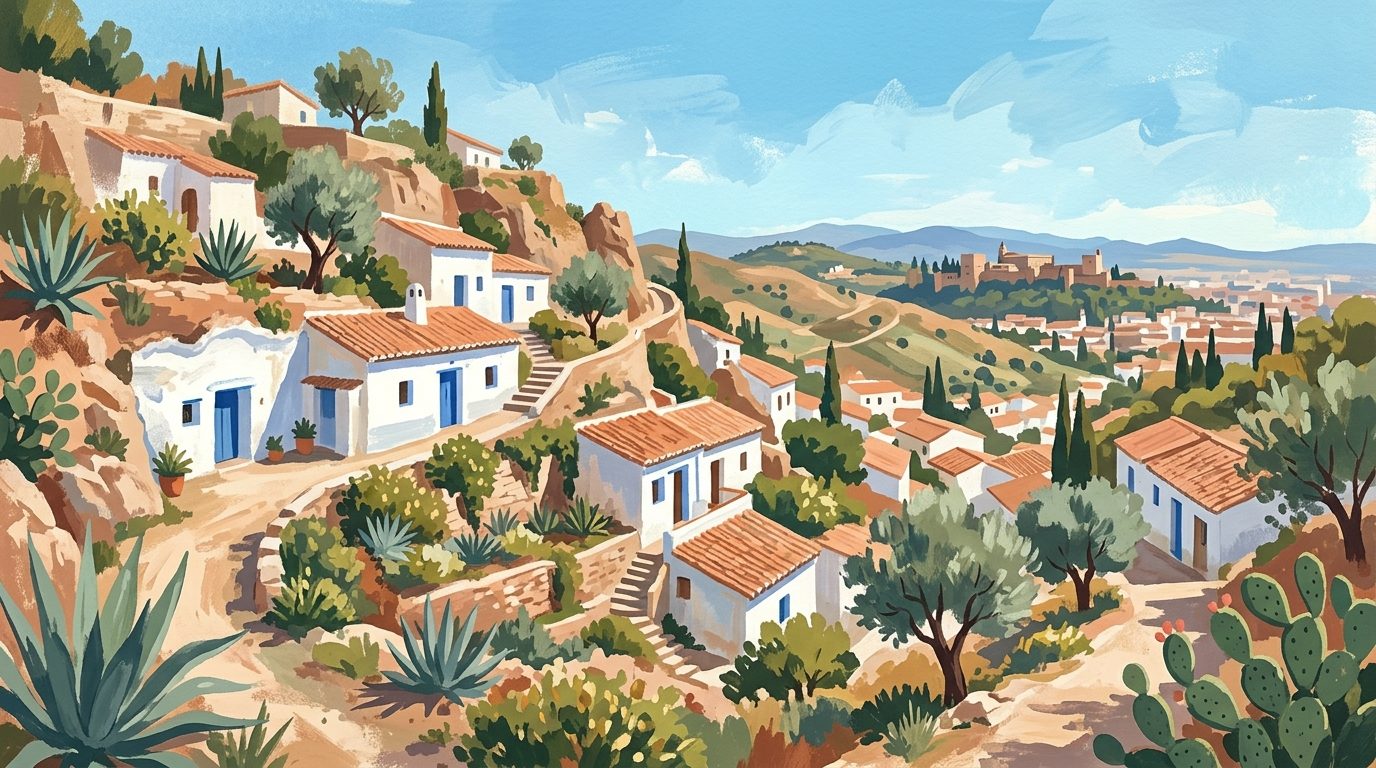
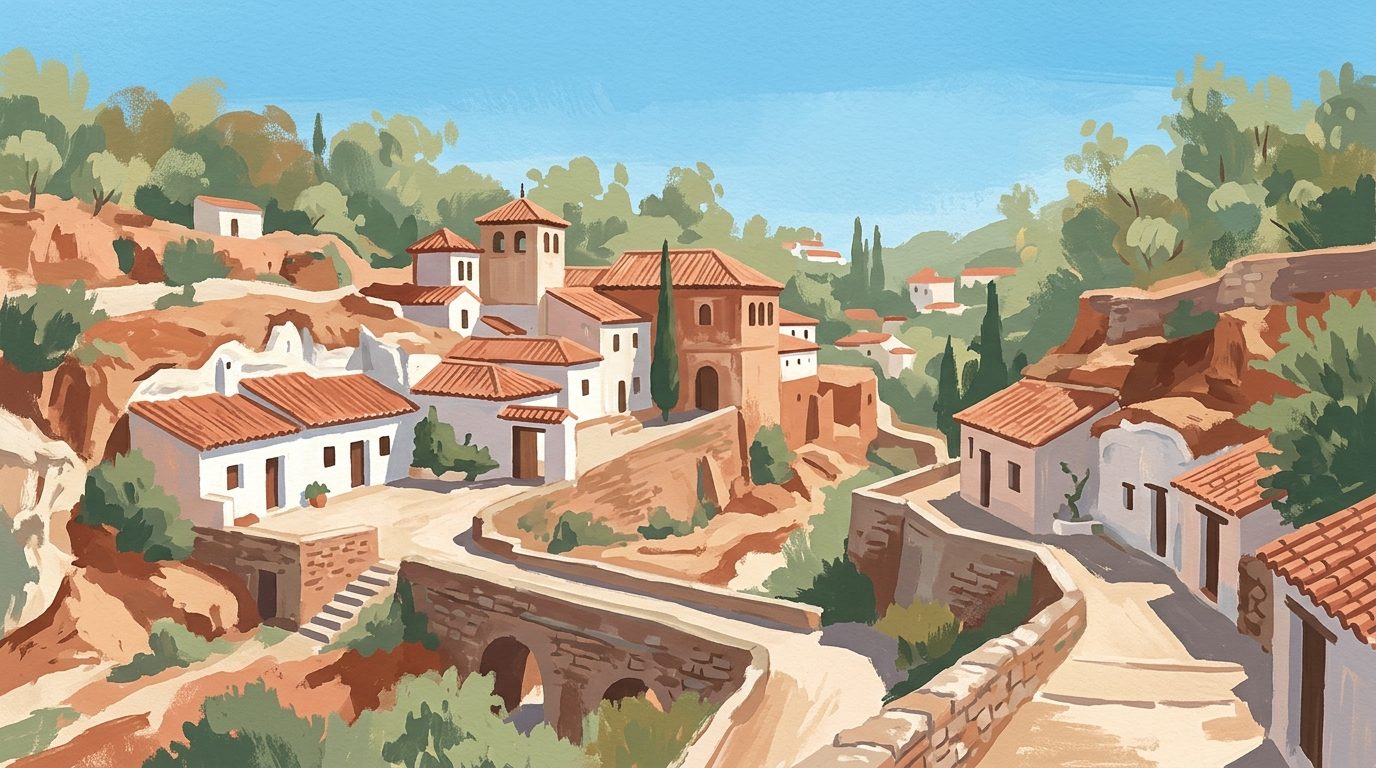
High above the Albaicín, the hillside of Sacromonte is synonymous with Granada’s Gitano (Romani) community and the art of flamenco. The landscape here is distinctive, dotted with prickly pear cacti and white-washed chimneys poking out from the earth. These are the cuevas (caves), dwellings carved directly into the soft rock which remain naturally cool in summer and warm in winter. While many are now dedicated to zambras (the local style of flamenco performed in a circle), many remain family homes.
To understand the history of this unique community, visit the Museo Cuevas del Sacromonte. It provides a fascinating look at the traditional crafts and living conditions of the cave dwellers. Walking along the Camino del Sacromonte, the views back towards the city and the Generalife are spectacular and far less crowded than the main tourist trails. Avoid the overly theatrical "dinner and show" packages advertised in the centre. Instead, look for posters at Venta el Gallo or simply wander the upper paths in the early evening. The Abadía de Sacromonte (Sacromonte Abbey), sitting at the very top of the hill, is worth the trek for its catacombs and the Libros Plúmbeos (Lead Books), which are central to the city's religious folklore.
Read the full Sacromonte guide →
Granada City Centre
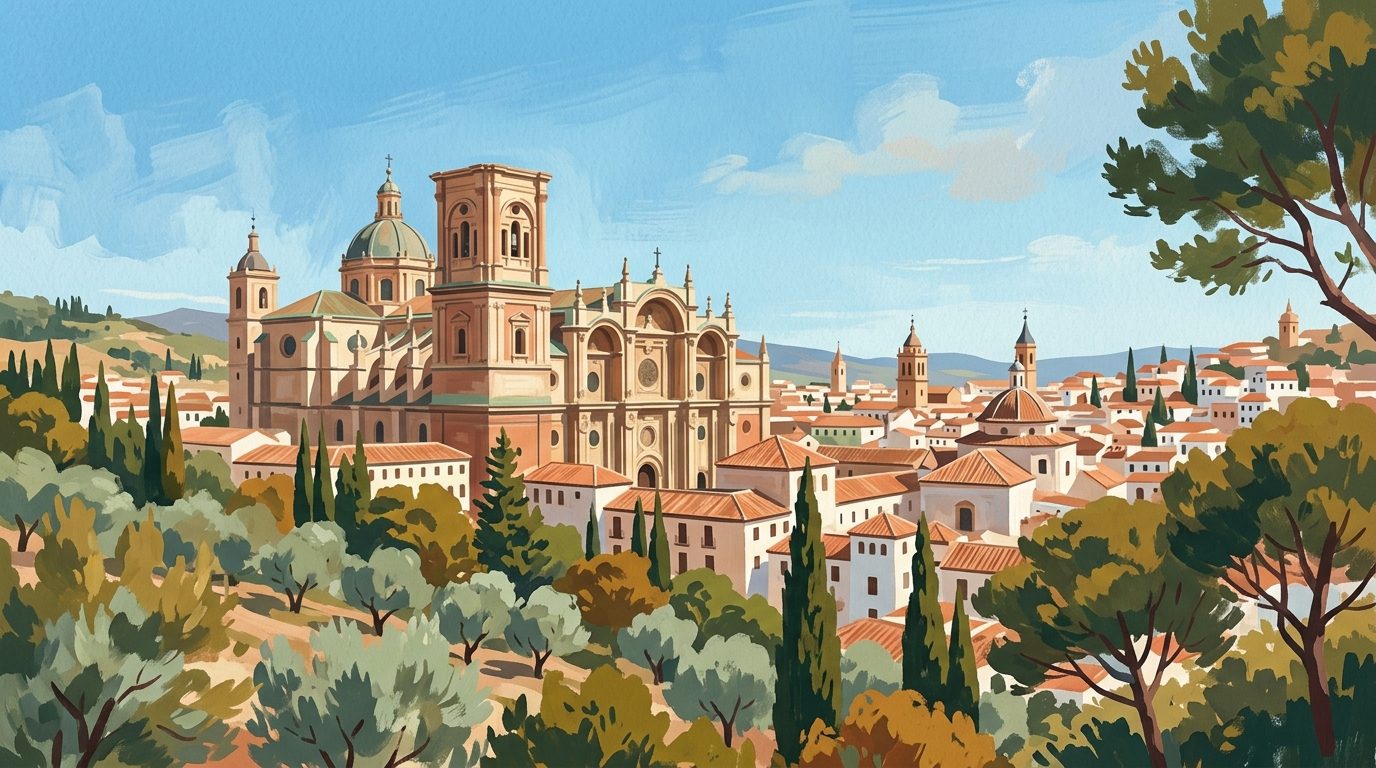
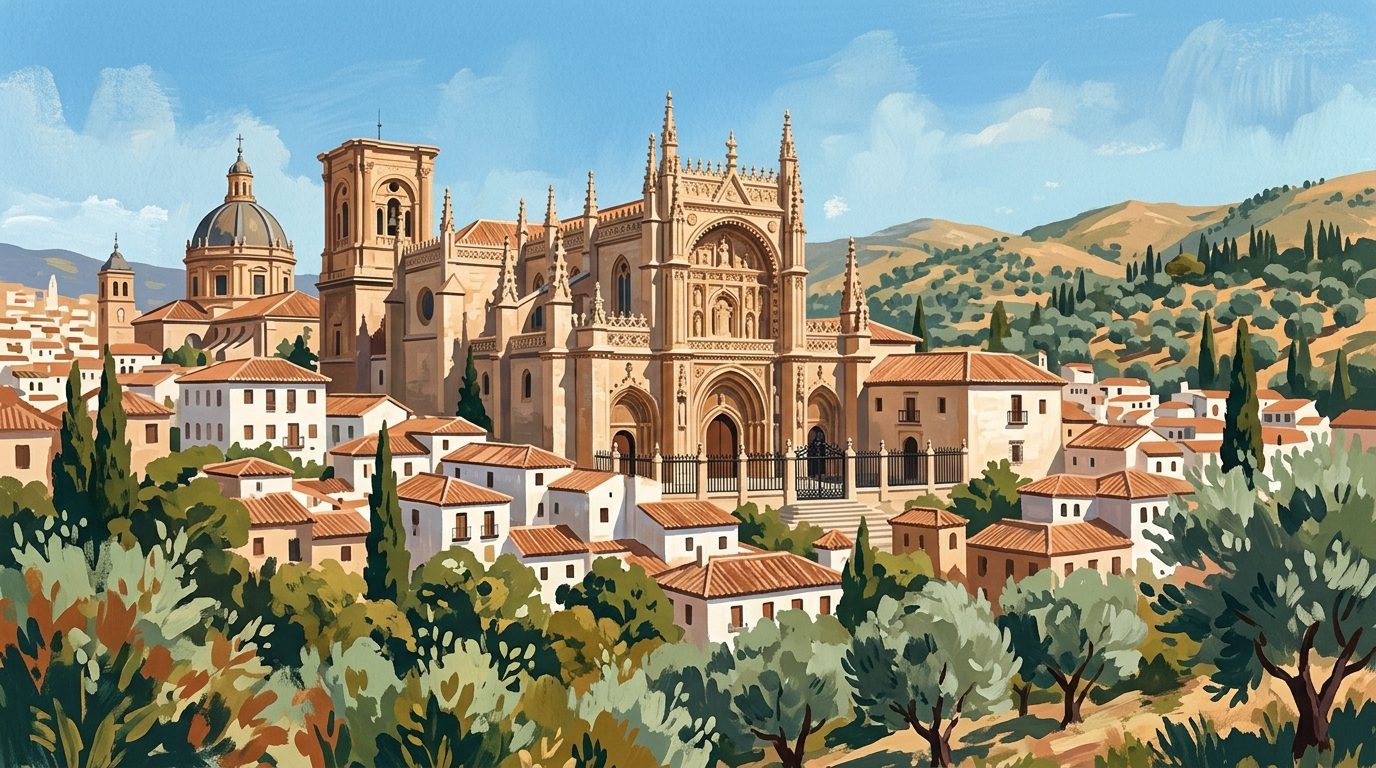
The lower city is where Granada’s modern life happens, but it is anchored by heavy history. The Cathedral of Granada is a colossal masterpiece of Spanish Renaissance style, though it was intended to be Gothic. Its sheer scale can be overwhelming, but the adjacent Capilla Real (Royal Chapel) is more intimate and historically significant, containing the tombs of the Catholic Monarchs, Isabella I and Ferdinand II. Nearby, the Alcaicería, once the great silk bazaar of the Nasrid era, still maintains its narrow alleyways, though today it leans heavily into selling spices and ceramics.
The centre is also the hub for the city’s famous shopping and socialising. Calle Navas is the traditional artery for tapas, though it can get crowded with tourists. For something more local, head towards the streets surrounding the Mercado de San Agustín. Here, you will find locals stopping for a quick caña (small beer) and a plate of grilled mushrooms or jamón de Trevélez. The Plaza de la Romanilla is a great spot to sit with a coffee and watch the world go by. Don’t miss the Corral del Carbón, the oldest monument from the Nasrid period and the only alhóndiga (corn exchange and inn) preserved in its entirety on the Iberian Peninsula.
Read the full Granada City Centre guide →
Realejo & Campo del Príncipe
Realejo was the city’s old Jewish quarter (the Garnata al-Yahud) and today it is perhaps the most relaxed and atmospheric neighbourhood for a long lunch. It lacks the steep climbs of the Albaicín but retains a maze-like charm. The neighbourhood has become an outdoor gallery for the street artist Raúl Ruiz, known as El Niño de las Pinturas; his evocative murals are tucked into corners and splashed across garage doors throughout the district. The heart of Realejo is the Campo del Príncipe, a large open square lined with terrace restaurants that fill up with local families on Sunday afternoons.
For a high-end dining experience, Realejo is home to Damasqueros (Calle Rosario, 1), where the tasting menus offer a contemporary take on Andalucían ingredients. If you prefer something more traditional, the bars along Calle Rosario and Calle San Matías serve excellent free tapas. A walk through Realejo should take you past the Convento de Santa Cruz la Real and up the Cuesta de Realejo. It is a neighbourhood that feels lived-in and creative, bridging the gap between the monumental centre and the historic hills. It is also the best place to find artisanal bakeries selling piononos: small, syrup-soaked sponge cakes topped with toasted cream, which originated in the nearby town of Santa Fe.
Read the full Realejo & Campo del Príncipe guide →
Eating & Drinking in Granada City
Granada is one of the last places in Spain where the tradition of the free tapa remains standard. Order a drink, be it a caña, a glass of local Vino de la Tierra, or a mosto (grape juice), and a plate of food will arrive without you asking for it. This isn't just a bowl of olives; it could be anything from carne en salsa (meat stew) to a generous portion of paella. For the best experience, avoid the restaurants with picture menus on the main plazas. Instead, find Bar Los Diamantes (Calle Navas, 28) for legendary fried fish, or Bodegas Castañeda (Calle Almireceros, 1) near the Cathedral for a tabla of cured meats and local cheeses in a room that hasn't changed in decades.
Beyond the tapas bars, the city’s culinary scene is evolving. For something refined, check out Faralá (Cuesta de Gomérez, 11) near the Alhambra, which focuses on local seasonal produce with great technical skill. If you need a break from the savoury, the teterías (tea houses) on Calle Calderería Nueva offer a nod to the city’s Moorish past with mint tea and honey-laden pastries. For a true local breakfast, head to a churrería like Cafetería Alhambra in Plaza de Bib-Rambla for thick chocolate and crispy tejeringos (the local style of churro).
Where to Stay
Choosing where to stay in Granada depends entirely on how much you enjoy walking up hills. For the most evocative experience, stay in a cármen hotel in the Albaicín, such as the Palacio de Santa Inés or Casa Morisca. These offer internal courtyards and often have stunning views of the Alhambra from their upper windows, but they require navigating steep, cobbled streets with luggage. If you prefer convenience, the area around Plaza Nueva or the Ayuntamiento (Town Hall) is central and flat, with options like the Hotel Casa 1800 providing a blend of historic architecture and modern comfort.
For those with a generous budget, the Parador de Granada is situated within the Alhambra grounds in a former 15th-century convent. It allows you to wander the gardens after the crowds have left. In Realejo, the Hospes Palacio de los Patos is a grand 19th-century palace with a sleek, minimalist interior for those seeking something more contemporary. Avoid staying in the very modern outskirts; you will miss the morning bells of the churches and the evening atmosphere that makes the city centre so special.
Getting There & Around
Granada Airport (GRX) is small and primarily handles domestic flights from Madrid and Barcelona, plus a few international routes. Most visitors arrive via the high-speed AVE train from Madrid (about 3.5 hours) or via bus from Málaga or Sevilla. The bus station is on the outskirts, but a short taxi or local bus ride will bring you to the centre. Within the city, your own feet are the best mode of transport. The historic areas are largely pedestrianised and the streets are too narrow for standard buses. Use the C30 and C32 red minibuses to get up the hills to the Alhambra and Albaicín, and use lines 4, 8, 11, 21, or 33 (check the line maps with Transportes Rober before travelling) for travelling along the main city arteries such as Gran Vía and Avenida de la Constitución.
Best Time to Visit
The ideal windows for visiting Granada are spring (May and June, including the Cruces de Mayo festival in early May) and autumn (October and November). During these months, the temperatures are comfortable for climbing the hills, and the gardens of the Generalife are either in full bloom or transitioning into rich autumnal colours. July and August can be punishingly hot, with temperatures often exceeding 40°C, while winter nights can drop below freezing. However, visiting in January or February offers the unique sight of the Alhambra against the brilliantly white, snow-capped peaks of the Sierra Nevada, and the city is far less crowded.