
Living guide
Understanding the Spanish School System in Andalucía
A comprehensive guide for expats navigating the Spanish school system in Andalucía, covering state, concertado, and private schools, crucial admission timelines, catchment rules, and essential paperwork.
By Dan · Updated 18 July 2026 · 8 min read
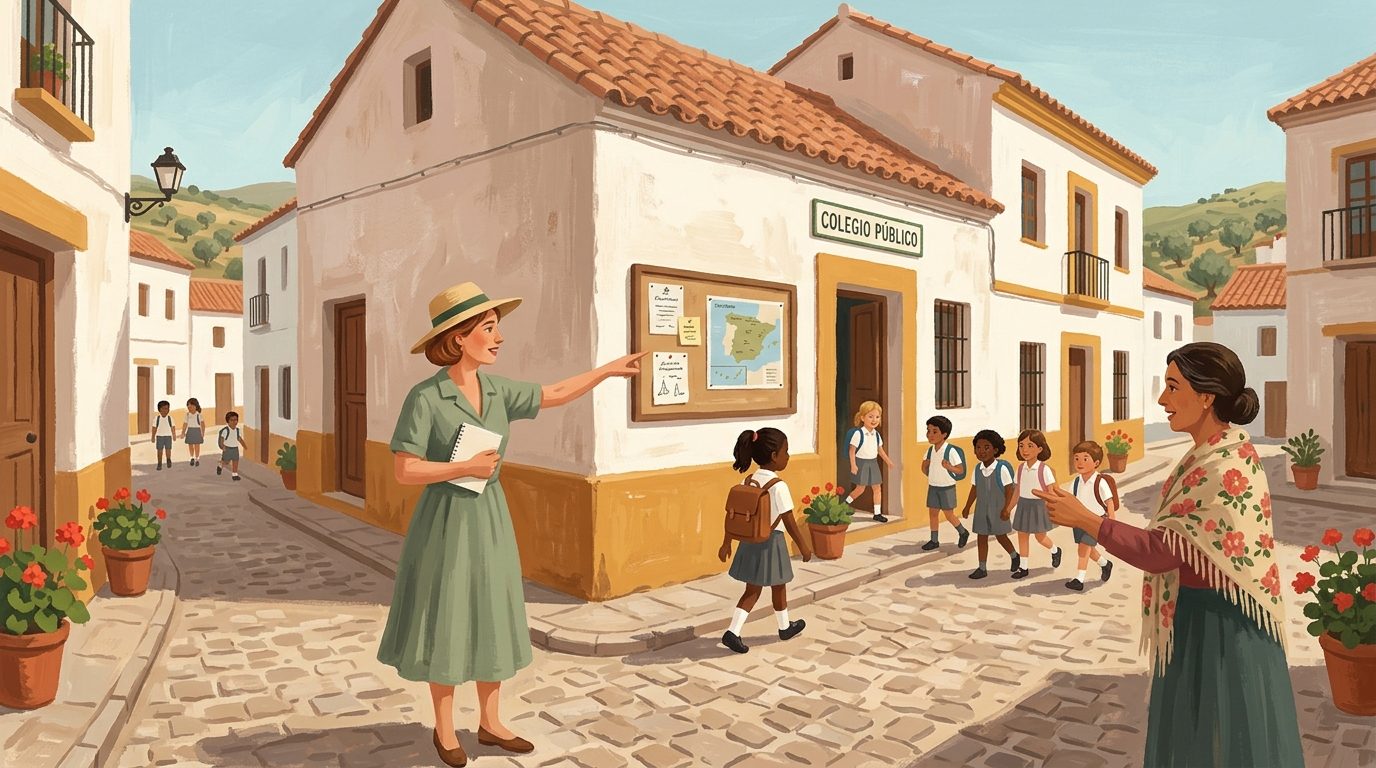
Choosing a school in Andalucía is a practical decision about language, catchment areas, daily commutes, wraparound services, and strict admission timelines. Use official Junta de Andalucía sources for current admission dates, and treat school-office advice as essential.
The Andalucían school system is highly structured but entirely manageable once you understand how school types, educational stages, and the admissions process intertwine. For families moving to Andalucía from abroad, securing a school place is often one of the first major bureaucratic hurdles. It is vital to start early. Gathering the correct paperwork, securing official translations, registering your address, and navigating the application windows almost always take longer than expected.
Understanding School Types in Andalucía
Schools in the region fall into three distinct categories. Your choice will dictate the admissions process you must follow, the fees you will pay, and the culture your child will experience.
- Colegios Públicos (State Schools): These are fully funded by the state, entirely secular, and free to attend. Admissions are strictly controlled by the Junta de Andalucía through a points-based system. While tuition is free, parents generally pay for stationery, backpacks, and sometimes specific textbooks, although Andalucía provides a "Cheque-Libro" (book voucher) system for primary and secondary students to cover core texts.
- Colegios Concertados (State-Subsidised Schools): These are privately run but receive government funding. They must follow the official Spanish curriculum and adhere to the same Junta admissions rules and points system as state schools. Many concertados in Andalucía are Catholic, though they accept students of all faiths. Education is technically free, but parents are usually expected to make a "voluntary" monthly contribution, and school uniforms are almost always mandatory.
- Colegios Privados or International Schools: These are entirely independent, fee-paying schools. They have their own admissions criteria, set their own term dates, and often teach international curricula such as the British GCSE/A-Level system or the International Baccalaureate. This is often the preferred route for older children needing educational continuity. If you plan to go down this route, read our dedicated guide to international schools.
The Spanish Education Stages
Spain operates a distinct educational timeline. Repeating a year (repetir curso) is a normal and common practice if a child does not pass enough core subjects, so do not panic if this is suggested. The system breaks down into the following stages:
- Educación Infantil (Ages 0 to 6): The first cycle (0 to 3 years) takes place in a guardería (nursery). It is not free, but heavily subsidised based on income. The second cycle (3 to 6 years) is preschool. While not legally compulsory, almost all Spanish children attend, and it is free in state schools.
- Educación Primaria (Ages 6 to 12): This is the beginning of compulsory education. It is divided into six years (cursos).
- Educación Secundaria Obligatoria or ESO (Ages 12 to 16): This is compulsory secondary education, consisting of four years. Graduating with a passing grade grants the "Graduado en ESO" certificate.
- Bachillerato (Ages 16 to 18): A non-compulsory, two-year academic programme required for university entry. Alternatively, students can opt for Formación Profesional (FP), which provides vocational training.
The Step-by-Step Admissions Process
If you are applying to a Público or Concertado school, you must navigate the Junta de Andalucía's annual admissions cycle. The process is strict and highly dependent on where you live.
- Secure your Padrón (January to February): School places are allocated on a points system. The highest points are awarded for living in the school's immediate catchment area (zona de influencia), followed by having siblings already at the school. To prove your address, you must be on the local town hall register. Securing your empadronamiento is the non-negotiable first step.
- Submit the Application (March): The application window for the next academic year strictly runs throughout March. You must list your preferred schools in order. You can submit the "Anexo III" form in person at your first-choice school or online via the Junta's Secretaría Virtual using a digital certificate.
- Check the Lists (April to May): Provisional lists of admitted students are published in April, followed by a window for appeals. Final lists are published in May.
- Formal Enrolment or Matrícula (June to July): Gaining a place in March does not mean you are finished. You must formally enrol (matricular) your child. For infant and primary schools, this happens in early June. For secondary schools, it happens in early July. Failure to complete this step means losing the place.
Navigating the Friction: Mid-Year Moves and Paperwork
Arriving in Andalucía outside the standard March admissions window changes everything. This is known as "escolarización extraordinaria". You can no longer pick and choose based on points. Instead, you must visit the local provincial education office (Delegación Territorial de Educación) or the municipal schooling commission. You will be allocated a place at a school that has a vacancy, which may not be the closest one to your home.
Paperwork is another major friction point. Spanish bureaucracy requires official identification. While children under 14 are not legally required to hold a DNI or NIE, schools will struggle to register them in the digital system (Séneca) without one. It is highly advisable to secure a NIE Number for your child as soon as possible. Furthermore, if your child is entering post-compulsory education (Bachillerato or Formación Profesional), their previous foreign qualifications must be officially validated (homologación). Admission to any year of compulsory education (Primary and ESO) is based on age and level, and does not require homologación, though you will need it later to be awarded the official Graduado en ESO certificate. This process requires apostilled and officially translated school records and can take several months to clear through the Ministry of Education in Madrid.
Complementary Services: Aula Matinal, Comedor, and Extraescolares
Wraparound care in Spanish state schools is excellent but strictly regulated. When you complete the formal matrícula in June or July, you must simultaneously apply for complementary services.
- Aula Matinal: Early morning drop-off, usually from 07:30 until the school day begins at 09:00.
- Comedor: The school dining room. The Junta describes the service as lasting up to two hours after the morning school day, typically 14:00 to 16:00. Places can be heavily oversubscribed. Priority is given to families where both parents can prove they work during school hours (you will need a certificate from your employer or proof of self-employment).
- Actividades Extraescolares: Subsidised after-school clubs (sports, languages, arts) running in the afternoon until 18:00, with Friday services usually ending at 16:00.
Language, Integration and Bilingual Schools
State schools offer an incredible environment for integration, but the first year can be difficult for non-Spanish speakers. Many schools in Andalucía are designated as "bilingual" (centros bilingües). Be aware that this does not mean the school operates identically to an English school. It usually means that two or three subjects, such as Science or Physical Education, are taught in English by Spanish teachers. The playground language and the core culture remain entirely Spanish.
To support foreign students, the Junta de Andalucía provides ATAL classes (Aulas Temporales de Adaptación Lingüística). These are pull-out Spanish support classes. The availability of ATAL teachers varies wildly depending on how many foreign students live in the municipality. If your child is older, supplementing their education with private tutors focused on learning Spanish during the first six months is highly recommended.
Common Mistakes and What Catches People Out
- Renting property before checking the catchment zones: A distance of two streets can put you in a completely different school zone, drastically reducing your points for your preferred school. Always check the official Junta zoning maps at the town hall before signing a lease.
- Assuming school lunch is guaranteed: Many expats expect a school canteen to be available to everyone. If you cannot prove that your working hours conflict with the 14:00 pick-up time, you will likely be denied a comedor place.
- Missing the June/July Matrícula window: Believing the process is finished once the admission lists are published in May is a frequent trap. The physical enrolment in June/July is a hard deadline.
- Expecting schools to handle translation: The school administration will speak Spanish. Any foreign medical records, vaccination histories, or academic transcripts must be provided in Spanish, ideally via a sworn translator (traductor jurado).
Frequently Asked Questions
What are the typical school hours in Andalucía?
State primary schools usually run from 09:00 to 14:00, Monday to Friday. Secondary schools (ESO and Bachillerato) usually begin earlier, running from 08:15 to 14:45. Afternoon classes are rare in state schools, unless children stay for extraescolares.
Do children wear uniforms?
In colegios públicos (state schools), uniforms are generally not worn, though children require specific tracksuits for PE. In colegios concertados and privados, uniforms are almost universally mandatory and must be purchased from designated local suppliers.
Is religion compulsory in Spanish schools?
No. Upon enrolment, parents choose between religious teaching options, such as Catholic Religion, and a non-religious attention or values alternative. Your child will be placed in the corresponding option.
What if my child has special educational needs (SEN)?
The Spanish system refers to this as NEAE (Necesidades Específicas de Apoyo Educativo). State schools have a designated SEN coordinator (PT, Pedagogía Terapéutica). If you are moving with a child who requires support, it is crucial to bring translated diagnostic reports and speak to the school's orientation team (Equipo de Orientación Educativa) before applying, as some schools are better resourced for specific needs than others.
Official Sources and Checks
Always verify dates and procedures through official channels. The definitive sources for Andalucían schooling are listed below. Please note that the information provided in this guide is for general orientation. For specific legal, residency, or educational advice, always consult the responsible authority or a qualified professional.
- The Junta school admissions portals: Escolarización and Secretaría Virtual
- The official Junta Ministry of Education and Vocational Training
- The regional school calendar (updated annually per province)
- Information on complementary services (comedor, aula matinal)
- The national framework on the BOE (Boletín Oficial del Estado)
- The national Ministry of Education portal for homologación of foreign studies
Summary Checklist
- Decide between público, concertado, or private schooling based on your budget, location, and the child's age.
- Register on the Padrón as early as possible to secure your catchment area points.
- Observe the strict March application window and the June/July formal enrolment deadlines.
- Apply simultaneously for morning clubs, lunches, and after-school care during the summer enrolment phase.
- Prepare all documentation, including birth certificates, vaccination records, and NIEs, translating them where necessary.
- Keep an open dialogue with the school secretary; their guidance is invaluable for navigating local quirks.
Last reviewed: 18 July 2026 · Editorial policy
Related guides

International Schools in Andalucía: A Practical Enrolment Guide
A practical guide to international schools in Andalucía. Compare British, IB and bilingual options, understand the true costs, check official accreditations, and navigate the paperwork and university access routes.
7 min read
A Practical Guide to Learning Spanish in Andalucía
A deep, practical guide to learning Spanish in Andalucía: navigating EOI enrolments, adult education, tuning your ear to the local accent, and overcoming common expat learning traps.
8 min read
A Practical Guide to the TIE Residency Card in Andalucía
A comprehensive, practical guide to getting your TIE residency card in Andalucía, covering the cita previa system, Modelo 790-012 fees, document checks, and real-world friction points.
8 min read

How to Exchange Your Driving Licence for a Spanish One in Andalucía
A comprehensive guide to exchanging your foreign driving licence in Andalucía. Learn about DGT appointments, the medical test, UK licence rules, bilateral agreements, and the common mistakes that catch expats out.
8 min read
The Digital Nomad Visa for Spain: A Practical Guide for Remote Workers
A comprehensive guide to Spain’s digital nomad visa for those moving to Andalucía. Covering step-by-step applications, tax reality checks, social security hurdles, and avoiding common local pitfalls.
7 min read
Long-Term Renting in Andalucía: A Practical Guide
A deep dive into long-term renting in Andalucía. We explain the LAU, the crucial difference between 11-month and habitual contracts, how to handle deposits (AVRA), the 2023 Housing Law on agency fees, and exactly what to watch out for before signing.
9 min read
More guides

Navigating Spanish Bureaucracy: A Practical Survival Guide
A practical survival guide to Spanish bureaucracy in Andalucía: official sources, appointments, documents, digital certificates, translations and when to use a gestor.
7 min read

A Practical Guide to Working Remotely from Andalucía
A comprehensive guide to legally and practically working remotely from Andalucía, covering digital nomad visas, tax residency, employment structures, internet setup, and navigating Spanish bureaucracy.
7 min read

Recycling and Waste Management in Andalucía: A Practical Guide
A complete guide to recycling and waste in Andalucía. Learn how to use the colour-coded bins, access clean points, dispose of bulky items legally, and navigate local rubbish collection taxes.
8 min read

Registering a Foreign Vehicle in Spain: A Practical Guide
A comprehensive guide to registering a foreign vehicle in Andalucía. Learn the step-by-step process for ITV inspections, DGT paperwork, tax exemptions, customs rules, and the real-world friction to avoid.
8 min read

Setting Up Utilities in Andalucía: A Practical Guide
A complete guide to setting up utilities in Andalucía: navigating electricity (potencia and boletines), local water monopolies, gas bottles, internet contracts, and how to avoid inheriting previous debts.
8 min read
Retiring to Andalucía: A Practical Guide to Residency, Healthcare, and Finance
Retiring to Andalucía requires careful planning across residency, healthcare, and tax. This practical guide covers non-lucrative visas, the TIE process, S1 healthcare registration, pensions, and common administrative hurdles.
8 min read
Having a Baby in Andalucía: A Practical Guide to Maternity and Paperwork
Navigating pregnancy and childbirth in southern Spain involves managing a high-quality medical system alongside a complex administrative process.
8 min read
Building a Sustainable Life and Overcoming Homesickness in Andalucía
Settling in Andalucía requires more than just sunshine and paperwork. Learn how to navigate culture shock, build sustainable local routines, overcome homesickness, and manage seasonal changes in southern Spain.
7 min read
How to Register and Run a Holiday Rental in Andalucía
A comprehensive guide to legally registering and running a holiday rental in Andalucía, covering new VFT rules, town hall limits, guest records, and tax obligations.
7 min read
Newsletter
More stories from Andalucía
Weekly notes, seasonal picks, and the next guides worth bookmarking.