
Living guide
Recycling and Waste Management in Andalucía: A Practical Guide
A complete guide to recycling and waste in Andalucía. Learn how to use the colour-coded bins, access clean points, dispose of bulky items legally, and navigate local rubbish collection taxes.
By Dan · Updated 14 July 2026 · 8 min read
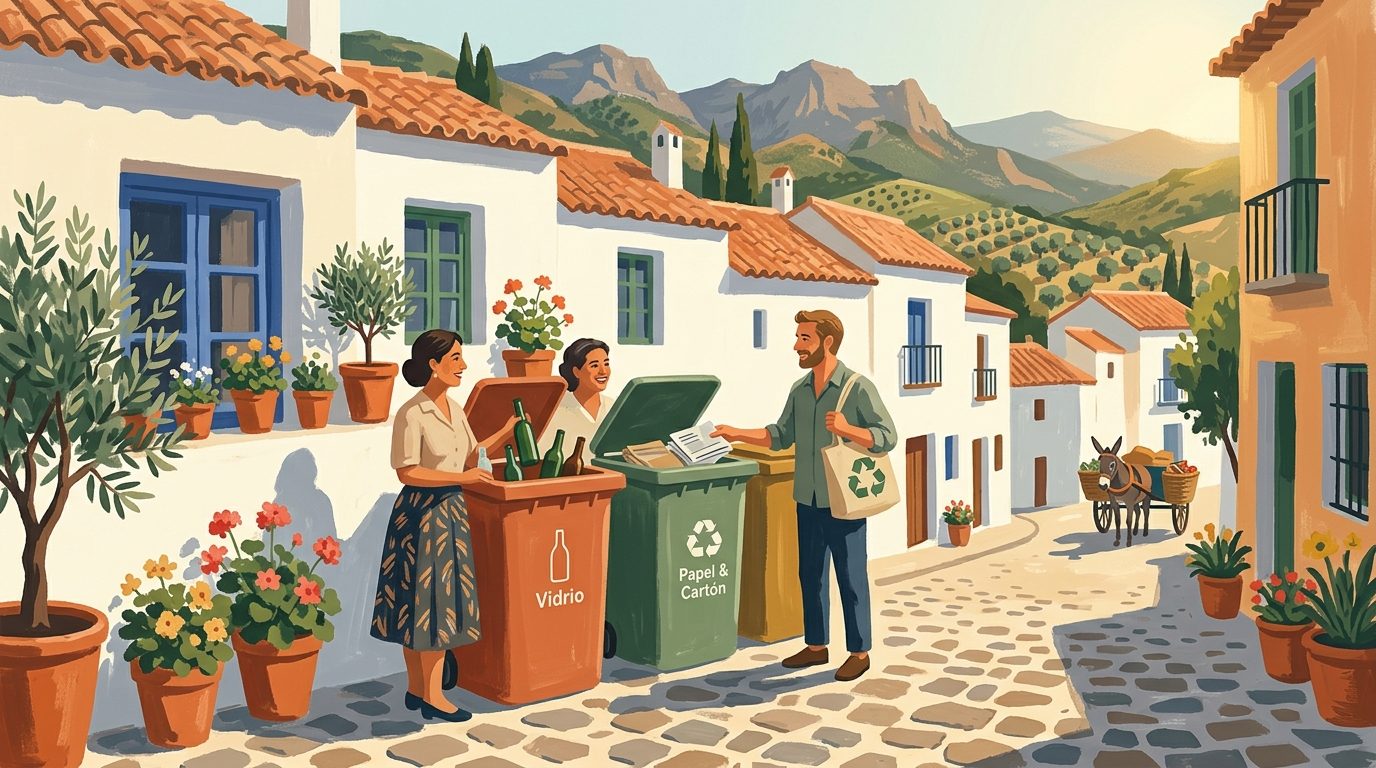
Recycling in Andalucía is largely straightforward once you understand your local containers, but collection schedules, bulky waste rules and clean point access operate on a strictly municipal level rather than a universal regional system.
For most new arrivals, the biggest initial change is the shift from individual door-to-door wheelie bins to large communal street containers. While the underlying colour-coded sorting system is broadly familiar across Spain, the daily practicalities vary depending on your town, whether you live in an urbanisation, or if you are located in a rural area. Understanding these local variations is crucial when deciding where to live in Andalucía, as rural properties may require you to drive your rubbish to a central drop-off point, while city dwellers usually have bins within a short walk.
Paying for waste: the Tasa de Basura
Rubbish collection is not funded through general income tax. Instead, residents pay a specific municipal tax known as the tasa de basura. This forms a routine part of the cost of living in Andalucía. The way you are billed depends entirely on your municipality. In some towns, the rubbish tax is added directly to your bi-monthly water bill. In others, it is collected as a separate annual or bi-annual bill by the provincial tax collection agency, such as the Patronato de Recaudación in Málaga or SUMA in other regions. If you rent a property, check your tenancy agreement to confirm whether the landlord or the tenant is responsible for paying this fee.
The common container colours
The bins on your street are designated for specific materials. Putting the wrong items into these containers slows down the recycling process and can result in the entire load being sent to landfill.
- Yellow (Envases): This is strictly for packaging. It accepts plastic bottles, yoghurt pots, tin cans, drinks cartons (tetra briks), aluminium foil and plastic wrap. It is not for general plastic items like broken toys, Tupperware or plastic chairs.
- Blue (Papel y Cartón): Paper and cardboard. Cardboard boxes must be flattened to save space. Do not include greasy pizza boxes, used paper napkins or food-contaminated paper, as the grease ruins the recycling process.
- Green (Vidrio): Glass bottles and jars only. Remove all metal or plastic lids and put them in the yellow bin. Never put drinking glasses, mirrors, window panes, lightbulbs or ceramics into the green bin, as they melt at different temperatures to standard container glass.
- Brown (Orgánico): Organic and compostable waste. This is for food scraps, fruit peelings, coffee grounds and soiled paper napkins. This bin is still being rolled out across various Andalucían municipalities.
- Grey or dark green (Restos): Residual household waste that does not fit into any other recycling stream. This includes floor sweepings, nappies, sanitary products, heavily soiled packaging and bagged pet waste.
Building a home system
The easiest way to manage waste in Andalucía is to sort it before you leave the house. Following a few practical steps will make the daily disposal routine much smoother.
- Set up separate kitchen bins: Dedicate space under your sink or in a utility room for separate bags. Having small dedicated containers for plastic, paper, glass and general waste prevents the need to sort items on the street.
- Manage the summer heat: Andalucía gets incredibly hot in the summer. Organic and residual waste will begin to smell very quickly. Plan to take your general rubbish out daily, ideally in the late evening.
- Bottle your cooking oil: Never pour used cooking oil down the sink, as it destroys local water treatment plants. Let the oil cool, pour it into an empty plastic bottle, seal it tightly, and drop it into one of the designated orange street bins or take it to a local clean point.
- Learn the local timetable: Many town halls have strict rules stating that residual waste (the grey bin) can only be deposited between 20:00 and 23:00 during the summer months. This prevents the streets from smelling during the heat of the day. Check your local ayuntamiento website for exact hours.
Punto limpio and special waste
A punto limpio (clean point) is a municipal facility designed to handle items that should never go into ordinary street containers. This includes small electrical appliances, batteries, paint, engine oil, household chemicals, fluorescent tubes and scrap metal.
Using a clean point requires a little preparation. First, find your nearest facility on your town hall website. Second, check their opening hours, as many close for a long lunch or do not open on Sundays. Third, be aware that access rules vary. Many facilities require you to show your TIE or passport, and some demand proof that you are registered on the local padrón to prove you are a resident of that specific municipality. Commercial vehicles are often turned away unless they have specific business permits.
In larger cities, you may also see a punto limpio móvil. This is a specialised lorry that parks in different neighbourhoods on set days of the week to collect small electronics, batteries and lightbulbs from pedestrians.
Bulky items and furniture
Disposing of mattresses, sofas and large white goods requires following local protocols. You cannot simply leave them next to the street bins. Most municipalities offer a free collection service for bulky items (known as muebles y enseres), but you must use the correct system.
Many towns operate a booking system. You must call the town hall or use an app to request a cita previa (appointment). They will tell you exactly which day and at what time to leave the item by your nearest bins. Other municipalities have a designated day. For example, they might dictate that furniture can only be left beside the bins on Thursdays after 20:00. Leaving furniture on the street outside of these approved methods is considered fly-tipping and carries substantial fines.
DIY, rubble and renovation waste
If you are purchasing property in Andalucía and planning renovations, you must handle construction waste legally. Construction debris, broken tiles, cement bags and sanitaryware are classified as escombros. They are strictly prohibited from entering standard household bins.
For minor DIY tasks, your local clean point may accept a small number of rubble sacks per day, provided you drop them off yourself. For larger works, you must hire a licensed skip (a cuba). Placing a skip on a public road always requires a minor works licence (licencia de obra menor) and a street occupation permit from your town hall. Always check the rules before starting any demolition.
Common mistakes and what catches people out
- Throwing glass away late at night: Dropping heavy glass bottles into an empty metal container makes a tremendous noise. Doing this at 2:00 in the morning will anger your neighbours. Dispose of glass during standard daytime hours.
- Misunderstanding the yellow bin: Placing plastic toys, buckets or garden chairs into the yellow bin is one of the most common errors. The yellow bin is only for packaging.
- Dumping garden waste: Prunings, branches and large amounts of grass clippings (restos de poda) belong at the clean point, not in the general waste bin.
- Leaving cardboard unflattened: Propping whole cardboard boxes next to an empty blue bin is considered illegal dumping. If the bin is genuinely full, take the cardboard home or to another bin.
- Assuming rural and urban rules are identical: A countryside property (campo) often relies on a shared collection point situated at the junction of a main road. You are fully responsible for transporting your waste to that point.
Frequently asked questions (FAQ)
Can I throw my rubbish away at any time of day?
You can usually use the recycling bins (yellow, blue and green) at any time during the day. However, most municipalities have strict rules for the residual (grey) and organic (brown) bins. During the summer, you are often only permitted to deposit general waste between 20:00 and 23:00 to prevent bad odours and pest problems in the heat.
Why are some street bins locked?
Some towns and modern urbanisations use smart bins to track usage and encourage recycling. These bins require a magnetic municipal card or a smartphone app to open. If your town uses this system, you must register at the town hall to receive your access card.
What should I do with old clothing and shoes?
Do not put clothing in the standard recycling or general waste bins. Look for designated charity bins located around your town. These are often brightly coloured (pink, white or green) and are operated by registered charities such as Cáritas or Humana. Alternatively, the municipal clean point will have a dedicated clothing container.
Can I burn my garden waste instead?
Open fires and agricultural burning are strictly controlled in Andalucía due to the extreme risk of forest fires. From early June to mid-October, all outdoor burning is entirely banned. Outside of this high-risk season, you must still apply for a burning permit from the local environmental office or town hall. It is always safer to take garden waste to the clean point.
First-week waste checklist
During your first week in a new property, walk around your neighbourhood and photograph the nearest container points. Note which colours are available, as you may need to walk slightly further for a glass or paper bin. Ask your neighbours or your community administrator about the accepted protocol for bulky items and where the nearest cooking oil container is located.
For renters, clarify who handles the disposal of old furniture or broken appliances before you sign the inventory. For buyers, include waste disposal logistics in your initial property checks, especially if the house is rural, situated on a steep hillside, or located inside a historic centre where collection lorries cannot easily access the streets.
Official and provider checks
To verify local regulations, use the Junta de Andalucía environment portal. For national packaging recycling guidance, visit Ecoembes, and for glass recycling, refer to Ecovidrio. Many Andalucían towns also use the Línea Verde application for reporting full bins or requesting furniture collection.
Always check your specific municipal website for the most accurate local timetables, such as the official portals for Málaga, Sevilla, Granada and Cádiz.
Summary
- Container colours are standard across the region, but disposal timetables are strictly local.
- General waste should often only be deposited late in the evening during the summer months.
- Use a punto limpio for electronics, hazardous liquids, batteries and large volumes of garden waste.
- Never abandon furniture on the street. Always book a municipal collection or use the designated local drop-off day.
- DIY rubble requires authorised disposal and cannot be placed in household bins.
- Check your local town hall website for specific rules on the rubbish tax and smart-bin access.
Last reviewed: 14 July 2026 · Editorial policy
Related guides

A Practical Guide to the TIE Residency Card in Andalucía
A comprehensive, practical guide to getting your TIE residency card in Andalucía, covering the cita previa system, Modelo 790-012 fees, document checks, and real-world friction points.
8 min read

How to Exchange Your Driving Licence for a Spanish One in Andalucía
A comprehensive guide to exchanging your foreign driving licence in Andalucía. Learn about DGT appointments, the medical test, UK licence rules, bilateral agreements, and the common mistakes that catch expats out.
8 min read

The Digital Nomad Visa for Spain: A Practical Guide for Remote Workers
A comprehensive guide to Spain’s digital nomad visa for those moving to Andalucía. Covering step-by-step applications, tax reality checks, social security hurdles, and avoiding common local pitfalls.
7 min read

Long-Term Renting in Andalucía: A Practical Guide
A deep dive into long-term renting in Andalucía. We explain the LAU, the crucial difference between 11-month and habitual contracts, how to handle deposits (AVRA), the 2023 Housing Law on agency fees, and exactly what to watch out for before signing.
9 min read

Tax Obligations for Expats in Spain: A Practical Guide
A practical guide to tax obligations for expats in Andalucía, covering tax residency rules, resident and non-resident filings, the Modelo 720 asset declaration, and essential friction points to discuss with an adviser.
8 min read

Moving to Andalucía: A Practical Relocation Guide
A practical roadmap for moving to Andalucía, covering visas, the padrón, the cita previa system, digital certificates, and the exact order to tackle your post-arrival paperwork.
7 min read
More guides
Navigating Spanish Bureaucracy: A Practical Survival Guide
A practical survival guide to Spanish bureaucracy in Andalucía: official sources, appointments, documents, digital certificates, translations and when to use a gestor.
7 min read

Understanding the Spanish School System in Andalucía
A comprehensive guide for expats navigating the Spanish school system in Andalucía, covering state, concertado, and private schools, crucial admission timelines, catchment rules, and essential paperwork.
8 min read

A Practical Guide to Working Remotely from Andalucía
A comprehensive guide to legally and practically working remotely from Andalucía, covering digital nomad visas, tax residency, employment structures, internet setup, and navigating Spanish bureaucracy.
7 min read

Registering a Foreign Vehicle in Spain: A Practical Guide
A comprehensive guide to registering a foreign vehicle in Andalucía. Learn the step-by-step process for ITV inspections, DGT paperwork, tax exemptions, customs rules, and the real-world friction to avoid.
8 min read
Setting Up Utilities in Andalucía: A Practical Guide
A complete guide to setting up utilities in Andalucía: navigating electricity (potencia and boletines), local water monopolies, gas bottles, internet contracts, and how to avoid inheriting previous debts.
8 min read

Retiring to Andalucía: A Practical Guide to Residency, Healthcare, and Finance
Retiring to Andalucía requires careful planning across residency, healthcare, and tax. This practical guide covers non-lucrative visas, the TIE process, S1 healthcare registration, pensions, and common administrative hurdles.
8 min read

Having a Baby in Andalucía: A Practical Guide to Maternity and Paperwork
Navigating pregnancy and childbirth in southern Spain involves managing a high-quality medical system alongside a complex administrative process.
8 min read
Building a Sustainable Life and Overcoming Homesickness in Andalucía
Settling in Andalucía requires more than just sunshine and paperwork. Learn how to navigate culture shock, build sustainable local routines, overcome homesickness, and manage seasonal changes in southern Spain.
7 min read
How to Register and Run a Holiday Rental in Andalucía
A comprehensive guide to legally registering and running a holiday rental in Andalucía, covering new VFT rules, town hall limits, guest records, and tax obligations.
7 min read
Newsletter
More stories from Andalucía
Weekly notes, seasonal picks, and the next guides worth bookmarking.