Ronda is a city that seems to hang between heaven and earth, defined by a massive chasm that separates its medieval soul from its 18th-century expansion. It is a place where the mountain air meets a deeply layered heritage of bullfighters, outlaws, and poets.
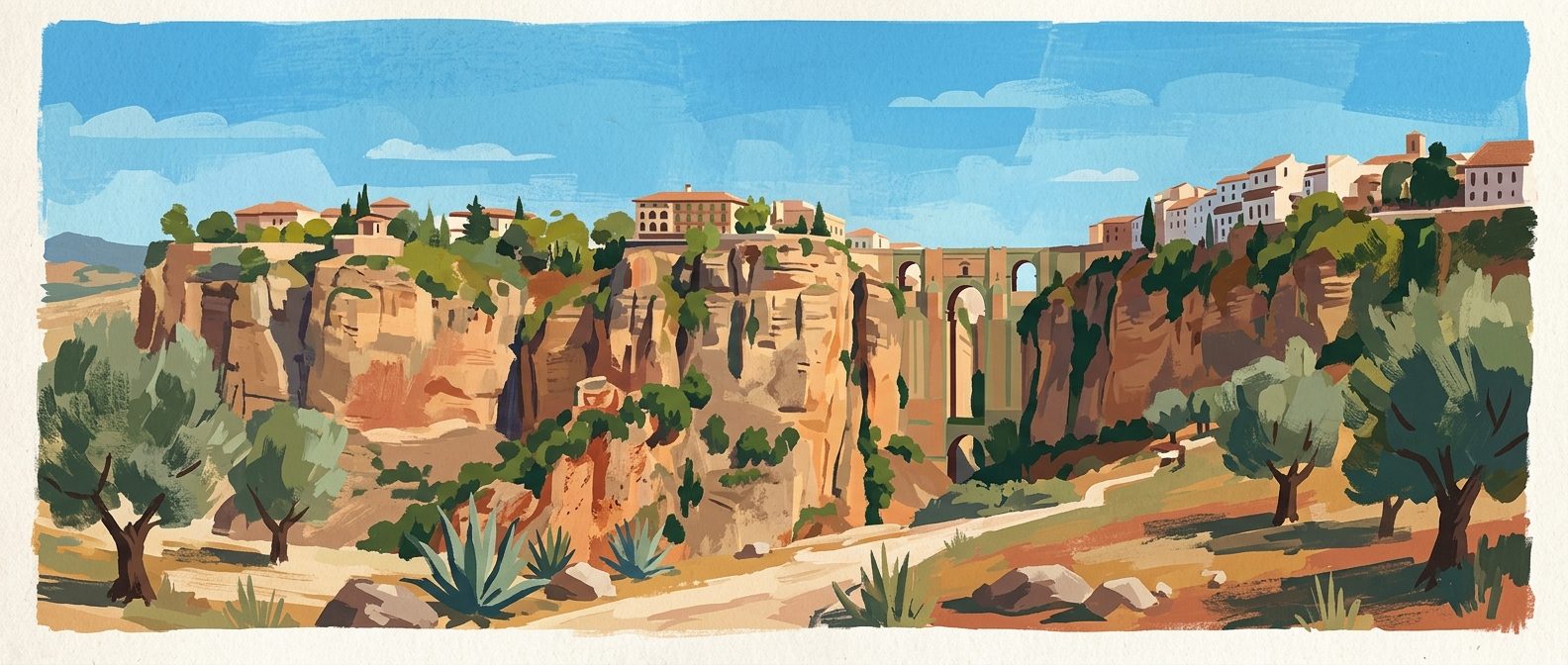
Perched precariously on a limestone plateau in the Serranía de Ronda, this is one of Andalucía’s most photographed locations. While it is technically located within the inland reach of the Málaga province, its proximity to the coast makes it a favoured day trip for those staying in the Costa del Sol Occidental. The city is famously split into two parts: La Ciudad, the ancient Moorish quarter, and El Mercadillo, the newer 18th-century town. These two halves are bridged by the staggering Puente Nuevo, an architectural feat that drops 120 metres into the depths of the El Tajo gorge.
Walking through Ronda feels like stepping through different eras of Spanish identity. From the quiet, winding alleys of the old town to the grand Neoclassical structures of the Enlightenment, every corner offers a different perspective on how this city has survived its dramatic geography. Ronda provides an experience that is as much about atmosphere as it is about landmarks.
What to See & Do
Puente Nuevo and the El Tajo Gorge
The Puente Nuevo (New Bridge) is the defining image of Ronda. Completed in 1793 after 34 years of construction, it replaced a previous structure that had tragically collapsed. The bridge is not just a crossing; it is a massive stone lung containing a chamber above the central arch that once served as a prison. You can visit the Puente Nuevo Interpretation Centre inside this chamber for €2.50 to learn about the bridge’s history and see the sheer drop from a unique vantage point.
To truly appreciate the scale of the bridge, follow the Camino de los Molinos. This path leads down into the valley floor, offering the famous view looking back up at the golden stone arches and the white houses of Ronda clinging to the cliff edge. It is a steep walk back up, but the perspective on the 120-metre-deep El Tajo gorge is unmatched.
The Plaza de Toros de Ronda
Ronda is widely considered the cradle of modern bullfighting. The Plaza de Toros, built in 1785 by José Martín de Aldehuela (the same architect behind the Puente Nuevo), is one of the oldest and most beautiful in Spain. Unlike the concrete arenas found elsewhere, this bullring is constructed entirely from golden sandstone with a double gallery of Tuscan columns supporting the roof.
Even if you have no interest in the sport itself, the site is worth visiting for its Neoclassical architecture and the Taurino Museum. The museum details the lives of the Romero and Ordóñez families, the two dynasties that defined the "Rondeño" style of bullfighting. Note that the arena currently undergoes periodic consolidation work, so some areas may have limited access, but the museum and the main ring remain open to visitors.
The Arab Baths (Baños Árabes)
Located in the old San Miguel quarter, these are arguably the best-preserved Islamic baths on the Iberian Peninsula. Built in the 13th and 14th centuries, they used a sophisticated hydraulic system to draw water from the nearby river. The most striking feature is the roof, which is pierced by star-shaped vents that created a celestial light effect for bathers below. Walking through the cold, warm, and hot rooms offers a tranquil look into the city’s Moorish past, far removed from the busy squares above.
La Casa del Rey Moro and the Water Mine
Despite the name, the House of the Moorish King is an 18th-century palace, though its secret is much older. The palace gardens, designed by Jean-Claude Forestier, lead to "La Mina" (The Mine). This is a 14th-century military installation consisting of roughly 231 steps carved directly into the rock. During the Christian sieges of the city, Christian captives were forced to carry water skins up these dark, damp stairs to supply the defenders above. Today, you can descend the slippery steps to reach the river at the very bottom of the gorge.
Bandit Heritage and the Serranía
The rugged mountains surrounding Ronda were once the primary haunt of Andalucían bandoleros (bandits). These outlaws were romanticised by 19th-century travellers for their defiance of central authority and their knowledge of the mountain passes. While the local Museo del Bandolero has moved to the village of El Borge, its heritage is still felt in the city's folklore and the rough-hewn landscape that once sheltered them. The nearby Alameda del Tajo park offers wide balconies where you can look out over the Serranía de Ronda and imagine the difficult terrain these figures navigated.
Practical Information
Getting There: If you are driving from the Costa del Sol, the A-397 from Marbella is the most direct route. It is a stunning, winding road that takes about an hour but requires care due to its steep curves. Alternatively, buses run frequently from Málaga and Marbella. Ronda is also accessible by train, with a station located in the newer part of town, about a 15-minute walk from the bridge.
Parking: Driving into the old town is not recommended as the streets are exceptionally narrow and many are restricted to residents. Instead, use the large underground car parks such as Parking Martínez Astein or Parking Plaza del Socorro. If you prefer free parking, look for spaces near the train station or the public swimming pool (Piscina Municipal), though these fill up early in the day.
Ticket Prices and Opening Times:
- Plaza de Toros: €9.00 (General), €10.50 (with audio guide). Open daily from 10:00, closing between 18:00 and 20:00 depending on the season (check the official website before travelling).
- Arab Baths: €4.50. Open Mon to Fri 10:00 to 19:00, Sat and Sun 10:00 to 15:00. (Note: Hours often vary by season; check the Turismo de Ronda website before travelling). Free entry for EU citizens on Tuesdays from 15:00.
- Casa del Rey Moro (Mine and Gardens): €10.00. Open daily 10:00 to 20:00 (later in summer). The house itself is closed for repairs.
- Mondragón Palace (Municipal Museum): €4.00. Features archaeology and lovely patio gardens.
Where to Eat Nearby
For an unconventional dining experience, Casa Maria in the Plaza de la Ciudad is a local favourite. There is no physical menu; the staff simply ask what you dislike and then bring out a series of seasonal, impeccably prepared dishes. It is a personal and high-quality introduction to Serranía flavours. For something more contemporary, Tragá, located near the bullring, offers modern interpretations of traditional tapas in a sleek setting. Their focus on local ingredients from the Ronda mountains, such as Payoyo cheese and Iberian pork, makes it an excellent choice for a refined lunch. If you want a quick bite with a view, many smaller bars along Calle Tenorio offer simpler fare overlooking the gorge.
Where to Stay
The Parador de Ronda is the most iconic choice, situated in the former town hall right next to the Puente Nuevo. Many of its rooms feature balconies that hang directly over the cliff edge. For a more historic, literary connection, the Hotel Catalonia Reina Victoria is located on the edge of the plateau and was once the residence of the poet Rainer Maria Rilke. It offers expansive gardens and a spa, providing a quieter retreat away from the main tourist thoroughfares.