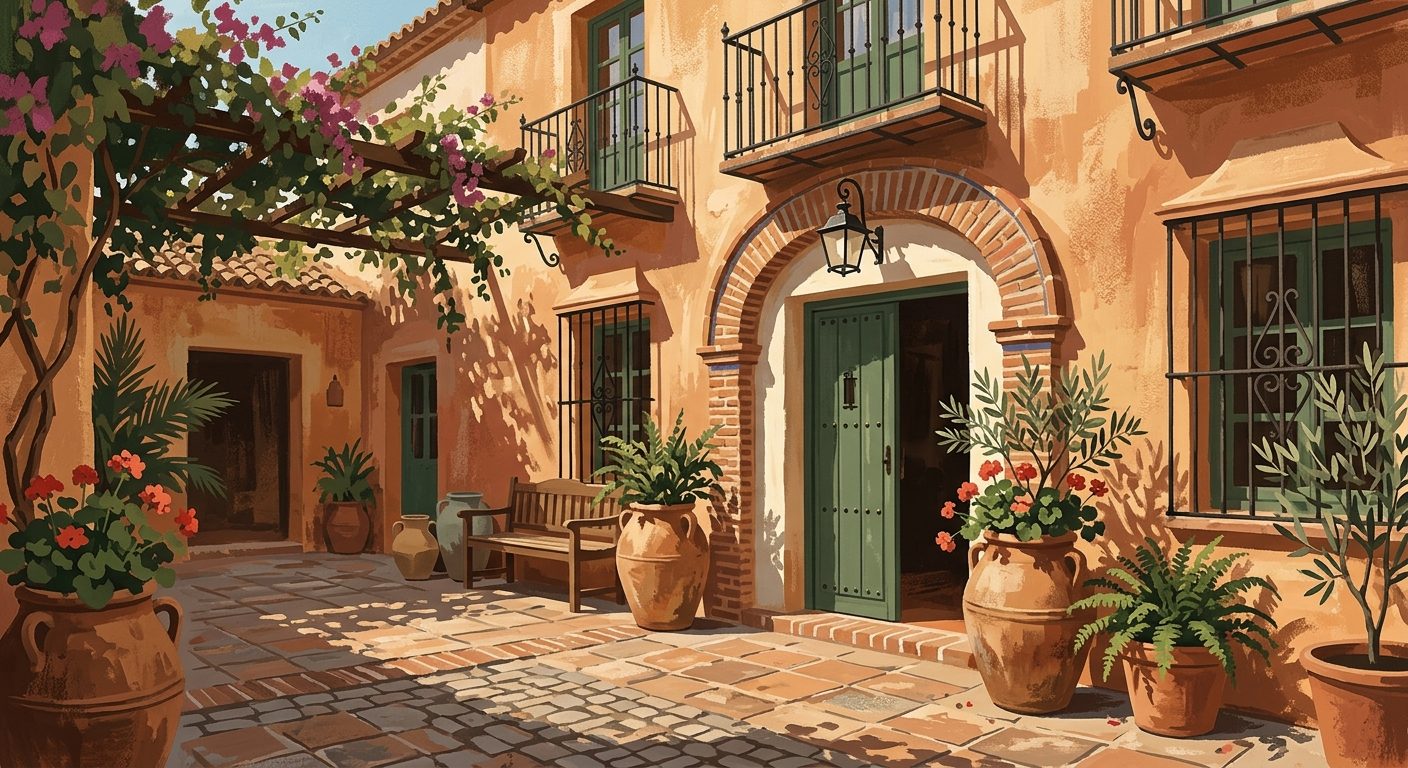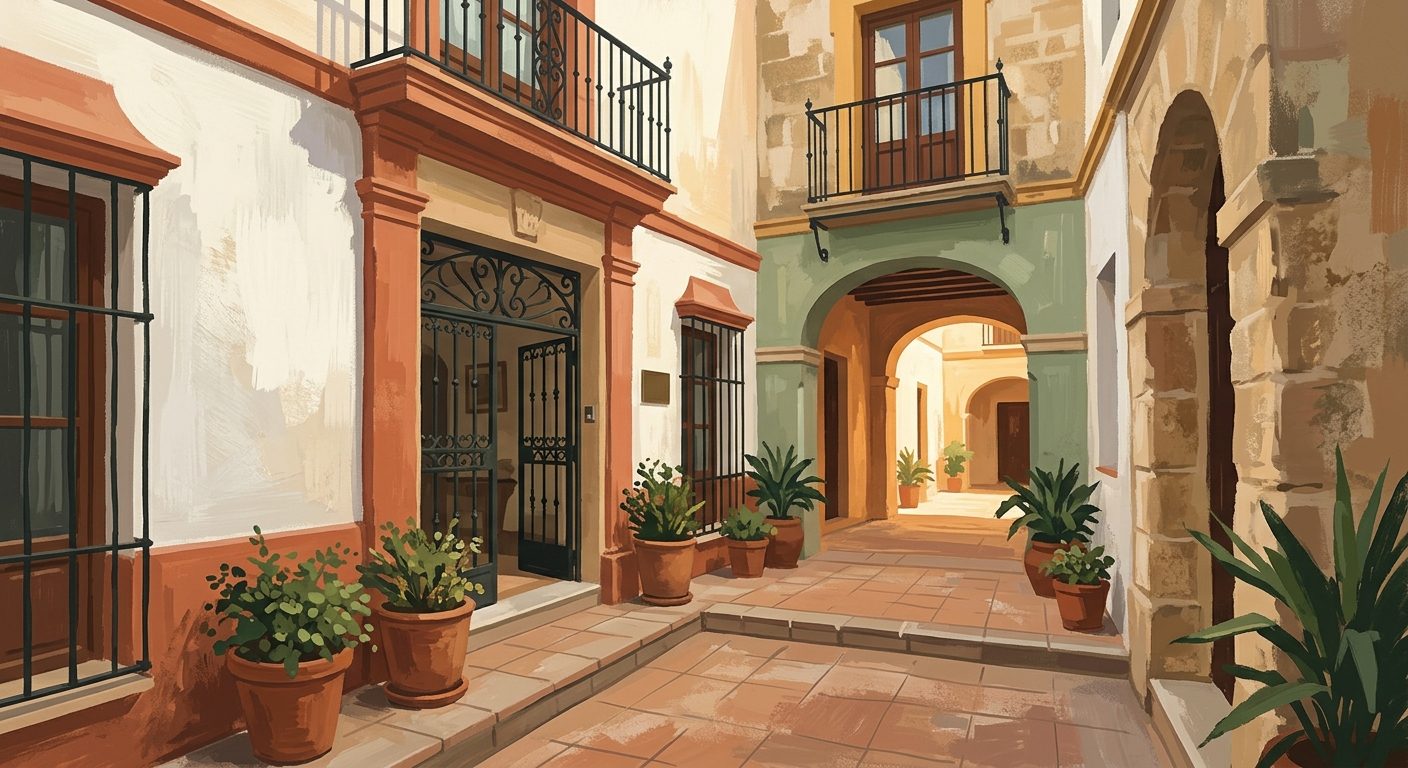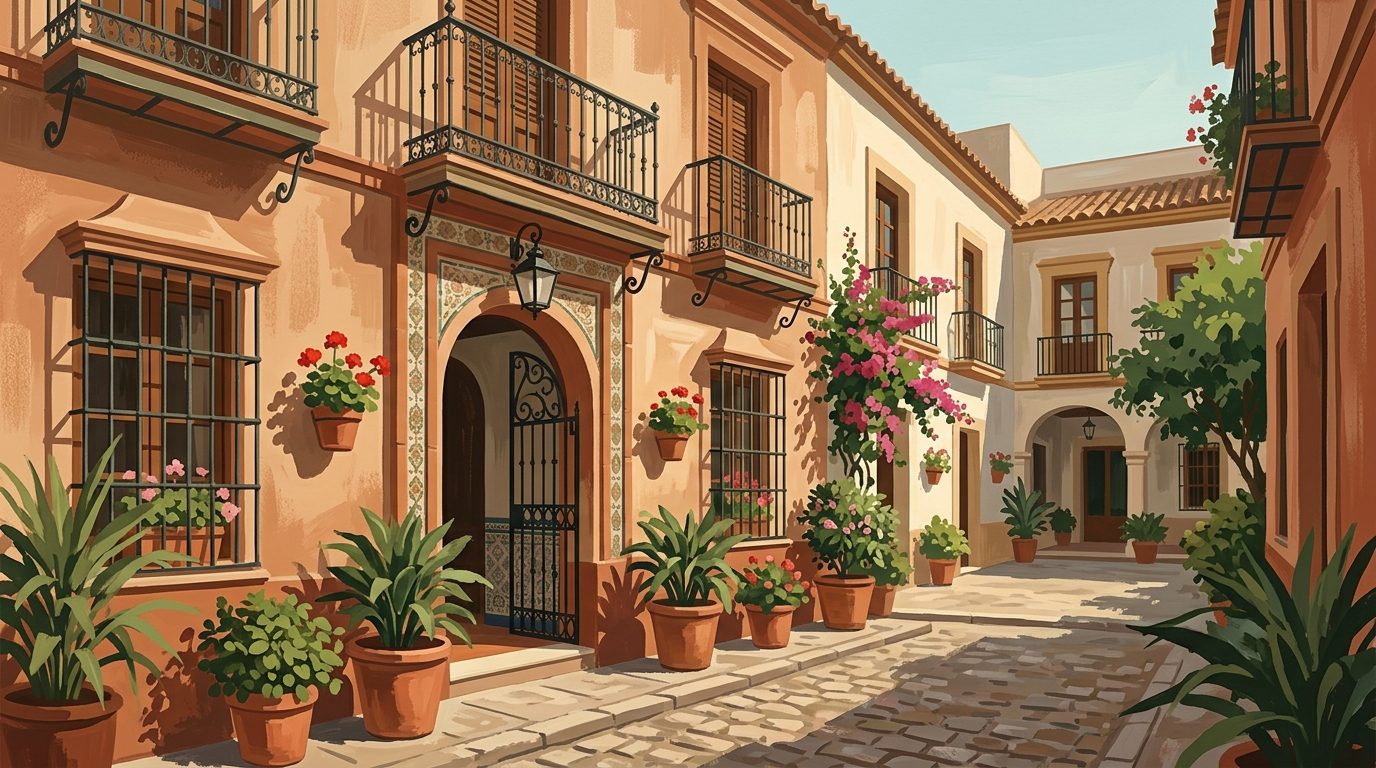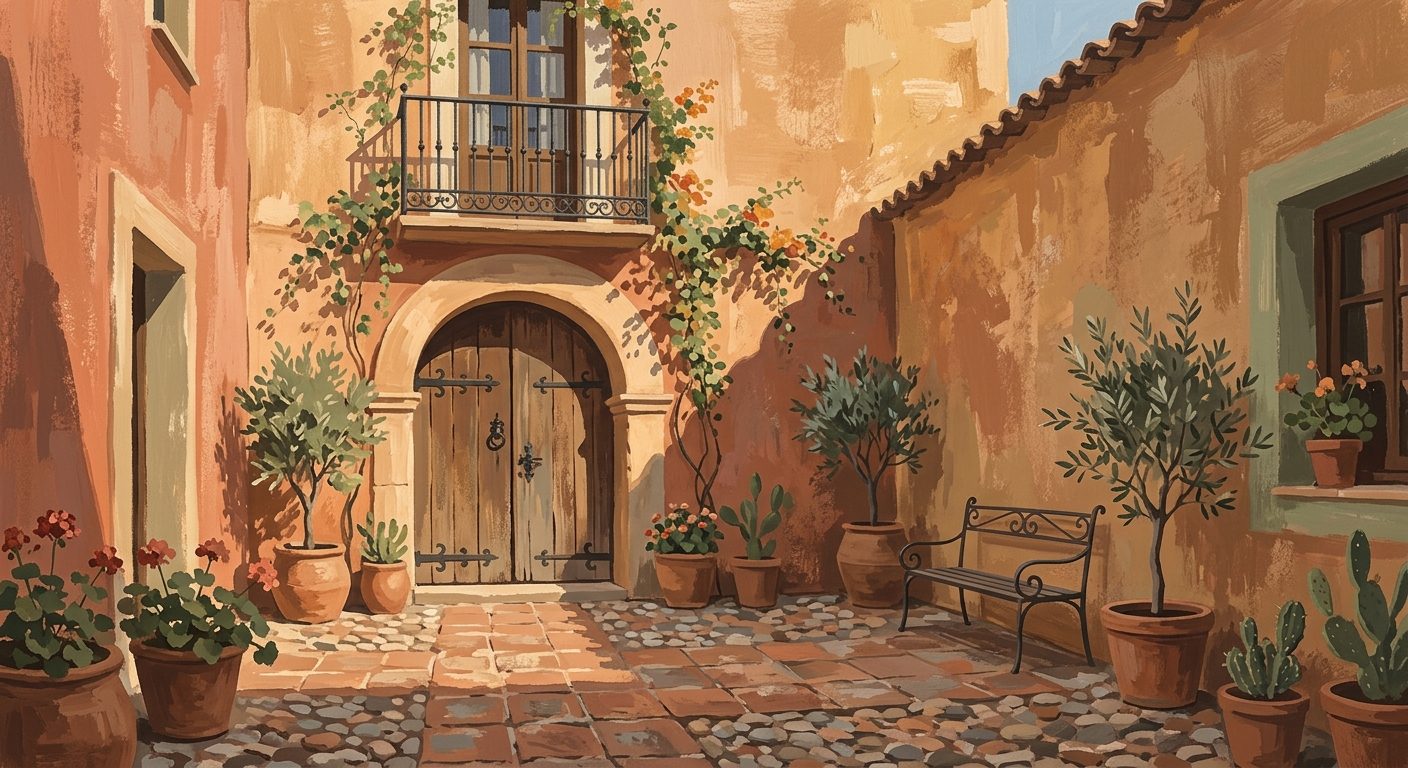
Often described as the oldest continuously inhabited city in Western Europe, Cádiz is a salt-crusted maze of tall houses and narrow alleys. It feels less like a polished tourist museum and more like a living, breathing neighbourhood that happens to be surrounded by the sea.
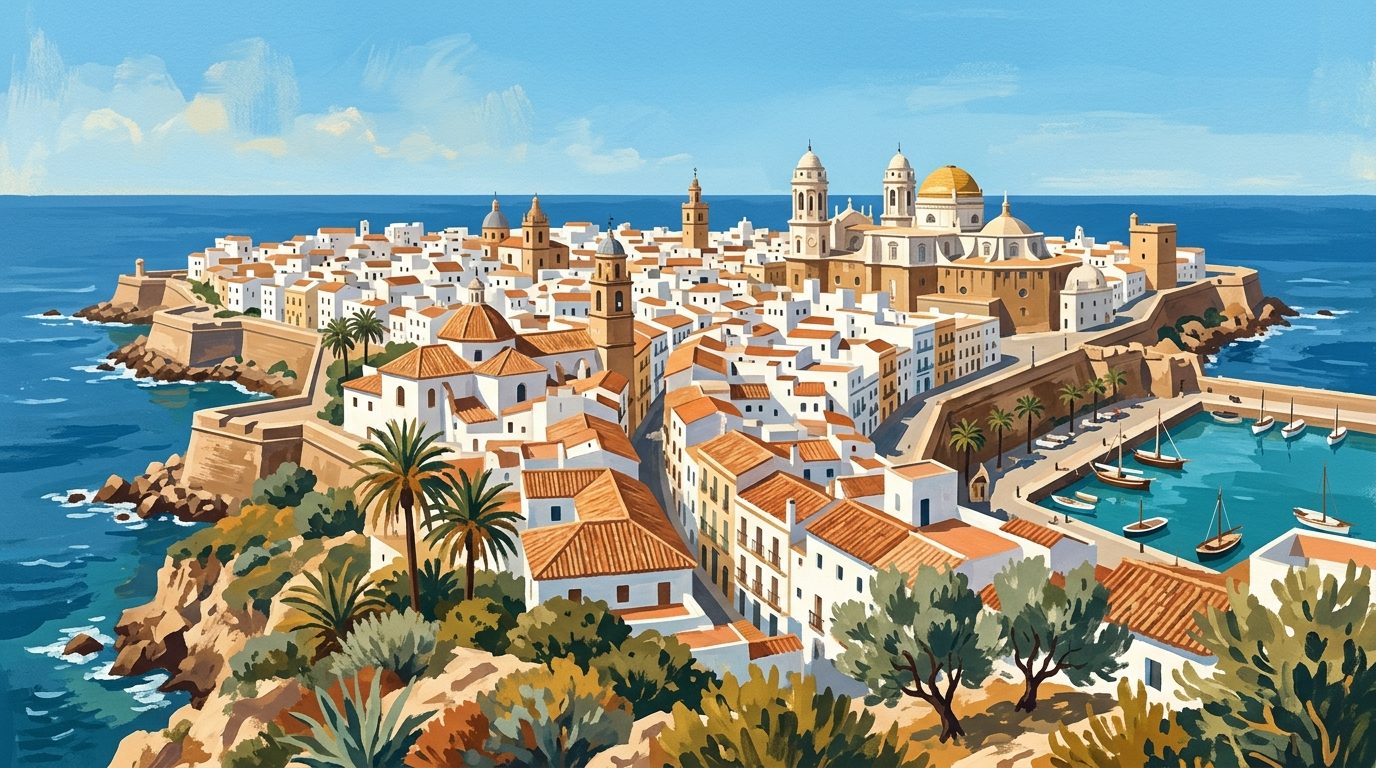
To understand Cádiz, you must first understand its geography. This is effectively an island, tethered to mainland Spain by a narrow causeway and a couple of soaring bridges. Known locally as the Tacita de Plata (silver cup), the city is wrapped almost entirely by the Atlantic Ocean, which provides a constant, briny breeze and a light so sharp it feels like it has been polished. Unlike the grand, land-locked cities of inland Andalucía, Cádiz feels exposed and ancient, its buildings scarred by the salt air and its people, the gaditanos, famous for a wit as sharp as the Atlantic wind.
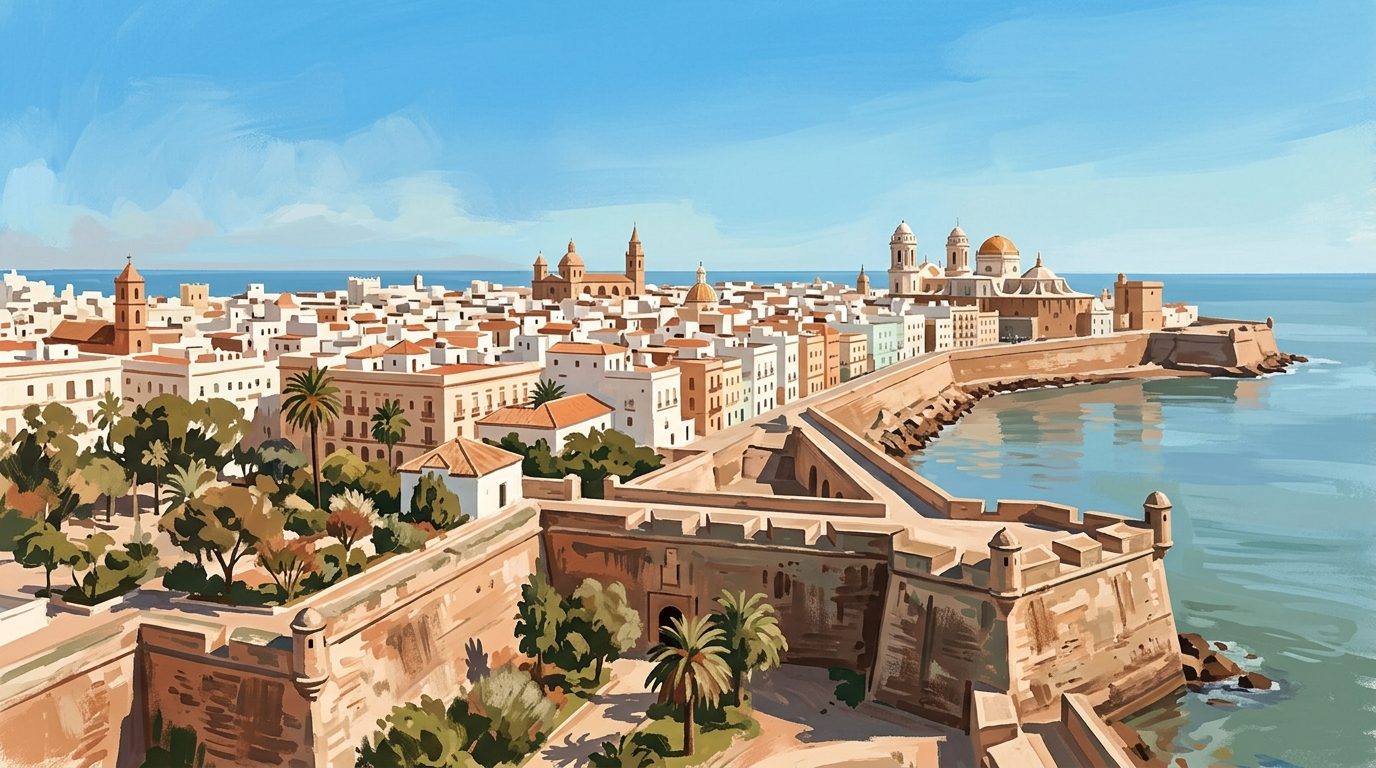
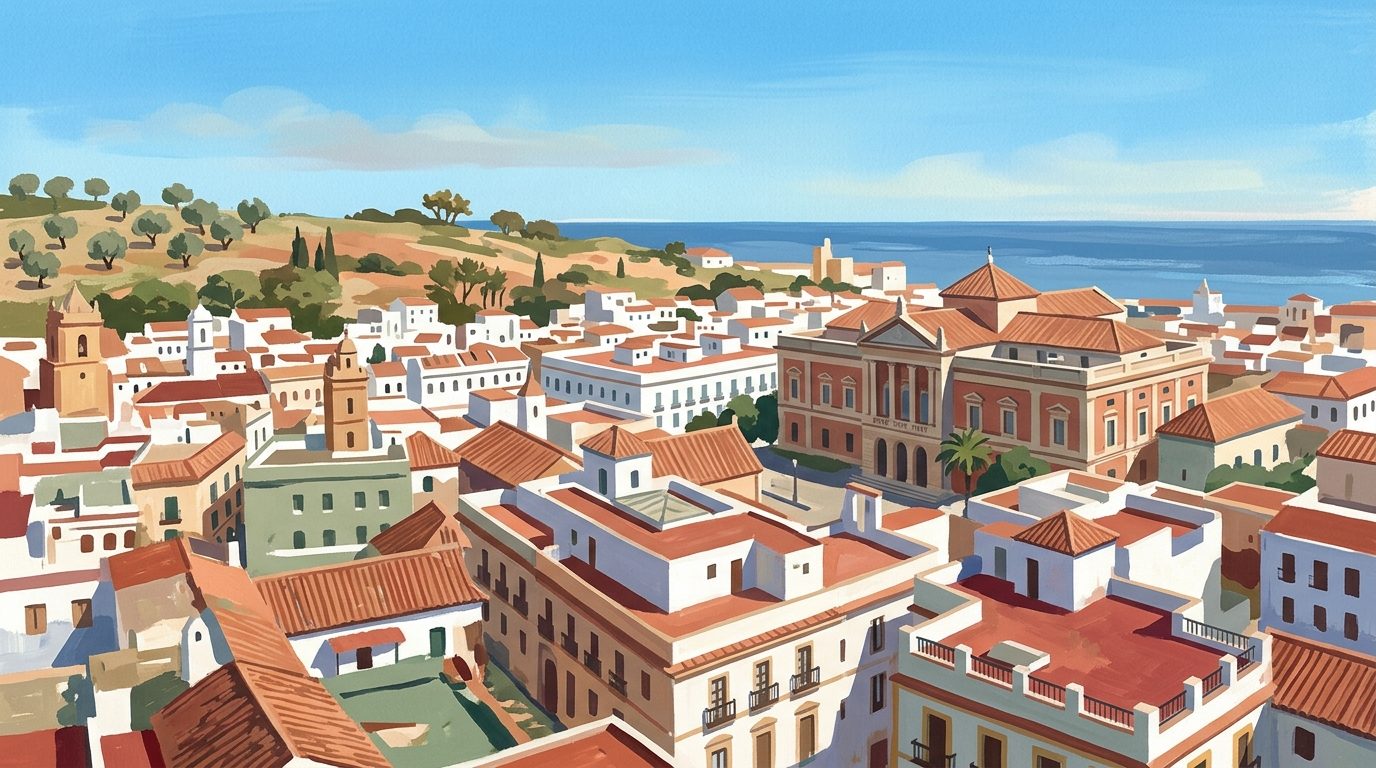
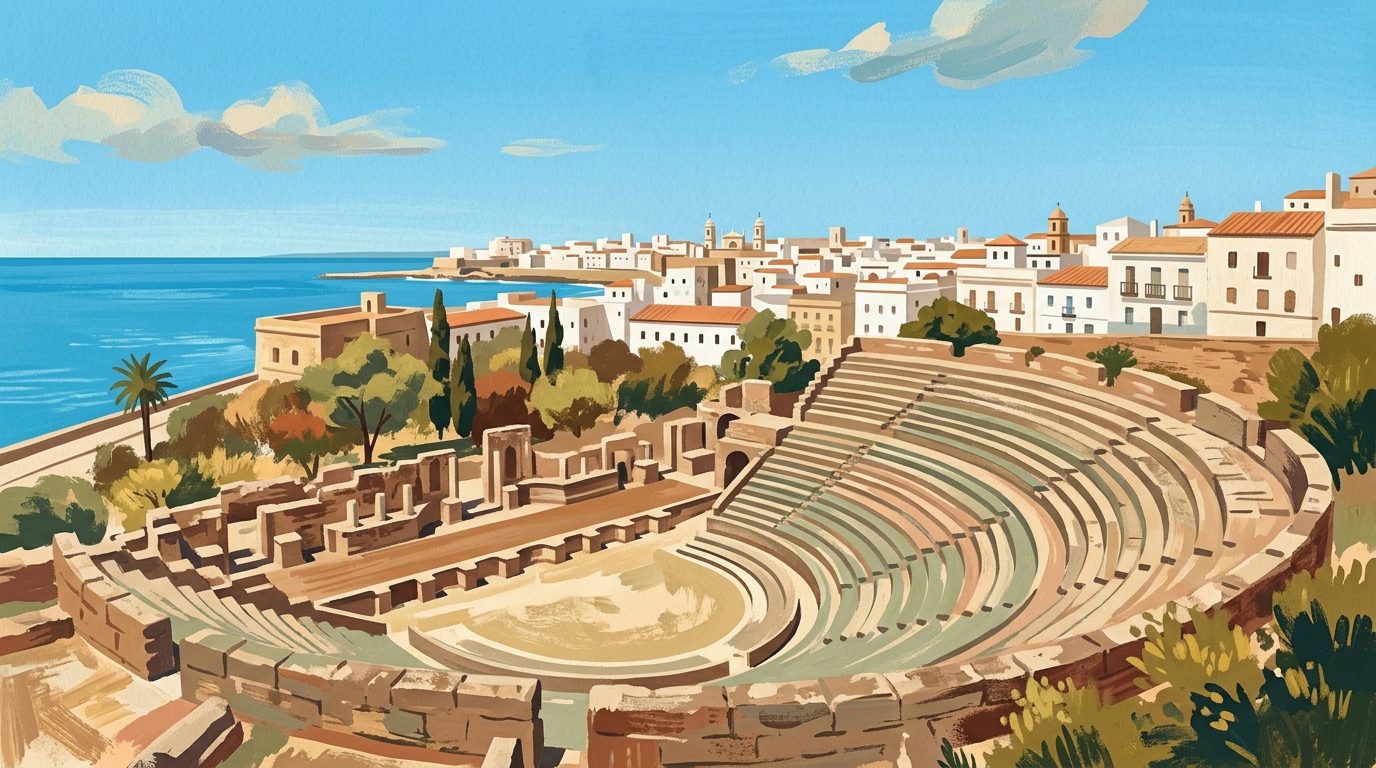
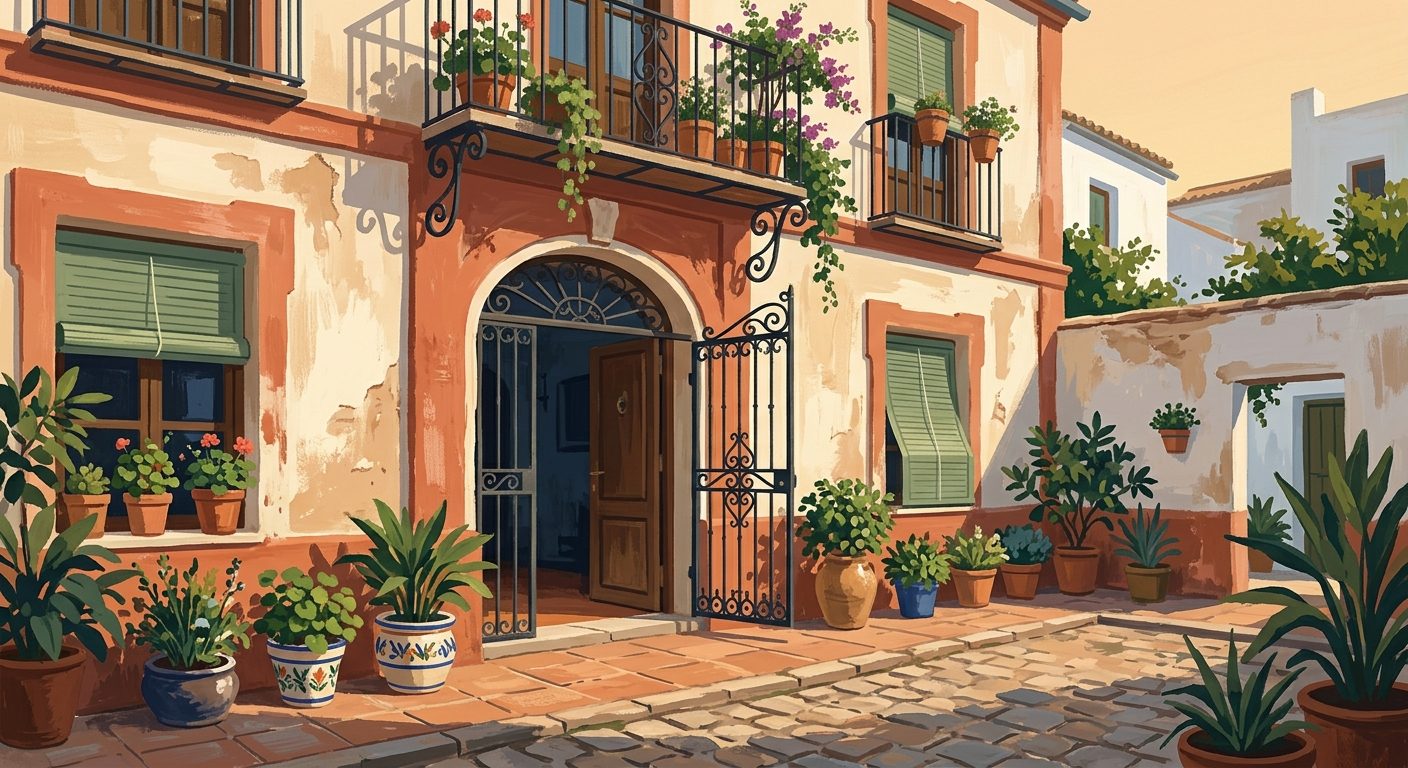
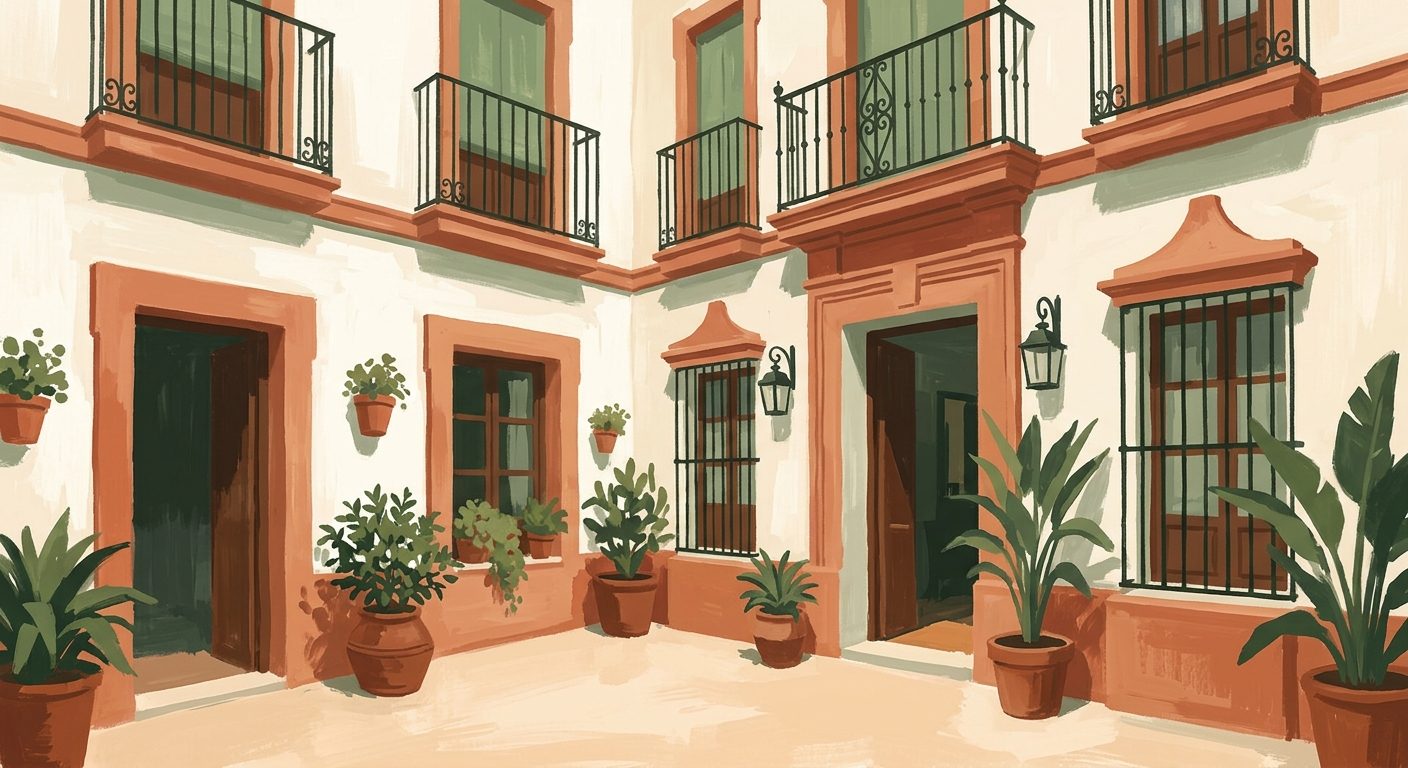
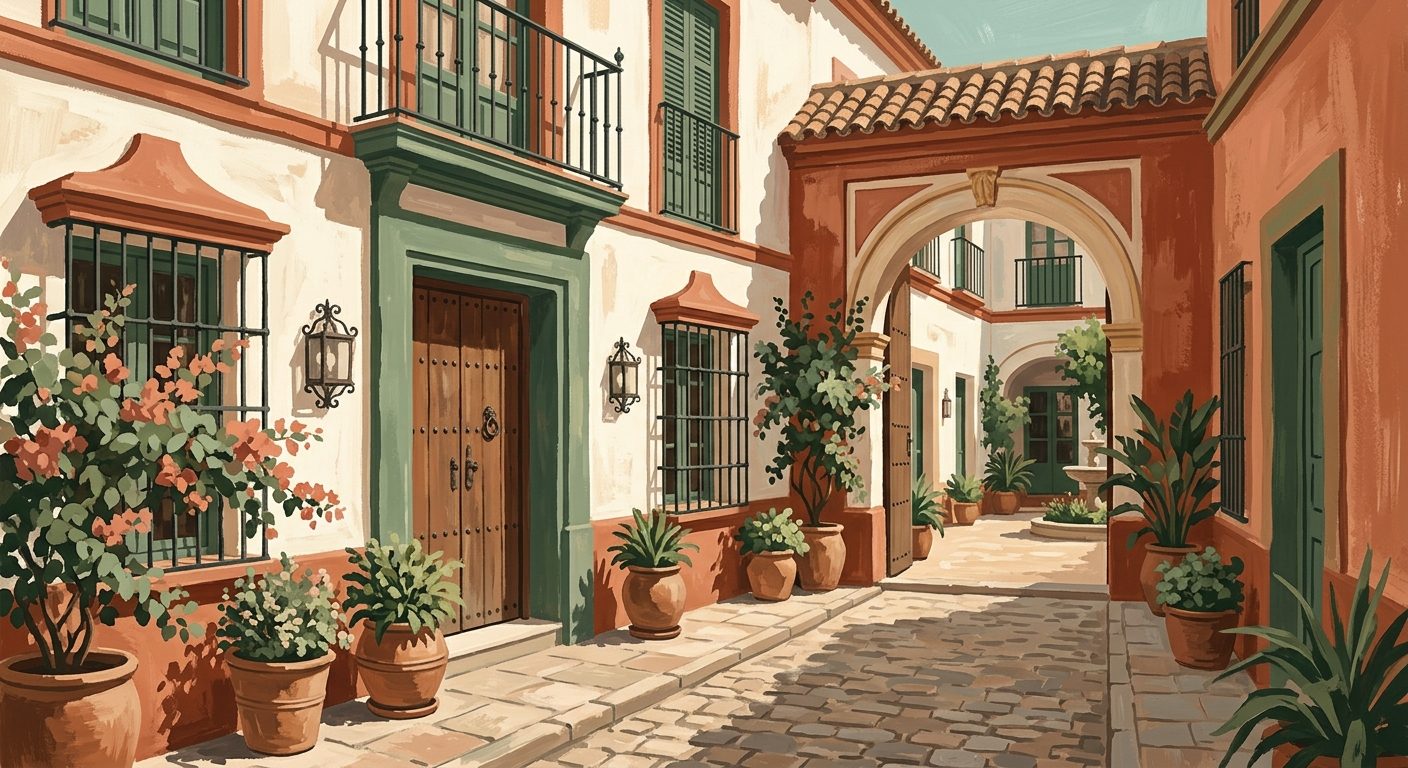
The city doesn't reveal itself through a checklist of monuments. Instead, it invites you to get lost in its four historic quarters: El Pópulo, La Viña, Santa María, and San Carlos. In these barrios, the houses are built tall to catch the breeze, often featuring watchtowers from which 18th-century merchants scanned the horizon for returning treasure fleets. Walking here is a sensory experience: the smell of fried fish from a freiduría (fried fish shop), the sound of a distant flamenco guitar, and the sight of laundry flapping against pastel-coloured facades. It is a city of layers, where Roman ruins sit beneath medieval walls, and Baroque cathedrals cast shadows over 19th-century marketplaces.
Old Town & La Caleta Beach
The Heart of La Viña
The Barrio de la Viña is the soul of the old town. Historically a fisherman’s quarter, it remains the most atmospheric part of Cádiz. Start at the Plaza del Tío de la Tiza, a square shaded by trees and lined with tables where locals linger over plates of caballa con piriñaca (mackerel with minced vegetables). The streets here are narrow and purposefully crooked, designed to break the force of the wind. As you walk towards the sea, you’ll notice the buildings becoming more weathered, leading eventually to the water’s edge. This area is the birthplace of the city’s most famous traditions and remains fiercely local, largely ignoring the trends of more modern Spanish cities.
La Caleta: The Local’s Living Room
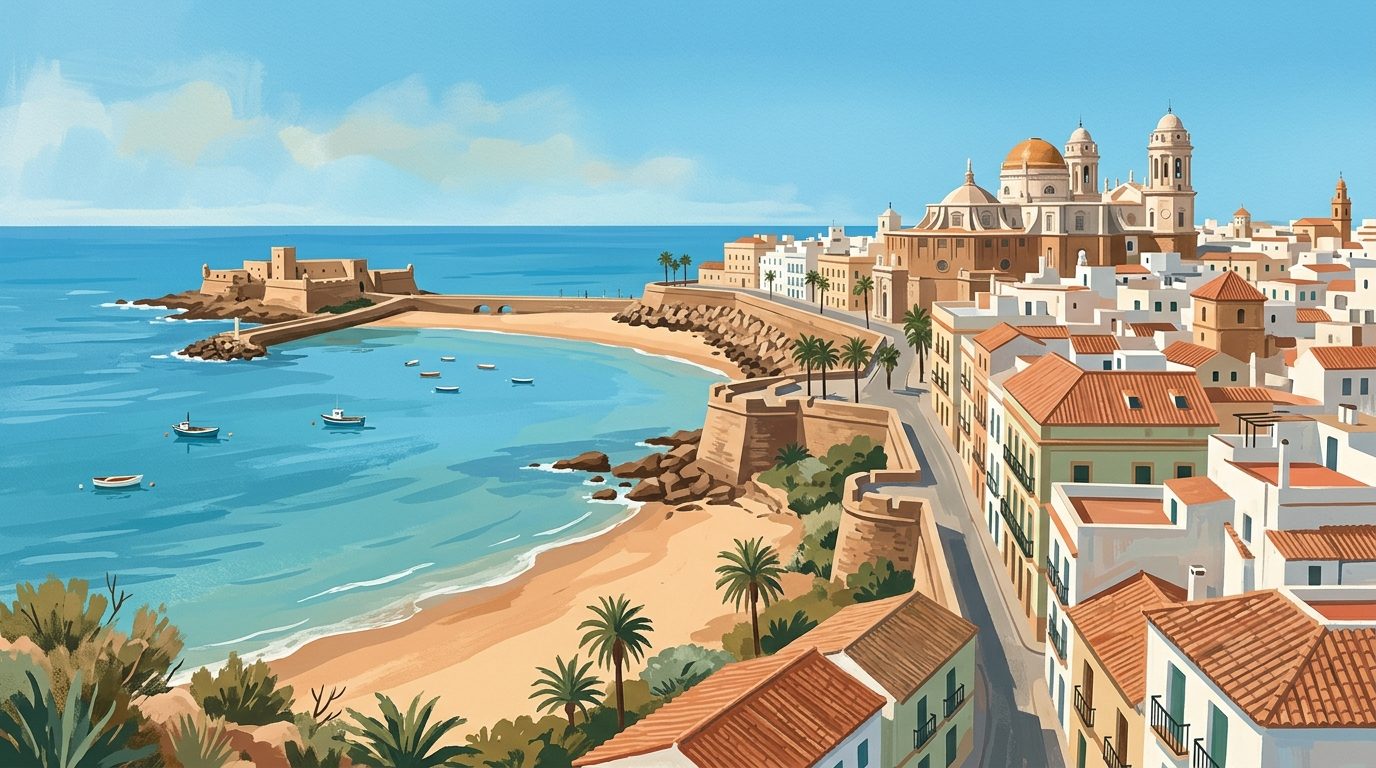
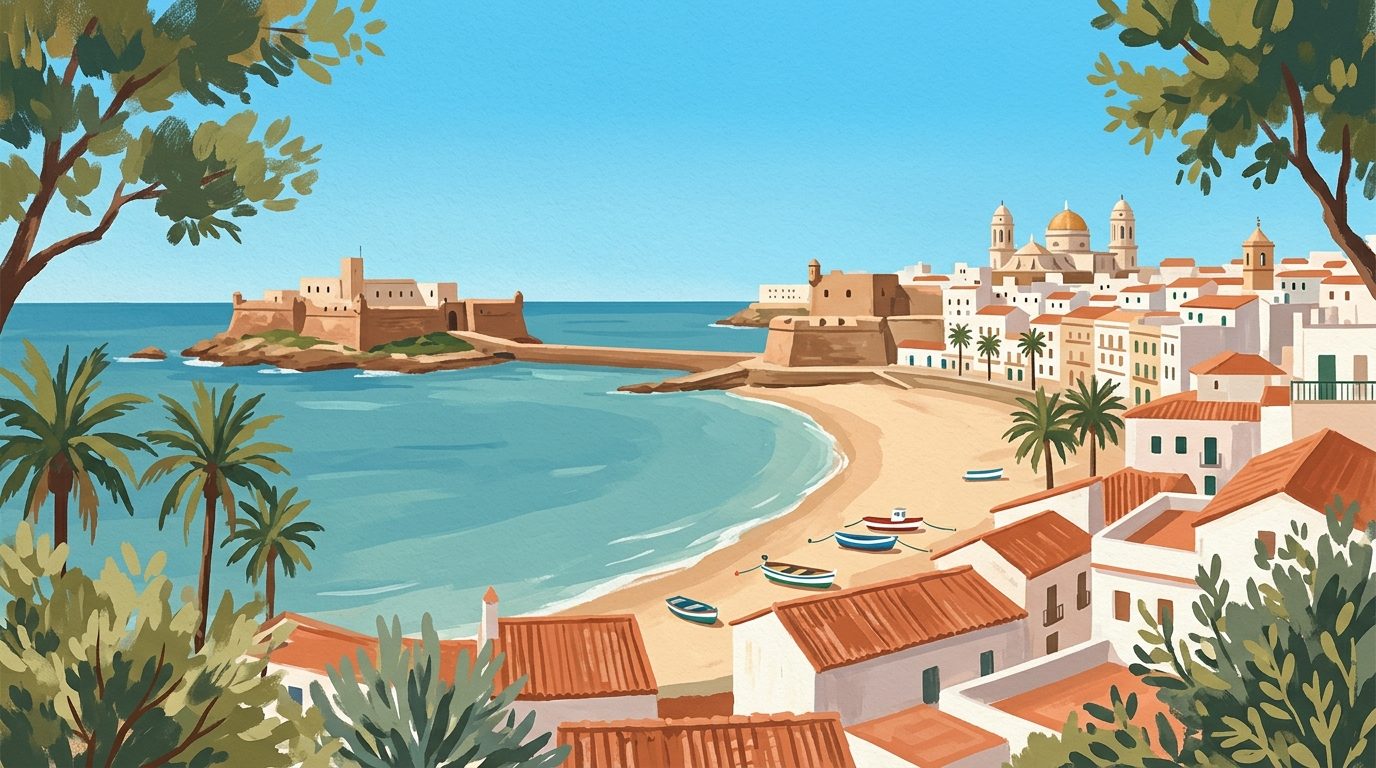
At the western tip of the old town lies La Caleta, a small, crescent-shaped beach that serves as the city’s social hub. It is flanked by two fortresses: the Castillo de Santa Catalina and the Castillo de San Sebastián, the latter reached by a long stone causeway that juts out into the ocean. The beach is famous for its white, 1920s-style bathhouse, the Balneario de la Palma, which looks like a colonial cruiser docked in the sand. Come here in the late afternoon to watch the sunset; the light turns the sand to gold and reflects off the dozens of small fishing boats bobbing in the shallows. It is not a place for luxury loungers; it is a place where families bring folding chairs and retirees debate politics over the sound of the surf.
Read the full Old Town & La Caleta Beach guide →
Cádiz Cathedral & Torre Tavira
The Cathedral of the Americas
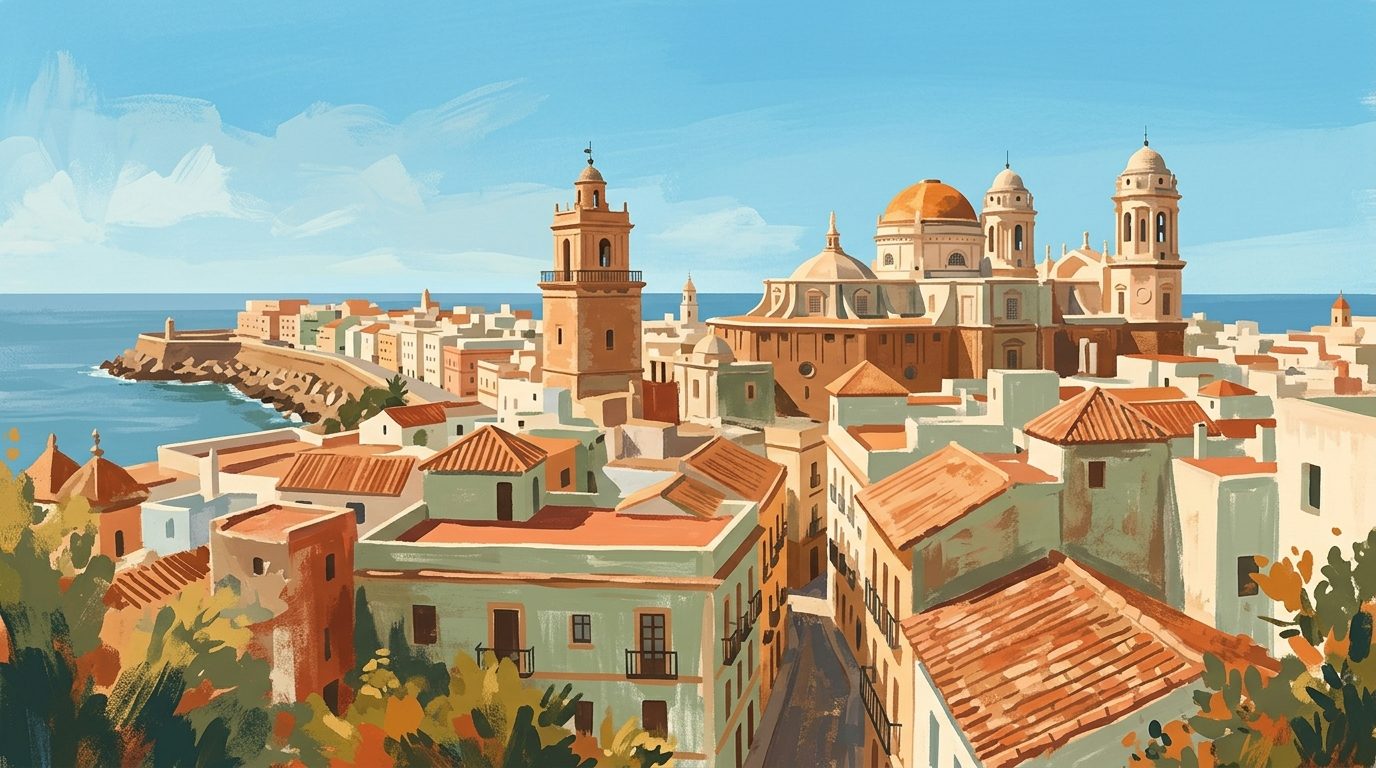
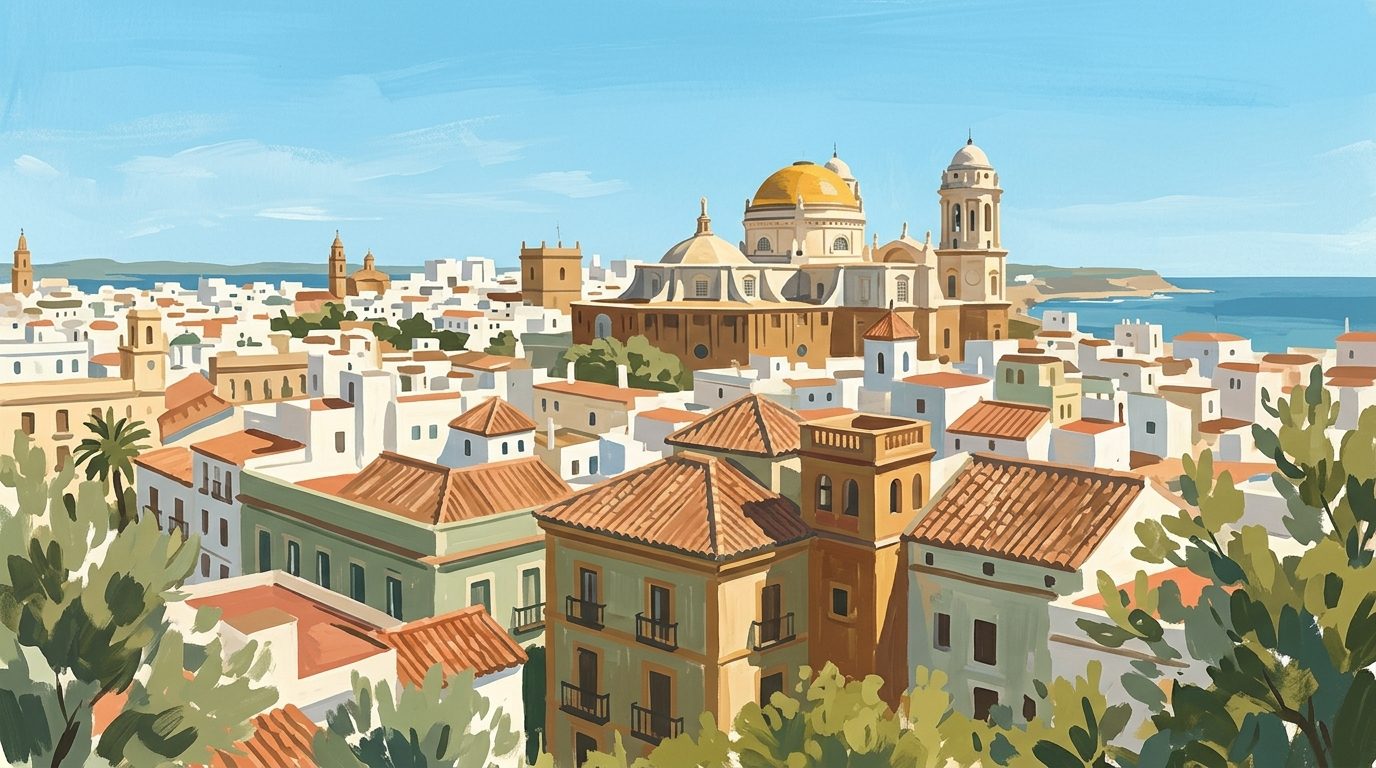
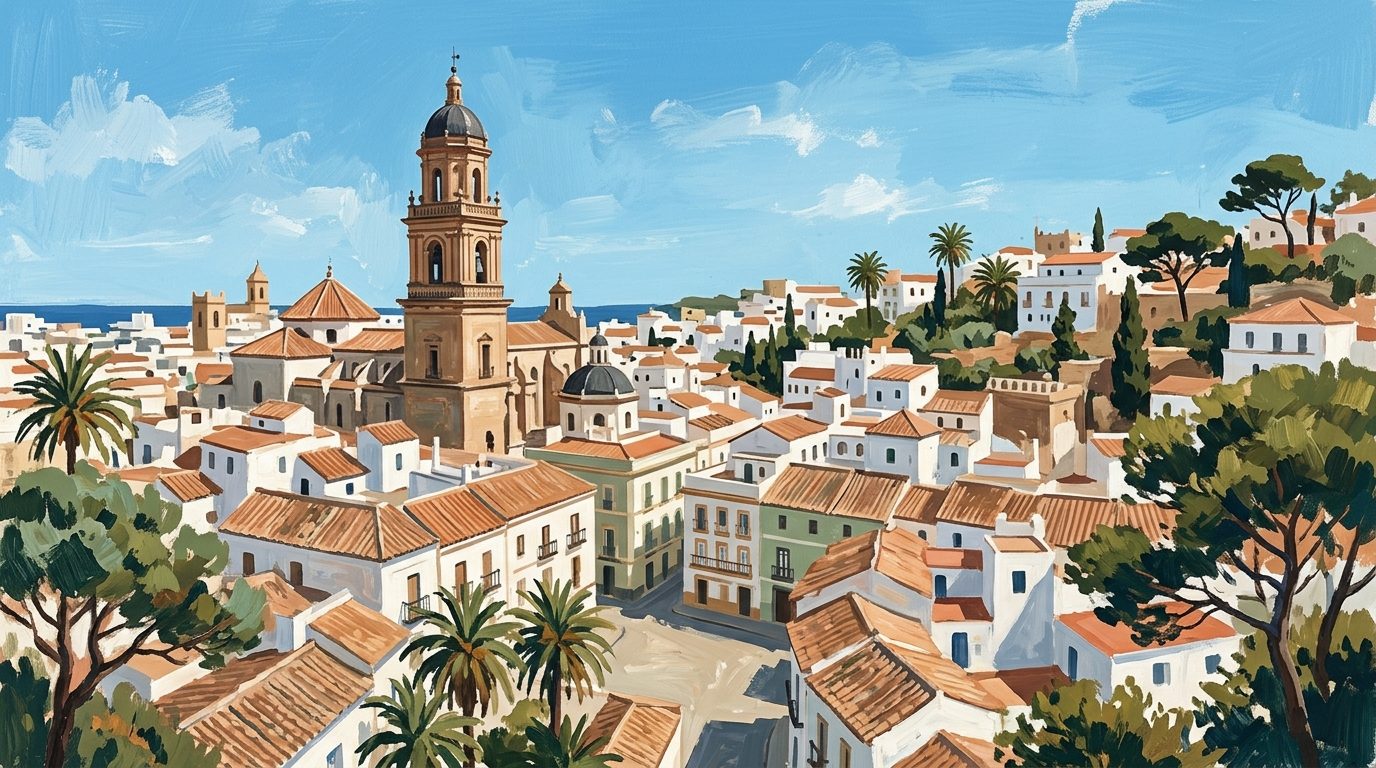
Cádiz Cathedral, with its distinctive yellow-tiled dome, is visible from almost everywhere in the city. Built between 1722 and 1838, it reflects the city’s golden age of trade with the Americas. Because it took over a century to complete, the architecture transitions from Baroque to Neoclassical, using everything from marble to local oyster stone. The interior is vast and somewhat austere, but the real draw is the crypt, where the composer Manuel de Falla is buried. The sound of the waves crashing against the sea wall outside echoes through the stone vaults. For the best view, climb the Levante Tower, one of the cathedral’s twin steeples, to see the rooftops of the city stretching out like a bleached-white jigsaw puzzle against the blue of the sea.
The Merchant’s Eye: Torre Tavira
In the 18th century, Cádiz had over 160 watchtowers. Today, Torre Tavira remains the most significant. Standing at the city’s highest point, it served as the official lookout for the port. The tower houses a cámara oscura (camera obscura), a clever optical system that projects a real-time, moving image of the city onto a concave white screen. Guided sessions typically require advance booking during peak months. It is a fascinating way to spy on the life of the city: watching people hang out their washing or seeing the big cruise ships dock in the harbour. Beyond the optics, the tower provides a historical context for how the city functioned as a global trade hub, where every merchant needed a private vantage point to ensure they were the first to know when their cargo arrived.
Read the full Cádiz Cathedral & Torre Tavira guide →
Carnival & Local Traditions
The Spirit of Satire
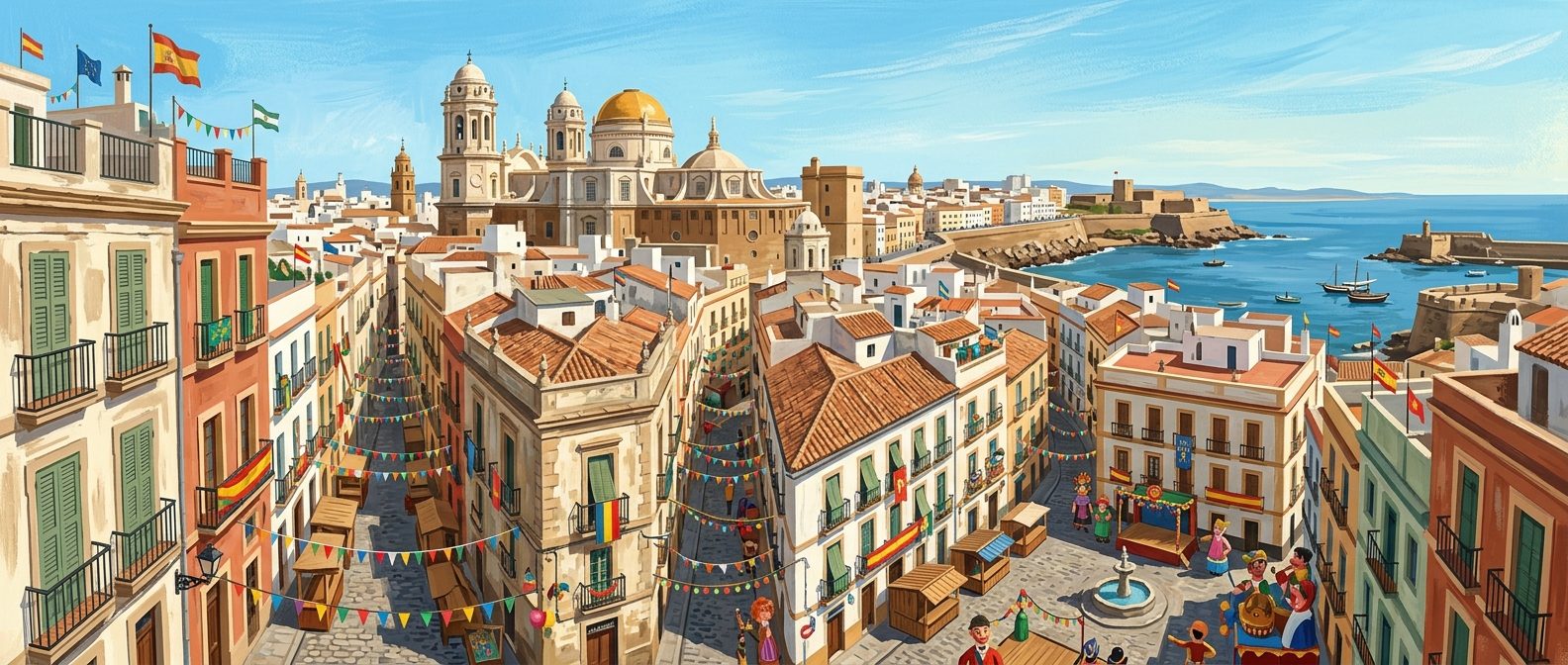
While Sevilla is known for the solemnity of its Holy Week, Cádiz is defined by the irreverence of its Carnival. Held every February, the Cádiz Carnival is one of the biggest in the world, but it is unique for its focus on satire and wordplay. Locals form groups called chirigotas (satirical musical groups) and comparsas, performing elaborate songs that mock politicians, celebrities, and social norms. The costumes are incredible, but the lyrics are the real prize. Even if your Spanish isn't fluent, the infectious energy in the streets of La Viña during this time is undeniable. It is a period when the strict hierarchies of Spanish life are upturned, and the city becomes one giant, open-air theatre.
Flamenco and the Silver Cup
Beyond the February madness, traditions in Cádiz are found in the peñas (cultural clubs). This is the birthplace of many flamenco styles, specifically the more upbeat alegrías, which reflect the salty, sunny disposition of the coast. To experience this, head to the Barrio de Santa María, the traditional flamenco heartland. Look for small, unpretentious venues like La Perla de Cádiz. Here, flamenco isn't a show for tourists; it is a community expression. You won't find neon signs; instead, follow the sound of rhythmic clapping and the smell of sherry. These traditions are woven into the daily rhythm, from the way the fishmongers cry out their catch in the Mercado Central to the communal tapas-crawling that takes place every Sunday afternoon.
Read the full Carnival & Local Traditions guide →
Eating & Drinking in Cádiz City
Dining in Cádiz is a masterclass in simplicity and freshness. The Mercado Central is the essential starting point. This Neoclassical market is one of the oldest in Spain, and its Rincón Gastronómico (gastronomic corner) allows you to buy fresh seafood from the stalls and have it cooked nearby, or sample local delicacies like chicharrón de Cádiz (thinly sliced, seasoned pork belly). For a legendary local experience, go to Casa Manteca in La Viña. This former grocery store is papered with old bullfighting posters and serves excellent Manchego cheese and cured meats on squares of wax paper. Order a glass of manzanilla (dry sherry) and lean against the wooden bar.
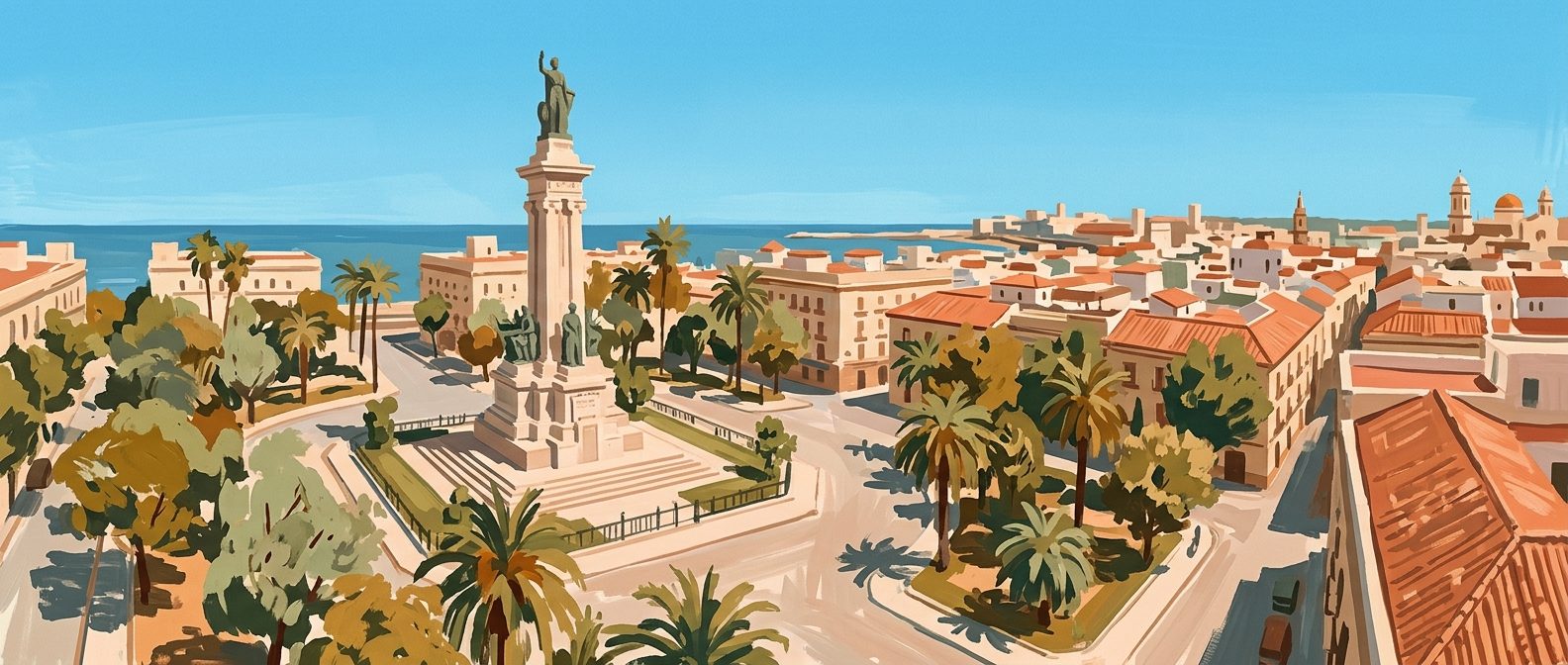
For something more refined, El Faro de Cádiz is an institution. While the main dining room is formal, the bar area is perfect for sampling their famous tortillitas de camarones, lacy, crisp fritters filled with tiny, sweet shrimp. If you want the quintessential gaditano experience, find a freiduría like Las Flores on Plaza de las Flores. Order a cartucho (paper cone) of cazón en adobo (marinated dogfish) or puntillitas (baby squid) and eat them on a park bench under the palm trees. To wash it all down, look for the local white wines produced in the nearby ‘Sherry Triangle’, which are increasingly popular and perfectly suited to the local seafood.
Where to Stay
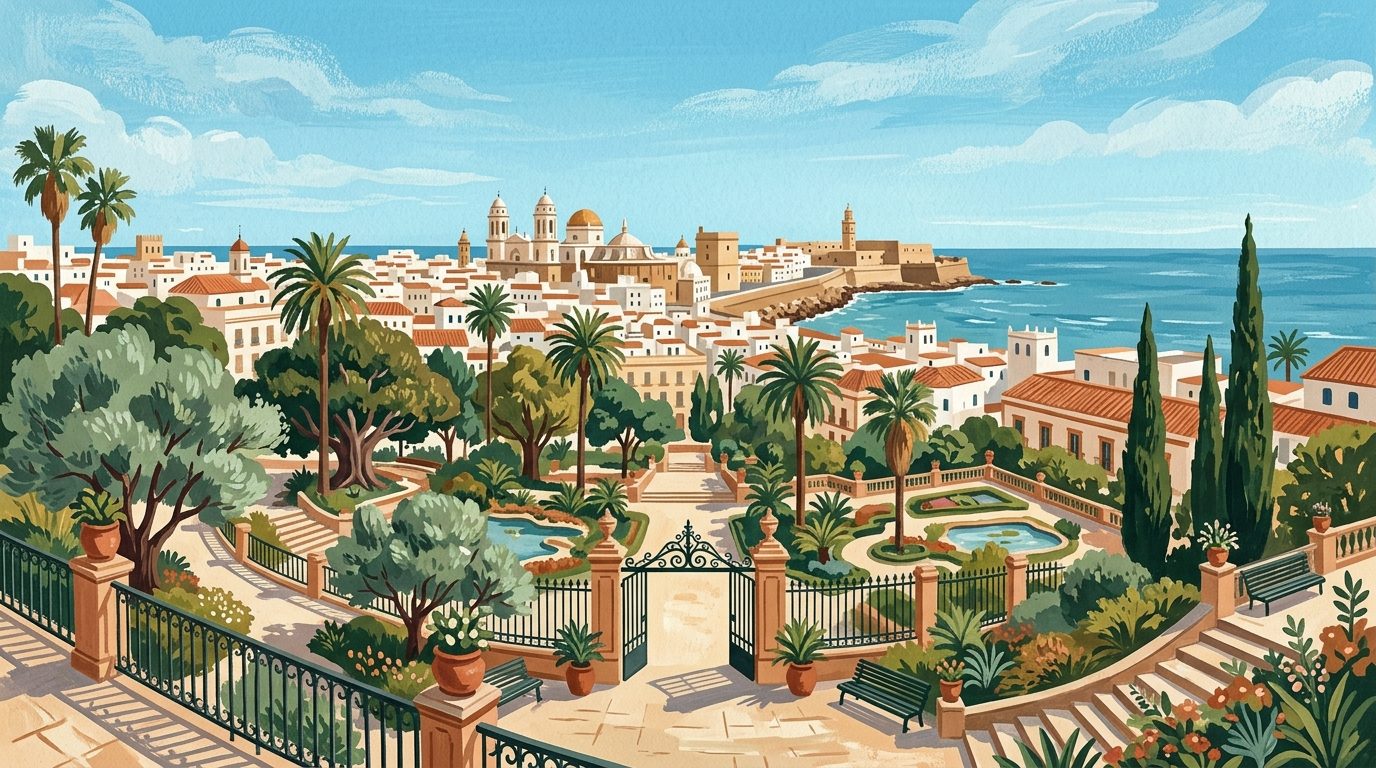
For those who want a blend of history and modern comfort, the Parador de Cádiz is a striking choice. Located at the edge of the old town near Parque Genovés, it is a contemporary glass-and-steel structure that offers views over the Atlantic from every room (we recommend booking well in advance). If you prefer more character, the boutique hotels in the city centre are excellent. Hotel Casa de las Cuatro Torres is a restored merchant’s house that retains its original 18th-century lookout tower and stone arches, providing a genuine sense of the city’s naval history.
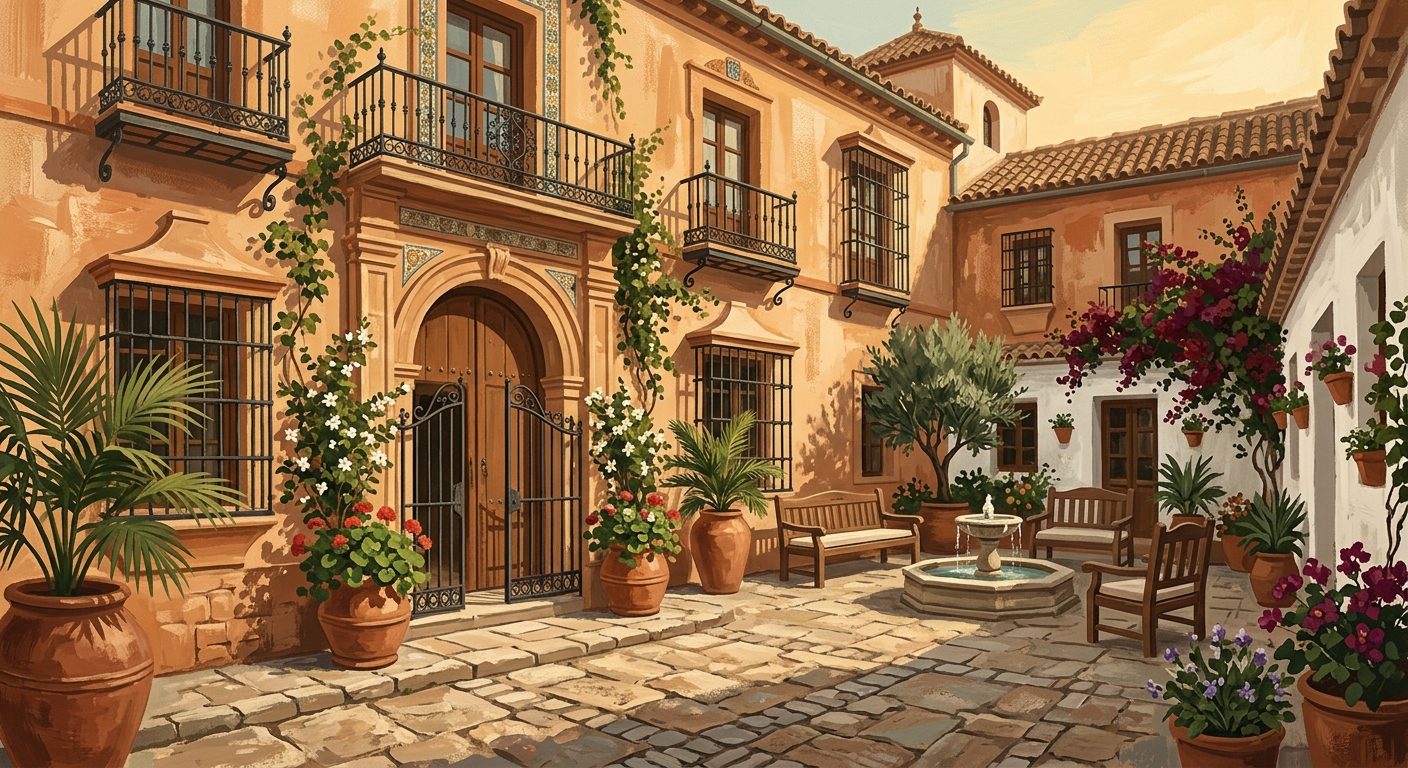
Alternatively, the many apartments in the Barrio del Pópulo offer a chance to live like a local. Staying in this area means waking up to the sound of church bells and being just a short walk from the cathedral. For a more bohemian feel, look for converted lofts in La Viña, where the salt air blows through the windows and the best tapas bars in the city are right on your doorstep.
Getting There & Around
Cádiz is well-connected by rail to Sevilla and Jerez de la Frontera, with the train station located at the edge of the old town. If you are arriving from further afield, Jerez Airport (XRY) is about 35 minutes away by car or train. Once you arrive, the best way to explore is on foot. The old town is compact and mostly pedestrianised, though the streets can be a confusing labyrinth. If you need to travel to the newer part of the city or the outer beaches like Playa de la Victoria, use the local bus network or the modern Trambahía tram-train system.
Best Time to Visit
The ideal time to visit Cádiz is during the late spring (May and June) or early autumn (September and October). During these months, the temperatures are warm enough for the beach but cool enough for exploring the narrow streets, and the intense Atlantic humidity is manageable. If you want to witness the city at its most chaotic and brilliant, visit during February for the Carnival, but be prepared to book accommodation months in advance. Avoid the peak of August if you dislike crowds, as the city becomes a favourite escape for Spaniards fleeing the inland heat.