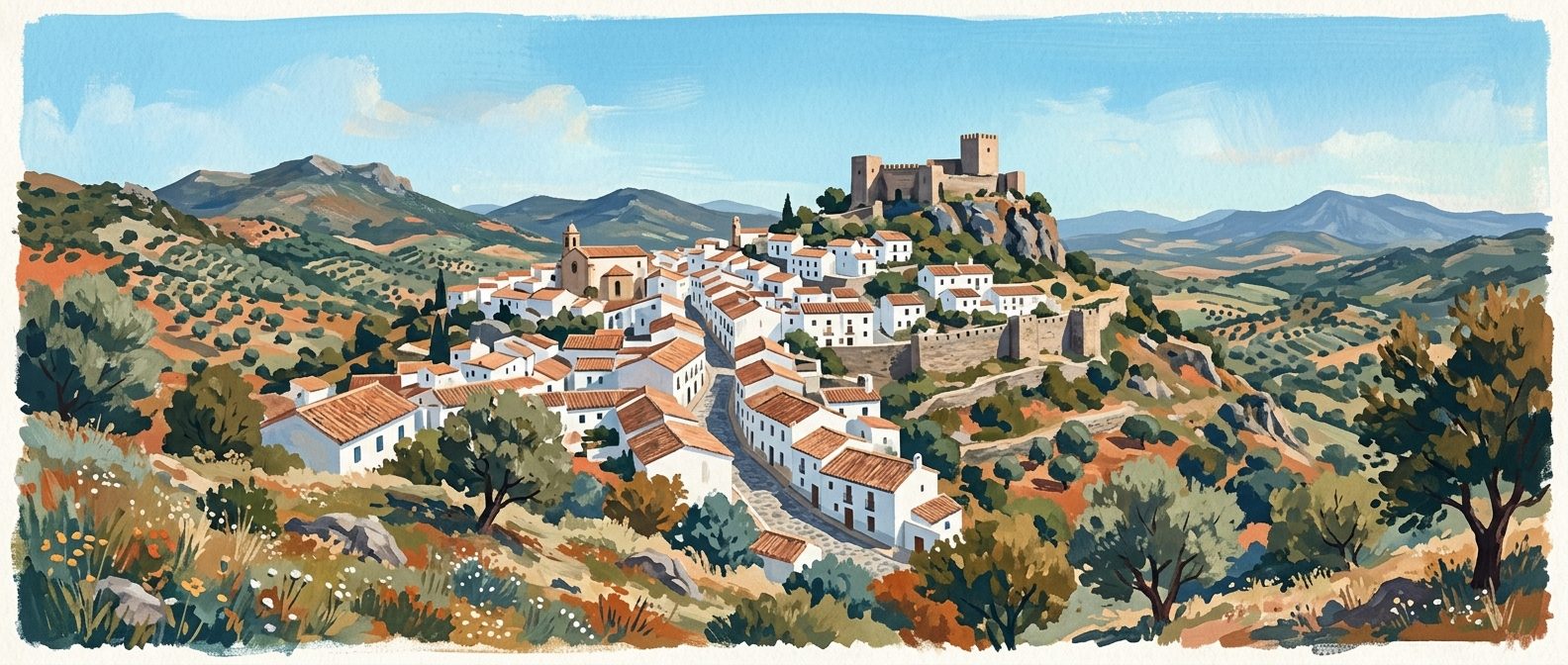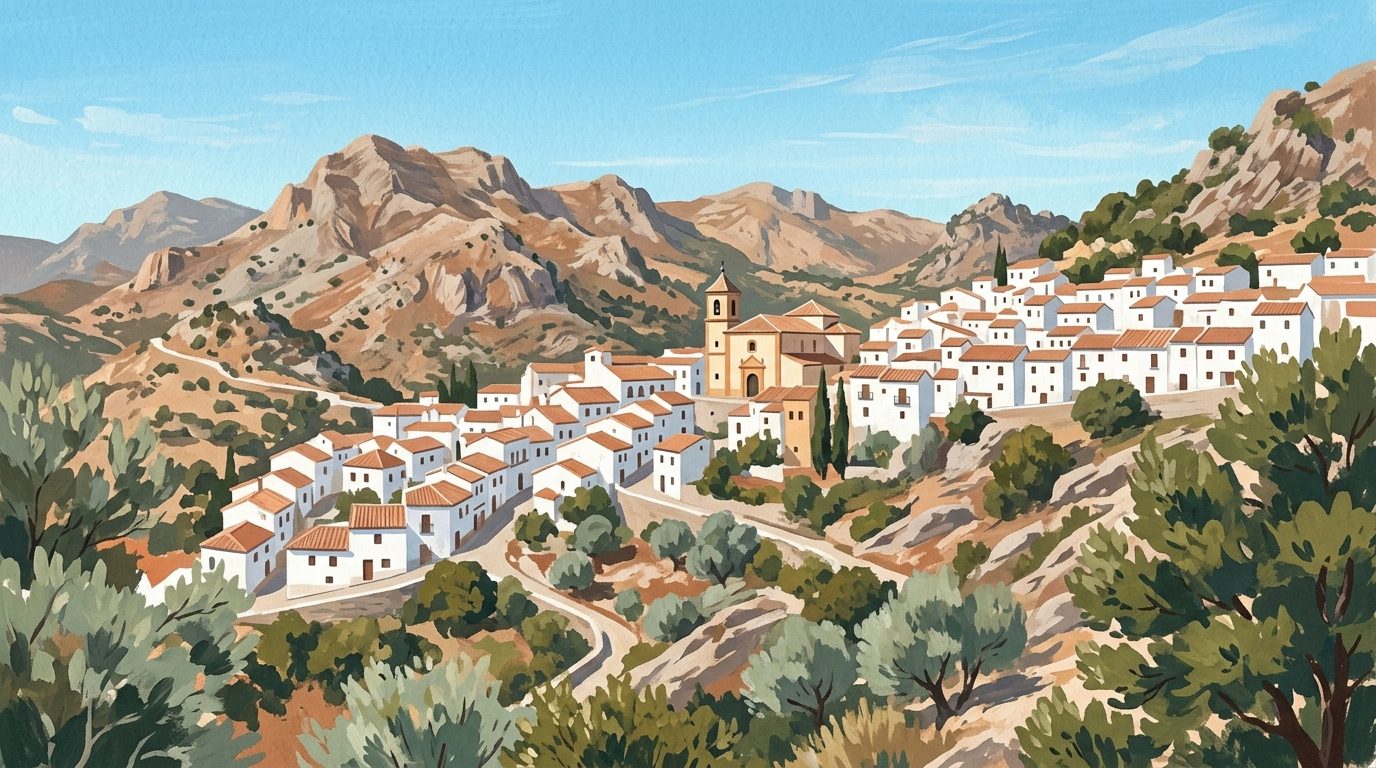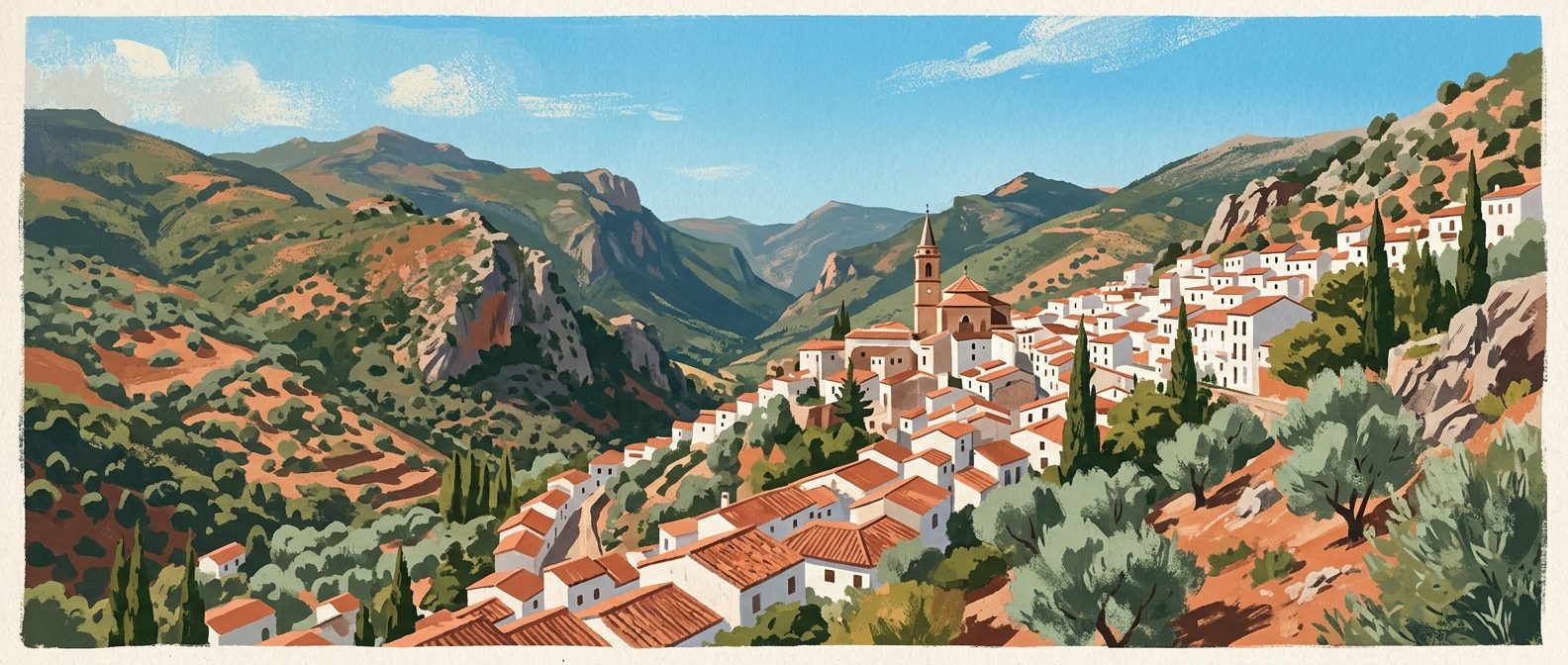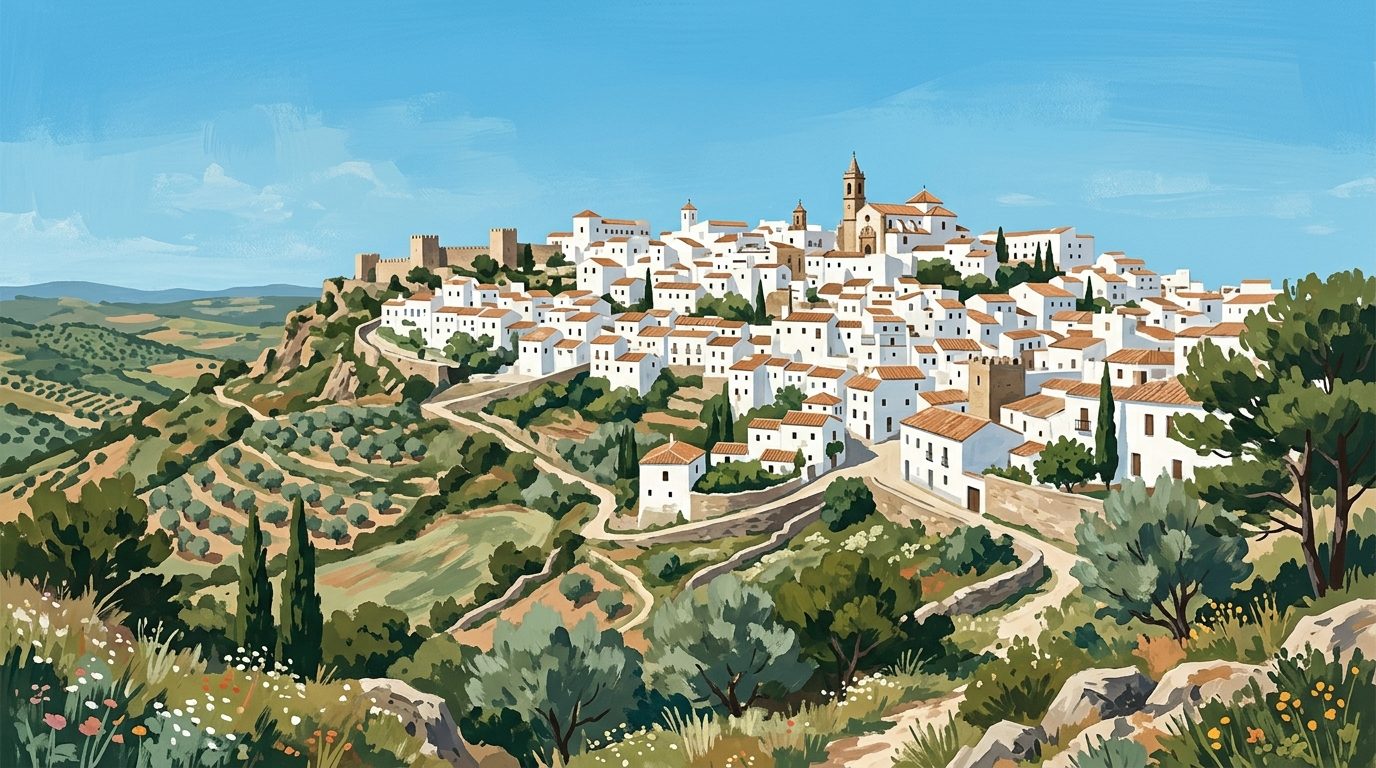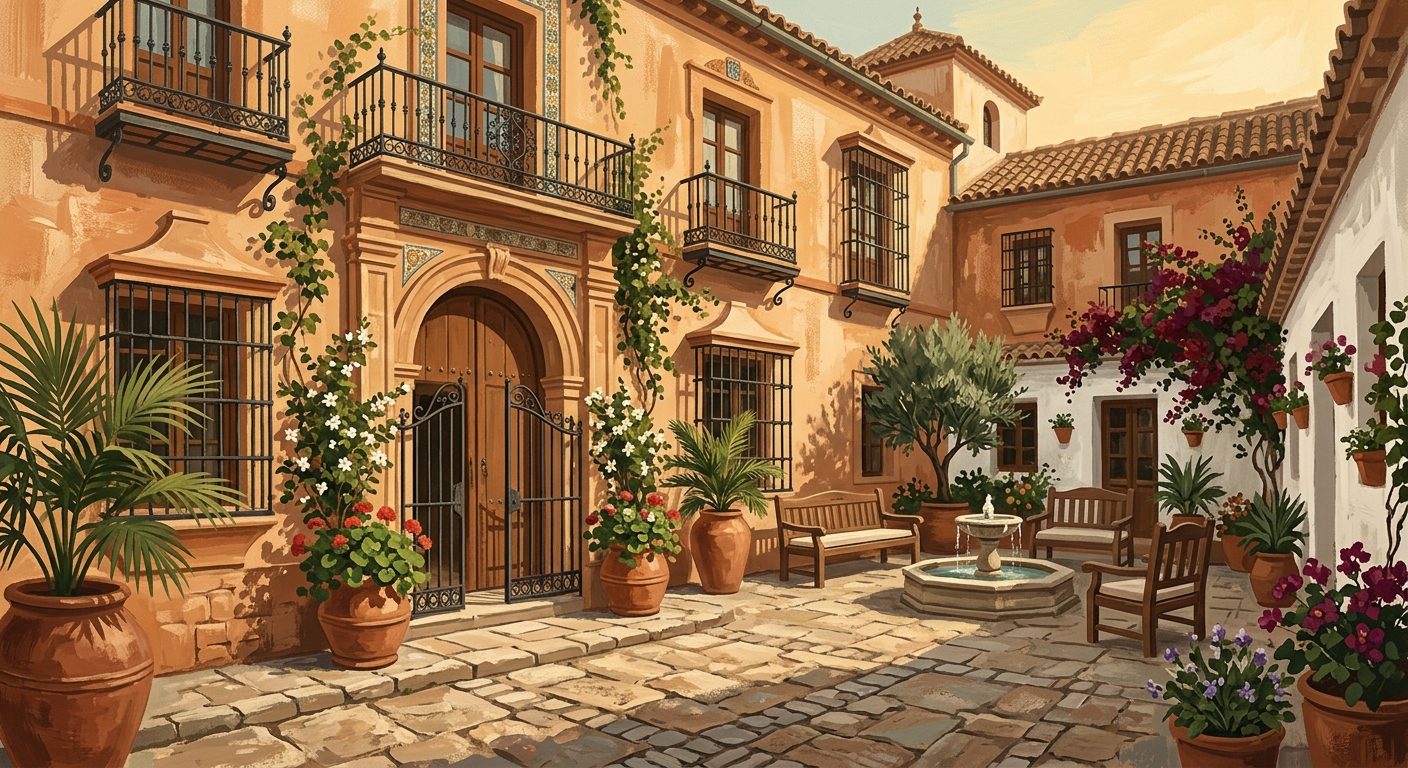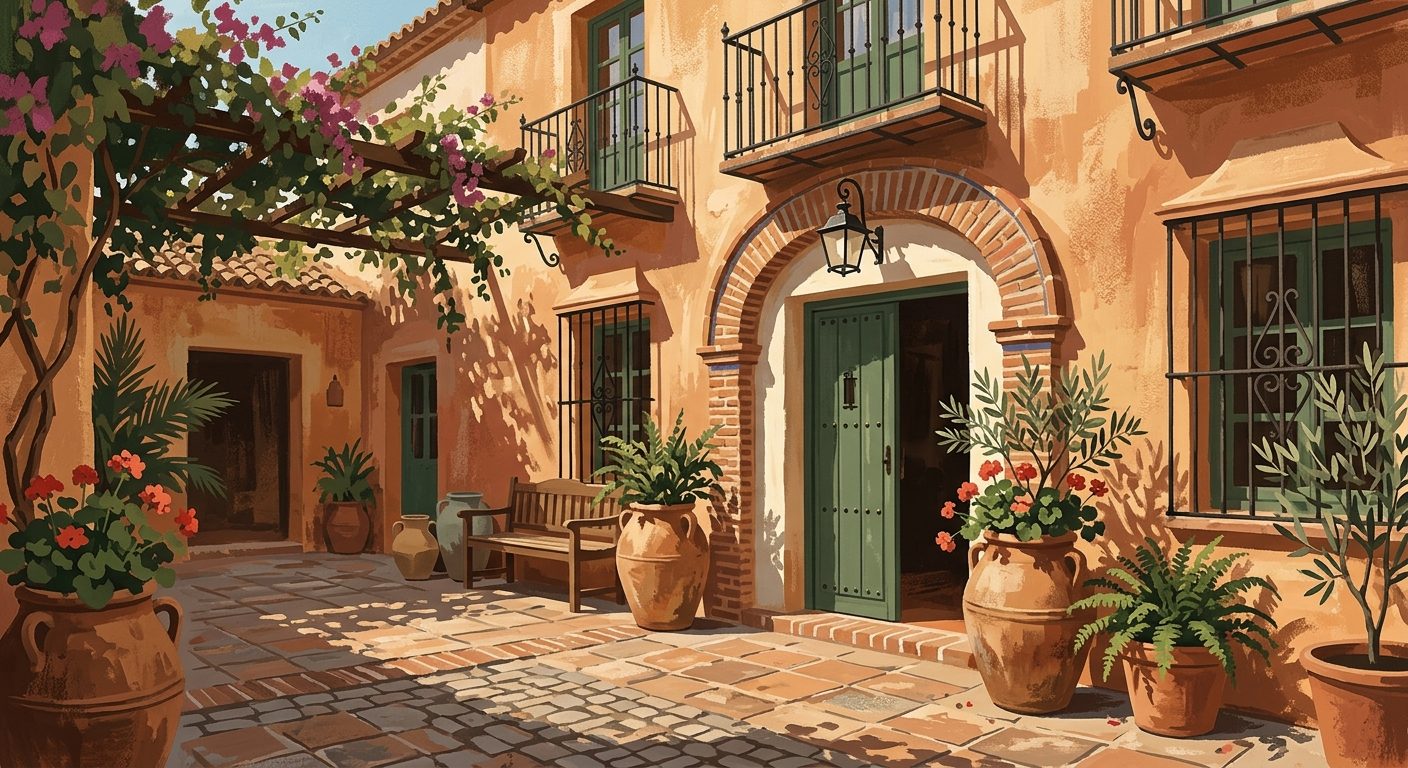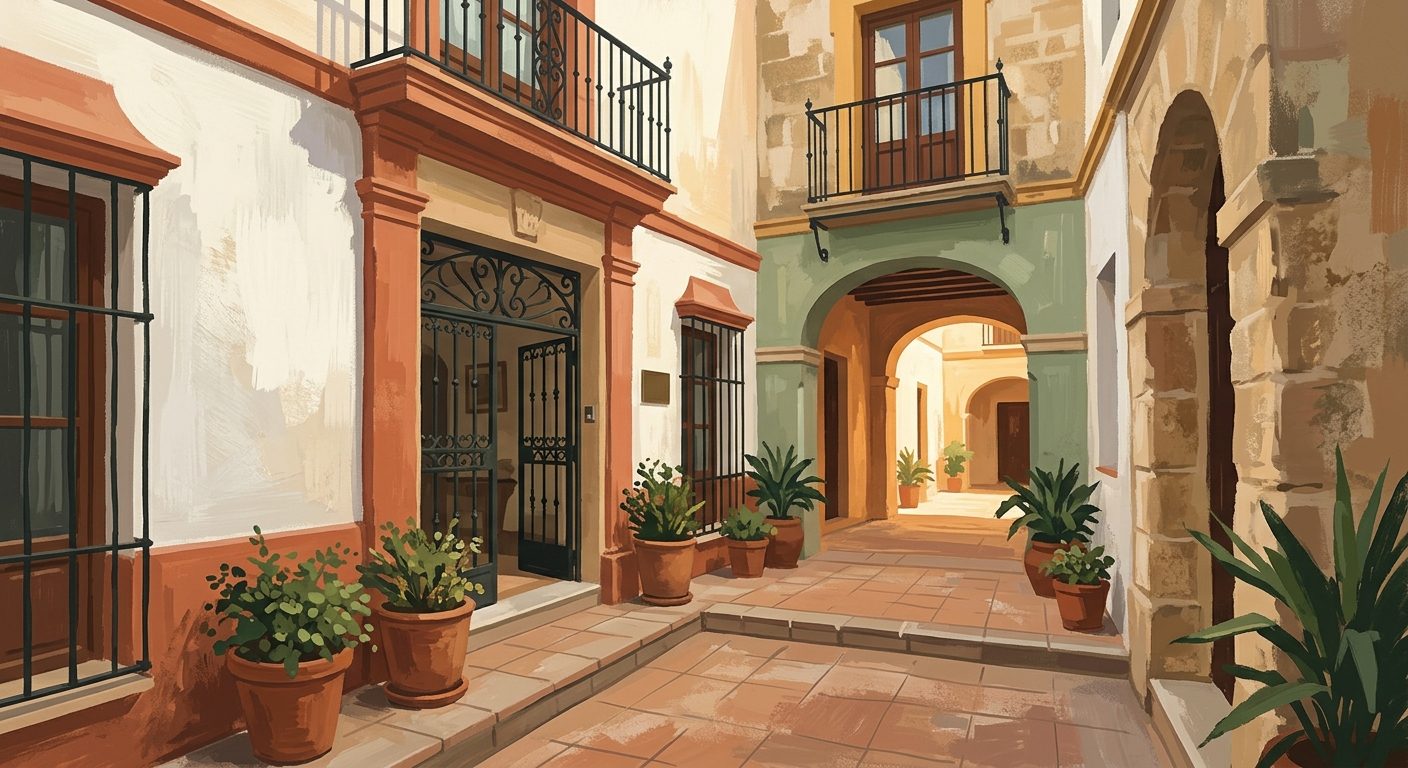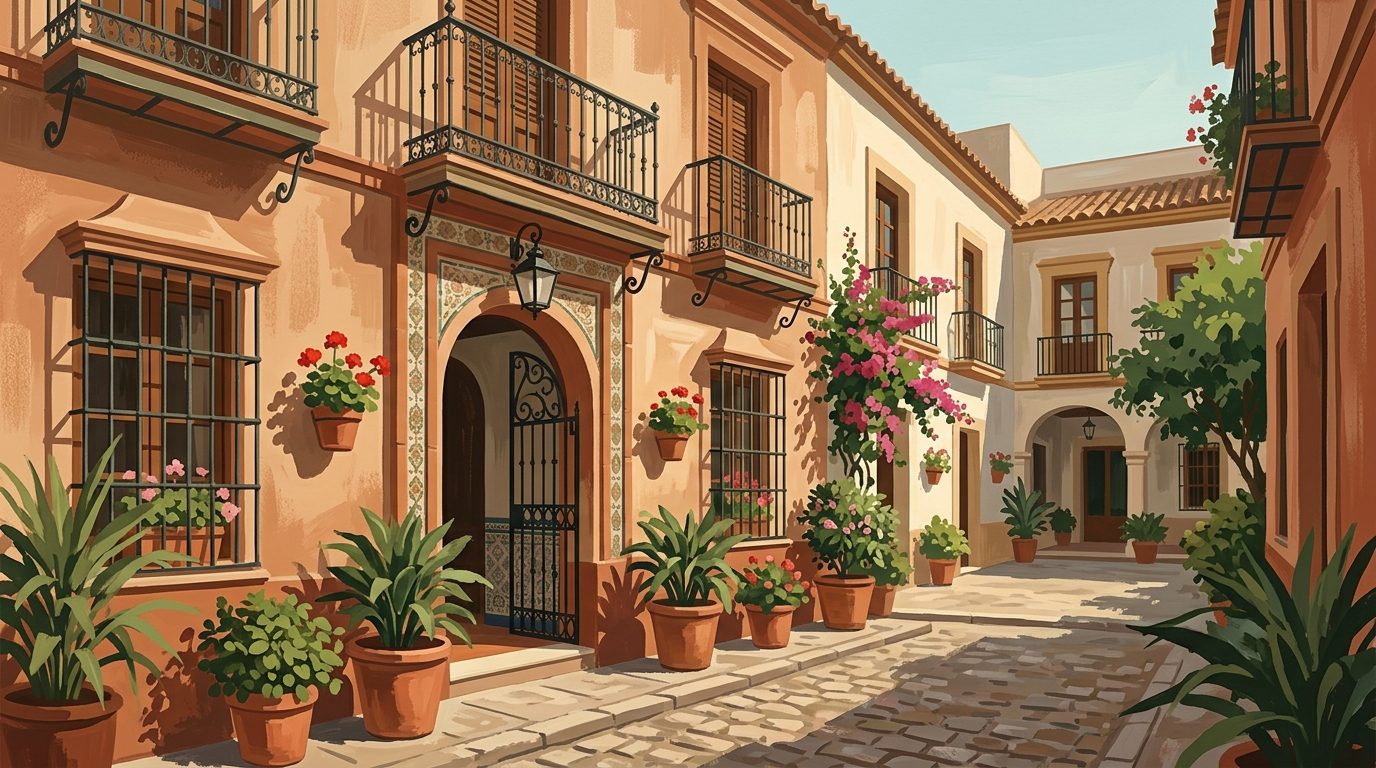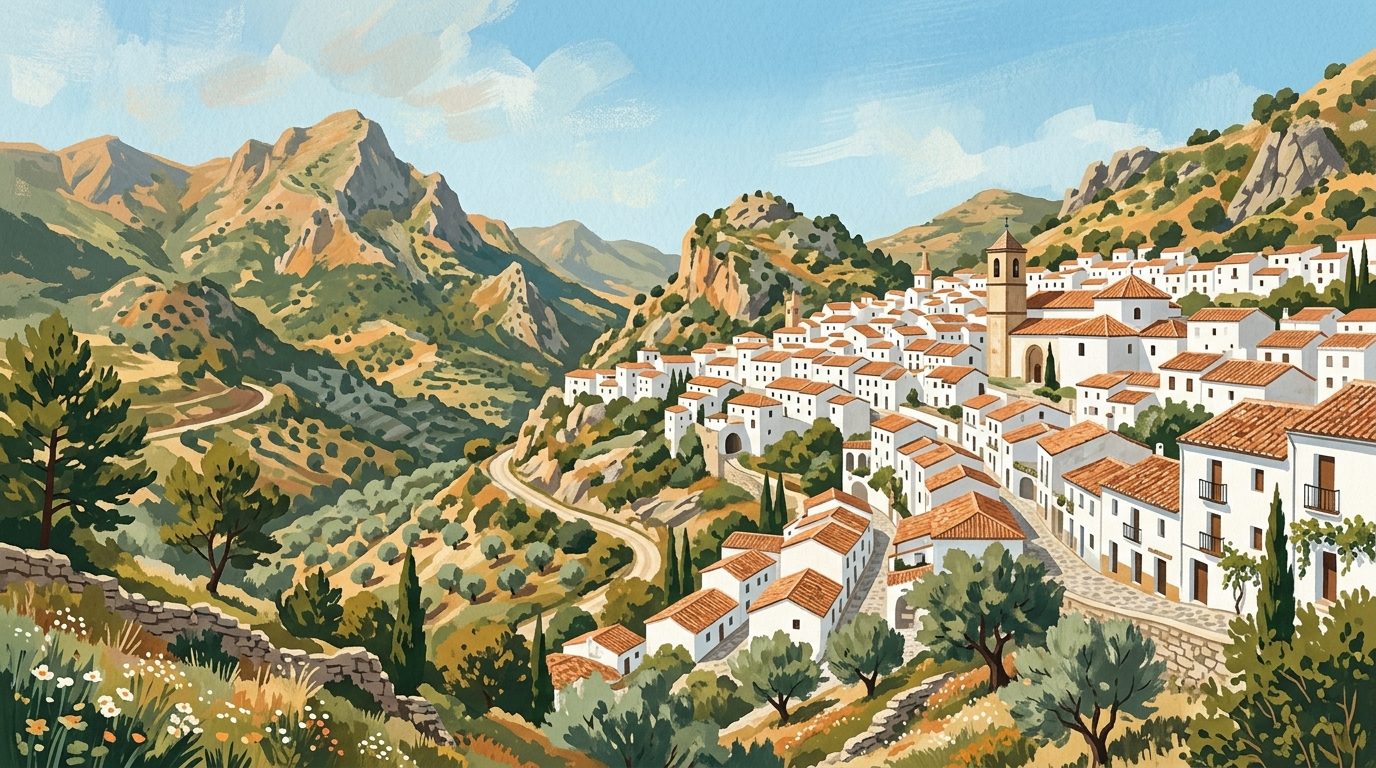
Beyond the Atlantic breezes of the Cádiz coast, a world of limestone peaks and lime-washed walls rises into the clouds. These are the Pueblos Blancos (white villages), where life is measured by the seasons and the steepness of the climb.
The Pueblos Blancos of Cádiz are not merely a collection of pretty facades; they are survivors. For centuries, these settlements served as the frontier between Christian and Muslim kingdoms, a history written into their defensive positions and the very names of the towns, many of which still carry the suffix de la Frontera (of the frontier). The tradition of using cal (lime wash) began as a practical measure to deflect the fierce southern sun and disinfect homes, but it has created one of the most distinctive architectural landscapes in Europe.
Driving through the Sierra de Cádiz, you will find that each village has its own temperament. Some are dramatic, perched on the edge of precipices; others are tucked into the folds of the Sierra de Grazalema Natural Park, where the air smells of woodsmoke and damp pine. This is a region for slow travel. It is for those who find joy in a perfectly aged queso payoyo (a local goat and sheep milk cheese), the sound of goat bells in the distance, and the challenge of navigating a car through streets originally designed for mules. Put away the checklist and prepare for the verticality of the interior.
Arcos de la Frontera
The sheer drop of the sandstone crag
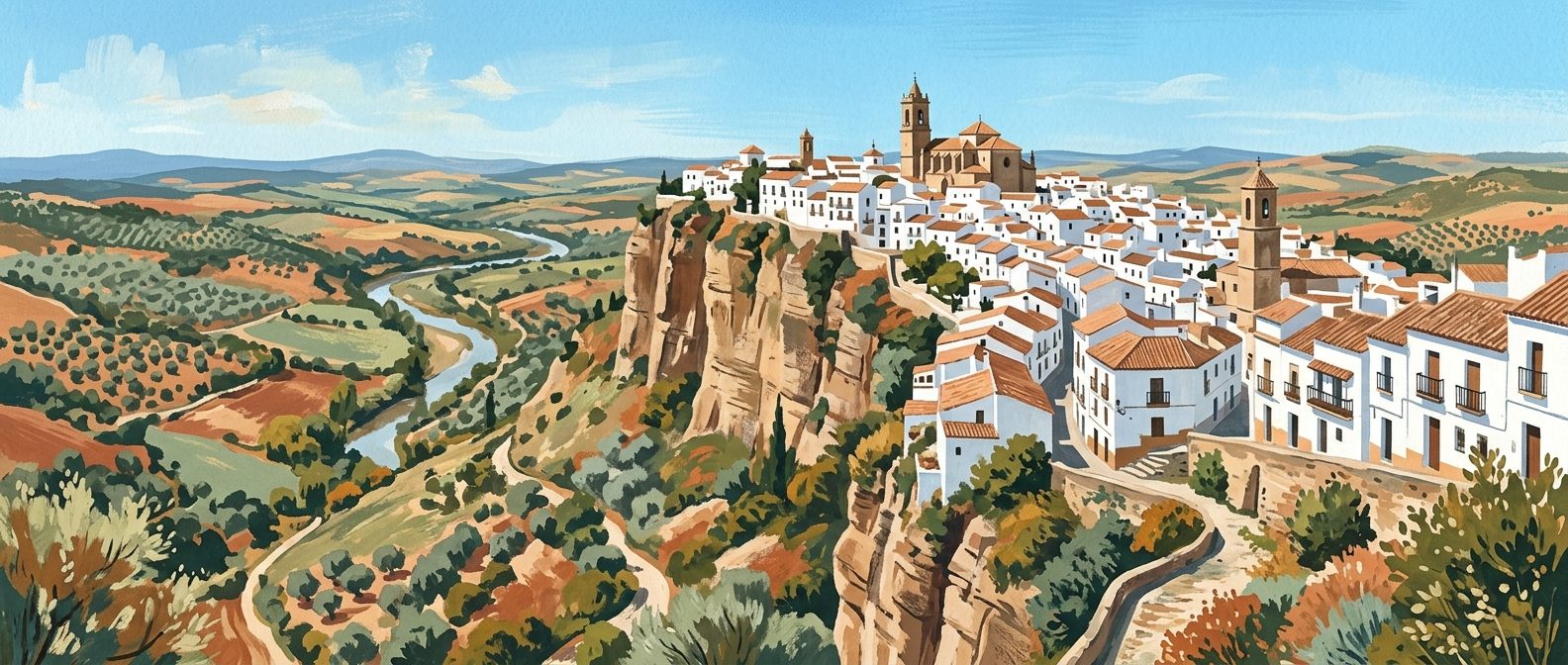
Arcos de la Frontera serves as the logical starting point for any exploration of the white villages. Standing on a sandstone ridge, the town terminates abruptly at the Peña de Arcos, a sheer cliff that drops 150 metres to the Guadalete River below. The best place to orient yourself is the Plaza del Cabildo. On one side, the Gothic-Baroque façade of the Basílica de Santa María de la Asunción looms; on the other, the Balcón del Coño offers a view so sudden and steep that it traditionally elicits a specific Spanish profanity, hence the name.
Walking the interior of Arcos requires sturdy footwear and a lack of ego regarding your sense of direction. The streets narrow as you climb toward the castle, passing convents like the Mercedarias, where you can still buy dulces (sweets) from cloistered nuns via a torno (revolving wooden window). For lunch, avoid the tourist menus on the main drag and seek out Taberna Jóvenes Flamencos on Calle Nueva. Order the alboronía, a local vegetable stew of Moorish origin that predates the arrival of the tomato in Spain.
Read the full Arcos de la Frontera guide →
Grazalema
The rain-drenched heart of the sierra
Grazalema holds the unlikely title of the wettest place in Spain. This microclimate, created by Atlantic clouds hitting the first major mountain range they encounter, results in a lush, emerald landscape that feels worlds away from the dry plains of Sevilla. The village is the centre of the Sierra de Grazalema Natural Park and serves as the primary base for hikers. The surrounding mountains are home to the Pinsapo (Spanish Fir), a rare prehistoric tree that survived the last ice age only in these specific altitudes and parts of the nearby Sierra de las Nieves.
In the village itself, the architecture is exceptionally well-preserved, characterised by heavy wooden doors and wrought-iron window grilles. Grazalema was historically famous for its wool production; you can still visit the Mantas de Grazalema factory and museum to see traditional blankets being made on 19th-century looms. When the evening chill sets in, even in late spring, head to El Simancón to eat Sopa de Grazalema, a hearty broth made with chorizo, egg, and mint. It is the definitive flavour of the mountains.
Read the full Grazalema guide →
Ubrique
The scent of leather and Roman roads
Ubrique is an anomaly. Unlike its neighbours, which rely heavily on tourism and agriculture, Ubrique is a global powerhouse of leather craftsmanship. Walk through the lower part of town and you will smell it: the earthy, rich scent of cured hides. The town’s petacas (leather cigar cases) were once famous across the empire, and today, local workshops discreetly produce handbags for the world’s most expensive French and Italian luxury labels. The Museo de la Piel, housed in an 18th-century Baroque convent, provides an excellent look at this industrial heritage.
To see Ubrique at its most dramatic, climb to the Ermita del Calvario. From this small chapel, the town appears to be swallowed by the surrounding limestone massifs of the Cruz del Picacho. If you have a few hours, follow the remains of the Roman road that climbs out of the town towards Benaocaz. It is a rugged, stony path that has been used by shepherds and soldiers for two millennia, offering views that make the modern world feel very distant indeed.
Zahara de la Sierra
A fortress overlooking turquoise waters
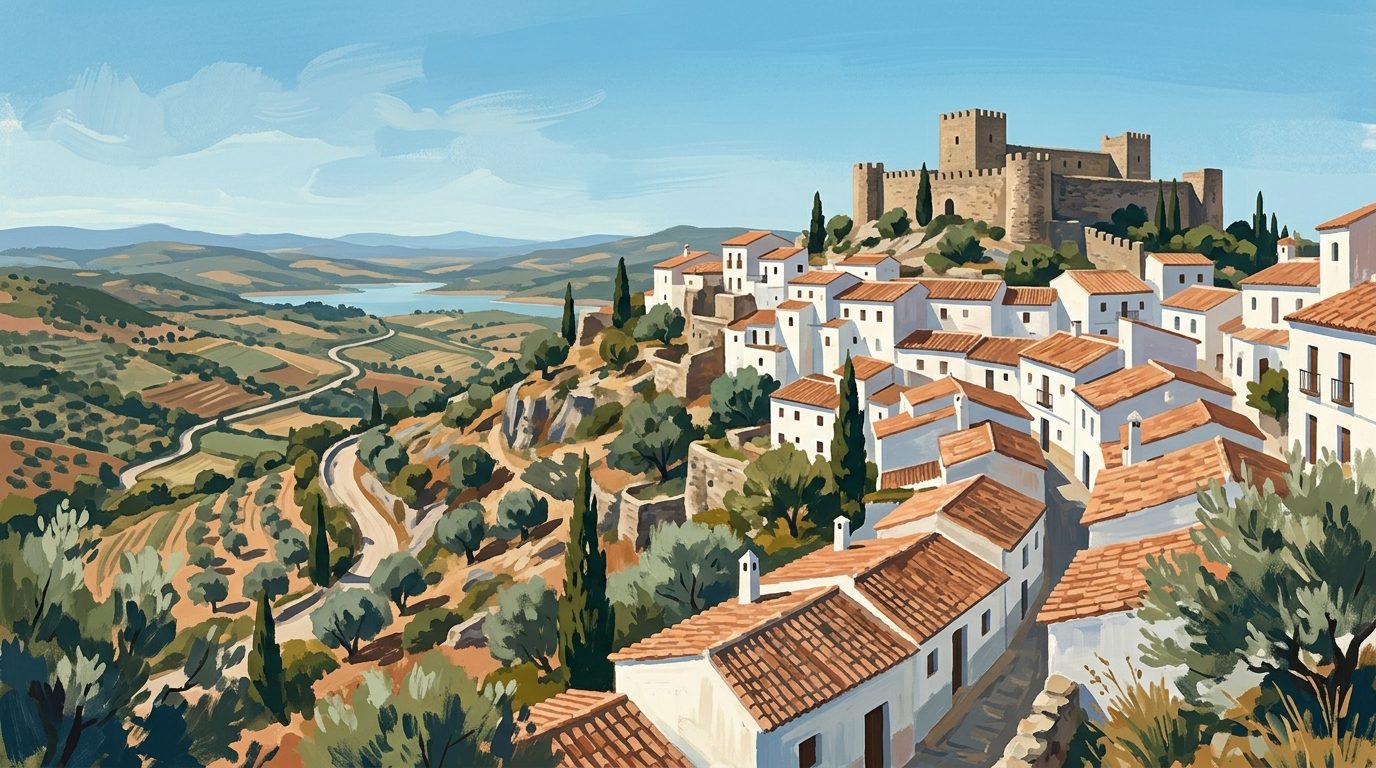
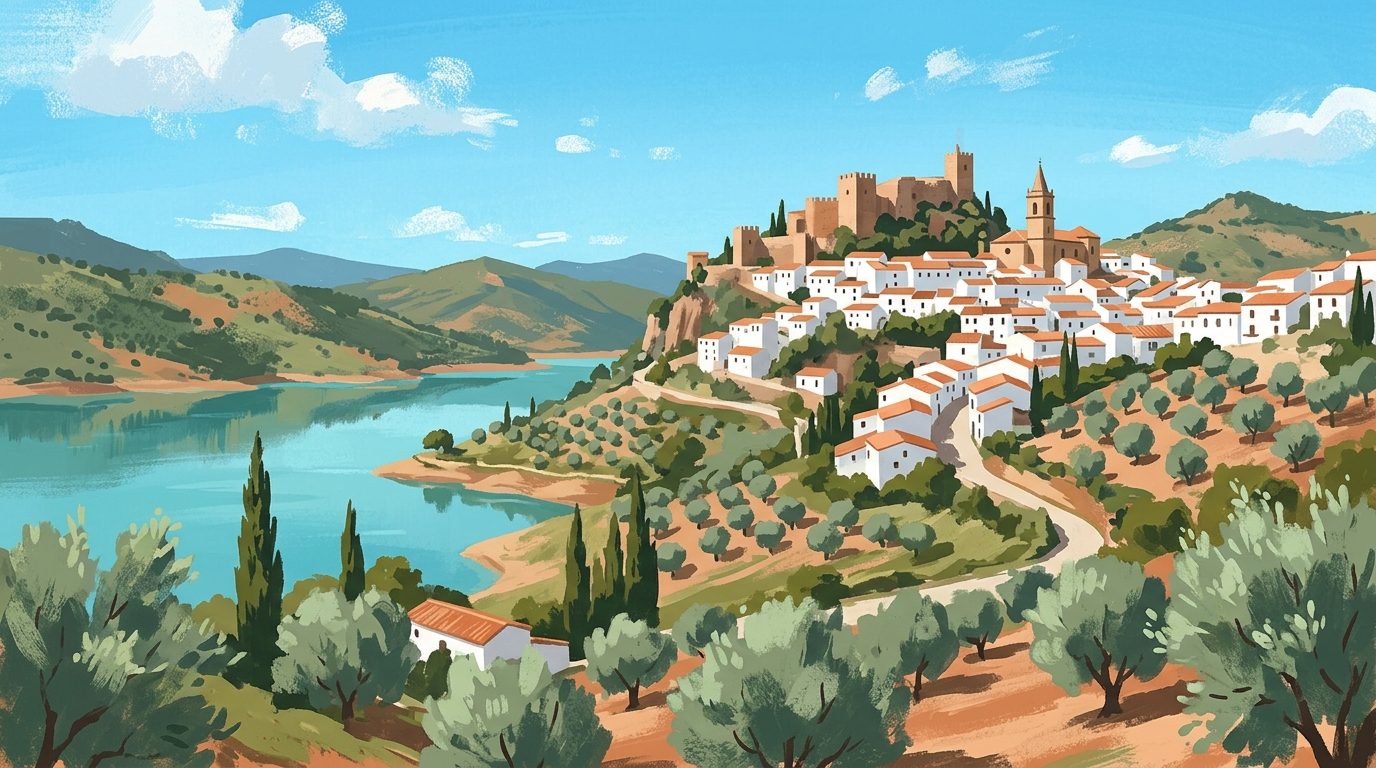
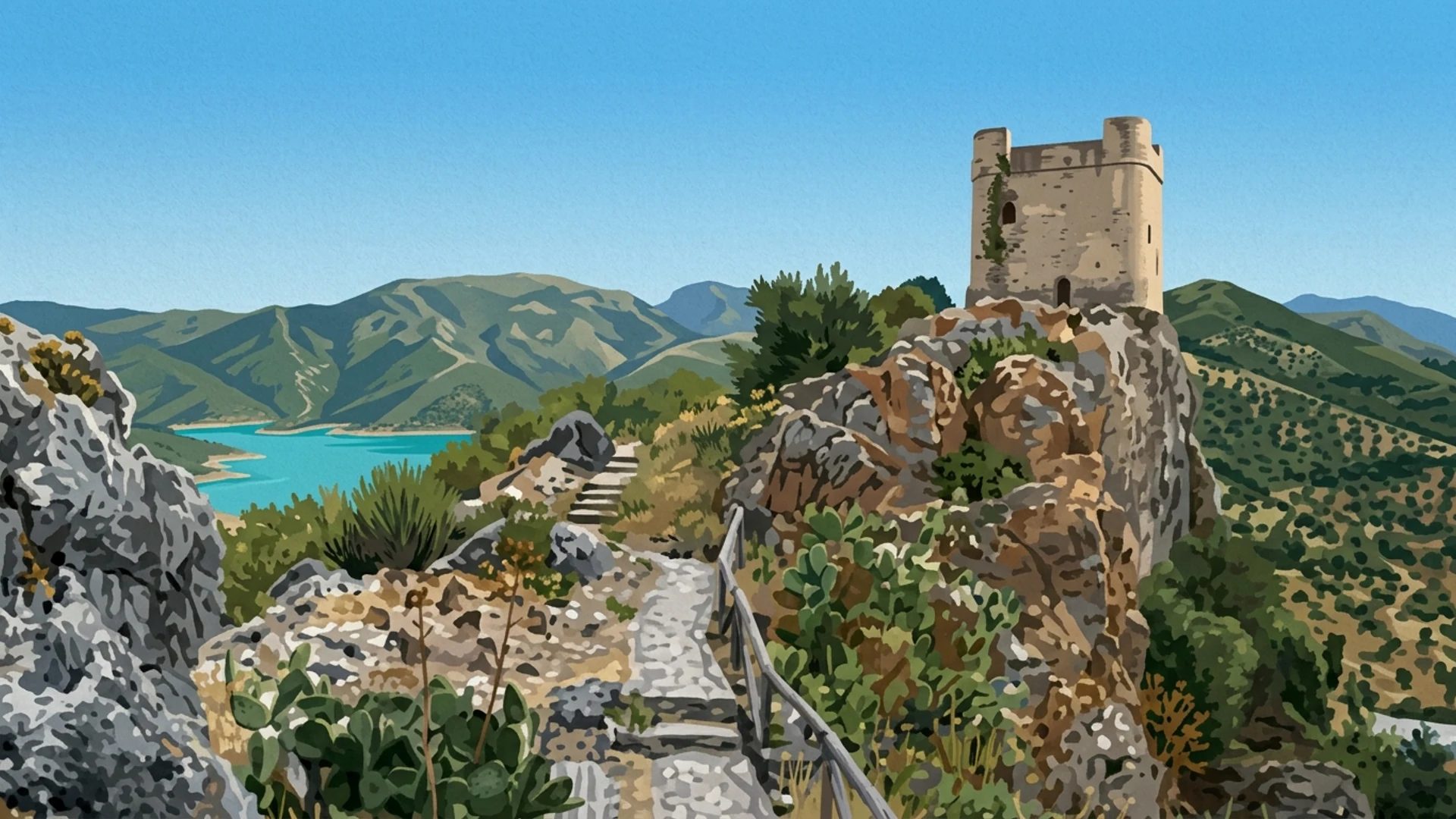
The approach to Zahara de la Sierra is one of the most spectacular sights in Andalucía. The village clings to a steep hill, topped by a 13th-century Almohad tower, all reflecting in the turquoise waters of the Embalse de Zahara-el Gastor reservoir below. The climb to the Torre del Homenaje (Tribute Tower) is non-negotiable; from the summit, you can see the entire valley laid out like a map, with the peaks of the Sierra de Líjar in the distance.
Zahara is also a centre for high-quality olive oil. Visit the Oleum Viride mill just outside the village to taste oil made from the manzanilla cacereña olive, which has distinct notes of green apple and freshly cut grass. For a long, lazy lunch, Al Lago offers a terrace with views over the water. Their menu focuses on local produce but with a more modern execution than the standard mountain fare; try the pork cheek braised in local red wine. After lunch, a short drive takes you to the Garganta Verde, a deep canyon that is home to a massive colony of griffon vultures.
Read the full Zahara de la Sierra guide →
Olvera
The silhouette of the frontier
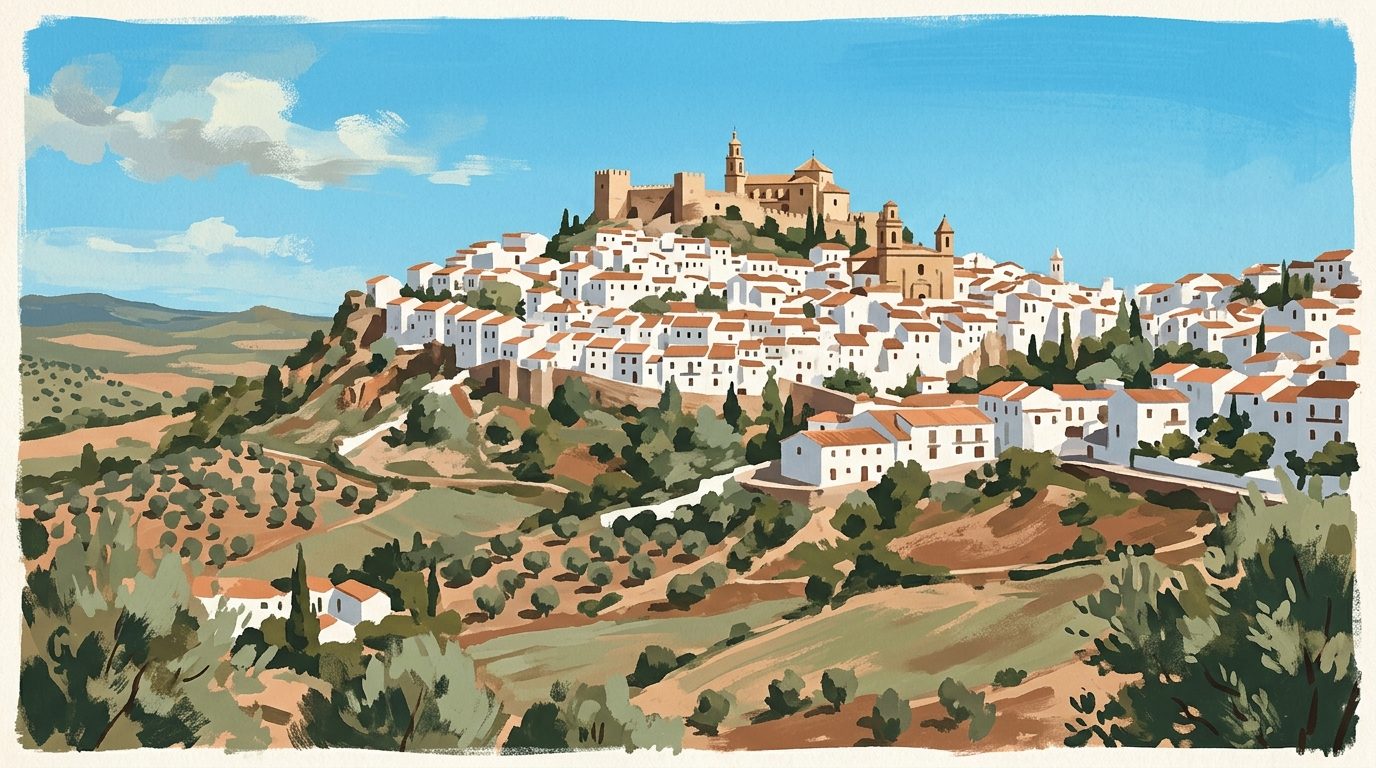
Olvera is often described as having the most impressive silhouette of all the white villages. As you approach from the north, two structures dominate the skyline: the massive Neoclassical Church of Nuestra Señora de la Encarnación and the remains of the Moorish castle, both balanced on a narrow ridge of rock. The town was a key strategic point on the Vía de la Plata (Silver Route), and that sense of importance remains in its grand plazas and wide, sloping streets.
One of the main reasons to visit Olvera today is the Vía Verde de la Sierra. This is a former railway line, built in the early 20th century but never used by trains, that has been converted into a 36-kilometre cycling and walking trail. It runs through 30 tunnels and over four viaducts, connecting Olvera with Puerto Serrano. It is an easy, flat route that takes you through the Peñón de Zaframagón, which hosts one of Europe’s largest nesting colonies of tawny vultures. Rent a bike at the old station in Olvera for a day of car-free exploration.
Setenil de las Bodegas
Living under the weight of history
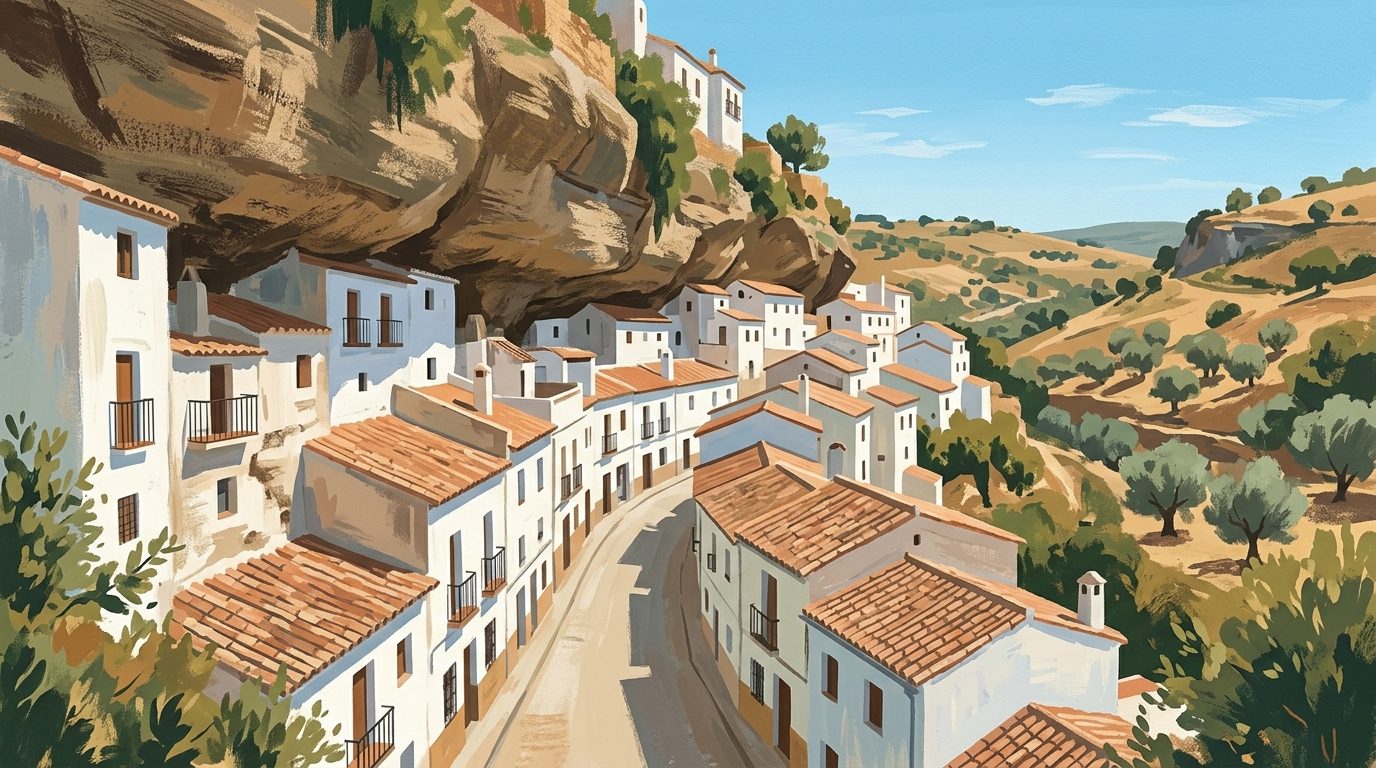
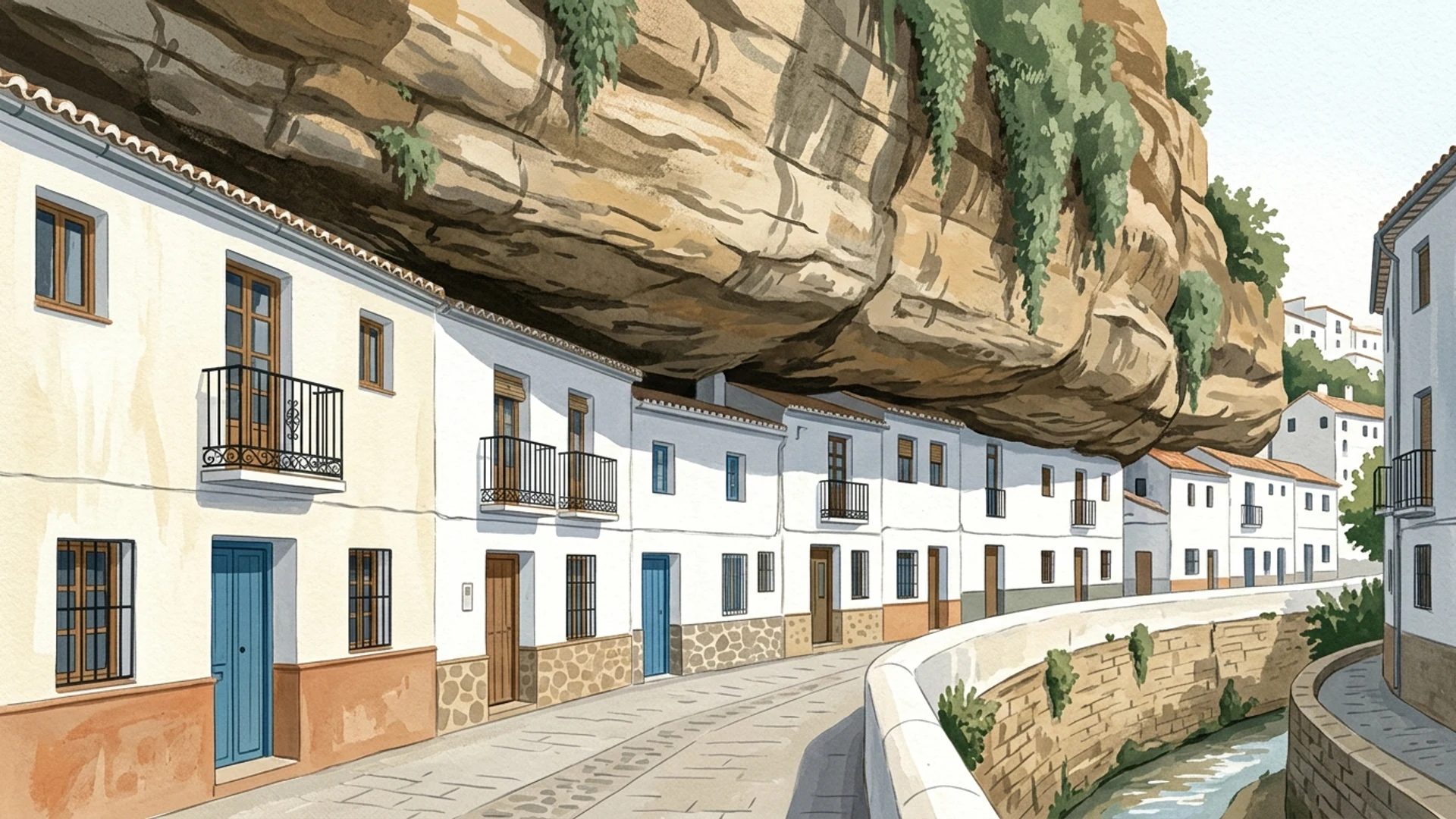
Setenil de las Bodegas is fundamentally different from its neighbours. While other villages were built on peaks for defence, Setenil grew along the narrow gorge of the Río Trejo. Here, the residents used the natural erosion of the limestone cliffs to their advantage, building their houses directly into the rock overhangs. In streets like Calle Cuevas del Sol and Calle Cuevas de la Sombra, the "roofs" are not tiles, but millions of tonnes of solid rock. This provides a natural insulation that keeps the houses cool in the searing heat of August and warm in the winter.
The town’s name refers to the bodegas (wineries) that once filled these cool caves, though today they are more likely to house bars or shops selling chacinas (cured meats). Setenil is famous for its pork products, particularly the morcilla (black pudding) and chorizo. Find a table at Bar Frasquito on the riverbed to experience the sensation of dining with a mountain hanging over your head. It is a geological curiosity that remains a functioning, working village rather than a museum piece.
Read the full Setenil de las Bodegas guide →
Vejer de la Frontera
The coastal white village
Vejer de la Frontera sits somewhat apart from the rest of the route, located closer to the Atlantic coast than the high mountains of Grazalema. However, it is arguably the most impeccably maintained of all the white villages. Its walled old town is a labyrinth of whitewashed alleys and hidden patios filled with geraniums. The Plaza de España, with its tiled fountain and towering palms, is often cited as the most beautiful square in the province.
Vejer has a distinctly cosmopolitan edge. This is reflected in its dining scene, most notably at El Jardín del Califa, which serves excellent North African and Middle Eastern cuisine in a restored 16th-century barn and garden, a nod to the town’s long Moorish history. Don't miss the Callejón de las Monjas, a stunning street defined by its flying buttresses. If you visit in the evening, look for the statue of the Cobijada, a woman dressed in the traditional black cloak that covered everything but one eye, a garment that looks remarkably like a niqab but was worn here well into the 20th century.
Read the full Vejer de la Frontera guide →
Eating & Drinking in Pueblos Blancos
The gastronomy of the white villages is rugged and seasonal. This is the land of the retinto cow, a local breed that produces exceptionally high-quality beef. In the mountains, look for carne de monte (wild boar or venison), usually slow-cooked in a rich sauce of wine and herbs. Cheese is perhaps the region's most famous export. The Payoyo cheese, produced in the Sierra de Grazalema, has won numerous international awards; try the version cured in rosemary or lard for the most authentic experience.
Breakfast in these villages is a serious affair. Order a mollete (a soft, round bread roll) toasted and topped with manteca colorá, lard seasoned with paprika and bits of pork. To wash it down, skip the commercial lagers and try a craft beer from Cerveza Gaitanejo or a glass of local red wine. While Cádiz is famous for Sherry, the mountains around Arcos and Prado del Rey are increasingly producing excellent still red wines using Tintilla de Rota grapes.
Where to Stay
For an authentic experience, choose a property that leans into the local architecture. In Arcos, the Parador de Arcos de la Frontera is located in an old magistrate's house right on the cliff edge; the views from the terrace are worth the price alone. In Vejer, Casa del Califa offers a collection of interconnected historic houses that feel like a journey through time, featuring stone arches and a rooftop with views out to the African coast on clear days.
If you prefer the quiet of the high mountains, look for casas rurales (country houses) in or near Grazalema. Hotel El Fuerte Grazalema is located just outside the village and offers a more resort-style experience with a pool, but for something more intimate, try Hotel Blanco Encalado in Olvera, which combines traditional charm with modern hospitality. Many visitors choose to rent a small village house to fully immerse themselves in the local rhythm of life.
Getting There & Around
A car is essential for exploring the Pueblos Blancos. While there are buses connecting the larger towns like Arcos and Ubrique, the schedules are often designed for locals rather than tourists and can be infrequent. The most scenic route is the A-372, which winds from Arcos through El Bosque and up into Grazalema. Be prepared for narrow roads with sharp bends and significant gradients. If you are driving the CA-9104 over the Puerto de las Palomas pass towards Zahara, ensure your brakes are in good order, as it is one of the most dramatic mountain passes in Andalucía, reaching an altitude of 1,357 metres.
Best Time to Visit
Spring (April to June) is the optimum time to visit. The mountains are carpeted in wildflowers, the reservoirs are full, and the temperatures are perfect for hiking without the oppressive heat of the lowlands. Autumn (October and November) is also excellent, particularly for seeing the chestnut forests change colour and for sampling the new season's olive oil and mushrooms. Avoid the peak of summer (July and August) if you plan on doing anything active; the sun reflecting off the white walls can make the villages feel like a kiln, with temperatures often exceeding 40°C.