
Feature · Córdoba
A Guide to the Patios de Córdoba
While other Andalucían festivals celebrate grand public spectacles, the Patios de Córdoba invite you into the most intimate of domestic spaces: the floral courtyards of private family homes.
By Dan · Updated 13 May 2026 · 10 min read
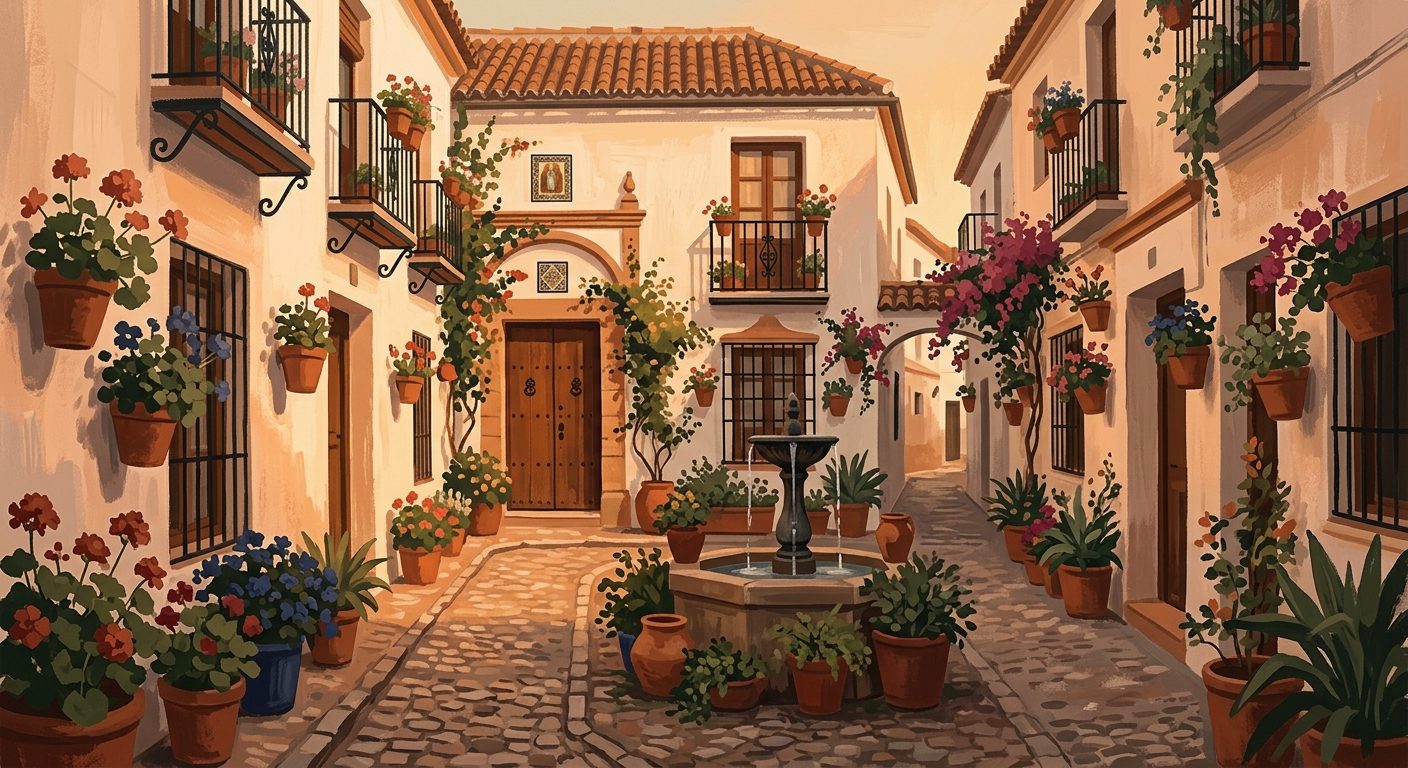
While other Andalucían festivals celebrate grand public spectacles, the Patios de Córdoba invite you into the most intimate of domestic spaces. For two weeks in May, families open their private courtyards to reveal whitewashed walls transformed by hundreds of blooming geraniums, carnations, and trailing jasmine.
The roots of the courtyard tradition
To understand the Patios de Córdoba, you must first understand the demanding climate of this inland city. Summer temperatures here regularly exceed forty degrees Celsius. To survive this intense heat, the Romans and later the Moors built their houses around central courtyards. These architectural voids acted as the lungs of the home. They captured the cool night air and retained it through the day, aided by central water features like wells and fountains.
Over the centuries, residents began lining these walls with climbing plants and hundreds of potted flowers to create a shaded, humid microclimate. What began as a practical architectural necessity evolved into a passionate horticultural art form. The modern festival began as a formal competition in 1921 when the local council decided to organise a contest to preserve the tradition. Today, the event is an internationally recognised cultural phenomenon, inscribed on the UNESCO Representative List of the Intangible Cultural Heritage of Humanity.
Unlike the sombre religious processions of Semana Santa or the public dancing of a local fair, this festival is deeply domestic. The participants are ordinary families, neighbourhood associations, and elderly residents who spend the entire year cultivating their plants. When they open their heavy wooden doors to the public, they are inviting you directly into their daily lives.
What to expect
Visitors should prepare for a profound sensory immersion. As you step from the sun-baked street through a stone entryway (known locally as a zaguán), the temperature drops noticeably. You will encounter the sharp scent of damp earth, the sweet perfume of jasmine, and the bright visual impact of blue terracotta pots mounted on brilliant white walls. The air is filled with the sound of trickling water from central fountains and the soft chatter of visitors admiring the displays.
You must also prepare for significant crowds and a test of patience. The festival is exceptionally popular with both domestic and international tourists. Because these are private homes, capacity is strictly limited. Many courtyards can only hold twenty people at a time. This inevitably leads to long lines snaking down narrow cobblestone streets, particularly on weekends. You might wait up to an hour to enter a courtyard that takes only five minutes to view.
The atmosphere within the queues is usually highly sociable. Locals share fans and exchange tips on which nearby streets have the best displays. Once inside, the mood shifts to quiet reverence. You will often see the owners sitting quietly in a corner, watching thousands of strangers filter through their personal sanctuary. It is an extraordinary display of civic pride and Andalucían hospitality.
When it happens
The festival takes place in early May. It typically spans two full weeks, bridging the gap between the Cruces de Mayo (the Festival of the Crosses) and the Feria de Córdoba (the city fair) at the end of the month. The exact dates shift slightly each year depending on the calendar, but the courtyards usually open around the second or third of May and close by the middle of the month (check the official town hall website for exact closing dates before travelling).
The daily schedule is strictly observed and follows the traditional Spanish rhythm. The patios open to the public in the morning, usually from 11:00 to 14:00. At two o'clock, the heavy wooden doors close firmly. This afternoon closure is crucial. It gives the plants a reprieve from the intense midday heat, allows the owners to water the displays, and lets the families eat their lunch and rest. The doors reopen in the early evening, typically from 18:00 to 22:00.
Evening viewing offers a completely different atmosphere. The fading light creates long shadows across the pebble floors, and the scent of the flowers becomes much more pronounced in the cooler night air. Many locals prefer viewing the courtyards after dusk for this exact reason.
The routes and the competition
The festival is fiercely contested, with awards given in two main categories. The first is Ancient Architecture (Arquitectura Antigua), which recognises courtyards built before the mid-twentieth century that preserve their original structural elements. The second is Modern Architecture (Arquitectura Moderna), dedicated to newer courtyards or those that have undergone significant renovation while maintaining traditional decorative styles.
The participating homes are grouped into six distinct municipal routes to help visitors navigate. The most famous and heavily visited route is the Alcázar Viejo, located in the San Basilio neighbourhood. This area contains the highest concentration of prize-winning patios, including the legendary courtyards on Calle San Basilio and Calle Martín de Roa. The architecture here is classic, and the floral density is staggering.
Other routes offer a quieter, more residential experience. The Santa Marina and San Agustín routes take you into the northern part of the historic centre. Here, you will find sprawling, aristocratic courtyards alongside humble, communal patios shared by multiple families. A famous example of the latter is Calle Marroquíes, a labyrinthine communal workspace and living area that feels like a small village entirely consumed by vegetation.
The Judería route winds through the ancient Jewish quarter surrounding the Mezquita-Catedral. While convenient for day-trippers, these spaces tend to be smaller and heavily congested. Finally, the San Lorenzo and Regina-Realejo routes provide a wonderful opportunity to explore working-class neighbourhoods that tourists rarely visit outside of May.
Where to walk and where to be
To navigate the festival successfully, you need a strategy. The local town hall releases an official map and the 'Patios de Córdoba' mobile application each year, detailing the routes and the opening times. Downloading this map is essential.
If you want to view the famous San Basilio courtyards without standing in line for hours, you must avoid the weekends entirely. A Tuesday or Wednesday morning is the ideal time to visit this specific neighbourhood. Arrive at the first courtyard fifteen minutes before the official opening time to secure your place at the front of the queue.
For weekend viewing, abandon the popular routes and head north to San Lorenzo or San Agustín. The streets here are wider, the queues are manageable, and the experience feels much more authentic. You can spend a highly enjoyable Saturday evening wandering between the Convent of Santa Marina and the Plaza de San Lorenzo, dropping into whichever courtyard has the shortest line.
For a guaranteed, comprehensive viewing experience outside of the competition circuit, you should visit the Palacio de Viana. This aristocratic mansion is open year-round but is particularly spectacular in May. It contains twelve distinct historical courtyards, each representing a different era and style of Andalucían gardening. It requires a paid ticket, but it offers a structured, crowd-controlled alternative to the public streets.
What to wear and cultural sensitivities
May in Cordoba is invariably hot, often reaching the low to mid-thirties by mid-afternoon. Lightweight, breathable clothing is essential. However, the most critical item of clothing is your footwear. The historic centre of Cordoba is paved entirely with uneven cobblestones, known locally as enchinado. High heels or thin-soled sandals will make your day deeply uncomfortable. Sturdy, comfortable walking shoes are mandatory, as you will be standing and walking for several hours at a time.
You must remember that you are entering private homes, not public museums. The residents sleep, cook, and live in the rooms surrounding these courtyards. Cultural etiquette is paramount. Never touch the plants, no matter how tempting it might be to feel a velvet petal or inspect a watering mechanism. The oils from human hands damage the delicate blooms, and a snapped stem can ruin a carefully cultivated display.
Keep your voice down while inside. The acoustics of a stone courtyard amplify every sound. Shouting to a friend across the patio is considered highly disrespectful. When taking photographs, be mindful of others. Do not monopolise a doorway or block a narrow path to stage a portrait. Take your photos quickly and move along to allow the next person to enter.
Finally, near the exit of almost every courtyard, you will notice a small ceramic plate or brass tray. While entry to the patios is entirely free, leaving a small donation is an important cultural norm. The water bills required to keep hundreds of plants alive through a dry Andalucían spring are astronomical. Leaving a one or two euro coin is a respectful acknowledgement of the immense labour and financial cost the owners bear to host the festival.
Where to eat and drink
Exploring the courtyards is hungry work, and Cordoba possesses one of the most distinctive culinary traditions in southern Spain. The local food is heavy, flavourful, and designed to be accompanied by the region's fortified wines.
If you are exploring the San Basilio route, Taberna San Basilio and Taberna La Viuda offer excellent traditional fare. They will be incredibly busy during the festival, so arriving the moment they open for lunch (usually around 13:30) is the only way to secure a table without a reservation.
When you sit down, you must order salmorejo cordobés. This cold, thick emulsion of tomatoes, bread, olive oil, and garlic is topped with chopped Iberian ham and hard-boiled egg. It is the definitive dish of the city. Follow this with a flamenquín, a large pork loin pounded flat, rolled around Iberian ham, breaded, and deep-fried. Another local speciality is berenjenas fritas con miel de caña, crispy slices of fried aubergine drizzled with thick, dark molasses.
To drink, ask for a glass of Montilla-Moriles wine. This local appellation produces wines very similar to sherry but made primarily from the Pedro Ximénez grape. A chilled glass of dry fino from Montilla is the perfect accompaniment to the heavy local tapas. For a deeply traditional drinking experience, head to the Sociedad de Plateros in the San Francisco neighbourhood, a historic tavern where the wine is poured directly from enormous wooden casks.
Where to stay and booking advice
Accommodation in Cordoba during the first half of May is under immense pressure. Prices for hotels and apartments frequently double or triple, and the best properties sell out entirely. You must book your accommodation at least six to nine months in advance to secure a reasonable rate and location.
Choosing the right neighbourhood is a balancing act. The Judería and the immediate vicinity of the Mezquita-Catedral offer profound historical atmosphere and put you within walking distance of many courtyards. However, these areas are noisy, crowded, and entirely inaccessible by car. If you stay here, you will be in the thick of the action from early morning until late at night.
For a more restful experience, look for accommodation slightly outside the medieval core. The modern area known as Vial Norte, located near the main train station, offers contemporary hotels with excellent air conditioning and soundproofing. From here, it is a pleasant twenty-minute walk into the historic centre, allowing you to escape the festival crowds when you need to sleep.
Alternatively, the neighbourhoods of Santa Marina and San Lorenzo offer a brilliant compromise. They are historic and feature their own beautiful courtyard routes, but they lack the overwhelming density of day-trippers that flood the southern half of the city.
Practical notes
The physical geography of the festival dictates how you travel. The historic centre of Cordoba is a confusing maze of narrow, pedestrianised alleys. Driving into the city centre during May is a frustrating and often impossible endeavour due to strict resident-only traffic zones and a severe lack of parking. If you are travelling by car, you should park in the modern sectors of the city or use a large commercial parking garage across the Guadalquivir river and walk in.
The most efficient way to reach Cordoba is by the high-speed AVE train network. The city is a major railway hub, located just forty-five minutes from Sevilla, one hour from Malaga, and under two hours from Madrid. The train station is a straightforward twenty-minute walk or a brief taxi ride from the main festival areas.
Because the event involves hours of walking outdoors, sun protection is vital. The sun is surprisingly fierce in early May. A wide-brimmed hat, high-factor sunscreen, and a reusable water bottle are indispensable. Public drinking fountains are available in many plazas, providing safe, cold water to keep you hydrated as you navigate this extraordinary celebration of Andalucían domestic life.
Last reviewed: 21 June 2026 · Editorial policy
Related guides
The Granite and the Geranium: The Fragile Geometry of Córdoba’s May
For two weeks in May, Córdoba’s residents throw open the doors of their private courtyards, turning a city of stone into a living, breathing laboratory of botanical obsession.
6 min read
The Fall of Córdoba, 1236
In 1236, a daring winter raid by Castilian frontiersmen escalated into a full siege of the former Umayyad capital. The subsequent surrender of Córdoba marked a decisive turning point in the medieval history of the Iberian Peninsula.
8 min read
The Floral Courtyards of Córdoba: A Guide to the Patios and Palacio de Viana
Discover the flower-filled courtyards of Córdoba, from the twelve aristocratic patios of the Palacio de Viana to the UNESCO-listed private homes that open their doors during the May Patio Festival.
6 min read
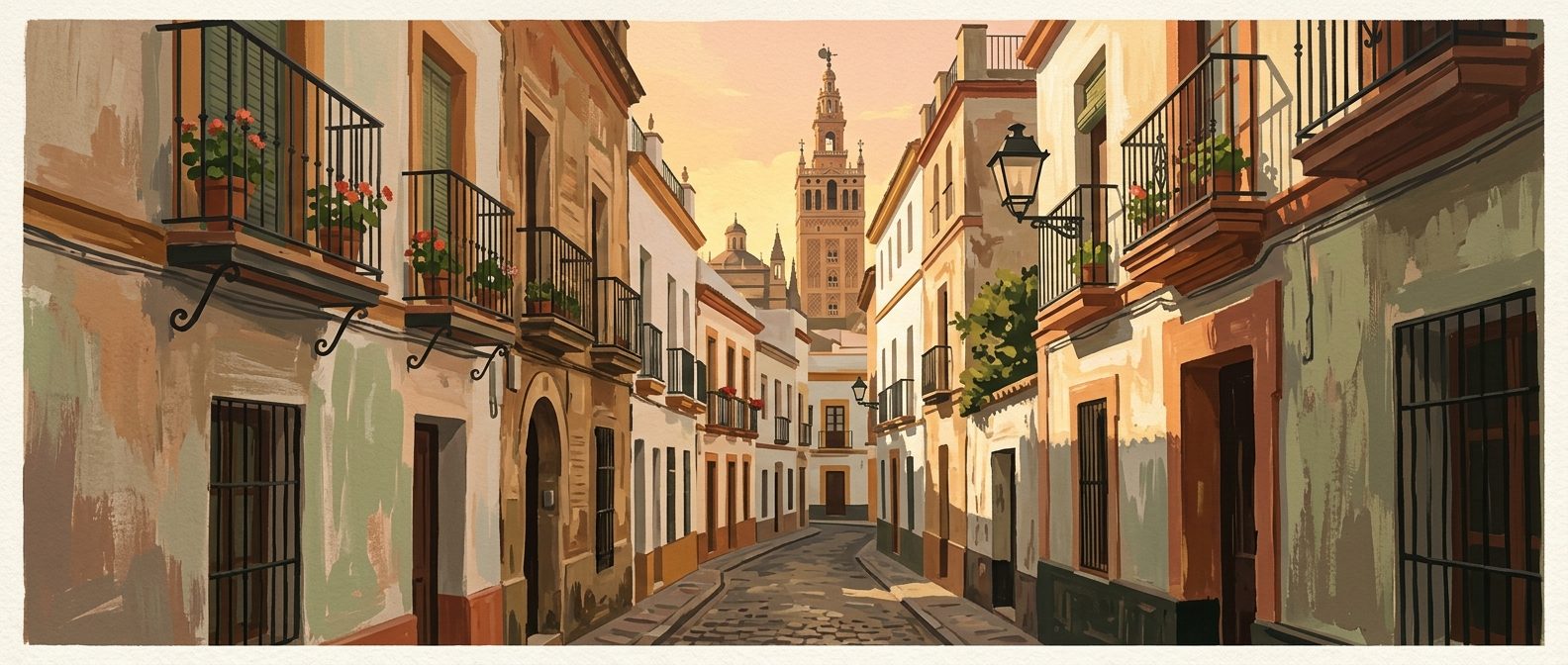
The Siege of the Real: Inside Sevilla’s Private Universe
Beyond the yellow dust of the Real, Sevilla’s great fair is a labyrinth of closed doors where the city’s true social hierarchy is revealed in the clinking of glasses.
8 min read
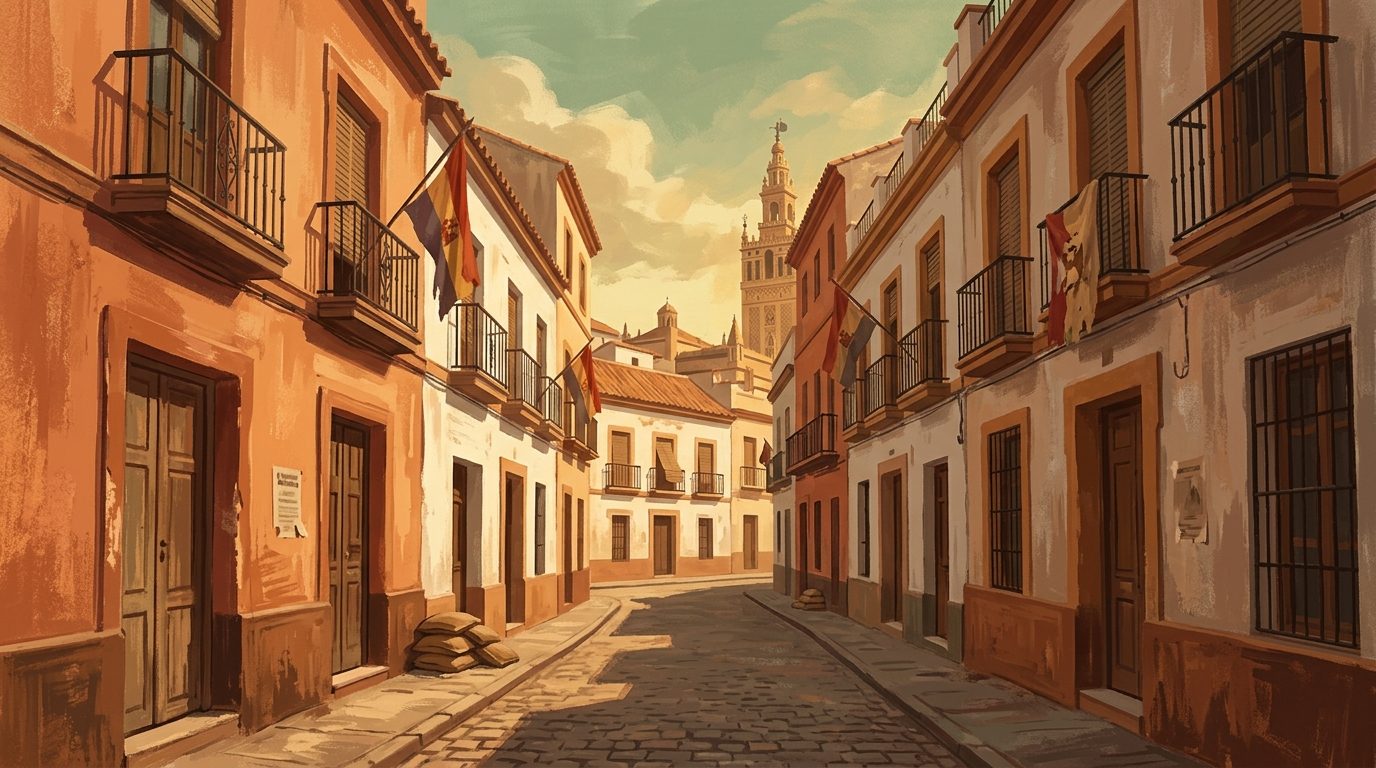
July 1936 in Andalucía: The Coup and the Fall of Sevilla
On 18 July 1936, General Gonzalo Queipo de Llano used bluff, intimidation, and brutal swiftness to seize Sevilla. His actions ignited a conflict that rapidly tore the region apart.
8 min read
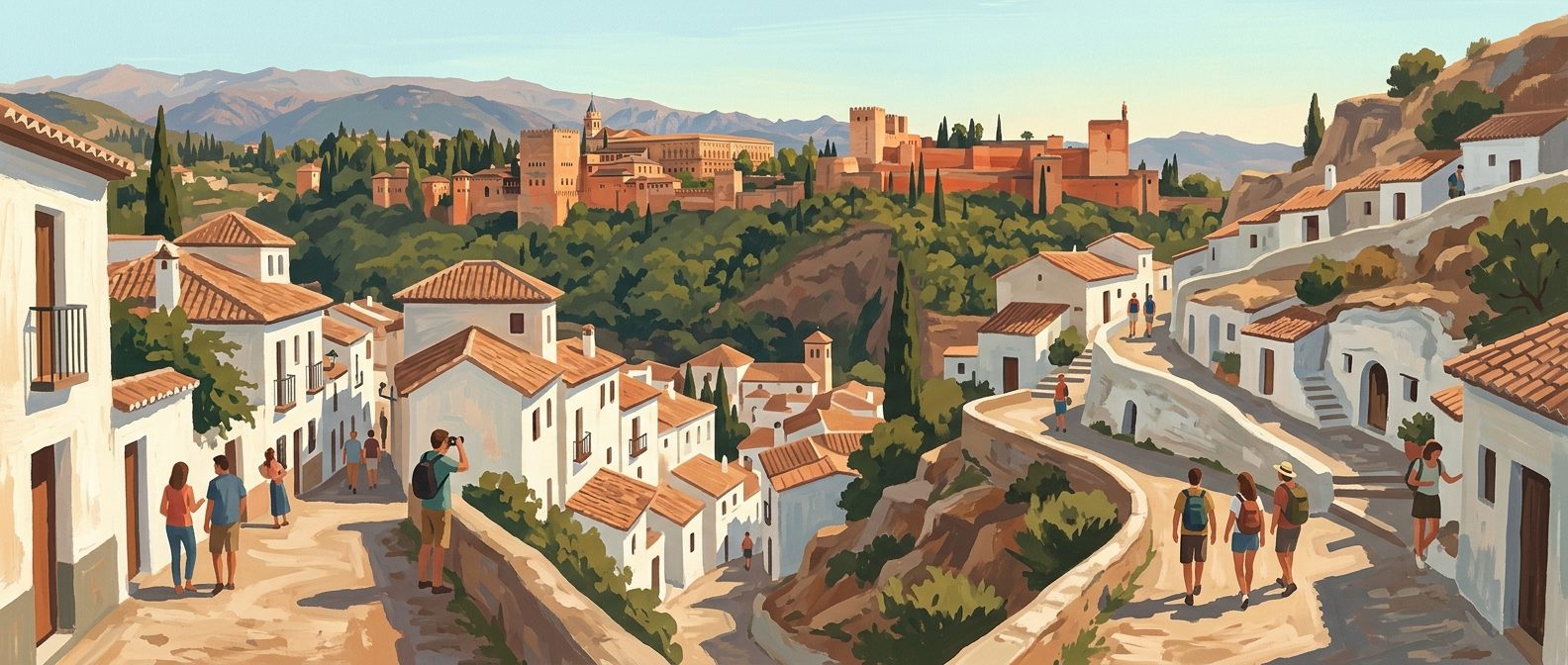
Unveiling Granada's Soul: A Journey Through the Albaicín and Sacromonte Quarters
Walk through Granada’s Albaicín and Sacromonte quarters with context on Moorish streets, cave houses, flamenco heritage, viewpoints and practical routes.
7 min read
More from Córdoba
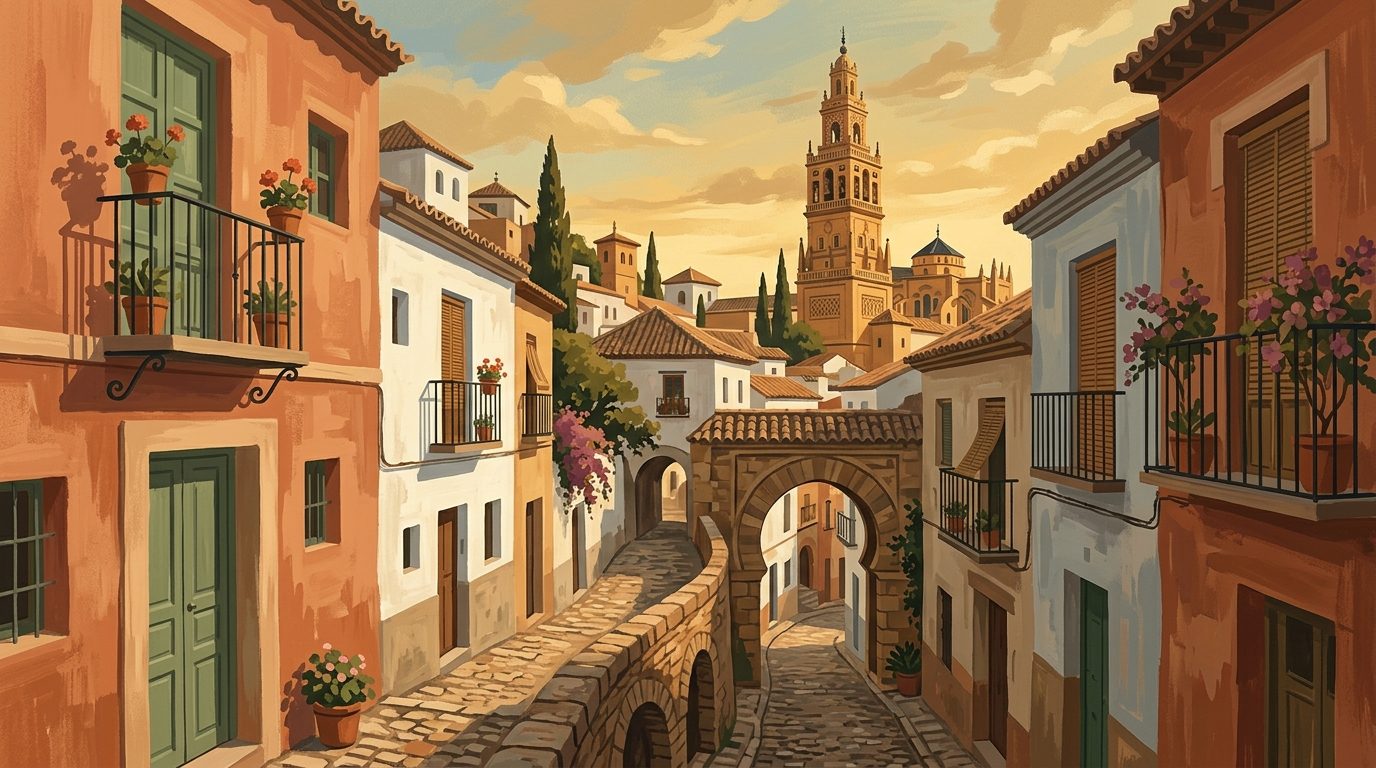
The Caliphate of Córdoba
In 929, Abd al-Rahman III declared himself Caliph, breaking religious ties with the Middle East and launching an era of unparalleled architectural and intellectual achievement.
8 min read
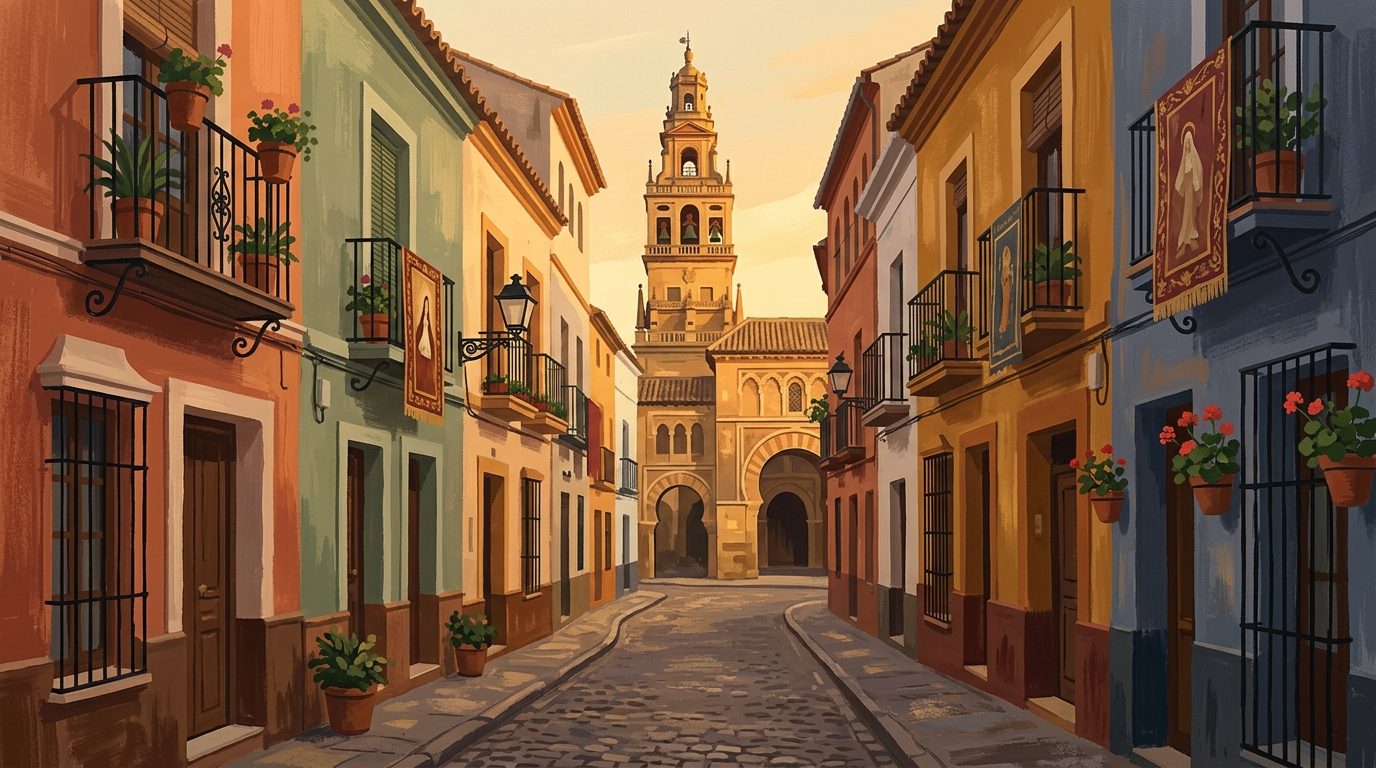
Semana Santa in Córdoba: The Definitive Guide
During Semana Santa in Córdoba, the air smells of orange blossom and incense as penitential floats pass beneath the candy-striped arches of the Mezquita.
8 min read
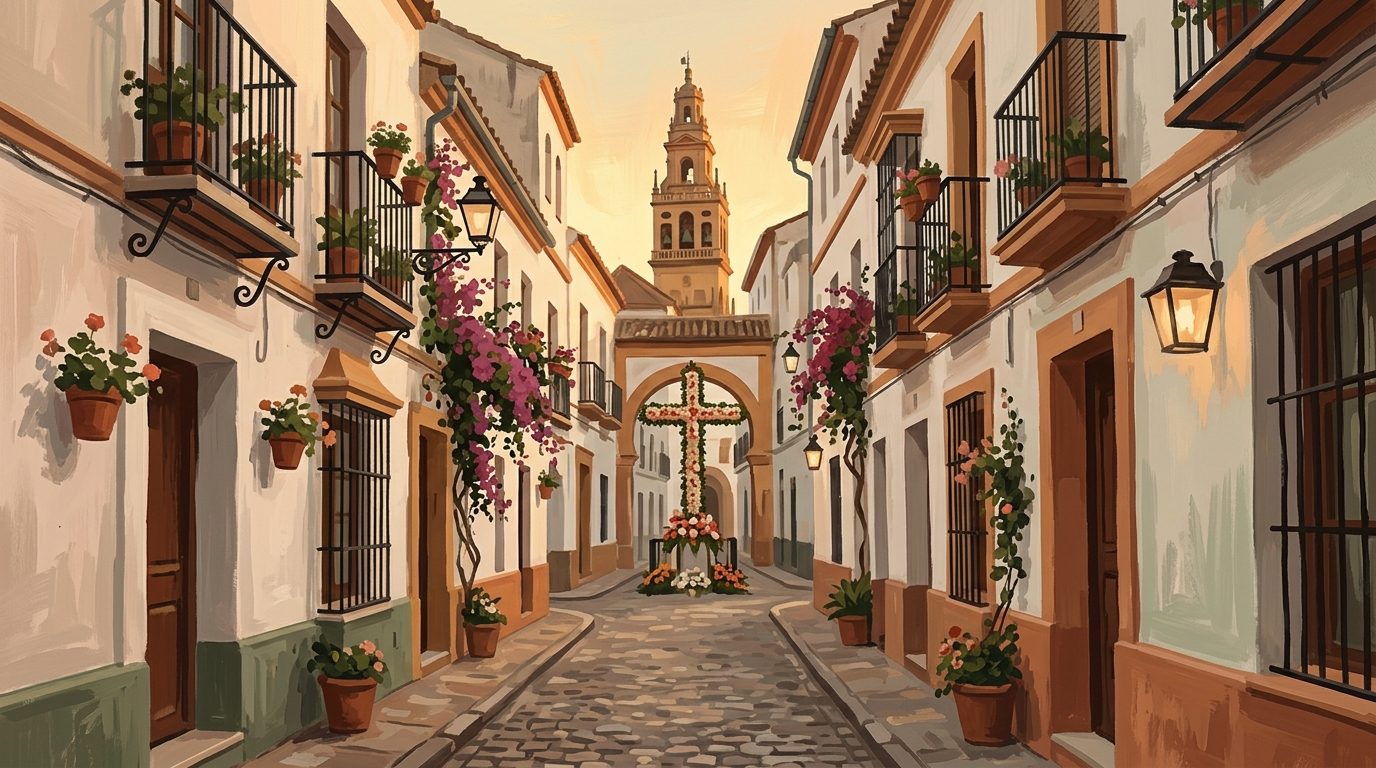
A Guide to the Cruces de Mayo Festival in Córdoba
Discover how Córdoba transforms its historic plazas into flower-draped street parties to celebrate the Cruces de Mayo festival.
8 min read
Newsletter
More stories from Andalucía
Weekly notes, seasonal picks, and the next guides worth bookmarking.