
Feature · Huelva
The Definitive Guide to Romería del Rocío in Almonte
Every Pentecost, the sandy streets of a small village in Almonte transform to host a million pilgrims drawn by intense devotion and Andalucían tradition.
By Dan · Updated 22 June 2026 · 10 min read
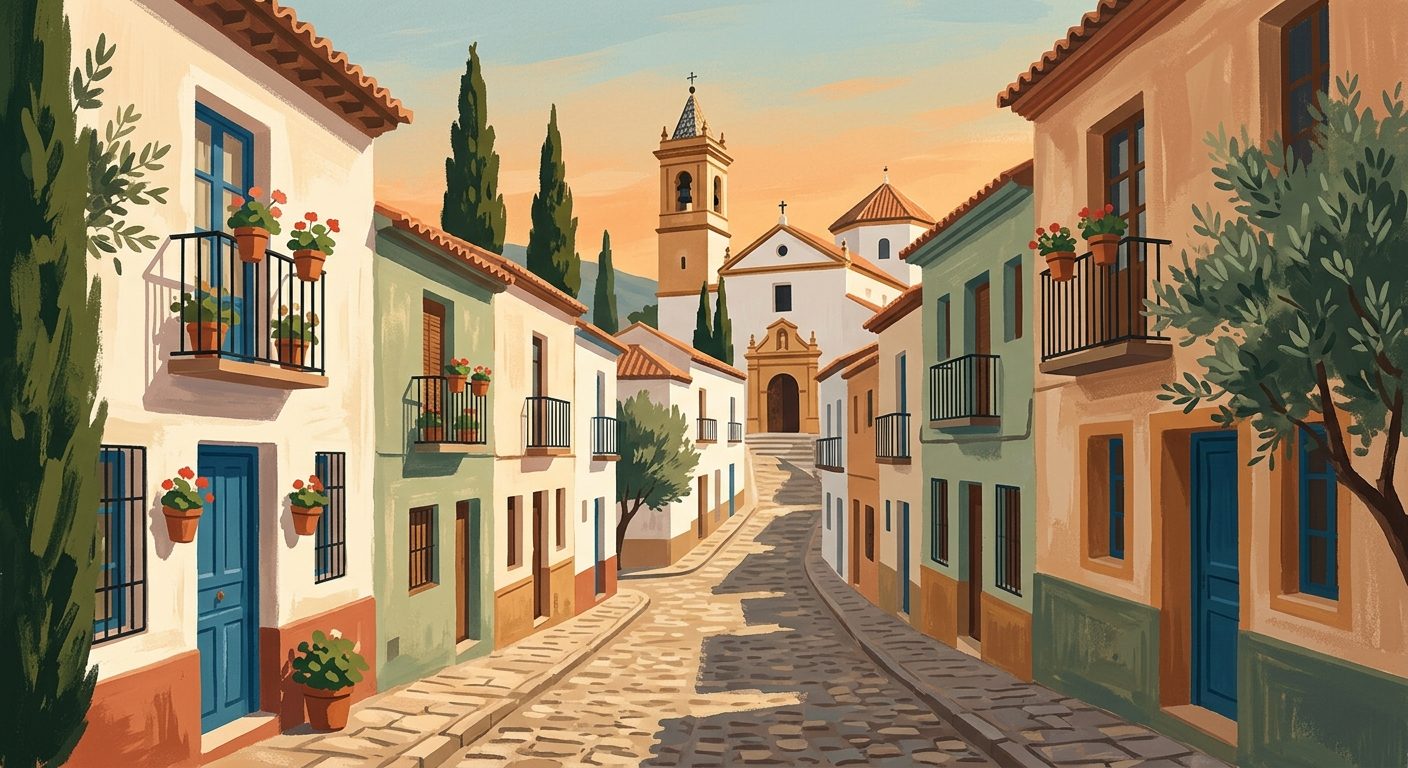
Every Pentecost, the unpaved sandy streets of El Rocío undergo a miraculous transformation, swelling from a sleepy village into a sprawling, makeshift city of a million pilgrims. It is an event where deep religious devotion collides with equestrian culture, creating a spectacle of dust, song, and overwhelming emotion that exists nowhere else in Andalucía.
To understand the Romería del Rocío, you must first understand its geography. El Rocío is a small village (aldea) within the vast municipality of Almonte in the province of Huelva. Bordering the wetlands of the Doñana National Park, it is a place where asphalt has never replaced the sand. For fifty-one weeks of the year, it is a quiet, wind-swept settlement of whitewashed houses with wide verandas and wooden hitching posts for horses. However, during the week leading up to Pentecost, it becomes the epicentre of Spain's largest pilgrimage.
The festival centres entirely on the Virgen del Rocío, affectionately known as the Blanca Paloma (White Dove). Unlike the solemn, silent processions of Semana Santa found elsewhere in the region, the Romería is characterised by an outpouring of noise, colour, and communal endurance. Pilgrims, known as rocieros, travel for days across plains, pine forests, and marshlands. They arrive on horseback, in brightly painted ox-drawn wagons, or on foot, following the banner (Simpecado) of their local brotherhood. The devotion here is fierce, deeply tied to the identity of the Almonteños, the people of Almonte, who consider themselves the sole guardians of the Virgin.
What to expect
Your first impression of the Romería del Rocío will likely be the sheer scale of the crowds and the unavoidable presence of dust. The fine sand of Doñana is kicked up by thousands of hooves and boots, creating a perpetual haze over the village. The atmosphere is intensely communal, yet overwhelmingly massive. You will hear the constant beating of side drums, the high-pitched trill of wooden flutes (flautas rocieras), and groups singing sevillanas everywhere you turn. These are not commercial performances but spontaneous expressions of faith and fellowship.
El Rocío during the pilgrimage is not a conventional tourist festival. The vast majority of the million attendees are part of over a hundred recognised brotherhoods (hermandades) from across Spain and beyond. These brotherhoods own or rent large houses in the village, which act as private headquarters. Inside these courtyards, families and friends share enormous stews, carve cured ham, and drink rebujito (manzanilla sherry mixed with lemonade). As an independent visitor, you are an observer looking into a deeply entrenched social and religious world.
Visually, it is staggering. You will see endless convoys of decorated wagons pulled by massive oxen, riders in traditional Andalucían country dress sitting perfectly straight in their saddles, and women in bright, dust-stained flamenco dresses walking through ankle-deep sand. Emotionally, it swings between exhausting, raucous celebration and moments of intense, tearful religious fervour, particularly when a brotherhood finally reaches the sanctuary to present itself to the Virgin.
When it happens
The Romería takes place on Pentecost weekend (Whit Sun/Mon), which falls fifty days after Easter Sunday. Because the date is tied to the lunar calendar, it shifts every year, usually landing in late May or early June. While the 2026 pilgrimage took place from 22 to 25 May, planning for 2027 is already underway, with Pentecost falling on 16 May 2027. However, the event is not confined to the weekend alone. The pilgrimage (el camino) begins days earlier, depending on how far a brotherhood has to travel.
By Wednesday and Thursday, the sandy tracks leading into El Rocío are filled with approaching caravans. Friday and Saturday are dedicated to the official presentations. One by one, in a strict order of seniority, each brotherhood marches past the sanctuary of the Hermandad Matriz de Almonte (the Mother Brotherhood of Almonte) to pay their respects. This process takes hours and continues well into the evening.
Sunday is a day of massive gatherings, beginning with an open-air pontifical mass in the morning, where thousands gather in the fields known as the Real del Rocío. Sunday night features the spectacular Rosary of the Brotherhoods, where thousands of pilgrims march through the dark streets carrying candles and their brotherhood banners. The climax of the entire week occurs in the early hours of Whit Monday (Lunes de Pentecostés), a moment that defies strict timetables.
The processions and the action
The Romería operates on two distinct levels: the journey there and the events within the village. The journey features several legendary routes. The Camino de Sanlúcar sees brotherhoods from the province of Cádiz crossing the Guadalquivir River at Bajo de Guía on large barges. The Camino de Sevilla brings massive crowds, including the famous Hermandad de Triana, trekking through the deep sand tracks of the Raya Real within Doñana. The Camino de Moguer brings pilgrims from the western coast. Watching the brotherhoods arrive at the Ajolí bridge on the edge of the village is one of the most moving parts of the festival.
The central action in the village is unlike any other religious parade in Spain. There are no neat lines of penitents or scheduled turning points. The entire festival builds toward the Salto de la Reja (the jumping of the fence). In the early hours of Monday morning, inside the packed sanctuary, the men of Almonte wait in a state of extreme tension. Tradition dictates that only the Almonteños have the right to carry the Virgen del Rocío. When their patience finally breaks, they surge forward in a wave of bodies, leaping over the wrought-iron altar rails to seize the heavy silver float.
What follows is a chaotic, physically punishing procession. The Almonteños carry the Virgin out of the sanctuary and into the sea of waiting pilgrims. The float pitches and sways violently, often looking as though it might crash to the ground, only to be caught and righted at the last second. Priests and members of other brotherhoods are lifted on shoulders to pray face-to-face with the Virgin as she passes their respective houses. The procession lasts for hours, meandering through the sandy streets until the sun is high in the sky, before she is finally returned to the altar.
Where to watch and where to be
For a first-time visitor, positioning is crucial. To watch the arrivals on Thursday and Friday, head to the Puente del Ajolí or the area around the Charco de la Boca. Here you can watch the oxen pulling the heavy wagons through the water and sand, a classic image of the Romería.
During the Friday and Saturday presentations, the best place to be is near the door of the Ermita (the sanctuary). The Hermandad Matriz receives the arriving brotherhoods here. The atmosphere is formal but joyful, with constant singing, cheering, and the ringing of bells. There is no paid seating anywhere in El Rocío. You stand where you can find space, and you will be standing for hours.
Experiencing the Salto de la Reja and the Monday morning procession requires serious physical stamina and a tolerance for severe crowding. Entering the sanctuary on Sunday night is only for those comfortable with intense, claustrophobic crushes of people. Many visitors prefer to wait in the wider streets, such as Calle Sanlúcar or Calle Muñoz y Pabón, waiting for the Virgin to pass. If you choose to follow the procession, be prepared to be pushed, pulled, and covered in dust. Keep to the edges of the crowd if you want a safer vantage point.
What to wear and cultural sensitivities
Dressing for El Rocío is entirely dictated by the terrain. The streets are deep sand mixed with horse manure. Do not wear sandals, open-toed shoes, or delicate trainers. You need sturdy leather boots, ideally the traditional knee-high campero boots worn by locals, which keep the sand out. Trousers or jeans are essential for men. Many women wear traditional flamenco dresses (trajes de gitana), but unlike the pristine outfits seen at city ferias, these skirts are often pinned up at the waist to keep them from dragging in the dirt.
A wide-brimmed hat is mandatory for the daytime sun, and a bandana is highly recommended to pull over your nose and mouth when the dust becomes unbearable. Temperatures can soar during the day and drop sharply at night, so layering is necessary.
Culturally, you must remember that despite the party atmosphere, this is a profound religious event for the participants. When a brotherhood passes with its Simpecado, it is customary to show respect. Men should remove their hats. Do not walk through the middle of a brotherhood's procession.
The most important rule applies to the Monday procession. Never interfere with the Almonteños carrying the Virgin. The physical effort required to keep the heavy float moving through deep sand is immense. Outsiders attempting to touch the float or blocking the path can cause dangerous accidents. Stand back and let the locals manage the procession.
Animal welfare is a significant part of the modern Romería. Be extremely cautious around the horses, mules, and oxen. Do not use flash photography near the animals at night, and never make sudden loud noises that could spook a tired horse.
Where to eat and drink
Dining during the Romería is a challenge for the independent traveller. Because the vast majority of attendees are catered for within their private brotherhood houses, public commercial infrastructure is limited. The local restaurants and bars that do operate are overwhelmed.
If you arrive early in the day, you might secure a table at established local spots like Restaurante Toruño or Paco Triana, which overlook the marshlands. These places serve regional specialities like cured Iberian ham, grilled meats, and the famous white prawns (gambas blancas) from the Huelva coast.
However, during peak times, you will likely rely on the temporary food stalls set up on the outskirts of the village, selling fried fish, bocadillos (sandwiches), and churros. Hydration is a serious concern. Bring your own large bottles of water, as local shops quickly sell out and the heat and dust will dehydrate you much faster than you expect. If you want to drink alcohol, follow the local custom and stick to rebujito, which is refreshing and less dehydrating than neat wine or beer.
Where to stay and booking advice
Finding accommodation in El Rocío itself during Pentecost is virtually impossible for a casual visitor. The houses are either owned by brotherhoods or rented privately years in advance by large groups of friends, often at staggering prices. Unless you have a personal invitation to stay in a casa de hermandad, you must look outside the village.
The most practical base is the coastal resort town of Matalascañas, located about fifteen kilometres south of El Rocío. It has a large concentration of hotels and apartment rentals. Alternatively, look at the nearby towns of Almonte, Mazagón, or even the city of Huelva. You generally must book your accommodation at least a year in advance. Do not expect to turn up in May and easily find a room anywhere within a fifty-kilometre radius, though it is worth booking your accommodation as early as possible for the 2027 pilgrimage.
Practical notes
Logistics are the hardest part of attending the Romería. Driving a private car into El Rocío during the festival is an exercise in futility. The local authorities enforce strict road closures days in advance, and parking is restricted to massive, dusty fields several kilometres away from the centre. The traffic jams on the A-483 road connecting Almonte to Matalascañas can last for hours.
The most efficient way to access the village is using the special shuttle bus service operated by the Damas bus company (check the Damas website for the special services timetable before travelling). These buses run continuously around the clock between Almonte, Matalascañas, Huelva, Sevilla, and the bus terminal in El Rocío. Using public transport bypasses the nightmare of parking and allows you to leave whenever you have had enough.
Be aware that mobile phone networks often collapse under the strain of a million extra users in a rural area. Agree on a physical meeting point with your travel companions in case you get separated in the crowds. Finally, if you suffer from asthma or severe allergies, you must bring your medication and seriously consider wearing a high-quality dust mask. The combination of horse dander, pollen from the national park, and airborne sand makes the air incredibly heavy.
Attending the Romería del Rocío requires preparation, patience, and a willingness to surrender to the chaotic beauty of the event. It is physically demanding and intensely crowded, but for those who make the journey, it offers a glimpse into the raw, beating heart of Andalucían faith and culture.
Last reviewed: 14 July 2026 · Editorial policy
Related guides
A Complete Guide to the Feria del Caballo in Jerez
The Feria del Caballo in Jerez stands apart from other spring fairs in Andalucía because its casetas are almost entirely open to the public. Here, the aristocratic tradition of the Andalucían horse meets the egalitarian spirit of the city, fuelled by endless cold glasses of fino sherry and native flamenco bulerías.
9 min read
The Siege of the Real: Inside Sevilla’s Private Universe
Beyond the yellow dust of the Real, Sevilla’s great fair is a labyrinth of closed doors where the city’s true social hierarchy is revealed in the clinking of glasses.
8 min read
The Granite and the Geranium: The Fragile Geometry of Córdoba’s May
For two weeks in May, Córdoba’s residents throw open the doors of their private courtyards, turning a city of stone into a living, breathing laboratory of botanical obsession.
6 min read
The Sound of Silence: Inside Semana Santa
The drumbeat hits the sternum first, a rhythmic thud that vibrates through the marrow before the ear registers the sound. Then comes the silence: a heavy, suffocating quiet.
7 min read
The Wit of the Atlantic: A Guide to the Cádiz Carnival and Local Traditions
Every February, the narrow alleys of Cádiz transform into an open-air theatre where biting satire and local wit take centre stage. This is a celebration that prioritises the power of the word, making it the most intellectual and hilarious festival in Spain.
6 min read
LGBTQ+ Travel Guide to Andalucía
A practical guide to safety, nightlife, legal rights and relocation logistics for LGBTQ+ travellers and residents in Andalucía.
8 min read
More from Huelva
Newsletter
More stories from Andalucía
Weekly notes, seasonal picks, and the next guides worth bookmarking.