
Feature · Granada
Corpus Christi in Granada: The Definitive Guide
In Granada, Corpus Christi is far more than a solemn religious observance. It is the city's largest annual festival, combining the scent of fresh rosemary crushed underfoot during the sacred Thursday procession with the unapologetic joy of the week-long public feria in Almanjáyar.
By Dan · Updated 22 June 2026 · 10 min read
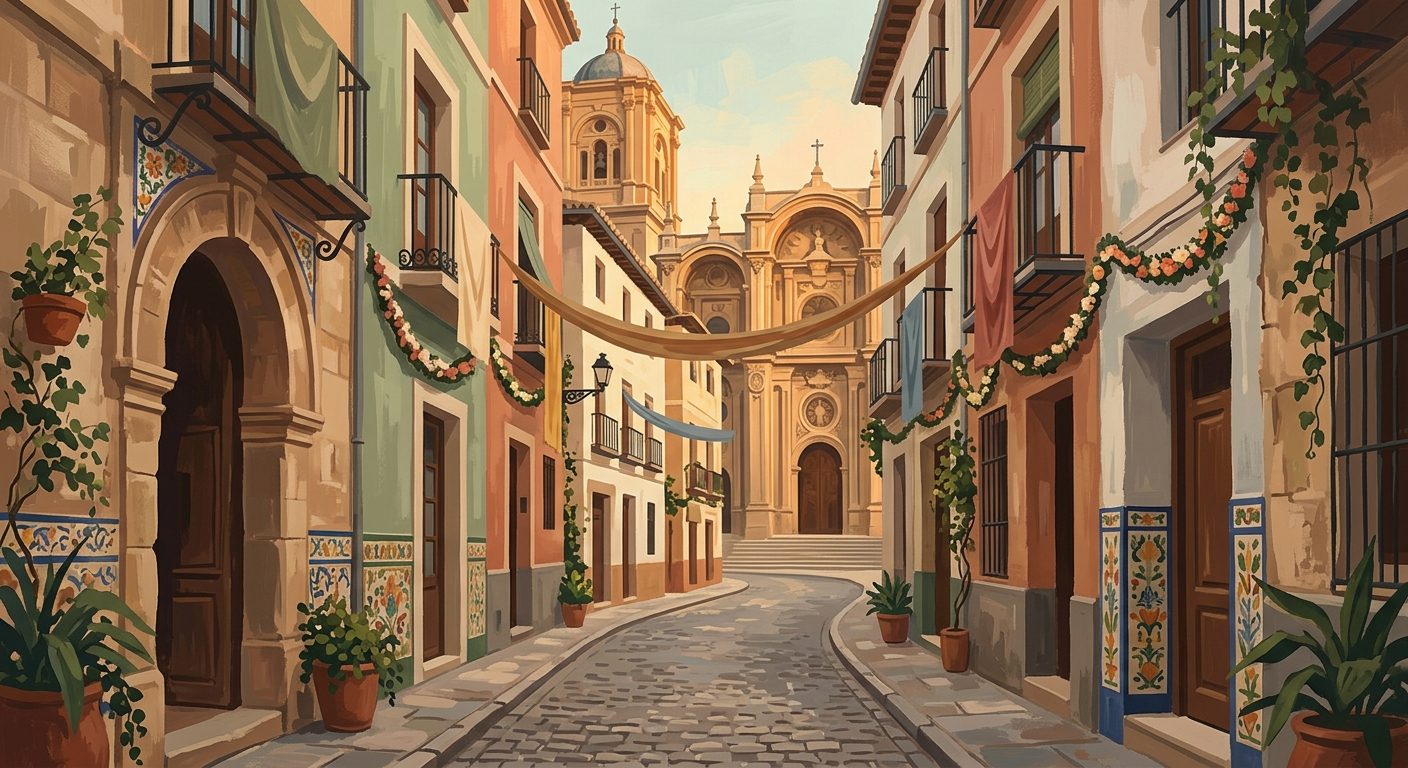
In Granada, Corpus Christi is far more than a solemn religious observance. It is the city's largest annual festival, combining the scent of fresh rosemary crushed underfoot during the sacred Thursday procession with the unapologetic joy of the week-long public feria in Almanjáyar.
Granada celebrates Corpus Christi unlike any other city in Andalucía. When Isabella and Ferdinand conquered the city in 1492, they needed a way to establish a definitive Christian identity over their new territory. They chose Corpus Christi, elevating it to become the preeminent local celebration. Today, it remains Granada's main annual fair, seamlessly weaving together profound Catholic devotion, pagan-infused civic parades, and a massive, inclusive party at the northern fairgrounds.
Unlike the penitential processions of Semana Santa, Corpus Christi is a festival of light, colour, and civic pride. The city centre is transformed with awnings shading the main commercial streets, while the local authorities cover the pavements with thousands of fragrant herbs. Yet, what truly sets Granada apart is the dual nature of the week. You have the solemnity of the silver monstrance passing through the historic centre, paired directly with the Feria del Corpus. In other Andalucían cities, the annual fair and Corpus Christi are entirely separate events. Here, they are one and the same.
For a first-time visitor, this combination can be overwhelming. You might find yourself observing centuries-old liturgical traditions in the morning and dancing sevillanas in a public tent until dawn. Understanding the rhythm of the week, knowing the difference between the Tarasca and the Custodia, and navigating the transport between the historic centre and the northern fairgrounds will transform your experience from mere observation into genuine participation.
What to expect
Expect an atmosphere that swings rapidly from reverent to raucous. The historic centre, particularly around the Cathedral, Plaza del Carmen, and Plaza Bib-Rambla, becomes the focal point for daytime activities. Plaza Bib-Rambla is especially significant because it hosts the exhibition of the carocas and quintillas. These are large, locally drawn caricatures painted onto wooden boards, accompanied by five-line satirical poems that mock the political and social events of the past year. Locals gather here to read them in the sunshine, laughing at the expense of local politicians and public figures.
The sensory experience of Corpus Thursday is entirely unique to Granada. Before the main procession begins, municipal workers scatter tons of fresh rosemary, thyme, and other wild herbs along the entire route. As thousands of spectators and procession participants walk over them, the crushing of the leaves releases a powerful, earthy fragrance that fills the narrow streets and lingers in the air for days.
In stark contrast, the atmosphere at the fairgrounds (El Real de la Feria) in the Almanjáyar district is loud, dusty, and relentlessly energetic. Expect endless rows of illuminated tents, the smell of fried fish and grilled meats, and the constant sound of flamenco and modern pop music spilling out into the streets. It is a space designed for socialising, eating, and dancing until the early hours of the morning.
When it happens
The exact dates of Corpus Christi shift every year according to the liturgical calendar, falling exactly sixty days after Easter Sunday. This places the festival in late May or June. While Thursday is the official feast day, Granada turns the occasion into a week-long celebration.
In 2027, Corpus Thursday will fall on 27 May, with the festivities expected to begin on Saturday 22 May. The opening event is the alumbrao, the ceremonial switching on of the thousands of lightbulbs that form the towering entrance gate (the Portada) to the fairgrounds. From Sunday to Tuesday, the focus is largely on the feria, though there are cultural events and classical concerts scattered throughout the city centre.
Wednesday brings the first major daytime event, La Pública, commonly known as the procession of the Tarasca. Thursday is the absolute crescendo, featuring the solemn procession of the Corpus Christi itself. The fair continues through the weekend, concluding with a massive fireworks display late on the following Saturday night. Finally, the Sunday after Corpus Thursday features a smaller, highly traditional procession known as the Octava, which circumnavigates the Cathedral.
The processions and the action
To understand Corpus Christi in Granada, you must understand its two defining civic and religious parades, as well as the fair itself.
The Tarasca (Wednesday)
La Pública is a secular, pagan-rooted parade designed to announce the main religious festival. Its focal point is the Tarasca, a fearsome papier-mâché dragon subdued by a female mannequin riding on its back. The figure represents the triumph of good over evil, but in modern Granada, she is the ultimate fashion icon. Every year, a local designer is chosen to dress the mannequin in a new outfit, and her clothing, hairstyle, and makeup are kept tightly secret until she emerges from the City Hall in Plaza del Carmen. She is accompanied by a noisy, chaotic entourage of gigantes (towering figures representing the Catholic Monarchs and Moorish kings) and cabezudos (people wearing oversized, grotesque carnival heads who playfully chase children with inflated pig bladders).
The Custodia (Thursday)
The Thursday morning procession is a masterpiece of Spanish Catholic tradition. It is built around the Custodia, a magnificent silver monstrance gifted to the city by Queen Isabella, which carries the consecrated host. The procession includes an immense civic entourage. You will see representatives of every local brotherhood, historic guilds, military regiments in full dress uniform, university officials in traditional academic robes, and the entire city council. The pace is incredibly slow, the music provided by brass bands is majestic, and the silence of the crowd as the silver monstrance passes is absolute.
The Feria in Almanjáyar
While Sevilla is famous for its strictly private fair tents, Granada is exceptionally welcoming to visitors. The vast majority of the casetas (the marquee tents) at the Almanjáyar fairgrounds are fully public. You can walk into almost any tent, find an empty table, and order food and drinks without needing an invitation or a membership. The city council operates a massive central caseta, while local political parties, trade unions, and cultural associations run the rest. The music ranges from traditional sevillanas to modern rumba, and the dancing continues virtually uninterrupted until sunrise.
Where to watch and where to be
For the Wednesday Tarasca and the Thursday Custodia, the route is identical. The processions depart from the Cathedral and move through the main commercial arteries of the centre, passing through Plaza de las Pasiegas, Mesones, Reyes Católicos, Gran Vía, and Cárcel Baja.
If you want a comfortable view of the Thursday procession, the city sets up rows of folding chairs along Reyes Católicos and Gran Vía. These must be rented in advance or very early on the day from the municipal attendants, but they sell out rapidly. For a free viewing spot, position yourself near the intersection of Mesones and Marqués de Gerona. The streets are narrower here, making the passage of the towering silver monstrance feel much more intimate, and the scent of the crushed herbs is particularly intense in the enclosed space. Arrive at least an hour before the scheduled start time to secure a place on the pavement.
During the early evenings, Plaza Bib-Rambla is the perfect place to sit with a coffee and churros. The square is decorated with the carocas, and the local council often stages free classical music or traditional dance performances here.
What to wear and cultural sensitivities
The dress code changes drastically depending on the day and the location. On Wednesday for the Tarasca, the crowd is decidedly casual. Families are out with their children, and standard comfortable daytime clothing is entirely expected.
Thursday is entirely different. For Andalucían locals, the Corpus Christi procession is one of the most formal days of the year. Men frequently wear dark suits with ties, and women wear elegant, conservative dresses. While foreign visitors are not strictly expected to wear a suit, you should dress smartly out of respect for the occasion. Shorts, vests, and beachwear are completely inappropriate for watching the Thursday procession and will draw highly disapproving looks from locals.
At the fairgrounds, you will see many local women wearing the traditional traje de flamenca (flamenco dress) and men in the traje de corto (short riding jacket and wide-brimmed hat), particularly during the daytime carriage parades. Visitors should not attempt to wear these unless they are deeply familiar with the culture, as cheap imitation dresses are considered highly disrespectful. Instead, opt for smart casual evening wear.
When watching the Thursday Custodia, remember that this is a deeply sacred event for many locals. Keep your voice down as the monstrance passes. If you are taking photographs, do not step into the path of the procession, do not use a flash directly in the faces of the participants, and never attempt to cross the street through the ranks of the procession.
Where to eat and drink
During the day, the historic centre is packed, and the traditional tapas bars operate at maximum capacity. Bodegas Castañeda on Calle Almireceros is an institution, serving excellent local wines and generous portions of hot food, though you will have to fight for space at the wooden bar. For exceptional fried fish, head to Los Diamantes on Calle Navas or Plaza Nueva. Be prepared to eat standing up, as tables are almost impossible to secure without a reservation.
If you want a sit-down meal away from the immediate chaos of the parade route, head towards the Realejo neighbourhood. Restaurants like Los Manueles offer traditional granadino cuisine such as habas con jamón (broad beans with local cured ham) and remojón granadino (a refreshing orange and salt cod salad). For dessert, look in any local bakery for piononos, small cylindrical sponge cakes topped with toasted cream that originate from the nearby town of Santa Fe.
At the feria, dining is an integral part of the experience. Every public caseta has a working kitchen. You should order plates to share: raciones of cured meats, tortilla de patatas, grilled pork skewers, and fried aubergines with cane honey. The drink of choice is rebujito, a refreshing and highly deceptive mixture of fino or manzanilla sherry and lemon-lime soda, always served in a large jug with plenty of ice.
Where to stay and booking advice
Because Corpus Christi is the city's largest festival, accommodation prices soar, and the best rooms vanish six to nine months in advance.
The Centro Sagrario district places you right on top of the procession routes. This is highly convenient for returning to your room for a midday rest, but it comes with immense street noise and crowded doorways. Staying in the Realejo offers a fantastic compromise. It is a short walk from the Cathedral but feels far removed from the crushing crowds of Gran Vía.
The Albaicín, the historic Moorish quarter, is incredibly atmospheric. However, it requires navigating steep, cobbled hills. After standing for hours to watch the processions or returning from the fairgrounds at three in the morning, the climb up to the Albaicín can feel punishing. Regardless of where you book, always confirm whether your hotel has soundproofed windows. The street cleaning crews and municipal workers operate through the night during the festival week.
Practical notes
Getting to the fairgrounds requires planning. The Almanjáyar district is located in the northern part of the city, far too distant to walk from the historic centre. The local transport network, Rober, runs special bus lines directly to the fair entrance. These buses operate twenty-four hours a day during the peak weekend and are the most efficient way to travel, as finding a taxi at the fair gates in the early hours of the morning requires immense patience.
An excellent alternative to the bus is the Granada Metro (the light rail system). You can board at Recogidas or Méndez Núñez in the centre and take it to the Jaén or Estación de Autobuses stops, which leave you a very short walk from the fairgrounds. The Metro extends its operating hours significantly during the main days of the festival (check the official Metropolitano de Granada website for specific schedules closer to your travel dates).
If you are travelling by car, do not attempt to drive into the centre of Granada during Corpus week. Extensive road closures begin early on Wednesday morning and last through Thursday evening. Gran Vía, Reyes Católicos, and the surrounding streets are completely sealed off to civilian traffic. Park your car in one of the peripheral underground car parks, such as the one at the Palacio de Congresos, and rely on your feet and the public transport network.
Last reviewed: 14 July 2026 · Editorial policy
Related guides
Semana Santa in Sevilla: A First-Timer's Guide
Semana Santa in Sevilla is an intense expression of faith, art and civic identity. Unlike other cities, the spectacular wooden floats are carried from below by hidden costaleros, moving to the slow beat of mourning marches or absolute silence.
8 min read
Semana Santa in Córdoba: The Definitive Guide
During Semana Santa in Córdoba, the air smells of orange blossom and incense as penitential floats pass beneath the candy-striped arches of the Mezquita.
8 min read
Semana Santa Guide: Decoding Andalucía's Most Intense Week
Holy Week in Andalucía is a profound sensory experience of heavy incense, brass bands, and thousands of shuffling feet. This guide decodes the intricate schedules, unwritten rules, and distinct regional styles of Spain’s most intense cultural phenomenon.
9 min read
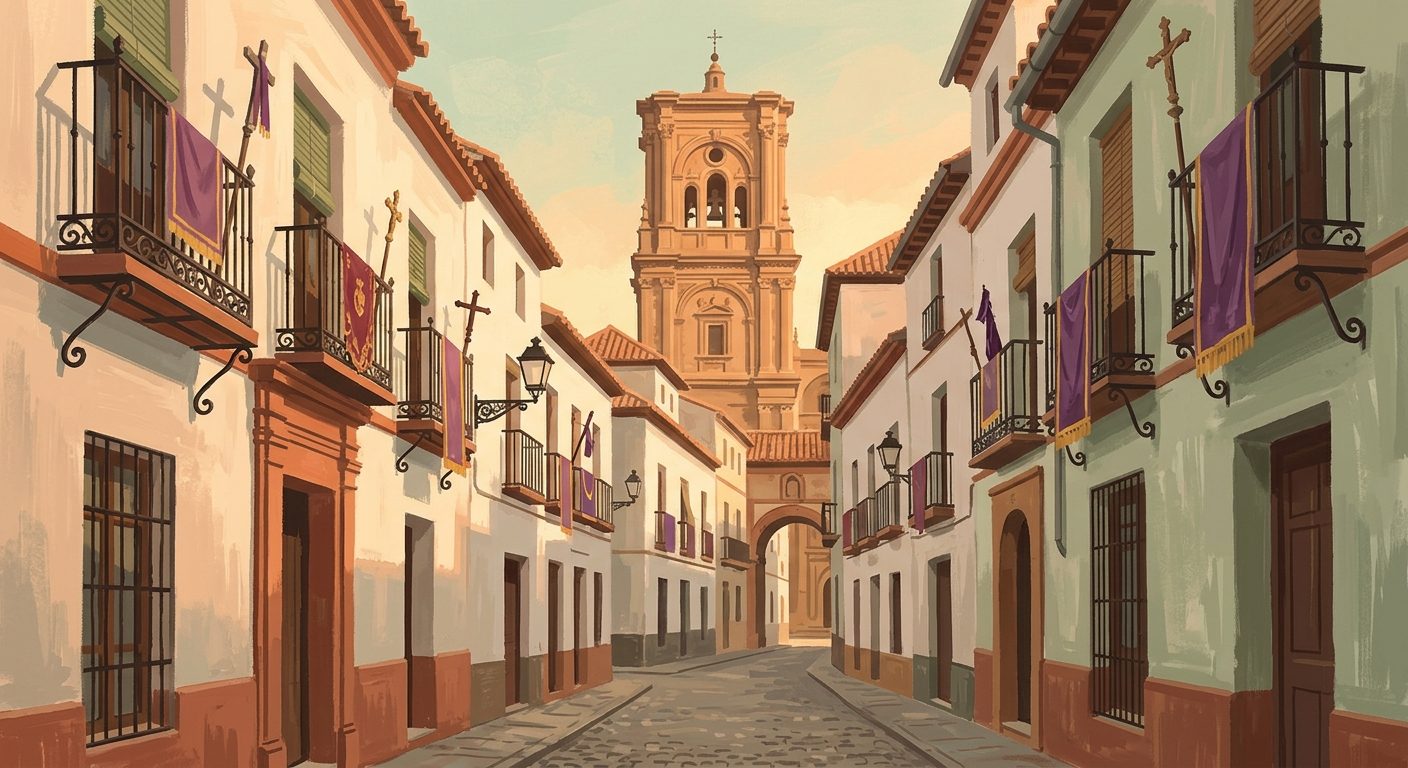
Semana Santa in Granada: A Complete Visitor Guide
Semana Santa in Granada swaps broad avenues for narrow Moorish streets and steep hillsides. Watching an illuminated wooden float emerge from the grounds of the Alhambra or ascend into the caves of Sacromonte offers a profound emotional experience that feels intimately tied to the landscape itself.
8 min read
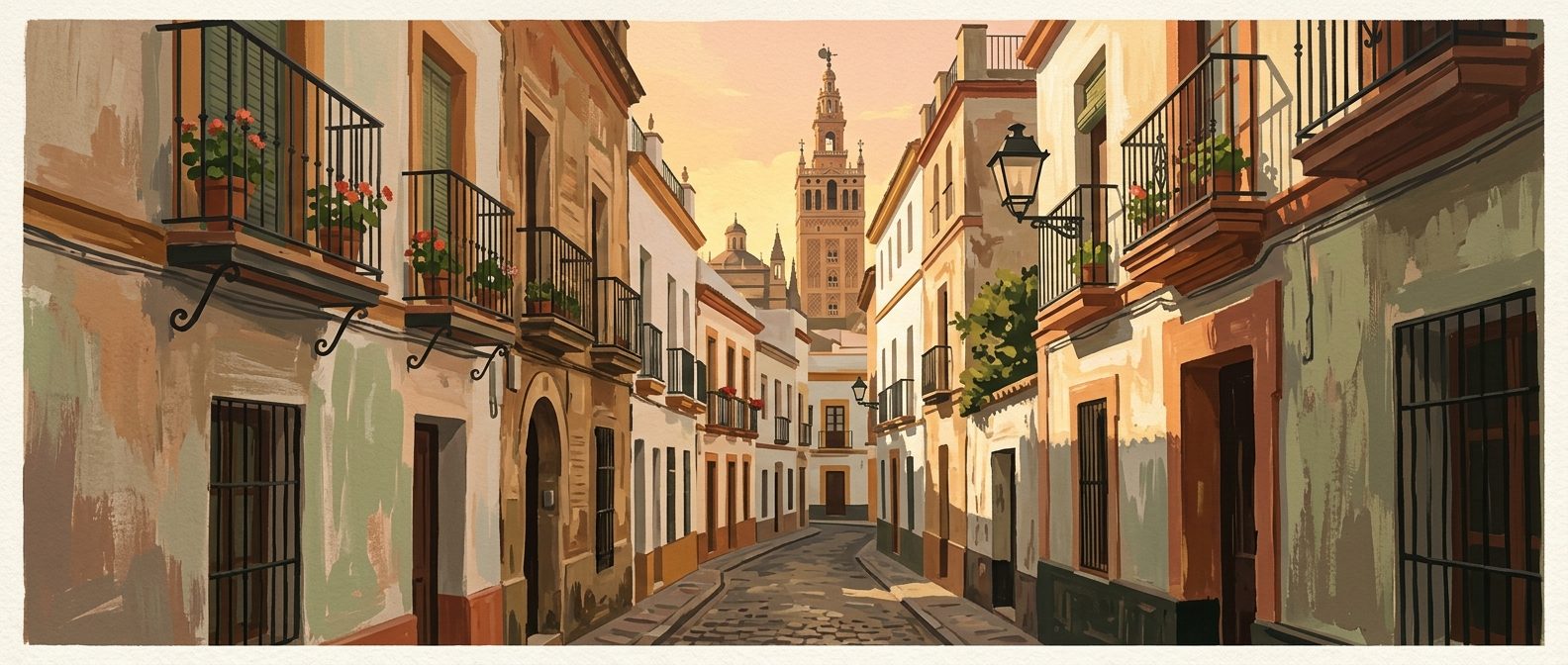
The Siege of the Real: Inside Sevilla’s Private Universe
Beyond the yellow dust of the Real, Sevilla’s great fair is a labyrinth of closed doors where the city’s true social hierarchy is revealed in the clinking of glasses.
8 min read
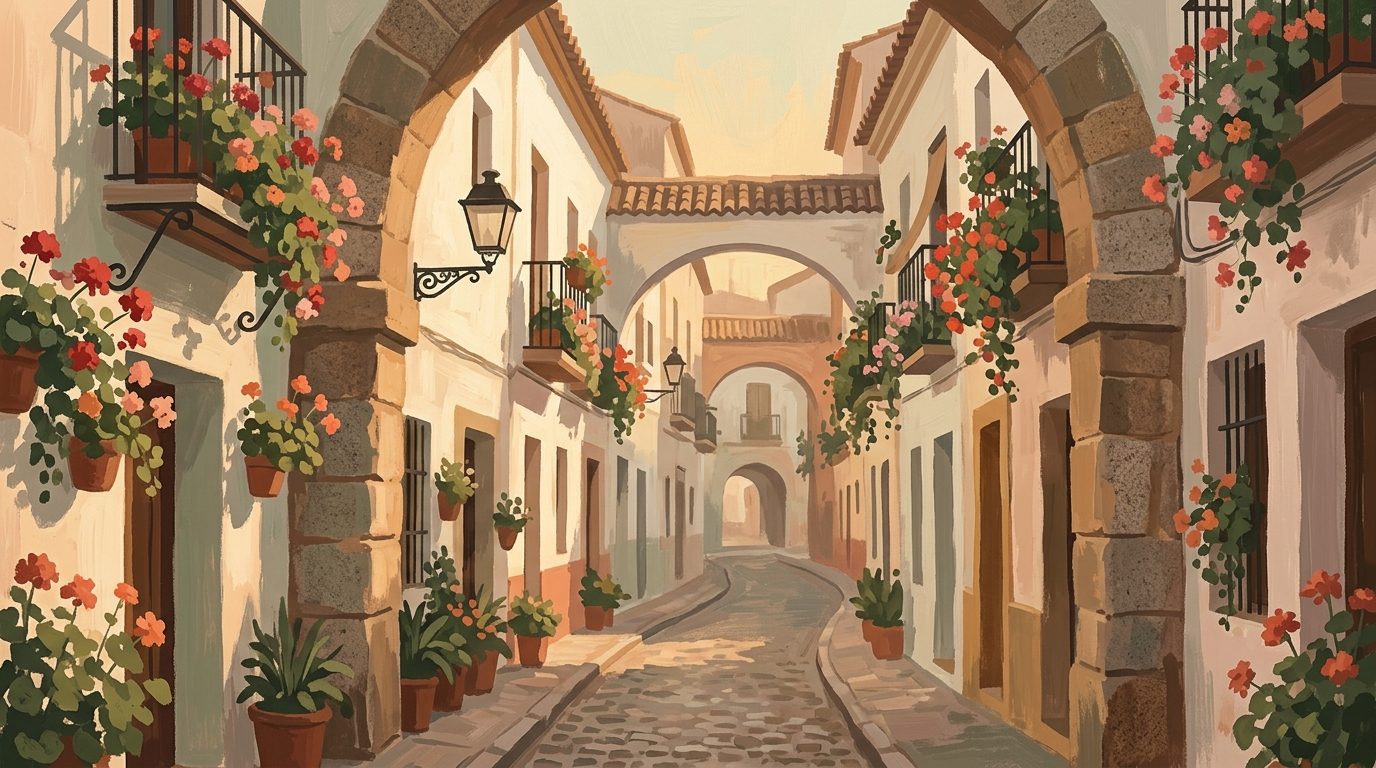
The Granite and the Geranium: The Fragile Geometry of Córdoba’s May
For two weeks in May, Córdoba’s residents throw open the doors of their private courtyards, turning a city of stone into a living, breathing laboratory of botanical obsession.
6 min read
More from Granada
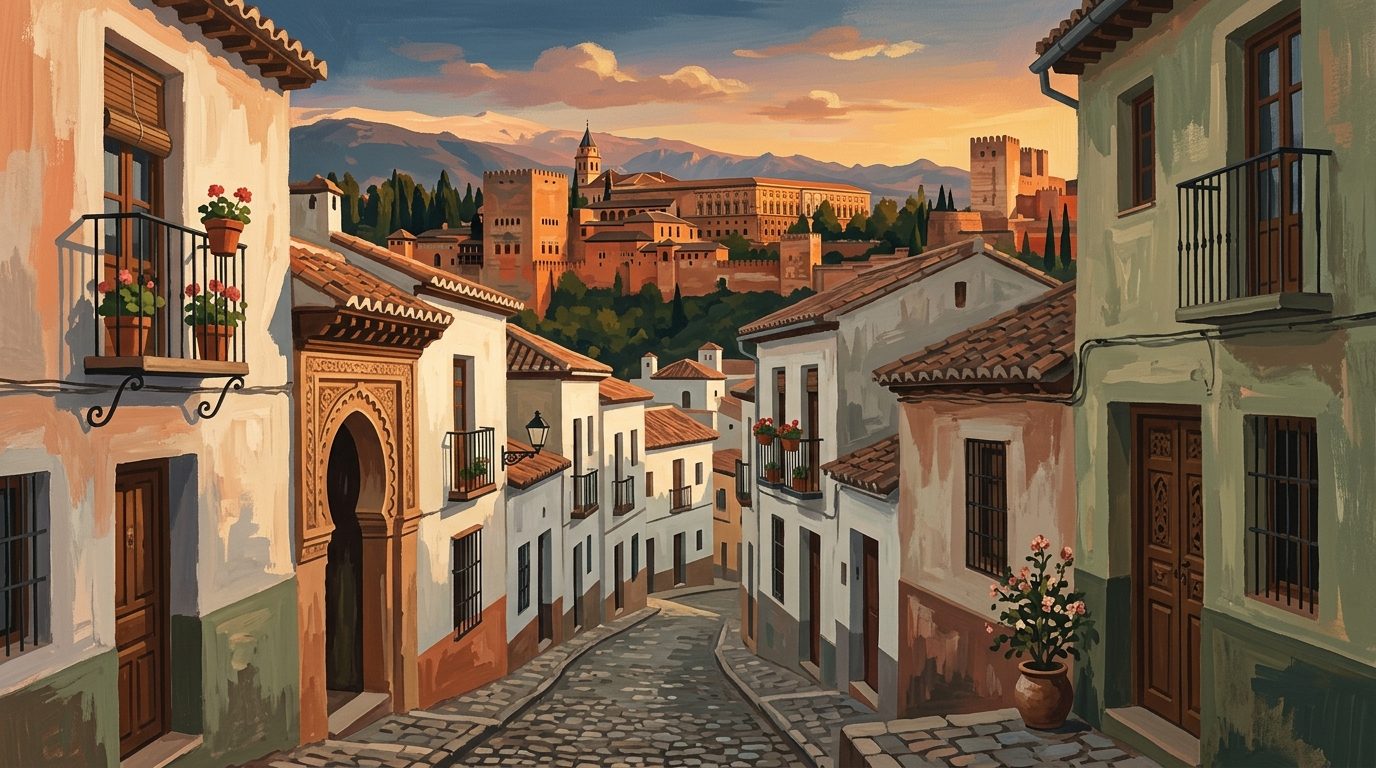
Nasrid Granada: The Last Islamic Kingdom of Iberia
Discover how the Nasrid dynasty forged a pragmatic mountain emirate that survived for over two centuries, creating the Alhambra and leaving a lasting architectural legacy.
8 min read
Lorca and the Repression in Granada
The assassination of Spain's most celebrated poet was just one part of a systematic campaign of terror. Today, the ravines of Víznar and Alfacar hold the stories of thousands whose voices were silenced.
7 min read
The Frontier of Granada: Life and War on the Edge of Al-Andalus
For over two centuries, the borderland separating the Christian Crown of Castile from the Nasrid Emirate of Granada was defined by watchful towers and sudden raids. Yet this military frontier was equally a zone of profound cultural exchange, where merchants, captives and diplomats negotiated daily survival in a divided land.
7 min read
The Morisco Revolt of the Alpujarras
The Morisco Revolt of 1568 transformed the mountainous terrain of the Alpujarras into the theatre of a brutal war. Driven to rebellion by laws erasing their culture, the descendants of Granada's Muslim population fought a desperate campaign against the Spanish Crown.
8 min read
The Fall of Granada, 1492
On the second of January 1492, the keys to the Alhambra were handed over to Ferdinand and Isabella, bringing a close to almost eight centuries of Muslim rule in the Iberian Peninsula. The capitulation of Granada reshaped the political and religious landscape of Europe forever, ending a long war of attrition.
8 min read
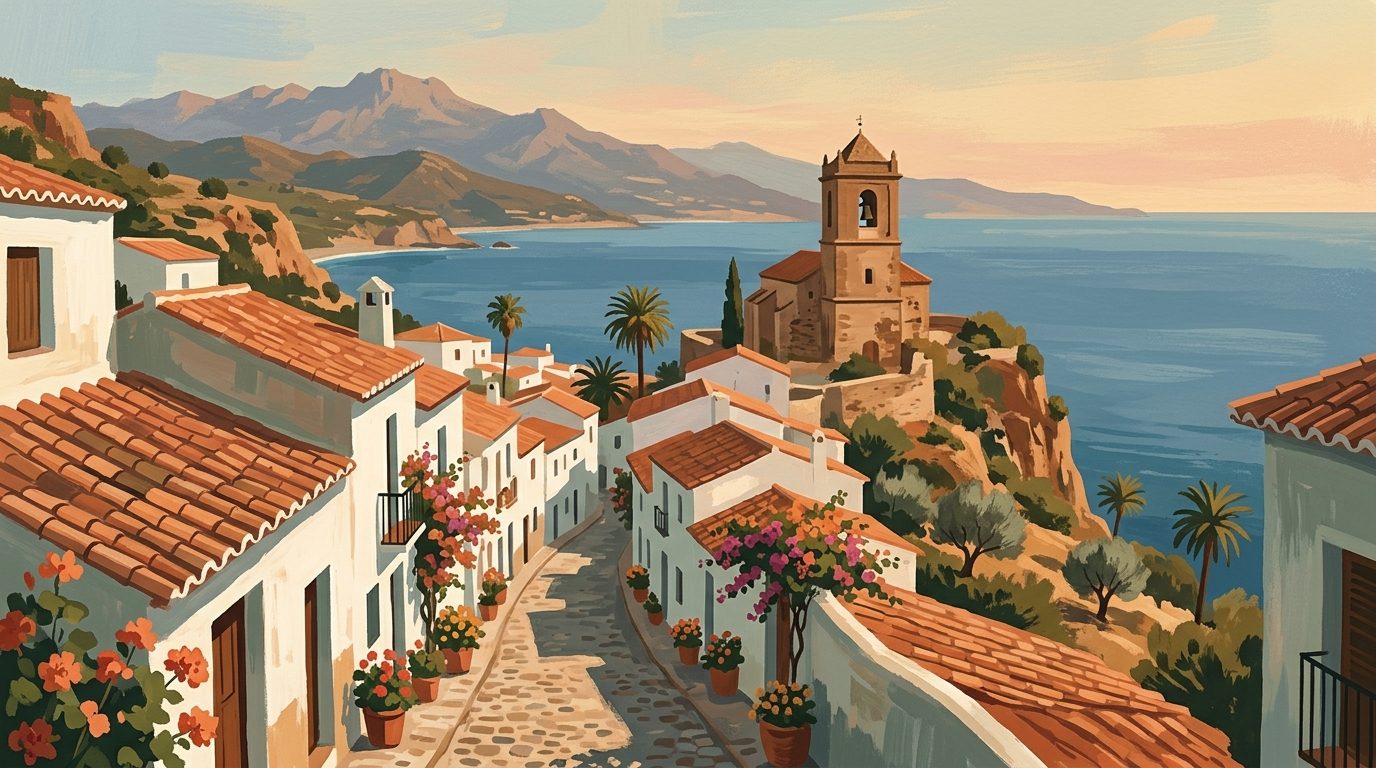
Costa Tropical: The Complete Guide to Granada's Subtropical Coast
Wedged between the foothills of the Sierra Nevada and the Mediterranean Sea, the Costa Tropical is defined by dramatic cliffs, sheltered pebble coves and a unique subtropical microclimate. It offers a quieter, more agricultural alternative to its heavily developed neighbours.
9 min read
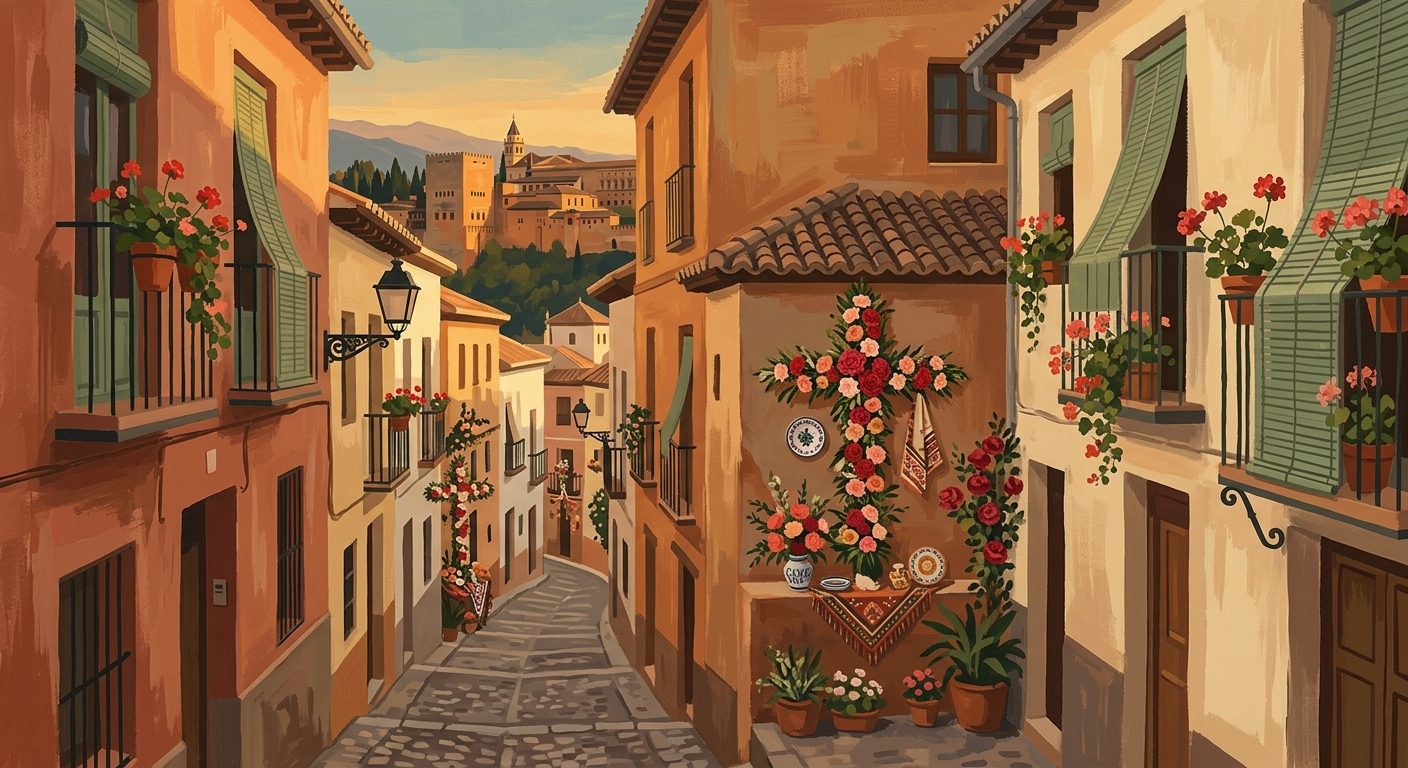
Cruces de Mayo in Granada: A Complete Guide
Discover how Granada transforms during the Cruces de Mayo festival. We detail where to find the most spectacular floral crosses, the local traditions to observe, and how to navigate the celebrations.
9 min read
The Resistance of the Plate: Why Granada Refuses to Sell Its Soul
In a world of monetised moments and rising margins, Granada holds fast to a radical social contract: the gift of a plate with every glass.
7 min read
Beyond the White Caves: The Unseen Struggle of Sacromonte
The whitewash on Curro’s fingers is thick as paste, a seasonal ritual of reclaiming a home from the damp appetite of the hillside.
7 min read
Newsletter
More stories from Andalucía
Weekly notes, seasonal picks, and the next guides worth bookmarking.