
Feature · Cádiz
A Complete Guide to the Feria del Caballo in Jerez
The Feria del Caballo in Jerez stands apart from other spring fairs in Andalucía because its casetas are almost entirely open to the public. Here, the aristocratic tradition of the Andalucían horse meets the egalitarian spirit of the city, fuelled by endless cold glasses of fino sherry and native flamenco bulerías.
By Dan · Updated 22 June 2026 · 9 min read
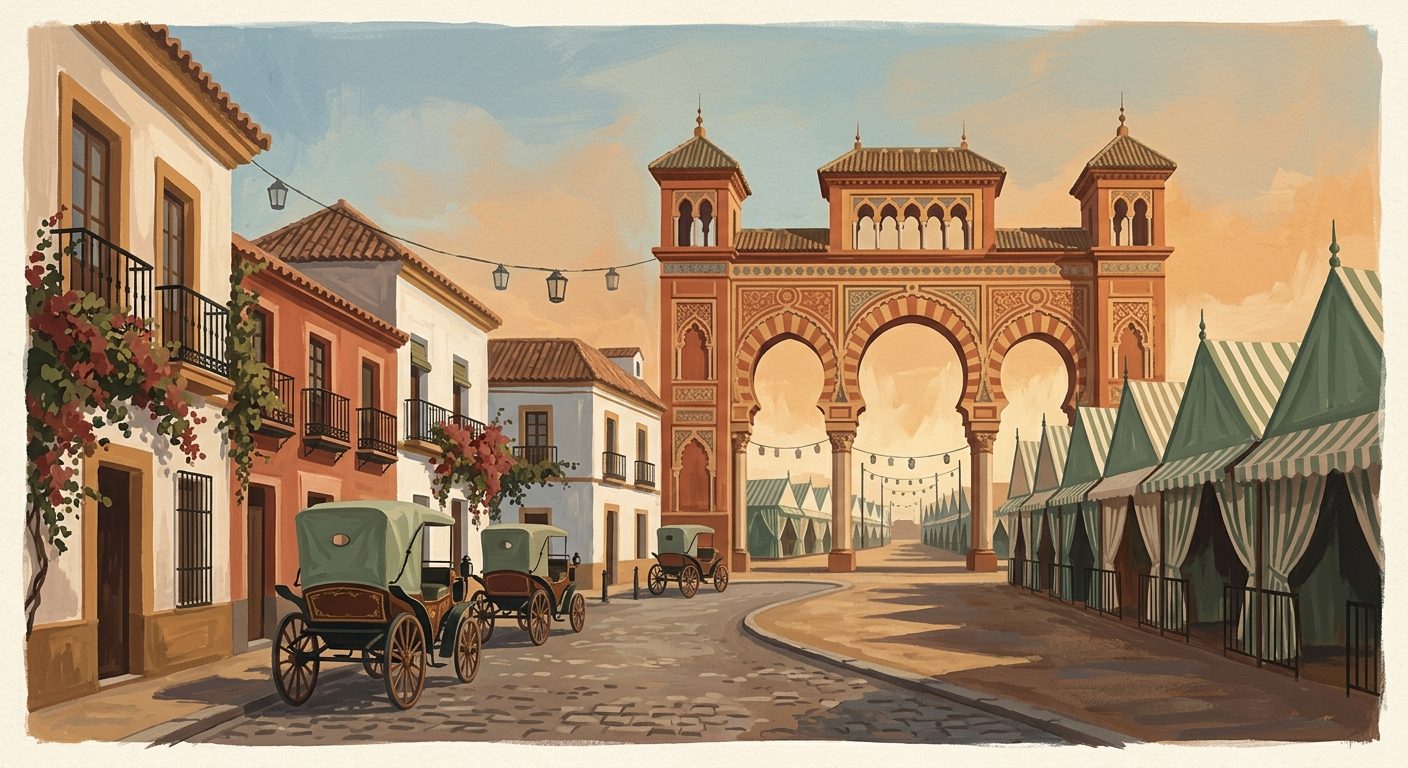
The Feria del Caballo in Jerez stands apart from other spring fairs in Andalucía because its casetas are almost entirely open to the public. Here, the aristocratic tradition of the Andalucían horse meets the egalitarian spirit of the city, fuelled by endless cold glasses of fino sherry and the spontaneous, rhythmic clapping of native flamenco bulerías.
Jerez de la Frontera has cultivated horses, sherry and flamenco for centuries, and its Feria del Caballo is the supreme expression of all three. While other cities in Andalucía host spectacular spring celebrations, the event in Jerez possesses a distinct character rooted in accessibility and equestrian excellence. The fair takes place in the Parque González Hontoria, a sprawling enclosure carpeted in yellow albero sand and illuminated by hundreds of thousands of lightbulbs.
What truly separates Jerez from the famous Feria de Abril in Sevilla is the philosophy of the casetas. In Sevilla, the striped tents are largely private, requiring an invitation to enter. In Jerez, municipal rules dictate that almost every single caseta must be open to the general public. You can walk into any tent that catches your ear, order a half bottle of fino sherry, and join the local families at the bar.
The roots of the fair date back to the Middle Ages as a simple livestock market. Over the centuries, the focus narrowed to the majestic Carthusian horses bred by local monks and aristocratic families. Today, the festival honours that lineage. During the daylight hours, the sand-covered avenues of the fairground become an immaculate runway for hundreds of beautifully groomed horses and magnificent carriages. It is an intensely local celebration, yet profoundly welcoming to outsiders who respect the traditions.
What to expect
The Feria del Caballo provides a sensory overload in the best possible way. The visual impact hits you immediately as you walk through the main gates. The central avenues of the Parque González Hontoria are wide and lined with towering trees, offering valuable shade that other fairgrounds lack. By day, the air smells of roasted peppers, dry earth, and horse leather. You will hear the constant jingling of carriage bells and the rhythmic clip-clop of hooves on the compacted sand. You will notice that the ground is covered in yellow albero sand, the exact same crushed limestone used in bullrings. It creates a beautiful golden hue under the sunlight but has a habit of coating your shoes and the hem of your trousers in a fine dust.
As afternoon turns to evening, the atmosphere shifts dramatically. The horses retreat to their stables, and the millions of coloured lights flick on overhead. The soundscape transitions from the polite applause for equestrian displays to the loud, communal singing of flamenco. Jerez is the undisputed capital of bulerías, a fast, rhythmic style of flamenco, and spontaneous circles of singers and dancers form inside the casetas and out on the street. Expect large crowds. The main avenues become tightly packed rivers of people, especially from Thursday to Saturday, requiring patience and a good sense of humour to navigate.
When it happens
The fair usually falls in the first or second week of May. While the 2026 fair took place from 2 to 9 May, the 2027 dates are expected to be announced in late 2026. The opening Saturday night features the ceremonial switching on of the lights, known locally as the alumbrao, which marks the official start of the festivities.
Sunday is traditionally an opening day for local families, while Wednesday is designated as women's day. On this day, large groups of local women gather for long lunches and dancing, filling the fairground with exceptional colour and energy. Thursday, Friday and Saturday are the peak days of the event, drawing visitors from across Spain. If you prefer to focus on the horses and the traditional carriages, aim for the daytime hours between Tuesday and Friday, when the equestrian parades are at their most disciplined and the crowds are slightly more manageable. By the final Saturday, exhaustion begins to mingle with the fino sherry, but the closing fireworks display provides a spectacular finale.
The horses, casetas and flamenco
The Paseo de Caballos (horse parade) takes place daily from 1:00 pm until 7:30 pm (check the official Turismo Jerez website for the latest programme before travelling). This is a strictly regulated exhibition of equestrian skill and traditional dress. Male riders wear the classic traje corto, which consists of a short jacket, high-waisted trousers and a wide-brimmed hat, while many women ride sidesaddle in spectacularly ruffled dresses. You will see pristine Carthusian horses executing complex dressage movements right in the middle of the crowd, alongside magnificent antique carriages pulled by teams of four or five mules. Every carriage is a museum piece in motion, meticulously restored and adorned with floral displays. The drivers, known as cocheros, command their teams with absolute precision, often guiding five horses in a complex tandem formation.
Once the horses leave the enclosure, the focus moves entirely to the casetas. With over two hundred to choose from, picking a destination can be overwhelming. The local brotherhoods, or hermandades, often run excellent casetas with high-quality, reasonably priced food. Look for the tents belonging to the Hermandad del Prendimiento or the Hermandad de la Yedra. Alternatively, the Peña Flamenca Los Cernícalos and Peña La Bulería host casetas where you are guaranteed to hear authentic, high-calibre flamenco rather than recorded pop music. Keep an ear out for the difference between sevillanas, a structured folk dance performed in pairs, and bulerías, the improvised, rapid-fire flamenco native to Jerez where participants take turns dancing in the centre of a clapping circle.
Where to be and how to watch
For the Paseo de Caballos, the best vantage points are along the central avenue, Paseo Principal, and the intersecting Calle de Romería. Arrive by 2:00 pm to secure a spot near the main intersections, where carriages often pause and riders show off their horses' training. There are no grandstands or paid seating areas for the daily parades. You simply stand at the edge of the sandy road, meaning you can get exceptionally close to the animals.
If you want to sit down to watch the parade, you need to secure a table at the front terrace of a well-positioned caseta. This requires arriving before 1:30 pm or booking days in advance if the caseta accepts reservations. Alternatively, head to the Depósito de Sementales, a military stud farm immediately adjacent to the fairground. During the week, this venue hosts the prestigious morphological horse competitions and the spectacular Acoso y Derribo exhibitions, which test the working skills of the horses in the field. Tickets for these formal equestrian events can be bought at the gate (check the Turismo Jerez website to confirm competition times).
What to wear and cultural sensitivities
The Feria del Caballo is a formal affair, and dressing appropriately is a sign of respect for the local culture. For men, a suit and tie are standard, particularly in the evening. In the heat of the day, a tailored blazer, collared shirt and smart trousers are acceptable. Never wear shorts, sandals or sports trainers, as you will feel entirely out of place and may even be turned away from the smarter casetas.
Women often wear the traditional traje de flamenca. If you do not own one, wear an elegant dress or a smart blouse with tailored trousers, paired with comfortable wedges. High heels will sink deep into the albero sand, and flat shoes can leave your feet vulnerable in the dense crowds.
When photographing the riders, be unobtrusive. Do not step into the path of a carriage or a moving horse to get a photograph. Inside the casetas, ask before filming a spontaneous flamenco performance. If local families are singing and clapping among themselves, they may welcome a quiet observer, but thrusting a camera in their faces destroys the intimacy of the moment. Recognise that these are private, emotional celebrations happening in a public space.
Where to eat and drink
Inside the fairground, the drink of choice is fino. Jerez produces this bone-dry sherry, and it is served either neat in small tasting glasses called catavinos, or mixed with lemonade and ice to create a rebujito. The rebujito is incredibly refreshing but notoriously deceptive under the hot Andalucían sun. Alternate your alcoholic drinks with plenty of water.
The food inside the casetas is hearty, traditional fare designed to keep you going through long hours of dancing. Order sharing plates, known as raciones, of fried fish, jamón ibérico, and mature sheep cheese. For something hot and substantial, look for berza jerezana, a dense local stew made with chickpeas, beans, pork and chard, or a rich rabo de toro (oxtail stew). Another excellent option is the simple but deeply satisfying montadito, a small toasted sandwich filled with grilled pork loin, spiced sausage or local cheese. During the afternoon, vendors walk through the crowds selling paper cones of roasted almonds, which pair perfectly with your sherry. Most casetas have a dining area at the back and a standing bar at the front.
If you need a break from the noise and heat of the fair, exit the main gates and walk towards the Avenida Alcalde Álvaro Domecq. Here you will find long-standing restaurants like Restaurante Bosque or Bar Arturo, where you can sit down to eat superb local seafood in an air-conditioned room before returning to the festivities.
Where to stay and booking advice
Accommodation in Jerez during the Feria is expensive and scarce. You must organise your trip and book your hotel at least six to eight months in advance. The most popular hotels are those on or near the Avenida Alcalde Álvaro Domecq, such as Hotel Jerez Centro or the NH Avenida Jerez, simply because they are within a short walking distance of the Parque González Hontoria.
Staying in the historic centre of Jerez is an excellent alternative. The walk to the fairground takes about twenty-five minutes along wide, safe avenues. Look for boutique hotels or restored palacios near the Plaza del Arenal or the Barrio de San Miguel, which is itself a historic heartland of flamenco. If Jerez is completely sold out, you can base yourself in the nearby coastal city of El Puerto de Santa María. The train connection is quick, but you will be tied to the railway timetable for your journey home each night, which might cut your evening short.
Practical notes
If you are staying in the centre of Jerez, walking is the most reliable way to reach the fair. Taxis operate constantly, but the queues at the official ranks outside the main gate can stretch for over an hour during peak times, particularly between 8:00 pm and midnight when the dinner crowds arrive.
Public buses are rerouted during the festival to provide dedicated services directly to the fairground gates, and these are cheap and highly efficient. If you are travelling from outside Jerez, the main train station is a pleasant twenty-minute walk from the fair. For those flying into the region, Jerez Airport is located just north of the city centre and connects directly to the train station. Alternatively, you can fly into Sevilla and catch a high-speed train (ALVIA) south, which takes approximately one hour. Do not attempt to drive your own vehicle to the Feria. The surrounding streets are subject to strict road closures, parking spaces are virtually non-existent, and local police actively tow cars parked in restricted zones.
Last reviewed: 14 July 2026 · Editorial policy
Related guides
Cádiz in December: Atlantic Drama and Festive Traditions
Atlantic winds meet the warm glow of festive lights, creating a unique coastal Christmas atmosphere where the air smells of roasted chestnuts and sea salt.
6 min read
The Definitive Guide to Romería del Rocío in Almonte
Every Pentecost, the sandy streets of a small village in Almonte transform to host a million pilgrims drawn by intense devotion and Andalucían tradition.
10 min read
The Definitive Guide to Feria de Málaga
Unlike famously private celebrations elsewhere, the Feria de Málaga is built on absolute inclusion. Virtually every marquee at the fairground opens its doors to anyone wanting to celebrate.
9 min read
Uncorking Andalucía's Soul: A Journey Through the Sherry Triangle
Discover the rich traditions of Andalucía's Sherry Triangle, a captivating region where history, culture, and world-renowned sherry wine intertwine across Jerez, Sanlúcar, and El Puerto.
6 min read
The Resurrection of the Chalk: How Sherry Escaped the Dusty Sideboard
For decades, the wines of Marco de Jerez were relegated to the back of the liquor cabinet; today, a new generation of winemakers is digging into the white earth to prove Sherry is the world's most misunderstood terroir wine.
7 min read
The Wit of the Atlantic: A Guide to the Cádiz Carnival and Local Traditions
Every February, the narrow alleys of Cádiz transform into an open-air theatre where biting satire and local wit take centre stage. This is a celebration that prioritises the power of the word, making it the most intellectual and hilarious festival in Spain.
6 min read
More from Cádiz
The White Villages of Andalucía: A Guide to the Pueblos Blancos
Discover the iconic white villages of Cádiz and Málaga, where lime-washed houses and narrow Moorish streets define the rugged mountain landscape of Andalucía.
6 min read
Costa de la Luz: The Complete Guide
The Costa de la Luz is an untamed stretch of Atlantic shoreline defined by wild dunes, pine forests and stiff sea breezes. Spanning the coastlines of Huelva and Cádiz, it offers a stark alternative to the concrete resorts of the Mediterranean.
9 min read
The Albariza English: A Two-Century Shadow in Cádiz
The British presence in Andalucía is more than a seasonal migration; it is a two-hundred-year-old layering of trade, conflict, and quiet assimilation.
6 min read
The Weight of the Water: Life at the Edge of Two Continents
Fourteen kilometres of salt water separate the northern edge of Africa from the southernmost tip of Spain, creating a corridor where geopolitical tension, ecological wonder, and human desperation collide.
7 min read
The Last Almadraba: Blood, Steel, and the Silver Ghost of Barbate
In the coastal town of Barbate, a three-thousand-year-old ritual of blood and silver continues as the bluefin tuna begin their ancient migration.
7 min read
The Weight of the Blood: How Flamenco Outlives the Stage in Jerez
In the back rooms and private social clubs of Jerez, flamenco isn't a show for tourists: it is a gritty, ancestral language passed down through bloodlines and the stubborn memory of the barrios.
7 min read
Newsletter
More stories from Andalucía
Weekly notes, seasonal picks, and the next guides worth bookmarking.