While the world focuses on the arrival in the Americas, the real story began in the shipyards and friaries of Huelva. This journey connects the specific riverfronts and cloisters where the 1492 voyage was conceived and financed.
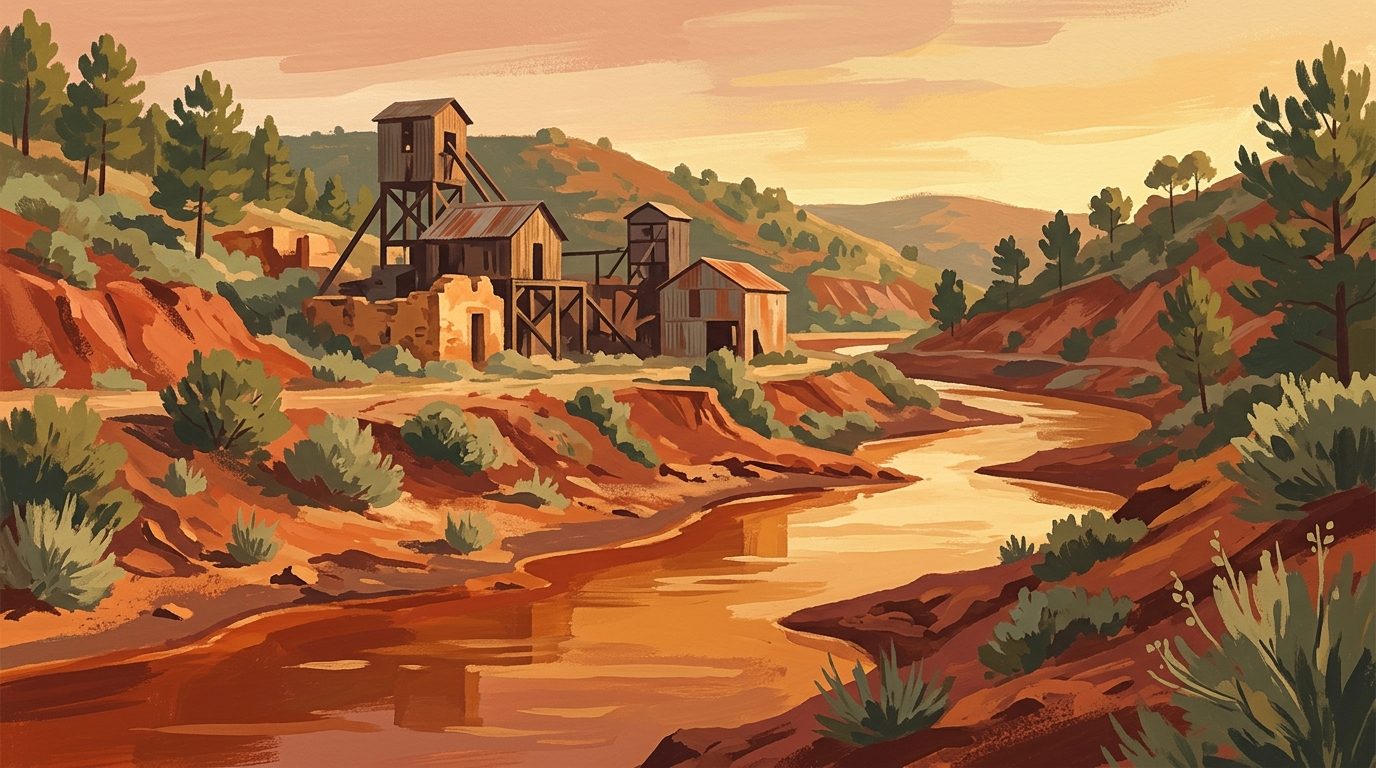
To understand the sheer audacity of the 1492 voyage, you have to stand on the banks of the Río Tinto. This isn't the turquoise Mediterranean or the crashing Atlantic of the Costa de la Luz; the water here is stained a deep, metallic ochre by the upstream mines, and the air smells of salt and tidal mud. This corner of south-western Spain, known collectively as the Lugares Colombinos (Columbus Discovery Places), remains remarkably grounded despite its global historical weight. You won't find the over-polished theme-park atmosphere of larger Spanish heritage sites here. Instead, you find working towns like Moguer and Palos de la Frontera that continue to harvest strawberries and wine while guarding the quiet cloisters where Christopher Columbus once pleaded for support.
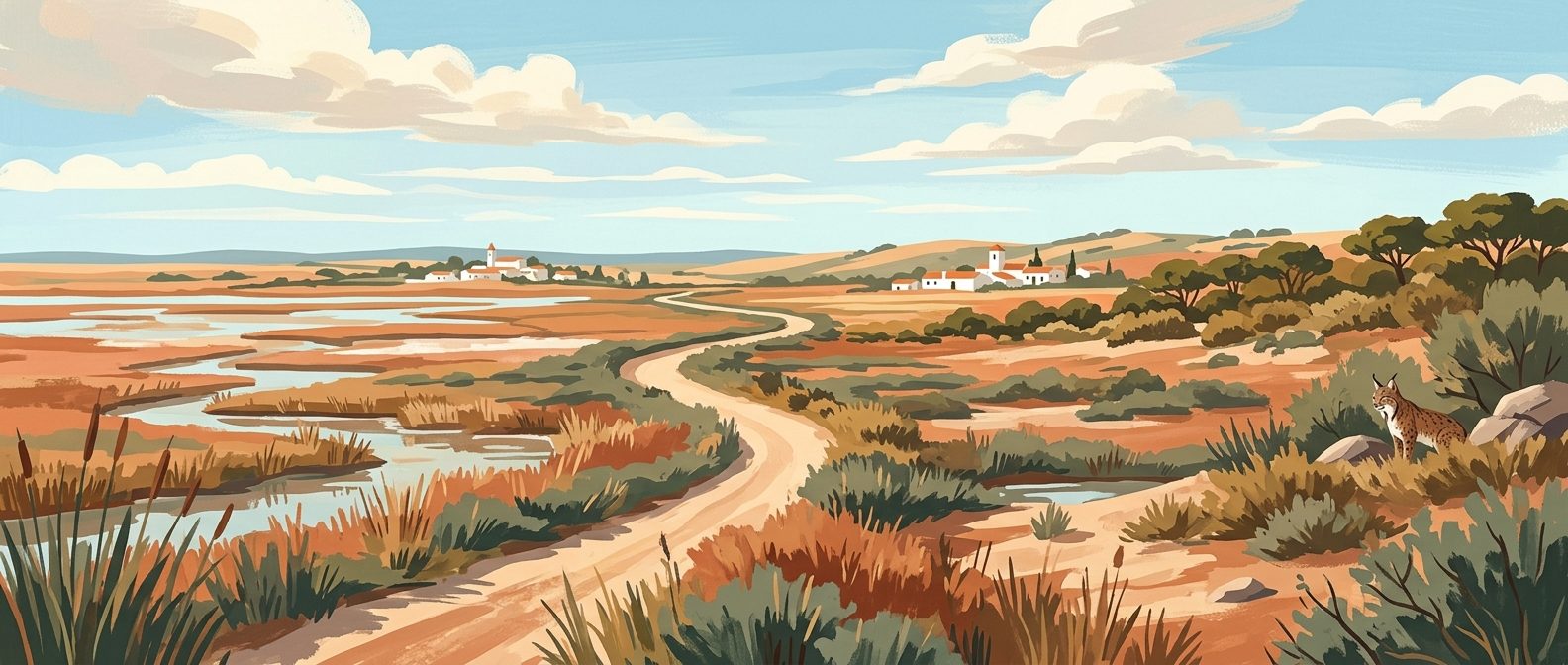
Following the Columbus Route is a short but profound loop. It covers the transition from religious meditation at La Rábida to the pragmatic seafaring logistics of Palos and the aristocratic influence in Moguer. For the modern traveller, it offers a rare opportunity to see the logistical 'how' of history: where the ships were built, where the crews were recruited, and where the first prayers of thanks were offered upon their return. This is a landscape of low-lying marismas (marshes), whitewashed facades, and a stubborn sense of maritime pride that hasn't faded in five centuries.
Palos de la Frontera: The Port of Departure
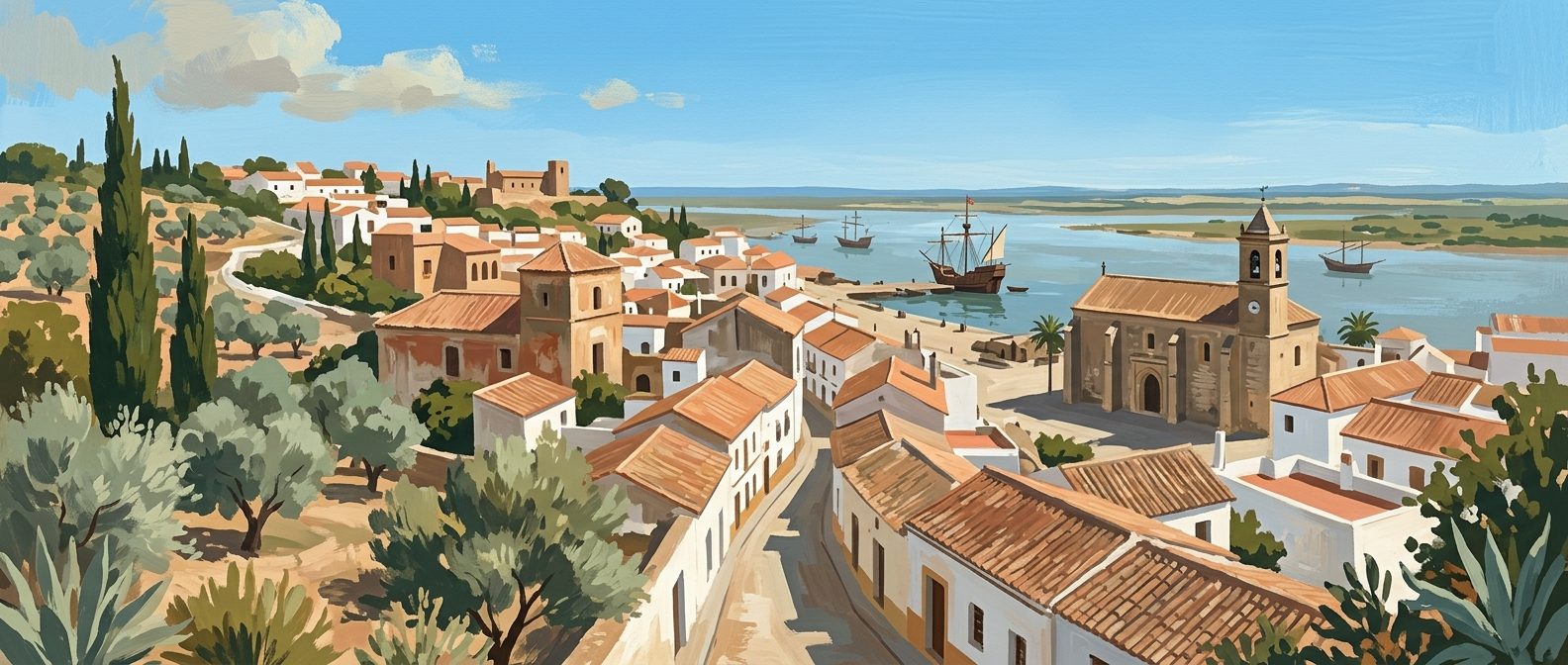
If you want to find the exact spot where the world changed, head to the Fontanilla in Palos de la Frontera. This unassuming brick structure, once the public fountain of a thriving port, is where the crews of the Pinta, the Niña, and the Santa María took on their final water supplies before weighing anchor on 3rd August 1492. Today, the river has receded, leaving the fountain sitting in a quiet park, but the sense of scale remains. The town itself sits on a ridge overlooking the former harbour, and its streets are dedicated to the Pinzón brothers, local shipowners without whom Columbus would likely have never left the dock.
The Church of San Jorge and the Pinzón Legacy
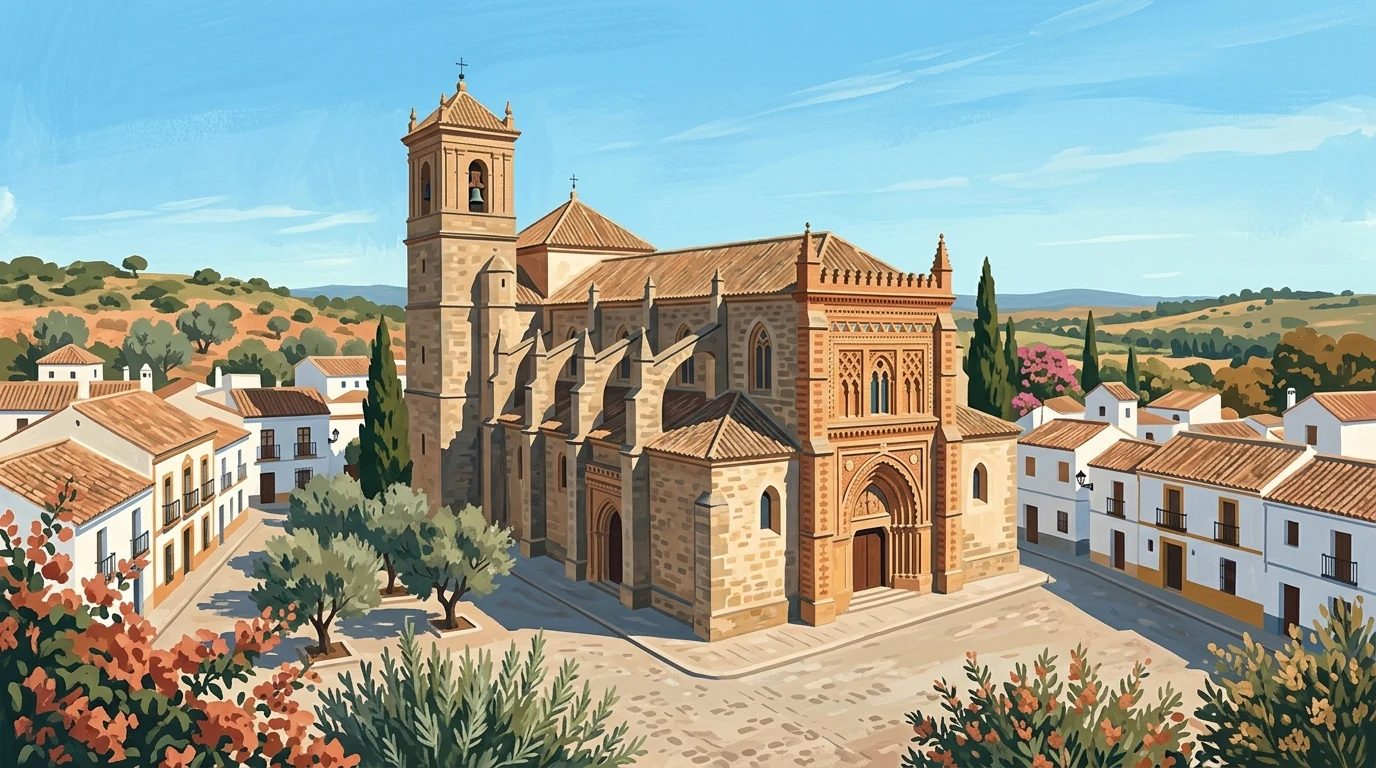
A short walk from the Fontanilla leads you to the Iglesia de San Jorge (Church of Saint George). This Mudejar-style church, with its distinctive brickwork and 14th-century portal, is where the royal decree from Isabella and Ferdinand was read aloud, ordering the people of Palos to provide two caravels for the expedition. It is a sombre, sturdy space. Inside, the silence is heavy with the weight of the men who stood here five centuries ago. For a deeper look at the local families involved, visit the Casa Museo de Martín Alonso Pinzón on Calle Colón. This 15th-century residence belonged to the captain of the Pinta and contains fascinating maritime charts and period furniture that illustrate the wealth and technical skill of the Palos navigators. It’s a vital reminder that Columbus provided the vision, but the men of Palos provided the expertise.
Read the full Palos de la Frontera guide →
Moguer: The Convent and the Poet
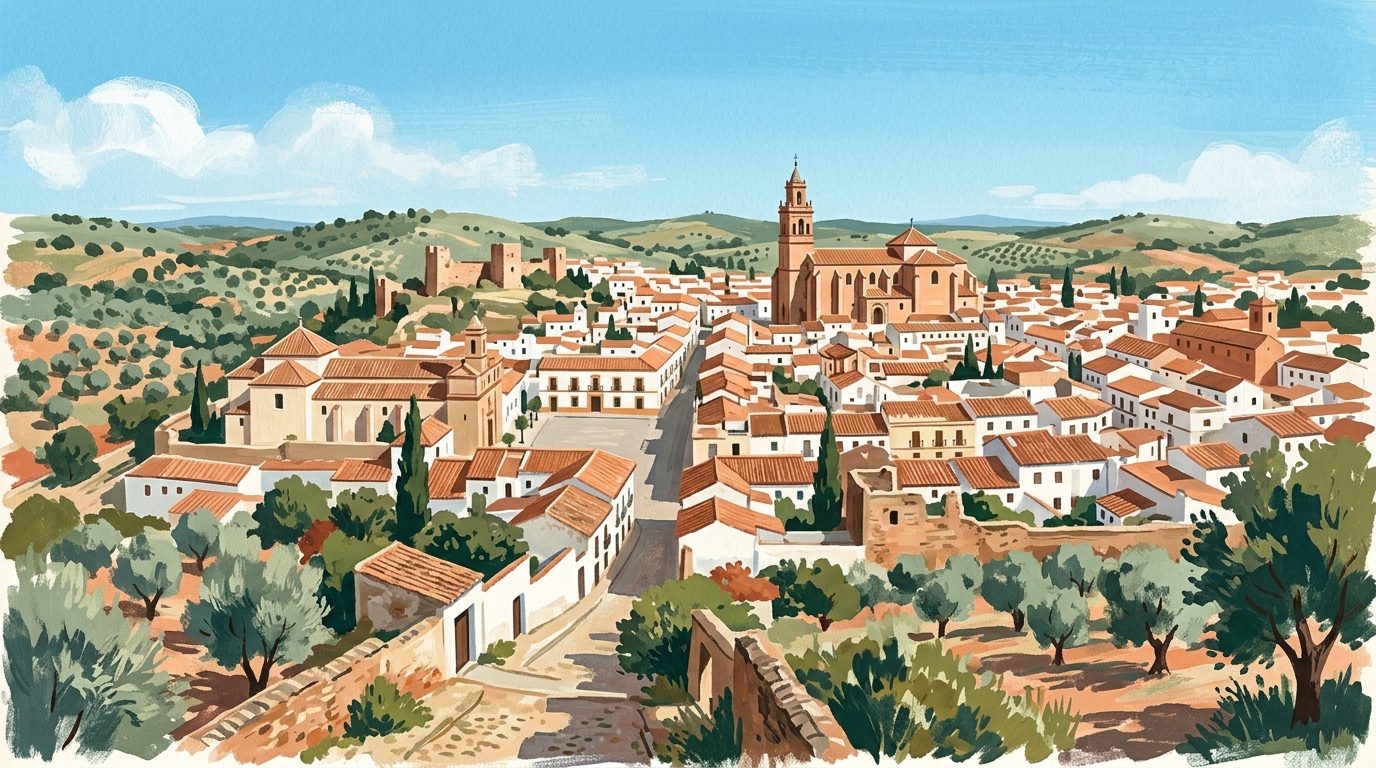
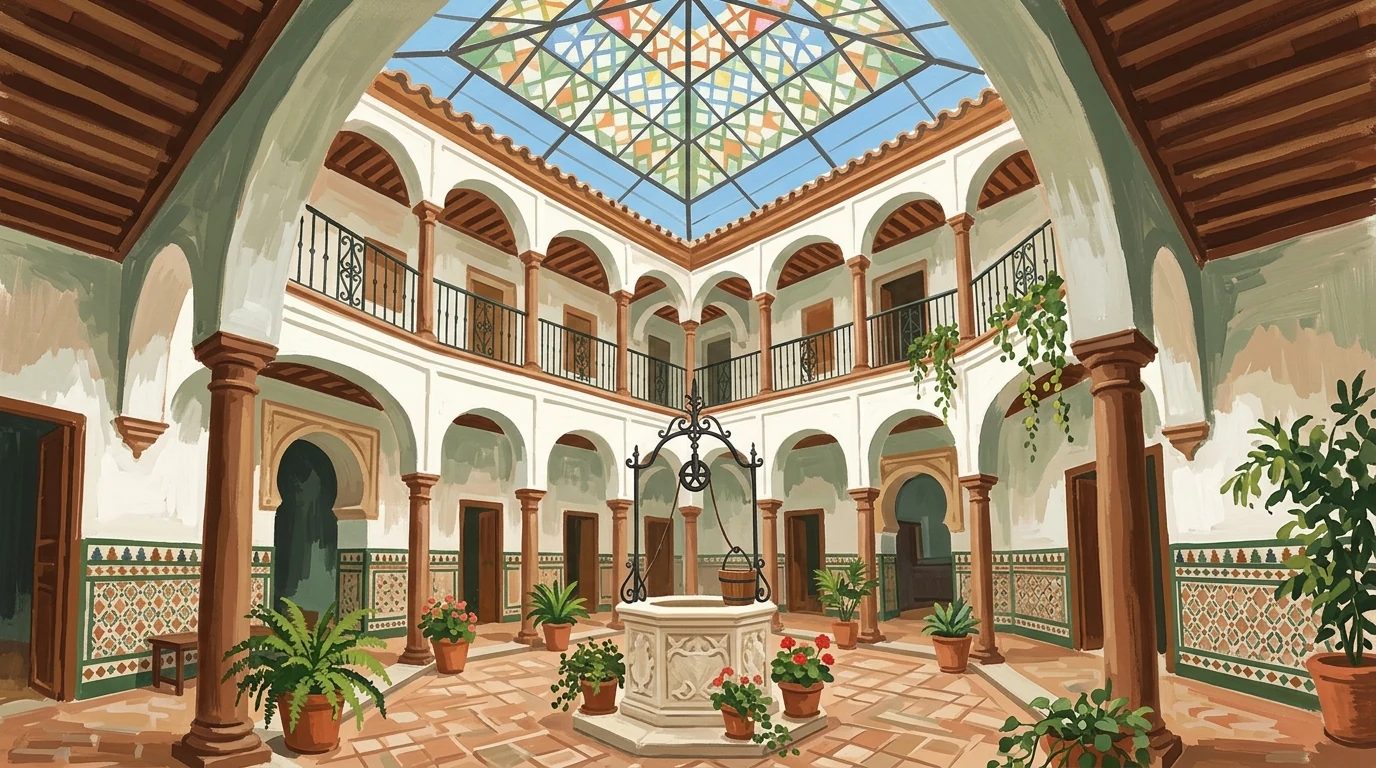
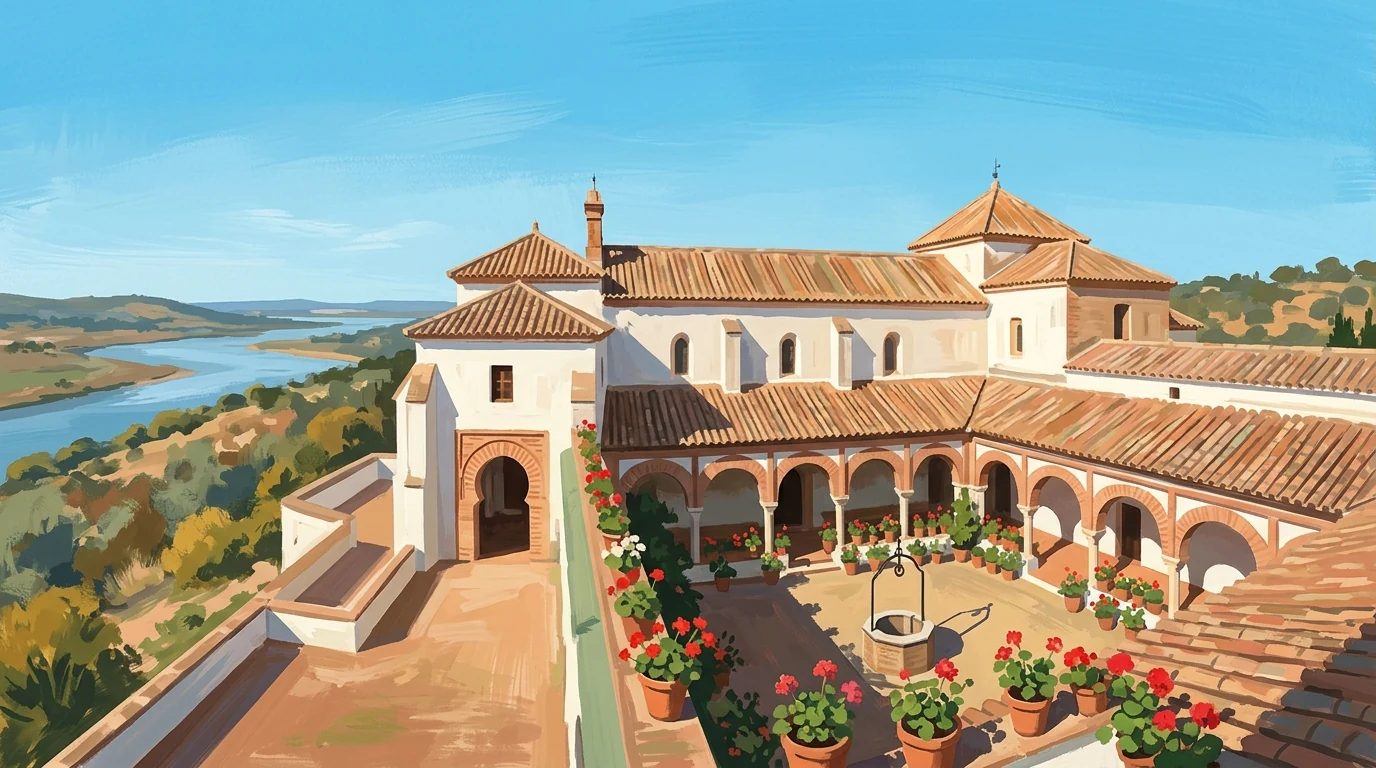
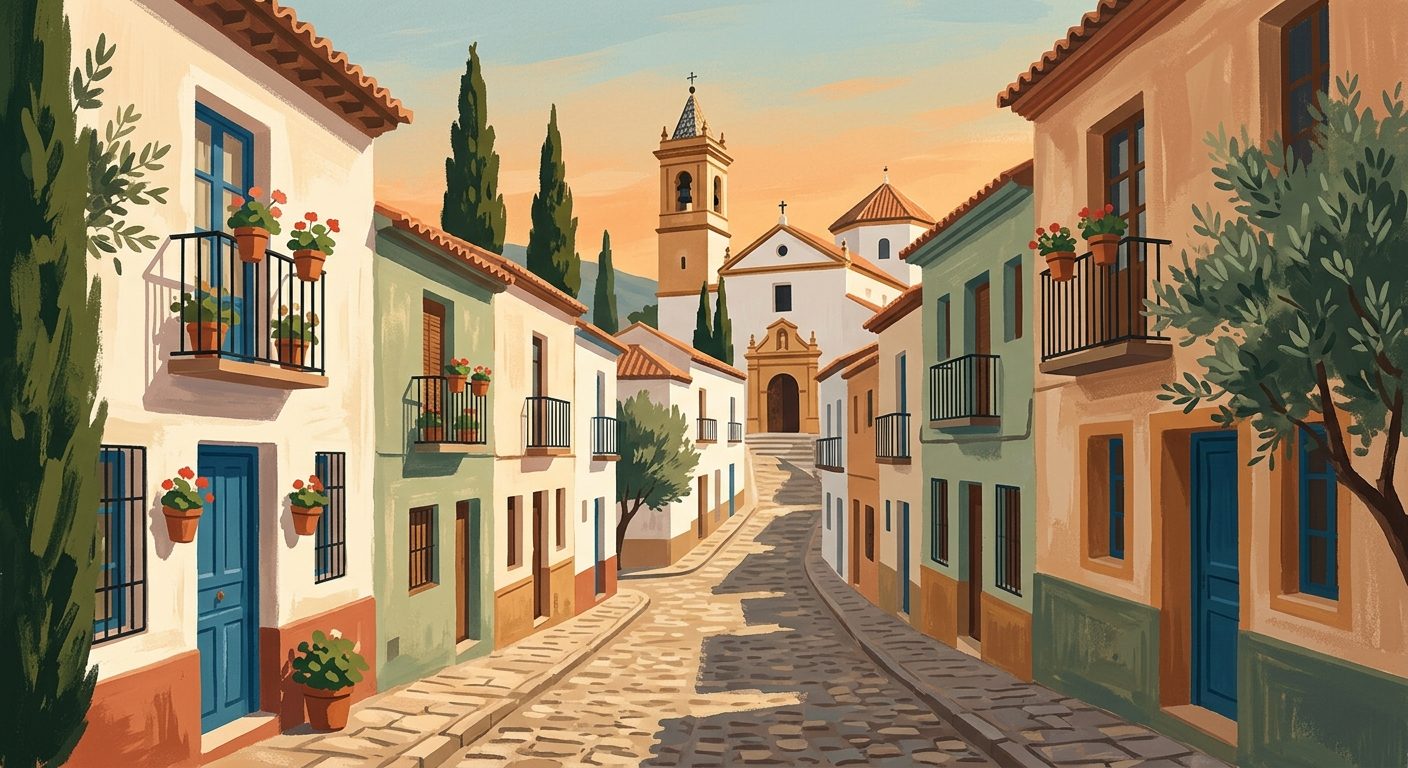
Moguer is perhaps the most elegant stop on the route. While Palos was the gritty shipyard, Moguer was the town of wealthy merchants and powerful clerics. The town is dominated by the Monasterio de Santa Clara, a National Monument that serves as a pillar of the Discovery story. It was here that Columbus spent a night in vigil upon his return in 1493, fulfilling a vow he made during a violent storm in the Atlantic. The Gothic-Mudejar cloisters, particularly the Claustro de las Madres, are among the most beautiful in Andalucía, featuring delicate brick arches that filter the harsh Huelva sun into soft, geometric shadows.
Literary Landscapes and Local Sweets
Moguer holds a double claim to fame. Beyond its Columbus links, it is the birthplace of the Nobel Prize-winning poet Juan Ramón Jiménez. His prose poem Platero y yo (Platero and I), which chronicles the wanderings of a man and his donkey through these very streets, is celebrated with bronze statues scattered throughout the town. This literary layer adds a poetic softness to the historical weight of the Columbus sites. After exploring the poet's house on Calle Puerto, stop by Confitería La Victoria on Calle Iglesia. This bakery is a local institution; try the tortas de aceite (olive oil biscuits) or the piononos de Moguer, which are small, syrup-soaked cakes that provide the necessary energy for a day of walking through the town’s sloping, cobbled lanes.
La Rábida Monastery: The Intellectual Engine
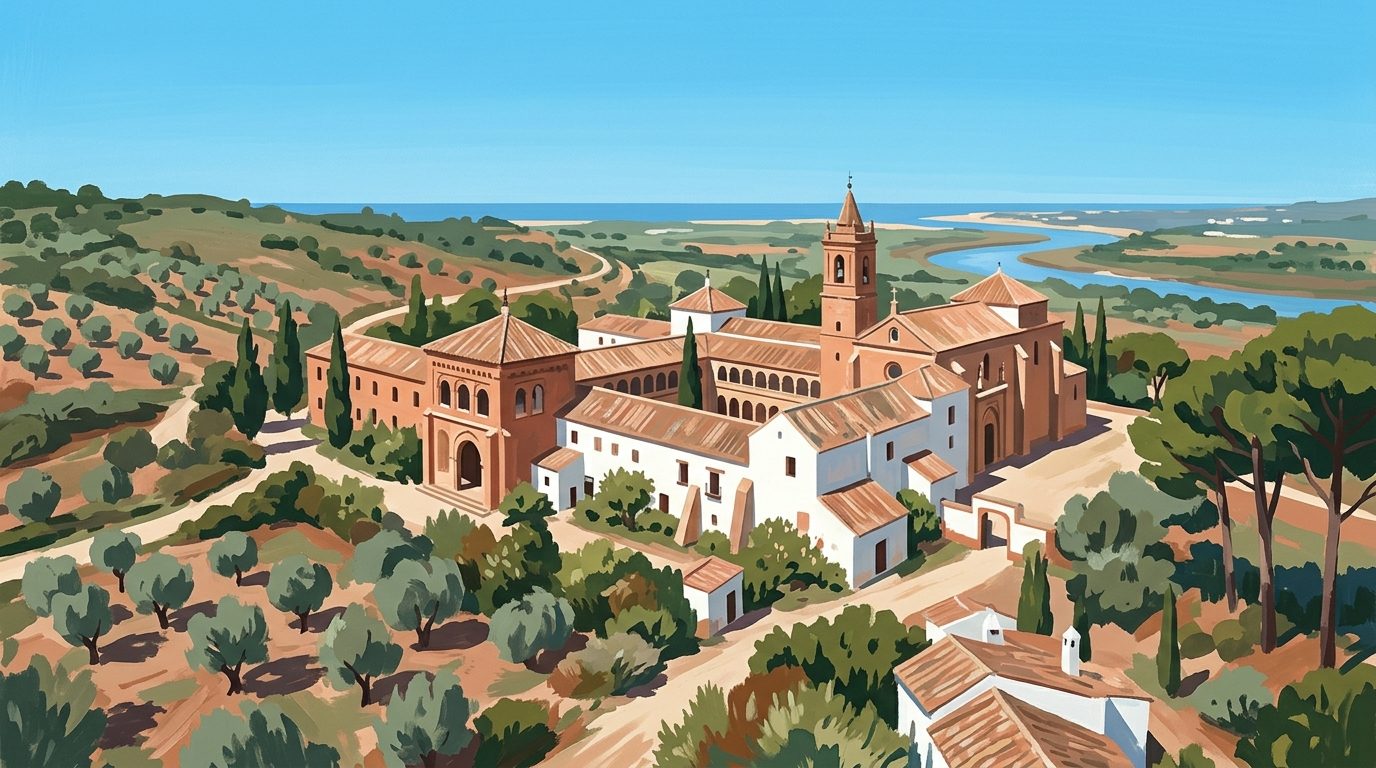
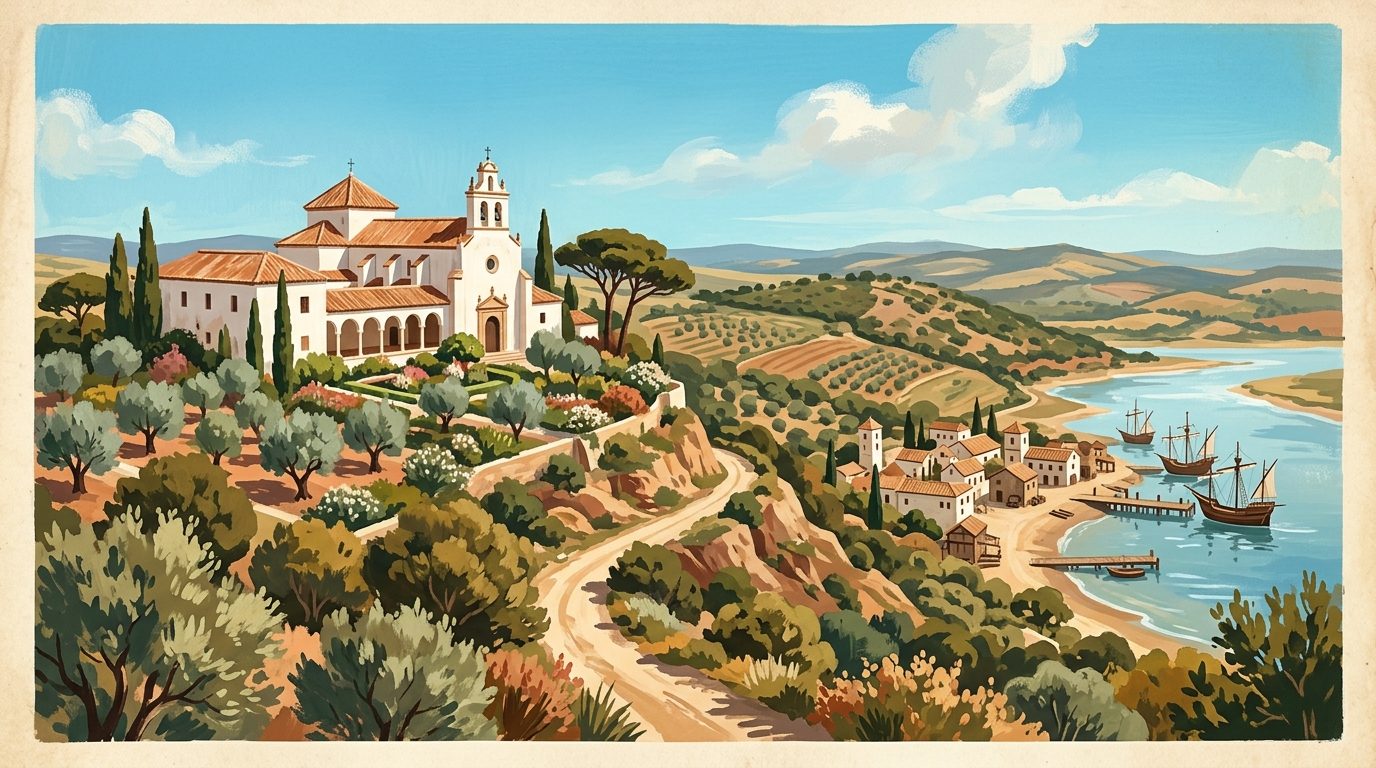
Sitting on a headland where the Tinto and Odiel rivers meet, the Monasterio de la Rábida is the spiritual heart of the route. It was here that a penniless Columbus arrived in 1485 with his young son, seeking food and shelter. The Franciscan friars, particularly Fray Juan Pérez and Fray Antonio de Marchena, were not just men of God but also men of science. They recognised the potential in Columbus’s theories and used their influence at the royal court to secure him an audience with the Catholic Monarchs. The monastery remains a functioning religious site (check local schedules for liturgical closures), but visitors are generally welcome to explore the 15th-century cloister and the room where Columbus held his strategic meetings with the friars.
The Muelle de las Carabelas
Directly below the monastery, at the water's edge, is the Muelle de las Carabelas (Wharf of the Caravels; check the official tourism board for visiting details). While the term "museum" often implies a dry experience, this site is visceral. It houses full-scale replicas of the Pinta, Niña, and Santa María, built for the 500th anniversary in 1992. Stepping onto the deck of the Santa María is a revelation; the ship is staggeringly small. Seeing the cramped quarters and the rudimentary rigging makes the prospect of a two-month crossing into the unknown seem even more terrifying. Nearby, the Celestino Mutis Botanical Park offers a quieter pace, showcasing flora from both the Iberian Peninsula and the Americas, a living reflects the biological exchange that followed 1492.
Read the full La Rábida Monastery guide →
Eating & Drinking in Columbus Route / Discovery Places
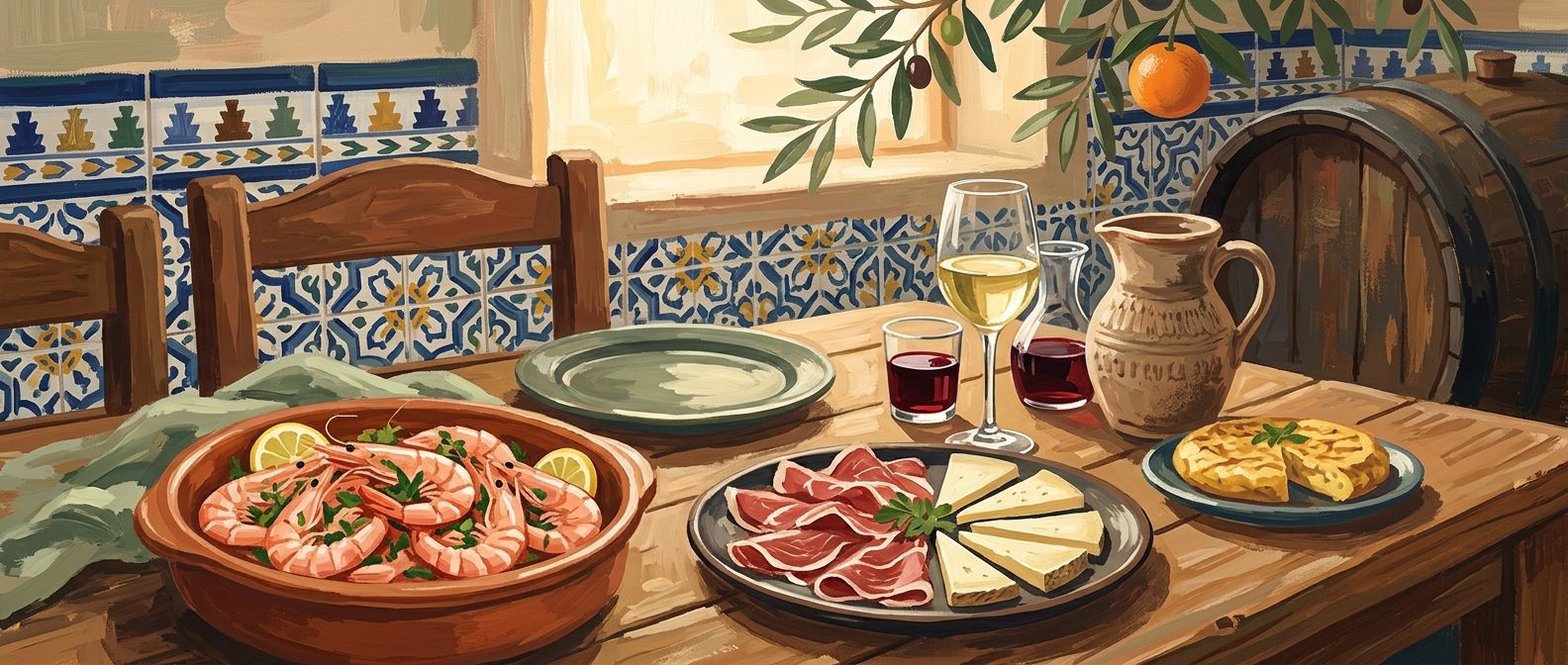
Huelva is the culinary engine room of Andalucía, and the Columbus Route passes through some of its most fertile ground. This is the land of the Gamba Blanca de Huelva (Huelva white prawn), a delicate, sweet crustacean that is best enjoyed simply boiled with a handful of sea salt. In Palos de la Frontera, look for Restaurante La Pinta. It isn't flashy, but they understand the local larder perfectly. Order the choco frito (fried cuttlefish), which is a local obsession so profound that the people of Huelva are colloquially known as Choqueros.
In Moguer, the dining scene is more traditional. Mesón El Lobito is a fantastic choice for those wanting to try habas con poleo, a typical Huelva dish of broad beans cooked with mint, garlic, and vinegar. It’s an earthy, pungent dish that speaks to the agricultural roots of the town. To wash it all down, you must try the local Vino del Condado de Huelva. These are often fortified wines, similar to Sherry but with their own distinct DO (Denominación de Origen) status. The Vino Naranja (Orange Wine), macerated with orange peel from the local groves, is a refreshing, aromatic aperitif that perfectly matches the citrus-scented air of the Moguer plazas.
Where to Stay
For those who want to stay within the historical atmosphere, the options are charmingly understated. In the heart of Moguer, the Hotel Plaza Escribano is a converted manor house that keeps you within walking distance of the Santa Clara monastery. It’s simple, clean, and captures the town's quiet evening hum. However, for a more dramatic setting, the Parador de Mazagón is the regional standout. Located about 15 minutes from La Rábida, it sits on a cliff overlooking the Atlantic Ocean within the Doñana Natural Park. The architecture is mid-century modern, and the views of the pristine, sandy coastline are unparalleled. If you prefer something more central to the Columbus sites, Palos de la Frontera has several smaller pensiones (guest houses), but Moguer offers a more comprehensive 'town life' experience for an overnight stay.
Getting There & Around
The Columbus Route is best explored by car, as public transport between the specific historical sites can be sporadic. From Sevilla, it is a straightforward 60-minute drive via the A-49 motorway. If you are staying in Huelva city, Palos and La Rábida are only 15 minutes away across the bridge over the Río Tinto. There is ample parking at the Muelle de las Carabelas and the La Rábida monastery. To truly appreciate the geography, I recommend driving the backroads between Palos and Moguer through the strawberry fields. This is the economic lifeblood of the province and provides a striking contrast to the historical monuments.
Best Time to Visit
Timing is everything in Huelva. The height of summer (July and August) can be oppressively hot and crowded with domestic tourists heading to the nearby beaches of Mazagón. The ideal window is April to June. During these months, the strawberry harvest is in full swing, and the wildflowers in the Doñana marshes are in bloom. Alternatively, early autumn (September and October) offers mild temperatures and a lovely golden light that suits the red-tinted waters of the Tinto. If you can, visit on 3rd August to witness the commemorative events in Palos marking the departure of the first voyage.