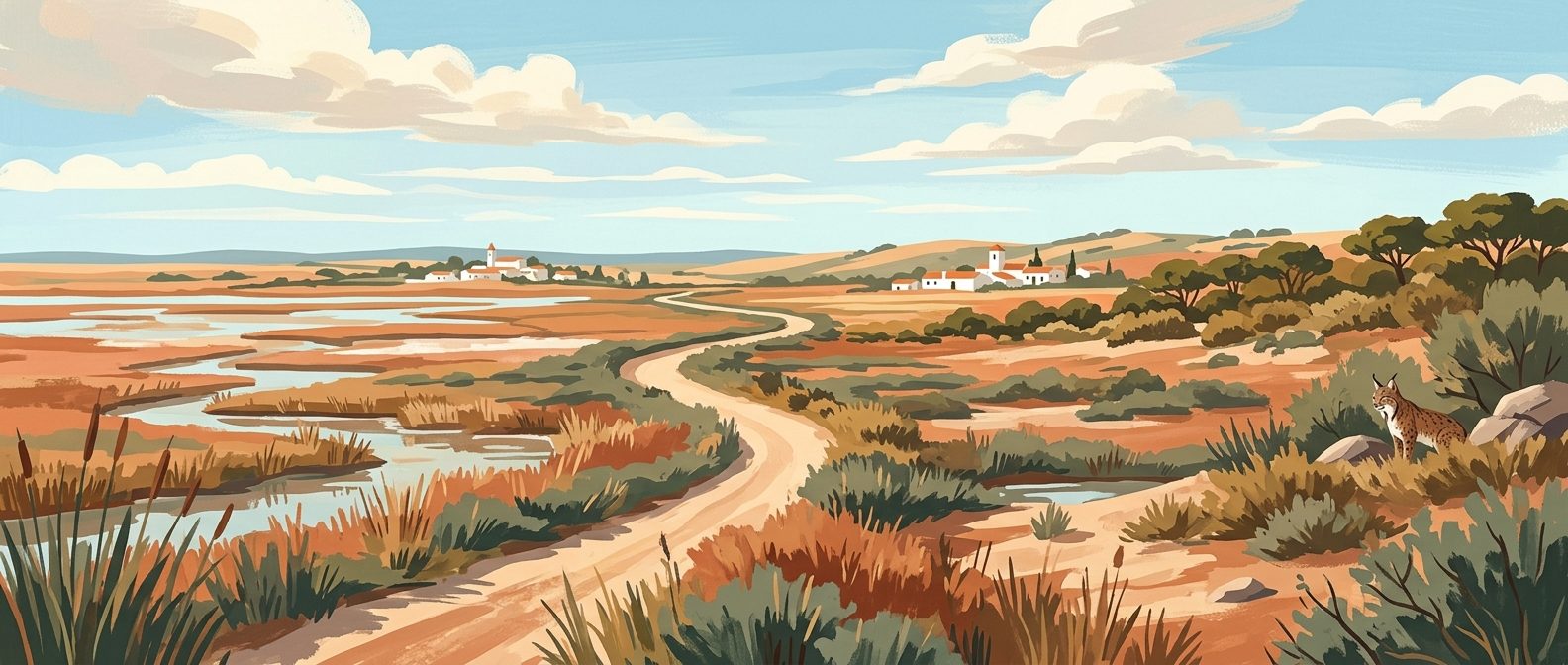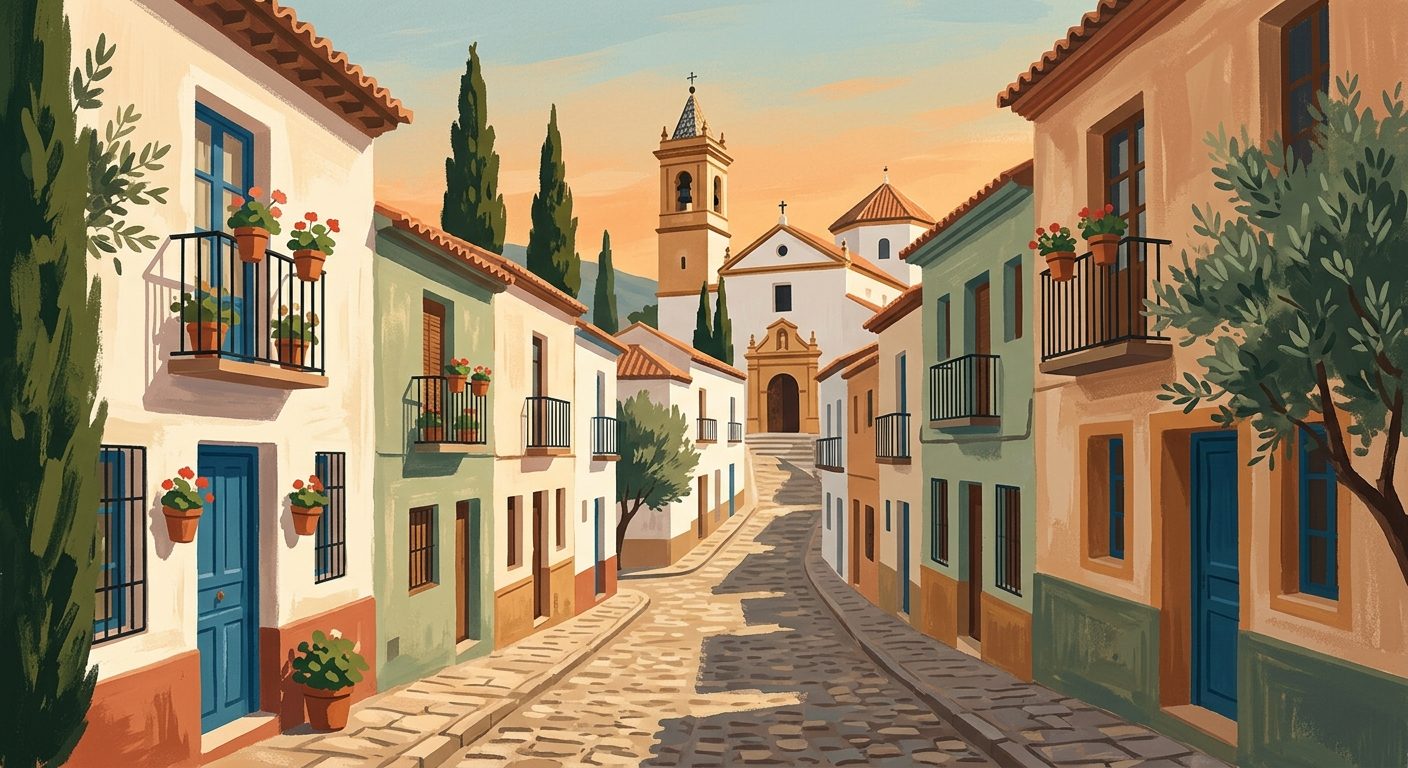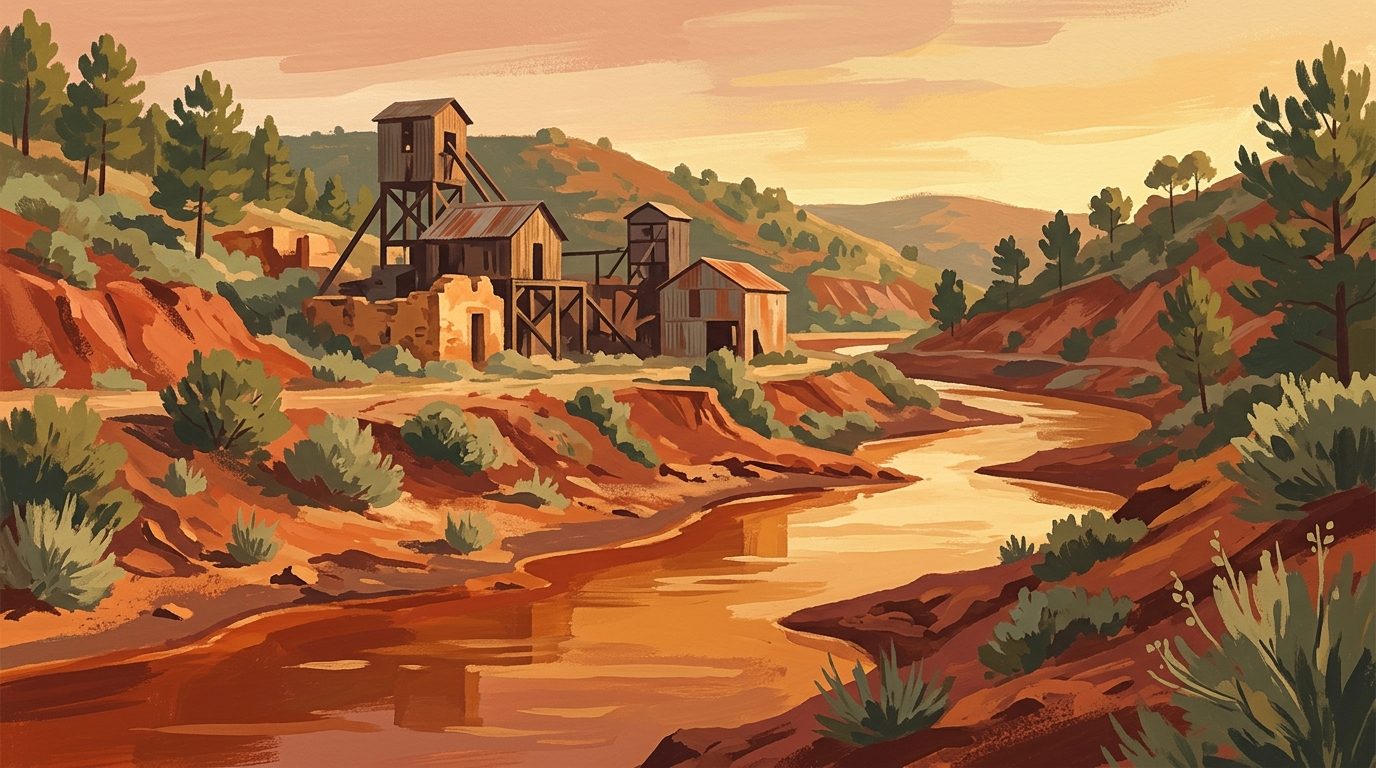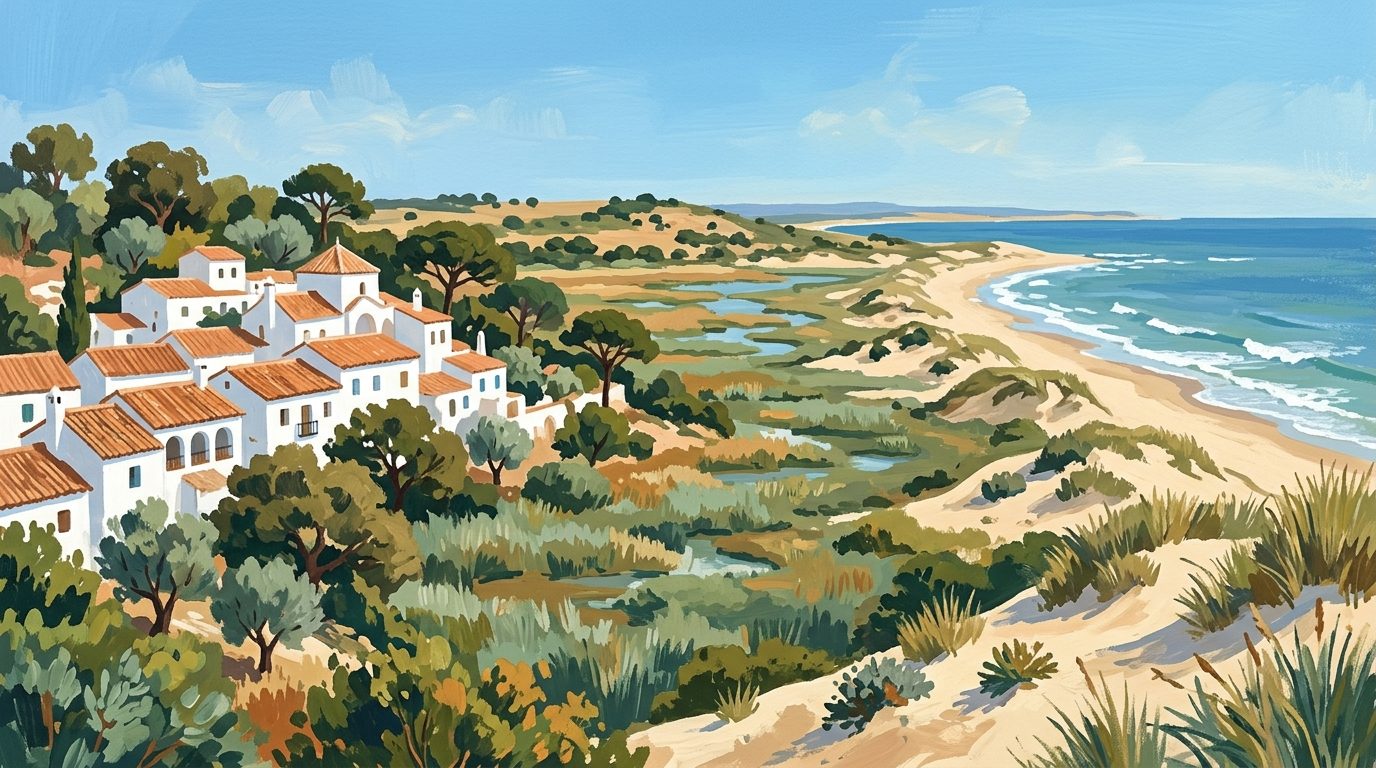
Doñana is a landscape that refuses to stay still, where shifting sand dunes slowly swallow pine forests and seasonal rains transform parched basins into Europe's most significant wetlands. It is a place where the wild Atlantic meets the spirit of Andalucía, offering a silence rarely found elsewhere on the Iberian Peninsula.
To understand the province of Huelva, one must first understand Doñana. Covering over 500 square kilometres across the provinces of Huelva, Sevilla, and Cádiz, the Doñana National Park (Parque Nacional de Doñana) is a complex mosaic of ecosystems. It is most famous for its marismas (marshlands), which serve as a vital crossroads for millions of migratory birds travelling between Europe and Africa. However, the park is equally defined by its cotos (woodlands) and its extraordinary 30-kilometre stretch of pristine, undeveloped coastline.
Unlike the more manicured coastal regions further east, the Huelva coast retains a rugged, frontier-like quality. Here, the Lince ibérico (Iberian lynx), the world’s rarest feline, still stalks through the Mediterranean scrub, and the Águila imperial (Spanish imperial eagle) circles above. This guide explores the unique trio of settlements that define the area: the dusty pilgrimage village of El Rocío, the resort town of Matalascañas, and the tranquil, pine-fringed Mazagón.
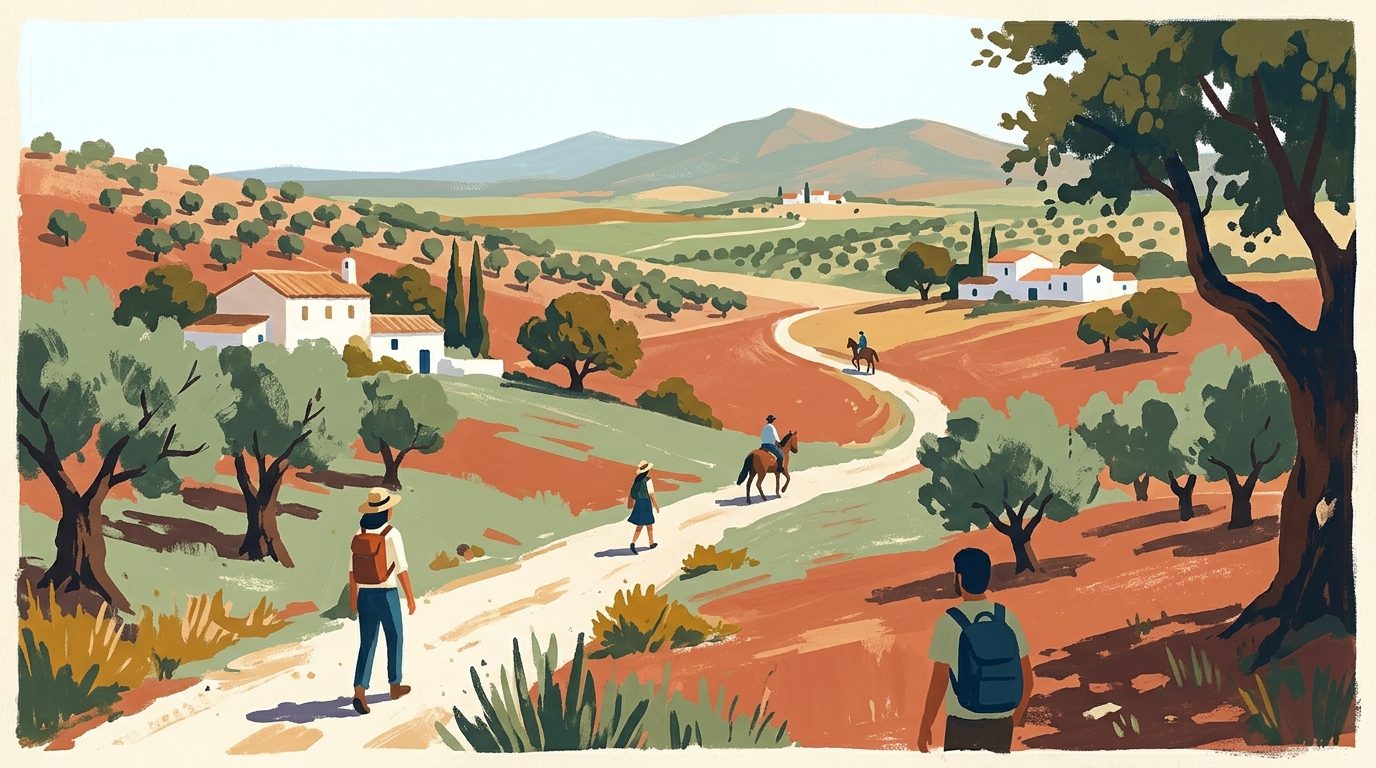
Exploring Doñana requires a shift in pace. You cannot simply drive through the heart of the park; access is strictly controlled to protect the fragile environment. Instead, you engage with it through official 4x4 tours, quiet boardwalks, or by simply sitting on the edge of the wetlands at sunset, watching the flamingos turn the shallow waters a pale shade of pink.
El Rocío: The Village of Sand and Spirit
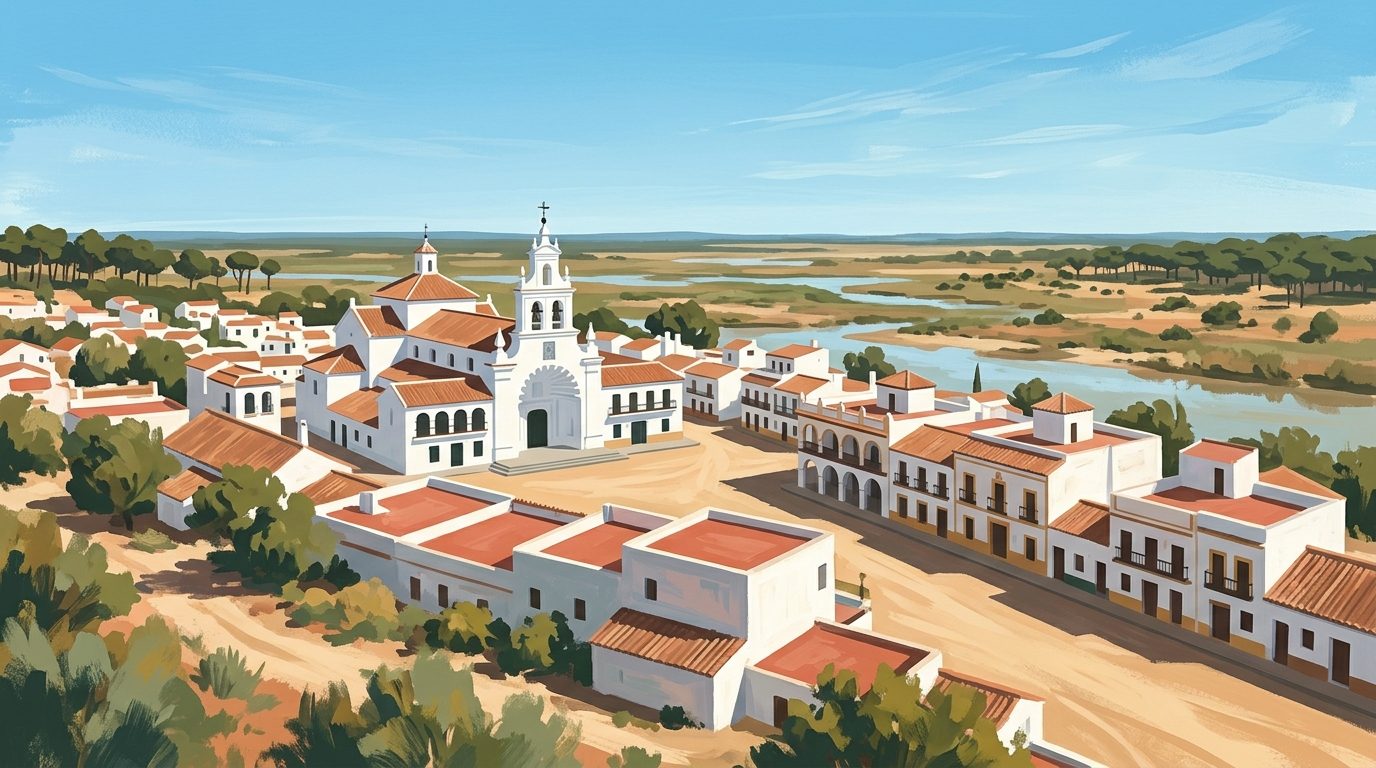
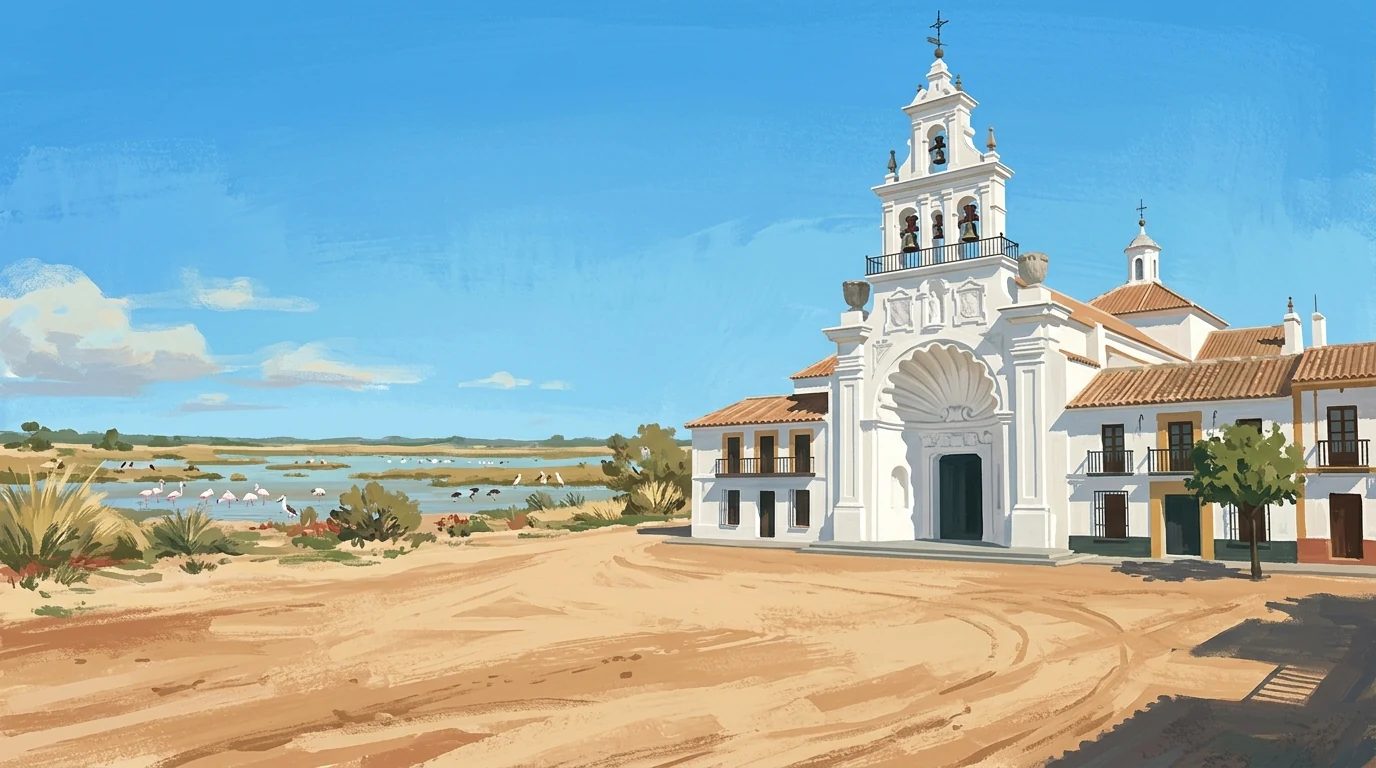
Arriving in El Rocío feels like stepping onto the set of a 1960s Spaghetti Western. There is no tarmac here; the streets are made of deep, fine sand. Instead of parking bays, you will find wooden rails (muretes) for hitching horses outside the whitewashed houses. This is the headquarters of the Hermandad Matriz, the brotherhood responsible for the annual Romería de El Rocío. The 2026 event took place in late May; looking ahead to 2027, the main pilgrimage festivities will occur from 14 to 17 May. During this time, access to the village is strictly limited, massive crowds surge into the area, and accommodation is entirely unavailable.
The Marismas Edge
The village sits directly on the edge of the Madre de las Marismas, a wide expanse of wetland. From the promenade outside the Ermita de la Virgen del Rocío, you can look out over the water and see hundreds of wild horses grazing in the shallows alongside spoonbills and grey herons. It is one of the few places in the world where a significant wild bird population lives in such close proximity to a permanent human settlement. For the best view, head to the SEO/BirdLife visitor centre on the edge of the village; their telescopes offer a clear look at the flamingos further out in the reeds.
The Saca de las Yeguas
If you visit in late June, you might witness the Saca de las Yeguas (the gathering of the mares). Local cattlemen, known as yegüerizos, ride into the deep marshes of the National Park to round up the semi-wild Marismeño horses, driving them through the sandy streets of El Rocío to be shod and sold in nearby Almonte. It is a raw, powerful display of local tradition that has remained unchanged for centuries. Outside of festival times, the village returns to a quiet, almost eerie stillness, where the only sound is the occasional clip-clop of a horse's hooves.
Read the full El Rocío guide →
Matalascañas: The Gateway to the Wilderness
Matalascañas is a town of two halves. To the west, it is a functional seaside resort with high-rise apartments and family-friendly amenities. To the east, the buildings stop abruptly at a wire fence, beyond which lies 30 kilometres of untouched National Park beach. It is this proximity to the wild that makes Matalascañas an essential stop on any Huelva itinerary.
The Upside-Down Tower
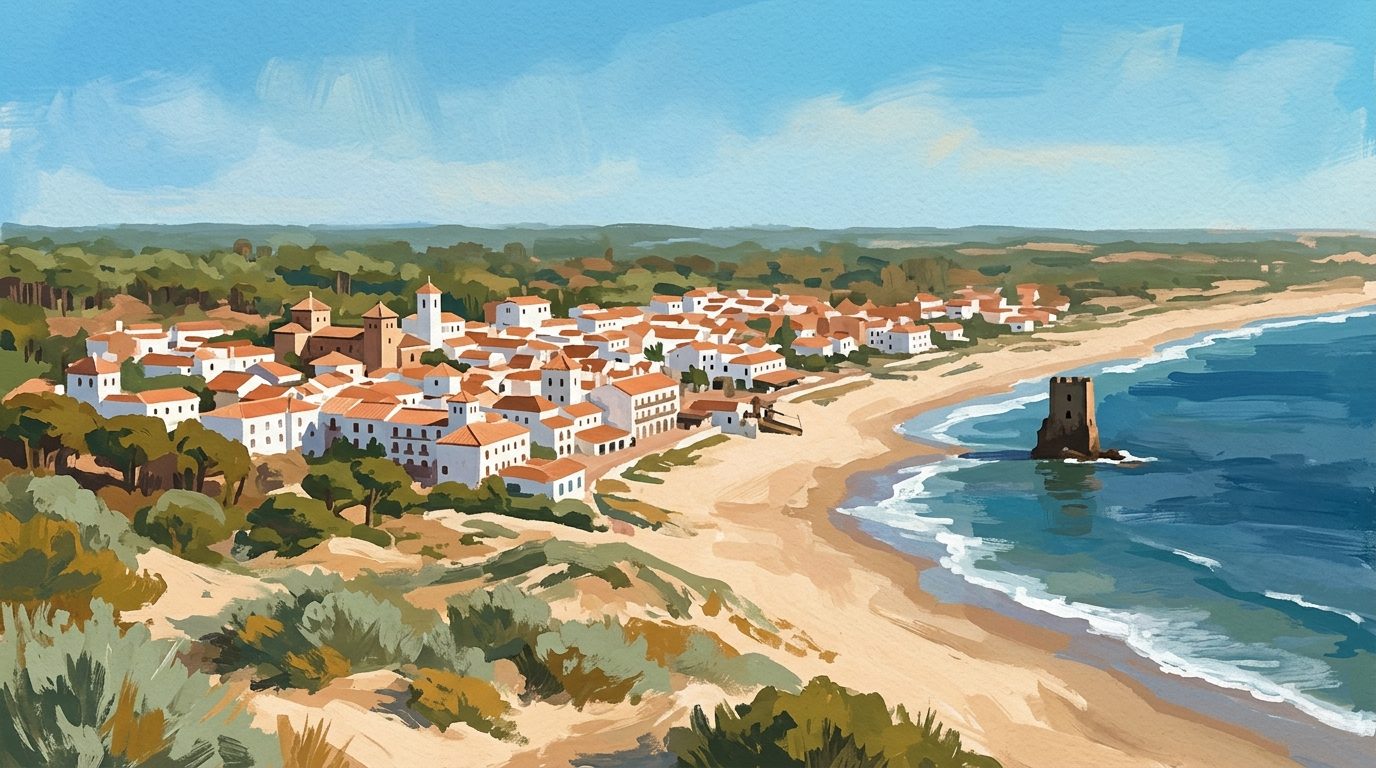
The town’s most recognisable landmark is the Torre la Higuera. This 16th-century watchtower was toppled during the Lisbon Earthquake of 1755 and now sits upside down in the surf. At low tide, it serves as a perch for cormorants and a focal point for photographers. The beach here is vast, with golden sand that stays firm near the water's edge, perfect for long walks. If you walk eastwards for twenty minutes, the crowds vanish, and you are left with nothing but the Atlantic on one side and the towering sand dunes of Doñana on the other.
Cuesta Maneli
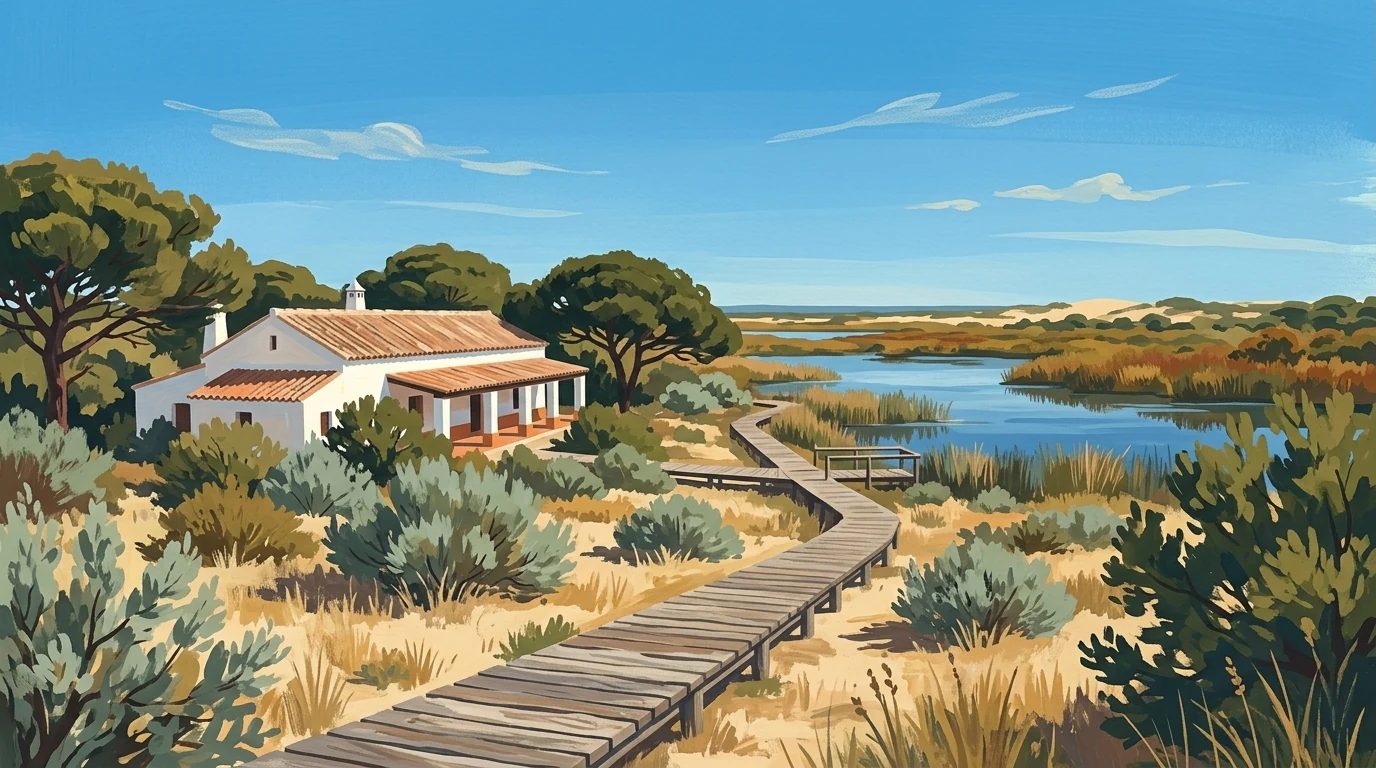
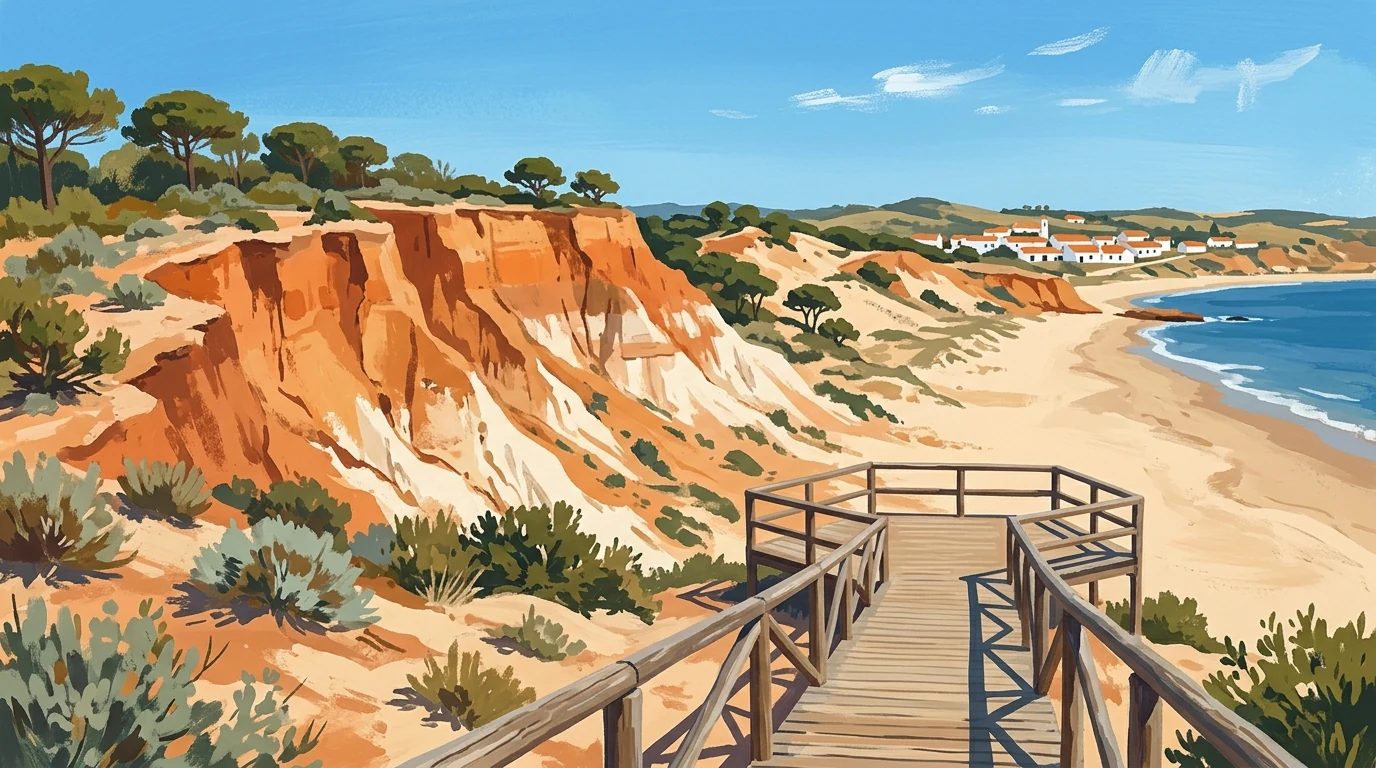
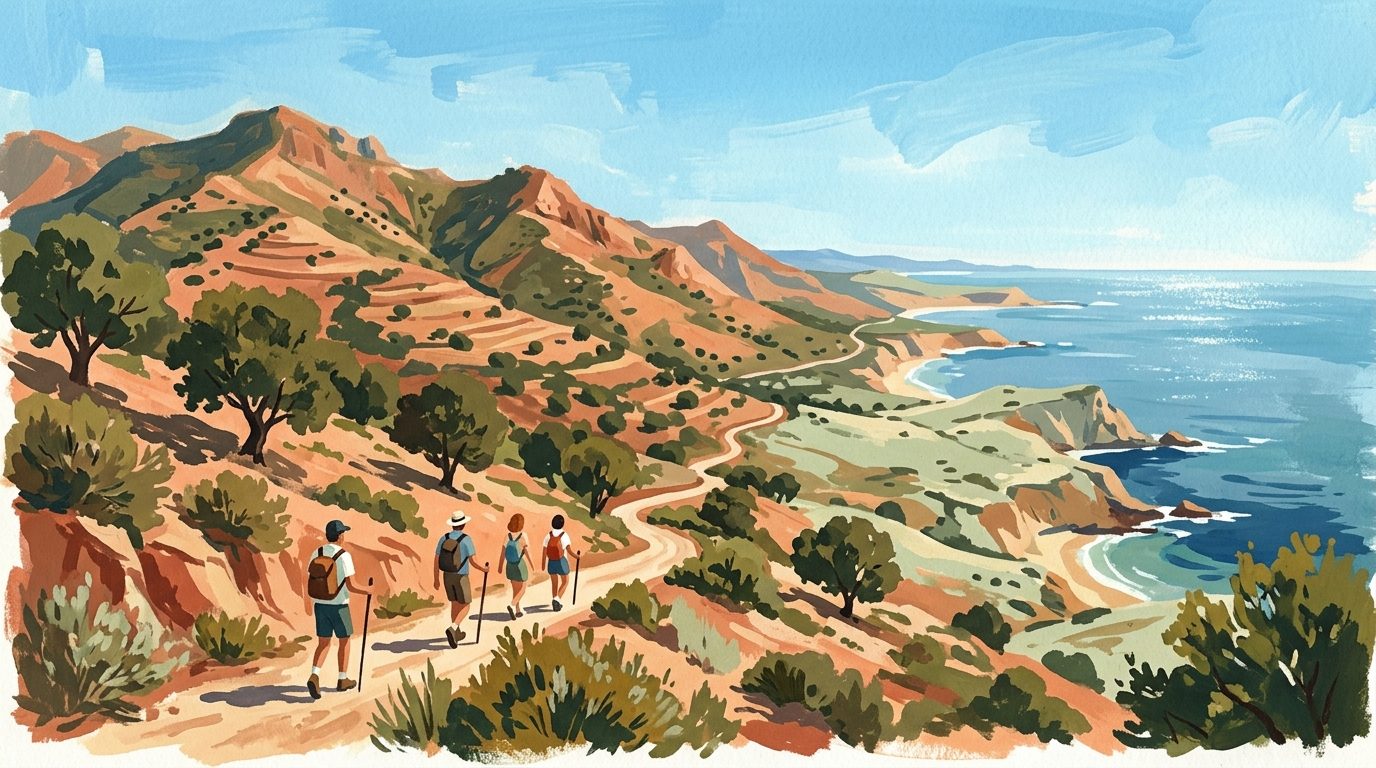
A few kilometres west of the main town, between Matalascañas and Mazagón, lies the Cuesta Maneli trail. This wooden boardwalk snakes through a landscape of fossilised dunes and aromatic shrubs like rosemary and juniper. After a 1.5-kilometre walk, the path descends a steep wooden staircase to a beach that feels entirely cut off from the modern world. The cliffs here, known as the Acantilado del Asperillo, are made of burnt-orange sandstone and provide a striking backdrop to the blue of the ocean. It is arguably the finest stretch of sand in Andalucía.
Read the full Matalascañas guide →
Mazagón: Pine Forests and Atlantic Breezes
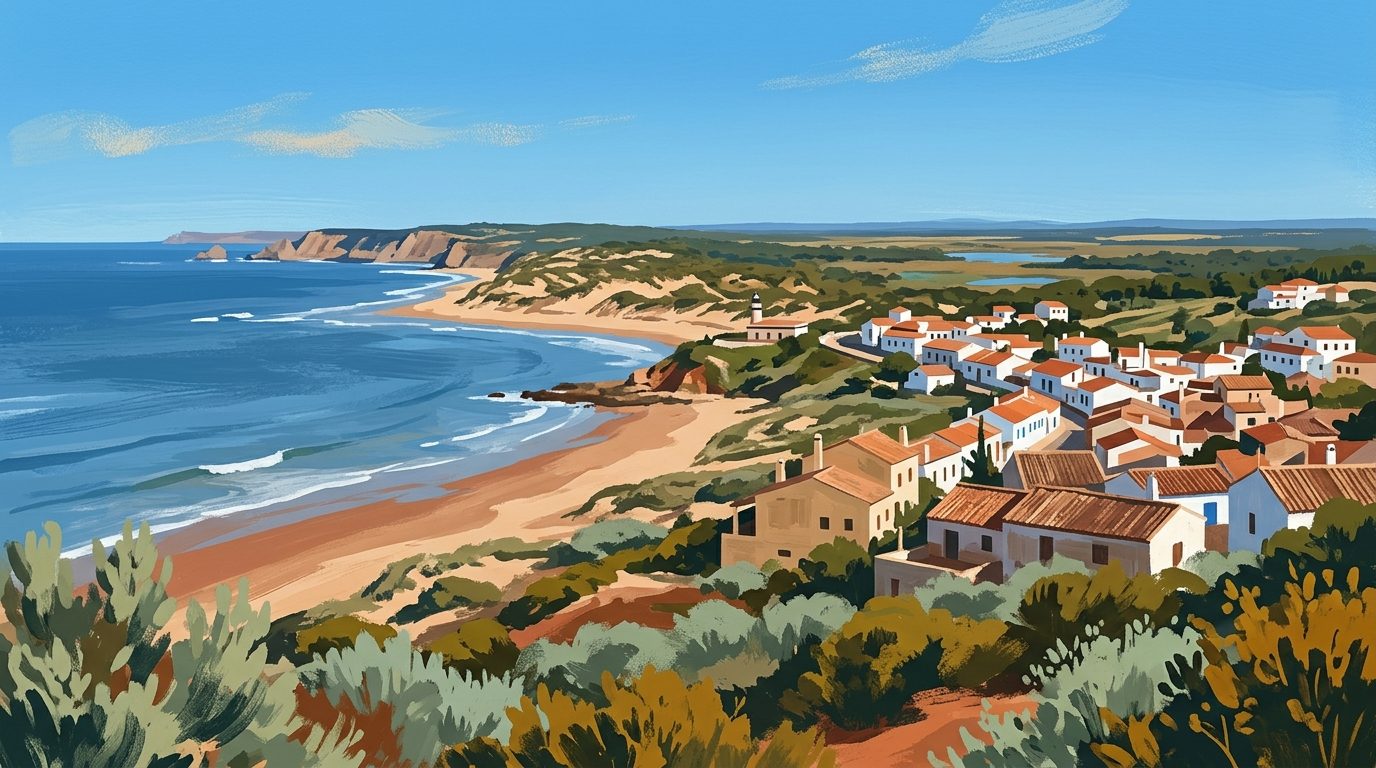
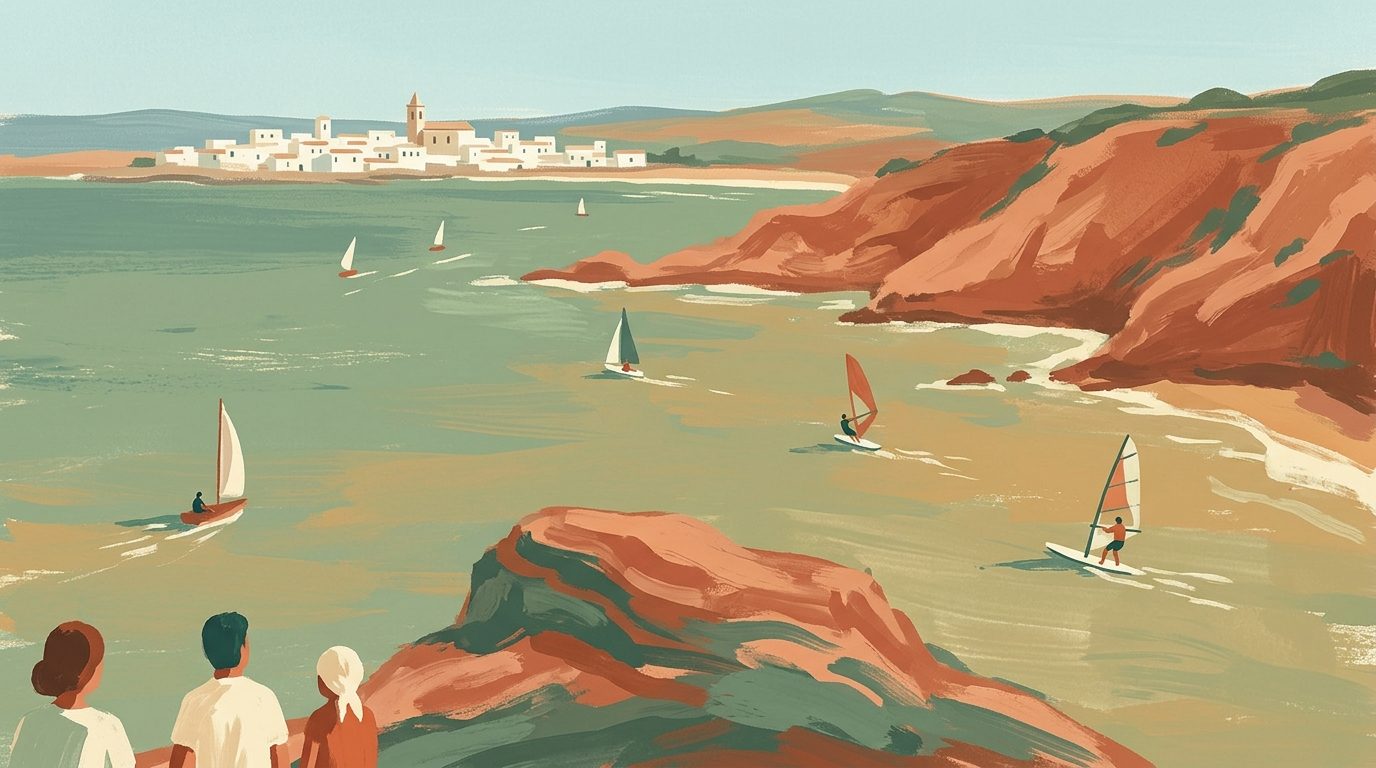
Further west along the coast, Mazagón offers a much more understated atmosphere than its neighbour. It lacks the high-rise profile of Matalascañas, instead being defined by low-slung villas and sprawling pine forests (pinares) that grow right down to the shoreline. This is a place for those who prefer the smell of salt and pine needles over the sound of beach clubs.
The Parador and the Cliffs
The area around the Parador de Mazagón is particularly special. Perched on a cliffside, the state-run hotel is surrounded by protected parkland. Even if you aren't staying there, the surrounding coastal paths offer exceptional views of the Atlantic. The beaches here are punctuated by freshwater streams that trickle down from the dunes, creating small green oases on the sand. The Pino del Centenario, a massive, ancient stone pine located nearby, is a local monument worth seeking out for its sheer scale.
Marina and Gastronomy
Mazagón also features a modern Puerto Deportivo (marina), which adds a touch of maritime life to the town. The restaurants around the port and along the main Avenida de Fuentepiña are where the locals gather. Unlike the more tourist-focused menus elsewhere, Mazagón stays true to its fishing roots. Look for corvina (meagre) or lenguado (sole) caught that morning. The town serves as a perfect base for exploring the nearby Lugares Colombinos, the sites associated with Christopher Columbus’s first voyage, located just 15 minutes away at the Monastery of La Rábida.
Eating & Drinking in Doñana National Park & Coast
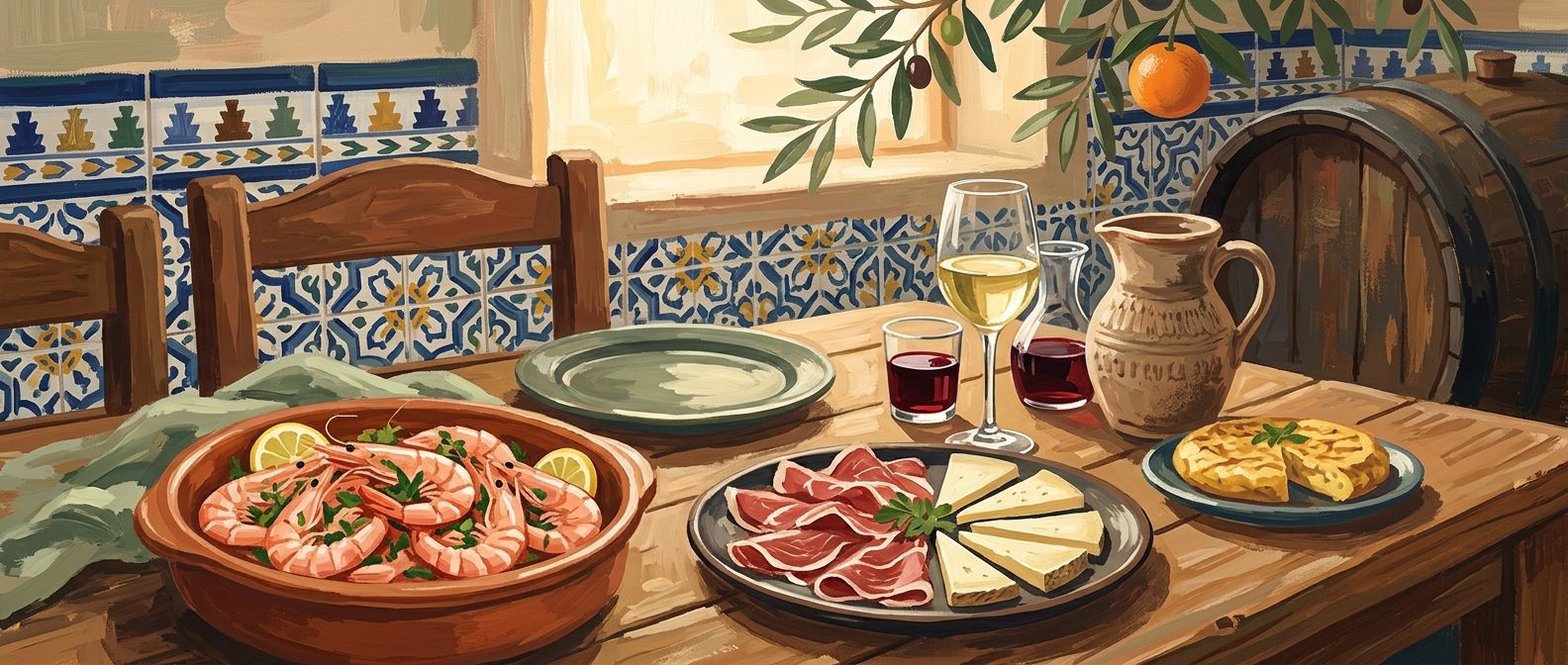
The gastronomy of this region is a marriage between the bounty of the Atlantic and the riches of the Huelva countryside. The undisputed star is the Gamba Blanca de Huelva (Huelva white prawn). These are best enjoyed simply boiled with a touch of sea salt. You will find them at their freshest at Restaurante El Choco in Mazagón or Restaurante Sidonía.
In El Rocío, the food takes on a more terrestrial flavour. Restaurante El Toruño is a local institution, offering views over the marshland and serving jamón ibérico de bellota from the nearby Sierra de Aracena. Try the coquinas de fango (small wedge clams) sautéed in garlic and parsley, or the arroz marismeño (marshland rice), often prepared with wild duck or eel.
To drink, look no further than the local Condado de Huelva DO wines. The Zalema grape produces crisp, dry whites that pair perfectly with seafood. For something more traditional, try Vino Naranja (orange wine), a fortified wine macerated with orange peel, which is a speciality of the nearby town of Moguer. For a casual lunch in Matalascañas, Chiringuito Tucán offers excellent grilled sardines right on the sand.
Where to Stay
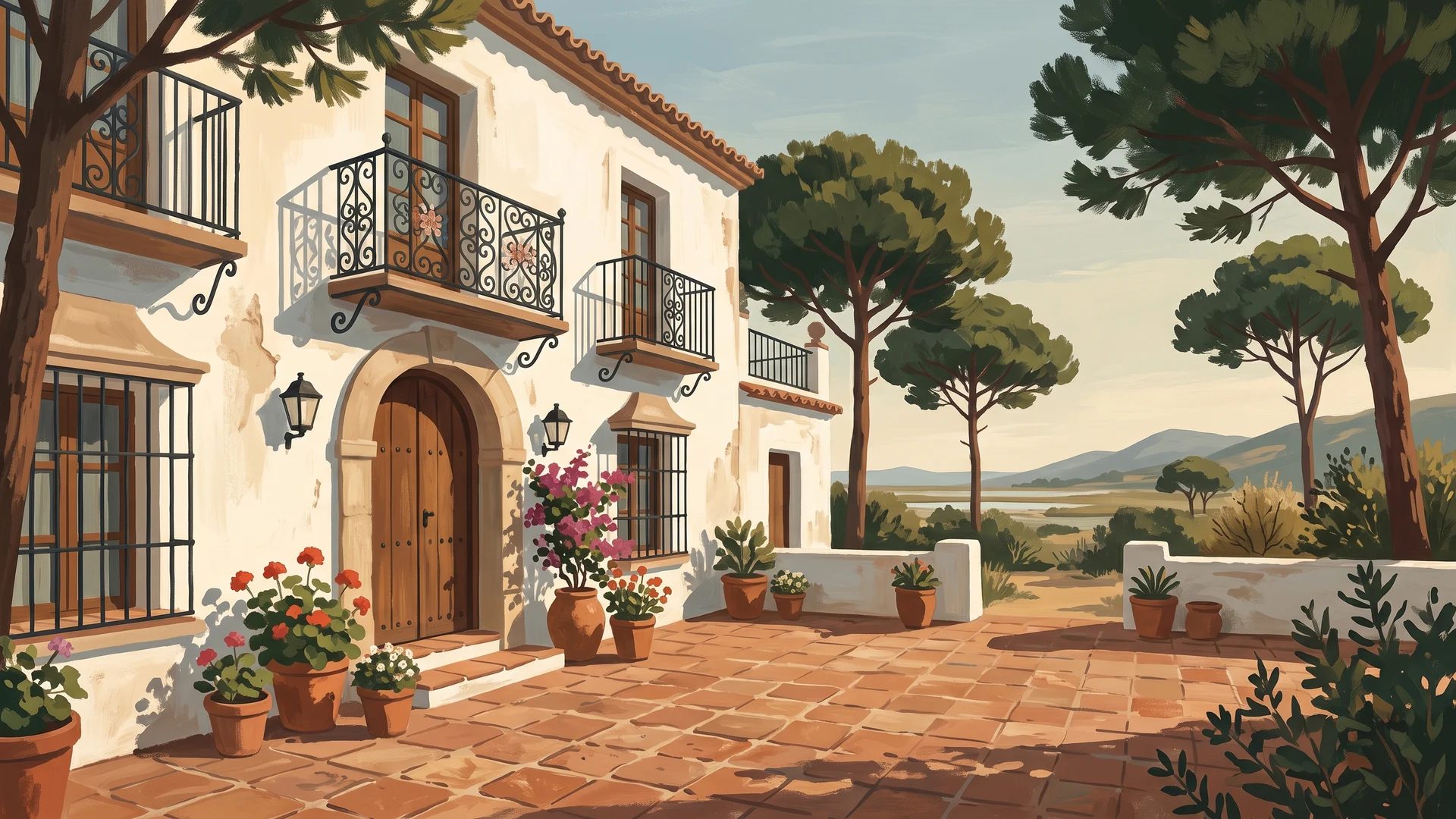
For a truly immersive Doñana experience, split your time between the coast and the village. In El Rocío, Hotel La Malvasía is an elegant choice, designed in the traditional style of a grand village house with a courtyard. It feels authentic without sacrificing comfort. If you prefer the sound of the waves, the Parador de Mazagón is unbeatable for its location. It sits within the protected coastal zone, offering direct access to secluded beaches and featuring a large pool surrounded by pine trees.
For those who prefer self-catering, Mazagón has several low-rise apartment options that feel less industrial than those in Matalascañas. If you are visiting for the Romería, be aware that accommodation in El Rocío is booked years in advance, but during the rest of the year, the village is surprisingly affordable and quiet.
Getting There & Around
The nearest major airport is Sevilla (SVQ), roughly an hour's drive away. Alternatively, Faro airport (FAO) in Portugal is about 90 minutes to the west. A car is essential for this region. The A-49 motorway connects Sevilla to Huelva, and the A-483 takes you down through Almonte to El Rocío and Matalascañas. Be mindful that you cannot drive through the National Park to reach Cádiz; you must drive back up and around through Sevilla. Public transport is limited to occasional buses from Huelva and Sevilla, which are fine for reaching the towns but won't allow you to explore the park's peripheral visitor centres.
Best Time to Visit
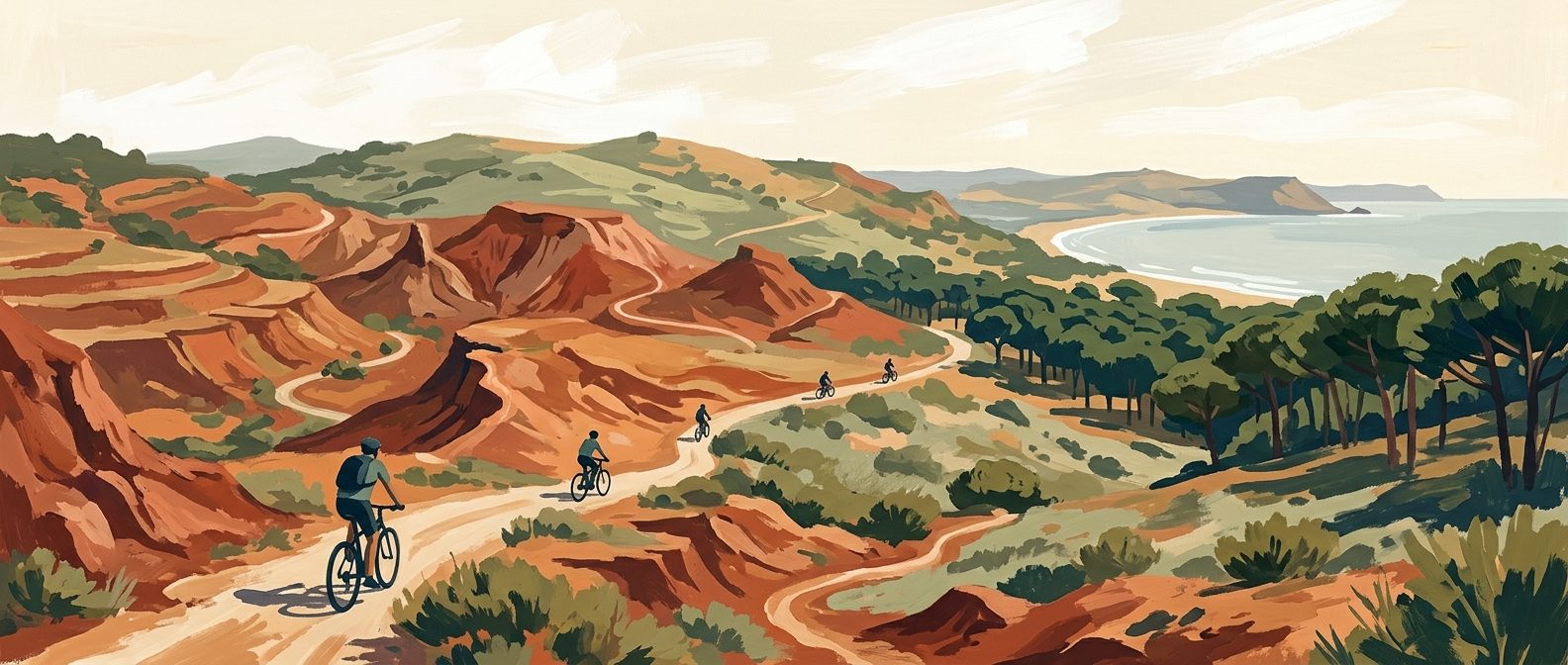
Timing is everything in Doñana. To see the wetlands at their most spectacular, visit between February and May. This is when the winter rains have filled the marismas, and the bird migration is at its peak. By July and August, the heat can be intense, and much of the marshland dries up into a cracked clay crust. Spring also offers the best conditions for hiking the coastal trails. If you wish to experience El Rocío at its quietest, visit in autumn; however, given that the 2027 Romería is scheduled for 14 to 17 May, readers travelling during this period should expect massive crowds rather than quiet streets.