
Practical guide
Photography in Andalucía: A Practical Guide
A practical, source-led guide to photography in Andalucía. Discover how to manage bright light, navigate complex drone rules, secure permits for monuments, respect privacy, and avoid common legal and logistical mistakes.
By Dan · Updated 14 July 2026 · 7 min read
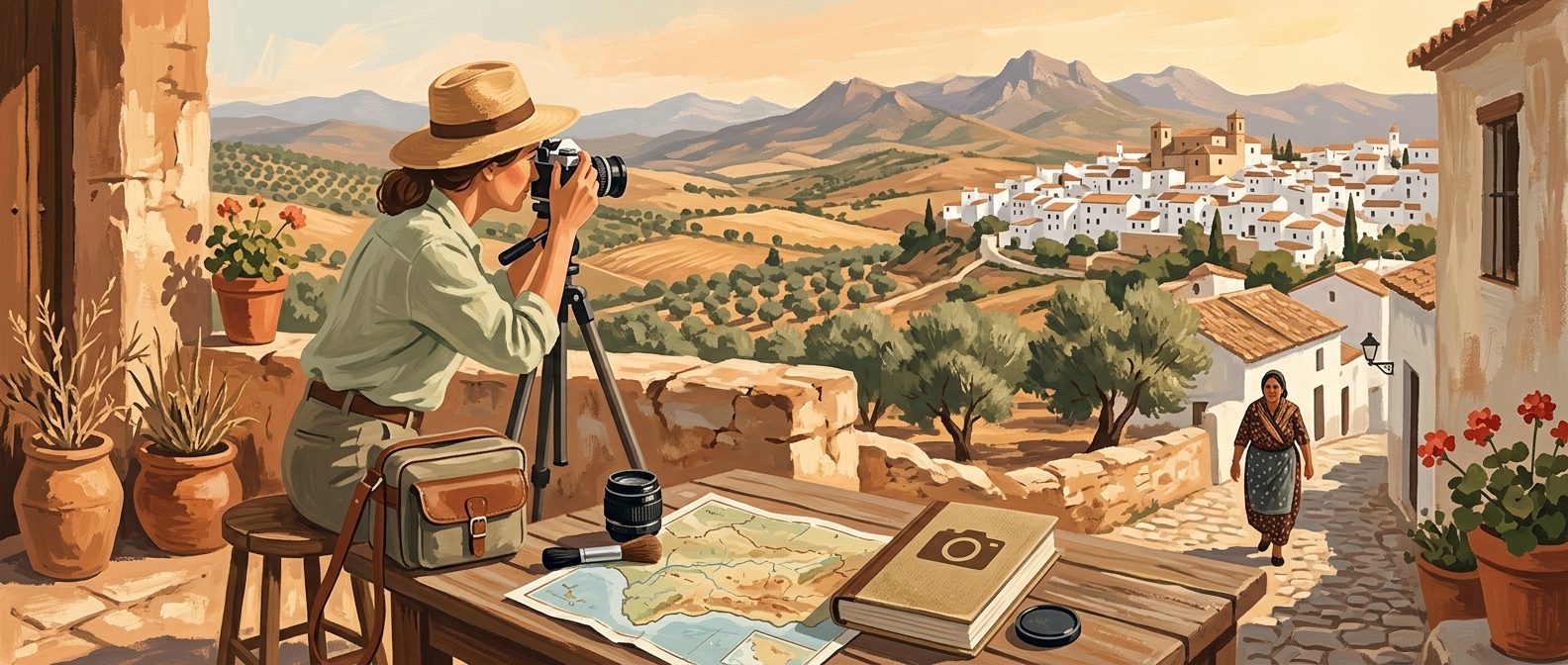
Photography in Andalucía is rewarding because the region gives you bright light, historic interiors, white villages, beaches and mountain viewpoints in a compact area. The main risks are not technical: they are drone rules, privacy, protected spaces, venue restrictions, heat and crowded streets.
Use this guide as a planning checklist rather than a permit shortcut. Rules can differ wildly between a public street, a church interior, a museum gallery, an archaeological site, a protected natural space and the airspace above them. If you use a drone, a tripod, a model, professional lighting or plan a commercial shoot, check the official source first to avoid fines or confiscated equipment.
Quick answer: the safest approach
- Shoot early and late: Morning and evening light is kinder for streets, white villages, the coast and monuments. It also allows you to avoid the intense midday heat.
- Check signs at every venue: Flash photography, tripods, selfie sticks, video recording and commercial use almost always have separate, strict rules.
- Use the official drone map: Check ENAIRE before every single drone flight, not just before your trip.
- Respect privacy: Avoid publishing recognisable people, especially children, as the main subject without their explicit consent.
- Plan around the weather: In summer, midday photography is often better indoors or in shaded streets, and you must protect your gear from overheating.
City and landscape ideas
Sevilla
- Plaza de España: Early morning gives cleaner reflections, cooler temperatures and fewer tour groups. Commercial shoots, including wedding and fashion photography, require advance permission from the city hall.
- Triana and the Guadalquivir: The blue hour works incredibly well from the Calle Betis side and the bridge approaches.
- Real Alcázar area: Check current venue rules for interiors and gardens before planning tripod work. Security guards will ask you to put tripods away immediately if you have not arranged a prior permit.
Granada
- Mirador de San Nicolás: This is the classic Alhambra view, but it becomes extremely busy at sunset. Arrive early or try nearby viewpoints, such as the Mirador de San Cristóbal, if crowds are heavy.
- Alhambra and Generalife: Book well in advance and check the official visit conditions for photography. Large camera backpacks are routinely denied entry and must be left in the official lockers, which can delay your visit.
- Sacromonte and Albaicín: Strong textures and viewpoints abound, but steep cobbled lanes make heat management and sensible footwear just as important as your lens choice.
Córdoba, Málaga and the white villages
- Mezquita-Cathedral: Low-light performance matters much more than a tripod, as tripods are strictly forbidden inside without explicit written permission. Check the ticket site rules before arrival.
- Málaga: The Gibralfaro viewpoints, the port light and the Soho street art murals give very different scenes within a relatively short walk.
- Setenil de las Bodegas and white villages: Go early to avoid narrow-street congestion and harsh white-wall glare, which will quickly overexpose your shots.
Light, weather and timing
The light in Andalucía is famously intense. In summer, the middle of the day can flatten colours, blow out the highlights on white walls and make walking with heavy equipment deeply uncomfortable. Dust from the Sahara, known locally as the Calima, can occasionally turn the sky hazy and yellow, which requires you to clean your lenses and sensors more frequently.
Instead of relying on fixed golden-hour tables, check a sun-position app or local sunrise and sunset times for your exact province and date. Almería, Huelva, the high mountains of the Sierra Nevada and inland cities will all feel very different on the same day. Picking the best time to visit Andalucía will dictate what kind of landscape photography is possible, as the lush green hills of spring turn completely brown by late July.
Drone rules: a step-by-step guide
Spain follows European drone rules, with Spanish implementation managed by AESA. Do not assume that a small recreational drone under 250 grams is automatically allowed everywhere. Registration, training, insurance, distance limits and airspace restrictions affect all flights.
- Register with AESA: Use the official AESA drones guidance to register as an operator. You must display your operator number on your drone.
- Check the ENAIRE map: Always use the ENAIRE Drones map before every flight. This map shows active military zones, airports, heliports and restricted natural areas.
- Identify the land manager: Even if the airspace is clear on ENAIRE, protected spaces, archaeological sites and certain municipalities require separate permission from the land manager. In natural parks, this is usually the Junta de Andalucía.
- Apply for permits early: The real-world friction here is bureaucracy. Submitting a permission request to the Junta usually requires a Spanish digital certificate (certificado digital) and processing can take several weeks or even months.
Never fly over crowds. Processions, crowded beaches, busy viewpoints and public events are completely unsuitable and illegal places to improvise a drone flight without highly specific professional permits.
Venues, museums and monuments
Personal photography may be allowed in one part of a site and restricted in another. Flash, tripods, selfie sticks, drones, continuous lighting, microphones, models and commercial use are commonly treated differently. Temporary exhibitions often have stricter rules than permanent collections due to distinct copyright agreements.
Always check signage and ask staff rather than arguing from another venue's policy. For major visits, consult the official source before planning a shot. Use the Alhambra visit information, the Mezquita-Cathedral ticket information and the relevant monument page for the exact day you visit.
Privacy and street photography
Street scenes are a core part of travel photography, but publishing a recognisable person as the main subject can create privacy and image-rights issues. Spanish law strongly protects personal image rights, particularly concerning children, vulnerable people and police or security personnel.
Capturing candid moments is popular, especially if you are interested in Spanish festival culture in Andalucía during events like Semana Santa or local ferias. However, if a person is clearly identifiable and the image is used commercially, you generally need a signed model release. When in doubt, ask permission, photograph wider scenes, or keep the images private. Use the Spanish Data Protection Agency as your starting point for privacy context.
Protected natural spaces
Doñana, the Sierra Nevada, Cabo de Gata, Grazalema and other protected areas have strict rules designed to protect wildlife, nesting zones, delicate dunes and wetlands. These rules change seasonally. For example, drone flights and off-path photography are strictly banned during spring nesting seasons in many coastal and wetland areas.
Keep to marked paths, avoid disturbing wildlife, and check access or permit rules before using hides, commercial setups or night photography equipment. The Junta's protected spaces portal is the vital starting point for finding the specific management office for each park.
Practical kit choices
- Travel light: Steep old towns make heavy camera bags tiring very quickly. A single versatile lens is often better than a full kit.
- Protect from heat: Batteries, mobile phones and camera sensors overheat quickly in direct summer sun. Keep your bag in the shade whenever possible.
- Check your power: Ensure you have the right electricity plugs and adaptors to charge your camera batteries, as older rural hotels may have limited wall sockets.
- Use a fast lens: A lens with a wide aperture is incredibly useful for dark church interiors where tripods are banned.
- Back up daily: Opportunistic theft is a risk in crowded tourist areas. Backing up your photos every evening to a hard drive or the cloud is essential, and arranging comprehensive travel insurance for Andalucía that covers expensive electronics is highly recommended.
Common mistakes that catch photographers out
- Bringing a massive tripod to historic sites: Security at places like the Alcázar in Sevilla or the Alhambra in Granada will routinely stop visitors with large tripods at the entrance gate.
- Assuming small drones are exempt from rules: Many visitors assume a sub-250g drone can be flown anywhere. The ENAIRE map reveals that huge swathes of Andalucía, including entire cities and coastlines, are restricted airspace.
- Underestimating the midday glare: Shooting at 2:00 PM in a white village like Ronda or Frigiliana usually results in harsh shadows, blown highlights and an exhausted photographer.
- Ignoring locker restrictions: Large hiking-style camera backpacks are rarely allowed into major monuments. Check the venue's maximum bag dimensions before you leave your accommodation.
Frequently asked questions
Can I fly a drone over the Alhambra?
No. The airspace over the Alhambra and the city of Granada is strictly controlled. Flying a drone there without complex professional aviation permits and coordination with the local airport is illegal and carries severe fines.
Do I need a permit for a wedding or fashion shoot?
Usually, yes. If your shoot involves professional lighting, models, blocking public pathways or commercial intent, local town halls (ayuntamientos) and monument managers require advance notification and often charge a fee.
Can I take photos inside churches?
It depends entirely on the church. Many allow photography without flash for personal use. Others, particularly during active mass or in highly sensitive chapels, strictly forbid all photography. Always look for signage at the entrance.
How do I protect my camera gear from the Andalucían heat?
Never leave your camera bag in a parked car, as temperatures can exceed 50 degrees Celsius inside the vehicle. Turn off your camera between shots to keep the sensor cool, and keep spare batteries in a shaded, breathable pocket.
Summary
- Use morning and evening light rather than relying on fixed golden-hour tables.
- Check venue signage for flash, tripods, selfie sticks, video and commercial use.
- For drones, check AESA registration, the ENAIRE map and land-manager permissions before every single flight.
- Respect privacy when people are recognisable, especially children and in commercial images.
- Plan your photography walks around the heat, steep slopes, crowds and equipment weight.
Last reviewed: 14 July 2026 · Editorial policy
Related guides
Lucena: The Sephardic Soul of the Subbética
Discover Lucena, the 'Pearl of Sepharad', where significant Jewish heritage meets the finest Baroque architecture in the heart of Córdoba's Subbética.
6 min read
Osuna: The Ducal Grandeur of the Sevillian Countryside
A town of honey-coloured stone and Baroque palaces, Osuna served as a powerful seat for the Dukes of Osuna, leaving behind a skyline of grand churches and one of Spain’s oldest universities.
6 min read
A Guide to the Alcazaba and Roman Theatre in Málaga
Discover the layers of Málaga's history at the 1st-century Roman Theatre and the formidable Moorish Alcazaba fortress.
5 min read
48 Hours in Sevilla: A Weekend Itinerary
Spend a weekend in Sevilla navigating the royal palaces, historic tapas bars and shaded plazas. This two-day plan balances major architectural sights with long lunches and evening walks along the river.
8 min read
The Spanish Inquisition in Andalucía: Orthodoxy and Paranoia
From its very first tribunal in Sevilla to the shadow it cast over centuries of daily life, the Spanish Inquisition demanded absolute religious conformity. Its legacy remains etched in the architecture, archives and even the culinary traditions of southern Spain.
7 min read
Corduba and Roman Baetica
Discover the political and intellectual might of Corduba, the wealthy administrative capital of Roman Baetica and the birthplace of the philosopher Seneca.
7 min read
More guides
Using a VPN in Andalucía: A Practical Guide for Travellers and Residents
A comprehensive guide to using a VPN in Andalucía for security, accessing UK streaming services, and maintaining privacy on public Wi-Fi.
6 min read
Sevilla Airport (SVQ) Guide: Transport, Facilities and Tips
A practical guide to Sevilla Airport (SVQ) covering the EA bus, taxi flat rates, terminal facilities, car hire, and connecting to wider Andalucía.
9 min read
Practical Guide to Almería Airport (LEI)
A practical logistics guide to arriving at Almería Airport (LEI). Discover how to navigate terminal facilities, use the Surbus Line 30, connect to intercity buses, and avoid common transport mistakes.
7 min read
Practical Guide to Gibraltar International Airport (GIB)
A practical guide to using Gibraltar Airport (GIB) for trips into Andalucía, covering border logistics, avoiding vehicle queues, Spanish transport options, and how to handle wind diversions.
8 min read
Málaga-Costa del Sol Airport (AGP) Travel Guide
A deep practical guide to navigating Málaga-Costa del Sol Airport (AGP). Learn the realities of arrivals, transport connections, parking rules, and common mistakes.
8 min read
Federico García Lorca Granada-Jaén Airport Guide: Transport, Costs and Tips
A complete practical guide to Granada-Jaén Airport (GRX), covering airport buses, taxi fares, car hire friction, terminal facilities, and the step-by-step reality of arriving and departing.
7 min read
Jerez Airport (XRY): The Complete Guide to the Gateway of Cádiz
A deep-dive practical guide to using Jerez Airport (XRY). Learn the realities of onward transport to Cádiz province, car hire friction, train timetables, and how to avoid the most common arrival mistakes.
8 min read
Understanding Spanish Festival Culture in Andalucía
A deep dive into Andalucían festival culture for residents and visitors. Understand Semana Santa, ferias, local holidays, etiquette, administrative friction and how to survive the local party season.
9 min read
Driving in Andalucía: Rules, Tolls, and Parking Guide
A practical guide to driving in Andalucía, covering road rules, ZBE checks, AP-7 toll choices, parking, roundabouts, breakdown equipment and official sources.
9 min read
Newsletter
More stories from Andalucía
Weekly notes, seasonal picks, and the next guides worth bookmarking.