
Nature & wildlife · Huelva
Odiel Marshes: Huelva's Overlooked Wetland
Discover the Marismas del Odiel, a tidal powerhouse in Huelva that hosts Europe's largest spoonbill colony and a spectacular array of flamingos and ospreys.
By Dan · Updated 7 June 2026 · 7 min read
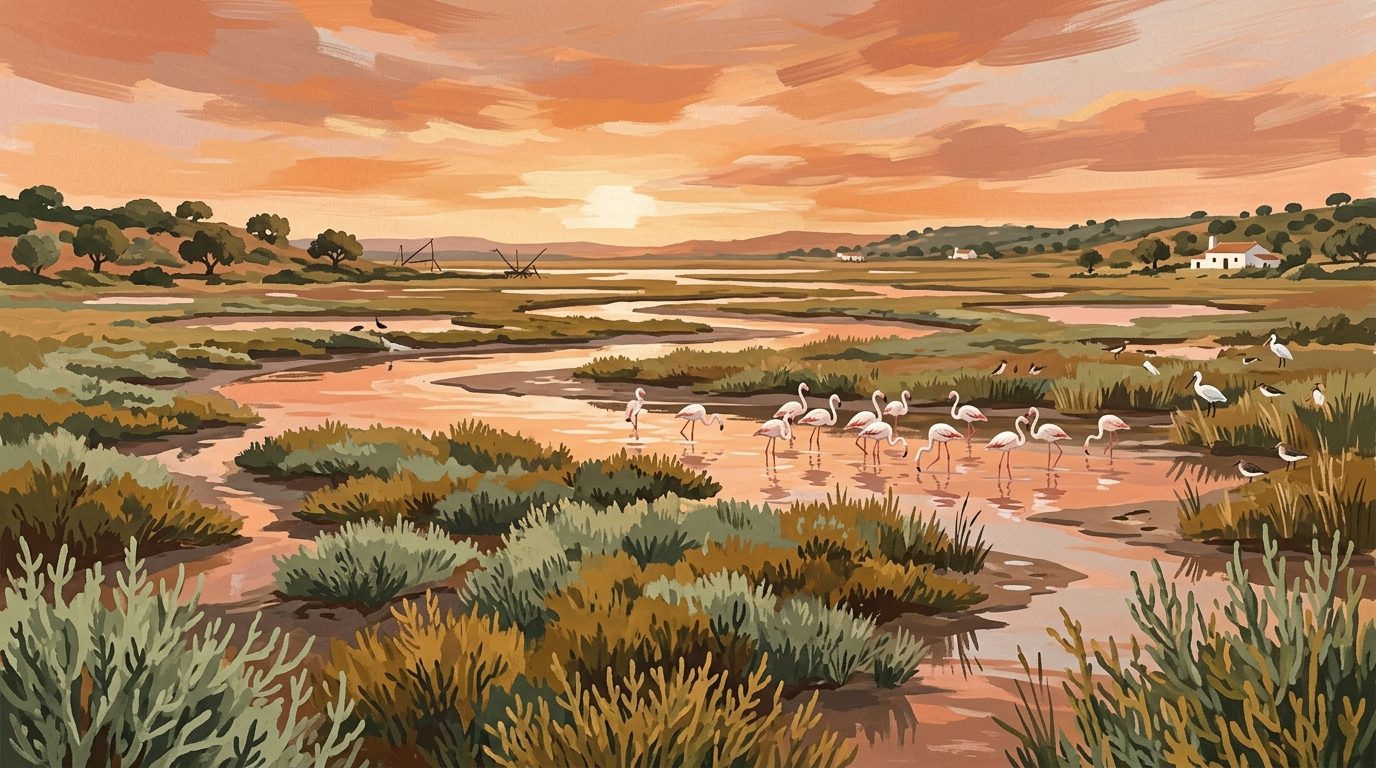
The Odiel Marshes represent one of Europe's most significant tidal wetlands, where the rhythm of the Atlantic shapes a landscape of saltpans and sandbanks. While nearby Doñana attracts the crowds, this UNESCO Biosphere Reserve offers a more intimate encounter with the continent's largest breeding colony of Eurasian Spoonbills.
To the casual observer driving toward the city of Huelva, the horizon is defined by the vertical lines of chemical plants and shipping cranes. However, immediately south of this industrial skyline lies an ecological powerhouse. The Marismas del Odiel (Odiel Marshes) cover over 7,000 hectares of tidal estuary where the Odiel and Tinto rivers meet the Atlantic Ocean. Despite its proximity to urban infrastructure, this site is a critical node in the East Atlantic Flyway, providing essential forage and nesting grounds for tens of thousands of birds.
Designated as a UNESCO Biosphere Reserve in 1983, the marshes function as a giant biological filter and a nursery for marine life. For the visiting naturalist, the appeal lies in the accessibility of high-density bird populations. Unlike the vast, often dry interior of Doñana National Park, the Odiel Marshes are pulse-driven by the tides, ensuring that even in the height of a Mediterranean summer, there is water, and consequently, a concentration of life that is rare elsewhere in southern Spain.
The Ecosystem: A Landscape of Silt and Salt
The Odiel Marshes are a complex of four distinct islands: Enmedio, Saltés, Bacuta, and Burro. This landscape is a result of centuries of sediment deposition at the mouth of the rivers, sculpted by the dual forces of riverine flow and Atlantic tides. The habitat is primarily composed of salt marshes (marismas), mudflats, and saltpans (salinas), interspersed with small stands of stone pine (Pinus pinea) and scrub on the higher, sandier ground.
The daily tidal cycle is the heartbeat of this ecosystem. As the tide recedes, it exposes vast tracts of nutrient-rich mudflats. This provides an immediate buffet for waders, which use their specialised bills to extract polychaete worms, molluscs, and crustaceans. The saltpans, some of which are still commercially harvested, offer a different environment; their varying salinity levels support specific micro-organisms, such as the brine shrimp (Artemia salina), which is a primary food source for flamingos.
This environment is harsh. Plants here must be halophytes: species capable of surviving high salt concentrations. You will notice the grey-green carpets of Perennial Glasswort (Sarcocornia perennis) and Sea Purslane (Halimione portulacoides) dominating the low marsh, providing cover for nesting birds and stabilising the silt against the erosive power of the sea.
Key Species: What to Look For
Eurasian Spoonbill (Platalea leucorodia)
The spoonbill is the undisputed icon of the Odiel Marshes. According to the official Junta de Andalucía Ventana del Visitante, the reserve hosts approximately 30% of the entire European breeding population. These large, white birds are easily identified by their long, spatula-shaped bills, which they sweep side-to-side through the shallow water to catch small fish and insects.
Sighting Likelihood: Almost guaranteed year-round. During the breeding season (March to July), the colony on the Isla de Enmedio is a hive of activity. Thousands of pairs nest here, and the sight of adults commuting between the colony and the feeding grounds is one of the great spectacles of Andalucían wildlife.
Greater Flamingo (Phoenicopterus roseus)
While the famous colony at Fuente de Piedra depends on rainfall levels, the Odiel Marshes provide a permanent saline habitat for Greater Flamingos. They do not always breed here, preferring the isolation of inland lagoons for nesting, but they are present in huge numbers as non-breeding residents or foragers.
Sighting Likelihood: Very high. Look for them in the commercial saltpans near the start of the main access road. Their pink plumage is particularly striking against the white salt crusts in the early morning light.
Osprey (Pandion haliaetus)
The Odiel Marshes have been the site of a highly successful reintroduction programme for the Osprey. Once extinct as a breeding species in mainland Spain, these specialist fish-hunters are now a common sight again. Artificial nesting platforms have been erected throughout the marshes to encourage their return.
Sighting Likelihood: High. They are most active during the spring and summer breeding months, but several individuals overwinter here as well. Look for them perched on the navigation markers in the estuary or hovering over open water before a spectacular dive.
Herons and Glossy Ibis
The reedbeds and scrubby islands support a variety of ardeids. The Glossy Ibis (Plegadis falcinellus), with its iridescent dark plumage and decurved bill, has seen a population explosion in recent years. You will also find Grey Herons (Ardea cinerea), Little Egrets (Egretta garzetta), and in the summer months, Purple Herons (Ardea purpurea).
Sighting Likelihood: High. The Glossy Ibis can often be seen in large flocks flying in V-formation across the marshes at dusk.
Best Time to Visit
The Odiel Marshes are a year-round destination, but the experience changes significantly with the seasons.
- Winter (October to March): This is the peak time for migratory waders and waterfowl. Thousands of Dunlin, Curlew, Whimbrel, and Black-tailed Godwit arrive from Northern Europe. The concentration of birds on the mudflats at low tide is staggering. This is also the best time to see the Bluethroat (Luscinia svecica) skulking in the salt marsh vegetation.
- Spring (April to June): The breeding season. The spoonbill colony is at its most active, and the air is filled with the calls of Black-winged Stilts and Avocets. Mediterranean Gulls and Slender-billed Gulls also move through the area.
- Summer (July to September): While the heat can be intense, this is a great time to see juvenile birds and the start of the autumn migration. Many waders begin their journey south as early as July.
Tidal Note: For the best birdwatching, check the local tide tables. Low tide is optimal for seeing waders on the mudflats, while high tide pushes the birds closer to the embankments and into the saltpans, often making them easier to photograph from the road.
How to Explore
The Anastasio Senra Visitor Centre
Located at the entrance to the reserve on the Carretera del Espigón, the visitor centre provides essential context. It features displays on the tidal cycle and the spoonbill reintroduction. From here, you can access the Sendero de la Calatilla, a short boardwalk that leads through the marsh to a bird hide.
The Dyke Road (Carretera del Espigón)
The most effective way to see the marshes is to drive or cycle the 12-kilometre road that runs along the dyke toward the Juan Carlos I breakwater. This road cuts directly through the heart of the marshes. There are several designated stopping points and bird hides along the route. Because birds here are accustomed to vehicles, your car often acts as a mobile hide, allowing for exceptionally close views of flamingos and spoonbills in the saltpans.
Boat Tours
To truly appreciate the scale of the Isla de Enmedio and the spoonbill colony, a boat tour is essential. Trips operated by local providers like Marismas del Odiel Ecoturismo depart from the Huelva canal or the nearby town of Punta Umbría (check their website, marismasdelodiel.com, before travelling). Navigating the narrow channels (caños) allows you to see species that remain hidden from the road, such as the secretive Bluethroat or hunting Marsh Harriers.
Practical Information
Access: Entry to the reserve is free. The main entrance is reached via the H-30 from Huelva, following signs for "Espigón" or "Marismas del Odiel." The road is paved but can be narrow in sections.
Walking and Cycling: The Sendero de la Cascajera is a popular 3km circular route that offers views over the estuary. Cycling is highly recommended as the terrain is completely flat, and it allows you to cover the length of the dyke without the noise of a car engine.
Facilities: The visitor centre has toilets and a small shop (typical hours are Tuesday to Sunday, 10:00 to 14:00 and 16:00 to 18:00, closed on Mondays, but check the official Ventana del Visitante page for seasonal changes before travelling). However, once you head out onto the dyke, there are no facilities, shade, or water. Bring plenty of water, a hat, and high-factor sunscreen, as the Atlantic glare can be punishing.
Accommodation: Huelva city offers standard hotels, but for a more nature-focused stay, look at the coastal town of Punta Umbría, which borders the western edge of the marshes.
Conservation Note
The Odiel Marshes exist in a delicate balance. The proximity of the Huelva industrial pole remains a constant concern regarding heavy metal contamination and air quality. However, the designation as a UNESCO Biosphere Reserve and a Paraje Natural provides significant legal protection. The main current threat is the rising sea level, which could potentially submerge the low-lying nesting islands of the spoonbills. Dedicated conservation efforts, including the management of water levels in the saltpans and the maintenance of nesting platforms, are vital for the continued success of this avian haven.
Last reviewed: 21 June 2026 · Editorial policy
Related guides
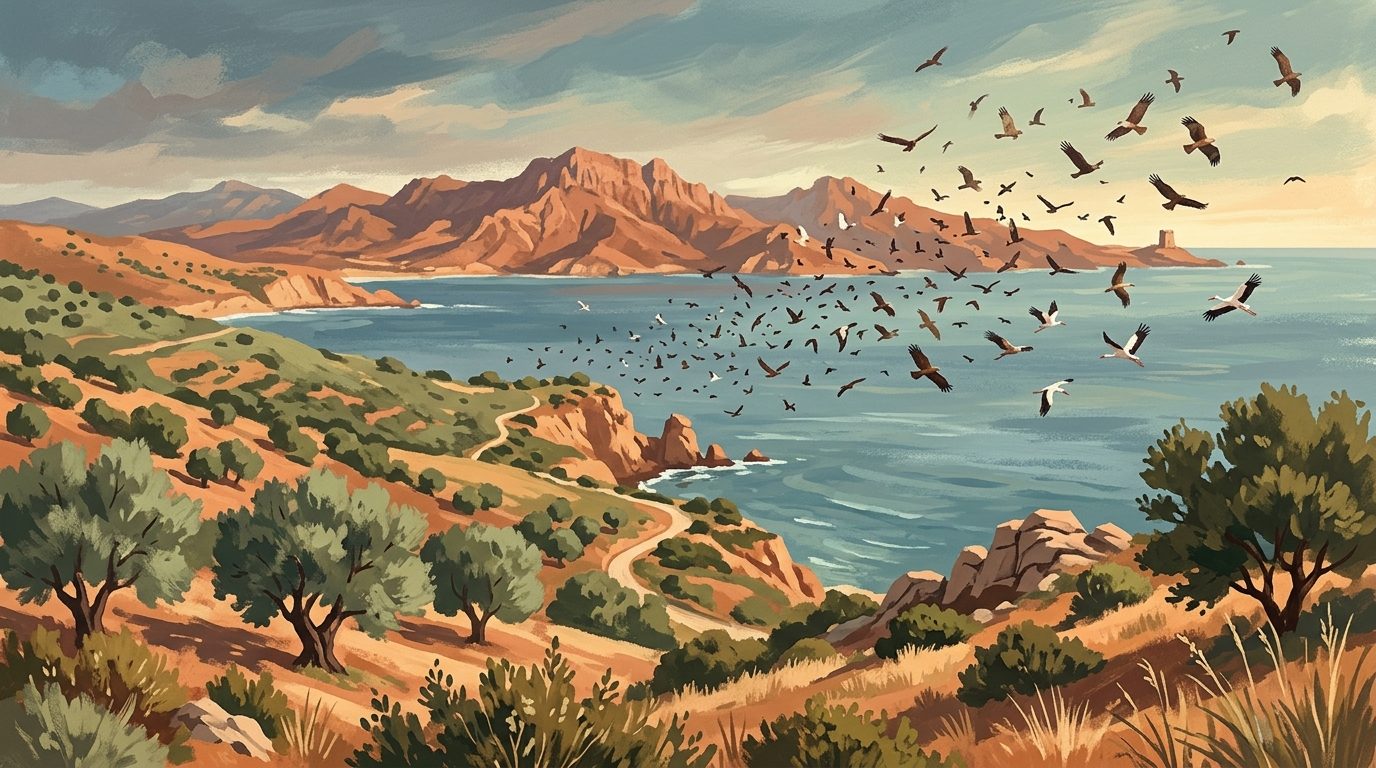
The Gibraltar Strait: Europe's Greatest Bird Migration
Discover the biological funnel where millions of raptors and storks cross between Europe and Africa, creating one of the world's most significant wildlife spectacles.
7 min read
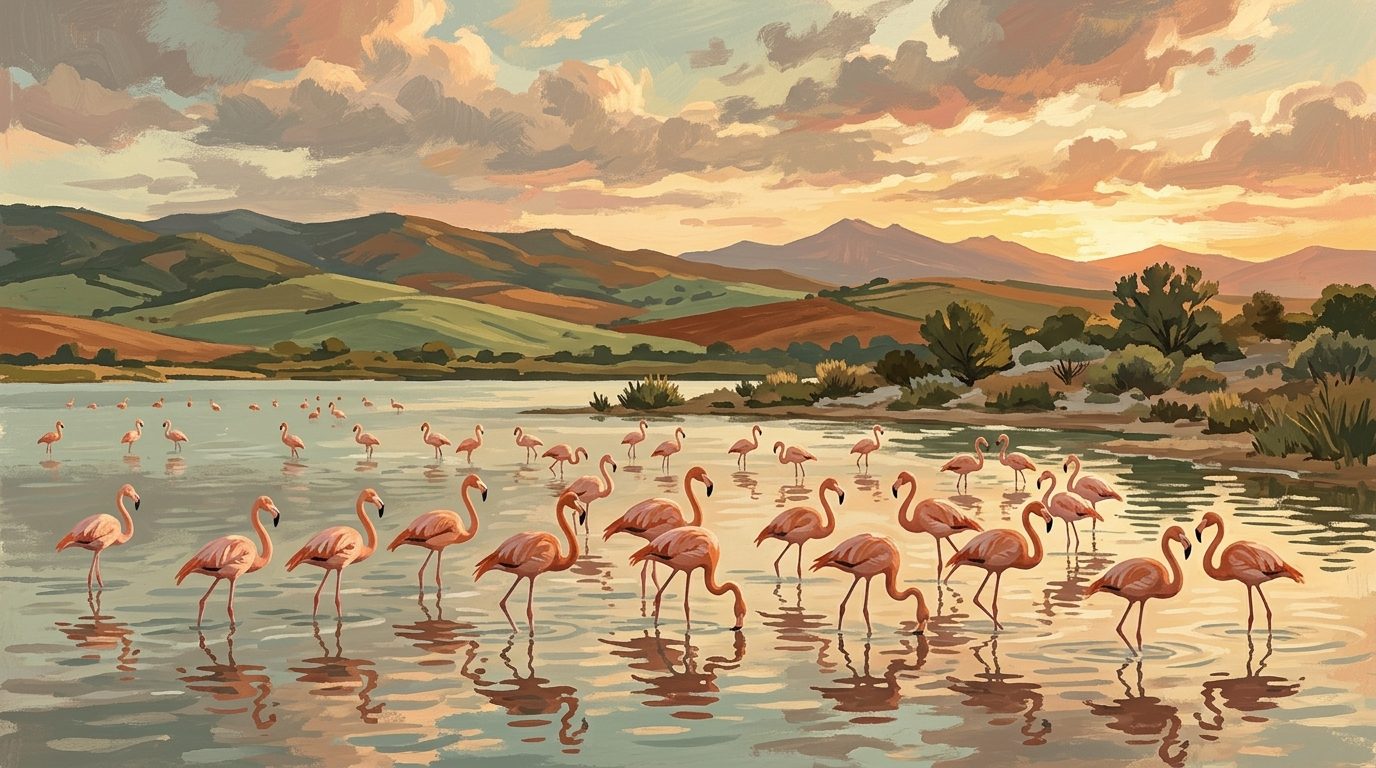
Fuente de Piedra: Andalucía's Flamingo Lake
Discover the vital breeding grounds of the Greater Flamingo at the Laguna de Fuente de Piedra, a hypersaline wetland in the heart of Málaga province.
7 min read
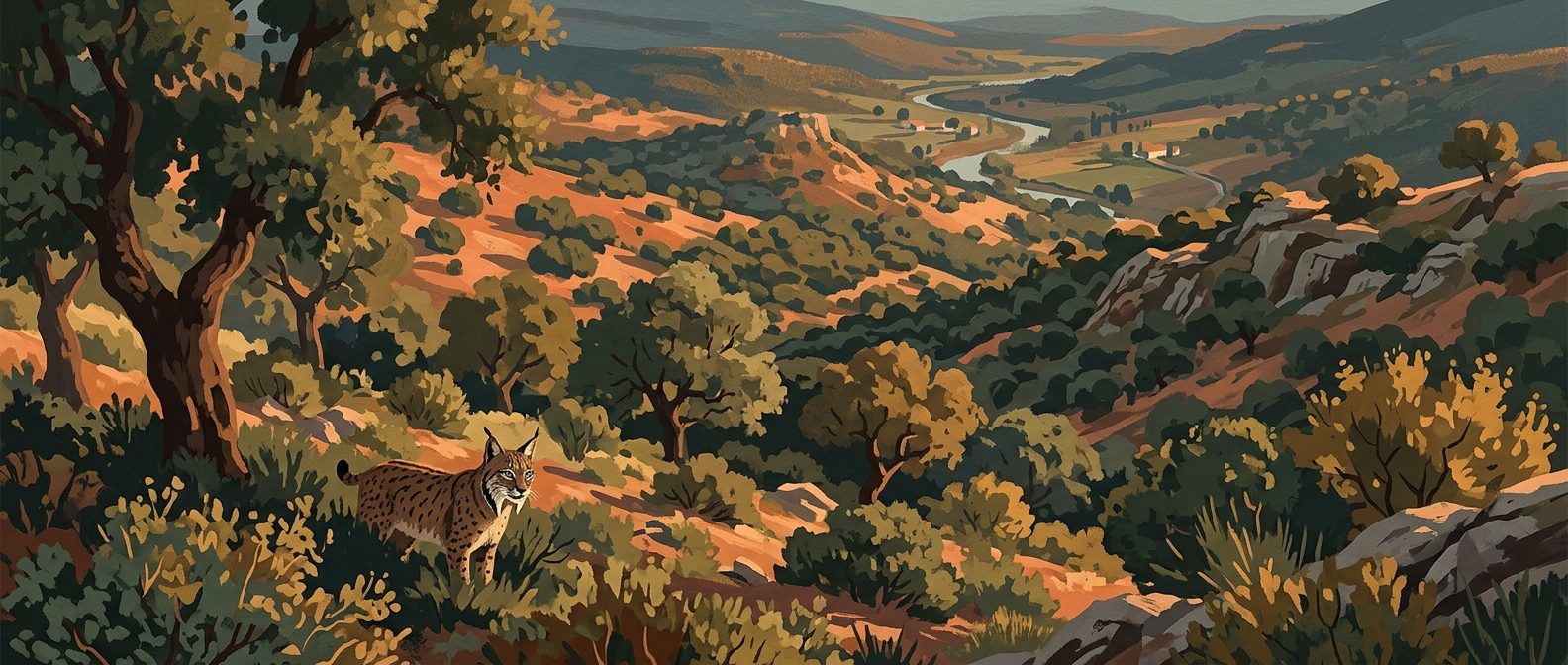
Where to See the Iberian Lynx: Andújar and Beyond
Discover the best ways to see the world's rarest cat in the Sierra de Andújar. This guide covers the best viewing spots, seasonal timing, and the diverse wildlife of Jaén's rugged Mediterranean scrubland.
6 min read

Where to Find Andalucía’s Most Remarkable Wildlife
Discover the best spots in Andalucía to see rare species like the Iberian lynx, migratory whales in the Strait of Gibraltar, and pink flamingos in natural lagoons.
6 min read

Sierra de Aracena: Huelva's Green Highland
An ancient managed landscape where holm oak and chestnut forests meet rare raptors and the iconic Iberian pig. This northern Huelva highland provides one of Andalucía's most intact examples of the dehesa ecosystem.
8 min read
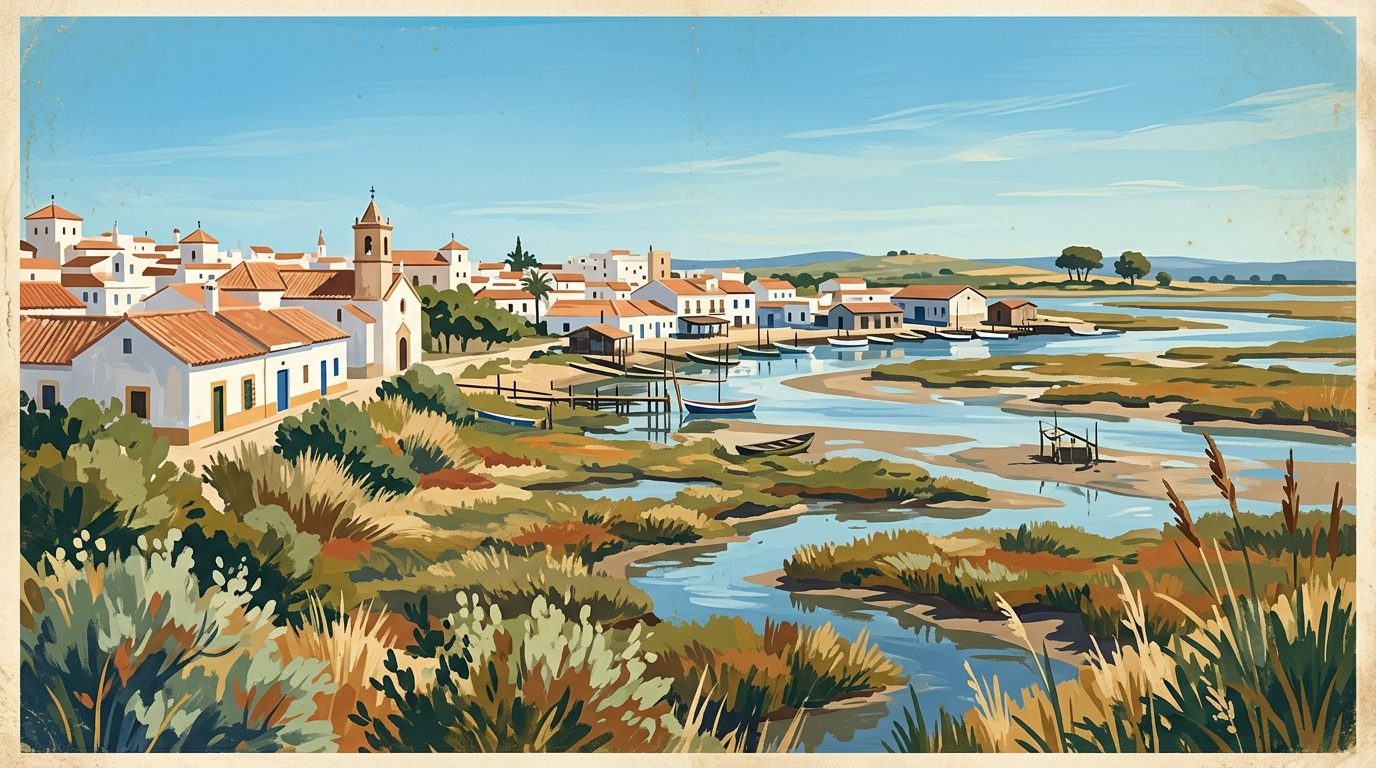
A Guide to the Odiel Marshes: Huelva’s Coastal Wilderness
Discover the sprawling tidal wetlands of the Odiel Marshes, a UNESCO Biosphere Reserve home to Europe’s most significant spoonbill colonies and striking pink flamingos.
6 min read
More from Huelva
Newsletter
More stories from Andalucía
Weekly notes, seasonal picks, and the next guides worth bookmarking.