
Nature & wildlife
The Spring Wildflower Season in Andalucía
Discover the exceptional botanical diversity of southern Spain, from the orchid-rich limestone sierras to the rare peonies of the cork oak forests.
By Dan · Updated 16 July 2026 · 7 min read
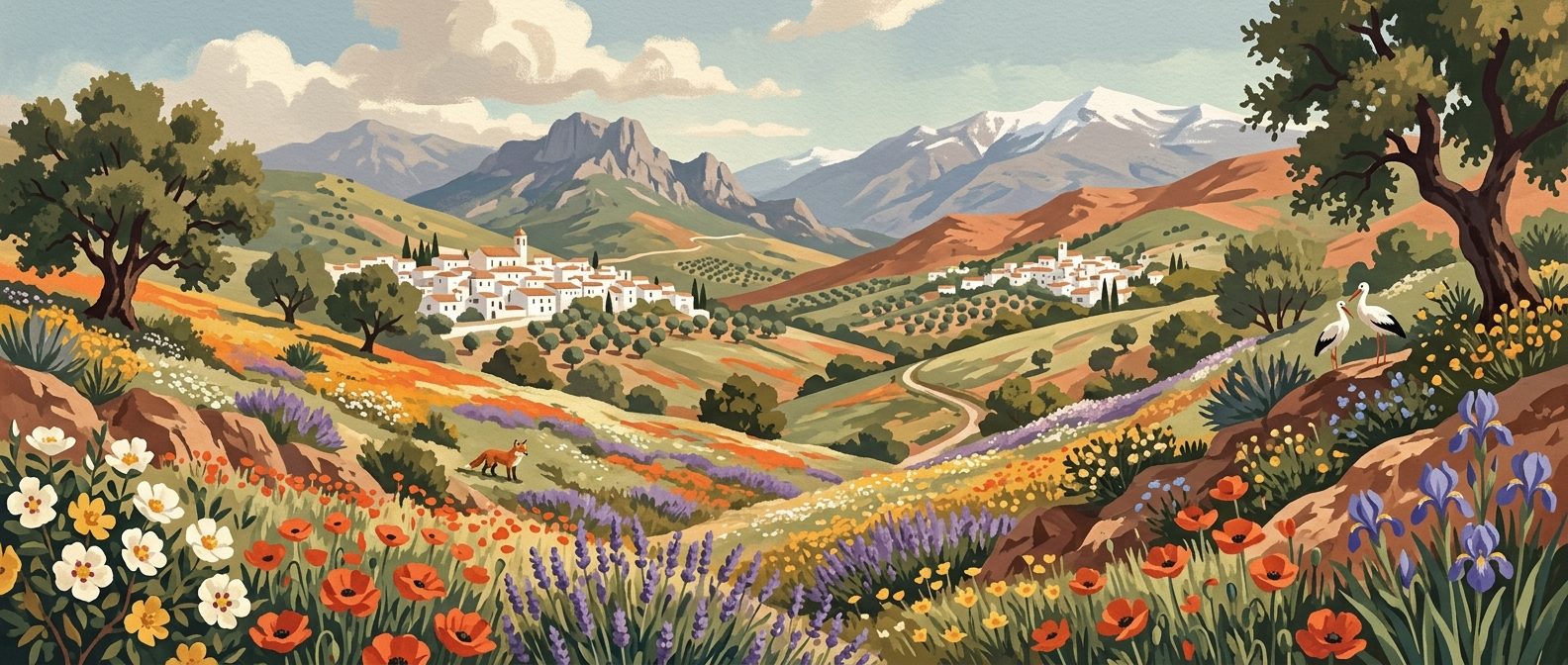
Andalucía hosts one of Europe’s most significant botanical displays, where the intersection of African and Mediterranean climates creates a sequence of flowering that lasts from February until June. This guide examines the species and locations that define the southern Spanish spring, from the coastal dunes to the high alpine peaks.
Andalucía is widely regarded as one of the most biodiverse regions in Europe. Its unique position as a bridge between the Atlantic and the Mediterranean, and its proximity to North Africa, has resulted in a botanical inventory of over 5,000 species. Approximately one-fifth of these are endemic to the Iberian Peninsula, with many found exclusively within the eight provinces of Andalucía. The arrival of spring here is not a singular event but a rolling wave of growth that begins on the sandy shores of Cádiz and Almería in late winter and concludes in the high-altitude glacial meadows of the Sierra Nevada as summer approaches.
For the visiting naturalist, the region offers a chance to see species that are rare or extinct elsewhere in Europe. The sheer variety of habitats, ranging from the humid cork oak forests of the Alcornocales to the semi-arid deserts of Tabernas, means that the wildflower season is prolonged and varied. Understanding the relationship between geology, altitude, and rainfall is key to finding the most spectacular displays. The Andalucían landscape provides an evolving theatre of botanical interest throughout the first half of the year for searching for the delicate mimicry of wild orchids or the dramatic crimson of wild peonies.
The Ecosystem: Geology and Adaptation
The botanical diversity of Andalucía is driven by its complex geology and dramatic topography. The region is divided into three main zones: the Sierra Morena to the north, the Guadalquivir basin in the centre, and the Baetic System to the south and east. Each of these areas provides a different substrate for plant life. The Sierra Morena is dominated by ancient, acidic soils which support vast expanses of Rock rose (Cistus) and Lavender (Lavandula). In contrast, the Baetic ranges, including the Sierra de Grazalema and the Sierra de las Nieves, are primarily limestone and dolomite. These alkaline soils are the preferred habitat for many of Andalucía’s 90+ species of wild orchids.
Climate also plays a defining role. The western provinces receive significant rainfall from Atlantic weather systems, creating a lush, almost sub-tropical environment in some valleys. As one moves east towards Almería, the climate becomes progressively more arid, favouring drought-resistant species like the Phoenician juniper (Juniperus phoenicea). This environmental gradient ensures that even within a single week in March, a traveller can experience entirely different flowering stages by moving just fifty kilometres inland or a few hundred metres uphill.
Key Species and Where to Find Them
The Wild Orchids (Orchidaceae)
Andalucía is a premier destination for orchid enthusiasts. The season begins as early as January in coastal areas with the Giant orchid (Barlia robertiana), followed quickly by the Mirror orchid (Ophrys speculum) and the Sawfly orchid (Ophrys tenthredinifera). The genus Ophrys is particularly fascinating; these plants have evolved flowers that mimic the appearance and pheromones of specific female insects to trick males into pollinating them.
Likelihood of sighting: High. In the limestone hills of the Serranía de Ronda or the Sierra Mágina, you can easily find ten or more species in a single morning during March and April. Look for the Bee orchid (Ophrys apifera) and the Woodcock orchid (Ophrys scolopax) on grassy verges and abandoned olive groves.
Wild Peonies (Paeonia broteroi and Paeonia coriacea)
The Andalucían peony (Paeonia broteroi) is perhaps the most spectacular of all the region's wildflowers. These plants produce large, deep pink or crimson blooms with a central cluster of bright yellow stamens. They prefer the dappled shade of Cork oak (Quercus suber) and Holm oak (Quercus ilex) forests. In higher, cooler elevations, the slightly paler Paeonia coriacea can be found growing amongst grey limestone rocks.
Likelihood of sighting: Moderate. Peonies have a relatively short flowering window, usually peaking in late April or early May. The best locations are the Los Alcornocales Natural Park in Cádiz and the higher reaches of the Sierra de Grazalema.
The Rock Roses (Cistaceae)
In the hills of the Sierra Morena and the Axarquía, the landscape is often dominated by the Cistus genus. The Gum cistus (Cistus ladanifer) is notable for its large white flowers with burgundy spots at the base of each petal and its sticky, highly aromatic resin known as labdanum. Another common species is the Grey-leaved cistus (Cistus albidus), which features delicate, crinkled pink petals that resemble tissue paper.
Likelihood of sighting: Certain. From March to May, thousands of hectares of hillside are covered in these blooms. They are a defining feature of the Mediterranean scrubland known as garrigue or maquis.
Andalucían Tulip (Tulipa sylvestris subsp. australis)
Unlike the large, cultivated tulips found in gardens, the wild Andalucían tulip is a delicate, slender plant. The flowers are bright yellow, often with a bronze or reddish tint on the exterior of the petals. They are typically found in rocky, mountainous areas, often appearing shortly after the snow melts in the higher sierras.
Likelihood of sighting: Moderate. They are small and can be easily overlooked. Look for them in the Sierra de las Nieves or the Sierra de Loja during April.
Narcissus and Early Bulbs
The Paperwhite narcissus (Narcissus papyraceus) often starts the season in December and January, filling damp meadows with scent. As spring progresses, other species appear, including the Hoop-petticoat daffodil (Narcissus bulbocodium), which has a distinctive flared trumpet. In the sandy soils of the coast, you may also find the Sea daffodil (Pancratium maritimum), though this flowers much later, in the heat of August.
Best Time to Visit
The timing of the wildflower season is heavily dependent on altitude and the preceding winter's rainfall. Below is a general guide for planning your trip:
- February to Early March: Focus on the coastal dunes of Doñana and the Cabo de Gata. Look for early orchids, narcissus, and the flowering of the Phoenician juniper. This is also the time when the almond trees blossom, turning entire valleys white and pink.
- Late March to April: This is the peak season for the majority of the region. The limestone sierras (Grazalema, Nieves, Mágina) are at their best. Orchids are at their peak, and the meadows are filled with Common poppies (Papaver rhoeas), Cornflowers (Centaurea cyanus), and various species of clover and vetch.
- May: The focus shifts to higher ground. Peonies are in full bloom in the oak forests. The Lavender (Lavandula stoechas) provides deep purple hues across the Sierra Morena. In the foothills of the Sierra Nevada, the Andalucían tulips and various fritillaries appear.
- June: While the lowlands begin to brown under the summer sun, the high-altitude meadows (borreguiles) of the Sierra Nevada (above 2,000m) come alive. This is the only time to see the rare endemics like the Sierra Nevada violet (Viola cheiranthifolia).
How to Explore
Many of the best botanical sites are located within protected Natural Parks (Parques Naturales). For those preferring a self-guided approach, the 'Sendero de las Flores' in the Sierra de Grazalema or the tracks through the Torcal de Antequera offer exceptional access to limestone flora. The Torcal, in particular, is an easy location to see several orchid species growing amongst the karst limestone formations.
For a deeper understanding, guided botanical tours are available, particularly in the Serranía de Ronda and the Sierra de Grazalema. Local guides can help identify cryptic species of orchids and lead you to remote sites for rare plants like the Spanish fir (Abies pinsapo), which, while a conifer, is a relic of the tertiary period and a botanical icon of the region. Most National and Natural Parks have visitor centres (Centros de Visitantes) that provide maps and current information on what is in bloom.
Practical Information
Access and Permits: Most Natural Parks have open access on established footpaths. However, certain areas, such as the Pinsapar forest in Grazalema or core zones of Doñana, require a free permit from the Ministry of Environment (Junta de Andalucía) or must be visited with an authorised guide. Always check the official Ventana del Visitante website before planning a specific hike.
What to Bring: A good hand lens (10x magnification) is essential for examining orchids. A dedicated Mediterranean wildflower identification book is highly recommended, as many species have look-alikes. Footwear should be sturdy; even 'easy' botanical walks often involve traversing uneven limestone pavement.
Getting There: Málaga or Sevilla airports serve as the best entry points. While a car is often necessary to reach remote trailheads, some areas like El Torcal are accessible via taxi or seasonal shuttle from Antequera.
Conservation Note
The flora of Andalucía faces significant challenges. Climate change is causing a noticeable shift in flowering times and reducing the available moisture in southern-facing habitats. Overgrazing by livestock and the expansion of intensive olive monocultures have also led to habitat loss. Furthermore, the illegal picking of rare orchids and bulbs remains a concern. Visitors are urged to stay on marked paths to avoid trampling delicate seedlings and to never pick wildflowers. Many of these species rely on complex fungal networks in the soil and will not survive if moved. Photography is the only sustainable way to 'collect' the botanical wonders of the region.
Last reviewed: 21 June 2026 · Editorial policy
Related guides
Restorative Andalucía: A Guide to Thermal Springs, Yoga, and Natural Wellness
Discover the restorative power of Southern Spain, from the ancient Arab baths of Granada to the healing mineral springs of the Alpujarra mountains.
7 min read
Exploring the Heavens: A Practical Guide to Stargazing in Andalucía
Andalucía offers some of Europe’s clearest night skies, particularly within its expansive Starlight Reserves. This guide covers the best locations and practical tips for observing the Milky Way across the southern Spanish landscape.
6 min read
UNESCO Geoparks and Natural Wonders of Andalucía
Discover the geological heritage of Southern Spain through its UNESCO-designated geoparks and natural wonders. Explore the tectonic history and diverse ecosystems of Almería, Granada, and Cádiz.
6 min read
Sierra de Aracena: Huelva's Green Highland
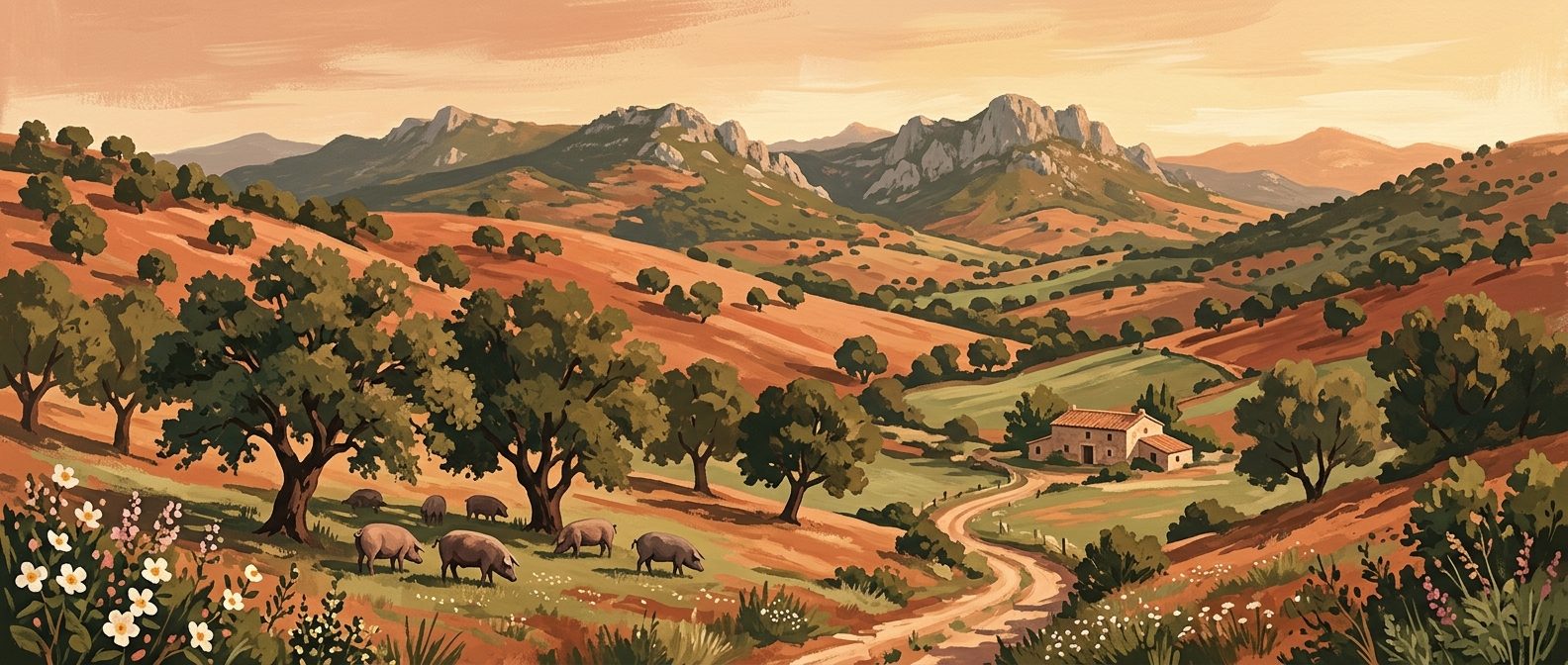
An ancient managed landscape where holm oak and chestnut forests meet rare raptors and the iconic Iberian pig. This northern Huelva highland provides one of Andalucía's most intact examples of the dehesa ecosystem.
8 min read
A Guide to Rural Stays and Farmhouses in Andalucía
How to choose rural stays and agrotourism in Andalucía, with verified farmhouses, cortijos and mountain stays plus access and season checks.
8 min read
A Birder’s Guide to Andalucía: Migration, Marshes, and Mountains
Andalucía is a global birdwatching hotspot, offering everything from massive raptor migrations over the Strait of Gibraltar to the iconic flamingo colonies of Doñana.
7 min read
More guides
Wildlife of the Sierra Nevada: High Altitude Biodiversity in Southern Spain
Discover the unique biodiversity of the Sierra Nevada, from the iconic Spanish ibex and Golden eagles to rare endemic flowers found nowhere else on Earth.
7 min read
Doñana National Park: A Guide to Europe’s Great Wetland Wilderness
A vital sanctuary for the Iberian lynx and millions of migratory birds, Doñana National Park is a landscape of shifting dunes and vast seasonal marshes.
7 min read
Reptiles of Andalucía: A Field Guide to Europe’s Herpetological Stronghold
Discover the incredible biodiversity of Andalucía's reptiles, from the giant Ocellated Lizard to the elusive Mediterranean Chameleon and the rare Lataste’s Viper.
7 min read
Sierra de Cazorla: Spain's Largest Protected Area
Covering over 200,000 hectares of rugged limestone peaks and deep river canyons, the Sierra de Cazorla forms the green heart of the Iberian Peninsula.
7 min read
Los Alcornocales: Europe's Finest Cork Oak Forest
Spanning the Cádiz mountains, Los Alcornocales preserves a prehistoric ecosystem of subtropical cloud forests and vast cork oak woodlands unique in Europe.
7 min read
Where to See the Iberian Lynx: Andújar and Beyond
Discover the best ways to see the world's rarest cat in the Sierra de Andújar. This guide covers the best viewing spots, seasonal timing, and the diverse wildlife of Jaén's rugged Mediterranean scrubland.
6 min read
Cabo de Gata Natural Park: Wild Coast Guide
Discover the volcanic cliffs, salt lagoons, and crystalline waters of Cabo de Gata-Níjar Natural Park, Europe’s only warm desert landscape and a haven for rare Mediterranean wildlife.
7 min read
Snorkelling & Marine Life of the Costa Tropical
Discover the underwater world of Granada's Costa Tropical, where clear Alborán waters host octopus, peacock wrasse, and protected seagrass meadows.
6 min read
Fuente de Piedra: Andalucía's Flamingo Lake
Discover the vital breeding grounds of the Greater Flamingo at the Laguna de Fuente de Piedra, a hypersaline wetland in the heart of Málaga province.
7 min read
Newsletter
More stories from Andalucía
Weekly notes, seasonal picks, and the next guides worth bookmarking.