
Nature & wildlife · Almería
Tabernas Desert: Europe's Only True Desert
Explore the unique ecology of the Tabernas Desert, Europe's only true desert, where Saharan-style badlands provide a sanctuary for rare Trumpeter Finches and specialist flora.
By Dan · Updated 7 June 2026 · 7 min read
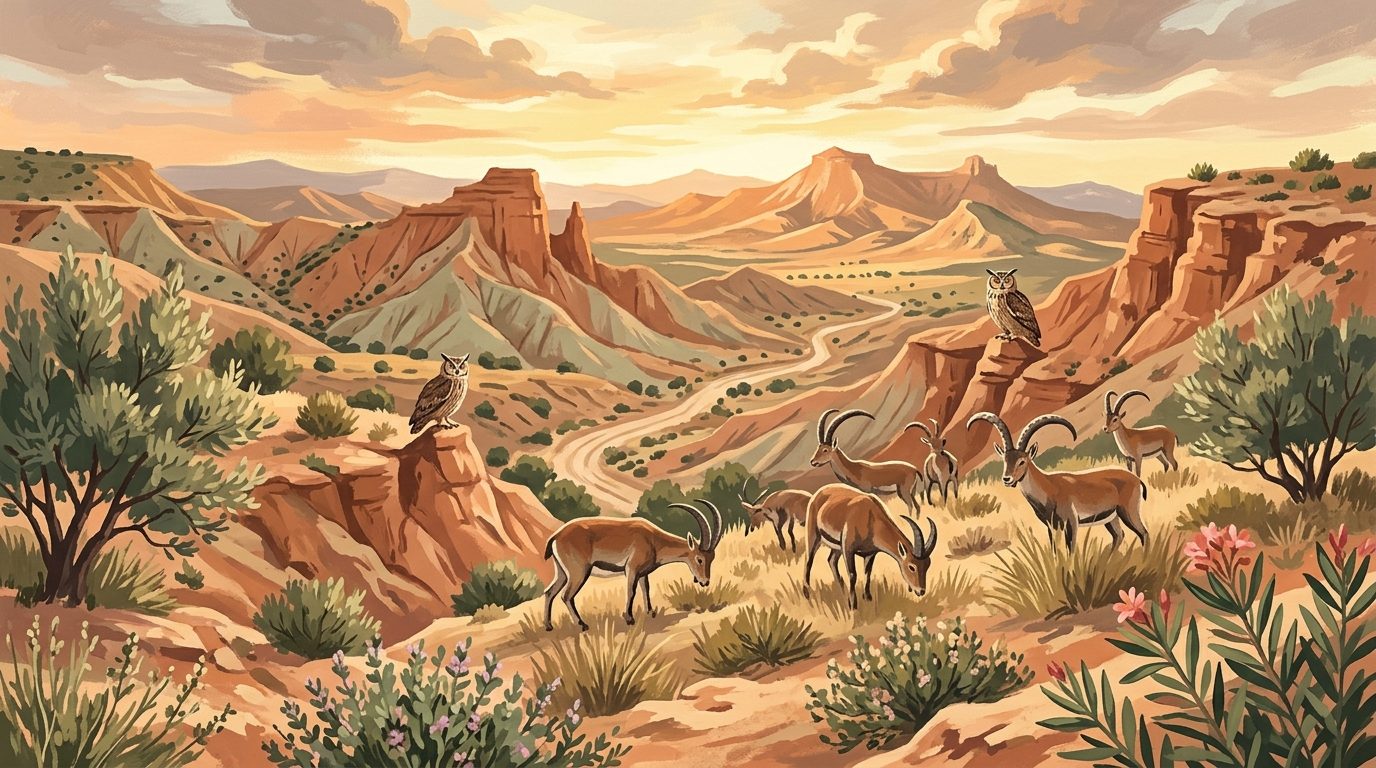
A stark landscape of eroded badlands and dry riverbeds, the Tabernas Desert offers a unique refuge for specialist North African fauna and rare botanical survivors. This is a place where survival is calculated in millimetres (mm) of rainfall and the endurance of heat-tolerant species.
To enter the Tabernas Desert (Paraje Natural Desierto de Tabernas) is to step into a landscape that feels fundamentally removed from the rest of the European continent. Located in the province of Almería, shielded from Atlantic storms by the Sierra de los Filabres to the north and the Sierra Alhamilla to the south-east, this 280-square-kilometre territory receives less than 250mm of rainfall annually. It is the only region in Europe that meets the scientific criteria for a true desert climate. While many visitors are drawn by its cinematic associations with 1960s Spaghetti Westerns, the real value of Tabernas lies in its extraordinary ecology.
For the naturalist, Tabernas is an open-air laboratory of evolution. Here, plants and animals have adapted to extreme aridity, high salinity, and solar radiation that can push summer temperatures beyond 45°C. Far from being a barren wasteland, the desert supports a high degree of endemism: species found nowhere else on Earth. The silence of the badlands is frequently punctuated by the metallic call of the Trumpeter Finch or the dry rustle of a lizard across gypsiferous soil. Understanding this ecosystem requires looking past the initial impression of desolation to find the life clustered within its deep ravines and seasonal watercourses.
The Ecosystem: Badlands and Ramblas
The geological foundations of Tabernas were laid eight million years ago during the Tortonian stage, when the area was submerged beneath the Mediterranean Sea. As the land rose and the sea retreated, thick deposits of marl, sandstone, and clay were exposed to the elements. Without significant vegetation to anchor the soil, infrequent but torrential rain events have carved the land into a classic 'badlands' topography. This is characterised by steep, knife-edge ridges and deep, labyrinthine gullies.
The defining feature of the Tabernas ecosystem is the rambla, a dry riverbed that carries water only during sporadic flash floods. These ramblas act as biological corridors. Even when the surface appears bone-dry, groundwater often persists at depth, allowing shrubs like the Oleander (Nerium oleander) and Tamarisk (Tamarix canariensis) to survive. These corridors provide essential shelter and nesting sites in an otherwise exposed landscape.
Furthermore, the presence of gypsiferous marl outcrops creates a chemically challenging environment for plants. Only 'gypsophiles', species that can tolerate high levels of gypsum and salt, can thrive here. This chemical exclusivity has led to the development of unique floral communities that are of international conservation importance.
Key Species
The Trumpeter Finch (Bucanetes githagineus)
The undisputed avian icon of Tabernas is the Trumpeter Finch. This small, thick-billed bird is a recent colonist from North Africa and the Middle East, finding in Almería a perfect substitute for its ancestral Saharan haunts. It is most easily identified by its distinctive call, which sounds remarkably like a toy tin trumpet.
Sighting Likelihood: High, particularly from February to June. They are most frequently seen in the early morning near the remaining water pools in the deeper ramblas or around the ruins of old farmsteads. Look for their greyish-brown plumage and, in breeding males, a striking coral-pink bill and flush on the wings.
Steppe Specialists: Sandgrouse and Larks
Tabernas is a stronghold for several bird species that require open, arid plains. The Black-bellied Sandgrouse (Pterocles orientalis) is a master of camouflage, its mottled plumage blending perfectly with the desert floor. These birds are known for their habit of flying long distances to find water, often at dawn.
More elusive still is the Dupont’s Lark (Chersophilus duponti). Often referred to by birdwatchers as the 'ghost of the desert', this rare species is better known for its mournful, whistling song than its physical appearance. It prefers the flat, scrubby plateaus (llanos) above the canyons.
Sighting Likelihood: Sandgrouse are moderately difficult to spot unless seen in flight; listen for their low, gurgling 'churra' call. Dupont’s Lark is very difficult to see and requires a pre-dawn start and expert knowledge of their specific territories.
Reptiles and Invertebrates
As an ectothermic paradise, the desert is home to a variety of reptiles. The Large Psammodromus (Psammodromus algirus) is common, often seen darting between esparto grass clumps. The Ocellated Lizard (Timon lepidus), Europe’s largest lizard, can also be found here, though it is increasingly rare. In the wetter ramblas, you might find the Ladder Snake (Zamenis scalaris).
Special mention must be given to the invertebrates, including the Mediterranean Tarantula (Lycosa tarantula), which lives in silk-lined burrows in the soil. On the coastal fringes nearby, the Common Chameleon (Chamaeleo chamaeleon) maintains a precarious foothold, though they are rarely seen in the heart of the desert badlands themselves.
Specialist Flora
The botanical stars of Tabernas are the endemics. The Almerían Sea Lavender (Limonium insignis) produces delicate purple flowers that persist even in harsh conditions. Another specialist is the Toadflax (Linaria nigricans), a tiny plant that appears briefly after winter rains. The landscape is dominated by Esparto Grass (Stipa tenacissima), which has been used by locals for centuries to make baskets and sandals, and the Crucifer Euzomodendron bourgaeanum, a woody shrub found only in the Almerían deserts.
Best Time to Visit
Timing is critical for a productive visit to Tabernas. Between July and September, the heat is oppressive and wildlife activity is strictly nocturnal or limited to the very earliest hours of dawn.
- October to January: Pleasant hiking weather. Migratory birds like the Alpine Swift (Tachymarptis melba) may be seen passing through, and the desert takes on a golden hue in the low winter sun.
- February to March: The prime window for botanists and birdwatchers. This is when the desert 'blooms', though the flowering is often subtle rather than carpet-like. Many bird species begin their breeding displays.
- April to June: Warming up quickly. Great for reptiles and seeing the Trumpeter Finch in full breeding plumage.
How to Explore
The Tabernas Desert is a protected Natural Area, and while access is generally open for hikers, specific rules apply to vehicles and conservation zones.
Guided Tours
For those interested in the geological and biological specifics, a 4x4 guided tour is highly recommended. Local companies have permission to access tracks that are closed to private vehicles, allowing you to reach the more remote volcanic dykes and fossil-rich layers. These guides often know the specific locations of nesting owls or active fox dens.
Self-Guided Hiking
The most famous route is the Sendero del Desierto (PR-A 269). This 14km circular trail starts near the Oasys MiniHollywood park and takes you through the heart of the ramblas. It offers a comprehensive view of the badlands erosion. Be aware that navigation can be tricky within the winding riverbeds; always carry a GPS-enabled map.
Viewpoints
For those with limited time, the Mirador del Desierto located off the N-340a provides an expansive panorama of the badlands. It is particularly effective at sunset when the shadows accentuate the sharp ridges of the marl hills.
Practical Information
Access: The desert is located approximately 30km north of Almería city. Access is via the A-92 motorway, taking the exit for Tabernas. Most trailheads are found along the N-340a road.
Permits: No permits are required for individual hikers on marked trails. However, organised groups or professional photographers may require authorisation from the Almería delegation of the Consejería de Sostenibilidad, Medio Ambiente y Economía Azul.
What to Bring: Even in winter, the sun is intense. High-factor sunscreen, a wide-brimmed hat, and at least three litres of water per person for a half-day hike are essential. Sturdy boots are required as the ground is often brittle or slippery with loose gravel.
Accommodation: The village of Tabernas offers several small guesthouses and rural apartments. For a more immersive experience, there are eco-lodges nearby that focus on stargazing, as the desert sky is one of the clearest in Europe.
Conservation Note
The Tabernas Desert faces significant environmental pressures. Despite its protected status, the surrounding area has seen an explosion of intensive olive and almond monocultures which deplete the ancient fossil aquifers that feed the ramblas. Furthermore, the push for renewable energy has led to the installation of massive solar farms on the desert's periphery, which can disrupt bird flight paths and fragment habitats. As a visitor, staying on marked paths and carrying out all waste is vital to preserving the delicate biological crust of the soil, a living layer of lichens and mosses that prevents further catastrophic erosion.
Last reviewed: 21 June 2026 · Editorial policy
Related guides
Cabo de Gata Natural Park: Wild Coast Guide
Discover the volcanic cliffs, salt lagoons, and crystalline waters of Cabo de Gata-Níjar Natural Park, Europe’s only warm desert landscape and a haven for rare Mediterranean wildlife.
7 min read
Los Alcornocales: Europe's Finest Cork Oak Forest
Spanning the Cádiz mountains, Los Alcornocales preserves a prehistoric ecosystem of subtropical cloud forests and vast cork oak woodlands unique in Europe.
7 min read
Almería in October: Desert Hikes and Coastal Solitude
October in Almería brings a soft, golden light and a gentle 23°C warmth, making it the perfect month for desert hiking, birdwatching, and enjoying the secluded beaches of Cabo de Gata.
6 min read
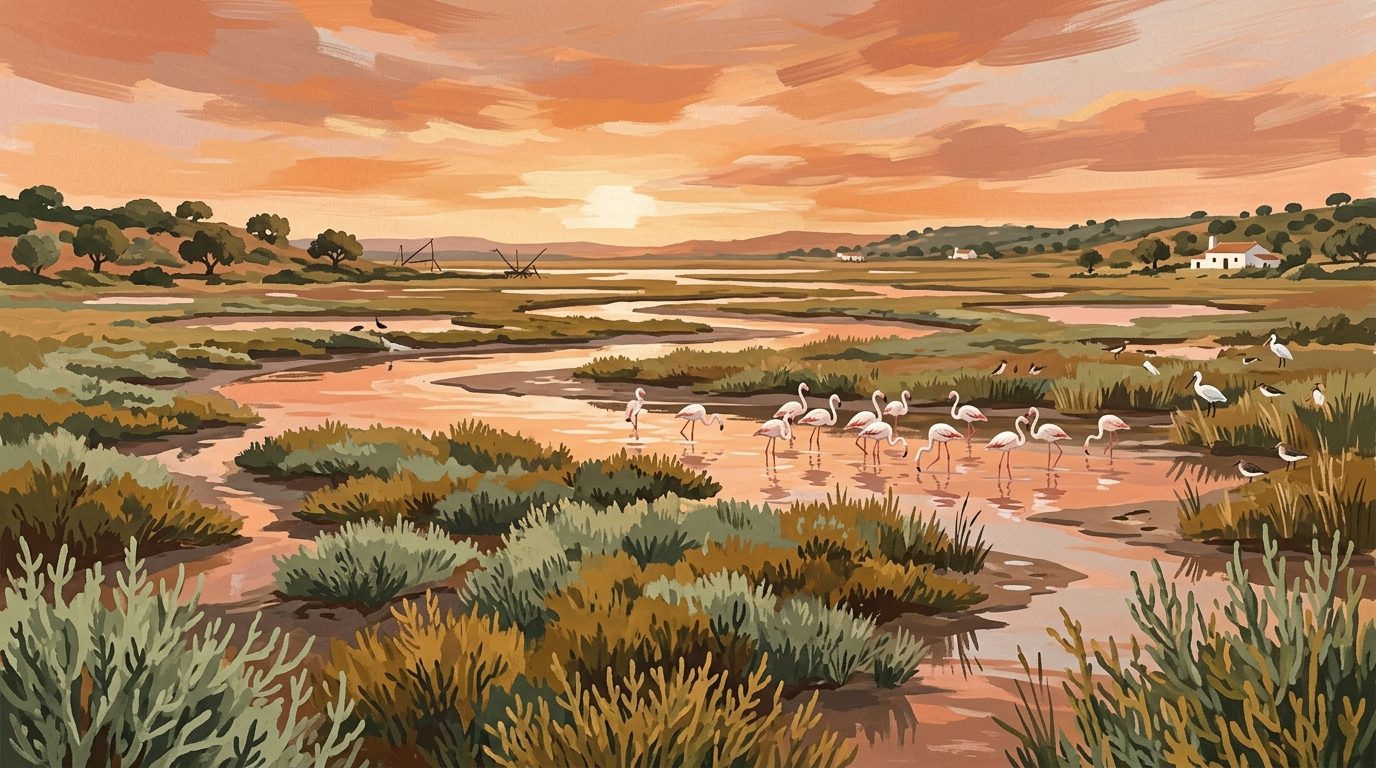
Odiel Marshes: Huelva's Overlooked Wetland
Discover the Marismas del Odiel, a tidal powerhouse in Huelva that hosts Europe's largest spoonbill colony and a spectacular array of flamingos and ospreys.
7 min read
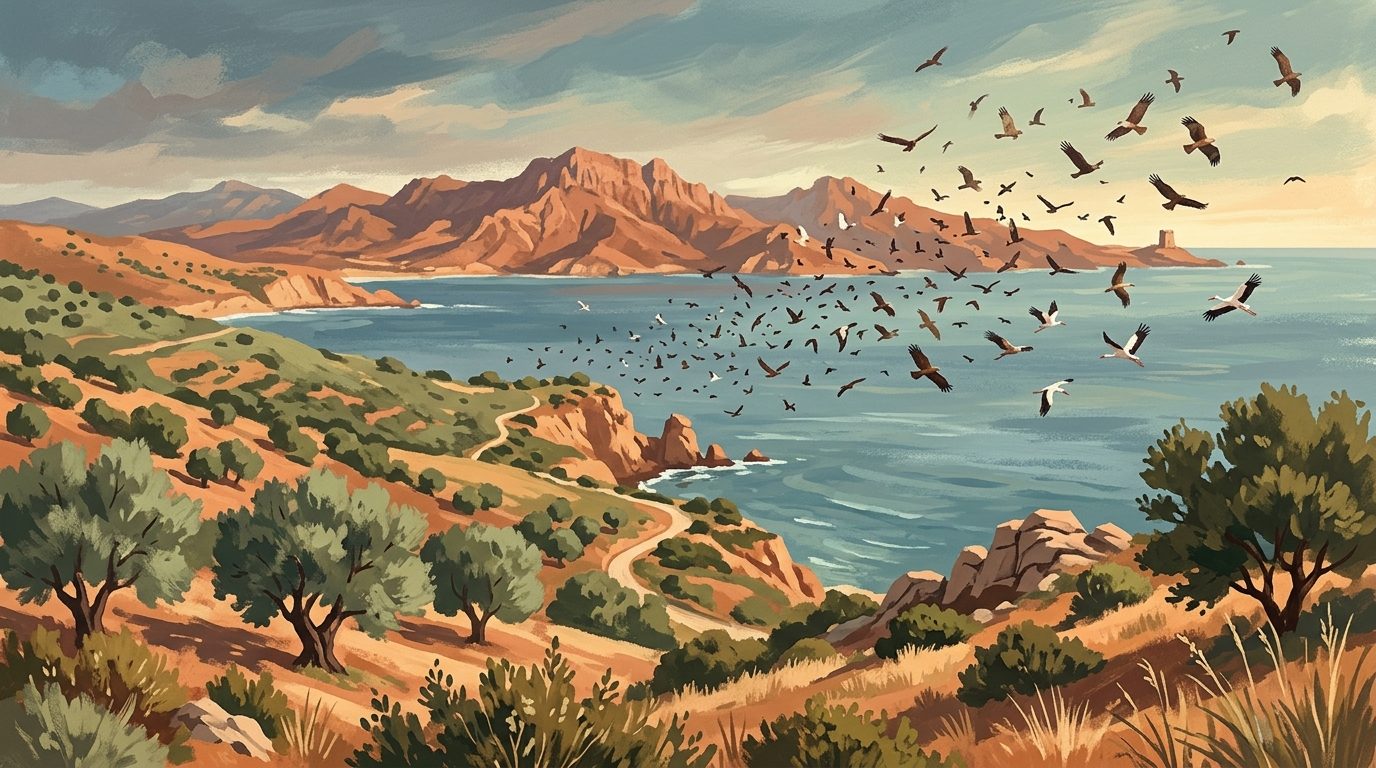
The Gibraltar Strait: Europe's Greatest Bird Migration
Discover the biological funnel where millions of raptors and storks cross between Europe and Africa, creating one of the world's most significant wildlife spectacles.
7 min read
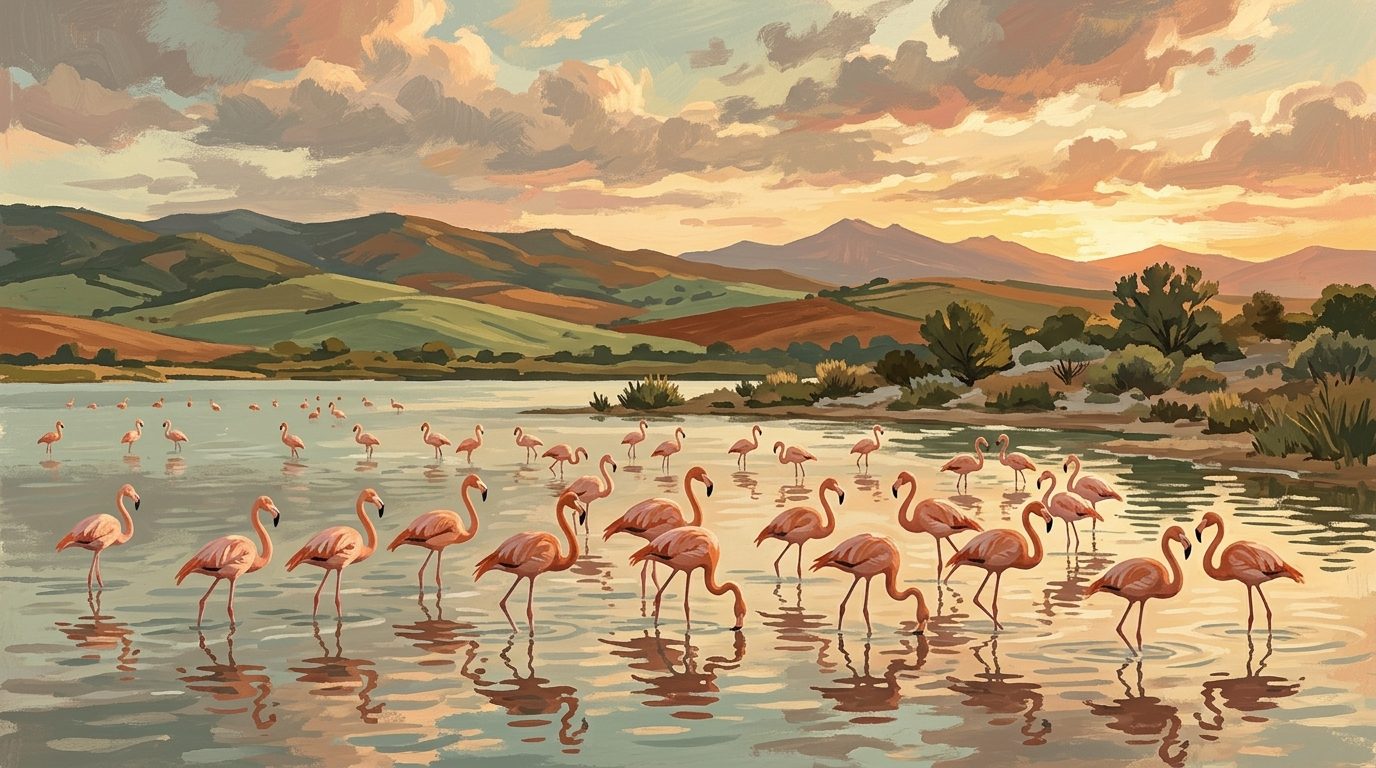
Fuente de Piedra: Andalucía's Flamingo Lake
Discover the vital breeding grounds of the Greater Flamingo at the Laguna de Fuente de Piedra, a hypersaline wetland in the heart of Málaga province.
7 min read
Newsletter
More stories from Andalucía
Weekly notes, seasonal picks, and the next guides worth bookmarking.