
Nature & wildlife · Huelva
Sierra de Aracena: Huelva's Green Highland
An ancient managed landscape where holm oak and chestnut forests meet rare raptors and the iconic Iberian pig. This northern Huelva highland provides one of Andalucía's most intact examples of the dehesa ecosystem.
By Dan · Updated 7 June 2026 · 8 min read
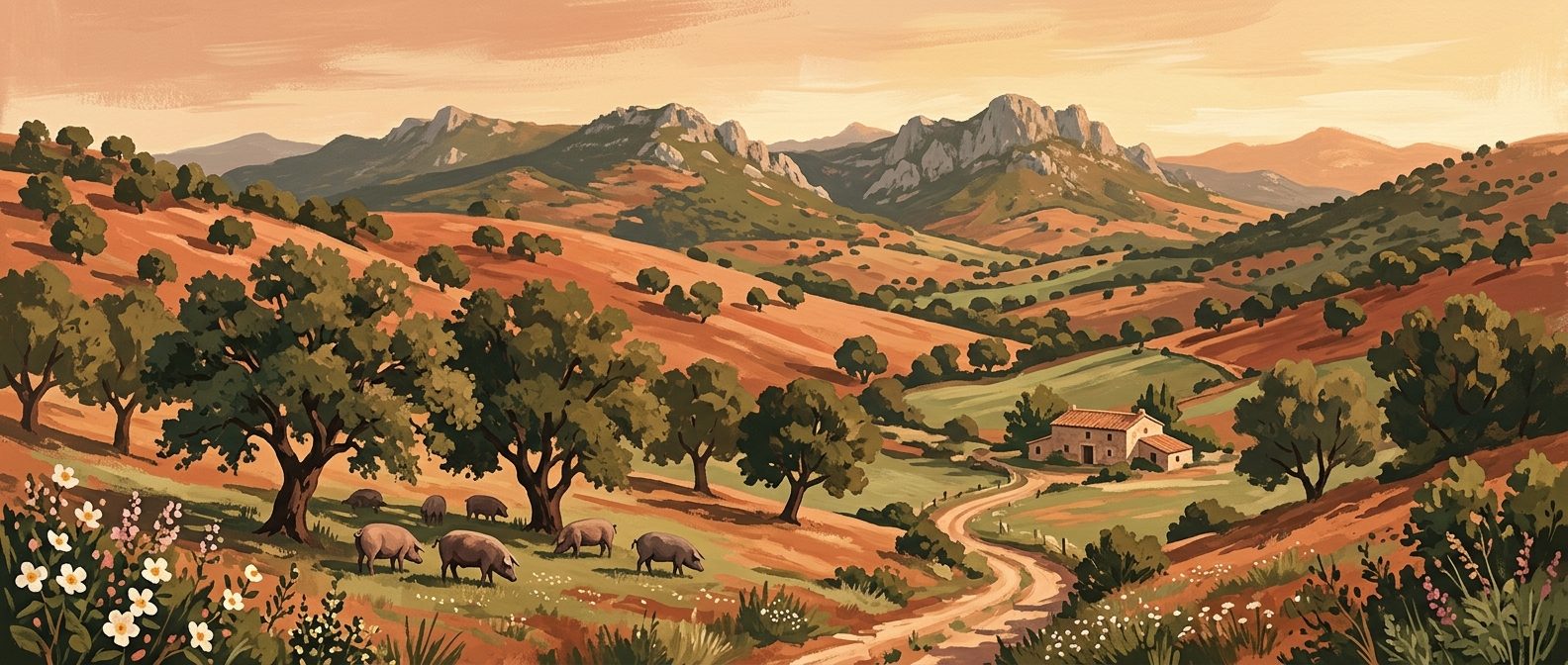
The Sierra de Aracena and Picos de Aroche Natural Park represents one of the most successful historical compromises between human industry and wild nature in Western Europe. Here, the humid Atlantic influence meets the Mediterranean sun, creating a high-rainfall sanctuary of ancient oak and chestnut forests.
While much of southern Spain is defined by its arid plains and sun-scorched coastlines, the Sierra de Aracena and Picos de Aroche Natural Park in the province of Huelva offers a starkly different landscape. This is a region of high rainfall, granite outcrops, and deep, shaded river valleys. It is a place where the air smells of damp earth and woodsmoke, and where the tree canopy remains green even in the height of summer. For the naturalist, it represents a unique opportunity to see species that struggle elsewhere in the south, supported by a traditional agricultural system that has protected the landscape for centuries.
The park covers over 186,000 hectares of the western Sierra Morena. It is not a wilderness in the North American sense, but rather a functional ecological corridor. It serves as a vital bridge for species moving between the plains of Extremadura to the north and the Doñana marshes to the south. Its value lies in its continuity; the vast stretches of oak woodland provide a safe harbour for wide-ranging raptors and elusive mammals that require large, undisturbed territories.
The Ecosystem: The Art of the Dehesa
The defining feature of the Sierra de Aracena is the dehesa. This is an agro-silvo-pastoral system, a man-made ecosystem that manages the balance between wild woodland and pasture. In a dehesa, the lower scrub is cleared to allow grass to grow for livestock, while the mature trees are preserved for their acorns, cork, and shade. The primary species here are the Holm oak (Quercus rotundifolia) and the Cork oak (Quercus suber).
Ecologically, the dehesa is extraordinary. By spacing out the trees, it creates a mosaic of light and shadow that supports a higher diversity of grasses and wildflowers than a dense forest would. This, in turn, supports a massive biomass of insects, which feeds the birds and small mammals. In the higher, cooler elevations, particularly around the villages of Aracena, Castaño del Robledo, and Fuenteheridos, the oaks give way to extensive Sweet chestnut (Castanea sativa) groves. Introduced by Roman and later settlers, these chestnuts have naturalised, forming the "Copper Forest" which turns a spectacular deep orange in November.
The river systems, such as the Rivera de Huelva and the Rivera de Múrtigas, create narrow corridors of riparian forest. Here, you find Alder (Alnus glutinosa), Willow (Salix spp.), and Poplar (Populus nigra), providing a cooling microclimate that hosts amphibians and semi-aquatic mammals found nowhere else in the province.
Key Species: From Sky to Soil
The Cinereous Vulture (Aegypius monachus)
The Sierra de Aracena is a stronghold for the Cinereous Vulture, also known as the Black Vulture. Unlike the more common Griffon Vulture, which nests on cliffs, the Cinereous Vulture builds massive stick nests in the tops of large trees, particularly Cork oaks. With a wingspan of up to three metres, it is one of the largest birds of prey in the world.
Sighting likelihood: High. Look for them soaring over the dehesas between Aroche and Cortegana. They are best spotted on clear, sunny mornings when thermals allow them to rise. Unlike Griffons, they are often seen in pairs rather than large groups.
The Black Stork (Ciconia nigra)
A much rarer and more secretive relative of the White Stork, the Black Stork avoids human habitation. It prefers the deep, wooded valleys near rivers and reservoirs within the park. This species is a migratory visitor, arriving in spring to breed in the quietest corners of the sierra.
Sighting likelihood: Low to Moderate. Your best chance is during the spring breeding season (March to June) near secluded water bodies or in the northern sections of the park away from the main hiking trails. Use high-quality optics and maintain a significant distance to avoid disturbing nesting sites.
The Iberian Pig (Sus scrofa domesticus)
While technically a domestic animal, the Iberian pig is an integral part of the sierra's wild ecosystem. These pigs roam freely through the dehesa for much of the year. During the montanera (the fattening season from October to January), they forage exclusively on acorns. Their presence helps maintain the pasture and prevents the overgrowth of invasive scrub.
Sighting likelihood: Guaranteed. You will see them in almost every rural area of the park. While they are used to people, they are semi-wild; do not approach sows with piglets, as they can be protective.
The Otter (Lutra lutra)
The clean, permanent waters of the Rivera de Múrtigas support a healthy population of Eurasian otters. They benefit from the abundance of crayfish and small fish in the slow-moving pools. The presence of otters is an indicator of high water quality and a functional riparian food web.
Sighting likelihood: Low. Otters are crepuscular, meaning they are most active at dawn and dusk. Look for their tracks (spraints) on flat rocks near the water's edge on the trail between Almonaster la Real and the river.
Iberian Lynx (Lynx pardinus)
Historically, the Sierra de Aracena was a prime habitat for the Iberian lynx, once the world's most endangered feline and now a symbol of successful conservation. After decades of absence, the park is now being managed as a transit corridor and potential reintroduction site. While a permanent breeding population is still being established, individuals occasionally wander into the park from the nearby Doñana or Vale do Guadiana populations.
Sighting likelihood: Extremely Low. Sighting a lynx here would be a once-in-a-lifetime event. However, keep an eye out for their distinctive tracks in the sandy paths of the more remote southern sections of the park.
Best Time to Visit
The Sierra de Aracena changes character dramatically with the seasons. Unlike the coast, which remains somewhat static, this highland has distinct temperate phases.
- Autumn (October to December): This is the peak season for naturalists. The chestnut harvest takes place, the mushrooms emerge (including the prized Amanita caesarea and Boletus edulis), and the vultures are highly active. The autumn colours in the chestnut groves are a major draw.
- Spring (March to May): The best time for birdwatching and wildflowers. The dehesa floor is covered in lavender, cistus, and wild orchids. Migratory birds like the Black Stork and Egyptian Vulture (Neophron percnopterus) arrive.
- Winter (January to February): Cold and often wet, but excellent for seeing the dehesa in its most productive state during the acorn season. The visibility through the deciduous chestnut trees is better for spotting smaller woodland birds like the Azure-winged Magpie (Cyanopica cooki).
- Summer (June to August): While hot, the sierra is significantly cooler than Sevilla or Huelva city. Wildlife activity drops during the midday heat but recovers at dusk.
How to Explore
The park is criss-crossed by an extensive network of signposted trails (senderos). Most are former mule tracks that connected the white villages. No special permits are required for the majority of these routes, though you should stay on marked paths to respect the private dehesa estates.
The Ribera del Jabugo Route: A linear path that follows the river between Galaroza and Castaño del Robledo. This is the best place to see riparian wildlife and the transition from oak to chestnut forest.
Cerro del Hierro: While just outside the main park boundary to the east, this ancient iron mine provides a unique limestone karst landscape that attracts specific rock-dwelling bird species like the Blue Rock Thrush (Monticola solitarius).
Guided Tours: For those looking to see the Black Vulture or Black Stork, hiring a local specialist guide is recommended. They have access to private estates and know the seasonal movements of the raptors. Several small outfits operate out of Aracena and Almonaster la Real.
Gruta de las Maravillas: Located directly under the town of Aracena, this cave system is essential for understanding the geology of the region. (Advance booking is highly recommended as daily entry is strictly limited.) While primarily a geological attraction, the caves host specialised cave-dwelling invertebrates and bat species.
Practical Information
Access: The park is roughly 80 minutes by car from Sevilla via the N-433 and 90 minutes from Huelva via the N-435. Public transport is limited to a few daily buses from Sevilla and Huelva to Aracena.
Parking: In villages like Alájar or Linares de la Sierra, parking is very limited. Use the designated car parks on the outskirts of the towns to avoid congestion in the narrow historic streets.
Equipment: Even in spring, weather in the highlands can be unpredictable. Bring a waterproof layer and sturdy hiking boots, as the granite paths can be slippery when wet. If you are visiting in autumn for fungi, remember that a permit is required for harvesting in certain areas, and you must use a wicker basket to allow spores to drop.
Accommodation: Aracena is the main hub with the most services, but for a more nature-focused stay, look for casas rurales in smaller hamlets like Almonaster la Real or Castaño del Robledo.
Conservation Note
The primary threat to this ecosystem is La Seca (the drying), a complex disease involving the water mould Phytophthora cinnamomi which causes the rapid decline and death of Holm and Cork oaks. This is exacerbated by climate change and prolonged droughts. Visitors can help by strictly staying on paths to prevent the spread of soil-borne pathogens on their boots. Additionally, the abandonment of traditional chestnut harvesting in some areas is leading to a loss of biodiversity as the groves become overgrown and prone to wildfires. Supporting the local economy by purchasing local products like chestnuts and honey directly contributes to the maintenance of this delicate landscape.
Last reviewed: 21 June 2026 · Editorial policy
Related guides
Odiel Marshes: Huelva's Overlooked Wetland
Discover the Marismas del Odiel, a tidal powerhouse in Huelva that hosts Europe's largest spoonbill colony and a spectacular array of flamingos and ospreys.
7 min read
A Guide to the Odiel Marshes: Huelva’s Coastal Wilderness
Discover the sprawling tidal wetlands of the Odiel Marshes, a UNESCO Biosphere Reserve home to Europe’s most significant spoonbill colonies and striking pink flamingos.
6 min read
The Gibraltar Strait: Europe's Greatest Bird Migration
Discover the biological funnel where millions of raptors and storks cross between Europe and Africa, creating one of the world's most significant wildlife spectacles.
7 min read
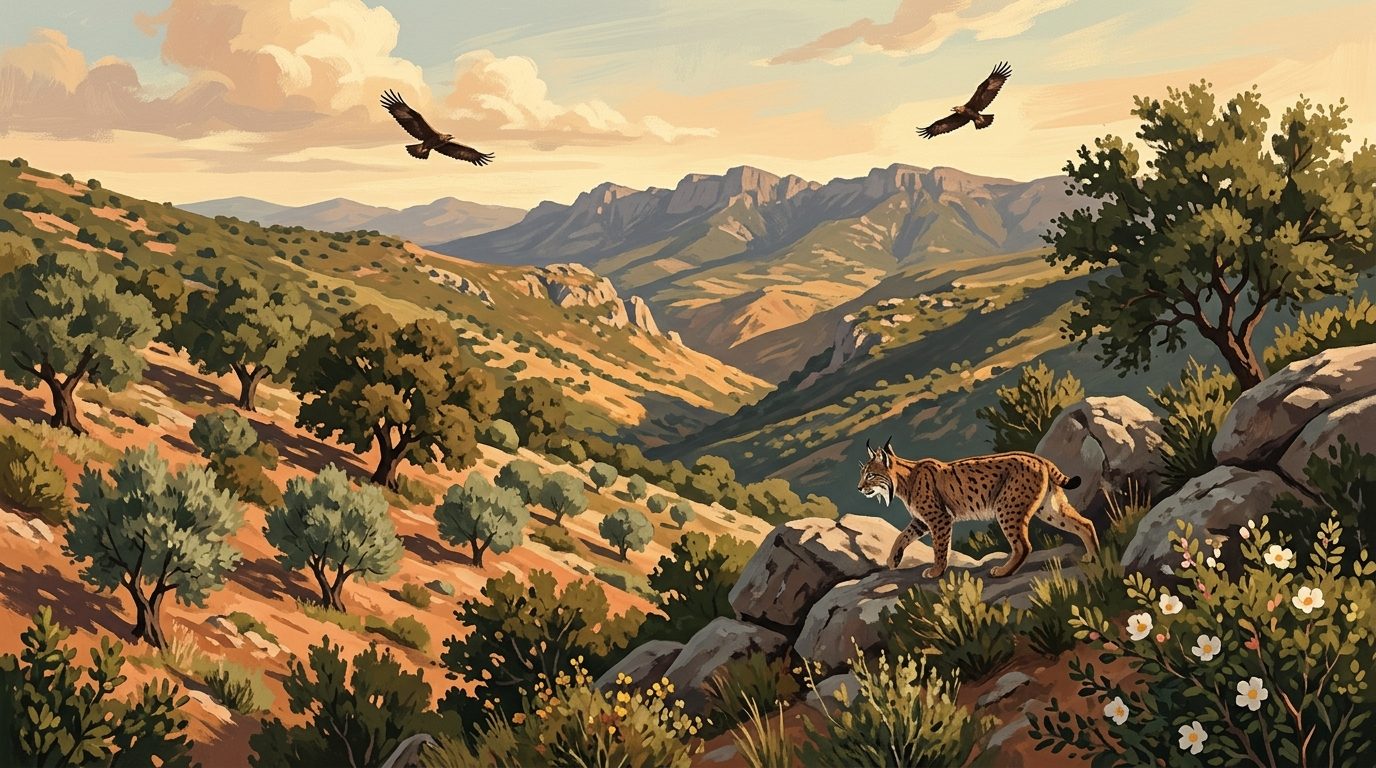
Sierra Morena: The Forgotten Wild of Andalucía
Discover the rugged beauty of the Sierra Morena, a vital sanctuary for the Iberian lynx and Europe's rarest raptors in the heart of northern Sevilla.
8 min read
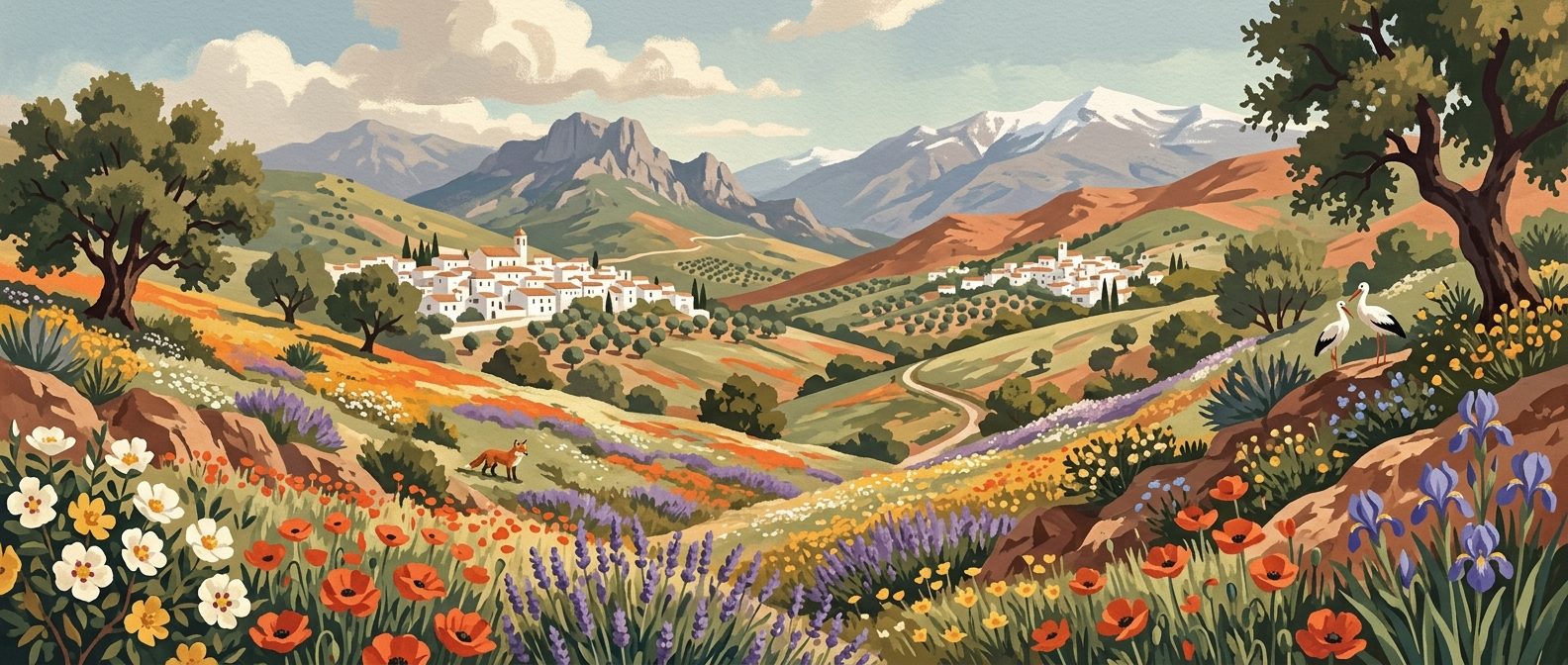
The Spring Wildflower Season in Andalucía
Discover the exceptional botanical diversity of southern Spain, from the orchid-rich limestone sierras to the rare peonies of the cork oak forests.
7 min read
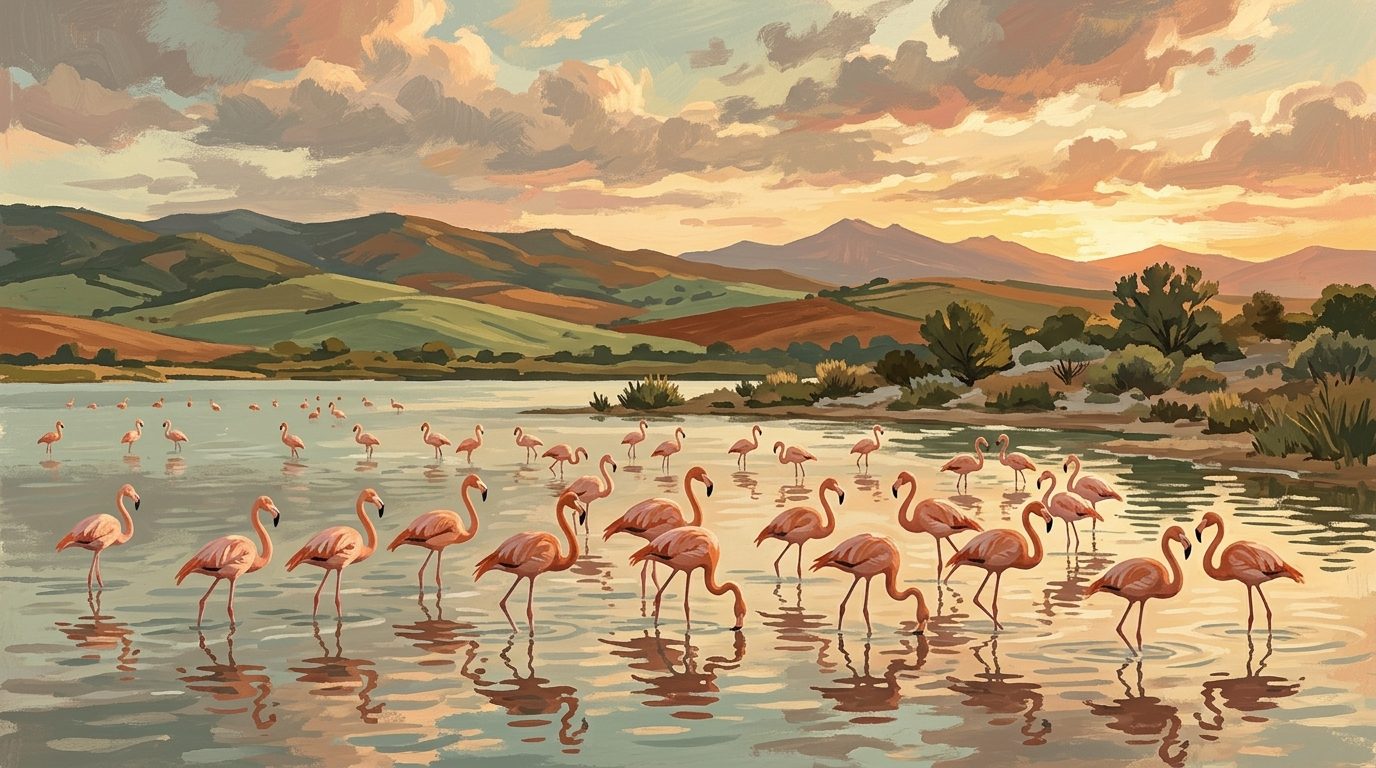
Fuente de Piedra: Andalucía's Flamingo Lake
Discover the vital breeding grounds of the Greater Flamingo at the Laguna de Fuente de Piedra, a hypersaline wetland in the heart of Málaga province.
7 min read
More from Huelva
Newsletter
More stories from Andalucía
Weekly notes, seasonal picks, and the next guides worth bookmarking.