
Nature & wildlife · Cádiz
The Gibraltar Strait: Europe's Greatest Bird Migration
Discover the biological funnel where millions of raptors and storks cross between Europe and Africa, creating one of the world's most significant wildlife spectacles.
By Dan · Updated 7 June 2026 · 7 min read
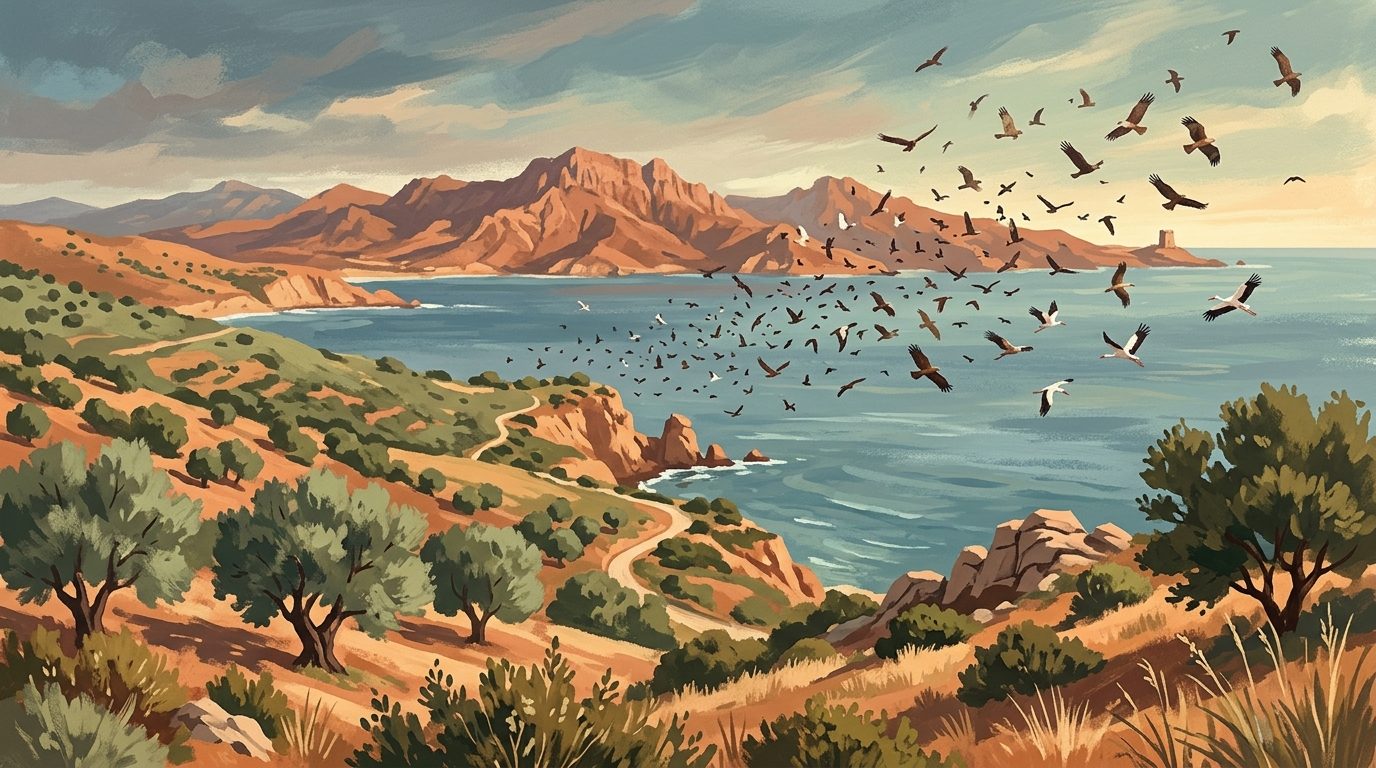
Positioned where two continents almost touch, the Strait of Gibraltar serves as the primary bottleneck for millions of migratory birds crossing between Europe and Africa. This narrow channel provides one of the world's most spectacular wildlife displays as soaring raptors and storks wait for the perfect wind to make the crossing.
The Strait of Gibraltar is a geographical funnel of global significance. At its narrowest point, only 14 kilometres of water separate the Spanish coastline from the Moroccan shore. For humans, this is a busy shipping lane; for the avian world, it is a formidable barrier and a vital bridge. Large soaring birds, such as eagles, vultures, and storks, rely on thermals, rising columns of warm air, to gain altitude and glide long distances without exhausting themselves. Since thermals do not form over the sea, these birds must seek the shortest possible water crossing. This biological necessity creates a concentrated stream of life that is arguably the finest birding spectacle in the Western Palearctic.
Standing on the headlands of Tarifa or the Sierra de la Plata, one observes more than just individual birds; you witness the pulse of two continents. Depending on the wind direction, tens of thousands of raptors can pass over a single viewpoint in a few hours. This is an environment defined by the wind, primarily the Levante (easterly) and the Poniente (westerly). These winds dictate exactly where and when the birds will cross, making every day in the Strait a unique exercise in natural history observation. For the naturalist, the experience is both humbling and exhilarating, offering a front-row seat to one of nature’s most ancient and urgent rhythms.
The Ecosystem
The Strait is not a single habitat but a complex intersection of marine, coastal, and montane ecosystems. The geology of the Campo de Gibraltar is dominated by the 'Flysch', sedimentary rock formations that create dramatic coastal cliffs and intertidal platforms. Inland, the landscape rises into the Alcornocales Natural Park, home to the largest cork oak (*Quercus suber*) forests in the Iberian Peninsula. These forests provide crucial resting and feeding grounds for birds before and after their sea crossing.
The physical geography is the engine behind the migration. As the sun warms the limestone crags and cork oak canopy, thermals are generated. Birds spiral upward in these invisible elevators until they reach a sufficient height to 'glide' across the Strait. However, the Mediterranean and Atlantic meet here, creating a high-pressure wind tunnel. When the Levante blows hard, it can push migrating birds far to the west, sometimes forcing them to wait in the valleys for days. This creates 'fall-outs' where woods and fields suddenly fill with thousands of birds of prey, waiting for the wind to drop. The maritime environment itself is equally productive; the upwelling of cold, nutrient-dense water from the Atlantic supports a food chain that includes pods of Long-finned Pilot Whales (*Globicephala melas*) and migrating Orcas (*Orcinus orca*), which are often visible from the same viewpoints used by birdwatchers.
Key Species
Honey Buzzard (*Pernis apivorus*)
The Honey Buzzard is the undisputed protagonist of the autumn migration. Unlike the common buzzard, this species is a long-distance migrant that winters in tropical Africa. In late August and the first week of September, they arrive in staggering numbers. On peak days, over 10,000 individuals can cross the Strait. They are distinguished by their small, pigeon-like heads and distinctive tail bands. Sighting likelihood: Near certain (95%+) if visiting between August 25th and September 10th with favourable winds.
White Stork (*Ciconia ciconia*)
White Storks provide some of the most visual drama. They travel in massive, disciplined flocks known as 'kettles'. Watching five hundred storks spiralling together in a single thermal is a transformative experience. While many now winter in Spain due to the availability of food in landfills and rice fields, hundreds of thousands still make the crossing. Sighting likelihood: Near certain during late July and August.
Black Kite (*Milvus migrans*)
Black Kites are often the first large raptors to move south, beginning their journey as early as July. They are highly gregarious and can be seen in huge numbers, often flying lower than the larger eagles. Their forked tails and dark plumage make them easy to identify even at a distance. Sighting likelihood: Near certain from July through September.
Short-toed Eagle (*Circaetus gallicus*) and Booted Eagle (*Hieraaetus pennatus*)
These two species represent the 'large eagle' contingent. The Short-toed Eagle, a specialist predator of reptiles, is easily identified by its pale underside and large, owl-like head. The Booted Eagle is smaller and comes in two colour phases: pale and dark. Both species are common on passage, with the Booted Eagle being particularly numerous in October. Sighting likelihood: Very high (90%) from September to late October.
Griffon Vulture (*Gyps fulvus*)
While many Griffon Vultures are resident in the nearby mountains of Grazalema, a significant number of juveniles attempt the crossing to Africa in late autumn. These massive birds, with wingspans up to 2.8 metres, struggle more than most with the water crossing. They are often seen testing the winds, turning back to land, and trying again. Sighting likelihood: Near certain year-round, with peak migratory movements in October and November.
Best Time to Visit
Migration in the Strait is a marathon, not a sprint, spanning nearly ten months of the year. However, there are two distinct peaks that offer the highest density of species.
- Autumn Migration (August to November): This is the most popular time for visitors. The movement begins in July with Black Kites and White Storks. The 'big' raptor days occur from late August to mid-September (Honey Buzzards). Late September and October see the passage of Short-toed and Booted Eagles, while November is the time for Griffon Vultures and the elusive Spanish Imperial Eagle (*Aquila adalberti*).
- Spring Migration (March to May): The return journey is often more rapid. Birds are eager to reach breeding grounds. March is excellent for Black Kites and Short-toed Eagles. April brings the colourful 'near-passerines' such as European Bee-eaters (*Merops apiaster*) and European Rollers (*Coracias garrulus*), which cross in small, vocal groups.
- Winter (December to February): While the main migration has finished, the Strait remains active. Thousands of Crag Martins (*Ptyonoprogne rupestris*) and local raptors inhabit the cliffs, and the wetlands of La Janda host massive numbers of Common Cranes (*Grus grus*).
How to Explore
The strategy for birding the Strait revolves around the wind. If the wind is blowing from the East (Levante), birds will be pushed towards the west of Tarifa. If it blows from the West (Poniente), they concentrate over the town of Tarifa and the mountains to the east.
Official Observatories: There are several purpose-built migration observatories (observatorios) that are free to access. Observatorio de Cazalla, located just off the N-340 road east of Tarifa, offers an exceptional panoramic view of the Strait. Observatorio de El Algarrobo is another vital spot, particularly during the Honey Buzzard passage. These sites are staffed by ornithologists from foundations like Migres during peak seasons, who count the birds and often assist visitors with identification.
Self-Guided Routes: The hike to the Silla del Papa provides an elevated view over the entire coastline. For those interested in woodland species, the tracks through the Santuario de la Luz offer opportunities to see Firecrests (*Regulus ignicapilla*) and various warblers taking refuge in the cork oaks. The nearby Playa de los Lances is a protected wetland where various waders and gulls rest before the crossing.
Guided Tours: Several local companies specialise in migration tours. These are highly recommended for those unfamiliar with the complex wind patterns of the Strait, as guides can move you to the best location for the specific conditions of the day. They also provide high-quality optics, which are essential for identifying birds at high altitudes.
Practical Information
Access: The main birding hubs are located around the town of Tarifa and the village of Pelayo. Most observatories are accessible via the N-340 highway. Parking is generally available at the observatories, though it can become crowded during peak September weekends.
Equipment: Good binoculars are non-negotiable; 8x42 or 10x42 are the standard. A spotting scope is helpful but not essential for general passage. Even in summer, the wind in the Strait can be cold and fierce, so bring a high-quality windbreaker. Sun protection is vital as you will be spending hours in exposed locations.
Accommodation: Tarifa offers a wide range of options, from boutique hotels to campsites. For a more nature-focused stay, look for 'Casas Rurales' in the Alcornocales Natural Park or near Facinas. This puts you closer to the 'fall-out' zones and the La Janda agricultural plains.
Permits: No specific permits are required to visit the public observatories or hike the established trails. However, stay on marked paths within the Natural Parks to avoid disturbing nesting species or infringing on private hunting estates (fincas).
Conservation Note
The Strait of Gibraltar is a protected area under various frameworks, including the Intercontinental Biosphere Reserve of the Mediterranean. However, it faces modern challenges. The most significant is the proliferation of wind farms. While providing renewable energy, the turbines are located directly in the migratory path of thousands of raptors. To mitigate this, many wind farms now employ 'environmental monitors' who have the authority to stop turbines when a large flock of birds is detected. This innovative approach has significantly reduced mortality rates. Climate change also presents a threat, as shifting wind patterns and desertification in the Sahel affect the timing and success of the birds' arduous journey. Supporting local conservation groups and using official observatories helps demonstrate the economic value of wildlife tourism to the region, encouraging further protection of this vital corridor.
Last reviewed: 21 June 2026 · Editorial policy
Related guides

Odiel Marshes: Huelva's Overlooked Wetland
Discover the Marismas del Odiel, a tidal powerhouse in Huelva that hosts Europe's largest spoonbill colony and a spectacular array of flamingos and ospreys.
7 min read
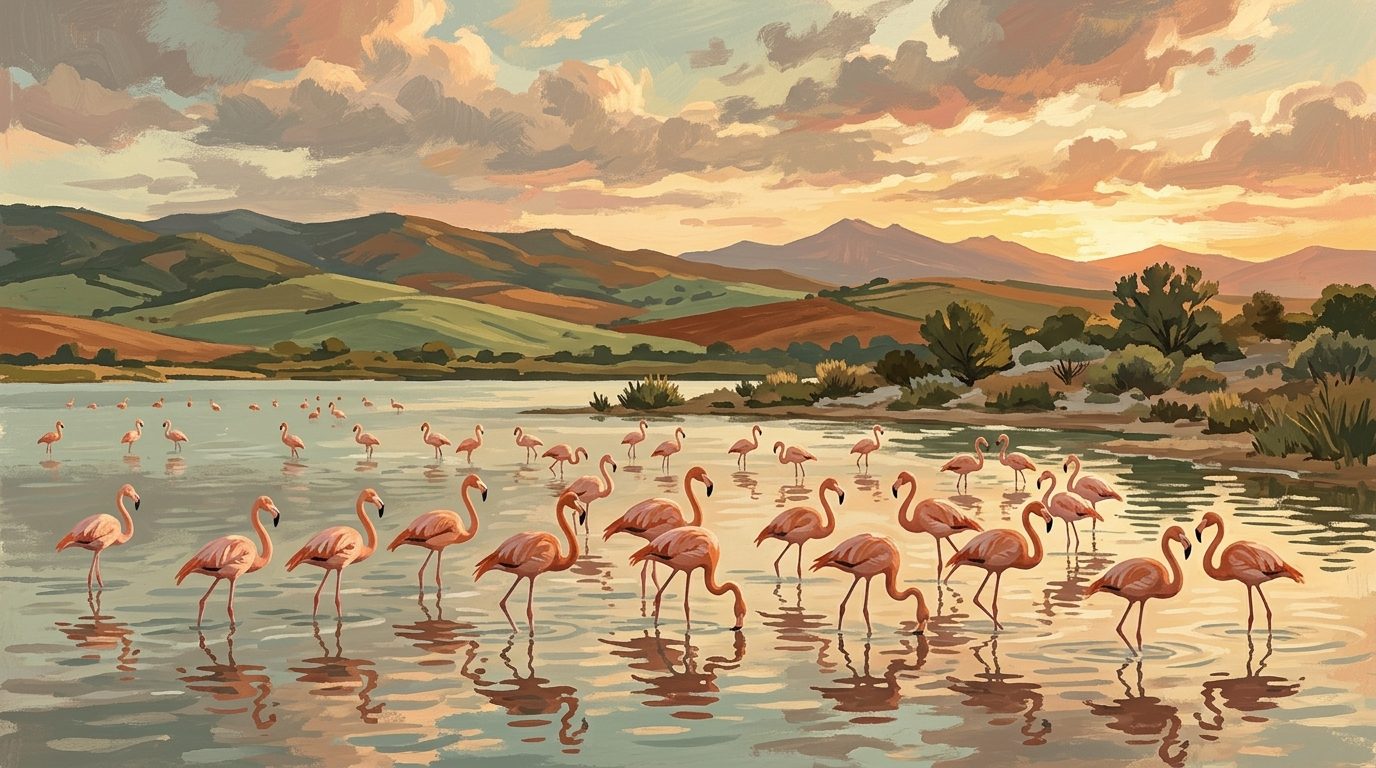
Fuente de Piedra: Andalucía's Flamingo Lake
Discover the vital breeding grounds of the Greater Flamingo at the Laguna de Fuente de Piedra, a hypersaline wetland in the heart of Málaga province.
7 min read
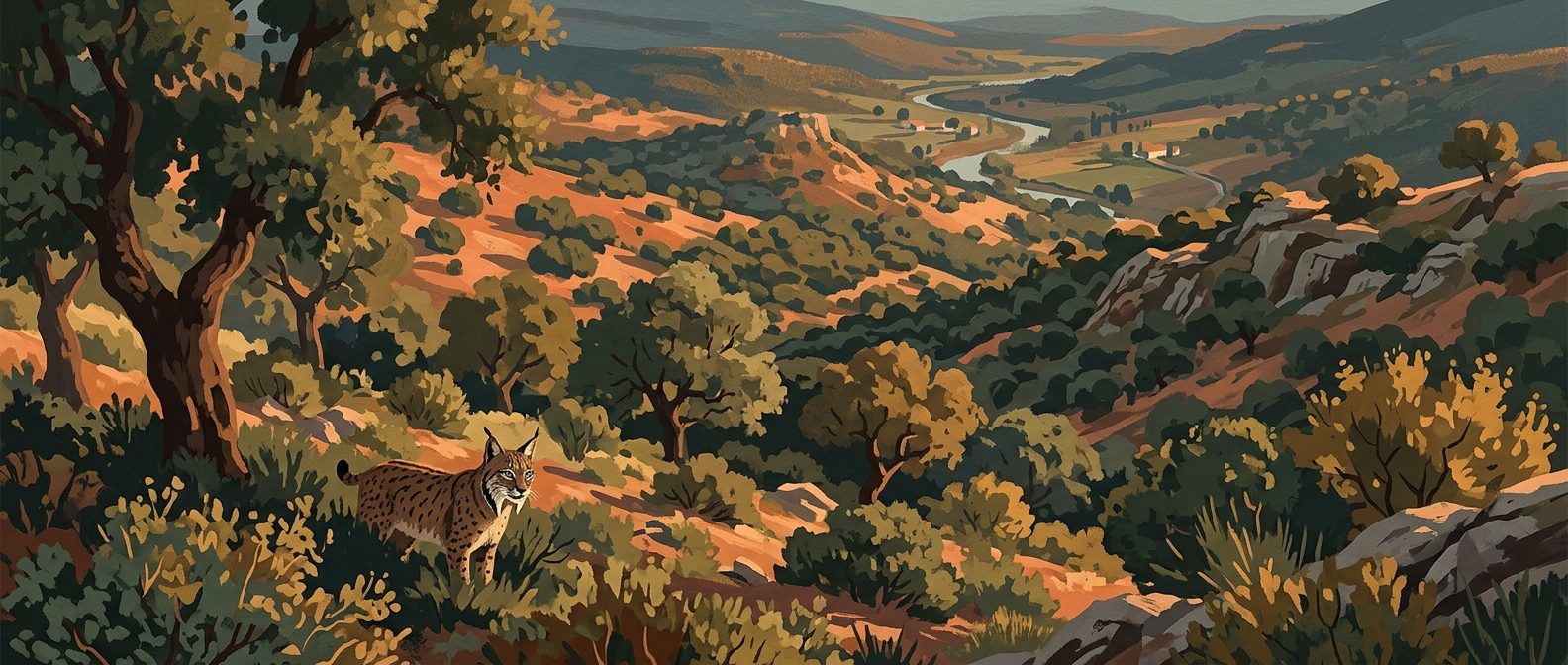
Where to See the Iberian Lynx: Andújar and Beyond
Discover the best ways to see the world's rarest cat in the Sierra de Andújar. This guide covers the best viewing spots, seasonal timing, and the diverse wildlife of Jaén's rugged Mediterranean scrubland.
6 min read
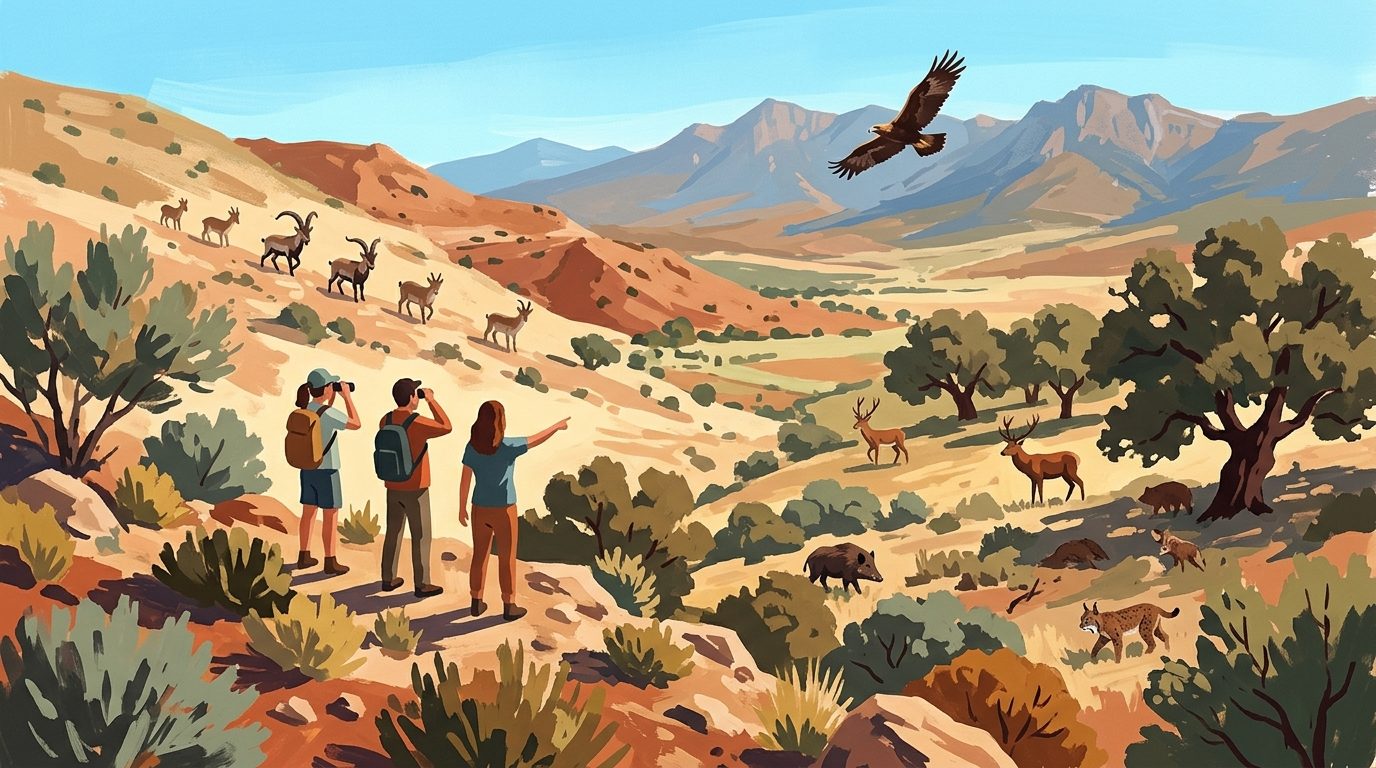
Where to Find Andalucía’s Most Remarkable Wildlife
Discover the best spots in Andalucía to see rare species like the Iberian lynx, migratory whales in the Strait of Gibraltar, and pink flamingos in natural lagoons.
6 min read

Whale and Dolphin Watching in the Strait of Gibraltar
The Strait of Gibraltar is a premier marine sanctuary where Atlantic and Mediterranean waters meet, offering reliable sightings of orcas, sperm whales, and several dolphin species.
7 min read

Los Alcornocales: Europe's Finest Cork Oak Forest
Spanning the Cádiz mountains, Los Alcornocales preserves a prehistoric ecosystem of subtropical cloud forests and vast cork oak woodlands unique in Europe.
7 min read
Newsletter
More stories from Andalucía
Weekly notes, seasonal picks, and the next guides worth bookmarking.