
Practical guide
Senior Travel Guide to Andalucía: Planning and Practical Advice
A practical guide to senior travel in Andalucía, featuring step-by-step advice on navigating rail assistance, securing the Tarjeta Dorada, managing medication, preparing for heat and choosing accessible accommodation.
By Dan · Updated 14 July 2026 · 8 min read
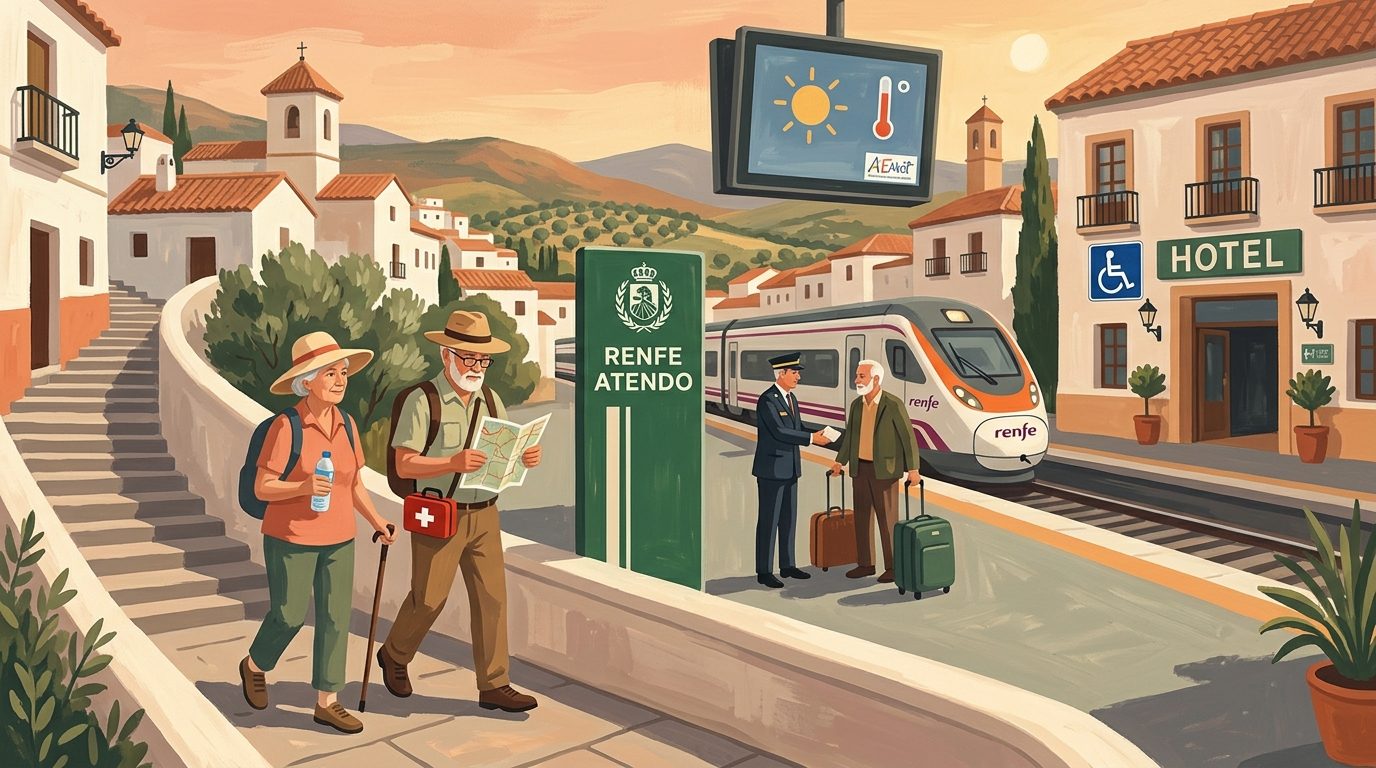
Andalucía can work very well for older travellers when the itinerary is built around heat, terrain, medication, rest time and accessible transport rather than a fast city checklist. This guide focuses on safer pacing, official assistance checks, healthcare preparation and realistic base choices.
Senior travel in Andalucía is less about age and more about matching the trip to mobility, heat tolerance and medical needs. Sevilla, Cádiz and Málaga can be relatively easy with the right hotel and taxi plan; Granada, Ronda, Córdoba's lanes and many white villages need more care because slopes, cobbles and steps are part of the historic fabric. Build the trip around mornings, shade, rail connections and short transfers.
Quick answer: plan around heat, terrain and recovery time
- Choose shoulder seasons: April, May, early June, late September and October are usually easier than July and August. For detailed seasonal advice, see our Month-by-Month Guide to Visiting Andalucía.
- Use rail where it helps: high-speed and Avant trains reduce driving stress between major cities. Check current assistance options before booking.
- Book hotels for access, not just charm: confirm lift access, step-free entrance, shower type, taxi drop-off and distance from slopes.
- Carry medical basics: prescriptions, generic medicine names, allergy list, insurance details and emergency contacts.
- Slow the route: three nights in a city is often better than one or two when heat and walking distances matter.
Best bases and navigating the terrain
For a first or lower-stress trip, consider a rail-linked base rather than a car-heavy touring loop. Sevilla and Málaga have excellent transport, flat central areas and many hotels with modern lifts. Cádiz is compact and mostly flat, though historic pavements can be very narrow. Córdoba is manageable if you stay near the Mezquita or the river and avoid long midday walks.
Granada and Ronda are deeply rewarding but require a deliberate strategy. Granada's Albaicín district is notoriously steep and cobbled. Do not attempt to walk up to the Alhambra or the Albaicín viewpoints if you have mobility concerns; instead, use the small red C30 and C32 minibuses that run constantly from the central Plaza Isabel la Católica, or take a local taxi.
If you want to experience the traditional white villages (pueblos blancos), choose a base with good road access and take short day trips. Changing hotels every night across mountainous terrain is exhausting. For more detail on lower-stress routing, pair this guide with our Accessibility Guide to Andalucía: Travel and Logistics.
Step-by-step: Securing the Tarjeta Dorada discount
Travellers aged 60 or over are eligible for Renfe's Tarjeta Dorada (Golden Card), which offers substantial discounts on train travel. A major point of friction for international visitors is that you cannot generally purchase this card online for the first time without a Spanish identification number. Here is how to handle it:
- Go to a staffed station: Visit the ticket office at your first major Spanish train station or airport railway station.
- Present your ID: Show your physical passport to prove you are 60 or older.
- Pay the nominal fee: The card costs a small annual fee (check the Renfe website for the current price, usually around six euros).
- Book your tickets: You can then buy discounted tickets at the window immediately. For future trips during your stay, you can book online and enter your new Tarjeta Dorada number at checkout.
For more on regional train routes and high-speed services, read our Guide to Train Travel in Andalucía: Renfe, AVE, and Regional Routes.
Step-by-step: Using Renfe train assistance
Renfe provides an excellent, free assistance service for passengers with reduced mobility. This is available at most major stations in Andalucía, but it requires prior arrangement.
- Check station coverage: Verify on the Renfe website that both your departure and arrival stations offer the assistance service.
- Request assistance during booking: When buying your ticket online or at the window, tick the box to request mobility assistance. You must usually do this at least 12 hours before departure.
- Arrive early: Get to the station at least 30 minutes before your train leaves.
- Find the meeting point: Look for the yellow assistance sign or desk in the main concourse. Staff will meet you there, help with your luggage, guide you to the platform and ensure you are safely seated. A colleague will meet you upon arrival.
Pacing and itinerary design
The most common mistake is trying to see Sevilla, Córdoba and Granada in one rushed week while also squeezing in beaches or villages. A comfortable plan gives each major city at least three nights, places the most demanding visit first thing in the morning, and keeps afternoons completely free.
- One major visit per day: the Alhambra, Mezquita-Cathedral or Alcázar should not be paired with another heavy walking tour on the same day.
- Embrace the siesta: The afternoon break is practical, not just cultural. Retreat to your air-conditioned room between 2 pm and 6 pm.
- Use taxis strategically: Taxis are relatively inexpensive in Andalucía. Even fit travellers save energy by taking a taxi back to the hotel after a long morning, or up to evening restaurants.
- Keep luggage light: Small lifts, narrow stairs and cobbled streets make heavy cases a burden. Consider travelling with a sturdy four-wheel cabin case and using hotel laundry services.
Medical preparation and healthcare friction
Bring enough regular medication for the whole trip plus a spare margin, and keep it in your hand luggage when flying. Carry the original packaging, a physical copy of your prescription and a short medical summary. Drug names differ internationally, so know the generic chemical name of your medication.
In Andalucía, the local pharmacy (farmacia, marked by a flashing green cross) is your first stop for minor ailments. Pharmacists are highly trained and can dispense advice and some medications that might require a prescription back home. However, they cannot prescribe antibiotics or heavy painkillers.
If you need to see a doctor for something more serious, be aware of the paperwork friction. UK visitors must carry a valid Global Health Insurance Card (GHIC) or European Health Insurance Card (EHIC) to access the public system (centros de salud and public hospitals). Without it, you will be billed. Even with reciprocal health agreements, private cover is vital for issues like medical repatriation. For further details on combining public and private care, consult our Travel Insurance for Andalucía: A Practical Guide.
For immediate, life-threatening emergencies, dial 112. The operators speak English. Keep our Emergency Numbers and Procedures in Andalucía guide bookmarked.
Managing heat and daylight
Inland Andalucía routinely exceeds 40 degrees Celsius during summer heatwaves, especially around Sevilla, Córdoba and Jaén. Check AEMET forecasts and respect official heat warnings (yellow, orange, or red alerts) rather than relying on historical averages.
Heat exhaustion sneaks up on visitors who push through the midday sun. Plan outdoor visits for 9 am, walk on the shaded side of the street (locals zig-zag to stay in the shadows), drink water constantly and wear a wide-brimmed hat. Light, breathable fabrics are essential.
Hotel checks that matter
Never assume an "accessible" or "senior-friendly" label tells the whole story. You must verify specific details directly with the hotel before paying.
- Step-free access: Ask whether every route from the street to your room is step-free. Some hotels have a lift, but still require climbing five steps in the lobby to reach it.
- Walk-in showers: In Spain, a walk-in shower is a "plato de ducha". Ensure you specify this; otherwise, you may get a bathtub ("bañera") which can be deep and difficult to step into.
- Taxi access: Many beautiful old-town hotels sit on strict pedestrian lanes. Check if a taxi can pull up exactly at the front door. If it cannot, ask how far you will have to wheel your luggage over cobbles.
- Air conditioning: Confirm that the room itself has individual air conditioning control, and that it is turned on during your travel month. Some hotels turn central air conditioning off in April or October, even if a late heatwave strikes.
What catches people out: common mistakes
- Relying on intercity coaches: While ALSA and Avanza buses are modern and cheap, getting on and off coach steps, and dealing with luggage in the hold, can be physically taxing. Trains are vastly easier for those with limited mobility.
- Ignoring opening hours: Many historic churches, smaller museums and local shops close entirely between 2 pm and 5 pm. Do not plan to "browse" during these hours.
- Assuming monuments are completely flat: Do not assume UNESCO sites are fully step-free. The Alhambra and Alcázar have accessible routes, but not every tower, garden terrace or wall walk is suitable for wheelchairs or unsteady walkers. Book accessible tickets in advance where available.
Frequently asked questions
Can I use my UK or EU disabled parking badge in Andalucía?
Yes, the UK Blue Badge and the EU parking card are generally recognised in Spain. However, local parking rules and time limits for disabled bays vary significantly by municipality. Always check local signage or ask your hotel.
How easy is it to find public toilets in Andalucían cities?
Public toilets are rare in Spanish streets and squares. The accepted practice is to walk into a cafe or bar, buy a small bottle of water or a coffee, and use their facilities. Department stores like El Corte Inglés are also reliable spots for clean, accessible toilets.
Do I need to tip taxi drivers and hotel staff?
Tipping is much lower-key in Spain than in the US or UK. Rounding up a taxi fare to the nearest euro is appreciated but not mandatory. Leaving a euro or two for a helpful porter or housekeeper is polite, but you will not face hostility if you do not.
Are restaurants accommodating of dietary requirements?
Major cities are increasingly accustomed to allergies and coeliac requirements (ask for "sin gluten"). However, traditional rural tapas bars may struggle with strict dietary requests. Carry a translated allergy card if your needs are severe.
Official sources and final checks
Before you travel, verify current conditions and assistance rules directly with official providers.
- Renfe Tarjeta Dorada: Check current rail-discount terms and prices.
- Renfe Assistance: Review reduced-mobility travel rules and station coverage.
- AEMET: The official Spanish meteorological agency for daily heat and weather warnings.
- Official EU EHIC information: Health coverage rules for visiting EU citizens.
- UK Spain health advice: The latest government guidance on GHIC and healthcare access for British nationals.
Last reviewed: 14 July 2026 · Editorial policy
Related guides

Accessibility Guide to Andalucía: Travel and Logistics
A practical accessibility guide to Andalucía, with city terrain notes, rail and airport assistance checks, hotel-room questions, adapted beaches and official source links.
6 min read

Travelling with Kids in Andalucía: A Practical Guide
A practical family guide to Andalucía, covering rooms, car seats, trains, meal times, pushchairs, heat, beaches, child health and official planning checks.
8 min read

Sevilla Airport (SVQ) Guide: Transport, Facilities and Tips
A practical guide to Sevilla Airport (SVQ) covering the EA bus, taxi flat rates, terminal facilities, car hire, and connecting to wider Andalucía.
9 min read

Jerez Airport (XRY): The Complete Guide to the Gateway of Cádiz
A deep-dive practical guide to using Jerez Airport (XRY). Learn the realities of onward transport to Cádiz province, car hire friction, train timetables, and how to avoid the most common arrival mistakes.
8 min read
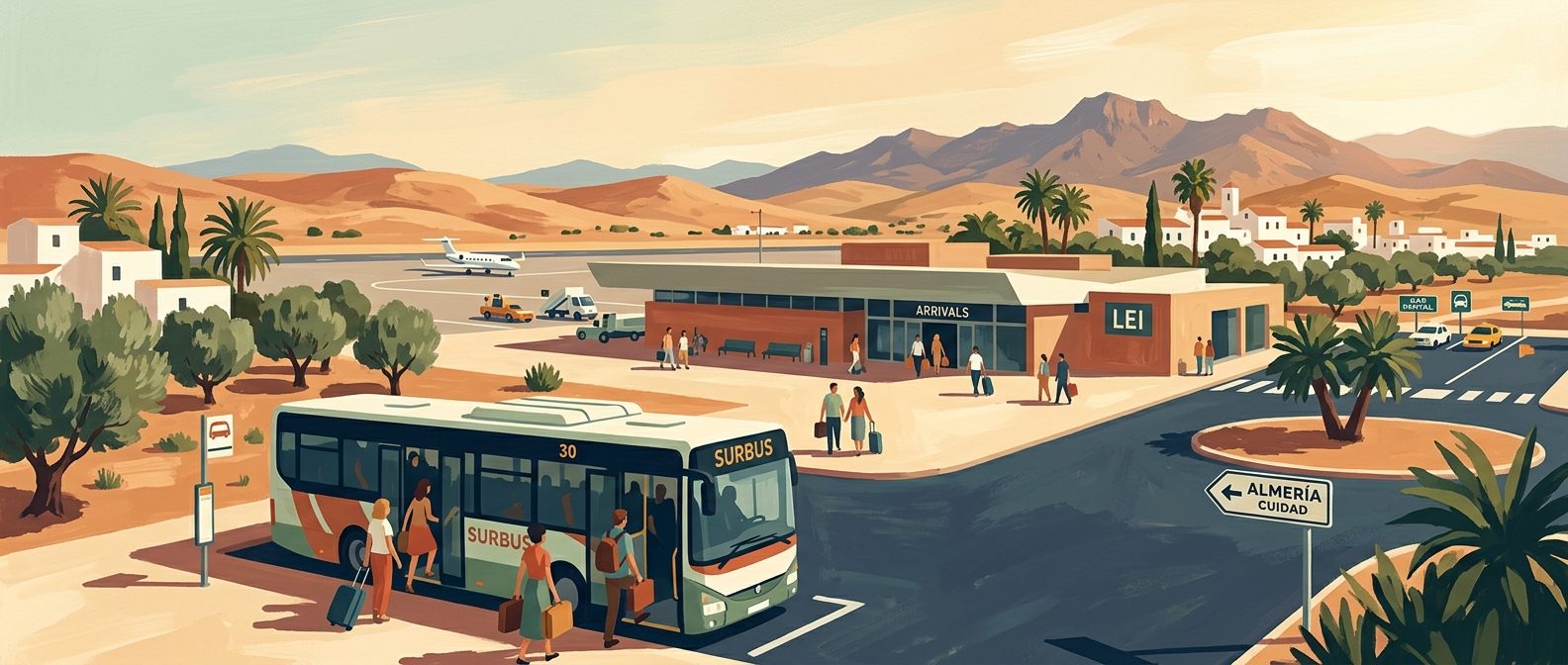
Practical Guide to Almería Airport (LEI)
A practical logistics guide to arriving at Almería Airport (LEI). Discover how to navigate terminal facilities, use the Surbus Line 30, connect to intercity buses, and avoid common transport mistakes.
7 min read
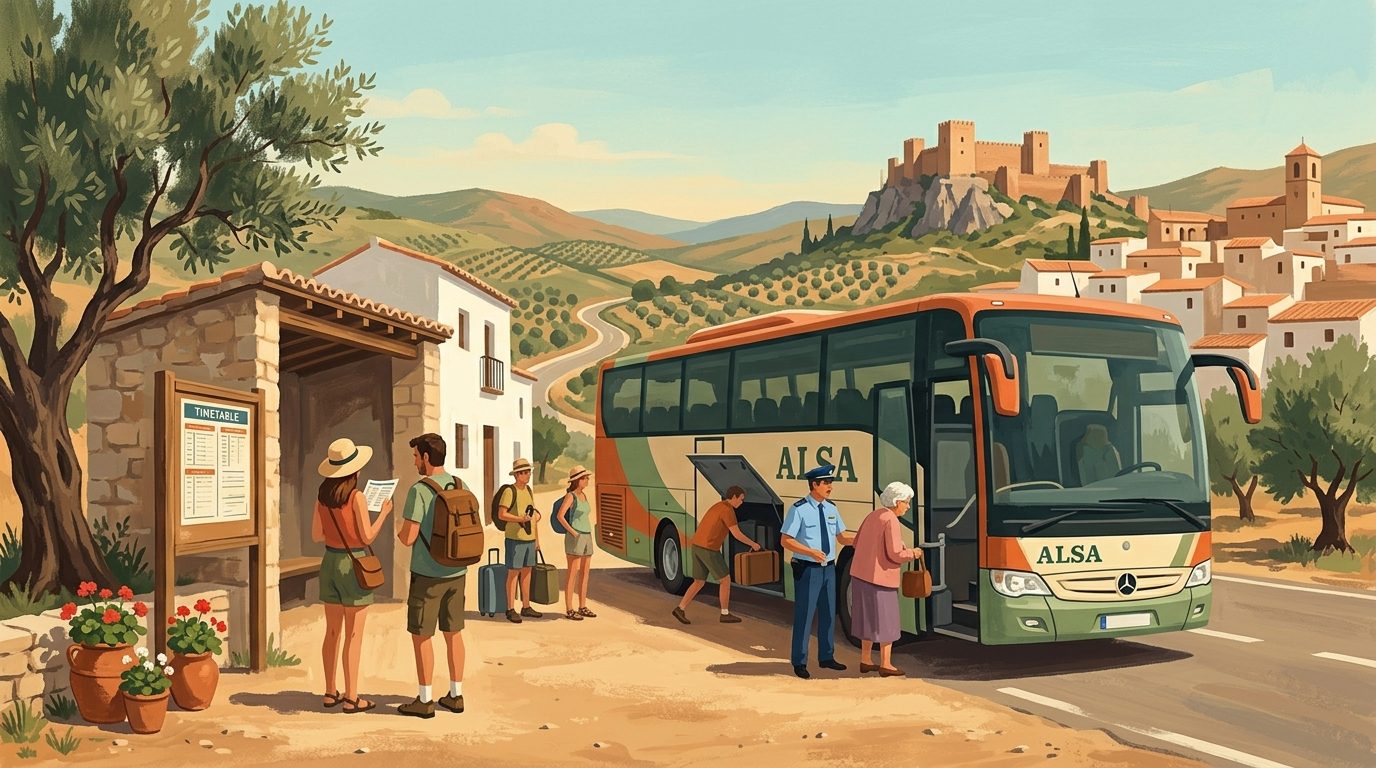
A Practical Guide to Bus Travel in Andalucía with Alsa
A comprehensive guide to using Alsa buses in Andalucía, covering booking tips, major routes, luggage rules, and station facilities.
7 min read
More guides

Using a VPN in Andalucía: A Practical Guide for Travellers and Residents
A comprehensive guide to using a VPN in Andalucía for security, accessing UK streaming services, and maintaining privacy on public Wi-Fi.
6 min read
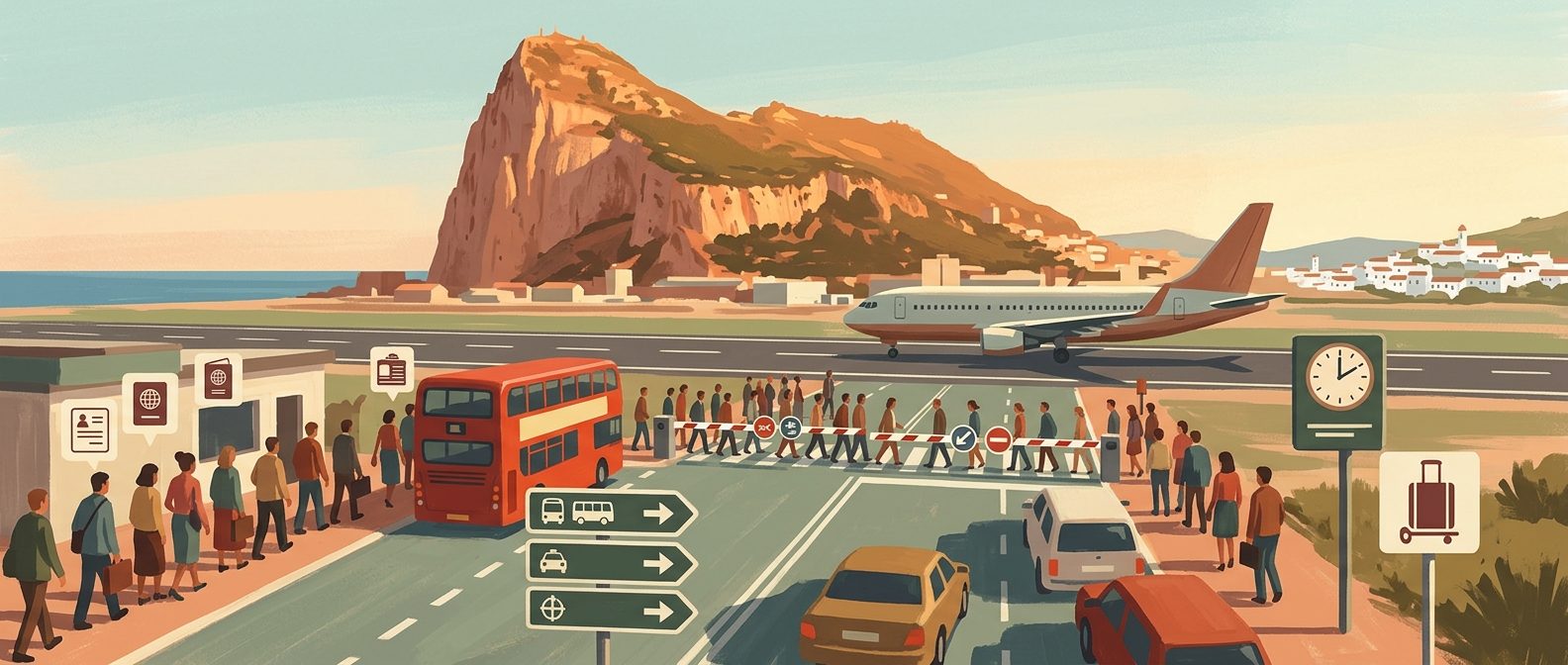
Practical Guide to Gibraltar International Airport (GIB)
A practical guide to using Gibraltar Airport (GIB) for trips into Andalucía, covering border logistics, avoiding vehicle queues, Spanish transport options, and how to handle wind diversions.
8 min read

Málaga-Costa del Sol Airport (AGP) Travel Guide
A deep practical guide to navigating Málaga-Costa del Sol Airport (AGP). Learn the realities of arrivals, transport connections, parking rules, and common mistakes.
8 min read
Federico García Lorca Granada-Jaén Airport Guide: Transport, Costs and Tips
A complete practical guide to Granada-Jaén Airport (GRX), covering airport buses, taxi fares, car hire friction, terminal facilities, and the step-by-step reality of arriving and departing.
7 min read

Understanding Spanish Festival Culture in Andalucía
A deep dive into Andalucían festival culture for residents and visitors. Understand Semana Santa, ferias, local holidays, etiquette, administrative friction and how to survive the local party season.
9 min read
Driving in Andalucía: Rules, Tolls, and Parking Guide
A practical guide to driving in Andalucía, covering road rules, ZBE checks, AP-7 toll choices, parking, roundabouts, breakdown equipment and official sources.
9 min read
Getting to Andalucía: A Practical Transport Guide
A comprehensive practical guide to reaching Andalucía. Learn how to navigate airports, high-speed rail transfers, road tolls, and cross-strait ferries, including solutions for common travel friction points.
7 min read

Travel Insurance for Andalucía: A Practical Guide
A practical guide to travel insurance for Andalucía, covering medical limits, public versus private healthcare, hire cars, adventure sports and the specific requirements for long-stay visas.
8 min read

Photography in Andalucía: A Practical Guide
A practical, source-led guide to photography in Andalucía. Discover how to manage bright light, navigate complex drone rules, secure permits for monuments, respect privacy, and avoid common legal and logistical mistakes.
7 min read
Newsletter
More stories from Andalucía
Weekly notes, seasonal picks, and the next guides worth bookmarking.