
Where to stay · Granada
Luxury Hotels in Granada: Historic Palaces and Alhambra Views
Discover the best luxury hotels in Granada, from historic Albaicín palaces with Alhambra views to sophisticated five-star properties in the city centre.
By Dan · Updated 24 July 2026 · 5 min read
This article contains affiliate links. If you book through them, we may earn a small commission at no extra cost to you.
Luxury accommodation in Granada is defined by two distinct styles: the opulent heritage of the historic hills and the sophisticated modernism of the city centre. Choosing correctly requires balancing the desire for a view with the practicalities of access.
What "luxury" actually means here
In many global cities, luxury is synonymous with standardisation, large room dimensions, and extensive facilities like indoor pools and expansive gyms. In Granada, the definition is narrower and more focused on heritage. A five-star rating here, supported by the official Andalucían tourism board, often applies to converted 15th-century or 16th-century palacios and traditional Carmens (large houses with walled gardens). While these properties offer high-end service and refined aesthetics, the rooms can be smaller than those in modern builds due to the constraints of the original architecture. You are often paying for the architectural significance and the proximity to the Alhambra.
The term "Alhambra view" is the most significant luxury marker in the city, but it is frequently used loosely. Real luxury in this category means a direct, unobstructed view of the Palacios Nazaríes or the Generalife from your private balcony or bedroom window. Many hotels claim these views while only offering them from a shared rooftop terrace or a tiny attic window. When booking high-end accommodation, distinguish between a "city view" and an "Alhambra view". In the lower-lying areas of the city, luxury properties such as the Hotel Palacio de Santa Paula or the Seda Club offer a completely different, more urban atmosphere, sometimes featuring Cathedral views or beautifully restored inner courtyards.
Furthermore, luxury in Granada includes the quality of the "baño árabe" (Arabic bath) experience. Many top-tier hotels have integrated their own private spas that mimic the traditional hammams. Unlike standard hotel saunas, these are often beautifully designed with authentic tiling and vaulted ceilings, forming a core part of the high-end experience in this city.
Best areas of Granada for it
The Albaicín is the most sought-after neighbourhood for those seeking character-driven luxury. The trade-off here is accessibility. This is a protected UNESCO zone with narrow, steep, cobbled streets. Most luxury hotels here are boutique properties in restored mansions, such as those found along the Carrera del Darro or the heights of San Nicolás. You will experience incredible views and quiet courtyards, but you cannot easily arrive by car. You will depend on taxis or the hotel's private shuttle service, and walking involves significant inclines.
The City Centre (Centro), particularly around the Cathedral and Plaza Bib-Rambla, is where you find the more traditional "Grand Hotel" style of luxury. These properties offer better accessibility, proximity to high-end shopping, and larger, more modern room configurations. The trade-off is the noise. This is a functional city, and even five-star hotels can suffer from the sounds of late-night foot traffic or early-morning deliveries if they are not properly soundproofed.
The Alhambra Hill (La Sabika) offers a very specific type of secluded luxury. Staying here puts you moments away from the palace entrance, often in buildings with significant history. Iconic properties like the Parador de Granada (set within a 15th-century convent on the Alhambra grounds) and the Alhambra Palace hotel provide this exact experience. It is exceptionally quiet at night once the day-trippers have left. However, the trade-off is a lack of local life. To find a variety of restaurants or bars, you will have to walk down the steep hill or take a taxi into the centre, making it feel somewhat isolated from the rest of Granada.
Realejo is the former Jewish quarter and offers a compromise between the two. It features several high-end boutique options that feel residential and authentic. It is flatter than the Albaicín and closer to the main sights than the Alhambra Hill, though it lacks the iconic "front-row" views found across the valley.
How to pick by budget
For the entry-level luxury tier (€), expect high-quality four-star boutique hotels. At this price point, you are paying for a prime location in the centre or the Albaicín and a well-designed, modern room. You likely will not have a full Alhambra view from your room, but you may have access to a shared terrace with a view. Facilities like spas or swimming pools are rarely included at this level.
In the mid-range luxury tier (€€), you can secure a room in an established five-star hotel or a high-end suite in a boutique property. This budget usually guarantees more space, better soundproofing, and onsite amenities such as a gym or a small plunge pool. In this bracket, you should expect more personalised service and potentially a partial view of the historic monuments.
At the top-end tier (€€€), you are paying for the best rooms in the city's most famous hotels. This includes direct, panoramic Alhambra views from a private terrace, expansive square footage, and often historical features like original frescoes or carved wooden ceilings. At this level, the hotel should provide seamless logistics, such as valet parking and private transfers, which are essential in a city as geographically complex as Granada.
Practical tips for booking
Granada is a seasonal city with extreme temperature fluctuations. If you are booking a luxury hotel for July or August, confirm that the air conditioning is modern and individually controlled in the rooms; heritage buildings can sometimes struggle with cooling. Conversely, in winter, the stone floors of the Albaicín can be very cold, so check for underfloor heating in high-end properties.
Booking lead times are critical. For the peak months of April, May, September, and October, the best rooms in luxury hotels often sell out six months in advance. If you require a specific room with a specific view, contact the hotel directly after booking to confirm the room number. Do not rely on automated requests for an "Alhambra view" as these are subject to availability and the hotel's own interpretation of what constitutes a view.
If you are driving, always contact the hotel before arrival. Many luxury properties in the Albaicín and the centre are located in restricted traffic zones monitored by CCTV. You must provide your vehicle registration number to the hotel at least 24 hours in advance to ensure they can whitelist your entry into the ZPR (Zona de Prioridad Residencial) and avoid automated fines. Additionally, be aware of the new Low Emission Zone (ZBE) regulations, which restrict non-compliant vehicles, including older rental cars, from entering the city centre. For the latest traffic and zone information, consult the Granada City Council (Movilidad Granada) website. Parking in these areas is often off-site and expensive, so factor this into your daily budget. Finally, clarify the breakfast situation: some heritage hotels have very small dining rooms and require you to book a time slot for your morning meal.
Last reviewed: 21 June 2026 · Editorial policy
Related guides
Two Days in Granada: A Step-by-Step Itinerary
Two days in Granada gives you just enough time to explore the Alhambra and lose yourself in the steep alleys of the Albaicín. This itinerary balances major monuments with the city's legendary free tapas culture.
10 min read
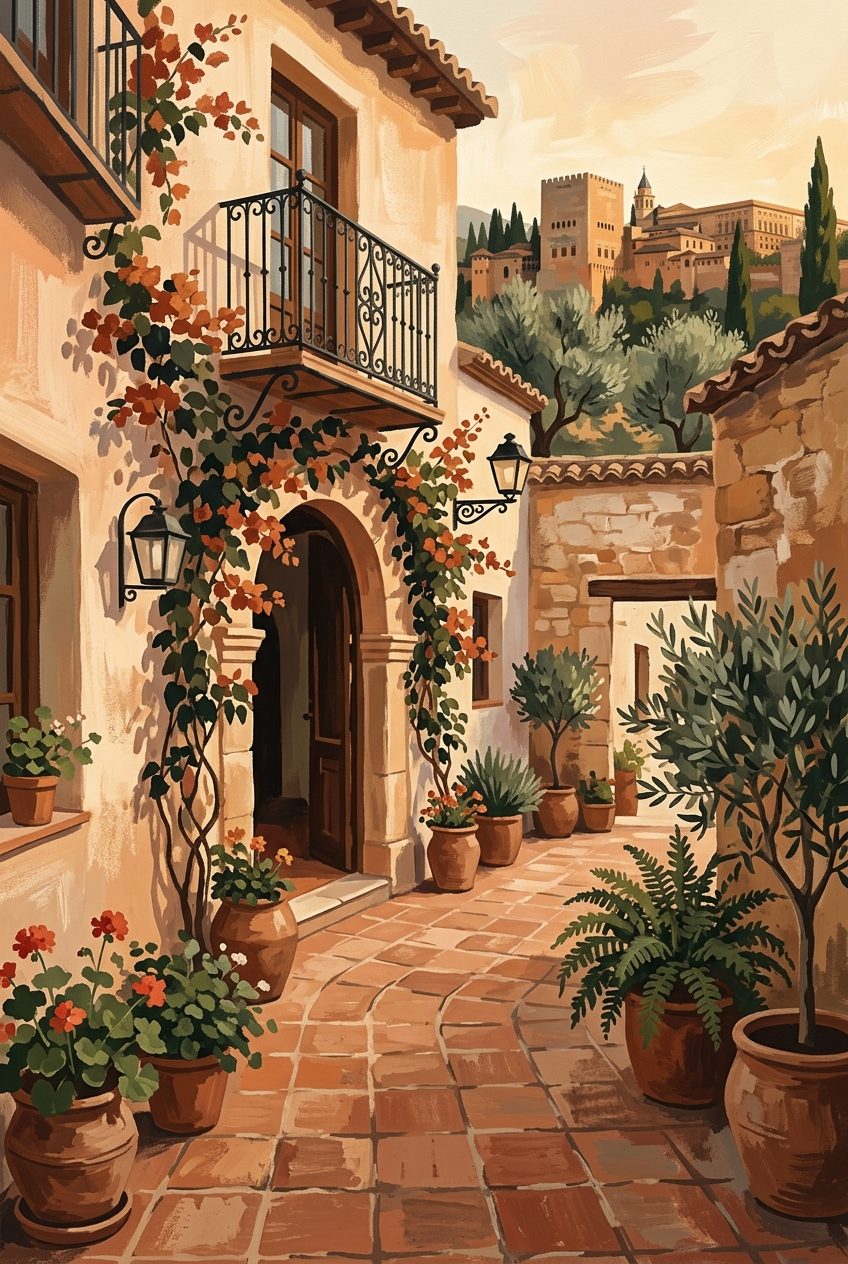
How to Book Hotels with Alhambra Views in Granada: Best Neighbourhoods and Rooms
Secure the perfect view of Granada's palace complex by choosing the right neighbourhood and room category for your budget.
5 min read
Granada Romantic Hotels: A Practical Guide to Choosing Your Stay
Choosing a romantic hotel in Granada requires balancing iconic Alhambra views against the logistical challenges of the city's historic hillside neighbourhoods.
5 min read
Boutique Hotels in Granada: Historic Cármenes and Palacetes
Choose between historical cármenes in the Albaicín and modern palacetes in the city centre with our guide to Granada boutique hotels.
5 min read
The Best Luxury Hotels in Andalucía
How to choose luxury hotels in Andalucía, with verified examples in Marbella, Sevilla, Granada and Ronda plus booking checks and area trade-offs.
8 min read
Luxury Hotels in Ronda: Where to Stay
How to choose luxury hotels in Ronda, comparing gorge-view rooms, historic boutiques and countryside estates with verified sources and access checks.
3 min read
More from Granada
Hotels with a Pool in Granada: Rooftop Plunges and Seasonal Tips
Finding a hotel with a pool in Granada requires understanding seasonal limits and the difference between a rooftop plunge and a full-sized basin.
5 min read
Quiet and Boutique Hotels in Granada: Best Adult-Focused Retreats
A practical guide to quiet and adult-focused hotels in Granada, comparing Albaicín, Realejo and Cathedral bases with Alhambra access, stairs, transport and spa checks.
6 min read
Hotels with Family Rooms in Granada: Best Neighbourhoods for Kids
Discover the most practical neighbourhoods and hotel configurations for a family stay in Granada, from the flat streets of the Centro to the modern parks of the Ronda district.
5 min read
Hotels with Pets in Granada: Best Stays and Essential Travel Tips
A practical guide to booking pet-friendly accommodation in Granada, including neighbourhood recommendations, weight limits, and essential Alhambra logistics.
4 min read
Newsletter
More stories from Andalucía
Weekly notes, seasonal picks, and the next guides worth bookmarking.