
attraction · Sevilla
Roman Amphitheatre of Carmona
Andalucía 365 · Updated 18 July 2026
Our Verdict
“This is a raw archaeological footprint rather than a reconstructed arena. The exterior-only view can feel limited, especially if you expect the scale of Itálica, but the site matters for its exceptionally early date and makes far more sense when paired with the neighbouring necropolis museum.”
Last verified: July 2026
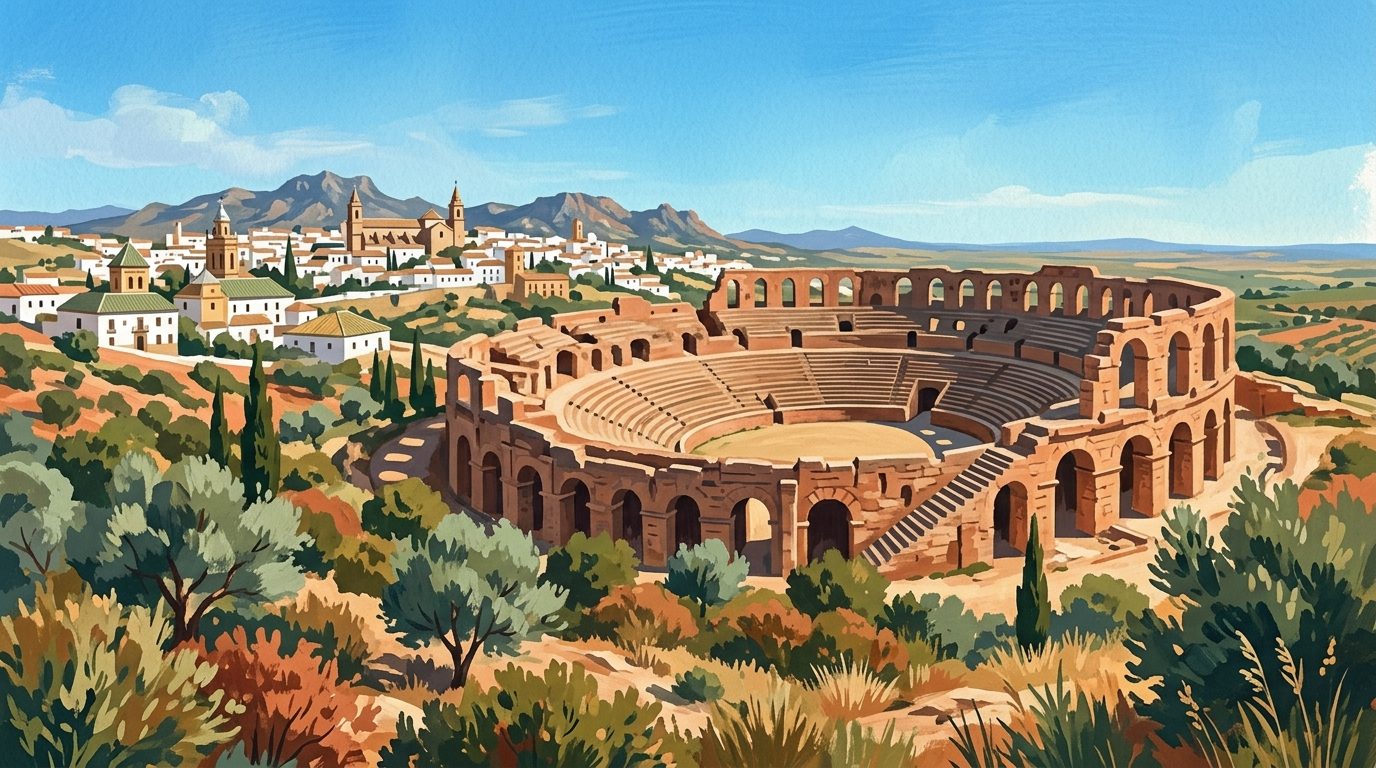
Carved directly into the natural limestone ridge of the Los Alcores plateau, the Roman Amphitheatre of Carmona predates the imperial grandeur of the empire's later arenas. Constructed in the first century BC during the late Republican period, this structure served the Roman city of Carmo. It is now recognised as the oldest known Roman amphitheatre in the Iberian Peninsula, dating to approximately 50 to 45 BC. This was long before the massive concrete coliseums became standard across Roman Hispania. The builders relied on the natural slope of the land to create the lower seating tiers, leaving a raw, rugged footprint that remains deeply embedded in the Andalucía landscape.
The Military Origins of Carmo
Discovered on 24 May 1885 by Anglo-French archaeologist George Bonsor and local pharmacist Juan Fernández López, the amphitheatre initially remained secondary to the spectacular Roman Necropolis situated across the road. Recent archaeological campaigns have since clarified its historical significance. Carmona was a heavily fortified military stronghold, described by Julius Caesar as the strongest city in the province (longe firmissima totius provinciae civitas). This amphitheatre was built to serve a large garrison of Roman troops, marking the city as a crucial military capital in the southwest before later administrative reorganisations shifted power toward other settlements. Estimates suggest the structure could accommodate roughly 18,000 to 20,000 spectators, providing an arena for gladiatorial combat, wild animal spectacles and public executions.
Architectural Features of the Arena
Even from the permitted exterior viewpoints, it is clear that the amphitheatre lacks the towering masonry arches typical of later Roman construction. Its engineers instead cut the lower and middle seating tiers directly into the limestone ridge, using the natural slope to support the cavea. The upper seating once rose above the bedrock on a built superstructure that has long since disappeared, leaving the arena as a broad, sunken outline rather than a complete standing monument.
The elliptical arena measures roughly 55 by 39 metres. Archaeological study has identified entrance ramps, circulation passages and drainage designed to move crowds and rainwater efficiently through the complex. These details are easier to understand after seeing the models and finds in the museum at the neighbouring necropolis. Under normal conditions the amphitheatre interior is closed, so visitors should not expect to walk the arena floor or inspect its internal chambers. Occasional special guided visits may offer closer access, but only when announced by the archaeological ensemble.
The Verdict
This is a raw, evocative archaeological site rather than a heavily reconstructed tourist attraction. If you expect towering, photogenic arches, you may find this sunken limestone footprint underwhelming. However, for those genuinely interested in early Roman engineering, it remains an essential, unmanicured marvel that perfectly complements the adjacent burial grounds.
Practicalities for Visiting
The amphitheatre forms part of the Archaeological Ensemble of Carmona on Avenida Jorge Bonsor, at the western edge of town. Under normal conditions it can be viewed only from outside the perimeter, while interior access is restricted to occasional special tours. Consult the official Carmona tourism page before travelling if access to the arena itself matters to your visit.
The adjoining necropolis and its museum are the best places to begin, as their artefacts and interpretive material make the amphitheatre's surviving footprint much easier to read. The whole area is exposed to the elements, so bring water and avoid the hottest part of the day during summer.
Terrain and Accessibility
Standard visits rely on exterior viewpoints rather than a route through the arena. Surfaces around the archaeological zone include paving, gravel and exposed ground, and shade is limited. Visitors with mobility requirements should confirm the current accessible viewing route with the ensemble, particularly if a special guided opening is advertised.
Extending Your Day
Once you have explored the amphitheatre and the adjacent burial chambers, the obvious next step is to head up the hill to explore the broader legacy of the city. Reading a guide to Carmona will help you navigate the historic centre, where the monumental Puerta de Sevilla stands as a testament to the town's enduring defensive strength.
If you are particularly interested in the region's ancient history, this site provides a fascinating point of comparison with later imperial structures. You can easily make this part of a wider archaeological itinerary by taking a short drive toward the capital to see Itálica, the birthplace of emperors Trajan and Hadrian, which boasts a far more massive and sophisticated arena. Alternatively, if you want to explore the wider rural landscape, reading about the Sevilla countryside reveals a trail of baroque towers and olive plains stretching between here, Osuna and Écija.
Nearby worth your time
A few well-placed stops for extending the day without turning it into a checklist.
Continue through Lower Guadalquivir & Countryside
Step back into the wider landscape with local guides, nearby places and the province overview.
Things to do · 9 min
The Definitive Guide to Feria de Abril in Sevilla
Discover the cultural nuances, strict dress codes, and insider advice for navigating Sevilla's exclusive spring fair like a seasoned local.
Things to do · 10 min
Golf in Sevilla Province: Courses, Holidays and Local Pro Shops
Swap the crowded coastal fairways for the refined courses of Sevilla province. Discover top layouts designed by golfing legends, local shops, and expert tips for your next trip.
Itinerary · 13 min
One Week in Sevilla: A Complete Seven Days Itinerary
Spending a full week in Sevilla allows you to slow down and adopt the local rhythm. You can explore the monumental centre, wander through neighbourhood markets, and take the train to nearby Andalucían cities without feeling rushed.