Bolonia is a rare enclave where the remains of a Roman maritime city sit alongside a towering Atlantic sand dune. It remains one of the most peaceful stretches of the Cádiz coastline, largely protected from over-development by its status as a natural park.
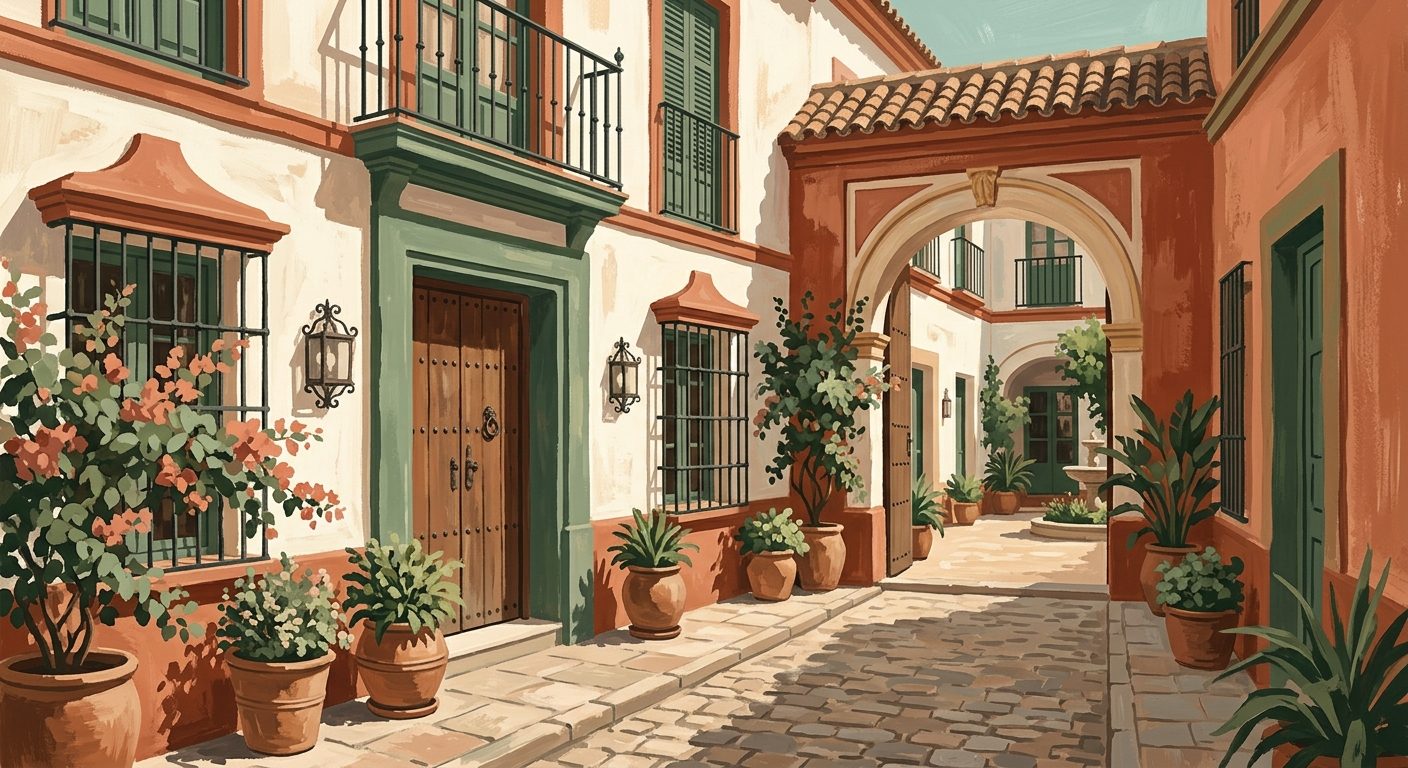
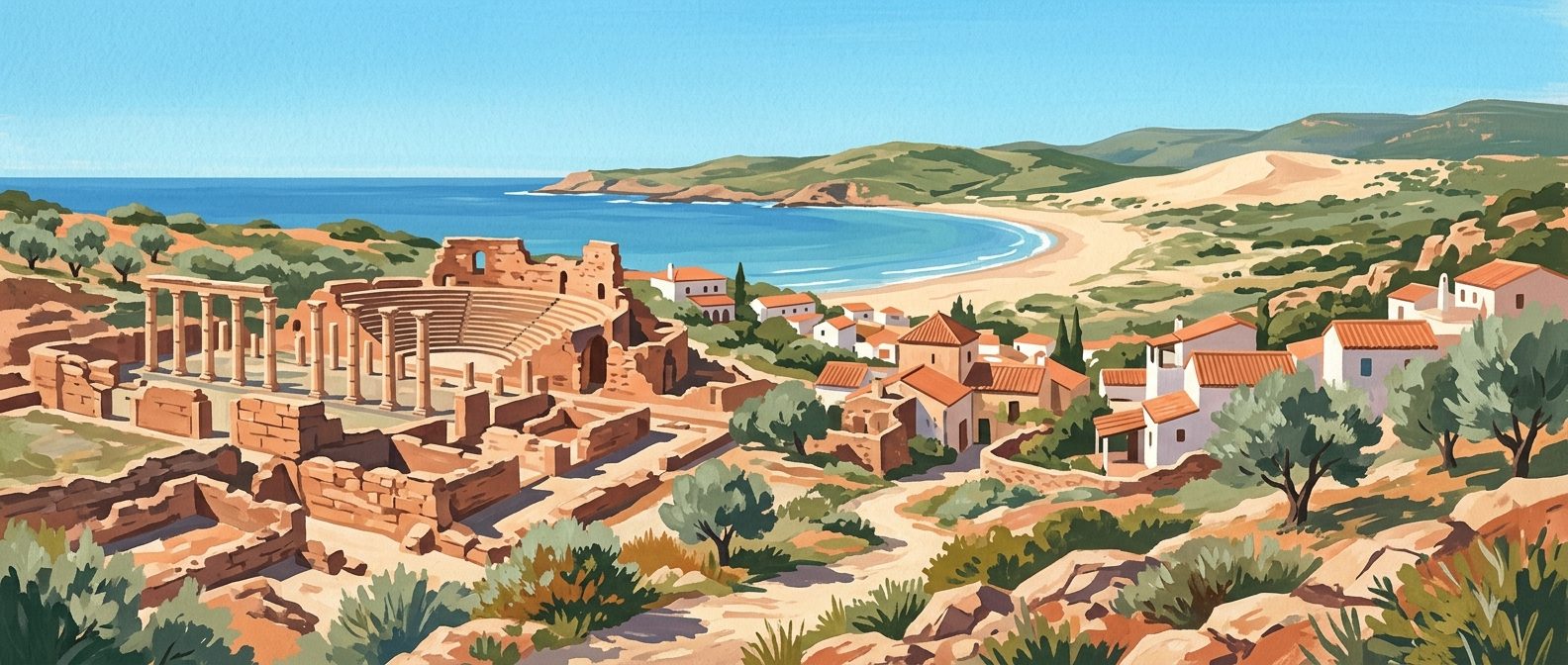
Driving south from Vejer de la Frontera or north from Tarifa along the N-340, the turn-off for Bolonia leads you away from the modern world. The road snakes through hills populated by Retinto cattle and wind turbines, eventually descending into a wide, horseshoe bay. Here, the landscape is defined by the Ensenada de Bolonia, a stretch of fine white sand that terminates in a massive, shifting dune. Unlike the more commercialised resorts of the Costa de la Luz, Bolonia has retained a low-key, almost makeshift atmosphere. There are no high-rise hotels or expansive shopping centres; instead, you find a collection of modest cottages, family-run guesthouses, and a history that stretches back over two millennia.
The site is essentially a cul-de-sac, which helps preserve its quietude. Because the road ends at the beach, Bolonia does not suffer from through-traffic, creating a self-contained world where the Atlantic breeze dictates the pace of the day. For those looking to escape the busier umbrellas of Conil or the windsurfing crowds of Tarifa, it offers a sophisticated balance of cultural immersion and raw natural beauty.
What to See & Do
The Archaeological Ensemble of Baelo Claudia
The most striking feature of Bolonia is Baelo Claudia, one of the most complete and well-preserved Roman cities in the Mediterranean. Founded in the 2nd century BC, the city reached its zenith under Emperor Claudius, largely thanks to its industry in garum, a fermented fish sauce that was the luxury condiment of the Roman world. Walking through the gates today, the layout of the city remains remarkably clear.
Key highlights within the site include the theatre, which utilised the natural slope of the hillside to seat up to 2,000 spectators and still features impressive acoustics. In the forum, you can see the remains of the temples dedicated to the Capitoline Triad (Jupiter, Juno, and Minerva) as well as a temple to the Egyptian goddess Isis, reflecting the cosmopolitan nature of Roman trade ports. The most evocative area, however, is the industrial sector. Here, the large stone salting tanks (cetariae) where tuna were processed are still visible just metres from the sea. The city was severely damaged by an earthquake in the 3rd century AD and was eventually abandoned by the 7th century, leaving behind a silent, sun-baked skeleton of a once-thriving port.
The Monumento Natural Duna de Bolonia
At the western end of the beach sits the Great Dune, a natural monument rising over 30 metres high. This massive sand formation is constantly reshaped by the Levante (east) and Poniente (west) winds. As the sand moves inland, it slowly buries the surrounding maritime pine forest, creating a surreal landscape of half-submerged treetops. Climbing the dune is a local rite of passage; though the ascent is strenuous, the views from the crest are peerless. On a clear day, the Moroccan coastline and the lighthouse at Cape Spartel appear remarkably close across the Strait of Gibraltar.
The Natural Pools (Piscinas Naturales)
If you head east from the main village area, away from the dune and towards the cliffs of Punta Paloma, a four-kilometre walk at low tide leads to the "natural pools". These are essentially hollows in the rock that trap seawater as the tide recedes. Because the rocks absorb the sun’s heat, the water in these pools is often significantly warmer than the Atlantic. It is a secluded spot frequented by those who enjoy a more solitary beach experience, though it requires sturdy footwear and careful timing with the tides to reach safely.
Practical Information
Baelo Claudia Opening Times: The archaeological site is closed on Mondays. From Tuesday to Saturday, it typically opens at 09:00. Closing times vary by season: 18:00 in winter (16 September to 31 March), 20:00 or 21:00 in spring/early summer (check the official website for monthly updates), and in the height of summer (July to mid-September), it often closes during the hottest part of the afternoon, reopening from 18:00 to 21:00. Sundays and public holidays always follow a shorter schedule, typically 09:00 to 15:00.
Ticket Prices: Entry is free for EU citizens with a valid passport or ID (subject to regional government policy changes). For non-EU visitors, the price is a nominal fee, usually around €1.50 (check on the operator's website before travelling). The modern visitor centre includes a small but excellent museum with artefacts found on-site, including statues and coins.
How to Get There: Bolonia is located at kilometre 70.2 of the N-340 road. From there, the CA-8202 leads you 8 kilometres down to the coast. While a car is essential for most of the year, a limited seasonal bus service occasionally operates from Tarifa during the peak months of July and August (check local Tarifa bus schedules before travelling). From Tarifa, the drive takes roughly 25 minutes.
Parking: In the winter and shoulder seasons, parking is straightforward in the large dirt car park near the visitor centre. However, in July and August, Bolonia becomes exceptionally popular. It is advisable to arrive before 10:00 to secure a spot. Local landowners often open fields for parking during peak summer for a small fee (usually €2 to €5).
Where to Eat Nearby
The culinary scene in Bolonia is small but centres on the incredible quality of local ingredients, particularly Almadraba tuna and Retinto beef. Restaurante Otero is a long-standing favourite, positioned perfectly between the Roman ruins and the beach. Their tuna tataki and atún encebollado (tuna with onions) are excellent. Another reliable choice is Restaurante Las Rejas in the El Lentiscal area of the village. They are renowned for their fried fish and croquetas de choco (cuttlefish croquettes). For something slightly more rustic, El Albero offers traditional Andalucían home cooking in a relaxed setting.
Where to Stay
Accommodation in Bolonia is limited, which is part of its charm. Hostal Bellavista and Hostal Rios offer simple, clean rooms right on the beachfront, perfect for those who want to wake up to the sound of the Atlantic. There are also several small apartment complexes, such as Apartamentos Miramar, which provide self-catering options. If you require more luxury or a wider choice of hotels, many visitors choose to stay in Tarifa or Zahara de los Atunes and visit Bolonia as a day trip.